Baha’i Citizen Matin Fahandej Saadi Arrested by Security Forces

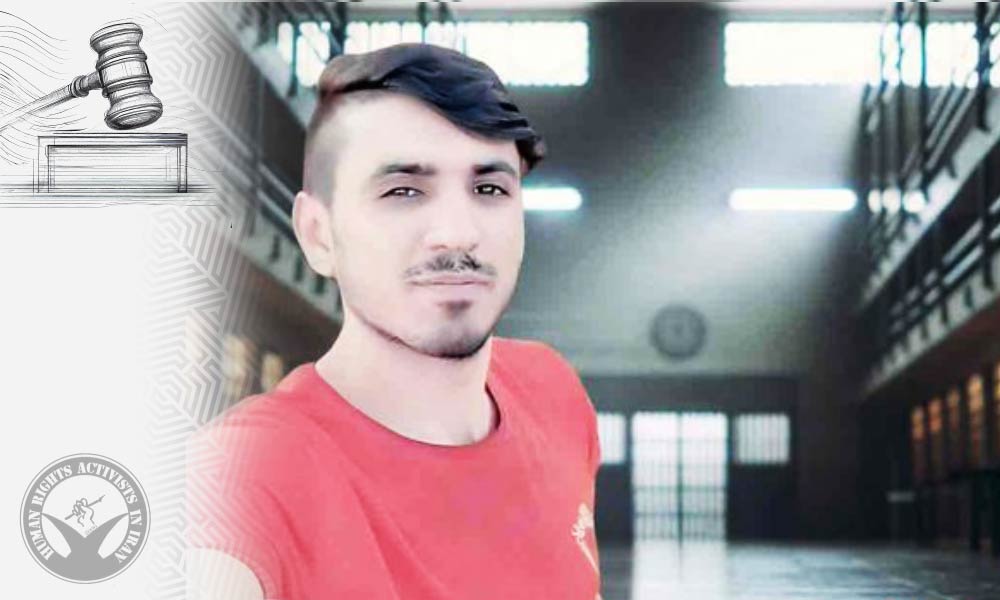
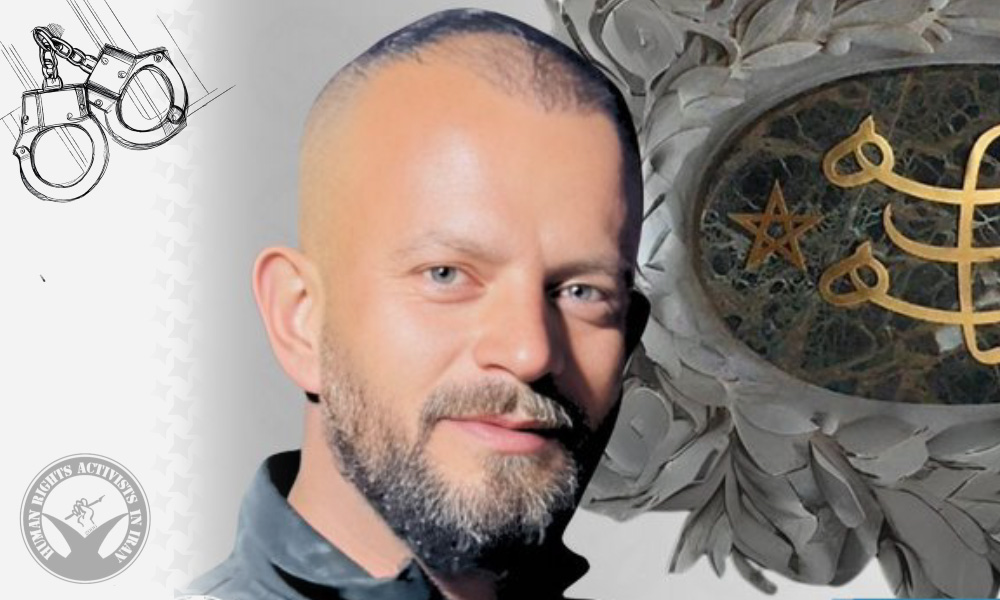
On August 5, 34 years old Matin Fahandej Saadi, a Baha’i citizen residing in Kerman, was arrested by IRGC intelligence of the city and transferred to an unknown location.

A source close to the family confirmed this news to HRANA and said: “Matin Fahandej Saadi was arrested at his father’s workplace by the IRGC intelligence forces of Kerman. The security forces then went to his business, a pet boarding house, searched the place, and confiscated some personal belongings and CCTV cameras.”

The source added: “Despite the family’s efforts to follow up on Matin’s status at the local police station, Kerman’s Judicial Branch No. 5, and the IRGC intelligence office in Kerman, they have not received any information regarding the reasons for his arrest or his whereabouts. Judge Hadi Khalooie is in charge of this Baha’i citizen’s case and has issued a 48-hour detention order. The Kerman prosecutor’s office informed the family that they need to wait until August 10 for the case to be registered and then follow up on Matin Fahandej Saadi’s status. Matin has only had one brief phone call with his family since his arrest.”

Baha’is are subjected to violations of their religious rights, comprising 82% of reports on infringements against religious minorities, according to HRA’s 2023 annual report.

The Baha’i faith is not recognized as a legitimate religion by Iranian authorities, leading to systematic and longstanding violations of the rights of Baha’is in the country. This includes the denial of their fundamental right to practice their religion, which constitutes a clear breach of both Article 18 of the Universal Declaration of Human Rights and Article 18 of the International Covenant on Civil and Political Rights. The United Nations covenant holds that every person has the right to freedom of religion, freedom of converting religion, as well as freedom of expression, individually or collectively; openly or secretly.
Report on the Latest Status of Writer Mehrzad Mousavi in Adelabad Prison

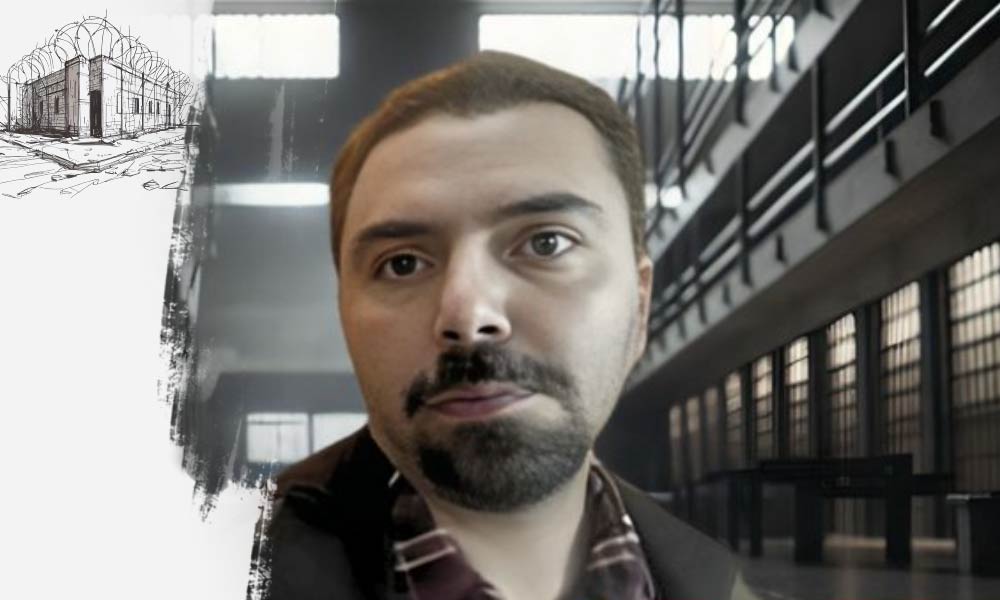
Mehrzad Mousavi, a writer and historian, is serving his sentence in Adelabad Prison, Shiraz. He was previously sentenced by the Shiraz Revolutionary Court to eleven years in prison and two years of exile in Kerman.

Based on information received by HRANA, Mr. Mousavi was previously sentenced by Branch 1 of the Shiraz Revolutionary Court to five years in prison for the charge of “membership in anti-regime groups,” five years in prison for the charge of “assembly and collusion to commit crimes against national security,” one year in prison for the charge of “propaganda against the regime,” and two years of exile to Bardsir, Kerman.

This writer and historian was arrested by IRGC intelligence agents at his home in Shiraz in early November 2023 and transferred to Adelabad Prison in this city.

Mousavi has made contributions to the realm of literature and historical research, with notable works to his name such as “An Inquiry into Achaemenid Art Antecedents” and “Iran in Two Invasions.”

Three Executed for Drug-Related Offenses in Kerman Prison

On May 8, 2024, three inmates, including one woman, were executed in Kerman Prison for drug-related crimes.

HRANA identified the executed individuals as Fariba Mohammad-Zahi (Mohammadi Zaei), aged 33, Abdollah Ozbakzahi, and Khalilollah Brahui (Barahooie). All three had been previously convicted on drug charges.

No official sources or domestic media outlets within the country have provided coverage of these executions at the time of writing.

The reports from the Department of Statistics and Publication of Human Rights Activists for the year 2023 reveal a concerning prevalence of executions for drug offenses in Iran, constituting 56.4% of the total executions. For a comprehensive examination of the details and statistics surrounding the executions in Iran, refer to HRANA’s report


Ayoub Gheibipour Sentenced to Eleven Years in Prison and Exile

The Revolutionary Court of Ahvaz sentenced Ayoub Gheibipour to eleven years in prison and exile to Kerman Prison for charges including “enmity against God (Moharebeh).” Gheibipour was arrested during the 2022 nationwide protests.

According to his lawyer Sajjad Chatrsefid, the ruling includes ten years in prison to be served in exile in Kerman Prison for “enmity against God (Moharebeh)” and one year for “propaganda against the regime.” Gheibipour can appeal the ruling.

This verdict followed the overturning of an initial verdict by the Supreme Court. Gheibipour had previously received ten years in exile imprisonment for “arson and destruction of public property, propaganda against the regime,” citing the burning of Qasem Soleimani’s statues as an example of this charge.

Gheibipour was arrested during the nationwide protests in Ahvaz and was transferred to Sheiban Prison in the city. He was released on February 13, 2024, on a heavy bail of three billion toman (approximately $60,000). During his detention, he was denied access to medical care.

Twelve Arrested in South Khorasan for Alleged Misinformation and Insults

Fars news agency reports that the Iranian Cyber Police in South Khorasan Province have identified 27 social media channels, leading to the arrest of 12 citizens for disseminating what authorities label as “misinformation and insulting content.” Additionally, a business unit has been closed in connection with these activities.

According to a police official, these 27 websites allegedly published “fake news and insulting content against the martyrs who lost their lives during the terrorist attack in Kerman.” The 12 individuals arrested in relation to this matter will face legal action. The identities of the detainees and the location of their detention remain undisclosed.

Following the tragic explosions in Kerman during the commemoration ceremony for Qasem Soleimani, which claimed numerous lives and caused injuries, security forces and affiliated individuals on social media have been actively pursuing those expressing opinions about the incident. Consequently, dozens of individuals have been summoned, arrested, and had their social media pages removed.

Subscribe to Our Newsletter

Now is definitely not the time to stop reading!

Three Detained for Voicing Opinions on Recent Kerman Blasts

In the ongoing trend of security and judicial actions against citizens expressing their opinions on social media regarding the deadly explosions in Kerman during Qasem Soleimani’s commemoration ceremony, three individuals have been arrested.

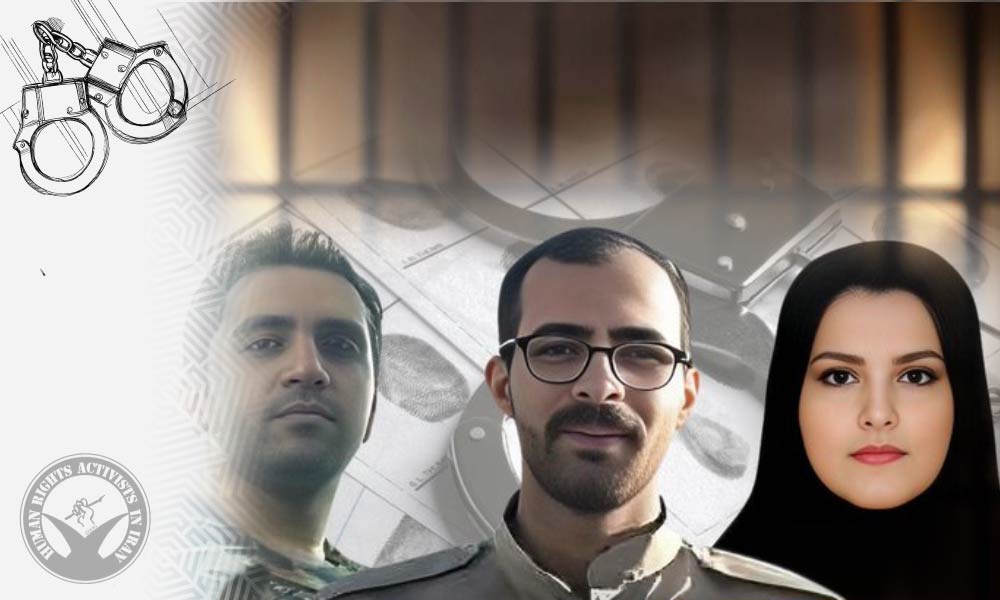
The detainees are identified as Amir Rah Peykar, a student at the University of Isfahan, Shahin Ghafoori, a university professor at Islamic Azad University, Qorveh Branch, and Niloofar Sadat Hashemian, an attorney and member of Iran’s central bar association.

As of now, the charges against these individuals remain undisclosed.

On January 3, 2024, two devastating explosions occurred during the fourth-anniversary commemoration of Qasem Soleimani in Kerman, resulting in dozens of casualties and over 170 injuries. Subsequently, the regime’s security apparatus arrested numerous citizens for expressing their opinions on social media regarding this incident.

Crackdown on Dissent Following Kerman Blasts: Dozens Arrested and Prosecuted

In the aftermath of the tragic explosions in Kerman during Qasem Soleimani’s commemoration ceremony, claiming numerous lives and causing injuries, security forces and affiliated individuals on social media have actively sought to identify and apprehend those expressing opinions about the incident. As a result, dozens of individuals have been summoned, arrested, and had their social media pages removed, with an estimated 76 people detained in connection to these events.

According to 32 reports from social media channels associated with Iran’s security institutions, at least 76 arrests have been made, 108 individuals have been summoned to security/judicial institutions, 537 social media pages were taken down, and two businesses in Mazandaran and South Khorasan Province were closed.

In an attempt to instill fear and suppress dissent, these security-affiliated channels have doxed 28 citizens, leading to their subsequent arrests and prosecutions. Furthermore, one security-affiliated channel has released a video featuring the coerced confession of a citizen, although the location and circumstances of the recording remain unclear. In the video, the detainee expresses regret for his opinions, attributing his actions to the influence of social media.

The regime’s approach has sparked concerns about potential violations of citizens’ privacy rights. Additionally, the Tehran prosecutor has announced legal action against Sadegh Zibakalam, an author and political pundit, and seven others for their statements regarding the recent blasts in Kerman. Furthermore, several students have faced disciplinary measures from universities due to their opinions on the incident.

Mohammad Davari Receives Four Years and Six Months Prison Sentence

The Shiraz Revolutionary Court has issued a verdict sentencing workers’ rights activist Mohammad Davari to four years and six months in prison. The sentence includes a two-year mandatory residence in Bardsir County, Kerman Province, a two-year travel ban, and additional social deprivations.

Presiding over the court, Judge Mahmood Sadati delivered a three-year prison term, a two-year prohibition from leaving the country, a ban on social media activities, and a two-year mandatory residence in Bardsir County for charges related to “insulting the Supreme Leader of Iran.” Additionally, Davari was handed a one-year and six-month sentence for “propaganda against the regime in favor of anti-regime groups.”

Despite the severity of the charges, a source informed HRANA that the court did not provide any specific examples for the accusation of “insulting the Supreme Leader of Iran.”

Furthermore, Davari is concurrently facing allegations of “disseminating false information” in another pending legal case, currently under consideration by the Shiraz Criminal Court.

Notably, Mohammad Davari has a history of prior arrests and convictions stemming from his activism. He is a civil engineering graduate from Yasuj University and a political science alumnus from Shiraz Payam Noor University.

Execution of Woman for Drug Offenses in Kerman Prison

On November 15, 2023, a female inmate convicted of drug-related crimes was executed at Kerman Prison.

The executed inmate is identified as Zarkhatoon Mazar-Zahi, approximately 46 years old, from Saravan, married, and a mother of one child. Mazar-Zahi was apprehended six years ago at a police checkpoint in Kerman Province on suspicion of drug smuggling while en route to Shiraz.
On March 15, 2022, the Kerman Revolutionary Court handed down a death sentence, a verdict subsequently affirmed by the Supreme Court. As of the current writing, no official sources or domestic media outlets within the country have reported on this execution.

According to data compiled by the Center of Statistics of Human Rights Activists in Iran (HRA), between October 10, 2022, and October 8, 2023, a total of 659 individuals were executed by hanging in Iran, representing a 24% increase compared to the corresponding period in the previous year. Seven of these executions were conducted publicly. Concerningly, many of the defendants were denied access to a fair trial and due process. For details and statistics, read HRANA’s report.

Execution of Inmate in Bam Prison

On Tuesday, October 10, Bam Prison in Kerman province bore witness to the execution of an inmate convicted of murder.

The inmate has been identified as Hossein Alizadeh, aged 30, originally from Iranshahr, according to Haal Vsh.

Alizadeh had been sentenced to death a decade ago. Two days prior to his execution, he was transferred to the quarantine section of the prison.

According to data compiled by the Center of Statistics of Human Rights Activists in Iran (HRA), between October 10, 2022, and October 8, 2023, a total of 659 individuals were executed by hanging in Iran, representing a 24% increase compared to the corresponding period in the previous year. Seven of these executions were conducted publicly. Concerningly, many of the defendants were denied access to a fair trial and due process. For details and statistics, read HRANA’s report.