





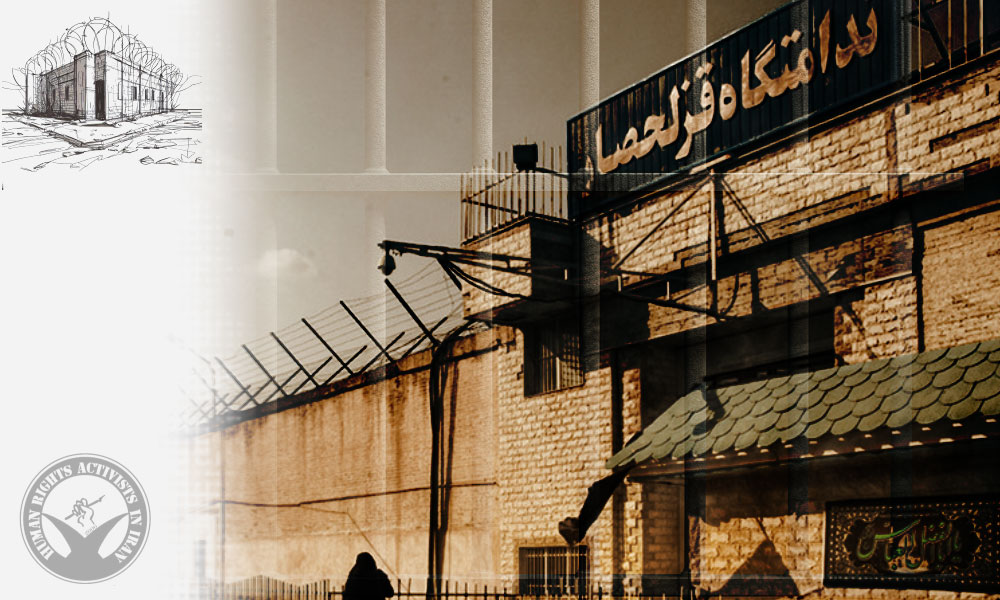
HRANA – Former inmates of Suite 35 at Ghezel Hesar Prison in Karaj have provided HRANA with accounts alleging the systematic mistreatment of prisoners, including physical assaults, the use of pipes as instruments of corporal punishment, denial of medical care, and the transfer of injured detainees to the facility. Multiple independent testimonies repeatedly identified a prison guard officer by name and described what sources characterized as a pattern of violent and degrading treatment of inmates.
According to HRANA, several former prisoners who had been held in Suite 35 of Ghezel Hesar Prison in recent months and have since been released have provided new details about conditions in the ward and the treatment of certain inmates.
According to these individuals, a number of detainees with physical injuries, including leg wounds, have been transferred to Ghezel Hesar Prison in recent months. Sources familiar with the matter reported that Parsham Parvas, Hojjat Naimi, and Sasan Jalilian were among those transferred to the prison while in poor physical condition.
HRANA has received accounts regarding the cause of these injuries; however, it is currently unable to independently verify all details concerning when, where, and how the injuries were sustained. Nevertheless, several informed sources separately confirmed that these individuals faced obstacles in accessing adequate medical care for a period following their transfer to prison.
One informed source stated: “Sasan Jalilian’s condition was more concerning than the others. He had suffered a serious gunshot wound to his leg, and despite the severity of the injury, his treatment was neither complete nor adequate.”
According to information received by HRANA, Parsham Parvas, a businessman residing in Tehran, was arrested in the mid-March 2026. Informed sources stated that his arrest was linked to his online activities and criticism of security conditions and inspection checkpoints. Hojjat Naimi, a 35-year-old resident of Tehran, reportedly faced security action because of content published on, or remaining on, his Instagram page.
Regarding Sasan Jalilian, a man approximately 25 years old, informed sources said he was arrested following a review of content on his Instagram account. HRANA has received conflicting information concerning the precise charges against him and therefore refrains from definitively identifying the accusations.
Several former prisoners also reported repeated beatings of inmates by certain prison officials. In most of these accounts, the name of Meysam Seifi, a prison guard officer, was mentioned.
One former political prisoner who was present in Suite 35 during an incident that resulted in the beating of Soheil Arabi told HRANA: “For several days, prisoners had been deprived of purchases, outdoor time, and certain facilities, and tensions in the ward had escalated. After inmates protested, Soheil Arabi was taken out of the ward. Some time later, sounds of a confrontation and blows could be heard from outside, and later we learned that he had been severely beaten.”
According to several former prisoners, physical abuse was not limited to punches and kicks. In some cases, water pipes were allegedly used to beat inmates. One former prisoner said: “Many times, prisoners would be taken out of the ward and return with bruises and visible signs of beating.”
Informed sources further stated that in one such case, the injuries inflicted on a prisoner were so severe that he required surgery after being transferred to a hospital. According to these sources, prison authorities initially recorded the cause of his injuries as “self-harm,” a claim that the prisoner himself rejected.
Another former prisoner described the atmosphere in the ward as follows: “For many of us, the most painful part was not being beaten ourselves. It was hearing the screams and pleas of other prisoners. Some nights those sounds continued for hours, and there was nothing anyone could do.”
At the same time, these former inmates emphasized that not all prison staff behaved in the same manner. Nevertheless, multiple independent accounts described violent conduct by certain prison officials.
Under the Executive Regulations of Iran’s Prisons Organization, adopted in 2021, as well as the directive on “Clarifying the Rights of Detainees, Respecting Their Dignity, and Supervising Detention Facilities,” prison authorities are required to uphold prisoners’ human dignity, ensure access to medical services, protect their physical safety, and prohibit all forms of torture, degrading treatment, harsh behavior, and physical or psychological abuse. Furthermore, prison regulations stipulate that disciplinary measures may only be imposed through legally prescribed procedures, and physical violence against prisoners is not among the lawful disciplinary sanctions.
This report follows a series of previous HRANA reports concerning Suite 35 of Ghezel Hesar Prison, a section that has repeatedly been the subject of complaints by prisoners and their families regarding detention conditions, imposed restrictions, and the treatment of detainees.