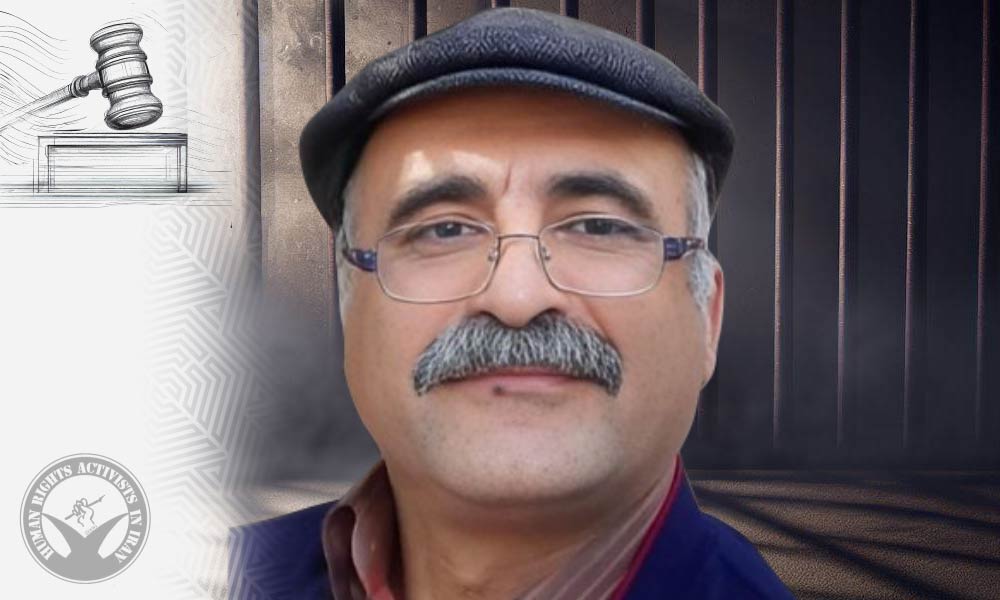
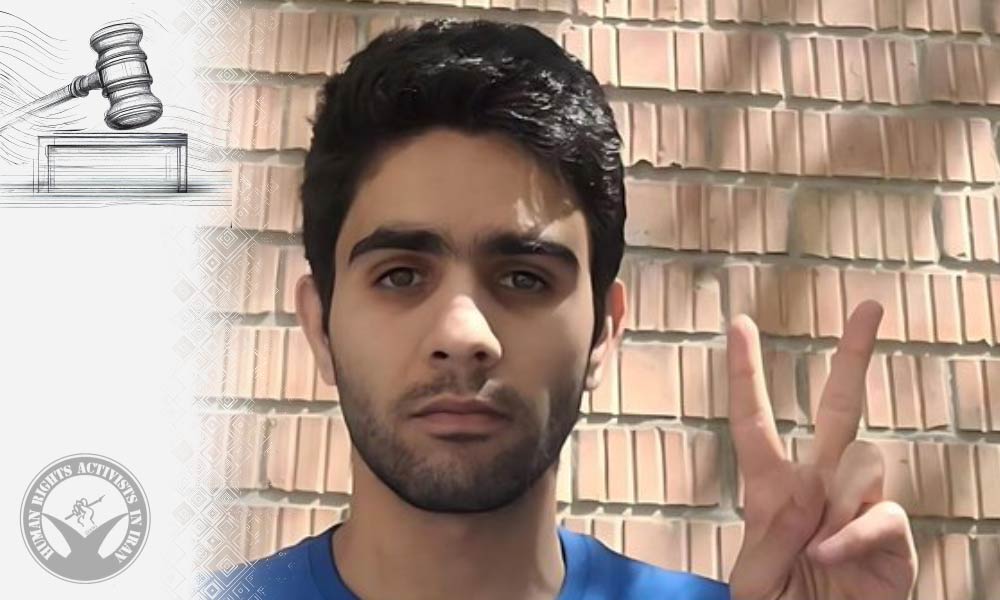
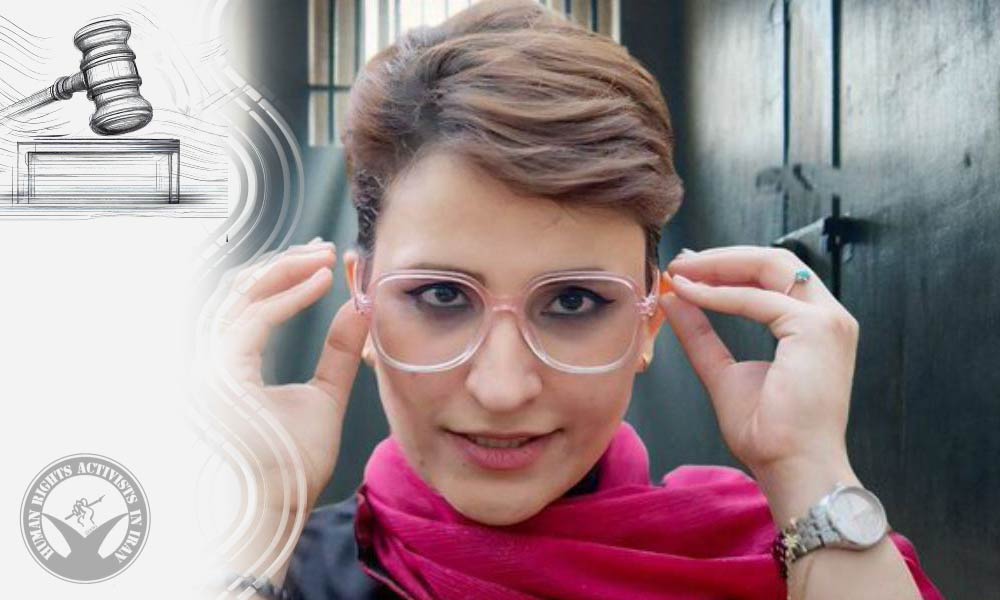
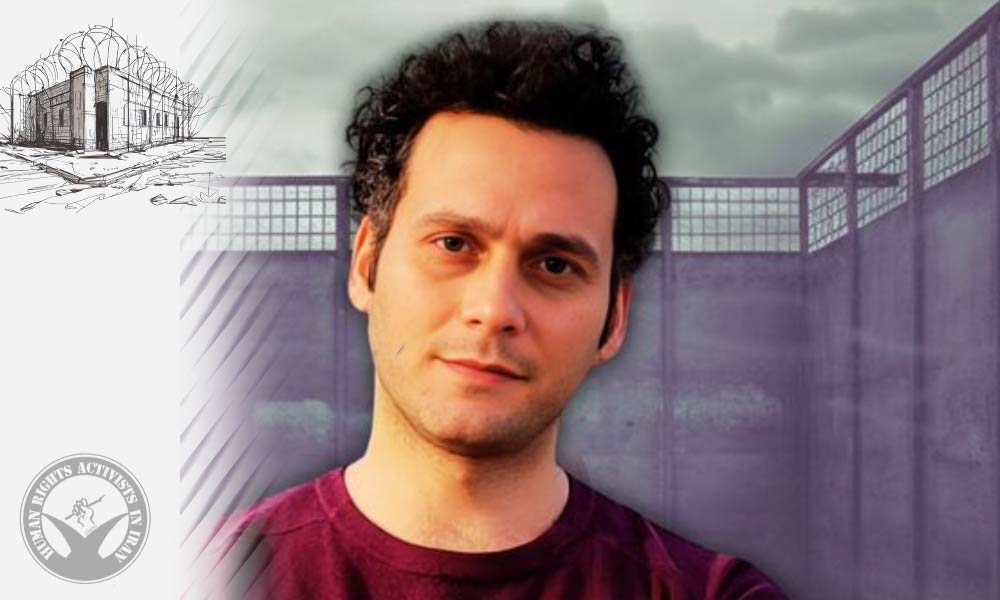
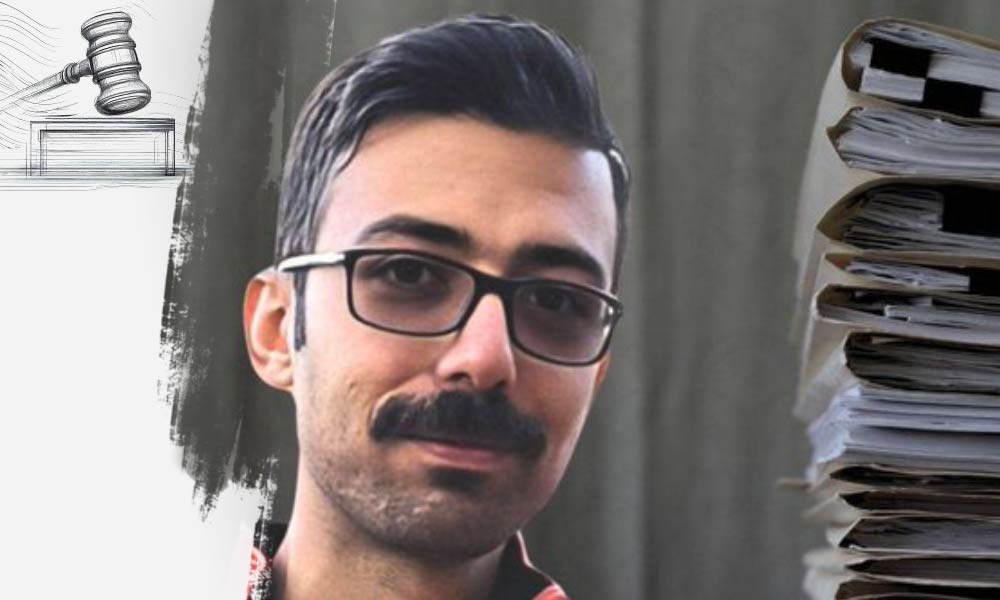
Journalist Hadi Kasaie Zadeh Arrested

Hadi Kasaie Zadeh, a journalist, has been arrested by security forces and transferred to an unknown location, as reported by Didban Iran.

The report does not specify the security institution responsible for Kasaie Zadeh’s arrest, the place of detention, or the charges against this journalist.

In May of this year, Kasaie Zadeh was charged with “publishing details about the death of Nika Shakarami.” at the Evin Prosecutor’s Office in Tehran.

Additionally, in another case, this journalist was sentenced to three months in prison by Branch 2 of the Tehran Criminal Court for the charge of “disseminating false information.” The sentence has been suspended for two years. According to information received by HRANA, this conviction was related to the publication of material concerning the judicial case of Reza Saghafi, the former head of the Gilan Department of Culture and Islamic Guidance.

Hadi Kasaie Zadeh Mahabadi has a history of judicial confrontations due to his activities as a journalist.

In 2023, the Department of Statistics and Publications of the Human Rights Activists in Iran (HRA) documented 2,380 cases in which citizens, including journalists and civil rights activists, faced legal and security consequences for exercising their freedom of expression and thought. These incidents resulted in the arrest of 3,130 individuals.

Appellate Court Upholds One-Year Sentence for Political Activist Reza Ramezanzadeh

Branch 36 of the Tehran Appellate Court has upheld a one-year prison sentence for Reza Ramezanzadeh.

The sentence was originally imposed by Branch 24 of the Tehran Revolutionary Court, which convicted Ramezanzadeh of “disseminating false information” related to reporting on the conditions of prisoners.

Ramezanzadeh was initially detained in late February 2024 after attending a hearing at the Evin Prosecutor’s Office. He was released on bail three days later.

This incident marks another chapter in Ramezanzadeh’s history of arrests and legal challenges stemming from his political activism.

Vahid Bani-Amerian Charged with “Armed Rebellion”

Political detainee Vahid Bani-Amerian has been indicted on charges of “armed rebellion (Baghi),” which carries the potential for severe penalties, including the death penalty.

Bani-Amerian was arrested in Tehran on December 22, 2023, by security forces. The Public and Revolutionary Court of Tehran has now formally charged him with “armed rebellion” for allegations of his involvement with an anti-regime group. He is additionally accused of “assembly and collusion against national security.”

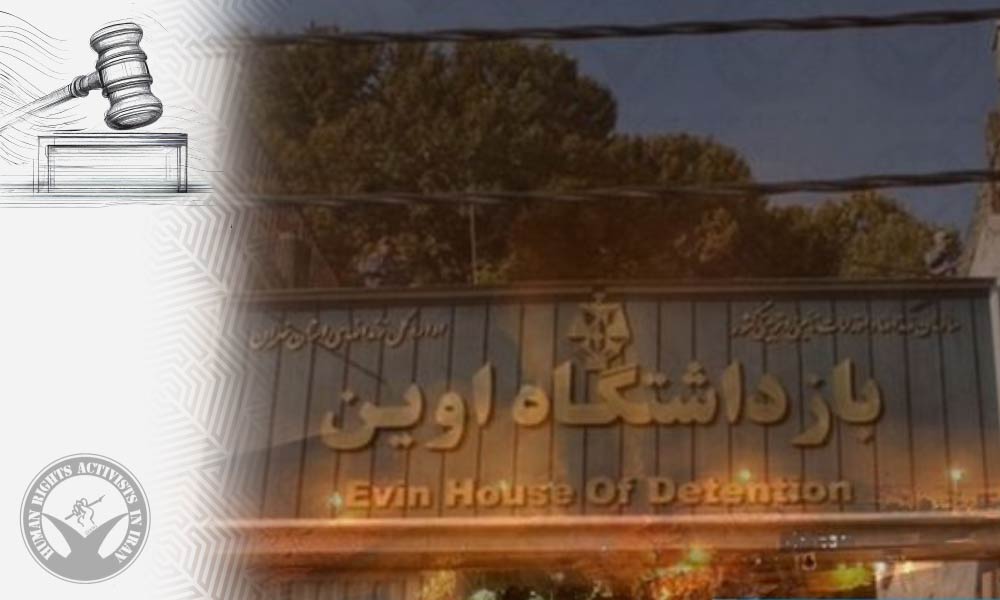
According to reports from HRANA, Bani-Amerian is currently held in Ward 209 of Evin Prison, which the Ministry of Intelligence manages. Since his arrest, he has been denied legal representation.

HRANA sources also report that Bani-Amerian suffers from several health issues, including irritable bowel syndrome, a compromised immune system, and an acute respiratory tract infection. These health concerns have significantly heightened his family’s worries about his health.

Previously, Bani-Amerian was arrested and convicted in Tehran during April-May 2018. The Tehran Revolutionary Court sentenced him to 18 years in prison and exile across two separate cases. However, he was released in March 2023 from Rajai Shahr Prison under a general amnesty.

Siamak Amini Sentenced to Imprisonment on Political Charges

The Revolutionary Court of Tehran has sentenced Siamak Amini to four years and three months in prison, along with a two-year travel ban and additional penalties.

The verdict, issued on May 8, 2024, by Branch 26 of the Tehran Revolutionary Court, sentences 63-year-old Amini to three years and seven months for “assembly and collusion to undermine national security” and eight months for “spreading propaganda against the regime.” The detention period will be subtracted from his prison term. Additionally, Amini is banned from leaving the country, joining civil/political groups, and using smartphones for two years.

His support of the nationwide protests in 2022 on social media and association with anti-regime groups have been cited as the basis for these charges.

If the verdict is upheld on appeal, according to Article 134 of the Islamic Penal Code—which dictates that in cases of multiple charges, the harshest punishment shall be enforced—he will spend three years and seven months in prison.

Confirming Amini’s conviction, a source close to his family informed HRANA that at the beginning of last winter, IRGC intelligence agents raided his residence, conducted a search, and confiscated some of his personal items. He was then interrogated three times and ultimately released on bail of 500 million tomans, approximately $10,000. Amini suffers from an inflammatory disorder known as Behcet’s syndrome, which makes incarceration particularly challenging for him.

Siamak Amini, a resident of Tehran, is married and was previously incarcerated for five years in the 1980s as a political prisoner.

Farahnaz Nik-Khoo Sentenced to Ten Years in Prison

The Revolutionary Court of Tehran sentenced Farahnaz Nik-Khoo to ten years in prison on political charges.

Branch 15 of the Revolutionary Court of Tehran, presided over by Judge Salavati, sentenced Nik-Khoo to ten years for “acting against national security through espionage.”

On December 3, 2022, IRGC Intelligence arrested Nik-Khoo at Tehran airport as she was attempting to leave the country. She was initially detained in Evin Prison, and after seven months, on April 30, 2023, she was moved to the women’s ward of Evin Prison.

The exact nature of the activities leading to these charges remains unclear.

A reliable source previously informed HRANA that Nik-Khoo was transferred to Ward 209 of Evin Prison, which is controlled by the Ministry of Intelligence, and interrogated for two weeks. Meanwhile, the case is under the purview of IRGC intelligence.

Nik-Khoo, 50 years old, is a retired employee of the national telecommunications company.

Subscribe to Our Newsletter

Now is definitely not the time to stop reading!

Azerbaijani-Turk Activist Asghar Faraji’s Health Concerns in Evin Prison

Azerbaijani-Turk activist Asghar Faraji is serving his sentence in Evin Prison and is reportedly suffering from poor health. Despite his medical needs, he has been denied adequate care.

A source close to Faraji’s family informed HRANA that Faraji suffers from severe back pain. His and his family’s repeated requests for treatment at an external clinic have been ignored.

Faraji was arrested by security forces in 2019 and later released on bail, pending further legal proceedings.

Branch 26 of the Revolutionary Court of Tehran initially sentenced Faraji to seven years for “assembly and collusion against national security,” six years for “membership in unlawful anti-regime groups,” three years for “disturbing public opinion,” and one year and four months for “propaganda against the regime,” totaling 17 years and four months imprisonment. Additionally, he was sentenced to a two-year mandatory residence in a village in South Khorasan Province.

However, Branch 36 of the Appellate Court of Tehran later reduced the sentence to five years in prison.

Update on Christian Convert Mina Khajavi in Evin Prison

60-year-old Christian convert Mina Khajavi Ghomi is currently serving her sentence in Evin Prison, where she faces health challenges due to her age and related issues.

A source close to her family told HRANA that Khajavi struggles with her incarceration given her age, suffering from back, knee, and joint pains that make walking difficult. Despite these challenges, she has been denied access to specialized medical care in prison.

Khajavi was arrested by security forces in June 2020 and released on bail the same month.

In June 2022, she was tried alongside other Christian converts in a case overseen by Judge Iman Afshari at Branch 26 of the Revolutionary Court of Tehran. Khajavi was sentenced to six years in prison for “acting against national security through proselytizing Christianity and establishing a home church.”

According to reports obtained by HRANA, Khajavi began her prison term on January 8, 2024, and has spent time in solitary confinement in Ward 209, undergoing interrogations.

Family of Fallahi Faces Eleven-Year Sentence on Political Charges

In a recent verdict from the Tehran Revolutionary Court, Parvin Mirasan and Nasrollah Fallahi, alongside their children, Ardavan and Arghavan, have been collectively sentenced to 11 years in prison on political charges.

Presiding over Branch 26 of the Revolutionary Court in Tehran, Judge Iman Afshari delivered the verdict, condemning Parvin Mirasan and Nasrollah Fallahi to four years each for charges including “assembly and collusion against national security” and “propaganda against the regime.” Meanwhile, Arghavan received a two-year sentence and Ardavan, one year.

According to a source close to the family, Parvin Mirasan and Nasrollah Fallahi are currently held in Evin Prison, while their children, who had previously been released on bail, have already served their terms, factoring in their detention period.

Reports obtained by HRANA indicate that this legal case involves 12 defendants, yet their identities and specifics remain undisclosed.

Ardavan Fallahi was apprehended in Isfahan on November 3, 2022, followed by the arrest of a family member the subsequent day. On February 12, 2023, they were transferred to Evin Prison in Tehran. Ardavan and Arghavan were granted release on bail pending legal proceedings, on January 3, 2024, and March 12, 2024, respectively.

Reports from the Department of Statistics and Publication of HRA in 2023 indicate a total of 193 cases in which Branch 26 of the Tehran Revolutionary Court, presided over by Judge Iman Afshari, has been involved in issuing verdicts that infringe upon the human rights of defendants.

Journalist Dina Ghalibaf Arrested

Dina Ghalibaf, a journalist and student at Shahid Beheshti University, was arrested by security forces on April 16 and transported to an undisclosed facility.

The arrest took place at Ghalibaf’s residence, with the responsible security institution currently unidentified.
However, Ghalibaf revealed on social media yesterday that she had been apprehended by the police at a metro station in Tehran, where she was taken to a room, subjected to electric shocks, and sexually assaulted.

Previously, Ghalibaf had been summoned by the university’s disciplinary committee for her involvement in a protest against the execution of several individuals in the “House of Isfahan” legal case.

Ghalibaf has contributed to various news agencies, including ISNA and Eghtesad Online.

Baha’i Educator Keyvan Rahimian’s Nine-Year Sentence Sustained on Appeal

The Appellate Court of Tehran Province has maintained a nine-year sentence and additional penalties for Baha’i educator Keyvan Rahimian.

In a verdict issued by Branch 36 of the Appellate Court of Tehran Province, presided over by Judge Abbasali Hoozan, Rahimian was sentenced to five years for “educational activities and propagating against the Islamic Sharia” and four years for “assembly and collusion against national security.” Alongside the prison term, Rahimian has been stripped of social rights and fined.

Per Article 134 of the Islamic Penal Code, five years of the prison term will be enforced.

Rahimian was apprehended by security forces in Tehran on July 18, 2023, and subsequently detained in Evin prison. His detention has been extended for four consecutive months, with Rahimian granted leave from November 25 to 29, 2023, to attend his mother’s funeral.

This is not Rahimian’s first encounter with legal repercussions for his activism. In August 2017, he was released from Rajai Shahr Prison after serving a five-year sentence. The current sentence raises concerns about the continued suppression of Baha’i individuals involved in educational and community activities.

Baha’is are subjected to violations of their religious rights, comprising 82% of reports on infringements against religious minorities, according to HRA’s 2023 annual report.

The Baha’i faith is not recognized as a legitimate religion by Iranian authorities, leading to systematic and longstanding violations of the rights of Baha’is in the country. This includes the denial of their fundamental right to practice their religion, which constitutes a clear breach of both Article 18 of the Universal Declaration of Human Rights and Article 18 of the International Covenant on Civil and Political Rights. The United Nations covenant holds that every person has the right to freedom of religion, freedom of converting religion, as well as freedom of expression, individually or collectively; openly or secretly.