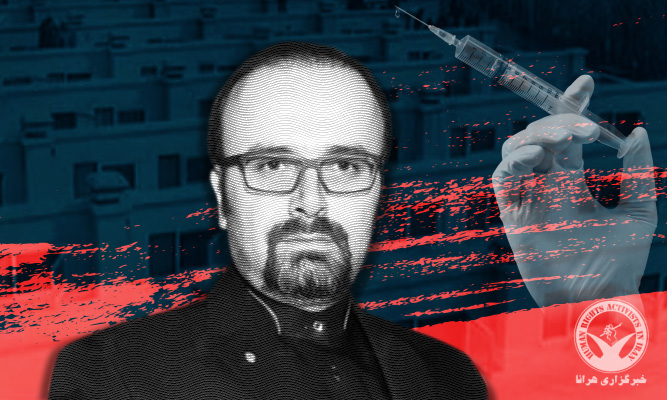
Soheil Arabi and Behnam Moosivand Go on a Hunger Strike in Rajai Shahr Prison

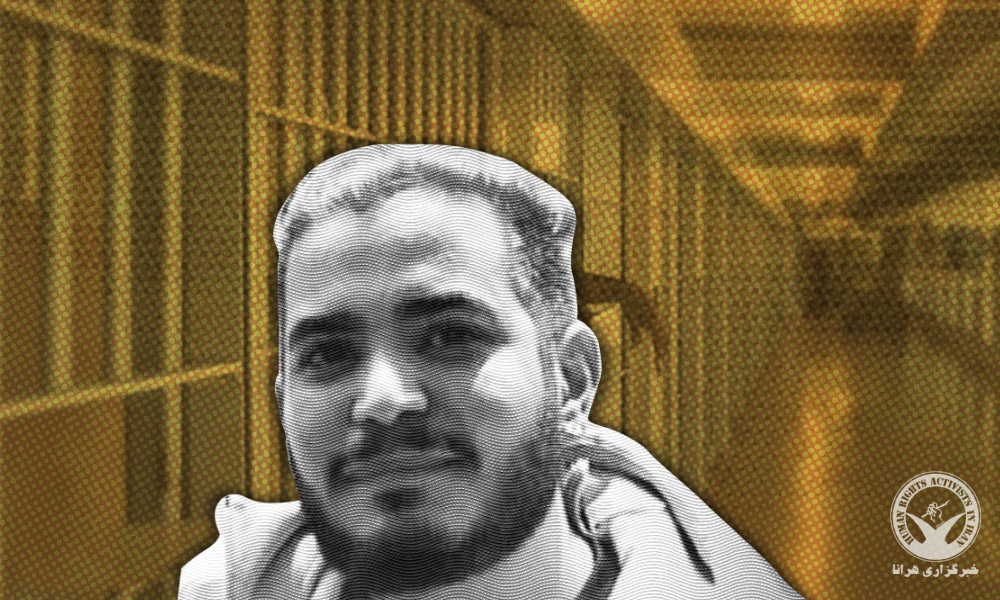
Yesterday, October 19, prisoner of conscience Soheil Arabi and civil activist Behnam Moosivand went on hunger strike in Rajai Shahr Prison.

According to HRANA, the news agency of Human Rights Activists, the political prisoners are protesting their beatings by prison guards and their transfer to the quarantine section of the facility. Rajai Shahr Prison head Allah-Karam Azizi reportedly ordered the beating of the two inmates.

“Allah-Karam Azizi…ordered the executive officer Ghasem Sahraie and other guards to beat them because of their objection against a body search,” an informed source told HRANA. “They were (beaten) and (kicked) to the abdomen and testicles. Due to the injuries, Soheil and Behnam could not go to the court.”

On October 6, the political prisoners refused to appear on the court holding for the unjustified new cases opened against them during their prison term, of which the charges included “disturbing prison order” and “offensive statements against the supreme leader of Iran”.  In response to this refusal, the deputy head of Rajai Shahr Prison Valiollah Muhammadi threatened them with a beating.

Soheil Arabi has been imprisoned without leave since November 7, 2013. While serving out the seven and a half year sentence, Soheil Arabi has been convicted on charges from two new cases.

In the first new case, On May 24, 2021, he was indicted on the charge of “agitation against the regime and Disturbing public opinions” via a video conference by Branch 3 of the Evin Investigation Office.

In the second new case, Soheil Arabi was condemned to 2 years imprisonment, paying a fine, and a ban from leaving the country and once every three times appearance at the Supervision and Follow-up office of Judiciary by Branch 26 of Tehran’s revolutionary court. His court session to address these charges was held on July 28.

On February 1, 2018, the intelligence officials raided Behnam Moosivand’s home and transferred him to the detention facility of the intelligence ministry in Evin Prison, known as section 209. He was released on bail on March 19, 2018.

Thereafter, in September 2019, branch 28 of Tehran’s revolutionary court sentenced him to five years in prison on charges of “assembly and collusion in the purpose of acting against national security”, and to one year on a charge of “agitation against the regime”. The verdict was upheld at appeal. On June 14, 2020, he appeared at the executive branch of Evin Prison to serve his six year sentence.


New Details Emerge on Inhumane Treatment of Lawyer and Human Rights Activist Payam Derafshan

Saeed Dehghan has revealed more details about the arrest of his colleague, lawyer and human rights activist Payam Derafshan.

According to HRANA, the news agency of Human Rights Activists, Dehghan claims in a note on his personal social media page that on June 7, 2020, 17 security agents raided Derafshan’s office and arrested him.

The post says, the agents took him to a so-called safe house and then, from there, to a solitary confinement cell in detention center No 2A. There they injected him with an unknown drug causing seizure and subsequent hospitalization.

“Not just a human rights activist, (Derafshan) was the secretary of the commission for the Protection of Lawyers, which is devoted to protects the lawyers who face security and judicial issues,” Derafshan’s note reads. “On June 7, 2020, 17 security forces raided his office, inspected the office and confiscated his personal computer and other documents…From the very time of arrest through the interrogation process, the interrogators of IRGC’s intelligence unit wanted to find out why he accepted Kavous Seyed-Emami’s case…They transferred him with a blindfold to a safe house rather than a detention centre. In addition to denying access to a phone call and informing his family and lawyer, his confinement in a dark cell without any windows in summertime put the maximum mental and corporeal pressure on him. Thereafter, they transferred him to detention centre No 2A, which is at the disposal of IRGC.  Being held in a cell with always-on-bright lamps, noisy ventilation and stinky toilet and long interrogation were making sleeping hard for him.”

When Mr. Derafshan complained about this situation, he was reportedly threatened with an electric shocker and then taken to prison healthcare where he was injected with an unknown drug. This injection caused a seizure, tongue biting and subsequent fainting and internal bleeding.

According to the note, they transferred him to the hospital the following day for surgery on his tongue. Thereafter, they extended the detention period and sent him back to the public ward of Evin Prison without providing any medical treatment for recovery time after surgery. When he got seizures again, they hospitalized him in a psychiatric hospital where he received electric shocks, which not only exacerbated his seizure problem, but also caused brain damage and consciousness disorders.

On July 6, 2020,  the Branch 26 of Tehran Revolutionary Court, headed by Judge Iman Afshari sentenced Payam Derafshan to two years and six months imprisonment on the charge of “the propaganda against the regime, spreading lies and disturbing public opinions and carrying illegal shocker and sprays”. He was exonerated on the charge of “assembly and collusion against national security”. The verdict was upheld on appeal but reduced to two years grounded on the applicability of “Punishment Reduction Law”.  After issuing the sentence, he was sent on furlough and after serving one-third of his term, he was released on probation to complete the treatment process.

In a previous case, Branch 1 of Karaj Revolutionary Court had sentenced him to two years imprisonment and two years occupational deprivation as a lawyer on the charge of “offensive statements against the supreme leader of Iran”. The imprisonment was reduced to one year on appeal. The conviction was held in suspension. It is unknown whether, after the last final conviction, this previous conviction will come out of suspension.

Payam Derafshan has been the lawyer of many political prisoners and prisoners of conscience such as Muhammad Najafi, Vida Movahed, Nasrin Sotoudeh,  Kavous Seyed-Emami’s family, Fatemeh Khishavand, Sekineh Parvaneh and a number of arrestees in the nationwide protests of November 2019.

HRANA Recap: This Week’s Protests in Iran

According to HRANA, the news agency of Human Rights Activists, a number of protests took place this week in Iran, many of which were continuations of ongoing movements.  Read our recap below for details, photos, and videos from the demonstrations.


Saturday, October 9

In Rameshk city, in Sistan and Baluchestan Province, a number of citizens assembled in front of a copper mining company called “Rameshk” to protest the company’s confiscation of their pieces of land without providing compensation.

Sunday, October 10

On the thirteen day of their strike, Haft-Tappeh’s workers assembled in front of the governorate building in Shush city and then marched in the streets. They chanted “this
revolutionary government has just empty slogans”.

These workers demand paying delayed wages, immediate returning the company from the private sector to state section, returning fired workers to work, extending the contracts of both seasonal workers and workers of the pest control department, carrying out repair operations.

A group of depositors of Caspian, a finance and credit institution, assembled in front of the building of the Central Bank in Tehran to protest against the sham investment scheme of the institution and ask for the return on their investment.

A number of retirees of the pension fund of steel corporation Fulad assembled in front of the company’s buildings in Isfahan and Khuzestan. They asked for levelling up their pension in proportion with the poverty line, enjoying adequate benefits and the supplementary insurance as set by the by-laws of this corporation.


Monday, October 11

For the second consecutive day, a number of workers of Jovein cement company in Mashhad assembled at company premises to ask for implementing Job Classification Plan and holding the employers to his promises.

A group of poultry farm workers assembled in front of the Governor’s office in Shahrekord city in Chaharmahal and Bakhtiari Province. They protested against the high costs of feeding and chicks for incubators in comparison to the low chicken prices.

On the fourteenth consecutive day, Haft-Tappeh workers assembled in front of the governorate building in Shush city and then marched in the streets.

The contracted workers the company SAAPEC in Asaluyeh went on strike and assembled in company premises in protest against two-months unpaid wages.

For the second consecutive day, a number of citizens in Rameshk city, in Sistan and Baluchestan Province, assembled in front of a copper mining company Rameshk. Reportedly, to build a copper mine site, this company has confiscated their pieces of land without paying any compensation.

Tuesday, October 12

The workers of Abnieh Fanni, a railway company in the Azerbaijan zone, which are working on rail lines of counties Salmas, Jolfa, Azarshahr, Marand and Ajabshir, went on strike in protest against the two-month delay in payment and employer’s contribution in the health insurance. According to these workers, their problems began when the project was outsourced to private-sector companies.

On the fifteenth consecutive day of the strike, workers of Haft-Tappeh Company assembled at their workplace. These worker demands, among other things, paying delayed wages, immediate returning the company from the private sector to state section, returning fired workers to work, extending the contracts of both seasonal workers and workers of the pest control department, Carrying out repair operations.

The workers of the Isfahan municipality assembled to ask for levelling up wages and other demands in front of the municipality headquarter.

In front of the building of the Tehran Planning and Budget Organization, a number of last-year-retired teachers protested unpaid pension income.

Wednesday, October 13

A number of school service personnel working for the Ministry of Education of Qom assembled in the premises of the Ministry of education’s building. They protested low wages,forced and unpaid overworking, cutting off work uniform quota and the lack of promotion and other job-related improvements for those who have obtained the university degree

On the sixteenth day of their strike, Haft-Tappeh’s workers assembled in front of Labor office in Shush city.

A number of contractual teachers assembled in front of the Provincial Government building in Shahrekord in Chaharmahal and Bakhtiari Province. These teachers protested against the lack of job security and low wages in comparison to teachers who are hired by the ministry of education. They demanded to come under contract with the ministry of education.

Thursday, October 14

In response to the call of the Coordinating Council of Iranian teacher Unions, working and retired teachers and educators in at least 40 cities assembled to ask for their demands.

A number of workers of the municipality in Khorramshahr city assembled to ask for six
months unpaid wages.

The workers of private companies which are working as contractors on coal mines in Kerman assembled in front of the Provincial Government building. They asked for implementing the Job Classification plan and other demands.

The retirees of Gilan Ministry of Health assembled in the premises of the University of Medical Sciences in Rasht to ask for closing pension gap and other demands.

On the Seventeenth day of their strike, the workers of Haft-Tappeh Company assembled at their workplace.

Political Prisoner Arezoo Ghasemi Released on Leave from Evin Prison

On Wednesday, October 14, political prisoner Arezoo Ghasemi was released on furlough from Evin Prison in Tehran.

According to HRANA, the news agency of Human Rights Activists, Ghasemi has been enduring her one and a half year prison sentence since August 9, 2020. On July 20 of this year, after testing positive for COVID-19, she was also granted furlough.

Arezoo Ghasemi was arrested by security forces amid nationwide protests in November 2019. She was released on bail until August 9, 2020, when she was sent to Evin Prison to serve her sentence.

The Branch 28 of the revolutionary court, headed by Judge Mohammad Moghayeseh sentenced her to three years imprisonment on a charge of “assembly and collusion against national security”. This sentence was subsequently reduced to one and a half years after applying the “Punishment Reduction Law”.

During the wave of protests of November 2019 in dozens of cities, which broke out initially in protest of an unprecedented fuel price surge, hundreds were killed and seven thousand were arrested by regime forces.

Since Ghasemi will have served out her term by the end of the furlough, she will not return to prison.

Judiciary Announced Shahin Naseri’s Cause of Death as “Drug Poisoning”

In a recent news conference,  Judiciary spokesperson Zabihollah Khodaeyan claimed the Shahin Naseri’s death in prison was caused by ” drug poisoning”, without providing any details.

According to HRANA, the news agency of Human Rights Activists, quoting IRNA, Shahin Naseri was an eyewitness to the torture of Navid Afkari. On September 21, 2021, he went to Prison healthcare of the Greater Tehran Prison for treatment, where he died mysteriously after 45 minutes.

“In the previous meeting, we said that forensic results have not yet been announced, ” Khodaeyan said in regard to Naseri’s death, “but recently forensic has detected drug poisoning as the cause of death.”

According to fellow inmates and friends close to Shahin Naseri, who had talked to him before his death, he did not express any depressive symptoms or any intention to commit suicide. Rather, he was concerned about his life and health due to the threats he had received in solitary confinement.

After testifying about the torture of Navid Afkari, he was exiled to the Greater Tehran Prison where he was held in solitary confinement for a while.

Two days after Shahin Naseri’s death, Public Relations of Tehran Prisons General Administration said in a statement,  “The inmate was urgently transferred to Prison healthcare, where he was under the resuscitation operation for 45 minutes, but despite the efforts of the medical staff, he died.”

In a voice message recorded before the death of Navid Afkari, Shahin Naseri reveals a part of tortures his fellow inmate has gone through.

“One day when they were taking me to the police station in Shiraz, in the corridor, I heard screams, begging and obscenities,” Naseri says in the recording.  “When I passed along the torture place, I saw that two undercover cops were beating on his face with batons.”

An informed source close to his family told HRANA that in coincide with the anniversary of Navid Afkari’s execution, they relocated him to an unknown location. Based on threats he had received from security forces, we thought he was transferred to a location of a security unit. But a few days ago, we found out that he was held somewhere in the Greater Tehran Prison. Since he did not have any acute background diseases, his death is quite suspicious.

“I heard clearly that they told him that you should write down and confess whatever we tell you,” Naseri added in the recorded message. “When I went to Security Court for testifying, I told the Branch Investigator about his torture. He said with slanderous words that ‘you are meddling in a security case. I will force the agents to file a complaint against you for these accusations. If you play with fire you are going to get burnt.'”

Navid Afkari was an Iranian wrestler who, despite serious ambiguities in his case and worldwide outcry to halt the execution, was executed on September 13, 2019, in Adelabad Prison in Shiraz.

Subscribe to Our Newsletter

Now is definitely not the time to stop reading!

Civil Activist Sepideh Gholiyan Arrested by Security Forces in Ahvaz

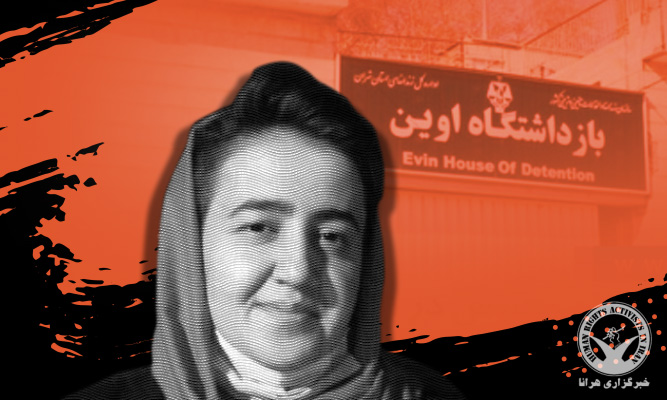
Civil activist Sepideh Gholiyan, who has been on leave from Bushehr Prison since August 19, was recently arrested by security forces in Ahvaz from her sister’s home to serve the rest of her sentence.

According to HRANA, the news agency of Human Rights Activists, security police confiscated the cell phones of all family members during the arrest.

Confirming Gholiyan’s arrest, an informed source told HRANA, “Thirty male and female security forces entered her sister’s home, arrested Mrs. Gholiyan, and confiscated the cell phones of all family members.”

Before this arrest, on her personal page on social media, Gholiyan had informed that she had been summoned to Bushehr prison and commented “Ten days ago, they called me from Bushehr Prison that I have to return to there. I told them that I am supposed to go to Tehran where the Executive Branch of the Department of Justice would decide to which prison I had to be sent. Seemingly, they are searching to find somewhere worse than Bushehr Prison.”

On November 18, 2018, Sepideh Gholiyan was arrested along with at least 19 others, including members of the Assembly of Representatives of Haft-Tappeh’s workers, several workers’ activists and company personnel and managers by security police of NAJA in Shush city. She was released on bail on December 18, 2018.
After broadcasting her forced confession as well as some other workers’ activists, including Ismail-Bakhshi on national TV channel, they announced that the “confessions” were extracted under torture by security forces. Soon after this announcement, the security police arrested them.

On October 26, 2019, she was released on bail until the end of legal proceedings. On December 14, 2019, she was sentenced to 5 years imprisonment by Tehran appellate court.

On June 21, 2020, she began serving her prison term in Evin prison. On March 10, 2021, she was exiled to Bushehr Prison, where she was held until being granted leave, and to where she is now being transferred back.

HRANA Recap: This Week’s Protests in Iran

According to HRANA, the news agency of Human Rights Activists, a number of protests took place this week in Iran, many of which were continuations of ongoing movements.  Read our recap below for details, photos, and videos from the demonstrations.


Saturday, October 2

This Saturday and Sunday, a group of environmental activists of Sanandaj in the vicinity of Vahdat Dam gathered to protest against the years-long negligence from local authorities in addressing the area’s unsafe drinking water. Because of the city water is contaminated, residents are forced to carry water from the springs surrounding the city.

Sunday, October 3

Employees of coal mining company Pabdana in Kerman Province assembled this Sunday at their workplace entrance gate and protested the company’s low wages, arguing that, compared to state-owned mining companies, private companies such as Pabdana pay employees less for longer hours.

About 400 drivers of the transport unit of South Zagros Oil and Gas Production Company, for a second consecutive day, assembled to protest the company’s decision to change their contracts. The new agreements are set up so that that workers will  be employed by a contractor rather than the company, meaning lower wages and fewer benefits.

In Bandar Imam Khomeini, a number of workers working for subsidiary companies of Persian Gulf Holding in the petrochemical special zone assembled to protest against wage discrimination. They asked for a direct contract with the company rather than contractors who enforce lower wages and harder work.

The retirees of the Social Security Organization assembled in front of this organization’s buildings in cities of Ahvaz, Rasht, Kermanshah, KHORAM-Abad, Tehran, Mashhad, Tabriz, and Qazvin, to ask for their demands. Their demands included levelling up pensions in proportion with the poverty line, enforcing the equating wages act, enforcing Article 96 of Social Security Act, addressing the issues regarding supplementary insurance, receiving end-of-year bonuses and taking work records in difficult-dirty-and-dangerous jobs into pension calculations.

A number of teachers and educators protested in front of the Parliament building in Tehran and the Ministry of Education’s buildings in the cities of Ahvaz, Shiraz, Zanjan, Darab, Bandar-Abbas and Isfahan. They asked for better enforcement of the Equating Wages Act for retirees and the Ranking Plan Act.

Personnel of the Municipality of Khorramshahr assembled in front of the government building to protest against a 6-month payment delay and a 10-month-unpaid insurance premium.

Retirees of the steel company Fulad protested in front of the company’s headquarters in Isfahan and Khuzestan provinces. They asked for levelling up their pension in proportion with the poverty line and enforcing the Equating Wages Act and addressing the problems of supplementary insurance.

A number of Haft-Tappeh’s workers continued to protest on the sixth day of their strike.

Monday, October 4

A number of students and alumni of pharmacology assembled in front of the building of the Ministry of Health and Medical Education in Tehran to protest against the monopoly on establishing pharmacies. They asked for the acceleration in enforcing the new regulations thereby the establishment of pharmacies in deprived areas would be facilitated.

On the seventh day, the workers of Haft-Tappeh company went out on strike. They assembled in front of the governorate building in Shush city.

Several workers for private coal mining companies in Kuhbanan county went on strike for the sixth consecutive day at their place of work. The workers said that, despite higher productivity and better quality of coal, they have been paid 4 to 5 million tomans less than workers of state-owned companies. Reportedly, in Kuhbanan County, more than 3000 workers are working for these private coal mining companies.

A group of personnel of social emergency workers of state welfare organization assembled in front of the parliament in Tehran and demanded changing work contract party from private to state section as well as the approval of the social emergency bill by parliament.

A group of retirees and working personnel of airline company Homa assembled in front of the building of Planning and Budget Organization. The retirees said that, despite promises from their supervisors, pensionsv for last month have not  been paid.

Tuesday, October 4

On the eighth day of their strike, Haft-Tappeh’s workers assembled in front of the governorate building in Shush city and then marched through the streets.

More than 500 workers of private companies, who are working on copper mining Sungun Varzaghan, assembled and went out on strike against low wages and hard work conditions.

Workers of the petrochemical special zone, including Persian Gulf Holding, assembled and demanded equal wage for equal work according to article 38 of Iran’s labour code and ILO Convention No. 100.

Wednesday, October 5

In response to recent violence against women (such as Faezeh Maleki-Nia who was burned to death by her father) and the negligence of the police and judiciary to prosecute and punish the offenders, a group of civil activists assembled in front of the Building of the Ministry of Justice in Sanandaj.

On the ninth day of the strike, in Shush city, Haft-Tappeh workers assemble again in front of the governorate building and then marched toward the building of the ministry of the judiciary.

For the second day, workers of private companies working on copper mining Sungun Varzaghan, refused to work and assembled at their workplace. These workers had spent last night in their tents in the same place of assembly.


Thursday, October 6

Following the protest of women in Sanandaj on previous day, several women protested in Marivan and asked that the case of Faezeh Maleki-Nia (who was burned by her father) be addressed, and called for an end to violence against women.

In Khorramshahr, a number of citizens assembled to protest against negligence and shortcomings of the municipality in collecting garbage. As a demonstration of protest, they piled up garbage bags in front of the municipality building.

In their tenth days of strike, Haft-Tappeh workers continued to protest in front of the governorate building in Shush.

A number of workers of Non-Industrial Operations Company Pazargad in Pardis Jam Town went out on strike at the workplace.


Khosro Sadeghi Boroujeni Being Denied Medical Treatment in Evin Prison

Imprisoned writer and journalist Khosro Sadeghi Boroujeni has been denied access to medical treatment by prison authorities despite his poor health condition.

According to HRANA, the news agency of Human Rights Activists, Boroujeni is currently enduring a five-year sentence in Evin Prison in Tehran.

“It is been over a month that he (has been) experiencing a poor health condition,” an informed source told HRANA. “He went several times to prison healthcare (for treatment), but he has not received any adequate treatment despite having body aches, insomnia, dizziness and nausea.”

Khosro Sadeghi Boroujeni was arrested and interrogated after being summoned to the Branch 2 of Evin’s prosecutor’s office on May 8, 2019. He was later temporarily released from Evin Prison on a bail of 300 million tomans.

Boroujeni’s trial was on July 28, 2019. According to the verdict ordered by the Branch 28 of the Revolutionary Court of Tehran, which was presided over by judge Mohammad Moghiseh, Boroujeni was sentenced to five years imprisonment on a charge of “assembly and collusion with an intention to commit a crime against the national security”, one year of prison for the charge of “propaganda against the regime”,  and to two years imprisonment on a charge of “insulting the founder of the Islamic Republic”, adding up to a total of eight years imprisonment. This sentence was later reduced to seven years after the charge of “propaganda against the regime” was dropped upon appeal.

Boroujeni has been conducting research on neoliberalism and the political economy of Iran and has written several articles on these subjects in recent years. His essay “Critique of Neoliberalism” was published by H&S Media Publishing Company in the UK. His other book “Globalization and Inequality” was published by Porsesh Publishing Company in 2011.

Mojgan Keshavarz Granted Leave on Bail from Qarchak Prison in Varamin

On Wednesday, October 6, civil activist Mojgan Keshavarz was granted a five-day leave on bail from prison.

According to HRANA, the news agency of Human Rights Activists, Keshavarz is serving out her five-and-a-half-year prison sentence in Qarchak Prison in Varamin.

On April 25, 2019, intelligence forces raided Keshavarz’s home and arrested her. She was under interrogation in the detention facility of the intelligence unit of the Revolutionary Guards, known as the 2A section of Evin Prison, until May 1, and then transferred to Qarchak Prison in Varamin. She was relocated to Evin prison on August 12, 2020, and sent back again to Qarchak Prison on December 5, 2020.

Branch 28 of the revolutionary court in Tehran sentenced the civil activist to a total of 22 years in prison. She received 5 years on a charge of “assembly and collusion in the purpose of acting against national security”, 10 years on a charge of “provoking and provision of impurity and indecency”, and 7 years and six months on a charge of ” blasphemy”.  Later the sentence was reduced to 12 years and 7 months on appeal.

According to Article 134 of the Islamic Penal Code, the severest enforceable punishment for the charge of ” provoking and provision of impurity and indecency ” is five and half years imprisonment.

Mojgan Keshavarz is 38 years old and a mother of a ten-year-old daughter.

Journalists at Tehran-Municipality-Owned Newspaper Asked Probing Personal Questions by New Management

Following turnover in the Tehran-Municipality-owned Hamshahri newspaper’s managerial board, the extension of staff members’ contracts is being influenced by answers they give to a set of probing personal questions about their lifestyle and beliefs.

According to HRANA, the news agency of Human Rights Activists, quoting Fararu, employees are being asked questions such as “Why haven’t you married?” and “Why didn’t you vote in the election?”.

“It seems to be very serious,” journalist Mohsen Zohuri, commented. “They held an inquisition meeting for the journalists of Hamshahri and asked the question like ‘Why don’t you go to Congregational prayer?’, ‘Did you vote on such and such election?’, ‘How many chapters of Quran have you memorized?’, “Why did you get divorced?’ or ‘Why haven’t you married?’ ”

Changes in management in Tehran Municipality led to the appointment of a new director at Hamshahri newspaper. The new director has reportedly spearheaded this new procedure for extending contracts, and it is being applied to even the publication’s most tenured reporters.

“The new management in Hamshahri newspaper has set an inquisition meeting for its well-experienced and professional journalists,” a member of the Board of Directors of the Journalists’ Guild Association wrote on his personal page on social media. “They have to answer the irrelevant questions which means nothing but spying on personal lives and has nothing whatsoever to do with their occupation. I hope someone comes forward to explain that.”