Appeals Court Upholds 15-Year Prison Sentence for Rezgar Beigzadeh Babamiri

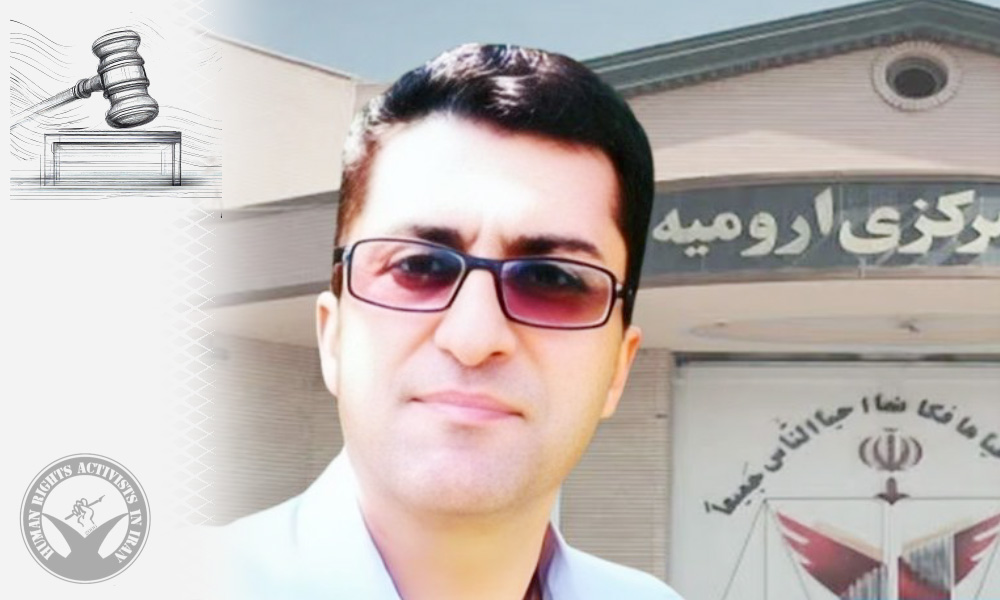
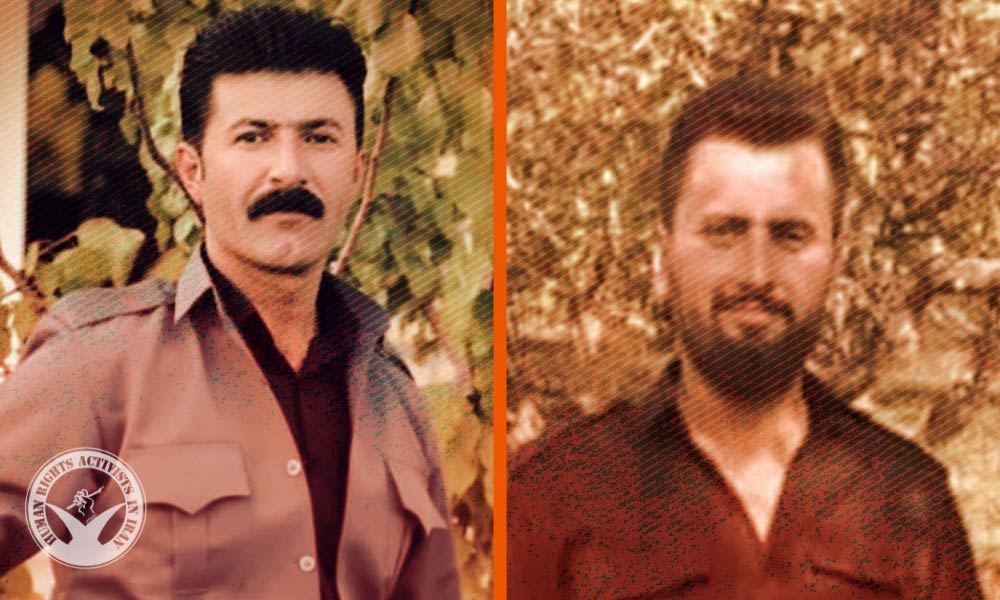
HRANA News Agency – The 15-year prison sentence for Rezgar Beigzadeh Babamiri, one of those arrested during the 2022 nationwide protests in Bukan, has been upheld in full by the West Azerbaijan Appeals Court.

Zhino Beigzadeh Babamiri, daughter of the political prisoner, announced in a post that her father’s 15-year sentence was fully upheld by the West Azerbaijan Appeals Court. She added that the ruling was recently delivered to Mr. Babamiri in prison by the Urmia Judiciary’s Sentence Enforcement Branch.

Previously, the Criminal Court Branch One of Urmia had sentenced Mr. Babamiri to 15 years in prison for alleged involvement in a murder during the 2022 nationwide protests.

In addition to this case, Mr. Babamiri is also facing other charges, including baghi (armed rebellion), in a separate case currently under review at the Urmia Revolutionary Court.

Rezgar Beigzadeh Babamiri, a farmer residing in Bukan, was arrested in April 2023 in connection with the 2022 protests.

Between late 2019 and the end of 2024, the number of arrests made by Iran’s security forces for peaceful expression nearly doubled compared to the preceding five-year period (2015–2019), reflecting an intensifying pattern of repression following major protest movements.

Human Trafficking in Iran: Exploitation Through Air, Land, and Sea

HRANA News Agency –Iran’s geographic position makes it a key hub for human trafficking, with victims transported through land, sea, and air routes for forced labor, sexual exploitation, and other abuses. Despite legal frameworks, systemic failures—including lack of transparency, weak enforcement, and reliance on the death penalty—raise serious concerns about the government’s response. This report examines Iran’s trafficking routes, vulnerable populations, and the state’s flawed approach to combating this crisis.

Trafficking in Persons or Human trafficking is the illegal transportation, transfer, or harboring of individuals for exploitation. This exploitation can take various forms, including forced labor, slavery, sexual exploitation, child soldiering, and more. Human Trafficking is a crime and a severe human rights violation. Traffickers employ force, fraud, and coercion as primary mechanisms to exploit individuals. This force includes acts of physical violence, such as assault, confinement, or drugging to incapacitate victims, effectively stripping them of autonomy. Fraud involves deceptive practices, including false promises of employment, improved living conditions, or fraudulent documentation to manipulate victims. Coercion encompasses both physical and psychological tactics, such as threats of violence, blackmail, or intimidation, including threats of deportation or harm to loved ones. These methods underscore the complex and systematic nature of exploitation in human trafficking.

Geographic Crossroads

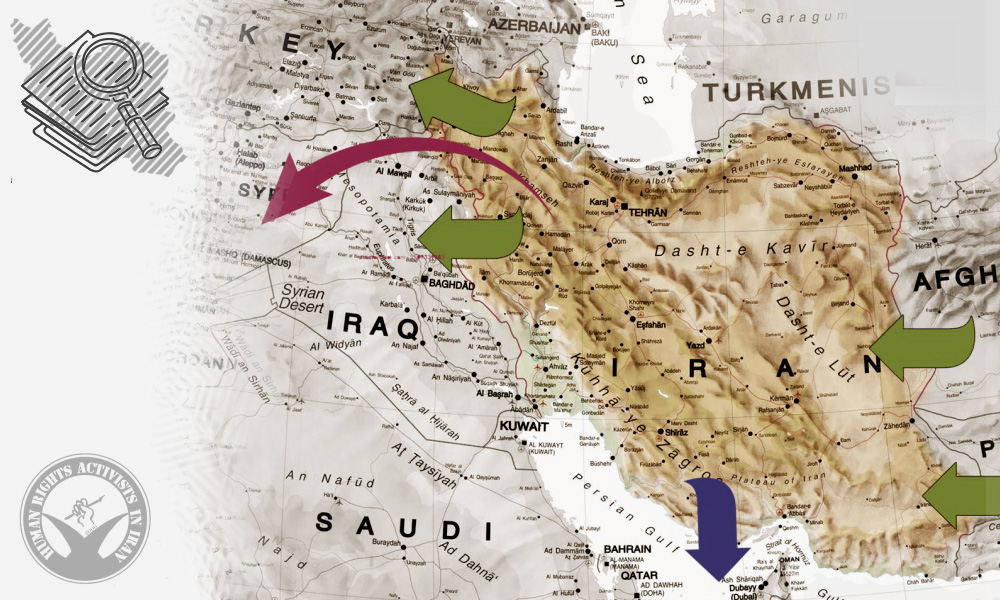
Situated at the crossroads of Asia, Europe, and the Middle East, Iran serves as a source, destination, and transit hub for human trafficking. Human traffickers exploit Iran’s land, air, and sea routes, operating at nearly every border to facilitate the movement of victims across the country and beyond.

This widespread exploitation is driven by a combination of social, economic, and geographical factors, with traffickers taking advantage of weak border controls, corruption, and gaps in enforcement.

Iran’s southeastern border, particularly in Sistan and Baluchestan Province, serves as a major transit corridor for traffickers. Its shared borders with Pakistan and Afghanistan facilitate the movement of trafficking victims, many of whom are transported to Persian Gulf countries. The region’s rugged terrain and inadequate border enforcement make it a preferred route for smugglers and traffickers seeking to evade detection.

Southern Iran, including key port cities such as Bandar Abbas, Bushehr, and Chabahar, is another critical trafficking hub. These ports serve as primary exit points for victims trafficked to Gulf states such as the United Arab Emirates and Qatar, where they are subjected to forced labor and sexual exploitation. The use of small vessels and maritime routes allows traffickers to circumvent legal monitoring.  One survivor, now residing in Dubai, shared her experience with HRA. She described being trafficked along with several other women and girls on an old wooden dhow under the guise of cargo transport from the port of Jask to Dubai. Upon arrival, she was provided with forged documents and forced into prostitution.

In western Iran, provinces such as Kurdistan, West Azerbaijan, and Khuzestan serve as key routes for traffickers moving victims into Turkey and, ultimately, Europe. Many of these victims are forced into labor or other forms of exploitation. The strategic significance of the Iranian-Turkish border, a major gateway to Europe, has made it a focal point for trafficking operations, posing ongoing security and humanitarian challenges.

Northern Iran, particularly its borders with Azerbaijan and Turkmenistan, is also exploited for trafficking networks. Victims transported through these routes are often funneled into the Caucasus and Russia for sexual exploitation or other illicit activities. Additionally, the Caspian Sea functions as a maritime trafficking route, further complicating efforts to combat these crimes.

Beyond conventional trafficking routes, Iran has also been implicated in the trafficking of children for military purposes. Afghan children recruited by the Islamic Revolutionary Guard Corps (IRGC) have been trafficked via air routes—including on now-sanctioned airlines Mehr Air and Iran Air—from Iran to Syria to serve as combatants. This practice constitutes not only a severe human rights violation but also a war crime and a crime against humanity under international law.

Despite the enactment of multiple domestic laws aimed at combating trafficking, Iran’s failure to ensure transparency and victim-centered accountability mechanisms raises serious concerns about the state’s commitment to protecting vulnerable populations. The judiciary’s lack of independence, coupled with the systemic absence of fully implemented victim protection measures, fosters an environment where victims remain at risk of further exploitation.

Vulnerable Groups

Victims of trafficking come from various vulnerable groups. Women, girls, and children are frequently targeted for sexual exploitation, while undocumented migrants are often forced into labor (employed in the construction, agriculture, and handicraft industries). Afghan migrants are particularly vulnerable to trafficking and sexual exploitation. Migrant children face significant risks, often falling victim to financial and sexual exploitation. These individuals, usually seeking to transit through Iran en route to Europe or other developed countries, become entangled in trafficking networks.

Concerns of Revictimization and a Flawed Reliance on the Death Penalty

The Iranian government and security agencies have taken various measures in recent years to combat human trafficking. Domestic legislation, including the provisions in the Islamic Penal Code, the Anti-Human Trafficking Act, the Law on the Protection of Children and Adolescents, and the Law on Combating Transnational Organized Crime, all address aspects of trafficking.

However, these legal frameworks fall far short of ensuring a transparent, victim-centered approach to justice. The absence of independent oversight, due process, and adequate protections for victims—particularly women, children, foreign nationals, and other vulnerable groups—raises serious concerns about the sincerity and effectiveness of these efforts.

In 2023, Iran claimed to have dismantled 94 trafficking networks and, the year prior, arrested members of 10 human trafficking rings. Yet, authorities failed to provide any meaningful details about the victims, their treatment, or the judicial process that followed.

While high-profile trafficking cases, such as the Alex network—accused of trafficking women for exploitation—led to multiple arrests and the eventual execution of its leader, the reliance on the death penalty only deepens Iran’s systemic human rights crisis. Iran’s continued use of execution sentences in trafficking cases, often following unfair trials, further violates international legal norms and underscores the judiciary’s disregard for fundamental rights.

Additionally, reports indicate the recent dismantling of a 12-member network engaged in forging travel documents to traffic individuals to 25 countries, as well as the detention of 97 individuals linked to a network transporting women to Turkey and Georgia for exploitation. While efforts to dismantle networks are welcome, concerns of revictimization are paramount.

The Iranian government has provided no assurances that victims of trafficking are not subjected to further harm within the judicial system. Instead of being treated as individuals in need of protection and support, victims—particularly women and children—face the risk of criminalization, stigmatization, and retraumatization through coercive legal proceedings or prolonged detention.

Iran must ensure that accountability processes for trafficking are conducted in a transparent and rights-based manner. Yet, the judiciary’s notorious lack of independence and the absence of protection mechanisms for victims suggest that trafficking-related prosecutions serve more as a demonstration of state control rather than a genuine effort to dismantle trafficking networks and safeguard those affected.

The Iranian government has repeatedly failed to provide evidence that women and children targeted by traffickers receive any meaningful protection. Without systemic reforms to ensure victim-centered protections and fair trials, alongside a reliance on the death penalty, Iran’s approach to human trafficking will remain deeply flawed, further endangering those most vulnerable.


Alarming Rise in Casualties Among Border Workers: Over 170 Kolbars and Fuel Carriers Dead or Injured in Two Months

HRANA News Agency reports that from February 20 to April 19, 2024, the number of incidents causing death and injury among cross-border laborers (Kolbar) and fuel carriers (Sukhtbar) has significantly increased.

During this period, at least 15 Kolbars in the border areas of Kermanshah, Kurdistan, and West Azerbaijan provinces, and 9 Sukhtbars in the southeastern border areas of the country, lost their lives. Additionally, 141 Kolbars and 11 Sukhtbars were injured. Indiscriminate military shootings were the leading cause, followed by incidents such as falls from heights, frostbite, and cardiac arrest.

In comparison, the casualty figures from the previous two months totaled 93 (10 dead and 83 injured). This indicates a 90% increase in casualties and injuries among border workers (both Kolbars and Sukhtbars) in the recent two months.

Military shootings caused the deaths of 9 Kolbars and injuries to 115. Additional Kolbar fatalities occurred due to falls from heights (3 deaths), frostbite (2 deaths), and cardiac arrest (1 death). Of the injuries, 17 resulted from falls, 4 from military personnel assaults, and 4 from landmine explosions in the border areas.

In Sistan and Baluchestan province, 9 Baluchi Sukhtbars died from direct gunshot wounds or vehicle overturns due to military shootings. An additional 11 Sukhtbars were injured in similar incidents.

All reported incidents in Kermanshah province occurred in the border areas of Nowsud county, resulting in 98 injured Kolbars and 3 deaths. In Kurdistan province, the border areas of Baneh reported the most Kolbar casualties, with 3 deaths and 22 injuries.

Between March 23 and March 28, 2024, at least 7 Kolbars died, with 5 deaths attributed to military shootings and falls from heights.

On February 24, 2024, military personnel targeted dozens of Kolbars with gunfire at the border. Investigations show that on this day, at least 45 Kolbars were injured by military gunfire.

These figures are collected by HRANA and may underreport the true scope of casualties, as data is likely lacking in some areas.

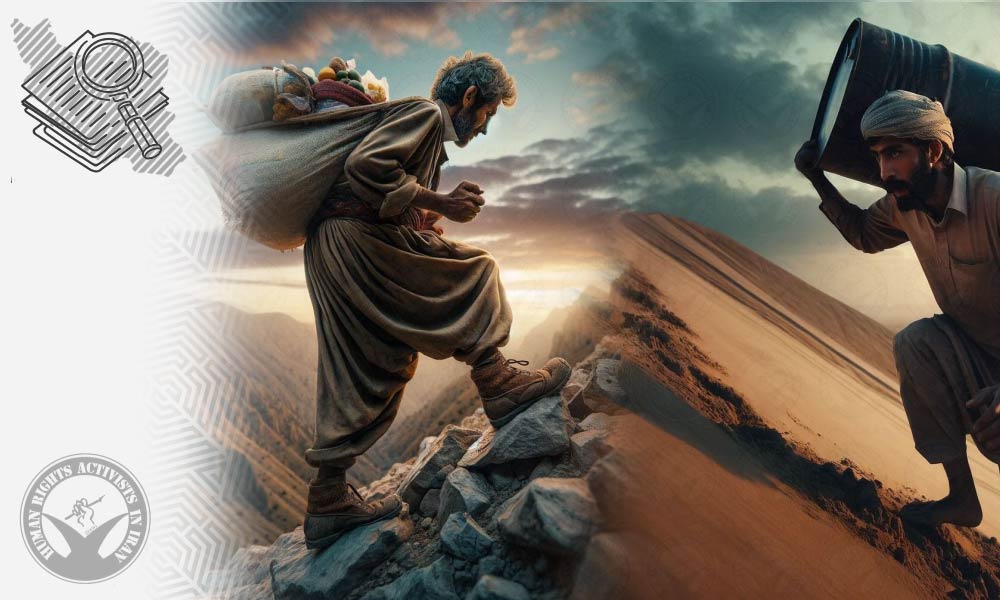
Kolbars, primarily Kurdish citizens residing in impoverished regions, face numerous hazards while carrying heavy loads over long, difficult paths, in addition to facing military forces on both sides of the border. Indiscriminate shootings by border guards remain a significant cause of death and injury among Kolbars.

Meanwhile, in Sistan and Baluchestan province, lack of sufficient income forces many to engage in high-risk fuel carrying, known as Sukhtbari, for family livelihood. This dangerous occupation involves transporting fuel across borders and exposes workers to threats such as military attacks and natural disasters.
In addition to material damages, the killing of pack animals and incidents such as frostbite and avalanches also lurk for cross-border workers.

HRANA’s report on human rights violations in Iran during the 1402 Hijri year provides statistics on citizens killed or injured by Iran’s military forces.

50 Arrested for Encouraging Election Boycott in West Azerbaijan

The Chief of Police in West Azerbaijan has revealed the arrest of 50 social media page administrators in this province for urging people to boycott the upcoming parliamentary election, as reported by IRNA.

Rahim Jahanbakhsh, the Chief of Police, cited charges of “disturbing public opinion and encouraging people to abstain from voting in the election.”

The report has not disclosed the identities of the detainees or the location of their detention.

Faryad Hama-Shour Receives 12-Year Prison Sentence

On May 31, 2023, Faryad Hama-Shour, a resident of Oshnavieh, had his 12-year prison sentence confirmed by the West Azerbaijan Court of Appeals, according to a report by Kurdpa.

Pursuant to Article 134 of the Islamic Penal Code, he will serve a mandatory five-year term.

Initially, on November 10, 2022, the Oshnavieh Criminal Court sentenced Hama-Shour to five years in prison for his alleged involvement in an anti-regime political party. Additionally, he was given a four-year sentence for purportedly assisting in setting fire to a bank in Oshnavieh, and three years for defying authority by using weapons. Presiding over the case, Judge Ali Hassanzadeh upheld this verdict at the West Azerbaijan Court of Appeals.

Hama-Shour was arrested on September 27, 2022, without showing an arrest warrant, by security forces who subsequently detained him in Urmia Prison.


Subscribe to Our Newsletter

Now is definitely not the time to stop reading!

13 People Arrested for Allegedly Espionage

Iran’s Ministry of Intelligence announced the arrest of 13 people accused of “espionage” in Tehran, Isfahan, Yazd, Golestan and West Azerbaijan Provinces.

According to HRANA, the news agency of Human Rights Activists, quoting Mizan Online News Agency, 13 individuals were arrested for allegedly “espionage.”

The Ministry of intelligence claimed that in Tehran, Isfahan, Yazd, Golestan and West Azerbaijan Provinces, 23 individuals working for Mossad (the intelligence agency of Israel) were detected, of which 13 people residing inside the country were apprehended before they could take any action. The Ministry claimed that the “head of this spy network” has been identified as “Sirus,” residing in one of the European Countries. This report did not disclose the detainees’ identities.

Although the prosecution of individuals for espionage is not considered a violation of human rights, there are concerns about the validity of these allegations due to the frequent use of such accusations by Iran’s regime in order to suppress its political dissidents and due to the ambiguities in legal proceedings and the lack of transparency about such legal cases.

Nationwide Protests: 209 People Indicted in Semnan, West Azerbaijan and Kerman Provinces

The Chief Justice of Semnan, West Azerbaijan and Kerman Provinces announced that 89, 95 and 25 protestors were indicted, respectively.

According to HRANA, the news agency of Human Rights Activists, quoting Aftab News, the Chief Justice of Semnan stated that 89 people arrested during the nationwide protests were indicted.

Also, the Chief Justice of West Azerbaijan Province stated that 95 individuals were indicted, and the rest is under review.
 
Moreover, IRNA, quoting the Chief Justice of Kerman, reported the indictment of 25 individuals as ” protest leaders” in Kerman Province.

According to the latest available data gathered by HRANA, over 13800 people have been arrested during the nationwide protests. For more details and statistics on the nationwide protest across Iran, read HRANA’s comprehensive report here.

Several Individuals Arrested for Live Stream Posts by Iran’s Cyber Police

The chief of Iran’s Cyber Police announced that several individuals have been arrested in several cities across the country for what he called inappropriate live videos on social media. He said that the individuals’ mobile phones have been confiscated and they have been indicted by the judicial authorities.

According to HRANA, the news agency of Human Rights Activists, quoting Mehr News Agency, a number of individuals have been arrested by the cyber police in Bushehr, Tehran, West Azerbaijan, Zanjan and Fars provinces.

Without revealing the identities and the number of the individuals who are arrested, Vahid Majid, the chief of Iran’s Cyber Police claimed, “from Bushehr, Tehran, West Azerbaijan, Zanjan and Fars, the members and heads of a gang, who were circulating inappropriate live video posts to promote corruption and money laundering were identified and apprehended.”

Two People Arrested by Security Forces in Naghadeh County

Two citizens were arrested by security forces and transferred to an unidentified location last Sunday. The arrests occurred in Naghadeh County, West Azerbaijan Province.

According to HRANA, the news agency of Human Rights Activists, quoting Kurdpa, Sarhang Alizadeh and Farzin Abdollahzadeh, both the residents of the village Kueek, were arrested for allegedly “collaborating with an opposition political party”. Reportedly, security agents did not show an arrest warrant.

The arrestee’s whereabouts are still unknown at the time of writing.

At Least 100 Workers Laid Off in the Aq-Dareh Gold Mine Complex

Earlier this Monday, November 22, at least 100 workers were laid off in the mining sector of the Aq-Dareh Gold mine complex in Takab County in West Azerbaijan Province.

According to HRANA, the news agency of Human Rights Activists, quoting ILNA, many of these laid-off workers have over 15 years of experience. The employer has reportedly stated that the mass layoffs were necessary due to the reduced available work during winter months, but several workers claim that the weather is not yet cold enough to hinder their work.

Apart from these laid-off workers, 150 to 170  seasonal workers who have a temporary contract by late December have not received confirmation that they will get back to work in spring of next year.

Each year, as the workers in this report said, about 60% of workers get laid off and the remaining 200-220 are those who work in guarding, maintenance, equipping of machines and office work. Approaching winter each year, they face uncertainty over whether they will be among the laid off.