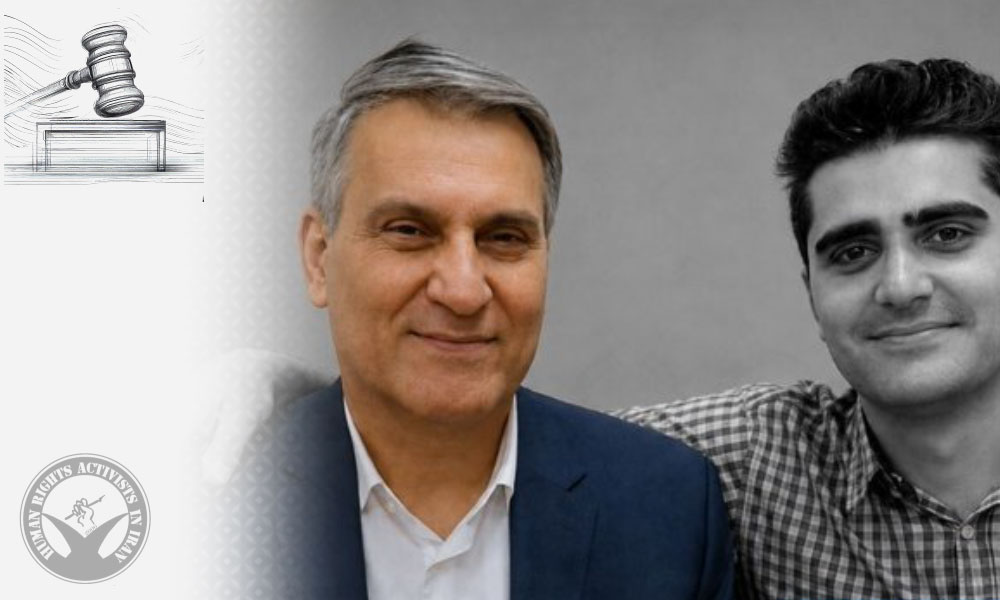
Report on the Arrest of Nine Citizens in Sabzevar

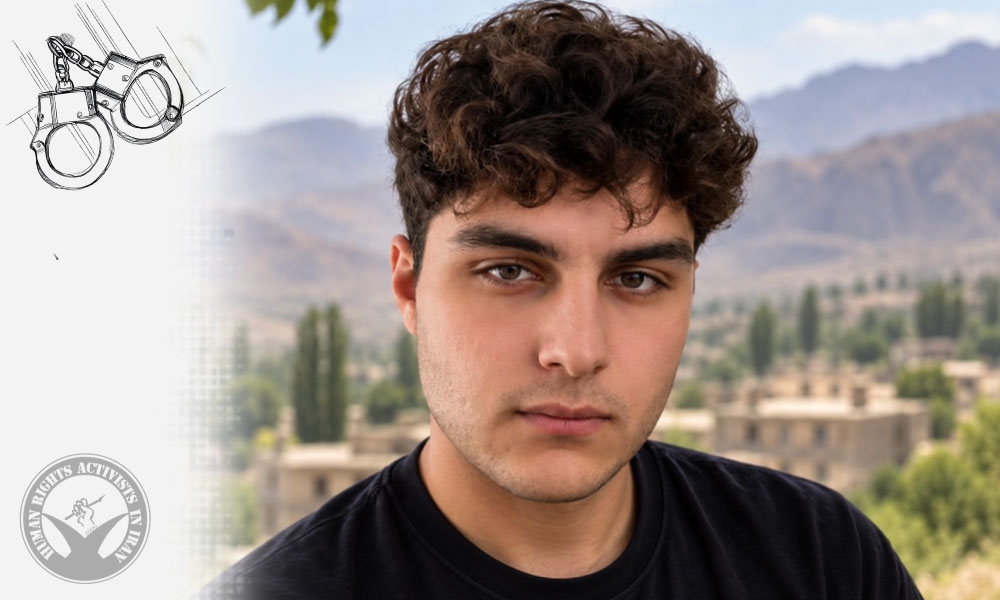
HRANA – In recent days, security forces arrested nine residents of Sabzevar and transferred to Torbat-e Heydarieh Prison. So far, the identities of four of them, Amirhossein Paydar, Farzaneh Parvaneh, Saeed Parvaneh, and Elham Parvaneh, all relatives of Abolfazl Paydar, who was killed during the January 2026 protests, have been confirmed.

Based on information received by HRANA, these arrests took place after the individuals attempted to hold a birthday memorial ceremony for Abolfazl Paydar, one of those killed during the January 2026 protests. So far, the identities of four of the detainees have been confirmed: Amirhossein Paydar, Abolfazl Paydar’s brother; Farzaneh Parvaneh, his mother; Saeed Parvaneh, his maternal uncle; and Elham Parvaneh, his maternal aunt.

A source familiar with the matter told HRANA that the ceremony was stopped by security agents before it could take place.

Further details, including the identities of the other detained individuals, are still being investigated by HRANA.

Abdoljalil Shahbakhsh Executed

HRANA – The judiciary’s media outlet announced the execution of Abdoljalil Shahbakhsh, a prisoner facing security-related charges including “armed rebellion” (baghi) and membership in an armed group opposed to the state.

Mizan News Agency, the judiciary’s media outlet, described Mr. Shahbakhsh’s charges as “armed rebellion through armed attacks on law enforcement bases and membership in the rebel group Ansar al-Furqan.”

His death sentence had initially been issued by the Revolutionary Court. After being confirmed by the Supreme Court, the sentence was carried out today, May 12, 2026.

In its statement, the judiciary claimed that “Abdoljalil Shahbakhsh confessed that he became acquainted with the Ansar al-Furqan group about six years ago. He had illegally crossed the border to travel to a neighboring country in order to receive military training.”

The statement did not specify the exact location where the execution was carried out, nor did it provide details regarding the judicial proceedings in this prisoner’s case.

At the same time, a video containing the prisoner’s forced confessions was also published, although the circumstances under which the video was recorded remain unclear.

In recent weeks, amid an intensified security atmosphere stemming from military conflicts, the issuance and implementation of death sentences in political and security-related cases have accelerated significantly. In a recent comprehensive report, HRANA examined the situation of political and security prisoners, particularly those arrested during the January 2026 protests, and documented this trend along with details of related cases.

Maryam Derisi Sentenced to Imprisonment and Flogging

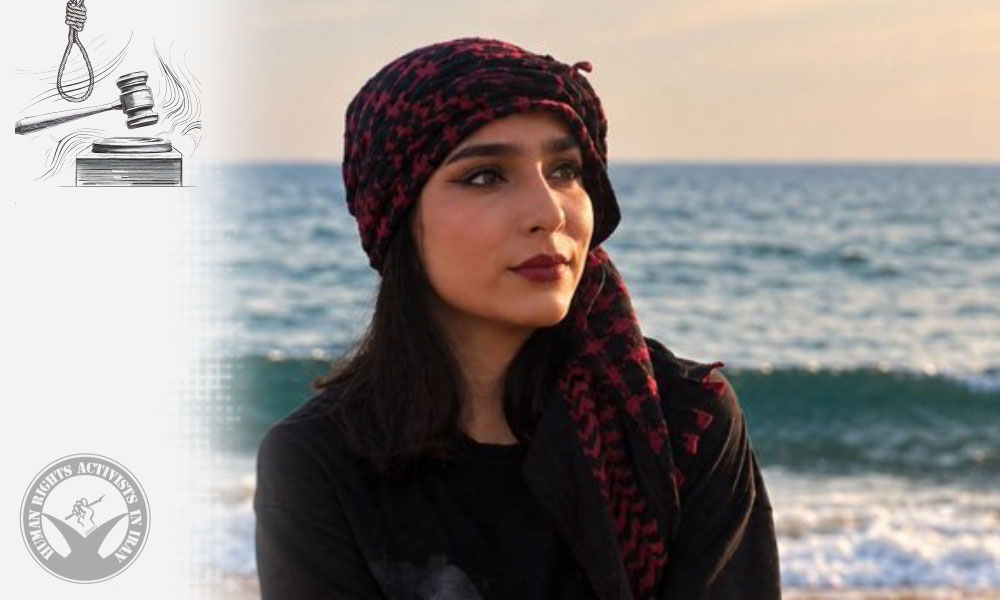
HRANA – Maryam Derisi, a resident of Kazerun who had been released on bail in March, has been sentenced by the Criminal Court of Kazerun and the Revolutionary Court of Shiraz to a total of two years and three months in prison and 74 lashes.

Based on a ruling issued by Branch 101 of the Criminal Court Two of Kazerun, Ms. Derisi was sentenced to one year in prison and 74 lashes on charges of “disrupting public order and peace” under Article 618 of the Islamic Penal Code. The verdict was issued in absentia on April 13, 2026.
In another part of her case, Branch One of the Revolutionary Court of Shiraz sentenced her to one year and three months in prison on charges of “propaganda against the regime.” The verdict was officially communicated to her lawyer two days ago, despite the fact that the maximum legal punishment for this charge is one year in prison. The court reportedly increased the sentence by invoking repeat-offense provisions.

According to the criminal court’s ruling, Ms. Derisi’s protest activities during a memorial ceremony for Behnam Enayat, one of those killed during the January 2026 protests, were cited as examples supporting the charges against her. The ruling also notes that the investigation phase of her case was conducted by the IRGC Intelligence Organization.

Ms. Derisi was arrested by security forces in February of last year and was released on March 8 after posting bail set at 20 billion rials.

Maryam Derisi, a resident of Kazerun, has previously faced arrest and imprisonment due to her activities.

It should be noted that protests and strikes by shopkeepers and bazaar merchants began in Tehran on Sunday, December 28, 2025, and within two days spread beyond markets and commercial centers. With the participation of students, citizens, and various social groups, these protests became one of the largest protest movements of recent years. Following the crackdown by security and law enforcement forces, thousands were killed or injured, and tens of thousands were arrested or summoned by security agencies. For more information, readers may refer to HRANA’s comprehensive report titled “Crimson Winter,” documenting the first fifty days following the outbreak of Iran’s nationwide protests.

Romina Goli, Baha’i Citizen in Sari, Arrested and Charged

HRANA – Romina Goli, a Baha’i citizen residing in Sari, was arrested on Saturday, May 9, and her interrogation session was held yesterday at the prosecutor’s office in the city. At the conclusion of the session, a one-month temporary detention order was issued against her.

Based on information received by HRANA, Ms. Goli’s interrogation session was held on Sunday, May 10, at the Sari Prosecutor’s Office. During the session, she was charged under Article 500 and Article 500 bis of the Islamic Penal Code with “propaganda against the regime” and “propaganda activities contrary to Islamic law.”

A source familiar with the matter confirmed to HRANA: “Romina Goli was arrested yesterday by security forces in Sari. At the same time, her home was searched, and officers confiscated her personal digital devices and religious books related to the Baha’i faith.”

As of the time of this report, no information has been obtained regarding Ms. Goli’s place of detention.

Over the past decade, the Baha’i community in Iran has faced more security and judicial pressure than any other religious minority. HRA’s annual report reveals that in 2025, an average of 62.41% of reports concerning religious minorities were related to violations of the rights of Baha’i citizens.

Amirhossein Rezaei, University of Tehran Student, Arrested in Arak

HRANA – Amirhossein Rezaei, a political science student at the University of Tehran and a journalist, was arrested by security forces in Arak on Wednesday, May 6, and transferred to an undisclosed location.

On the morning of Wednesday, May 6, security agents entered Mr. Rezaei’s family home in Arak, arrested him, and searched the residence. The agents also seized several personal items, including electronic devices and books belonging to the student.

Amirhossein Rezaei is a political science student at University of Tehran and a journalist. He had recently been dismissed from his job at the newspaper Donya-e-Eqtesad following a wave of staff layoffs and had returned to his family’s home in Arak.

At the time of this report, no information has been obtained regarding his place of detention, the charges against him, or his health condition.

Subscribe to Our Newsletter

Now is definitely not the time to stop reading!

Baha’i Citizen Riyaz Behrad Arrested in Karaj

HRANA – Riyaz Behrad, a Baha’i citizen, was arrested on Wednesday, May 6, after appearing at the Karaj Prosecutor’s Office and was transferred to an undisclosed location.

The arrest of this Baha’i citizen took place on Wednesday, May 6, after he appeared at the Karaj Prosecutor’s Office. Mr. Behrad’s home had also been searched by security forces on Monday, May 4.

At the time of this report, no information has been obtained regarding the reasons for his arrest, his whereabouts, or the charges brought against this Baha’i citizen.

Over the past decade, the Baha’i community in Iran has faced more security and judicial pressure than any other religious minority. HRA’s annual report reveals that in 2025, an average of 62.41% of reports concerning religious minorities were related to violations of the rights of Baha’i citizens.

Erfan Shakourzadeh, Aerospace Engineering Student, Executed on Charges of “Espionage”

HRANA – The Judiciary’s media center announced the execution of Erfan Shakourzadeh, a master’s student in aerospace engineering. Mr. Shakourzadeh had previously been sentenced to death on charges of “intelligence cooperation with Mossad and the CIA.”

Mizan announced this morning that Erfan Shakourzadeh, who had been active in a scientific organization working in the satellite field, was accused of establishing contact with individuals affiliated with Mossad and CIA through platforms such as email, LinkedIn, and WhatsApp.

The report claims that he provided these entities with information regarding the location of his workplace, ongoing projects, and certain details related to the organization where he worked, and in return received payments in cryptocurrency. The Judiciary’s media outlet also alleged that he had sought to establish contact with the CIA in order to obtain a visa and continue his studies abroad.

The judiciary also released a video of what it described as forced confessions attributed to Erfan Shakourzadeh. In the video, which was reportedly recorded under unclear circumstances, he says that CIA and Mossad agents attempted to recruit individuals by promoting the idea that there was “no future or progress in Iran” and by raising topics such as the “futility of studying and working in the country.”

The report did not specify the prison where Mr. Shakourzadeh’s execution was carried out. However, it had previously been reported that he was transferred from Evin Prison to Ghezel Hesar Prison for the implementation of the death sentence.

Erfan Shakourzadeh, approximately 29 years old, was a master’s student in aerospace engineering and satellite technology at Iran University of Science and Technology.

Several Citizens Arrested by Intelligence Ministry Forces in Ardabil

HRANA – In recent days, several citizens were arrested by Ministry of Intelligence over what has been described as “cooperation with foreign-based media outlets.” At the same time, a video containing the forced confessions of three of these individuals has been published, although the circumstances under which the footage was recorded remain unclear.

According to a report by IRIB News Agency, several citizens have been arrested in Ardabil. Based on the report, these citizens were detained in recent days by Intelligence Department forces on charges of “cooperation with foreign-based media outlets.”

Simultaneously, a video showing the forced confessions of three of these individuals was released, though the conditions under which the confessions were recorded are unknown.

The report does not mention the exact number of those arrested, their identities, or where they are being held.

January Protests: Samira Rezvanifar Remains Detained in Vakilabad Prison, Mashhad

HRANA – Samira (Fatemeh) Rezvanifar, one of those arrested during the 2026 nationwide protests in Mashhad, has been held in legal limbo in Vakilabad Prison for nearly four months.

Based on information received by HRANA, Ms. Rezvanifar was arrested by security forces on January 17, 2026, during the nationwide protests in Mashhad. Following her arrest, she was transferred to the quarantine ward of Vakilabad Prison in Mashhad and, after 111 days, remains in judicial limbo.

A source close to her family told HRANA’s journalist that no court hearing has yet been held to address her case, and no information has been obtained regarding the charges against Samira. According to the source, her family’s efforts to secure her temporary release have so far been unsuccessful.

According to reports received by HRANA, detained and imprisoned women held in the quarantine section of Vakilabad Prison in Mashhad are facing harsh conditions. These prisoners are deprived of basic facilities, including proper ventilation, standard sanitary services and showers, beds, and adequate access to medical care.

It should be noted that protests and strikes by shopkeepers and bazaar merchants began in Tehran on Sunday, December 28, 2025, and within two days spread beyond markets and commercial centers. With the participation of students, citizens, and various social groups, these protests became one of the largest protest movements of recent years. Following the crackdown by security and law enforcement forces, thousands were killed or injured, and tens of thousands were arrested or summoned by security agencies. For more information, readers may refer to HRANA’s comprehensive report titled “Crimson Winter,” documenting the first fifty days following the outbreak of Iran’s nationwide protests.


January Protests: Iman Sadeghi’s Legal Limbo Extends Beyond Three Months

HRANA – Iman Sadeghi, one of those arrested during the 2026 nationwide protests in Kashan, has been held in legal limbo in the city’s prison for more than three months.

Based on information received by HRANA, Iman Sadeghi was arrested on January 31, 2026, during the nationwide protests of January 2026 at his family home in Kashan. Following his arrest, he was transferred to Kashan Prison and, despite more than three months having passed since his detention, he continues to be held there without legal clarification of his status.

An informed source told HRANA: “So far, no court session has been held to address his case, and no information has been obtained regarding the charges against Iman.”

Iman Sadeghi, 20 years old, is a blogger and resident of Kashan.

It should be noted that protests and strikes by shopkeepers and bazaar merchants began in Tehran on Sunday, December 28, 2025, and within two days spread beyond markets and commercial centers. With the participation of students, citizens, and various social groups, these protests became one of the largest protest movements of recent years. Following the crackdown by security and law enforcement forces, thousands were killed or injured, and tens of thousands were arrested or summoned by security agencies. For more information, readers may refer to HRANA’s comprehensive report titled “Crimson Winter,” documenting the first fifty days following the outbreak of Iran’s nationwide protests.