Azadeh Yaghoubi Remains in Limbo at Vakilabad Prison in Mashhad

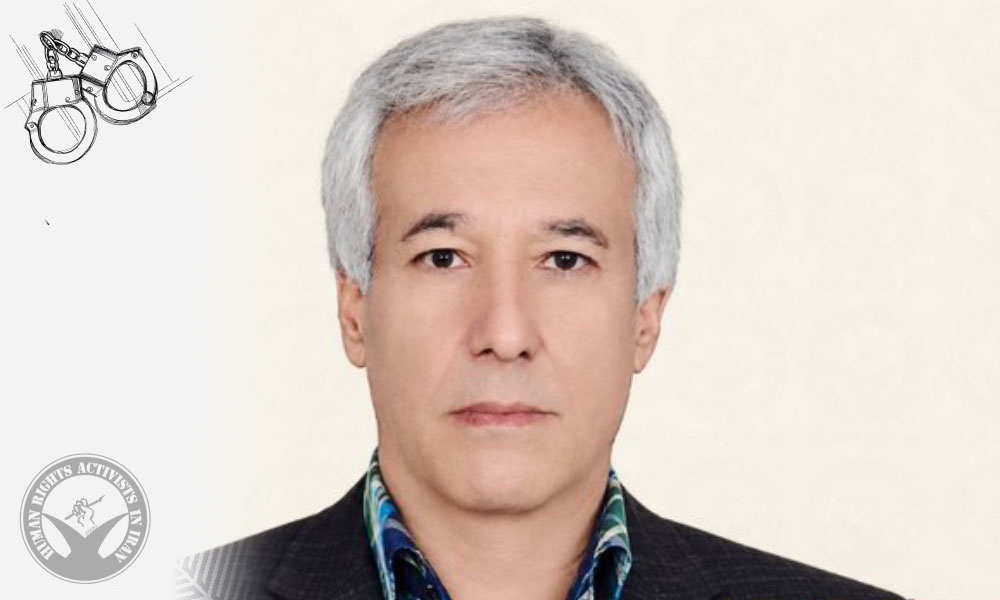
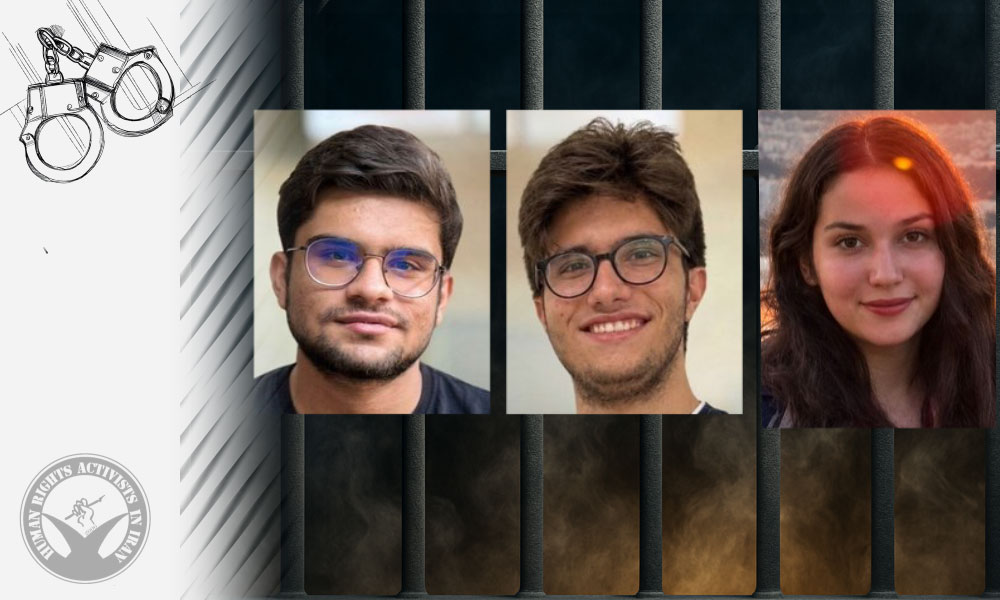
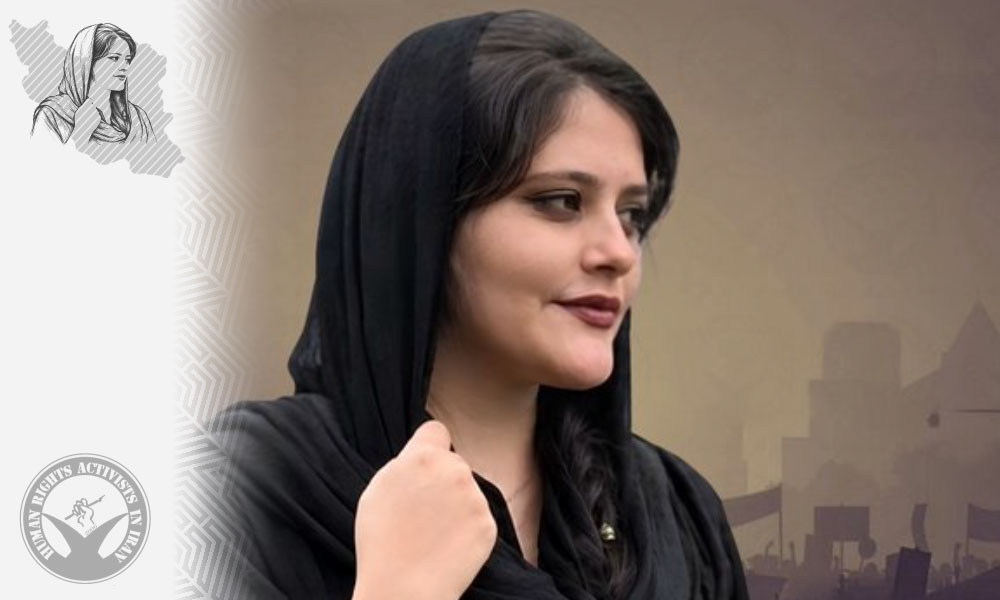
HRANA – Azadeh (Masoumeh) Yaghoubi, a resident of Mashhad, has been detained for more than three months following her arrest by security forces during the nationwide protests and remains held without clarification of her legal status in Vakilabad Prison in Mashhad.

Based on information received by HRANA, Ms. Yaghoubi was arrested by security forces in Mashhad on February 3, 2026. She is currently being held in the quarantine ward of Vakilabad Prison in Mashhad.

A source familiar with her situation confirmed the news and told HRANA: “It has been 93 days since Azadeh’s arrest, and we still have no information regarding the charges brought against her. Additionally, her temporary release has not been possible so far.”

According to reports received by HRANA, detained and imprisoned women held in the quarantine section of Vakilabad Prison in Mashhad are facing harsh conditions. These prisoners are deprived of basic facilities, including proper ventilation, standard sanitary services and showers, beds, and adequate access to medical care.

It should be noted that protests and strikes by shopkeepers and bazaar merchants began in Tehran on Sunday, December 28, 2025, and within two days spread beyond markets and commercial centers. With the participation of students, citizens, and various social groups, these protests became one of the largest protest movements of recent years. Following the crackdown by security and law enforcement forces, thousands were killed or injured, and tens of thousands were arrested or summoned by security agencies. For more information, readers may refer to HRANA’s comprehensive report titled “Crimson Winter,” documenting the first fifty days following the outbreak of Iran’s nationwide protests.

Two Prisoners Executed in Kermanshah and Isfahan

HRANA- During the current week, two prisoners were executed in Isfahan and Kermanshah prisons on charges related to drug offenses and murder, respectively.

In the early hours of Monday, May 4, the execution sentence of a prisoner previously convicted on drug-related charges was carried out in Dastgerd Prison in Isfahan.

According to Iran Human Rights Organization, the prisoner was identified as 30-year-old Masoud Shirzad, a resident of Kashan.

Based on the report, Mr. Shirzad had been arrested approximately three years ago on drug-related charges and was later sentenced to death by the Revolutionary Court.

His execution took place simultaneously with the execution of Ghasem Nouri Roudini in Dastgerd Prison in Isfahan.

Yesterday, Wednesday, May 6, Kurdpa reported the execution of a prisoner identified as Mohammad-Taghi Shahveisi, a married father of four, in Kermanshah Prison. According to the report, Mr. Shahveisi had been arrested last year on a murder charge and was later sentenced to death by judicial authorities.

As of the time of this report, prison officials and relevant authorities have not publicly announced the executions of these prisoners.

According to HRA’s Annual Report, in 2025 at least 2,063 citizens, including 61 women and 2 juvenile offenders, were executed. Of these, the sentences of 11 individuals were carried out in public. During the same period, 172 other individuals were sentenced to death.

Zarandieh: Five Citizens Arrested on Accusation of Sending Information to Opposition Media Network

HRANA – The police commander of Zarandieh County announced the arrest of five citizens on charges described as “sending information and cooperating with a hostile media network.”

According to IRNA, five citizens were arrested in Zarandieh County, Markazi province. Saeed Mohammadizad, the police commander of Zarandieh County, claimed that these individuals had been sending images showing the locations of security forces, military sites, relief and rescue centers, checkpoints, and other facilities to hostile networks.

The report does not provide further details, including the date of the arrests, the identities of the detainees, or their place of detention.

No Information on the Fate of Payam Afkhami After More Than 50 Days in Detention

HRANA – More than 50 days after his arrest, Payam Afkhami, a Tehran resident, remains in a state of uncertainty. The continued lack of information regarding Mr. Afkhami’s fate has intensified concerns among his family members.

According to HRANA, the uncertain status of detained Tehran resident Payam Afkhami has now entered its 52nd day. A source close to Mr. Afkhami’s family confirmed the matter to HRANA, stating: “Since his arrest, Payam has only had one brief phone call with his family, during which he was unable to provide any explanation regarding his condition or place of detention. The lack of information about his situation continues while he had been the caretaker of his ill mother, and his absence has caused growing concern and additional pressure on his family.”

Payam Afkhami was arrested on March 16, 2026, by agents of the Ministry of Intelligence at his home. The arrest was carried out under an order issued by Investigator Mehrdadi from Branch 2 of the District 33 Prosecutor’s Office in Tehran.

As of the time of this report, judicial and security authorities have not provided any explanation regarding the reasons for his arrest, the charges against him, the status of his case, or his place of detention.

Several Citizens Arrested and Forced Confessions Broadcast in Tehran

HRANA – Several citizens in Tehran have been arrested by the Tehran Province Security Police over what authorities described as “communication with hostile foreign-based media outlets.” A video containing the forced confessions of at least three of these individuals has also been published, although the circumstances under which the recordings were obtained remain unclear.

According to Rokna, several citizens have been arrested in Tehran. The individuals are accused of having contact with media outlets based outside the country. They were arrested by officers of the West Tehran Province Security Police and, after judicial cases were opened against them, were referred to judicial authorities.

Additionally, a video of the forced confessions of at least three of the aforementioned citizens has been released, although the conditions under which the confessions were recorded are unknown.

The report does not provide further details, including the identities of those arrested, the dates of their arrests, or their places of detention.

Subscribe to Our Newsletter

Now is definitely not the time to stop reading!

Report on the Latest Status of Majid Jamshidzadeh in Evin Prison

HRANA – Majid Jamshidzadeh, a student at Iran University of Science and Technology and one of those arrested during the January 2026 protests, is currently serving his prison sentence in Evin Prison. He had previously been sentenced to five years in prison by Branch 15 of the Tehran Revolutionary Court.

According to HRANA News Agency, quoting Amir Kabir Newsletter, Majid Jamshidzadeh is serving his sentence in Evin Prison. He was previously sentenced by Branch 15 of the Tehran Revolutionary Court, presided over by Judge Abolghasem Salavati, to five years in prison on charges of “assembly and collusion with the intent to disrupt national security” and “disrupting public order.”

The report states that the verdict was verbally communicated to Mr. Jamshidzadeh in Evin Prison. However, because the ruling has not been officially registered in the judicial notification system, he has so far been unable to file an appeal request.

Majid Jamshidzadeh, an undergraduate industrial design student at Iran University of Science and Technology, was arrested on January 2, 2026, during public protests in Tehran and was subsequently transferred to Evin Prison.

It should be noted that protests and strikes by shopkeepers and bazaar merchants began in Tehran on Sunday, December 28, 2025, and within two days spread beyond markets and commercial centers. With the participation of students, citizens, and various social groups, these protests became one of the largest protest movements of recent years. Following the crackdown by security and law enforcement forces, thousands were killed or injured, and tens of thousands were arrested or summoned by security agencies. For more information, readers may refer to HRANA’s comprehensive report titled “Crimson Winter,” documenting the first fifty days following the outbreak of Iran’s nationwide protests.

January Protests: Rasoul Salehi Sentenced to Nine Years and Three Months in Prison

HRANA – Rasoul Salehi, one of the individuals arrested in connection with the January 2026 protests, has been sentenced to 9 years and 3 months in prison by the Revolutionary Court.

Based on the verdict issued by the Revolutionary Court, he was sentenced to five years in prison on the charge of “providing the means for committing assembly and collusion against national security,” two years for “insulting the Supreme Leader,” one year and three months for “propaganda against the regime,” and one year for “spreading falsehoods.”

Under Article 134 of the Islamic Penal Code, out of the total sentence of 9 years and 3 months, five years of imprisonment will be enforceable for Mr. Salehi.

Rasoul Salehi had previously participated in a protest gathering outside the Najafabad Judiciary Office during the January 2026 protests, following the killing of a teenager in Yazdanshahr. He had demanded the release of detained protesters. In a video circulated on social media, he gave judicial authorities a deadline to release detainees and warned of further protest gatherings.

He was ultimately arrested on January 6, 2026, by security forces at a relative’s home. His arrest took place despite prior attempts by security institutions to pressure organizers into canceling protest gatherings through phone calls.

Following Rasoul Salehi’s arrest, citizens in Yazdanshahr held a protest gathering, which led to clashes after intervention by security and law enforcement forces.

As of the time of this report, no information has been published regarding the prisoner’s current place of detention or his access to legal rights, including access to a lawyer.

It should be noted that protests and strikes by shopkeepers and bazaar merchants began in Tehran on Sunday, December 28, 2025, and within two days spread beyond markets and commercial centers. With the participation of students, citizens, and various social groups, these protests became one of the largest protest movements of recent years. Following the crackdown by security and law enforcement forces, thousands were killed or injured, and tens of thousands were arrested or summoned by security agencies. For more information, readers may refer to HRANA’s comprehensive report titled “Crimson Winter,” documenting the first fifty days following the outbreak of Iran’s nationwide protests.

Baha’i Citizen Flora Samadani Arrested in Yazd

HRANA – Flora Samadani, a Baha’i citizen, was arrested on Sunday, May 3, by security forces in Yazd. Three days after her arrest, there is still no precise information available regarding her fate.

According to HRANA, the continued detention and uncertainty surrounding Flora Samadani has now entered its third day. Based on information received by HRANA, this Baha’i citizen was detained by security forces in Yazd on Sunday, May 3, and no information about her condition or whereabouts has been made available since. The lack of information about her situation has increased concerns among her family.

As of the time of this report, no details have been obtained regarding the reasons for her arrest or the charges brought against her.

Flora Samadani is a Baha’i resident of Yazd and the wife of Ahmad Naeimi. Mr. Naeimi has previously been arrested and faced judicial actions due to his religious beliefs.

Over the past decade, the Baha’i community in Iran has been subjected to more security and judicial pressures than any other religious minority. A review of annual reports by the Statistics, Publications, and Works Center of the Human Rights Activists in Iran indicates that over the past year, an average of 62.41% of reports concerning religious minorities were related to violations of the rights of Baha’is.

Seizure of Assets of 22 Individuals Accused of Cooperation with Hostile Governments

HRANA – The assets and property of 22 citizens in Semnan Province have been confiscated by order of a judicial authority. The judiciary has accused these individuals of “cooperating with hostile governments” during the recent military clashes and engaging in actions against national security.

According to Mizan News Agency, the assets of 22 citizens in Semnan Province have been seized. The judiciary stated that the reason for this action was “cooperation with hostile governments.” However, it did not specify the exact charges or provide concrete examples of the alleged offenses attributed to these individuals.

The Judiciary’s Media Center referred to these individuals as “elements affiliated with the enemy,” claiming that during the war involving the United States and Israel against Iran, they took actions against national security. Accordingly, all movable and immovable property, bank accounts, and financial assets of these individuals have been identified and confiscated, and a ban on any financial transactions has been imposed on them.

The individuals named are: Mehdi Nasiri, Zeinab Avazabadi, Fatemeh Koochakpour, Mohammadali Foadi, Zeinab Akbari, Faranak Rahbar, Hediyeh Kimiaei, Dorsa Rahbar, Ali Arian Saber, Raha Pouresmaeil, Ehsan Ebrahimian, Zahra Sheisi, Niloufar Asadian, Solmaz Ghaffarbeigi Darian, Kiarash Nili, Ali Shakeri Talarposhti, Faranak Amiri Baghbadarani, Vahid Pour-Rezaei, Mehdi Heydari, Mohsen Hosseini, Rashid Nouri, and Ramin Saemipour.

The report does not provide details about the legal proceedings or the value of the seized assets. The judiciary has stated that their cases are currently under review in judicial authorities in Semnan Province.

Among them, Mehdi Nasiri is a journalist, political activist, and former representative of Ali Khamenei at Kayhan newspaper, who currently resides in Canada.

Following the start of military attacks on Iran, Gholamhossein Mohseni Ejei, head of the judiciary, announced that judicial orders had been issued to confiscate the assets of what he described as “enemy collaborators inside and outside the country.” He also threatened these individuals with execution, stating: “One of the prescribed punishments in such cases is execution, and after review, one of the legal punishments will be applied to those concerned.”

Following this directive, a smart financial inquiry system called “Saham” has been launched. With its activation, prosecutor’s offices and courts across the country can quickly and online identify citizens’ assets and take necessary measures to confiscate them.

Hamid Haj Jafar Kashani Sentenced to Six Years in Prison

HRANA – Hamid Haj Jafar Kashani, a political prisoner currently held in Greater Tehran Prison, has been sentenced to six years in prison by the Tehran Revolutionary Court.

Based on a verdict issued by Branch 23 of the Tehran Revolutionary Court and communicated to him on April 28, 2026, he was sentenced to five years in prison on the charge of “assembly and collusion against national security,” and one year for “propaganda against the regime.” Under Article 134 of the Islamic Penal Code, only the most severe punishment, five years in prison, will be enforceable.

Mr. Haj Jafar Kashani was arrested on January 4, 2026, during nationwide protests in Tehran. He is currently being held in Ward 6, Unit 1 of Greater Tehran Prison. He has previously faced arrest and judicial action due to his activities.