Six Defendants in the “Ekbatan Town” Case Sentenced to Death

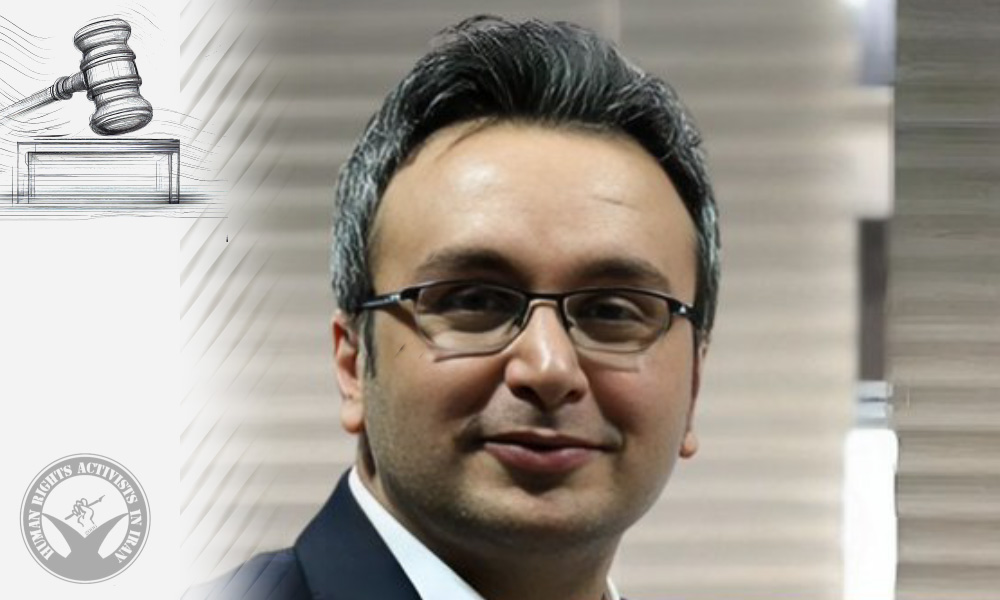
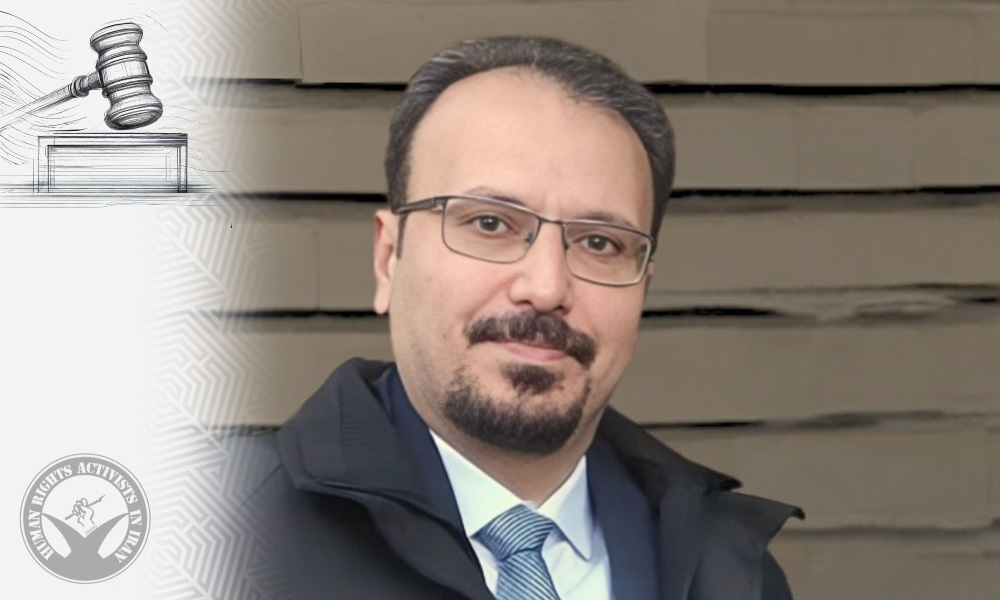
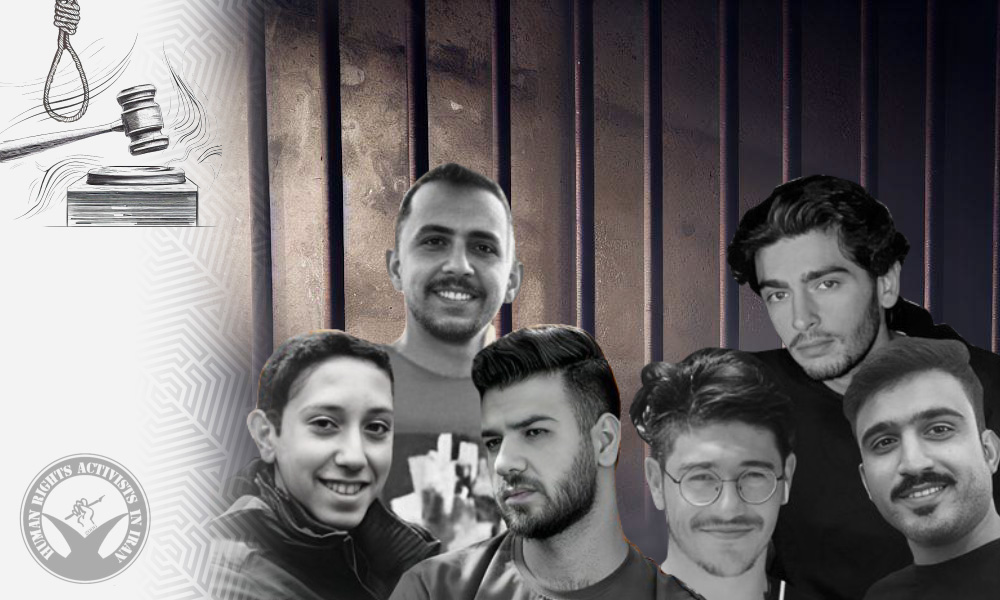
Milad Armoun (Armoon), Alireza Kafaei, Amir-Mohammad Khosh-Eghbal, Navid Najaran, Hossein Nemati, and Alireza Barmarz Pournak, defendants in the so-called “Ekbatan Town” case, have been sentenced to death by Branch 13 of Tehran Criminal Court.

According to HRANA, the news agency of Human Rights Activists in Iran, the defendants were convicted on charges of “participation in murder and intentional assault.” Babak Paknia, a defense attorney, confirmed the sentences, noting that while the court’s advisors upheld the death penalties, the presiding judge opposed the decision and issued a minority opinion. These verdicts are subject to appeal.

The final defense sessions were held on November 3, 2024. Following the hearings, four of the accused—Hossein Nemati, Alireza Barmarz Pournak, Alireza Kafaei, and Amir-Mohammad Khosh-Eghbal—were detained and transferred to Ghezel Hesar Prison in Karaj.

This case stems from protests in October 2022 at the Ekbatan Complex, during which a Basij member, Arman Ali Vardi, was killed. Security forces reportedly arrested over 50 residents from Ekbatan, with indictments later issued for 14 individuals.

The charges include “moharebeh” (enmity against God), “participation in premeditated murder,” and “disturbing public order.” The case has been reviewed by Branch 13 of Tehran Criminal Court and Branch 15 of the Revolutionary Court, presided over by Judge Abolghasem Salavati.

While four of these defendants were temporarily released on bail in early 2024, several remain in custody.

Several Followers of a Religious Movement Arrested in Torbat Heydariyeh

The Public Prosecutor of Torbat Heydariyeh, Razavi Khorasan province, announced the arrest of several followers of the “Yamani” movement in the city. Their residences and workplaces were searched, and some personal belongings were confiscated during the operation.

According to HRANA, quoting IRNA, the detainees were accused of promoting beliefs related to Mahdism through online sessions and recruiting individuals, particularly youth, to their cause.

Prosecutor Mohammad-Hossein Hassannejad did not specify the number or identities of the detainees but stated that the arrests were part of a coordinated operation by intelligence agencies.

He added that various items, including digital media production equipment, symbols of the movement, dozens of books, brochures, and flags, were confiscated during the searches.

Each year, individuals in Iran are arrested for claiming spiritual connections to the Mahdi, the Twelfth Imam of Shia Islam. Among these groups, the Yamani movement, led by Ahmad al-Hassan Yamani, stands out for its prominent activities and claims centered on Mahdism.

The Iranian government’s intelligence apparatus, particularly the Ministry of Intelligence, actively targets religious, spiritual, and ideological groups that fall outside its accepted ideological framework.

Three Prisoners Executed in Ghezel Hesar Prison, Karaj on Drug-Related Charges

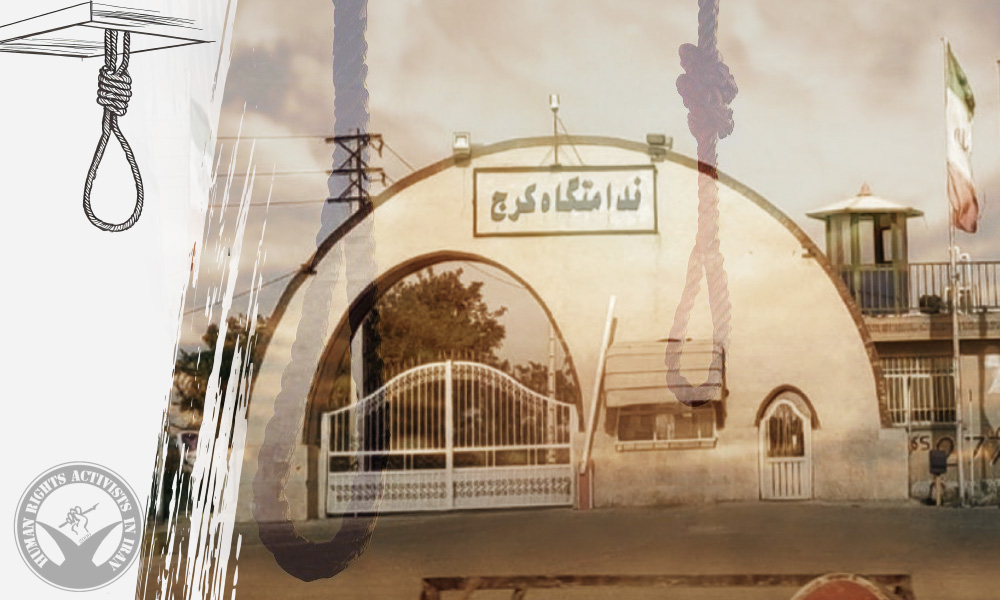
Early this morning, November 13, three prisoners previously sentenced to death on charges related to drug offenses were executed in Ghezel Hesar Prison, Karaj.

According to HRANA, the news agency of Human Rights Activists in Iran, the identities of the prisoners executed today have been confirmed as Hamzeh Torkashvand, Jafar Rahsepar, and (first name unknown) Rasgoo.

These individuals were previously arrested on drug-related charges and later sentenced to death by judicial authorities.

As of the time of this report, prison officials and relevant authorities have not announced the executions.

Update: With the identification of four additional prisoners executed early this morning in Ghezel Hesar Prison, Karaj, the number of executions in this prison today has risen to at least seven. HRANA has identified the four individuals as Khaled Tajik, Ahmad Alizadeh, and Saman Bozorgi, along with a woman whose name remains unknown.

In 2023, 66% of HRANA’s reports on executions lacked official announcements by judicial authorities and went unreported by media inside Iran, highlighting a troubling lack of transparency in due process.

According to data gathered by the Department of Statistics and Publication of Human Rights Activists, Ghezel Hesar Prison in Karaj witnessed the highest number of executions in 2023, with Zahedan Prison following closely behind. For a comprehensive examination of the details and statistics surrounding the executions in Iran, refer to HRANA’s report.


Ali Moeini and Ava Nasiri Sentenced to Prison

Political activist Ali Moeini and his wife Ava Nasiri have been sentenced to six years and one year in prison, respectively, along with additional penalties, by Branch 1 of the Isfahan Revolutionary Court. Of these sentences, six months of Mr. Moeini’s term and three months and one day of Ms. Nasiri’s term are enforceable, with the remaining portions suspended for five years.

According to HRANA, citing Emtedad, Mr. Moeini recevied five year for  “inciting people to wage war” and one year for “propaganda against the Islamic Republic”. Ms. Nasiri was sentenced to one year for “propaganda against the Islamic Republic.” Both have also been banned from leaving the country for two years as part of their additional penalties.

The verdict specifies that beyond the enforceable sentences, the remaining penalties for Mr. Moeini and Ms. Nasiri are suspended for five years. In effect, Mr. Moeini faces six months of prison time, while Ms. Nasiri faces three months and one day of imprisonment.

Additionally, Mr. Moeini was acquitted of the charge of “collaborating with hostile countries.” However, their confiscated mobile phones and digital devices were permanently seized by authorities.

Mr. Moeini was arrested in Isfahan on August 10, 2023. Following his arrest, some of his and Ms. Nasiri’s personal belongings were confiscated. He was released on bail on October 9, 2023.

Ali Moeini, father of a three-year-old child, has a history of judicial confrontations due to his activism.

Two Prisoners Executed in the Central Prison of Karaj

At dawn on Monday, November 11, two prisoners previously sentenced to death on drug-related charges were executed in the Central Prison of Karaj.

According to HRANA, the news agency of Human Rights Activists in Iran, the identities of the executed prisoners have been confirmed as “Hamzeh Jahanian” and “Javad Dolabi.”

HRANA’s investigation reveals that these prisoners were arrested in Safadasht, Karaj, on charges related to drug offenses and later sentenced to death by judicial authorities. On November 7, they were transferred, along with two others, to solitary confinement in preparation for their executions.

As of the time of this report, the executions have not been officially announced by prison authorities or relevant institutions.

The reports from the Department of Statistics and Publication of Human Rights Activists for the year 2023 reveal a concerning prevalence of executions for drug offenses in Iran, constituting 56.4% of the total executions. For a comprehensive examination of the details and statistics surrounding the executions in Iran, refer to HRANA’s report.

Subscribe to Our Newsletter

Now is definitely not the time to stop reading!

Two Prisoners Executed in Tabriz Prison

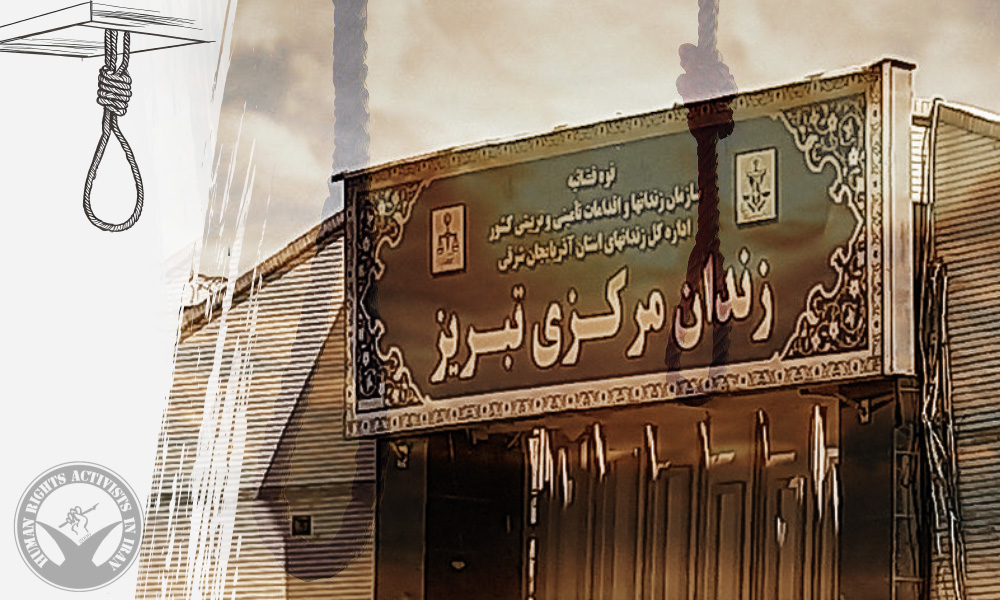
On Sunday, November 10, two prisoners, a man and a woman, were executed in Tabriz Prison. They had previously been sentenced to death in separate cases on charges related to drug offenses.

According to HRANA, the news agency of Human Rights Activists in Iran, the identities of the executed prisoners have been confirmed as “Kazem Babayi, 45, and Mahrokh Khani, 34.”

HRANA’s investigation reveals that Ms. Khani was arrested five years ago, and Mr. Babayi three years ago, in separate cases involving drug-related charges. Both were subsequently sentenced to death by judicial authorities.

As of the time of this report, prison officials and relevant authorities have not publicly announced the executions.

According to latest HRANA’s annual report over between October 10, 2023, and October 8, 2024, at least 811 individuals were executed by hanging in Iran, rising to 23.06% compared to the same period last year. Of these executions, four were carried out in public. Many of the defendants were denied a fair trial.

Ahmadreza Haeri Sentenced to Over Six Years in Prison Following Case Consolidation

Branch 36 of the Tehran Court of Appeals has handed down a sentence of six years and three months to Ahmadreza Haeri, a political prisoner currently held in Ghezel Hesar Prison in Karaj. The ruling comes after the consolidation of his cases and the overturning of earlier verdicts.

The court, presided over by Judge Abbasali Khozan, sentenced Haeri to four years for “assembly and collusion to commit crimes against national security,” one year for “propaganda against the regime,” and 15 months for “spreading falsehoods.” Under Iran’s penal code, the most severe punishment—four years—will be enforceable.

Haeri criticized the process, stating that Branch 36 issued this new ruling without notifying his legal counsel, despite the Supreme Court having overturned the initial verdict. Furthermore, the new sentence includes an additional year of imprisonment compared to the original ruling.

In late August 2022, Haeri was sentenced to three years and eight months by the Tehran Revolutionary Court. He began serving his prison term in May 2023 at Evin Prison and was transferred in September 2023, along with 12 other political prisoners, to Ghezel Hesar Prison in Karaj.

On October 16, 2024, Haeri appeared via video conference before the First Branch of the Public and Revolutionary Prosecutor’s Office in Karaj, defending himself against fresh charges of “propaganda against the regime” and “spreading falsehoods.”

Ahmadreza Haeri has faced multiple arrests and imprisonment in the past due to his activism.

Three Baha’i Citizens Arrested in Shiraz

On November 10, Vahid Masoumi, Rozita Eslami, and Elham Haghighatjou, Baha’i citizens residing in Shiraz, were arrested by security forces and transferred to The Ministry of Intelligence’s detention facility, known as “House No 100.”

According to reports received by HRANA, Mr. Masoumi was arrested by Intelligence Ministry agents while leaving his home and taken to the facility. During the arrest, the agents searched his vehicle and residence, seizing several personal belongings, including electronic devices, books, and family photos.

Ms. Eslami was also arrested at her residence following a search of the premises.

As of the time of this report, no information is available regarding the charges against the three detainees.

Baha’is are subjected to violations of their religious rights, comprising 82% of reports on infringements against religious minorities, according to HRA’s 2023 annual report.

The Baha’i faith is not recognized as a legitimate religion by Iranian authorities, leading to systematic and longstanding violations of the rights of Baha’is in the country. This includes the denial of their fundamental right to practice their religion, which constitutes a clear breach of both Article 18 of the Universal Declaration of Human Rights and Article 18 of the International Covenant on Civil and Political Rights. The United Nations covenant holds that every person has the right to freedom of religion, freedom of converting religion, as well as freedom of expression, individually or collectively; openly or secretly.

Two Prisoners Executed in Zahedan and Ghezel Hesar Prisons

Two prisoners previously sentenced to death in separate cases involving drug-related charges and murder were executed in Ghezel Hesar Prison in Karaj and Zahedan Prison.

According to Haal Vsh, on the morning of Sunday, November 10, 2024, an Afghan national was hanged in Zahedan Prison. His identity has been confirmed as Mohammad-Nabi Papal Zehi, approximately 28 years old, married, and a resident of Zabol.

He was arrested two years ago in connection with drug-related charges in Zahedan and was subsequently sentenced to death by the Revolutionary Court of the city. He had been transferred to solitary confinement a day before the execution and was allowed a final meeting with his family.

According to Kurdpa, separately, on Wednesday, November 6, another prisoner, identified as Mojtaba Ghasemi, a resident of a village in Harsin County, was executed in Ghezel Hesar Prison in Karaj.

Mr. Ghasemi was arrested approximately four years ago on murder charges and sentenced to death by judicial authorities.

Both executions have not been publicly announced by prison officials or responsible institutions as of this report.

Notably, HRANA had previously reported the execution of eight other prisoners in Ghezel Hesar Prison on Wednesday, November 6.

Baha’is Vahid Sabet Arrested

Yesterday, November 10, Vahid Sabet, a Baha’i citizen residing in Shiraz, was arrested by security forces in this city and transferred to an undisclosed location.

HRANA has confirmed the identity of the individual as “Vahid Sabet, a Baha’i citizen residing in Shiraz.”

As of the time of this report, no information is available about his whereabouts or the charges against him.

Additionally, three other Baha’i citizens in Shiraz — Rozita Eslami, Elham Haghighatjou, and Vahid Masoumi — were also arrested yesterday by security forces. Following their detention, they were transferred to The Ministry of Intelligence’s detention facility, known as “House No 100.”

Baha’is are subjected to violations of their religious rights, comprising 82% of reports on infringements against religious minorities, according to HRA’s 2023 annual report.

The Baha’i faith is not recognized as a legitimate religion by Iranian authorities, leading to systematic and longstanding violations of the rights of Baha’is in the country. This includes the denial of their fundamental right to practice their religion, which constitutes a clear breach of both Article 18 of the Universal Declaration of Human Rights and Article 18 of the International Covenant on Civil and Political Rights. The United Nations covenant holds that every person has the right to freedom of religion, freedom of converting religion, as well as freedom of expression, individually or collectively; openly or secretly.