Five Citizens from Zabol Arrested in Bardaskan

HRANA News Agency –On Wednesday, May 28, five citizens from Zabol were arrested by police forces in Bardaskan County and taken to an undisclosed location.

According to HRANA, quoting Haal Vsh, the identities of those detained are as follows:

Reza Javadi, 26, married with one child

Younes Arbabi, 27, married with two children

Mohammadsayyad Arbabi

Sajjad Larijani

Majid Arbabi

The group, traveling in two vehicles from Zabol toward Mashhad, was stopped and arrested in Bardaskan by law enforcement officers without the presentation of a judicial warrant.

As of the time of this report, the reasons for their arrest and any charges against them remain unknown.

Baha’i Citizen Sheida Rouhani Arrested in Tehran

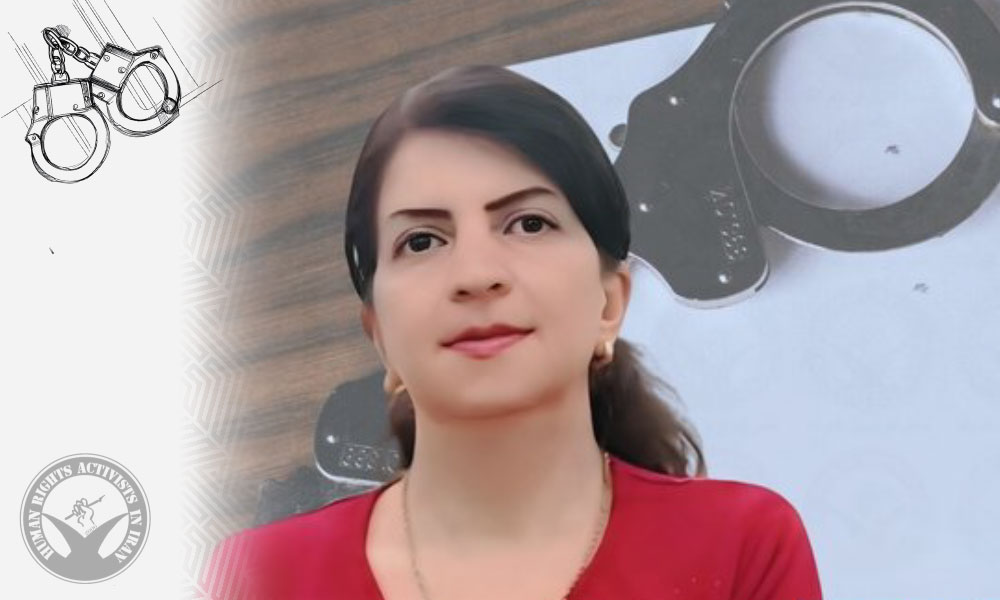
HRANA News Agency –Sheida Rouhani, a Baha’i resident of Tehran, was arrested by security forces on Tuesday, May 27, at her home and taken to an undisclosed location.

According to HRANA, the news agency of Human Rights Activists in Iran, Rouhani was arrested despite ongoing efforts by her family to obtain information about her situation. As of this report, her whereabouts remain unknown, raising serious concerns among her relatives.

A source close to the family told HRANA that around 5 p.m., ten security agents arrived at Rouhani’s apartment building. After convincing a neighbor to open the door, they entered her unit with a search warrant. The agents searched the home extensively and seized three laptops, two mobile phones, three tablets, three property deeds, a vehicle registration, academic documents, as well as books and photographs related to the Baha’i faith. Gold and a sum of U.S. dollars were also confiscated.

Before leaving, the agents told Rouhani she needed to accompany them to speak with a prosecutor. She was then taken into custody.

Rouhani is married and the mother of one child.

Over the past decade, the Iranian Bahá’í community has been disproportionately targeted by Iran’s security forces and judiciary—more than any other minority group. In the past three years, an average of 72 percent of the reports on religious rights violations collected by HRANA have documented the Iranian regime’s repression of the Bahá’í community.

Dozens Arrested as Truckers’ Strikes Spread Across Iran

HRANA News Agency –At least 20 truckers and supporters have been arrested in connection with a wave of truckers’ strikes that began on May 22 in cities across Iran, including Sanandaj, Eslamabad-e Gharb, Kermanshah, Rasht, Bandar Imam Khomeini, Bandar Lengeh, and Shiraz.

The strikes, launched in protest of longstanding grievances over working conditions and economic pressures, have drawn a strong security response. Among those detained are Sediq Mohammadi and Shahab Darabi, arrested in Sanandaj and Eslamabad-e Gharb respectively. The whereabouts of Mohammadi remain unknown.

The National Union of Truckers and Drivers has released several statements confirming the arrest of at least 11 drivers in Kermanshah and several others in Sanandaj. The union also reported violent police tactics, including the use of pepper spray against striking drivers at the Sanandaj terminal.

In Rasht, the IRGC’s Gilan provincial office announced the arrest of a citizen for allegedly supporting the strike. The individual was accused of “disrupting the order and security of road transport” and “aiding opposition groups” through negative portrayals of the situation.

The IRGC in Khuzestan Province reported the arrest of two individuals in Bandar Imam Khomeini on similar charges. State media later aired what appeared to be their forced confessions.

Authorities in Bandar Lengeh also arrested a citizen for allegedly producing and distributing videos encouraging strike participation. Police claimed the videos were shared with foreign media outlets.

In Shiraz, the local prosecutor confirmed the detention of several drivers, accusing them of “deliberate and organized disruption” of the transportation system. No specific number of detainees was disclosed.

HRANA previously published a detailed report on the first week of the truckers’ strike, outlining its causes, scale, and the government’s response, including arrests and repression.

Drug-Related Charges: Prisoner Executed in Qazvin Prison

HRANA News Agency – At dawn on Tuesday, May 27, a prisoner previously sentenced to death on drug-related charges was executed in Qazvin Prison.

According to HRANA, the news agency of Human Rights Activists in Iran, the identity of the executed prisoner has been confirmed as Khodayar Keyfari, a resident of Sahneh County.

Keyfari had been arrested on drug-related charges and later sentenced to death by the Revolutionary Court.

As of the time of this report, prison authorities and official agencies have not publicly announced the execution.

In 2024, Iranian prisons witnessed the execution of 930 inmates. According to HRANA’s data, the number of executions carried out by the Iranian regime’s judiciary has risen steadily over the past five years. The percentage of executions related to drug charges has also increased year after year.

Gelareh Abbasi’s Prison Sentence Upheld by Appeals Court

The Tehran Province Appeals Court has upheld a prison sentence of three years and nine months for political defendant Gelareh Abbasi. Based on Article 134 of the Islamic Penal Code, only the most severe charge will be enforced, meaning Abbasi must serve 33 months in prison.

The sentence, originally issued by Branch 23 of the Tehran Revolutionary Court, was for the charges of “assembly and collusion against national security” and “propaganda against the regime.” It has now been confirmed by Branch 36 of the Appeals Court, presided over by Judge Abbas-Ali Hozan.

A source familiar with the case told HRANA that Abbasi’s file has been forwarded to the sentence enforcement unit.

Abbasi was arrested on February 16, 2025, at her home in western Tehran by agents of the Ministry of Intelligence and transferred to Evin Prison. She was released from Evin Prison on March 28, 2025, after posting a bail of one billion tomans.

Earlier, in a separate case, Abbasi had been sentenced by Branch 26 of the Tehran Revolutionary Court, presided over by Judge Iman Afshari, to two years and six months in prison for “assembly and collusion against national security.” After serving several months, she was released from Evin in February 2023.

Gelareh Abbasi, 48, is the mother of a young daughter and the head of her household.

Subscribe to Our Newsletter

Now is definitely not the time to stop reading!

Law Student Fahimeh Soltani Arrested to Serve Prison Sentence

HRANA News Agency – Fahimeh Soltani, a law student at the University of Isfahan, was arrested by security forces on Wednesday, May 28, and transferred to Dolatabad Prison in Isfahan to begin serving a one-year prison sentence.

Amirkabir Newsletter, reporting the arrest, stated that she was detained for the enforcement of her one-year prison sentence and subsequently transferred to Dolatabad Prison.

Soltani’s sentence, initially issued by Branch 1 of the Isfahan Revolutionary Court presided over by Judge Mohammad Tavakoli—one year of mandatory imprisonment and two years suspended—was recently upheld by the Court of Appeals and finalized by the Supreme Court. Among the charges brought against her was “encouraging war and bloodshed.”

Soltani, who was previously arrested on April 6, 2024, after being summoned to the IRGC Intelligence Office in Isfahan, had been released on bail from Dastgerd Prison on April 29, 2024.

She has a history of previous arrests due to her activism and was also suspended from her studies for two and a half semesters in May 2023 by the University of Isfahan’s disciplinary committee.

HRANA’s report shows that in 2024, Iranian regime courts—both primary and appeals courts—issued a total of 33,574 months of prison sentences (equivalent to 2,797 years) against Iranian citizens for their political and civil activities. This total represents more than a 1.5-fold increase compared to the previous five-year period.

Two Prisoners Executed in Dastgerd Prison, Isfahan

HRANA News Agency – At dawn on Wednesday, May 28, the death sentences of two prisoners previously convicted of murder in separate cases were carried out in Dastgerd Prison in Isfahan.

Their identities have been reported by Iran Human Rights as Shahram Abbaszadeh, 23, from Khomeinishahr, and Alireza Ahmadi, 35, from Aligudarz.

According to the report, Abbaszadeh had been arrested four years ago, and Ahmadi about six years ago, both in separate cases on charges of murder, and later sentenced to death by judicial authorities.

As of the time of this report, the executions have not been officially announced by prison officials or relevant institutions.

In 2024, according to 812 reports compiled by HRANA, the Iranian regime executed 930 individuals in its prisons—marking the highest number of executions in the past 12 years. Despite the scale of these executions, prison officials and other relevant authorities publicly acknowledged only 6% of them, highlighting the regime’s lack of transparency and accountability.

Seven Days of Protest: Report on the Nationwide Truckers’ Strike in Iran

HRANA News Agency – Truck owners across Iran have launched widespread protests that began on May 22 and have now spread to at least 163 cities. The movement, driven by mounting frustrations over rising operational costs, declining freight rates, worsening living conditions, and official neglect of their demands, has seen drivers halt operations by parking their trucks on roadways. In recent days, reports have surfaced of confrontations between security forces and protesters, including arrests and threats, fueling fears of an intensified crackdown on the movement. This report provides an in-depth look at the causes of the protests, their national spread, the government’s response, and the status of those detained.

According to HRANA, the news agency of Human Rights Activists in Iran, the truck owners’ strike has reached its seventh day, and roads in dozens of cities across the country remain empty.

Truck drivers refused to load cargo in protest against economic pressures. Problems cited include: the reduction of diesel quotas from 2000 to 100–200 liters per month, delays in fuel allocation, disruptions in distribution systems, increases in social security insurance premiums, low freight rates in comparison to heavy road tolls, lack of oversight on parts and repair prices, and the high cost of tires and oil. One of the drivers’ main demands is official recognition of the arduous nature of their work.

A Review of the Geographical Scope and Continuation of the Truck Drivers’ Strike

The nationwide truck owners’ strike began on Thursday, May 22, and in less than a week, became one of the most extensive labor protests in recent years. HRANA’s review of field reports indicates that the strike spread to at least 163 cities across the country within a week.

On the first day, Thursday, May 22, the strike was reported in the cities of Kermanshah, Arak, Bandar Abbas, Abbasabad (Darreh Shahr), Tabriz, Sirjan, Shiraz, Lorestan, Baft, Zarand, Marivan, Tehran, Mashhad, Zakho, Eslamabad-e Gharb, and Ilam.

On the second day, Friday, May 22, the strikes continued in Eslamabad-e Gharb, Bandar Abbas, Golpayegan, Fasa, Asadabad (Hamadan), Isfahan, Kazeroon, Najafabad, Tiran, Divandarreh, Darreh Shahr, Izeh, Kermanshah, Sirjan, Gol Gohar, Zanjan, Zarand, Shamsabad, Sanandaj, Tabriz, Yazdanshahr, Qazvin, Kerman, Arak, Baft, Kashmar, Lotfabad, Fooladshahr, Shahr-e Kord, Semirom, Asaluyeh, Mahshahr, Feyzabad (Mahvelat), and Marivan.

On Saturday, May 23, the strike continued in Dezful, Ghareh Bolagh (Fars), Zarand, Azna, Asaluyeh, Rumeshkan, Kazeroon, Sabzevar, Boroujerd, Neyshabur, Shabab, Yazd, Kermanshah, Mehriz, Saveh, Arak, Bandar Abbas, Mashhad, Fasa, Gahro, Shalamzar, Khorramabad, Lahijan, Shamsabad, Kangavar, Kerman, Ghazanchi, Eslamabad-e Gharb, Boneh Kalaghi (Neyriz County), Miyanshahr, Darreh Shahr, Salehabad (Hamadan), Bahabad, Semnan, Ardabil, Rafsanjan, Shahreza, Sanandaj, Isfahan, Tehran, Tabriz, Birjand, Darab, Bam, and Firuzkouh.

On the fourth day, the protests saw their widest spread, reported in the cities of Tehran, Bostanabad, Urmia, Ilam, Sarbisheh, Qazvin, Asfarvarin, Bam, Marvdasht, Khomeini Shahr, Mashhad, Bushehr, Ahvaz, Fooladshahr, Shirvan, Sanandaj, Najafabad, Omidiyeh, Khoy, Pakdasht, Bojnord, Ardabil, Malayer, Isfahan, Langarud, Naqadeh, Qom, Kermanshah, Maragheh, Saveh, Semirom, Hamadan, Shahrbabak, Salafchegan, Dorud, Bandar Abbas, Mahirood, Karaj, Aslanduz, Tabriz, Arak, Yazd, Sirjan, Farsan, Jahrom, Varamin, Yazdanshahr, Robat Karim, Shabab, Kangavar, Basmenj, Jowzam, Sarab, Dowlatabad, Zarindasht, Jafarabad (Ilam), Ghazanchi, Shiraz, Baharan, and Zahedan.

On the fifth consecutive day of protests, the labor action continued in Ardabil, Aq Qala, Torbat Jam, Karaj, Meybod, Kermanshah, Yazd, Divandarreh, Bandar Imam Khomeini, Isfahan, Sadra, Gilan-e Gharb, Shiraz, Shahroud, Aligudarz, Dehgolan, Abyek, Chabahar, Dashtiari, Chamgordan, Zarrinshahr, Najafabad, Fooladshahr, Bojnurd, Sabzevar, Hoveyzeh, Younesi, Sirjan, Chardavol, Rasht, Khoro, Neyshabur, Zanjan, Qazvin, Robat Karim, Laybid, Bostanabad, Shahrbabak, Lenjan, Saman, Morcheh Khort, Asaluyeh, Fariman, Sari, Koura, Akbarabad, Ezhiyeh, Varzaneh, Naqadeh, Ahvaz, Jajarm, Qasr-e Shirin, and Bandar Abbas.

On Tuesday, May 27, the cities of Arak, Saqqez, Semnan, Gotvand, Mahidasht, Kermanshah, Ahar, Gonabad, Isfahan, Shiraz, Shahr-e Kord, Tehran, Fariman, Pardis, Mahallat, Nasim Shahr, Shahreza, Kamyaran, Yazd, Boukan, Lenjan, Khorramdasht, Bandar Abbas, Borujen, Abadan, Ardabil, Boneh Kalaghi (Neyriz), Shahroud, Qasr-e Shirin, and Varamin witnessed continued strikes by truck drivers.

On Wednesday, May 28, the protest entered its seventh consecutive day in 26 cities including Abadan, Kerman, Khorramabad, Kermanshah, Sanandaj, Hamadan, Urmia, Qorveh, Bardsir, Borujen, Ahvaz, Bandar Imam Khomeini, Malayer, Isfahan, Sirjan, Asemanabad (Ilam), Boroujerd, Marivan, Sarpol-e Zahab, Anzali, Bandar Abbas, Mashhad, Qom, Saveh, Marivan, and Pardis.

The rapid expansion of the truck owners’ strike reflects a swift and widespread escalation in both geographic reach and regional participation. Starting in just 16 cities on the first day, the movement grew more than threefold within three days, surpassing 60 cities by the fourth day. Particularly striking was the broad geographic distribution—from border provinces like Kurdistan, Kermanshah, and Ilam in the west to central industrial centers such as Isfahan, Kerman, and Fars. The repeated involvement of certain provinces, along with the participation of both major cities and smaller towns, underscores that this is not a localized protest but a truly nationwide movement rooted in shared professional grievances.

Among the dozens of participating cities, some areas became main centers of the strike, with their names appearing consistently throughout the days of protest. Bandar Abbas was present every day and, as one of the country’s most important transit ports, played a key role in disrupting the transportation chain. Kermanshah also appeared on the list of protesting cities every day from the beginning. Isfahan, Tabriz, Shiraz, Arak, Zarand, Eslamabad-e Gharb, and Mashhad were also cities that remained active for more than three consecutive days, playing a central role in maintaining the protests. This consistent presence reflects strong solidarity and sustained protest in strategic points of the national transportation network.

According to HRANA’s field reports, blue Nissan pickup drivers also joined the protesting truckers between Monday and Wednesday, May 26–28, in at least five cities: Qazvin, Golpayegan, Mashhad, Quchan, and Neyshabur.

Arrests and Crackdowns:

Security agencies have adopted a repressive approach in response to the continuing truckers’ strike. In recent days, reports have emerged of threats and arrests of several protesting drivers in various cities. These actions have taken place despite the truck drivers demanding professional rights and improvements in their livelihoods, and their actions—especially in the form of a strike—fall within the scope of basic labor and civil rights.

On Wednesday, truck driver Sediq Mohammadi was arrested by the Sanandaj Intelligence Office for participating in the nationwide strike and was transferred to an unknown location. Additionally, yesterday, truck driver Shahab Darabi from Eslamabad-e Gharb was also arrested for joining the nationwide strikes. He had posted a video on his Instagram page in support of the protest movement. The location of Mr. Darabi remains unknown.

On the fourth day of the strikes, the Union of Truck Drivers and Trucking Organizations of Iran issued a statement claiming that security forces violated protesters’ rights by attacking them at the Sanandaj terminal with pepper spray and detaining several individuals. The truckers’ organizations condemned this as a repressive act and criticized officials’ performative actions, stating that instead of addressing the core issues, they aim to silence dissent.

In a separate statement, the same union reported that 11 drivers were arrested in Kermanshah, marking another instance of repression against professional demands. This action prompted a protest response from hundreds of drivers in front of the provincial governor’s office in Kermanshah. The union emphasized that these crackdowns are taking place in response to legitimate demands such as fair freight rates, insurance, and road safety, and reflect the government’s inability to address basic human needs and increasing pressure on protesters.

The prosecutor of Shiraz also announced the arrest of several protesting drivers, accusing them of disrupting transportation. Without specifying the number of detainees, he claimed that these individuals had “deliberately and systematically disrupted the transportation system.”

The Islamic Republic of Iran Broadcasting (IRIB) also reported the arrest of two truck drivers in connection with the recent protests. In a video released on the matter, the two individuals are seen objecting to the continued work of a truck driver on one of the roads in Khuzestan Province before being arrested by security forces. In the video—whose recording conditions are unclear—the detainees confess that over the past four days, they attempted to encourage other drivers in various parts of Khuzestan to join the nationwide strike.

Truck Drivers’ Accounts of Economic Pressures and Professional Demands:

In this part of the report, we spoke with several protesting drivers; however, due to security concerns, their full names have been withheld, and only their first names are mentioned.

Ahmad, a truck driver in Bandar Abbas who has been on strike for the seventh consecutive day, told HRANA: “In previous years, the maximum increase in drivers’ insurance premiums was about 600,000 tomans, but suddenly it has jumped from 1.5 million to 3.4 million tomans. Under these conditions, how can a driver afford such an amount? We are just drivers, not vehicle owners.”

Mohammad, another protesting driver from Shiraz, told HRANA: “Last year, we bought tires for 24 million tomans, but this year, the same tires cost 60 million. Oil used to cost 735,000 tomans, now we have to pay between 2.5 to 3 million. The fuel quota has also become extremely limited, and we are forced to buy it on the open market at high prices. Moreover, unloading cargo sometimes takes 20 days or even a month. Under these conditions, how is a driver supposed to cover his expenses?”

A transportation expert, in a call with HRANA, referring to the impact of the strike on truck drivers’ families, stated: “The Road Maintenance and Transportation Organization has given implicit approval for revising the ton-kilometer rate and has begun technical reviews to increase it. Members of parliament have directly stepped in to pursue drivers’ demands. Officials from the Social Security Organization have officially responded to the drivers’ insurance issues. Domestic and foreign media attention to the truckers’ demands are among the key outcomes of this nationwide movement.”

Hiwa, another trucker from Sanandaj, mentioned during a phone call the emergence of a wave of solidarity among other drivers, including blue Nissan pickups, small trucks, and other freight fleets. He added that this strike has raised public awareness of the difficult living and working conditions drivers endure.

Mahmoud, a truck driver from Sirjan, emphasized the significant role of middlemen in the crisis of the sector, telling HRANA: “If you only address the brokerage issue, 90% of our problems will be solved. That one issue is enough. The presence of brokers in the freight distribution process has reduced drivers’ income and created injustice in the allocation of loads. These intermediaries, by taking commissions and manipulating the market, set freight rates in their own favor without considering the heavy costs imposed on drivers. The lack of effective oversight of brokers’ operations and the lack of transparency in the freight distribution system force drivers to accept fares that don’t even cover their running costs. This situation has not only reduced their income but has also severely diminished motivation to continue in this profession.”

Another protesting driver, who wished to remain anonymous, commented on the government’s response to the truckers’ strike: “Because these strikes have a direct impact on the supply chain and the national economy, they have always been met with particular sensitivity from the government. These actions not only disrupt the economic flow but could also spark broader nationwide protests. For this reason, the government tries with all its resources to suppress, divert, or control these actions. Experience has shown that the government uses a combination of negotiation, unfulfilled promises, and repression in response. For instance, during the 2018 strike, more than 100 people were arrested, and in 2022, some drivers received harsh sentences ranging from one to ten years in prison.”

Reactions:

In response to the truck drivers’ strikes, Mohammad Bagher Ghalibaf, Speaker of the Islamic Consultative Assembly, described truckers as a fundamental pillar of the supply chain and called for immediate attention to their problems. Mehdi Khezri, Deputy Head of the Road Maintenance and Transportation Organization, also promised that drivers’ base fuel quotas would be maintained and that the issue of reductions would be re-evaluated. He reported ongoing negotiations with the Social Security Organization to provide insurance discounts for drivers and acknowledged that the 45% increase in insurance premiums at the start of the year had triggered protests among truck drivers.

Reza Akbari, head of the Road Maintenance and Transportation Organization, referring to the truck drivers’ strike, claimed: “A minority of drivers are trying to stir unrest, and these actions are the result of incitement by hostile foreign media that aim to portray the country’s roads as insecure.”

The Chief Justice of Ilam Province, threatening protesting drivers, stated: “Those who disrupt the freight transport process or damage trucks will face legal action without any leniency.”

Fars News Agency, affiliated with security institutions, responded to reports about the skyrocketing insurance premiums for truckers by calling them “rumors” and claimed that the changes were made under the framework of the Seventh Development Plan Law and aimed to scale back government support to the level of the legally mandated minimum wage set by the Ministry of Cooperatives, Labor, and Social Welfare.

The representative of Khoy also issued a verbal warning in parliament, saying: “The country’s transportation fleet is on the verge of collapse due to years of neglect, lack of modernization, and absence of meaningful support for the hardworking community of drivers.”

The acting deputy for economic coordination at the Khuzestan Governor’s Office announced on Sunday the formation of a special committee to support the province’s truck drivers. He said the committee, chaired by the Khuzestan Industry, Mine, and Trade Department with participation from all relevant bodies, would address issues such as fuel provision, motor oil, insurance, and spare parts. Additionally, the governor of Shush announced that the demands of the county’s truck drivers were presented and would be pursued in a meeting with the Khuzestan governor.

Fatemeh Mohajerani, government spokesperson, announced that the issues faced by truckers were raised in a cabinet meeting. Reza Akbari, head of the Road Maintenance and Transportation Organization, also promised that within a month, the problems of fuel and insurance for truck drivers would be resolved. The Director General of the Fars Province Road Maintenance and Transportation Organization stated that the drivers’ demands were under review and announced a 25 to 30 percent increase in transportation fares by the end of June.

The ongoing nationwide strike by truckers, marked by strong professional solidarity across dozens of cities and joined by many light transport drivers, reflects more than just a reaction to economic hardship. It signals a broader protest against the systemic neglect of fundamental professional and human rights. In response to these legitimate demands, the government has resorted to intimidation, arrests, and efforts to shape public perception through state media. Yet the truckers’ movement has grown into one of the most significant expressions of civil resistance in recent years, extending beyond basic citizenship rights to challenge deeper injustices.

Three Prisoners Executed in Shiraz, Kerman, and Dezful

In recent days, three prisoners were executed in the prisons of Kerman, Dezful, and Shiraz on charges related to drug offenses and murder.

On Monday, authorities at Dezful Prison carried out the execution of a prisoner named Reza Abdoli. According to information received by HRANA, Mr. Abdoli had previously been arrested on murder charges and was later sentenced to death by the criminal court.

On the same day, a prisoner named Sanjar Navabi was executed in Kerman Prison on drug-related charges. His sentence had been issued by the Revolutionary Court.

Finally, yesterday, May 28, Adelabad Prison in Shiraz witnessed the execution of a prisoner named Mehdi Farhadi. According to information received by HRANA, Mr. Farhadi had previously been arrested on murder charges and sentenced to death by the criminal court.

As of the time of this report, none of these executions have been officially announced by prison officials or responsible institutions.

According to HRANA reports, in 2024, only 6% of executions were announced by official bodies or domestic media outlets. Over the past five years, 77% of executions have gone unreported—commonly referred to as secret executions. In some of these cases, the lack of transparency is so severe that the death-row prisoners are denied even the chance for a final visit with their families.

Two Women and One Man Arrested by Security Forces in Urmia

HRANA News Agency – On the evening of Monday, May 26, 2025, Ra’na Khoran and Rozhan Khoran, two sisters, along with their uncle, Jalal Farrokhi, were arrested by security forces in Urmia and taken to an undisclosed location.

According to Kolbar News, the arrests were carried out by security forces without presenting a judicial warrant, at their private residence in Urmia.

As of the time of this report, no information has been obtained regarding their whereabouts, the reasons for their arrest, or the charges against them.

Rana Khoran, Rozhan Khoran, and Jalal Farrokhi had previously been summoned and detained in April of this year for participating in Nowruz celebrations in Urmia.