Bijan Kazemi Sentenced to More Than 37 Years in Prison

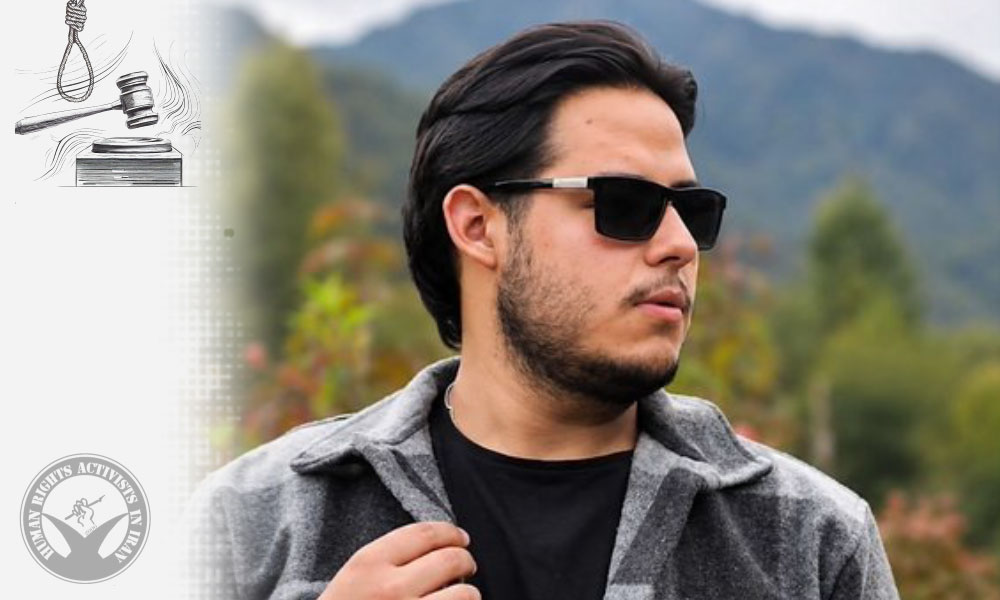
HRANA – Bijan Kazemi, a political prisoner currently held in Evin Prison, has been sentenced by Branch 15 of the Tehran Revolutionary Court to a total of 37 years and six months in prison.

Based on a ruling issued by Branch 15 of the Tehran Revolutionary Court, presided over by Judge Abolghasem Salavati, and recently communicated to him, he was sentenced to a total of 37 years and six months in prison on the charges brought against him in his case.

Bijan Kazemi, who had remained in pretrial detention until now, was tried in February of 2026 before Branch 15 of the Tehran Revolutionary Court on charges including “assembly and collusion to commit crimes against national security, and membership in groups opposing the state.”

An informed source told HRANA: “In this case, he also faced an accusation related to ‘procuring a weapon for the assailant of Judges Razini and Moghiseh,’ an allegation that had previously been rejected by security interrogators and about which judicial authorities in Kuhdasht had remained silent.”

In mid-August 2025, Bijan Kazemi’s interrogation session was held at Branch 5 of the Prosecutor’s Office of District 33 in Tehran without the presence of a lawyer. At the end of the session, bail was set at four billion tomans, but the case officer opposed his release. Mr. Kazemi was later transferred to The Ministry of Intelligence’s detention facility in Qom and returned to Evin Prison on September 25, 2025.

Bijan Kazemi has previously faced judicial harassment due to his activities.

Report on the Latest Status of Majid Jamshidzadeh in Evin Prison

HRANA – Majid Jamshidzadeh, a student at Iran University of Science and Technology and one of those arrested during the January 2026 protests, is currently serving his prison sentence in Evin Prison. He had previously been sentenced to five years in prison by Branch 15 of the Tehran Revolutionary Court.

According to HRANA News Agency, quoting Amir Kabir Newsletter, Majid Jamshidzadeh is serving his sentence in Evin Prison. He was previously sentenced by Branch 15 of the Tehran Revolutionary Court, presided over by Judge Abolghasem Salavati, to five years in prison on charges of “assembly and collusion with the intent to disrupt national security” and “disrupting public order.”

The report states that the verdict was verbally communicated to Mr. Jamshidzadeh in Evin Prison. However, because the ruling has not been officially registered in the judicial notification system, he has so far been unable to file an appeal request.

Majid Jamshidzadeh, an undergraduate industrial design student at Iran University of Science and Technology, was arrested on January 2, 2026, during public protests in Tehran and was subsequently transferred to Evin Prison.

It should be noted that protests and strikes by shopkeepers and bazaar merchants began in Tehran on Sunday, December 28, 2025, and within two days spread beyond markets and commercial centers. With the participation of students, citizens, and various social groups, these protests became one of the largest protest movements of recent years. Following the crackdown by security and law enforcement forces, thousands were killed or injured, and tens of thousands were arrested or summoned by security agencies. For more information, readers may refer to HRANA’s comprehensive report titled “Crimson Winter,” documenting the first fifty days following the outbreak of Iran’s nationwide protests.

British Nationals Craig and Lindsay Foreman Sentenced to Ten Years in Prison

HRANA – Craig and Lindsay Foreman, two British nationals currently imprisoned in Iran, have been sentenced to 10 years in prison by Branch 15 of the Tehran Revolutionary Court, presided over by Judge Abolghasem Salavati, on charges of “espionage.”

According to HRANA News Agency, citing BBC Persian, Branch 15 of the Tehran Revolutionary Court, headed by Judge Abolghasem Salavati, sentenced the couple to 10 years in prison on charges of “espionage.”

The British couple stated that despite being present in court, no evidence was presented and they were given no opportunity to defend themselves.

Their son, Joe Bennett, has said that he is deeply concerned about their conditions of detention. The UK Foreign Secretary has also described the ruling as “appalling and unjustifiable.”

The report does not provide further details, including the date on which the verdict was issued.

The couple had previously gone on hunger strike in November of last year in protest against the lack of progress in their case.

Craig Foreman and Lindsay Foreman had entered Iran as part of a round-the-world motorcycle trip and were arrested in December 2024 by the IRGC Intelligence in Kerman. Judicial authorities had earlier accused them of “espionage,” alleging that they had gathered information in several provinces under the cover of tourism and research activities.

The then British ambassador to Iran also met with the two defendants at the Kerman Prosecutor’s Office in February of last year.

In recent years, Iranian authorities have detained several foreign nationals on charges such as espionage or cooperation with hostile states. Some of these detainees have later been released following political negotiations. Human rights organizations and some Western governments have accused Iran of using such arrests as a means of political leverage, allegations that Iranian authorities have consistently denied.

New Prison Term for Jailed Political Prisoner Mostafa Tajzadeh

HRANA – Branch 22 of the Tehran Revolutionary Court has sentenced Mostafa Tajzadeh, a political prisoner held in Evin Prison, to 14 months in prison in connection with a case opened against him during his imprisonment.

Fakhrossadat Mohtashamipour, the wife of Mostafa Tajzadeh, announced in a statement that under a verdict issued today, Monday, February 16, by Branch 22 of the Tehran Revolutionary Court presided over by Judge Taghizadeh, this political prisoner was sentenced to 14 months of discretionary imprisonment on the charge of propaganda against the regime.

He had previously been summoned on December 30, 2025, following the opening of a new case, after receiving a notice to appear before Branch 23 of the Tehran Revolutionary Court to defend himself against the charges brought against him.

In July of 2025, in another case formed against him during his imprisonment, Mostafa Tajzadeh was sentenced to a total of five years in prison. According to Houshang Pourbabai, Mr. Tajzadeh’s defense attorney, with the issuance of this new ruling, the total sentences against his client have increased to 17 years in prison.

In December 2024, in another case, Mr. Tajzadeh was sentenced by Branch 15 of the Tehran Revolutionary Court, presided over by Judge Abolghasem Salavati, to one year in prison on the charge of propaganda against the regime and five years in prison on the charge of assembly and collusion against national security, totaling six years.

Regarding that case, Fakhrossadat Mohtashamipour had stated that it was initiated by the IRGC Intelligence Organization and that Abolghasem Salavati has, since 2009, issued a new sentence against Mostafa Tajzadeh for the third time.

Mostafa Tajzadeh was arrested by security forces on July 8, 2022, and transferred to The Ministry of Intelligence’s detention facility, known as Ward 2-A of Evin Prison. He was later sentenced by Branch 15 of the Tehran Revolutionary Court, presided over by Judge Salavati, to eight years in prison on charges of assembly and collusion against national security, spreading falsehoods, and propaganda against the regime, five years of which are enforceable.

Mr. Tajzadeh has previously faced judicial action and imprisonment due to his activities.

Forced Confession and Security Accusations Against Amirhossein Mousavi Broadcast on State TV

HRANA – The Islamic Republic of Iran Broadcasting (IRIB) has released a video featuring the forced confession of Amirhossein Mousavi, a political detainee held in Evin Prison.

According to HRANA, IRIB aired a video of Amirhossein Mousavi, in which efforts are made to portray him as involved in espionage and intelligence cooperation with Israel. Mousavi, appearing under apparent duress, describes his social media activities and voices remorse. The video claims he exchanged information with individuals linked to Israel during the 12-day war – despite the fact that his arrest took place roughly six months before that conflict began.

In September 2025, Mousavi’s case was referred to Branch 15 of the Tehran Revolutionary Court, presided over by Judge Abolghasem Salavati, following an indictment on charges of “assembly and collusion to act against national security” and “propaganda against the regime.” He also faces a separate charge of “insulting sacred beliefs,” which falls under the jurisdiction of the Tehran Province Criminal Court One. His lawyer previously announced that the first court hearing is scheduled for November 2, 2025.

A source close to Mousavi’s family told HRANA: “After ten months of investigation by Branch 5 of the Public and Revolutionary Prosecutor’s Office of District 33 in Tehran, his case was referred to the mentioned court branch with bail increased to 10 billion tomans.”

Earlier, Mousavi’s defense attorney, Reza Shafakhah, had shared updates regarding his client’s continued legal uncertainty and prolonged detention.

Mousavi, a Tehran resident approximately 41 years old, was arrested on December 18, 2024, at Mehrabad Airport while preparing to travel to Kish Island. His lawyer has stated that Mousavi’s account on the social media platform X (formerly Twitter) had been under surveillance for nearly six months and that his arrest stemmed from his activity there.

Before his arrest, Amirhossein Mousavi was active on X under the handle “James B Dean.”

Subscribe to Our Newsletter

Now is definitely not the time to stop reading!

Saman Mohammadi Khiyareh Executed

HRANA – On Saturday morning, Mizan News Agency, announced the execution of Saman Mohammadi Khiyareh, a political prisoner from Sanandaj. Mr. Mohammadi Khiyareh had previously been sentenced to death by Branch 15 of the Tehran Revolutionary Court.

The Judiciary’s Media Center stated that the sentence was carried out this morning, Saturday, October 4, 2025, after being upheld by the Supreme Court. In its report, the Judiciary accused Saman Mohammadi of “enmity against God (moharebeh) through membership in terrorist and Takfiri groups, carrying out armed operations, and planning and directing the assassination of Mamousta Sheikh al-Islam.”

The Judiciary further accused him of “armed robbery of a jewelry shop in Hamedan, stealing a private vehicle and killing its driver, shooting at civilians, and attacking a police station at the Sheikhan intersection in Sanandaj, which resulted in the death of a soldier.”

Saman Mohammadi Khiyareh, approximately 34 years old and a native of Sanandaj, was arrested in February 2010 on charges of moharebeh (enmity against God). A few months later, he was sentenced to death by Branch 15 of the Tehran Revolutionary Court, presided over by Judge Abolghasem Salavati. However, due to insufficient evidence, the Supreme Court’s Branch 41 overturned the verdict and sent the case to another branch for retrial. The new court sentenced him instead to 15 years in prison on charges of membership in anti-regime groups.

Nevertheless, in an opaque process and under pressure from security agencies – the complainants in the case – this ruling was overturned, and he was once again sentenced to death on the same charges.

A source close to the prisoner’s family previously told HRANA: “During detention, Saman Mohammadi was subjected to physical and psychological torture and forced to confess to charges including the killing of a military officer and another individual during the 2009 protests. However, he denied these confessions at every stage of interrogation and trial.”

According to HRANA’s statistics, Ghezel Hesar Prison in Karaj carried out the highest number of executions among all Iranian prisons, with 150 inmates hanged. This figure has nearly doubled compared to the previous year – a deeply alarming increase that underscores the escalating use of capital punishment in Iran.

Mohammad Amin Mahdavi Shayesteh Executed

HRANA News Agency – Today, Monday, June 23, Mizan, the Judiciary Media Center, announced the execution of Mohammad Amin Mahdavi Shayesteh, a prisoner convicted of espionage for Israel. In June of this year, his death sentence, issued while he was held in Ghezel Hesar Prison in Karaj, had been upheld by Branch 39 of the Supreme Court.

The Judiciary Media Center stated that Mohammad Amin Mahdavi Shayesteh was hanged this morning on charges of “espionage and intelligence cooperation in favor of the Israeli regime.”

The report claimed that Mahdavi Shayesteh was “the head of a cyber team affiliated with Mossad” and knowingly collaborated with Israel’s intelligence service.

Mizan further alleged that his responsibilities included “transmitting orders from Mossad officers,” “conducting virtual operations,” and even “directing field operations.”

The report did not provide further details, including the exact location where the execution was carried out.

In June of this year, Mohammad Amin Mahdavi Shayesteh’s death sentence, issued by Branch 15 of Tehran’s Revolutionary Court presided over by Judge Abolghasem Salavati, was confirmed by the Supreme Court. Mahdavi Shayesteh, a political prisoner approximately 27 years old, had been arrested in the fall of 2023 and was charged primarily with “collaborating with a hostile government.”

Previously, a source close to Mahdavi Shayesteh’s family told HRANA: “The accusations against Mohammad Amin were presented without sufficient evidence, and he was forced, under severe pressure, to make confessions whose validity is highly questionable. Furthermore, his arrest and trial process were marred by clear injustices, and he was denied access to legal counsel of his choice.”

Appeals Court Upholds Over 5-Year Sentence for Azerbaijani-Turk Activist Vadood Asadi

HRANA News Agency –The Gilan Province Appeals Court has upheld the five-year-and-six-month prison sentence of Vadood Asadi, an Azerbaijani-Turk activist currently detained in Evin Prison. The verdict was confirmed without any changes.

A source close to Asadi’s family told HRANA that the sentence, originally issued by Branch 3 of the Rasht Revolutionary Court, was reaffirmed by Branch 11 of the Gilan Appeals Court. Asadi was convicted on charges of propaganda against the regime, membership in anti-regime groups, and insulting the Supreme Leader.

On March 3, 2025, Asadi was transferred to Evin Prison to begin serving his sentence following an official summons.

In a separate case, Asadi had earlier been sentenced to four years in prison by Branch 15 of the Tehran Revolutionary Court, presided over by Judge Abolghasem Salavati, for “assembly and collusion to act against national security.” That sentence was later reduced to one year under a general pardon. After he accepted the verdict, a further reduction was applied, resulting in a final sentence of nine months.

Asadi was initially arrested by security forces in Rasht in February 2024. He was transferred to Evin Prison in March of that year and released on bail several days later.

The activist has a history of facing legal action related to his civil and political activities.

According to HRANA’s report, in 2024, 20 ethnic minority rights activists were sentenced to a total of 471 months (nearly 40 years) in prison. Over the past decade, the total length of such prison sentences has reached 913 years.

A Statistical Overview of Human Rights Violations in Iran in the Hijri Year 1403

HRANA News Agency -The year 1403 paints a stark picture of the continued violation of human rights in Iran. The persistent threat to freedom of thought and expression, the crackdown on peaceful protesters, increased pressure on ethnic and religious minorities, the prosecution and harassment of human rights activists, the execution of juveniles, the plight of child laborers, violations of women’s rights and the rights of sexual and gender minorities, and the poor conditions in detention centers and prisons are just some examples of the daily human rights violations in Iran. The comprehensive report by the Statistics and Publications Center of Human Rights Activists in Iran, presented below, provides a distressing account of human rights violations in the country over the past year.

Provincial Comparison: Introducing HRANA’s Human Rights Violation Index (HRVI)

This year, HRANA – the news agency of the Human Rights Activists in Iran (HRA) – has introduced the Human Rights Violation Index (HRVI) as a data-driven tool for analyzing and comparing the human rights situation across different provinces of Iran. The index provides organizations and researchers with a geographical and temporal framework for monitoring human rights violations.

The HRVI is built on thousands of HRANA’s reports and comprises 37 carefully developed indicators. It categorizes human rights violations into three main areas, each represented by a sub-index:

Political Rights Suppression Index (PRSI):
This sub-index measures actions by Iran’s security and judicial apparatus aimed at suppressing political and civil activism. It covers state-led violations against a wide range of groups, including civil rights activists, labor and women’s rights advocates, journalists, and others. Focused on direct government involvement, it captures incidents such as arbitrary arrests by security forces, prison sentences for political charges, and frequent summons or interrogations.

PRSI values across Iran’s provinces, reflecting the intensity of political repression.


Lack of Legal Protection Index (LLPI):

This sub-index assesses the government’s failure or unwillingness to provide legal protection for vulnerable groups such as women, workers, and children. It measures the state’s inability to shield people from violence, discrimination, and exploitation through a variety of indicators.

LLPI values across Iran’s provinces, reflecting the extent of legal protection failures for vulnerable groups.

Physical Integrity Index (PII):
This sub-index tracks state-led violent actions directly targeting citizens, including prisoners, kulbars (border porters), and fuel carriers. It also covers severe and inhumane punishments such as executions, torture, and prolonged solitary confinement.

PII values across Iran’s provinces, reflecting the intensity of state-led physical violence and inhumane punishments.

Each indicator is weighted according to the severity and impact of the violation to ensure that the most egregious cases have a greater influence on the overall index. The final HRVI score is calculated based on the weighted sum of these three sub-indices.

HRVI values across Iran’s provinces, reflecting the overall severity of human rights violations.

For a detailed breakdown of the indicators and the methodology behind the index, please refer to the HRVI documentation.

In summary, through extensive data collection and statistical modeling, the Human Rights Violation Index offers a quantitative and structured approach to assessing the human rights landscape in Iran.

Freedom of Thought and Expression

In 1403, a total of 1,141 reports were recorded in the field of thought and expression. During this period, at least 1,300 people were arrested, 168 of whom were detained without a judicial warrant. Additionally, 307 cases of prosecution, 39 cases of home searches, 25 instances of convicting publications, 3 cases of internet filtering, 1 case of property confiscation, 74 protest gatherings, 3 cases of preventing gatherings, 2,621 summonses to judicial authorities, and 161 instances of sentence enforcement were documented.

In this domain, judicial authorities issued at least 22,986 months of imprisonment for 548 individuals. This included 20,864 months of enforceable imprisonment and 2,122 months of suspended sentences. Notably, 4,965 months of these sentences were issued by the appellate court and 252 months by the Supreme Court. Additionally, 81 individuals were fined a total of 5,589 million tomans (approximately 70,000 dollars), 95 individuals were sentenced to 6,994 lashes, 28 individuals to 1,152 months of exile, and 78 individuals were deprived of their social rights.


Annual Statistical Comparison of Arrests in the Past Five Years (Freedom of Thought and Expression)
YearNumber of ArrestsArrests per Million PeoplePercentage Change Compared to Previous Year
13992,29227.5-45%
14001,41916.88-11%
140128,647338.2+95%
14022,49629.25-48%
14031,30028.89


Judicial Authorities Issuing the Most Sentences in the Freedom of Thought and Expression Category
Judge NameCourt BranchCourt PlaceNumber of CasesPrison Sentences (Months)LashesFine (Million Toman)
Jabar Javadi RamiCriminal Court Branch 2Tehran443,5765,550
Iman AfshariRevolutionary Court Branch 26Tehran412,0951484,460
Mohammad Reza TavakoliRevolutionary Court Branch 1Isfahan292,244
Abbasali HouzanAppellate Court Branch 36Tehran231,569
Mahdi RasekhiRevolutionary Court Branch 3Rasht171,023
Abolghasem SalavatiRevolutionary Court Branch 15Tehran151,015
Mohammad-Sadegh Iran AghidehAppellate Court Branch 11Gilan11727
Mahdi FakhriCriminal Court Branch 101Boukan11145
Sajad DoostiRevolutionary Court Branch 1Mahabad9402
Mohammad KaramiRevolutionary Court Branch 1Sanandaj7277


Children’s Rights

In 1403 Hijri year, a total of 498 reports were recorded in the field of children’s rights. During this period, at least 27 cases of child rape and sexual abuse, 43 cases of child murder, 5 cases of honor killings, 3 abandoned newborns, 9 deaths and 17 injuries among child laborers, 14 deaths and 204 injuries of children due to officials’ negligence, 58 suicides, at least 4,296 cases of child abuse, 28 arrests of individuals under 18, at least 3 million school dropouts, and approximately 2 million child laborers were documented. Additionally, 48 months of enforceable imprisonment were reported for 2 individuals under the age of 18.

Also, at least 5 juvenile offenders were executed in Iran over the past year.

According to official data from the Iranian Statistics Center, as of 1398 in the Hijri calendar, approximately 16.8% of girls aged 15 to 19 in Iran had been married. Among the limited available government statistics on this issue, a report from the same center shows that between winter 1400 to autumn 1401, at least 27,448 girls under the age of 15 were married in Iran. While the rate of child marriages among girls under 15 had been declining since 1396, the trend reversed and began rising again from 1398 onward.

Reports indicate that in 1399 and 1400, 31,646 and 32,655 girls under 15 were married, respectively. The number of marriages involving girls under 15 increased by 933 cases in autumn 1401 compared to the summer of the same year. Furthermore, in autumn 1401, over 5,500 more girls aged 15 to 19 were married compared to the previous season (summer 1401).

According to this report, most child brides become mothers at a very young age. As announced by the National Organization for Civil Registration, in 1400, at least 69,103 newborns were born to mothers aged 10 to 19, and 1,474 newborns were born to mothers aged 10 to 14.

Etemad newspaper reported that Iranian authorities would stop publishing statistics on child marriages and the number of children born to underage mothers. According to the report, an official from National Organization for Civil Registration confirmed that an “order was issued” to prevent the release of this data.

Women’s Rights

In 1403, a total of 253 reports were recorded in the field of women’s rights. These included 125 cases of femicide, 33 honor killings (including the murder of 19 men), 16,567 cases of domestic violence, 5 acid attacks, 3 suicides, 30,642 cases of enforcement related to improper veiling, 2 cases of prosecution, and 14 months of imprisonment for women. Additionally, 74 cases of flogging and fines amounting to 9,500,000 tomans were issued against women.

Over the past year, at least 649 arrests were documented in this category, of which 643 were due to non-compliance with mandatory hijab laws.

Workers’ Rights

In 1403, a total of 1,712 reports were recorded in this category, documenting the arrest of 13 individuals. Additionally, 10 workers or labor activists were sentenced to a total of 340 months of enforceable imprisonment. Furthermore, one individual was sentenced to 24 months of exile. Other documented cases include 31 summonses to judicial authorities, 12 interrogations, 3 trials, 5 instances of sentence enforcement, 5 cases of self-immolation, 6 suicides, 724 protests, 1,377 strikes, 1 house search, and 1 case of property confiscation.

Reports from 1403 indicate that delays or non-payment of wages affected at least 18,121 workers for a total of 592 months. Additionally, 4,765 workers were dismissed or laid off, 585 cases of unemployment were recorded, and 525,592 workers experienced a total of 488 months without insurance coverage. Furthermore, 11 factory closures were reported, leaving 4,835 workers in an uncertain employment status. At least 2,042 workers lost their lives in workplace accidents, and 16,113 workers sustained work-related injuries. Iran ranked 102nd globally in workplace safety compliance, a very low ranking.

Trade and Labor Unions

In 1403, the Statistics and Publications Center recorded 1,436 incidents related to trade unions and professional associations across Iran. These reports include the arrest of 28 union activists, 122 summonses to judicial or security authorities, 536 closures of business premises, 5 instances of physical assault, 1 license revocation, 17 trials in judicial courts, 19 security agency interrogations, 13 dismissals or layoffs, 4 cases of forced retirement, 1,187 protests, and 70 strikes. Additionally, at least 1,613 individuals experienced wage delays totaling 393 months, 3 home searches, and 6 cases of sentence enforcement.

Moreover, 75 individuals were sentenced to a total of 881 months in prison, including 777 months of enforceable imprisonment and 104 months of suspended sentences. Of this total, 147 months were issued by the appellate court. Additionally, 5 individuals were sentenced to 168 months of exile, 1 individual received 29 lashes, and 29 individuals were fined a total of 59,540,000 tomans.

Prisoners’ Rights

In 1403, the following violations of prisoners’ rights were documented: 14 cases of physical assault against political prisoners, 375 instances of medical neglect or deprivation of healthcare services, 312 illegal transfers of prisoners to solitary confinement, 79 hunger strikes, 36 cases of forced transfers or exile of prisoners, 335 cases of threats and pressure against political and ideological prisoners, 156 instances of denied family visits, 5 prisoner deaths due to illness, 18 suicides, 2 cases of self-immolation, 7 prisoner murders, 106 instances of denied access to legal representation, 105 cases of restrictions on phone calls, 75 cases of failure to separate prisoners based on their offenses, 495 cases of prisoners being held in unsuitable conditions, 18 forced confessions, and 99 instances of denial of medical leave.

Additionally, 275 cases of prisoners being held incommunicado and 928 cases of detainees being kept in an indeterminate legal status were documented.

Executions

As in previous decades since the 1979 Revolution, executions in Iran continue to represent one of the most severe forms of human rights violations. In 1403, at least 1,050 individuals — including 29 women and 5 juvenile offenders — were executed. Among them, 5 executions were carried out publicly. During the same period, 189 additional people were sentenced to death, including one individual specifically condemned to public execution. Notably, the Supreme Court also upheld the death sentences of 55 individuals within this timeframe.


Annual Statistical Comparison of Executions in the Past Five Years
YearNumber of ExecutionsExecutions per Million PeoplePercentage Change Compared to Previous Year
13992462.95+334%
14003514.17+192%
14016207.3+75%
14027719.03+35%
14031,05012.18


Execution Rate by Province (Executions Per 100,000 People)
ProvincePopulationNumber of ExecutionsExecution Rate
Alborz2,712,4001907.19
Fars4,851,2741082.23
Isfahan5,120,850841.64
Razavi Khorasan6,434,501671.04
East Azerbaijan3,909,652631.61
Kerman3,164,718451.42
West Azerbaijan3,265,219431.32
Lorestan1,760,649402.27
Sistan and Baluchestan2,775,014361.3
Zanjan1,057,461312.93
South Khorasan768,898314.03
Yazd1,138,533302.63
Golestan1,868,819291.55
Hamadan1,738,234291.67
Qazvin1,273,761282.2
Gilan2,530,696281.11
Kermanshah1,952,434241.23
Qom1,292,283231.78
Khuzestan4,710,509180.38
Mazandaran3,283,582170.52
Hormozgan1,776,415170.96
Markazi1,429,475140.98
Ardabil1,270,42090.71
Ilam580,15891.55
Semnan702,36071
Kohgiluyeh and Boyer-Ahmad713,05260.84
Kurdistan1,603,01160.37
Bushehr1,163,40060.52
North Khorasan863,09240.46
Chaharmahal and Bakhtiari947,76320.21


Ethnic Minorities’ Rights

In 1403, a total of 278 reports were documented in the category of ethnic-national rights. According to these reports, the arrest of 332 citizens was recorded, of which 153 arrests were carried out without a judicial warrant. Although the charges against 234 of these detainees remain unclear, based on patterns and the historical actions of security agencies in the mentioned regions, these arrests have been categorized under ethnic rights violations.

Additionally, 29 individuals were sentenced to a total of 1,244 months in prison, including 1,178 months issued by primary courts and 66 months by appellate courts. Furthermore, 4 individuals were fined a total of 53,600,000 tomans. Other documented cases include the summons of 59 individuals to security and judicial authorities, 5 instances of sentence enforcement, 36 trials, and 17 interrogations.


Annual Statistical Comparison of Arrests in the Past Five Years (Ethnic Minorities’ Rights)
YearNumber of ArrestsArrests per Million PeoplePercentage Change Compared to Previous Year
13994004.79-25%
14003584.26-10%
14012422.9+33%
14023714.35-11%
14033323.85


Religious Minorities’ Rights

In 1403, a total of 169 reports were documented in the category of religious minorities’ rights. According to these reports, 124 citizens were arrested. Additionally, 86 individuals were sentenced to a total of 4,364 months of enforceable imprisonment and 516 months of suspended imprisonment. Of this total, 4,070 months were issued by primary courts and 810 months by appellate courts.

Other documented violations include 63 summonses to judicial and security authorities, 49 trials, 19 interrogations, 1 case of preventing the burial of deceased individuals, 2 cases of cemetery destruction, 47 home searches, 37 travel bans, 20 instances of sentence enforcement, 1 case of property confiscation, and 10 cases of restrictions on economic activities.


Annual Statistical Comparison of Arrests in the Past Five Years (Religious Minorities’ Rights)
YearNumber of ArrestsArrests per Million PeoplePercentage Change Compared to Previous Year
13991001.2+20%
1400670.8+80%
14011752.1-31%
14021481.73-17%
14031241.44


Judicial Authorities Issuing the Most Sentences in Religious Minorities’ Rights
Judge NameCourt BranchCourt TypeNumber of CasesPrison Sentences (Months)LashesFine ( million Toman)
Mohammad Reza TavakoliRevolutionary Court Branch 1Isfahan282,2201,800
Kamran ZareAppellate Court Branch 37Fars7232261.3
Mahdi RasekhiRevolutionary Court Branch 3Rasht5145320.02
Iman AfshariRevolutionary Court Branch 26Tehran4524910
Gholi Mir NasabRevolutionary Court Branch 2Sari3100


Protests and Strikes

In 1403, at least 2,255 protest gatherings took place across Iran. This figure includes 724 labor protests, 1,187 trade union protests, 74 protests related to freedom of thought and expression, 47 student protests, and 48 environmental protests. Additionally, 175 protests were held across 31 provinces by citizens, most of whom were victims of financial fraud or individuals whose civil rights had been violated. Alongside these protests, at least 70 trade union strikes and 1,377 labor strikes were also recorded.

Civilian Killings

Throughout 1403, a total of 355 civilians were shot by military forces, resulting in the deaths of 156 individuals. This includes the deaths of 31 kolbars (border couriers), 42 fuel carriers, and 83 other civilians. Additionally, 199 civilians sustained injuries due to indiscriminate gunfire by military personnel, comprising 105 kolbars, 51 ordinary citizens, and 43 fuel carriers.

It is also worth noting that 30 other kolbars were involved in accidents due to environmental and geographical conditions such as hypothermia and falls from heights. Of these, 21 kolbars were injured, and 9 lost their lives. Moreover, 19 fuel carriers were involved in accidents following pursuits by military forces, resulting in the deaths of 5 and injuries to 14 others.

Landmine and Explosion Victims

Landmines left from past wars continue to pose a deadly threat to border residents each year. Meanwhile, the Iranian government continues to produce and plant anti-personnel mines, insisting—contrary to international treaties—that the use of such mines is the only effective way to secure the country’s long borders.

According to data from the past year, at least 9 civilians lost their lives due to landmine explosions in border areas, while 19 others sustained injuries.

Flogging and Amputation Sentences

The International Covenant on Civil and Political Rights explicitly prohibits degrading and inhumane punishments such as flogging and amputation. However, according to compiled data from 1403, at least 4 defendants were subjected to a total of 108 lashes under judicial orders in Iran. Additionally, Iranian courts sentenced at least 159 individuals to a total of 10,984 lashes.

Furthermore, the amputation sentences of two convicts were carried out, while four other individuals were sentenced to amputation by Iranian judicial authorities.

Sentences Issued

Over the past year, courts across Iran issued verdicts in 744 cases, collectively sentencing individuals convicted on political or ideological grounds to 27,857 months of enforceable imprisonment and 21,831 months of suspended imprisonment. Of these, 43,209 months were ruled by primary courts, 6,227 months by appellate courts, and 252 months by the Supreme Court.

Additionally, judicial authorities issued fines totaling 9,999,172,000 tomans, 7,127 lashes, 86 travel bans, 142 instances of deprivation of social rights, and 1,344 months of exile.

Arrests

In the past year, the arrest of 2,491 individuals in Iran was based on political or ideological grounds, or in clear violation of human rights principles. Among the most significant cases were 1,300 arrests related to freedom of thought and expression. Other documented arrests include:

. 13 laborers and labor activists
. 28 individuals under 18
. 4 student activists
. 28 trade union activists
. 124 religious minority members
. 1 individual in the cultural sector
. 1 individual from the LGBTQ+ community
. 11 environmental activists
. 332 individuals of ethnic backgrounds

It should be noted that the charges against 234 of these ethnic individuals remain unclear. However, based on established patterns and the actions of security agencies in the affected regions, these arrests have been classified under ethnic-national rights violations.

Additionally, at least 649 arrests related to women’s rights were recorded, of which 643 were due to non-compliance with mandatory hijab laws.

Comparison of the Number of Convicted Individuals Over the Past Five Years
YearNumber of Convicted IndividualsPercentage Change Compared to Previous Year
1399741+0.4%
14001,051+40%
14011,075-30.7%
1402843-11.7%
1403744


Comparison of the Number of Imprisonment Sentences (Months) Over the Past Five Years
YearNumber of Months of Imprisonment IssuedPercentage Change Compared to Previous Year
139926,775+4%
140013,316+109.1%
140133,671-17.2%
140233,790-17.5%
140327,857


Judicial Authorities Issuing the Most Sentences in the Past Year
Judge NameCourt BranchCourt PlaceNumber of CasesPrison Sentences (Months)LashesFine (Million Toman)
Mohammad Reza TavakoliRevolutionary Court Branch 1Isfahan574,4641,800
Iman AfshariRevolutionary Court Branch 26Tehran512,793148 lashes1,356
Jabar Javadi RamiCriminal Court Branch 2Tehran443,5765,550 lashes
Abbasali HouzanAppellate Court Branch 36Tehran312,0131,000
Abolghasem SalavatiRevolutionary Court Branch 15Tehran261,999
Mahdi RasekhiRevolutionary Court Branch 3Rasht251,312320.02
Mohammad-Sadegh Iran AghidehAppellate Court Branch 11Gilan13800800
Mahdi FakhriCriminal Court Branch 101Boukan11145
Sajad DoostiRevolutionary Court Branch 1Mahabad9156
Mostafa NarimaniRevolutionary Court Branch 3Karaj8431


Annual Statistical Comparison of Arrests in the Past Five Years
YearNumber of ArrestsArrests per Million PeoplePercentage Change Compared to Previous Year
13992,95035.37-18%
14001,88422.28+30%
140129,950353.6-92%
14023,86445.28-35%
14032,49128.89


Final Note

It is important to emphasize that the statistics presented in this report do not fully capture the state of human rights in Iran. The Iranian government restricts the activities of independent human rights organizations and limits their access to essential information. As a result, these figures represent only a minimum estimate of the human rights situation in the country, compiled exclusively by civil society groups — including HRANA — and documented by its Statistics and Publications Center.

International Women’s Day; Key Figures in Violations of Women’s Rights Over the Past Year

HRANA News Agency – While March 8, International Women’s Day, is a time to honor women’s struggles for equality worldwide, in Iran, it serves as a stark reminder of systematic oppression and ongoing violations of women’s rights. Instead of progress, Iranian women continue to face state-imposed restrictions, harsh punishments, and widespread repression, enforced by officials who use their power to limit freedoms, enforce discriminatory laws, and suppress dissent.

This report sheds light on 18 individuals who, over the past year, have played a key role in the oppression of women in Iran. From judges issuing death sentences and long-term imprisonments to officials implementing repressive policies like the “Noor Plan”, these individuals have been instrumental in violating women’s rights and enforcing systemic gender discrimination.

Women’s Rights Under Attack in Iran

While women in many parts of the world have made strides toward gender equality, in Iran, their fundamental rights continue to be systematically violated. The state’s grip on women’s personal and public lives extends across various domains, including:

  • Legal and social restrictions on marriage, child custody, employment, and personal freedoms
  • The violent suppression of protests and civil activism
  • Compulsory hijab laws, enforced through harsh crackdowns
  • Targeted arrests and severe sentencing of women advocating for change

One of the most blatant aspects of this repression is the direct role of judges, legislators, and government officials in depriving women of their rights, freedoms, and human dignity. These individuals not only enforce restrictive laws but also suppress protesters, issue heavy sentences, and use violence to crush any efforts toward change.

The 18 Officials Behind the Repression of Women

This report, compiled using data from Spreading Justice (SJ), a database of human rights violators, identifies 18 individuals who have played a direct role in enforcing discriminatory policies and punishing women who resist oppression. These include:

  • Judges who have sentenced female protesters to death and lengthy prison terms
  • Officials involved in oppressive programs like the “Noor Plan,” aimed at enforcing compulsory hijab and restricting women’s freedoms
  • Security forces and judicial authorities responsible for violent crackdowns, intimidation, and human rights abuses

This list is not just a collection of names—it serves as evidence of the systematic persecution of women in Iran. Whether through prison sentences, executions, or street-level repression, these officials have weaponized the law to silence women and enforce state control through fear, intimidation, and punishment.

A Call for Global Action

HRANA urges the international community, human rights organizations, and governments committed to human rights principles to treat this report as documented proof of widespread violations of women’s rights in Iran. Targeted sanctions against these individuals, diplomatic pressure, and legal action in international courts are crucial steps in holding them accountable for their role in state-sponsored oppression.

As Iranian women continue to resist and defend their rights, global silence would amount to complicity in their oppression. The international community must stand in solidarity and take concrete action against human rights violators to confront this systematic repression of women.

Publishing this report is a step toward raising awareness and mobilizing global attention to the widespread human rights abuses Iranian women endure—a call to action that cannot be ignored.

1. Abolghasem Salavati

Example of actions taken: Issuance of a death sentence for Varishe Moradi on the charge of “moharebeh” (waging war against God) by Branch 15 of the Tehran Revolutionary Court, presided over by Judge Abolghasem Salavati.

2. Iman Afshari

Example of actions taken: Issuance of a death sentence for Pakhshan Azizi on the charge of “moharebeh” by Branch 26 of the Tehran Revolutionary Court, presided over by Judge Iman Afshari.

3. Ali Razini

Example of actions taken: Approval of Pakhshan Azizi’s death sentence by Branch 39 of the Supreme Court. Razini, who presided over this branch, was shot and killed at his workplace on January 18.

4. Ghasem Mazinani

Example of actions taken: Rejection of Pakhshan Azizi’s request for a retrial by Branch 9 of the Supreme Court, presided over by Ghasem Mazinani.

5. Ahmad Darvish Goftar

Example of actions taken: Issuance of a death sentence for Sharifeh Mohammadi on the charge of “moharebeh” by Branch 1 of the Rasht Revolutionary Court, presided over by him.

6. Darvish Goftar (son of Ahmad Darvish Goftar)

Example of actions taken: After the Supreme Court overturned the death sentence of Sharifeh Mohammadi, Darvish Goftar, as the head of Branch 2 of the Rasht Revolutionary Court, reissued the death sentence.

7. Seyed Mousa Asaf al-Hosseini

Example of actions taken: Issuance of a one-year prison sentence, two years of exile to Rasht, a two-year travel ban, and a two-year ban on using social media for Hamideh Zarei, one of the detainees of the 2022 nationwide protests, by Branch 1 of the Karaj Revolutionary Court, presided over by Seyed Mousa Asaf al-Hosseini.

8. Amirhossein Bankpour Fard

Example of actions taken: One of the architects and supporters of the “Family Protection Bill through the Promotion of Chastity and Hijab” during his tenure in the Cultural Commission of the Islamic Consultative Assembly (Parliament).

9. Hossein Mirzaei

Example of actions taken: One of the drafters, supporters, and voters of laws violating human rights, including the “Family Protection Bill through the Promotion of Chastity and Hijab.” He also supported the “Family Protection and Population Growth Law.”

10. Zohreh Elahian

Example of actions taken: Participated in drafting, supporting, and voting for human rights-violating laws, including the “Family Protection and Population Growth Law.” As a member of the 11th Parliament, she supported the police operation known as “Project Noor” (a campaign initiated by the Islamic Republic’s Law Enforcement Command on April 13, 2024, to enforce mandatory hijab laws) and urged other responsible institutions to fulfill their legal duties in imposing mandatory hijab.

11. Hajar Chenarani

Example of actions taken: As one of the members and the first secretary of the Judicial and Legal Commission of the Parliament, she played a role in drafting and supporting the “Family Protection Bill through the Promotion of Chastity and Hijab.”

12. Hassan Mofakhemi Shahrestani

Example of actions taken: As the law enforcement commander of Mazandaran province, he was responsible for violations of women’s rights during his tenure. In one instance, in early June 2024, law enforcement officers in Noor County, Mazandaran province, fired at a vehicle that was on the impound list due to hijab violations. According to reports, contrary to the police’s claim of shooting at the vehicle’s tires, officers fired at least once “at the driver’s door,” hitting a young woman named Arezou Badri.

13. Heydar Susani

Example of actions taken: As the law enforcement commander of Bushehr province, he was responsible for the arrest of women over their attire and for sending warning messages about non-compliance with mandatory hijab in vehicles in the province.

14. Mahmoud Hafezi

Example of actions taken: As a mid-ranking commander in the Islamic Republic’s Law Enforcement Force, he played a role in violating women’s rights in Rasht. In one instance, a video was published showing a violent altercation between morality police officers and a young woman, highlighting the police’s enforcement of hijab laws in the city.

15. Mohammad Movahedi Azad

Example of actions taken: As the Attorney General, he was one of the key figures in supporting and enforcing “Project Noor” and mandatory hijab policies nationwide. In addition to repeated endorsements of “Project Noor,” the Attorney General’s Office announced that a draft directive had been prepared for the Islamic Republic’s Law Enforcement Command to implement this plan.

16. Ahmadreza Radan

Example of actions taken: As the Chief Commander of the Islamic Republic’s Law Enforcement Force, he was directly responsible for enforcing mandatory hijab policies, including “Project Noor,” across Iran.

17. Gholamhossein Mohseni Eje’i

Example of actions taken: As the head of the Judiciary, he was directly responsible for imposing restrictions, crackdowns, and enforcement measures related to mandatory hijab, the drafting of the “Hijab and Chastity Bill,” and the implementation of “Project Noor.”

18. Ghasem Rezaei

Example of actions taken: As the Deputy Commander-in-Chief of the Law Enforcement Force, he was responsible for implementing mandatory hijab policies. In one instance, two teenage girls on Vatanpour Shomali Street in Tehran were severely beaten by officers enforcing “Project Noor” due to their lack of hijab. In a published video, officers were seen violently dragging one of the girls to the ground and forcing her into a white police van. The Morality Police later claimed that one of the female officers had broken her finger in the altercation and threatened the girls against filing a complaint.

The individuals named in this report represent only a small fraction of the vast network of officials responsible for the repression, discrimination, and systematic violations of women’s rights in Iran. Through their decisions, policies, and actions, these figures have trampled on fundamental freedoms, reinforcing a system that seeks to control, silence, and punish women for demanding their basic rights.

Yet, despite this relentless oppression, Iranian women continue to resist. Their unwavering fight for justice, freedom, and equality is a testament to their courage and determination in the face of state-imposed restrictions and brutality.

Documenting these violations is not just about bearing witness—it is a crucial step toward accountability. Raising international awareness and applying legal, diplomatic, and economic pressure—including targeted sanctions against those responsible—can play a key role in challenging the Iranian government’s systematic oppression of women.

In addition to this report, HRANA has published a list of female political and ideological prisoners in Iran, detailing the names and cases of women imprisoned for their beliefs and civil activism. Readers are encouraged to refer to that report for a broader understanding of the deep-rooted gender-based persecution Iranian women endure.

The fight for women’s rights in Iran is far from over—but neither is the resolve of those who continue to stand against injustice. Global solidarity and concrete action are imperative to ensure that these violations do not go unanswered.