Truckers’ Strike: Farzad Rezaei Arrested in Divandarreh

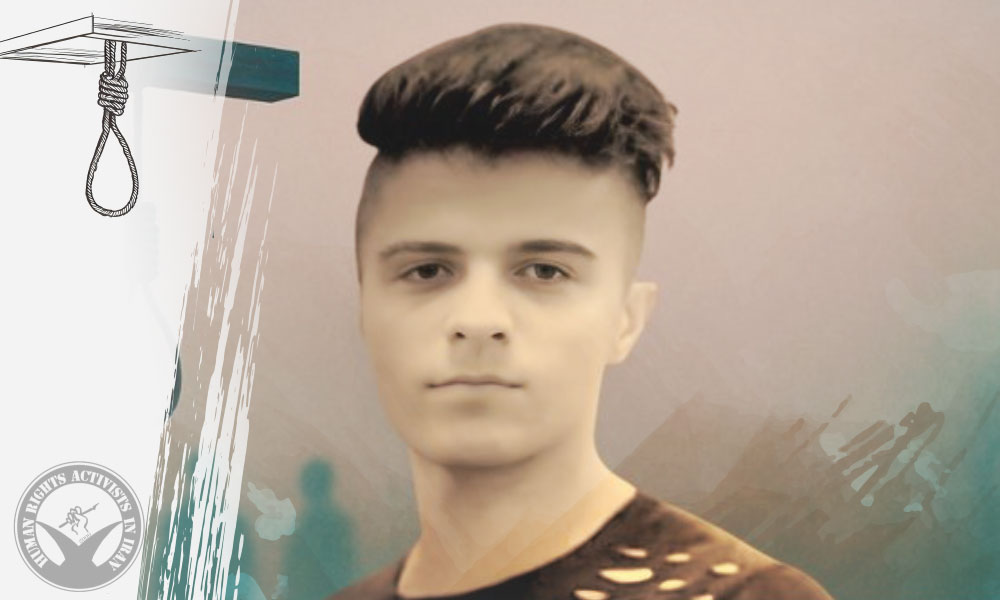
HRANA News Agency– Farzad Rezaei, a resident of Divandarreh, was arrested by security forces for expressing support and solidarity with the nationwide truckers’ strike.

According to HRANA, the news agency of Human Rights Activists in Iran, Rezaei was detained recently in Divandarreh, Kurdistan province, amid the ongoing protests by truckers.

Sources told HRANA that his arrest was directly linked to his support for the strike. As of the time of this report, no information has been made available regarding his place of detention or the charges against him.

The truckers’ protests began in Iran on May 22. Since then, dozens of truckers and supporters have been arrested in various cities across the country.

Additionally, HRANA has published a comprehensive report on the past week’s strikes, detailing the causes behind the protests, their spread, the government’s response, and the status of those detained.

Drug-Related Offenses: Three Prisoners Executed in Ghezel Hesar Prison, Karaj

HRANA News Agency –In the early hours of Monday morning, June 2, three prisoners convicted of drug-related offenses were executed in Ghezel Hesar Prison in Karaj.

HRANA, the news agency of Human Rights Activists in Iran, has confirmed the identities of two of the executed individuals as Ali Karami Nasr and Alireza Shahbazi, both from Kuhdasht. The identity of the third individual remains under investigation.

The three had previously been arrested on drug charges and sentenced to death by the Revolutionary Court.

As of the time of publication, neither prison authorities nor relevant state institutions have officially acknowledged the executions.

According to HRANA’s statistics, Ghezel Hesar Prison in Karaj carried out the highest number of executions among all Iranian prisons, with 150 inmates hanged. This figure has nearly doubled compared to the previous year — a deeply alarming increase that underscores the escalating use of capital punishment in Iran.

Political Prisoner Sayeh Seydal Hospitalized Amid Ongoing Hunger Strike

HRANA News Agency – Mahvash (Sayeh) Seydal, a political prisoner held in Evin Prison, is now on the eighth day of her hunger and medication strike. Despite a serious decline in her health that led to her transfer to the hospital last night, she was returned to prison in poor physical condition.

According to HRANA, the news agency of Human Rights Activists in Iran, Sayeh Seydal continues her hunger and medication strike in Evin Prison for the eighth consecutive day.

On the night of June 1, Seydal was transferred from prison to a hospital due to worsening health. Medical tests revealed the presence of a hemorrhagic cyst. She refused to take prescribed medication and, despite her critical condition, was returned to prison.
Seydal began her hunger and medication strike on May 26, 2025, in protest against the lack of adequate medical care in prison.

On March 10, 2025, Seydal was formally charged in Branch 3 of the Evin Prosecutor’s Office in connection with a new case opened during her incarceration, facing accusations of property damage and disturbing public order.

She had been granted furlough on February 3, 2025. During that time, she posted on Instagram that upon reporting to Branch 1 of the Sentence Enforcement Office at Evin Prosecutor’s Office, she was physically assaulted and insulted by a security officer for refusing to wear a chador. Seydal stated that when she attempted to file a complaint, the prosecutor refused to register it.

Seydal was first arrested on October 6, 2024, by security forces and transferred to the women’s ward of Evin Prison.

Following a new conviction, her previously suspended sentence was converted into an enforceable one. She was prosecuted in Branch 26 of the Tehran Revolutionary Court on charges including “spreading falsehoods” and was sentenced to two years in prison and paying a fine. One of the charges related to her reposting news about the wave of poisonings targeting schoolgirls.

In November 2023, the same court under Judge Iman Afshari had previously sentenced her to one year in prison and a fine for “spreading falsehoods with the intent to disturb public opinion,” though the prison sentence had been suspended for five years.

Seydal was initially arrested on June 21, 2023, along with several other Clubhouse activists in Tehran, reportedly due to her activity on the platform. She was released on bail from The Ministry of Intelligence’s detention facility (Ward 209 of Evin Prison) on July 23, 2023.

HRANA’s data from the past decade shows that during this ten-year period, over 2,050 political prisoners and prisoners of conscience in Iran prisons have been forced to go on hunger strike in protest of various abuses—including prolonged detention, being held in legal limbo, unfair trials, poor prison conditions, and being held in solitary confinement or alongside inmates convicted of violent crimes.

Mashhad: 19 Proponents of the “Yamani” Movement Arrested

HRANA News Agency – Nineteen individuals affiliated with the “Yamani” movement were arrested by security forces in Mashhad.

According to news outlets linked to security agencies, the arrests took place during a religious gathering and were carried out under judicial orders. While the reports identified the detainees as supporters of the “Yamani” movement, no further details have been provided regarding the circumstances of their arrest.

The identities and current whereabouts of those detained remain unknown. As of this writing, no official statements have been issued by security or judicial authorities.

In Iran, individuals are regularly arrested for claiming spiritual or religious connections to the Hidden Imam of Shi’a Islam. The “Yamani” movement—led by Ahmad al-Hasan Yamani—advocates beliefs centered on Mahdism, a messianic doctrine in Shi’a Islam.

Iranian security institutions, particularly the Ministry of Intelligence, maintain specialized units tasked with monitoring and suppressing religious, mystical, and ideological groups that fall outside the state’s sanctioned framework.

Two Prisoners Executed in Hamedan Prison

HRANA News Agency – At dawn today, June 2, two prisoners previously sentenced to death on drug-related charges were executed in Hamedan Prison.

HRANA has identified the two individuals as Navid Hodavand-Khani and Naeem Naseri.

According to information obtained by HRANA, both had been arrested on drug-related charges and later sentenced to death by the Revolutionary Court.

The prisoners were transferred to solitary confinement on May 31 in preparation for the execution.

As of the time of this report, the executions have not been officially announced by prison authorities or relevant institutions.

In 2024, according to 812 reports compiled by HRANA, the Iranian regime executed 930 individuals in its prisons—marking the highest number of executions in the past 12 years. Despite the scale of these executions, prison officials and other relevant authorities publicly acknowledged only 6% of them, highlighting the regime’s lack of transparency and accountability.

Subscribe to Our Newsletter

Now is definitely not the time to stop reading!

Truckers’ Strike: Two Arrested in Kurdistan Province

HRANA News Agency – Zanko Rostami in Dehgolan and Rezgar Moradi in Sanandaj were arrested by security forces for supporting and participating in the nationwide truckers’ strike.

Based on information obtained by HRANA, Rezgar Moradi was arrested on May 27 in Sanandaj, and Zanko Rostami was detained on May 25 in Dehgolan by security forces.

Mr. Rostami was arrested during a protest gathering by truckers in Dehgolan, and his current status remains unknown. Moradi was detained on the Sanandaj–Marivan road and, following the issuance of a one-month detention order, was transferred to Sanandaj Prison.

The truckers’ protests began in Iran on May 22. Since then, dozens of truckers and supporters have been arrested in various cities across the country.

Additionally, HRANA has published a comprehensive report on the past week’s strikes, detailing the causes behind the protests, their spread, the government’s response, and the status of those detained.

Ata Aziri Arrested for Supporting Truckers’ Strike

HRANA News Agency – On Wednesday, May 28, truck driver Ata Aziri was arrested by agents of the Ministry of Intelligence in Sanandaj for his support of the ongoing nationwide truck drivers’ strike. He is currently being held at the Ministry of Intelligence’s detention facility.

According to a source close to his family, agents from the Ministry of Intelligence visited Aziri’s home around noon, presented a warrant, and arrested him before transferring him to the agency’s detention center.

Information obtained by HRANA indicates that his arrest is directly linked to his participation in and support for the strike.

The nationwide truck drivers’ protests began on May 21. Since then, over 20 truckers and citizens supporting the movement have been arrested in various cities across Iran.

HRANA has also published a detailed report on the truckers’ strike over the past week, outlining the causes of the protest, its spread, the government’s response, and the condition of those detained.

Supreme Court Overturns Acquittal of 26 Baha’i Citizens; Re-summoned to Court

HRANA News Agency – Following an objection by the Chief Justice of Fars Province to the acquittal of 26 Baha’i citizens residing in Shiraz, the Supreme Court has referred their case to a parallel court branch for reconsideration. These citizens have now been summoned to Branch 2 of the Fars Province Court of Appeals.

Based on information obtained by HRANA, the following individuals received official summonses to appear before Branch 2 of the Fars Province Court of Appeals:
Parisa Rouhi-Zadegan, Esmaeil Roosta, Bahareh Norouzi, Behnam Azizpour, Samareh Ashnaei, Ramin Shirvani, Rezvan Yazdani, Soroush Aghaei Saghadi, Saeed Hasani, Shadi Sadegh Aghdam, Shamim Akhlaqi, Sahba Farahbakhsh, Sahba Moslehi, Ahdiyeh Enayati, Farbod Shadman, Farzad Shadman, Lala Salehi, Mojgan Gholampour Saadi, Marjan Gholampour, Maryam Eslami Mahdiabadi, Mahyar Sefidi Miyandoab, Nabil Tahzib, Nasim Kashani Nejad, Noushin Zenhari, Vargha Kaviani, and Yekta Fahandezh Saadi. They have been instructed to appear before the court July 1.

The source added that recently, Seyed Kazem Mousavi, Chief Justice of Fars Province, filed an objection to the acquittal under Article 477 of the Criminal Procedure Code. As a result, Branch 1 of the Supreme Court referred the case again to a parallel court—this time Branch 2 of the Fars Province Court of Appeals.

In June 2022, these Baha’i citizens had initially been sentenced by Branch 1 of the Shiraz Revolutionary Court to a total of 85 years in prison, exile, and travel bans. That verdict was upheld in full by Branch 37 of the Fars Province Court of Appeals.

Parisa Rouhi-Zadegan and Nasim Kashani Nejad served prison terms in 2022 in connection with this case.

The case was originally opened in 2016, and some of the individuals were detained at that time.

Additionally, Yekta Fahandezh Saadi was arrested in December 2023 in a separate case by security forces and released on bail after about five months. She has previously been arrested and sentenced due to her activities.

Two Prisoners Executed in Kermanshah Prison for Drug Offenses

HRANA News Agency – On Wednesday, May 28, the death sentences of two prisoners previously convicted on drug-related charges were carried out in Kermanshah Prison.

HRANA has identified the two individuals as Farhad Hosseini and Shahmoradi (first name unknown).
According to information obtained by HRANA, Mr. Hosseini and Mr. Shahmoradi had previously been arrested on drug-related charges and were later sentenced to death by the Revolutionary Court.

As of the time of this report, the executions have not been officially announced by prison authorities or relevant institutions.

According to HRANA’s report, in 2024, over 52 percent of executed prisoners had been convicted on drug-related charges. Over the past ten years, individuals convicted of drug trafficking have accounted for 40 percent of all executions. Unfortunately, HRANA’s statistics show no progress in reducing executions for drug-related offenses.

Monthly Report – May 2025: Human Rights Situation in Iran

HRANA News Agency  has compiled this monthly overview to highlight key human rights abuses reported across Iran in May. The execution of 157 individuals in May alone reflects a deeply alarming upward trend. If this pace continues, Iran is on track to record the highest number of executions in recent years.

Also concerning this month were the rise in arrests related to freedom of expression and belief, as well as the increase in casualties from indiscriminate shootings by military forces.

Executions

In May, HRANA reported the execution of 157 inmates across Iranian prisons—the highest monthly total since the beginning of the year. Among those executed were eight women, while the gender of three individuals remains unknown.

Most of the executions were carried out for murder (71 cases) and drug-related offenses (68 cases). Additionally, five individuals were executed on charges of rape, and three on non-political charges of corruption on earth. The charges against nine executed prisoners remain undisclosed, highlighting the Iranian regime’s lack of transparency in disseminating information.

Separately, on May 28, a prisoner named Pedram Madani was hanged in Ghezel Hesar Prison on charges of spying for Israel. A day before his execution, his mother released a video denouncing the legal proceedings in her son’s case as unjust.

Although public executions have decreased by approximately 90 percent over the past five years compared to the previous five-year period, the public hanging of a prisoner this month in Delfan Prison, Lorestan Province on May 27, indicates the Iranian judiciary’s continued insistence on such practices.

This Month, the Iranian judiciary sentenced twelve individuals to death. The most prominent cases included the Supreme Court’s upholding of the death sentence for political prisoner Mohammad-Amin Mahdavi Shayesteh, and the issuance of a death sentence for Gilan-based poet Peyman (Amin) Farah-Avar on charges of baghi (armed rebellion) and moharebeh (enmity against God). According to a source familiar with the case who spoke to HRANA, the charges against the poet stem from his protest-related activities and poems focused on social justice and civil rights.

Aside from these two cases, seven of the twelve individuals were sentenced to death on murder charges, while three others received death sentences on charges of spreading corruption on earth.

Freedom of Thought and Expression

According to reports received by HRANA, Iranian security agencies arrested 75 individuals in May for expressing their beliefs and opinions, bringing the total number of such arrests since the beginning of the year to 292. Twenty of these arrests were carried out solely for supporting the widespread truckers’ strike.

In addition, for similar reasons, four people were summoned by intelligence agencies, seven were summoned to court, and another seven stood trial. Security forces also searched the homes of four individuals.

In May, the Iranian judiciary sentenced twenty Iranian citizens to a total of 866 months in prison on charges indicative of violations of free expression. Of this total, 36 months were suspended sentences. In addition to the prison terms, the courts also issued sentences of ten lashes and twelve months of exile. One example is the sentencing of Taher Haji Ghorbani to 14 years and 2 months in prison on charges including insulting sacred beliefs, propaganda against the regime, and spreading false information.

As another example of violations against the right to freedom of expression, police and security forces of the regime prevented six peaceful gatherings from taking place during the month.

Women’s Rights

In May, seven more women were murdered, two of which are classified as so-called “honor killings.” Since the beginning of this year, HRANA has reported five such cases. Last year, that number reached 37—another indication of the lack of adequate legal protection for women in Iran.

Women’s rights activists were collectively sentenced to 31 months in prison during May.

Additionally, Masoumeh Soleimani, a world medalist in women’s wrestling, is now facing legal action for what authorities described as “encouraging women to remove their hijab.”

Workers’ Rights

May saw a 64% increase in labor protests, with 56 recorded gatherings compared to the previous month. More notably, the month witnessed 245 labor strikes across the country, particularly among truck drivers. Truckers across Iran launched a sweeping protest movement that began on May 22 and has now spread to at least 163 cities. Fueled by growing frustration over soaring operational costs, plummeting freight rates, deteriorating living conditions, and the government’s persistent disregard for their demands, drivers have staged widespread shutdowns by parking their trucks and halting services nationwide. For details, see HRANA’s report.

In this month, 21 workers lost their lives in workplace accidents, and 41 others were injured.

Although the International Labour Organization (ILO) does not rank Iran in terms of occupational safety due to insufficient data, an analysis based on statistics gathered by HRANA places Iran 97th out of 109 countries in terms of workplace accident fatalities—a notably low ranking. According to these figures, in the past year, roughly 9 out of every 100,000 workers in Iran died in workplace accidents.

Another example highlighting the lack of legal protection for workers was the dismissal of at least 40 employees from the Aria Steel Factory in Ardestan.

HRANA has also documented further labor rights violations, including unpaid wages for 4,315 workers, 180 cases of job suspension, one trial, and one court summons related to labor matters.

In May, guilds and unions held 160 protest gatherings—more than three times the number recorded in the previous month. One strike was also reported during this period. Also, security forces arrested seven individuals, including four teachers who were detained during a Labor Day protest in Tehran.

Other reported violations against guilds and unions include one case of a home search and one report of physical assault by police or security forces.

Children’s Rights

HRANA’s reports on violations of children’s rights over the past month include two cases of child suicide, four cases of child murder, two cases of sexual abuse, and three cases of domestic violence involving children. The most tragic incident occurred in the city of Mianeh, where a man killed his three children—aged 4, 7, and 10—before taking his own life.

In addition to these cases, the negligence of responsible institutions led to the death of one child and injuries to 13 others. HRANA also reported three cases of children being arrested by security forces.

Religious Minorities

This month, nine members of religious minorities faced a total of 672 months of imprisonment, fines, and other supplementary punishments—the highest recorded since the beginning of the current year. Among the harshest sentences was that of Rouya Sabet, a Baha’i citizen, who was sentenced to 25 years in prison. Two Christian converts, Mehdi Rahimi and Kia Nourinia, were each sentenced to 12 years in prison.

Additionally, six members of religious minorities were arrested this month, and three others were sent to prison to begin serving their sentences.

Other violations of religious minority rights reported by HRANA this month include: 19 home raids, 41 summonses by security agencies, one interrogation, and four cases of bans from economic activity.

Ethnic Rights

In May, according to HRANA’s reports, fourteen individuals were arrested by security forces for reasons related to ethnic rights activism. In five cases, the arrests were carried out arbitrarily and without a warrant.

Also this month, the five years and six months prison sentence of Vadood Asadi, an Azerbaijani-Turk activist currently held in Evin Prison, was fully upheld by Branch 11 of the Gilan Province Court of Appeals.

Other ethnic minority rights violations reported by HRANA this month include two home raids, two summonses by security agencies, and one case of interrogation.

Prisoners’ Rights

In Iran, prisoners’ rights are routinely violated, with widespread reports of unfair legal proceedings and prolonged legal uncertainty. In just the past month, documented violations include: two cases of assault, denial of medical care to seven prisoners, 54 cases of legal limbo, 28 instances where detainees’ families were kept uninformed about their condition or whereabouts, 31 transfers to solitary confinement, one case of denied access to legal counsel, one ban on phone calls, four forced relocations, and 10 cases of threats or coercion against inmates.

In protest against the violation of their rights, four prisoners went on hunger strike this month. Additionally, one case of suicide and one death due to illness and inadequate medical care were reported.

An example of prisoners’ rights violations was the denial of proper medical treatment to Ahmadreza Djalali (Jalali), a dual-national political prisoner sentenced to death, following a cardiac episode.

Kolbars and Fuel Carriers

In the past month, indiscriminate shootings by military and police forces claimed more civilian lives than the previous month. Eleven citizens—including five kolbars and three fuel carriers—were killed, and sixteen others, including two kolbars and one fuel carrier, were injured.

Also this month, a landmine left over from the Iran-Iraq war exploded in Marivan County, killing two conscripted soldiers. Two other border guard personnel, including one conscript, were injured.

Inhuman Punishment

In violation of the International Covenant on Civil and Political Rights (ICCPR), which strictly prohibits inhumane and degrading treatment, Iran’s judiciary issued sentences totaling 74 lashes this month.