Protest Rapper Vafa Ahmadpour Sentenced to One Year in Prison

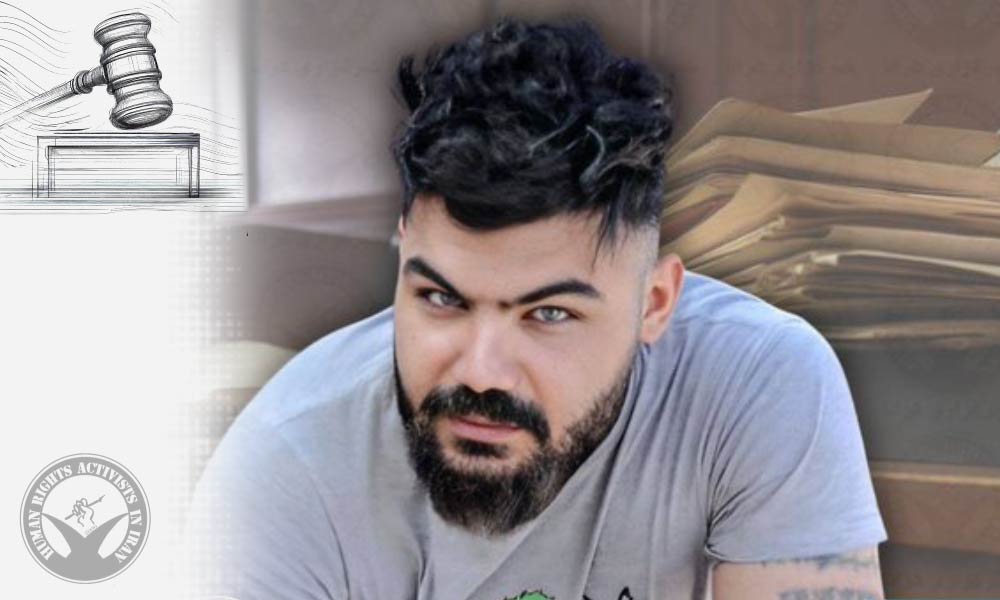
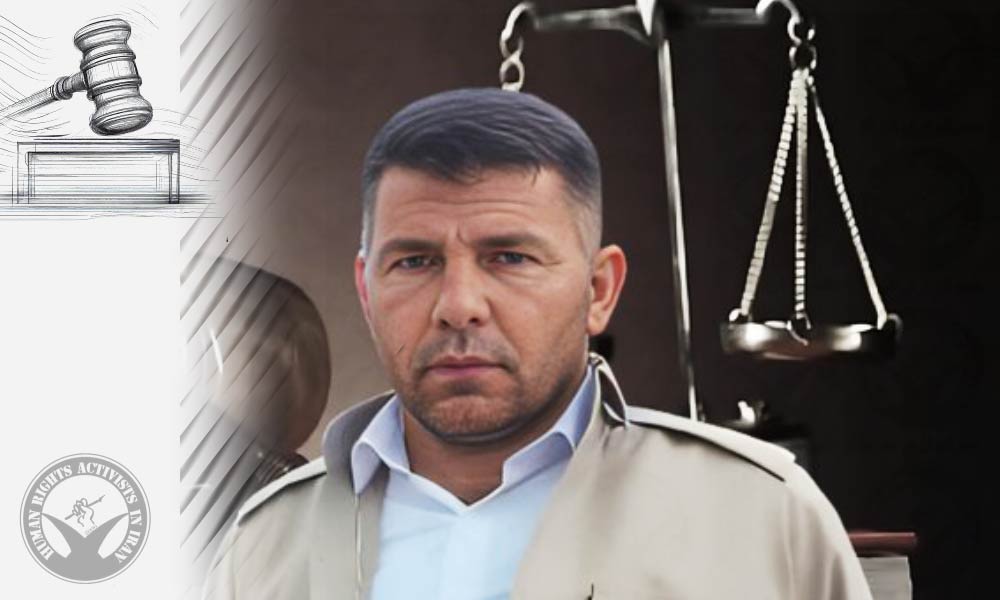
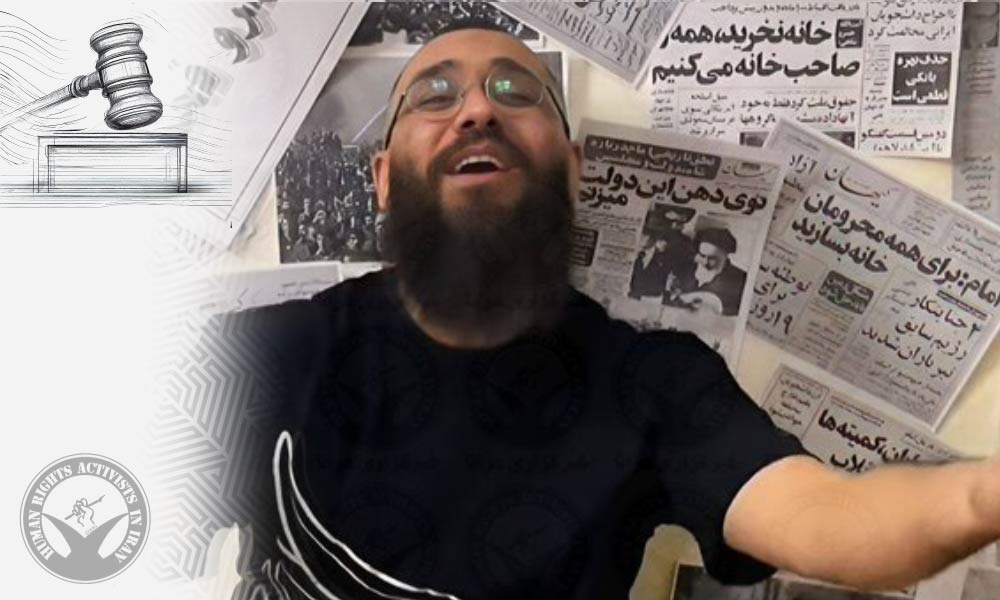
Vafa Ahmadpour, also known as Vafadar, has been sentenced to one year in prison by the Revolutionary Court.

Ahmadpour announced the conviction on social media, stating that he was found guilty of “spreading propaganda against the regime.” His case has been handed over to the judgment enforcement unit.

Ahmadpour’s trial took place on April 14, 2024.

In late March of this year, Ahmadpour was arraigned at the Evin Courthouse for “propaganda against the regime,” “disseminating false information,” and “disturbing public opinion.” The court dismissed the charge of “assembly and collusion against national security” due to insufficient evidence.

He was arrested on February 4, 2024, by security forces at his residence and detained for over 15 days before being released on bail from Evin Prison.

During his detention, PEN America issued a statement condemning Ahmadpour’s arrest and called for his immediate release.

Three Inmates Executed in Taybad for Drug Offenses

On April 21, 2024, three inmates convicted of drug-related crimes were executed in Taybad Prison in Razavi Khorasan province, according to a report by Haal Vsh.

Two of the inmates have been identified as Esmaeil Esmaeil-Zadeh, 37, and Mohammad-Amin Mohammad-Pour, around 38, both from Iran’s Sunni community. The third inmate executed is an Afghan national, whose identity has not been disclosed.

These individuals were sentenced to death by the Revolutionary Court in Taybad four years ago.

No official sources or domestic media outlets within the country have provided coverage of these executions at the time of writing.

The reports from the Department of Statistics and Publication of Human Rights Activists for the year 2023 reveal a concerning prevalence of executions for drug offenses in Iran, constituting 56.4% of the total executions. For a comprehensive examination of the details and statistics surrounding the executions in Iran, refer to HRANA’s report.


Update on Christian Convert Mina Khajavi in Evin Prison

60-year-old Christian convert Mina Khajavi Ghomi is currently serving her sentence in Evin Prison, where she faces health challenges due to her age and related issues.

A source close to her family told HRANA that Khajavi struggles with her incarceration given her age, suffering from back, knee, and joint pains that make walking difficult. Despite these challenges, she has been denied access to specialized medical care in prison.

Khajavi was arrested by security forces in June 2020 and released on bail the same month.

In June 2022, she was tried alongside other Christian converts in a case overseen by Judge Iman Afshari at Branch 26 of the Revolutionary Court of Tehran. Khajavi was sentenced to six years in prison for “acting against national security through proselytizing Christianity and establishing a home church.”

According to reports obtained by HRANA, Khajavi began her prison term on January 8, 2024, and has spent time in solitary confinement in Ward 209, undergoing interrogations.

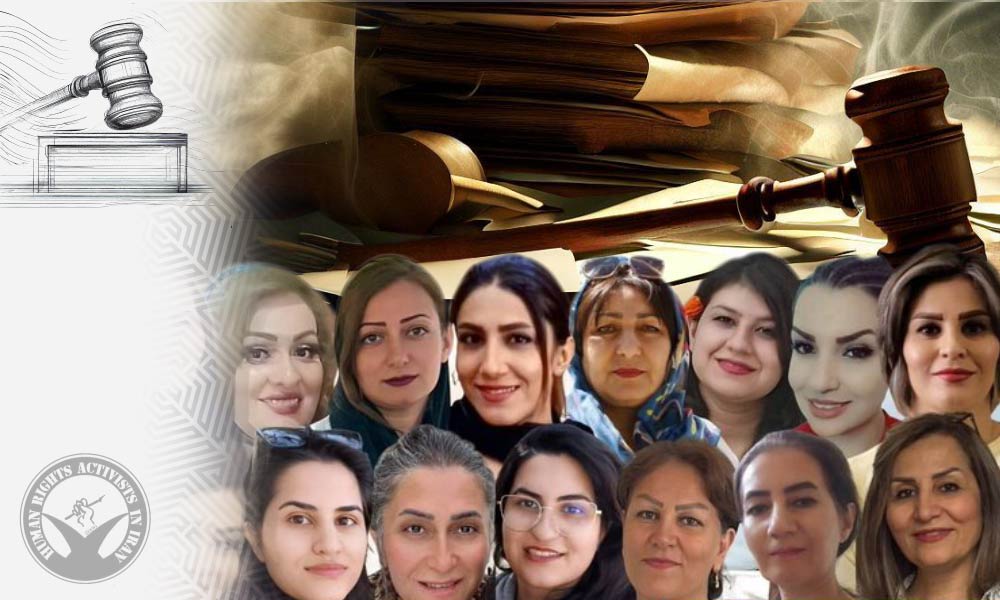
Fifteen Baha’i Women Summoned to Revolutionary Court of Isfahan

Fifteen Baha’i women have been summoned to appear before the Revolutionary Court of Isfahan on May 1, 2024.

The women include Mojgan (Mozhgan) Pourshafee, Nasrin Khademi, Azita Rezvani-Khah, Shola Ashouri, Mojdeh Bahamin, Bashra Motahar, Sara Shakib, Samira Shakib, Roya Azad Khosh, Noushin Hemmat, Shurangiz Bahamin, Sanaz Rasteh, Maryam Khorsandi, Firoozeh Rastinejad, and Farkhandeh Rezvan Pay.

On April 8, 2024, they were indicted of “propaganda against the regime” and “assisting in education and propaganda activities against Islamic Sharia.” The indictment was issued on April 8, 2024.

Among them, Pourshafee, Khademi, Rezvani-Khah, Azad Khosh, Shakib, Raseh, Ashouri, Bahamin, Rastinejad, Khorsandi, and Hemmat were previously arrested in 2021 and later released on bail.

Furthermore, Bahamin, Rezvan Pay, Motahar, and Shakib’s residences were subjected to raids and searches by Intelligence agents.

Baha’is are subjected to violations of their religious rights, comprising 82% of reports on infringements against religious minorities, according to HRA’s 2023 annual report.

The Baha’i faith is not recognized as a legitimate religion by Iranian authorities, leading to systematic and longstanding violations of the rights of Baha’is in the country. This includes the denial of their fundamental right to practice their religion, which constitutes a clear breach of both Article 18 of the Universal Declaration of Human Rights and Article 18 of the International Covenant on Civil and Political Rights. The United Nations covenant holds that every person has the right to freedom of religion, freedom of converting religion, as well as freedom of expression, individually or collectively; openly or secretly.


Two Inmates Executed in Ghezel Hesar Prison for Drug Offenses

On April 21, 2024, officials at Ghezel Hesar Prison executed two inmates who had been convicted of drug offenses.

The two individuals were identified as Abdolbari Pashto, an Afghan national, and Alireza Pourshahbaz. They had previously received death sentences for drug-related crimes and were moved to solitary confinement a day prior to their executions.

At the time of writing, no official sources or domestic media outlets within the country have covered these executions.

According to data gathered by the Department of Statistics and Publication of Human Rights Activists, Ghezel Hesar Prison in Karaj witnessed the highest number of executions in 2023, with Zahedan Prison following closely behind. For a comprehensive examination of the details and statistics surrounding the executions in Iran, refer to HRANA’s report.


Subscribe to Our Newsletter

Now is definitely not the time to stop reading!

Journalist Dina Ghalibaf Transferred to Evin Prison After Police Sexual Assault

Dina Ghalibaf, a journalist and student at Shahid Beheshti University, was moved to the women’s ward of Evin Prison on April 21, 2024, following her arrest by security forces on April 16.

Civil rights activist Narges Mohammadi confirmed in a voice message from the prison that Ghalibaf showed signs of bruising and shared her account of being sexually assaulted.

On April 15, Ghalibaf shared on social media that she had been detained by police at a Tehran metro station for allegedly wearing an improper hijab. She described being taken to a room, where she endured electric shocks and sexual assault. This public account led to her arrest the next day by security forces.

The agency responsible for her arrest remains unknown.

Previously, Ghalibaf was summoned by the university’s disciplinary committee for participating in a protest against the execution of several individuals in the “House of Isfahan” legal case.

Ghalibaf has worked with various news outlets, including ISNA and Eghtesad Online.

Rapper Saman Seydi Sentenced to Five Years in Exile

Saman Seydi, known as Yasin, was arrested during nationwide protests in 2022 and has been sentenced to five years of exile in a city in Kerman Province.

Seydi’s lawyer, Hossein Sartipi, announced that according to a verdict issued by Branch 15 of the Revolutionary Court of Tehran, his client will serve five years in exile. Sartipi plans to appeal to the Supreme Court, arguing that Seydi has already been detained for over 18 months, suggesting he has effectively served his time.

In mid-April 2024, Seydi was taken from Ghezel Hesar Prison in Karaj to a hospital for one day for nasal surgery, following an injury sustained during his incarceration.

Seydi was arrested on October 2, 2023, in Tehran during the protests and subsequently transferred to Rajai Shahr Prison.

On November 8, 2023, Seydi was convicted on charges including “enmity against God” (Moharebeh) and “assembly and collusion against national security,” and was initially sentenced to death. However, the Supreme Court overturned the death sentence, leading to the transfer of his case to another court branch for retrial.

On August 2, 2023, Seydi, along with six other political prisoners, was moved from Rajai Shahr Prison to Evin Prison. On September 3, 2023, he was transferred again with 12 inmates to Ghezel Hesar without prior notice and was held in a ward with prisoners convicted of drug offenses, violating regulations that require political prisoners to be housed separately.

Four Afghan Nationals Executed in Mashhad for Drug Convictions

On April 18, 2024, four Afghan nationals were executed in Vakilabad Prison in Mashhad for drug-related offenses, according to Haal Vsh.

The individuals, identified as Zaman Taheri, Salam Taheri, Gholam Ghader Samani, and Ebrahim Nour-Zahi, were sentenced to death four years ago.

No official sources or domestic media outlets within the country have provided coverage of these executions at the time of writing. In 2023, 66% of HRANA’s reports on executions lacked official announcements by judicial authorities and went unreported by media inside Iran, highlighting a troubling lack of transparency in due process.

The reports from the Department of Statistics and Publication of Human Rights Activists for the year 2023 reveal a concerning prevalence of executions for drug offenses in Iran, constituting 56.4% of the total executions. For a comprehensive examination of the details and statistics surrounding the executions in Iran, refer to HRANA’s report.


Hossein Burakah Sentenced to Prison and Exile on Political Charges

Hossein Burakah has been sentenced to three years and six months in prison by the Revolutionary Court of Mahabad, according to a report by Kurdpa. In addition, he received a one-year exile to Urmia.

Burakah was convicted of alleged membership in anti-regime groups.

He was arrested on October 23, 2023, after appearing at the courthouse in Piranshahr, and was transferred to Naqadeh Prison. Two days later, he was moved to the Ministry of Intelligence’s detention facility in Urmia and then returned to Naqadeh Prison. Burakah had previously been detained by security forces in early October of the previous year.

Seven Women Arrested in Bushehr Province for Social Media Modeling

Authorities in Bushehr Province have arrested seven women for sharing social media content related to modeling, according to Rokna. Their Instagram posts were removed, and electronic devices were confiscated.

The arrests occurred as part of a police initiative called “Nour,” according to the police commander of Bushehr province. The seven women were reportedly involved in operating businesses: one woman worked as a model, four others were involved in creating media content, and two others served as photographers.

The police official stated that, following orders from judicial authorities, the eight social media pages associated with these women were taken down. The report did not specify the identities of the detainees or their current location.

Since April 13, 2024, Iran’s police have increased enforcement of hijab regulations as part of the national action plan “Nour.” Reports suggest instances of arrests and use of force against women deemed to be improperly dressed.