Two Prisoners Executed in Khorramabad Prison

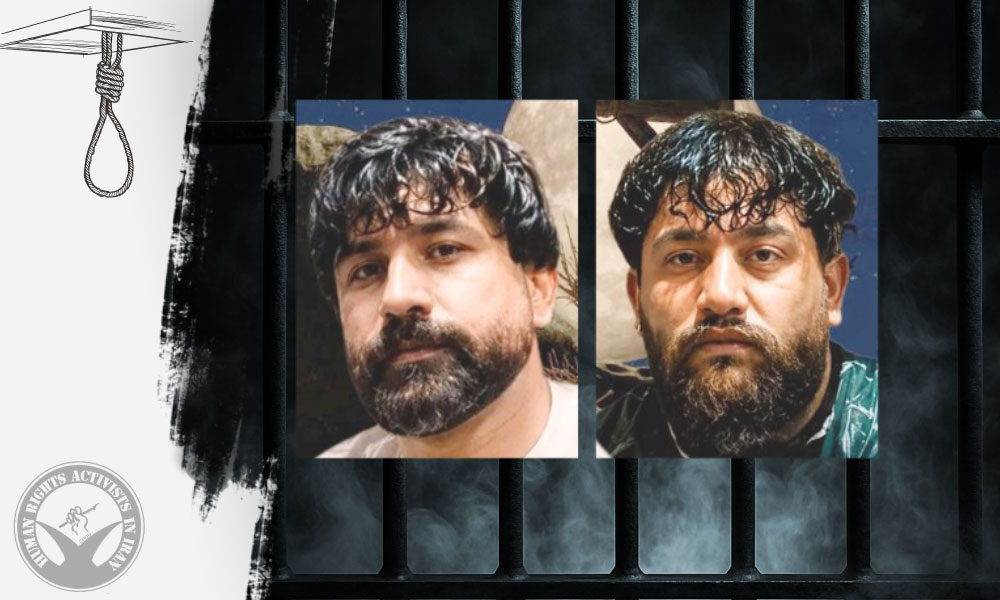
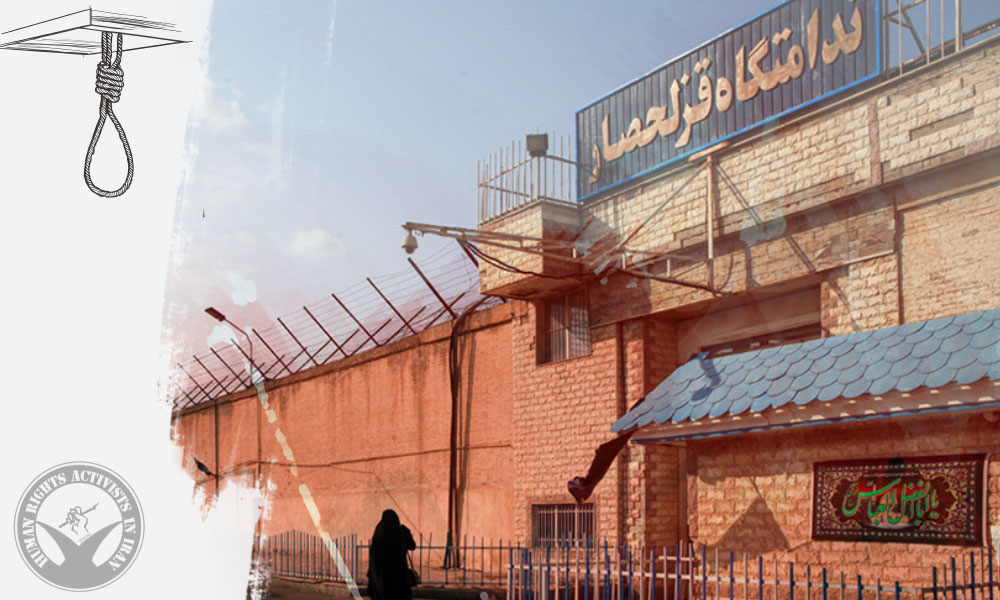
HRANA – The death sentences of two prisoners who had previously been convicted in a joint case on drug-related charges were carried out at dawn on Wednesday, July 15, in Khorramabad Prison.

According to HRANA, two prisoners were executed in Khorramabad Prison, at dawn on Wednesday, July 15.

HRANA has identified the prisoners as Mehdi Shahrisvand, 29, and Alireza Barani, 30.

Based on information received by HRANA, Mr. Barani and Mr. Shahrisvand were arrested approximately two years ago in a joint case on drug-related charges and were subsequently sentenced to death by the Revolutionary Court.

As of the time of writing, the executions have not been officially announced by prison authorities or the relevant institutions.

According to HRA’s Annual Report, in 2025 at least 2,063 citizens, including 61 women and 2 juvenile offenders, were executed. Of these, the sentences of 11 individuals were carried out in public. During the same period, 172 other individuals were sentenced to death.

Four Prisoners Executed in Sari and Aligudarz Prisons

HRANA – At dawn on Wednesday, July 15, the death sentences of four prisoners previously convicted on drug-related and murder charges were carried out in Sari and Aligudarz prisons.

According to HRANA, citing the Iran Human Rights Organization, four prisoners were executed in two separate prisons at dawn on Wednesday, July 15.

The three prisoners executed in Sari Prison were identified as Ferdows Memari, 47, a resident of Rasht and father of two; Shahin Sadr, 37, from Sari; and Saeed Armand, 35, also from Sari. The prisoner executed in Aligudarz Prison was identified as Karim Mirzaei, 27, from Aligudarz.

According to the report, Mr. Memari was arrested two years ago on drug-related charges involving the possession and transportation of 17 kilograms of heroin. He was subsequently sentenced to death by the Revolutionary Court.

Mr. Sadr and Mr. Armand were arrested approximately four years ago in a joint case on drug-related charges and were later sentenced to death by the Revolutionary Court.

Karim Mirzaei was arrested about five years ago, at the age of 22, on a murder charge after fatally attacking a man in what was described as an honor-related dispute involving the alleged harassment of his cousin. He was subsequently sentenced to death by a Criminal Court.

As of the time of writing, prison authorities and the relevant institutions have not officially announced the executions.

According to HRA’s Annual Report, in 2025 at least 2,063 citizens, including 61 women and 2 juvenile offenders, were executed. Of these, the sentences of 11 individuals were carried out in public. During the same period, 172 other individuals were sentenced to death.

Ghezel Hesar Prisoners’ Protest Against Executions Enters Fourth Day

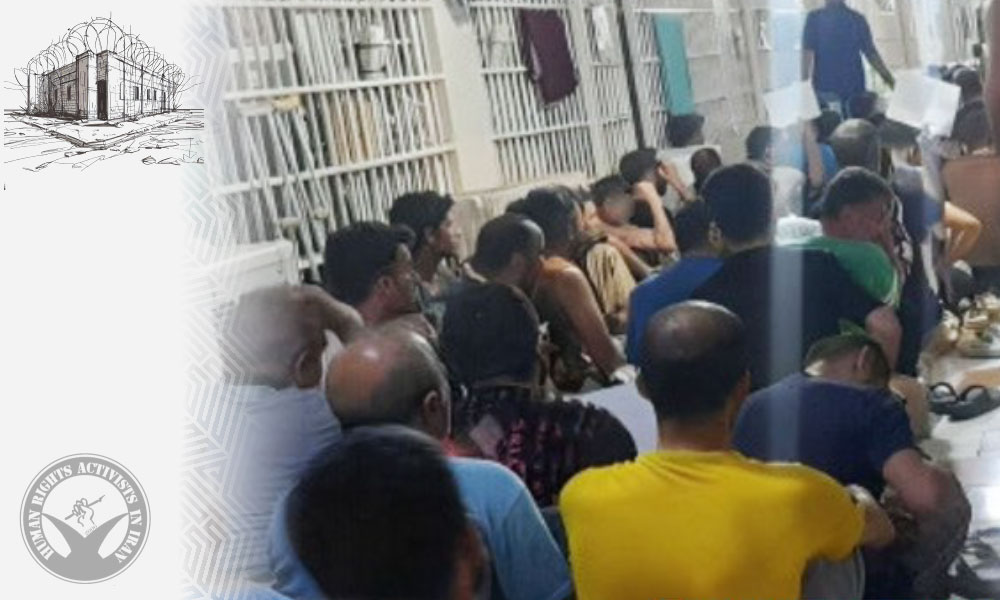
HRANA – Yesterday, Thursday, July 16, prisoners in Unit 2 of Ghezel Hesar Prison in Karaj entered the fourth consecutive day of their protest against the implementation of death sentences and the transfer of six prisoners to solitary confinement for execution. The prisoners continued their sit-in and refused to receive their food rations.

According to HRANA, the hunger strike by prisoners in Unit 2 of Ghezel Hesar Prison, which began on Monday in response to the transfer of six death row prisoners to solitary confinement, entered its fourth consecutive day yesterday.

Based on information received by HRANA, the protesting prisoners gathered in the prison ward and refused to accept prison meals to express their opposition to executions, particularly in cases involving drug-related offenses. Some also held handwritten signs reading “No to Executions,” calling for an end to the implementation of death sentences.

Informed sources also reported that signal-jamming devices (jammers) remain active inside the prison. According to these sources, prison authorities activated the equipment after videos of the prisoners’ hunger strike and sit-in were published, in an effort to prevent images and videos from being sent outside the prison.

In recent days, videos recorded inside Ghezel Hesar Prison have circulated, showing parts of the prisoners’ hunger strike and sit-in.

The prisoners’ protest began on Monday, July 13, following the transfer of six prisoners sentenced to death in drug-related cases to solitary confinement in preparation for their executions. The move prompted a collective response from prisoners in Unit 2, who have continued their hunger strike and sit-in ever since.

Ali Kalateh-Dolati Arrested in Sabzevar

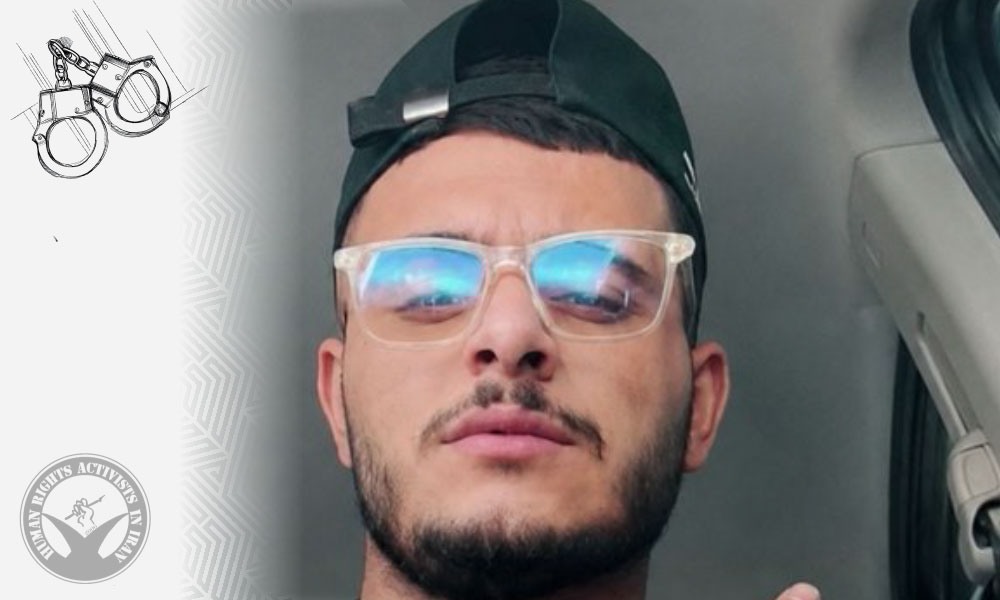
HRANA – Ali Kalateh-Dolati, a resident of Sabzevar who had been under judicial pursuit in connection with a case related to the January protests, was arrested by security forces at his home yesterday and taken to an undisclosed location.

According to HRANA, Ali Kalateh-Dolati has been arrested.

Based on information received by HRANA, security forces raided his home on the morning of Thursday, July 16, and arrested him.

A source close to Mr. Kalateh-Dolati’s family confirmed the news to HRANA, stating: “He had been facing a judicial case in connection with the January 2026 protests and was under judicial pursuit.”

As of the time of this report, no information is available regarding his whereabouts or the charges brought against him.

Dena Karari, Dual Iranian-American Citizen, Leaves Iran for the United States

HRANA – The attorney for Dena Karari, a dual Iranian-American citizen, announced that his client has left Iran and is en route to the United States. Ms. Karari, who traveled to Iran in December 2024 to visit her family, was detained for a period and later released on bail. However, she had been barred from leaving the country until today.

According to HRANA, on Thursday, July 16, 2026, Dena Karari departed Iran.

Jared Genser, Ms. Karari’s attorney, stated in a post, that his client is now safe and on her way back to the United States.

Genser also said in an interview that “53-year-old Karari had suffered a massive heart attack last week, and there were significant concerns about her condition moving forward.”

According to Genser, Iranian authorities had pursued charges against Ms. Karari on allegations of “cooperation with a hostile government” and “espionage.” He described the accusations as baseless and said that although she had been accused, she was never formally charged.

Dena Karari, a dual citizen of the United States and Iran, traveled to Iran in December 2024 to visit her family. As she was preparing to leave the country, security agents confiscated her passports. She was detained for a period and later released on bail; however, she was not permitted to leave Iran.

Karari is an employee of a U.S. technology company and the founder of a charitable organization supporting underprivileged children in Iran.

Subscribe to Our Newsletter

Now is definitely not the time to stop reading!

January 2026 Protests: Death Sentences of Behrouz Zamaninejad and His Son, Kourosh Zamaninejad, Overturned

HRANA – The death sentences issued against Behrouz Zamaninejad and his son, Kourosh Zamaninejad, who were arrested during the January 2026 protests and are currently imprisoned in Greater Tehran Penitentiary, have been overturned by the Supreme Court. Their case has been referred to a parallel court branch for retrial. The two had previously been sentenced to death by Judge Iman Afshari.

According to HRANA, the Supreme Court has overturned the death sentences of two individuals arrested during the January 2026 protests.

Based on information received by HRANA, Branch 32 of the Supreme Court accepted the request for a retrial submitted by Behrouz Zamaninejad and his son, Kourosh Zamaninejad, overturned the death sentences issued against them, and referred the case to a parallel branch for renewed proceedings.

In April 2026, the two men, along with their co-defendants Mohammadreza Majidi-Asl and his wife, Bita Hemmati, were sentenced to death by Branch 26 of the Tehran Revolutionary Court, presided over by Judge Iman Afshari, on the charge of “conducting operational activities on behalf of the hostile government of the United States and hostile groups.” All four defendants were also sentenced to five years of discretionary imprisonment each on the charge of “assembly and collusion against national security.” The court additionally ordered the confiscation of all their assets as a supplementary punishment. In late May 2026, the Supreme Court overturned the death sentences of Mohammadreza Majidi-Asl and Bita Hemmati.

It should also be noted that another defendant in the same case, Amir Hemmati, was sentenced to five years of discretionary imprisonment on the charge of “assembly and collusion against national security,” as well as eight months in prison for “propaganda against the regime.”

According to the court’s ruling, the defendants were accused of participating in protest gatherings on January 8 and 9, 2026, chanting protest slogans, throwing objects including bottles, concrete blocks, and incendiary materials, and damaging public property. The ruling further alleged that these actions were intended to disrupt national security and were carried out in connection with hostile groups. Judge Afshari also referred to the alleged use of explosives and an unspecified weapon, injuries inflicted on deployed security forces, and the dissemination of content aimed at undermining national security. However, the ruling did not specify the details of these allegations or explain how each accusation was individually attributed to each defendant.

A source close to the families of the prisoners previously told HRANA: “Mohammadreza Majidi-Asl and Bita Hemmati are a married couple living in Tehran, and Amir Hemmati is a relative of theirs. Kourosh Zamaninejad and Behrouz Zamaninejad were also living in the same residential building, and they were arrested simultaneously.”

According to information obtained by HRANA, the defendants were subjected to pressure during interrogations, raising concerns that forced confessions may have been extracted during that period.

The death sentences issued by the trial court were based on a combination of legal provisions, including Articles 131 and 134 of the Islamic Penal Code, as well as Articles 500 and 610, which relate to “propaganda against the regime” and “assembly and collusion against national security.” The application of the death penalty in conjunction with these charges, particularly in cases stemming from public protests, has drawn increasing criticism from human rights organizations in recent years.

The defendants were arrested by security forces in Tehran on January 9, 2026. Behrouz Zamaninejad and his son, Kourosh Zamaninejad, are currently being held in Greater Tehran Penitentiary, while Bita Hemmati is detained in the women’s ward of Evin Prison. HRANA is still investigating the whereabouts of Mohammadreza Majidi-Asl.

January 2026 Protests: Mohammad Aein Moayed Mohseni Sentenced to Prison

HRANA – The prison sentence of Mohammad Aein Moayed Mohseni, a 19-year-old detainee from the January 2026 protests, has been reduced to two years by the Tehran Province Court of Appeals. He had previously been sentenced to five years in prison by Branch 29 of the Tehran Revolutionary Court at the trial stage.

According to HRANA, Mohammad Aein Moayed Mohseni has been sentenced to prison.

According to a ruling issued by Branch 21 of the Tehran Province Court of Appeals, Mr. Moayed Mohseni was sentenced to two years in prison on the charge of assembly and collusion against national security.

Reza Salehiyeh, an attorney and human rights activist, stated that in this case, printing a number of small leaflets using a standard home printer was considered evidence supporting the charge of “assembly and collusion against national security” against Mohammad.

The indictment against him was issued two days after his arrest, on January 5, 2026, by Branch 2 of the Tehran Public and Revolutionary Prosecutor’s Office. He was subsequently tried by Branch 29 of the Tehran Revolutionary Court, presided over by Judge Seyed-Ali Mazloum, and in the initial ruling was sentenced to five years in prison.

Mr. Moayed Mohseni was arrested by security forces on January 3, 2026, in Tehran. He was released from Greater Tehran Penitentiary in late March 2026 after posting bail.

Death Toll from Executions at Ghezel Hesar Prison Rises to Five

HRANA – Yesterday, alongside the execution of political prisoner Aref Khoshkar, who had been sentenced to death on charges including murder, four other prisoners who had also been sentenced to death in separate murder cases were executed at Ghezel Hesar Prison in Karaj.

According to HRANA, five prisoners were executed at Ghezel Hesar Prison in Karaj in the early hours of Wednesday, July 15.

In addition to the execution of Aref Khoshkar, which HRANA reported earlier, four other prisoners were hanged at the prison. HRANA has identified one of them as Abbas Nesari, who had previously been sentenced to death on murder charges.

The remaining details regarding the four prisoners’ cases were published by the Hamshahri newspaper and are summarized below:

The first prisoner had been arrested in May 2022 on charges of fatally shooting a teenage boy with a Kalashnikov rifle. He was subsequently sentenced to death by a criminal court. After the sentence was upheld by Branch 20 of the Supreme Court, it was carried out on Tuesday.

The second prisoner had been arrested in 2021 on charges of murdering his stepson. He was sentenced to death by a criminal court, and the ruling was later upheld by Branch 7 of the Supreme Court before being carried out.

The third prisoner had been arrested in March 2024 on charges of murdering both his former wife’s daughter and his former wife. He was later sentenced to death by a criminal court.

The fourth case stemmed from the reported disappearance of a middle-aged man in December 2020. The investigation ultimately led to a confession by the victim’s wife.

According to the case file, the woman, with the assistance of a man identified as Behzad, gave her husband sleeping pills to facilitate the murder. Behzad then entered the house, fatally shot the victim, and together they transported the body to the Saveh road, where they set it on fire.

After reviewing the evidence, the criminal court found Behzad to be the principal perpetrator of the murder and sentenced him to death. His execution was carried out on Tuesday morning. The victim’s wife was sentenced to prison for complicity in the murder.

According to HRA’s Annual Report, in 2025 at least 2,063 citizens, including 61 women and 2 juvenile offenders, were executed. Of these, the sentences of 11 individuals were carried out in public. During the same period, 172 other individuals were sentenced to death.

Filmmaker Sepideh Abtahi Arrested by Security Forces

HRANA – On Wednesday, July 15, Sepideh Abtahi, a documentary filmmaker and film editor, was arrested by security forces and taken to an undisclosed location. At the same time, several of her personal belongings were confiscated by the agents.

According to HRANA, Sepideh Abtahi has been arrested.

Ms. Abtahi was arrested at her home on Wednesday morning by security forces. The agents also seized several of her electronic devices.

As of the time of writing, no information has been obtained regarding the reasons for her arrest, her place of detention, or the charges brought against her.

Sepideh Abtahi, aged approximately 52, is a member of the Iranian Alliance of Motion Picture Guilds (Khaneh Cinema) and formerly served as the secretary of the Iranian Documentary Filmmakers Association.

2022 Protests: Aref Khoshkar Executed at Ghezel Hesar Prison in Karaj

HRANA – The death sentence of Aref Khoshkar, one of those arrested during the 2022 nationwide protests, was carried out at dawn today, July 15, 2026, at Ghezel Hesar Prison in Karaj.

According to HRANA, the execution of Aref Khoshkar, a detainee from the 2022 nationwide protests, was carried out at dawn on Wednesday, July 15, 2026, at Ghezel Hesar Prison in Karaj.

A source close to the family of the political prisoner told HRANA that Khoshkar’s family was informed of his execution at approximately 8:00 a.m. today. Prison authorities refused to hand over his body to the family and transferred it to the Behesht Zahra morgue in Tehran at around 11:00 a.m. The family was also instructed to go to Behesht Zahra at approximately 9:00 a.m. on Thursday, July 16, 2026, to identify and receive his body.

The source added that Aref Khoshkar had been transferred to Suite 35 of Ghezel Hesar Prison on Saturday, July 11, 2026, and his family had their final visit with him on Sunday, July 12, 2026. His family had sought a one-month postponement of the execution and requested a meeting aimed at obtaining the consent of the victim’s family in an effort to halt the sentence. However, these efforts were unsuccessful. Despite assurances that such a meeting would be held, the relevant authorities ultimately took no action to arrange it.

Aref Khoshkar had been sentenced to death by the Revolutionary Court on the charge of moharebeh (enmity against God) through carrying and using a weapon, as well as the killing of a Basij member. His lawyer had previously pointed to significant ambiguities in the case, stating that the location of the killing cited by the court was not covered by surveillance cameras and that there was insufficient evidence to substantiate the charges.

Aref Khoshkar was arrested on November 11, 2022, during the nationwide protests in Tehran’s Fallah neighborhood. His indictment, which included charges of moharebeh through carrying and using a weapon, assembly and collusion against national security, and the killing of a Basij member, was referred to the Revolutionary Court.