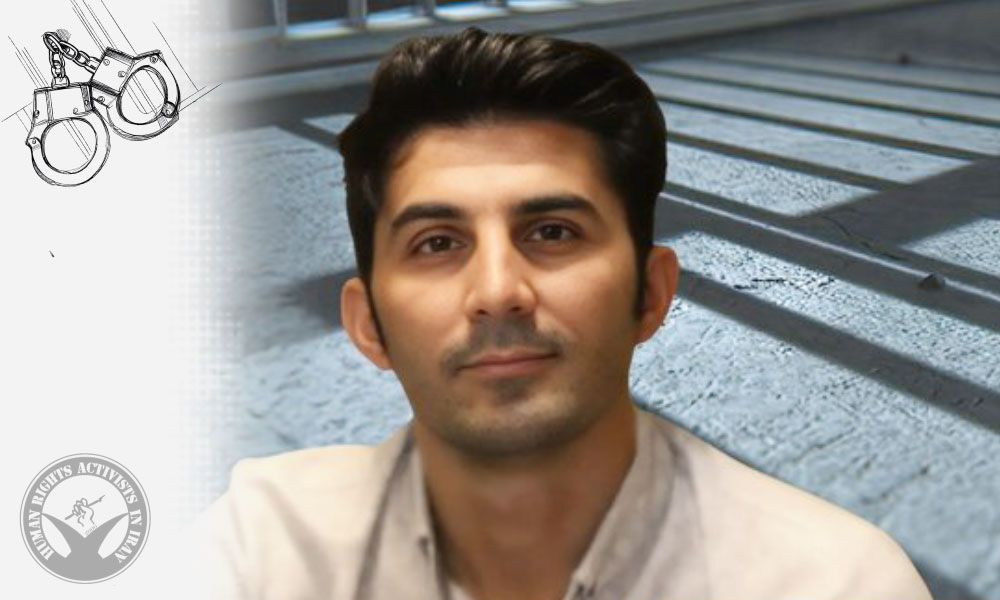
Appeals Court Upholds Over 5-Year Sentence for Azerbaijani-Turk Activist Vadood Asadi

HRANA News Agency –The Gilan Province Appeals Court has upheld the five-year-and-six-month prison sentence of Vadood Asadi, an Azerbaijani-Turk activist currently detained in Evin Prison. The verdict was confirmed without any changes.

A source close to Asadi’s family told HRANA that the sentence, originally issued by Branch 3 of the Rasht Revolutionary Court, was reaffirmed by Branch 11 of the Gilan Appeals Court. Asadi was convicted on charges of propaganda against the regime, membership in anti-regime groups, and insulting the Supreme Leader.

On March 3, 2025, Asadi was transferred to Evin Prison to begin serving his sentence following an official summons.

In a separate case, Asadi had earlier been sentenced to four years in prison by Branch 15 of the Tehran Revolutionary Court, presided over by Judge Abolghasem Salavati, for “assembly and collusion to act against national security.” That sentence was later reduced to one year under a general pardon. After he accepted the verdict, a further reduction was applied, resulting in a final sentence of nine months.

Asadi was initially arrested by security forces in Rasht in February 2024. He was transferred to Evin Prison in March of that year and released on bail several days later.

The activist has a history of facing legal action related to his civil and political activities.

According to HRANA’s report, in 2024, 20 ethnic minority rights activists were sentenced to a total of 471 months (nearly 40 years) in prison. Over the past decade, the total length of such prison sentences has reached 913 years.

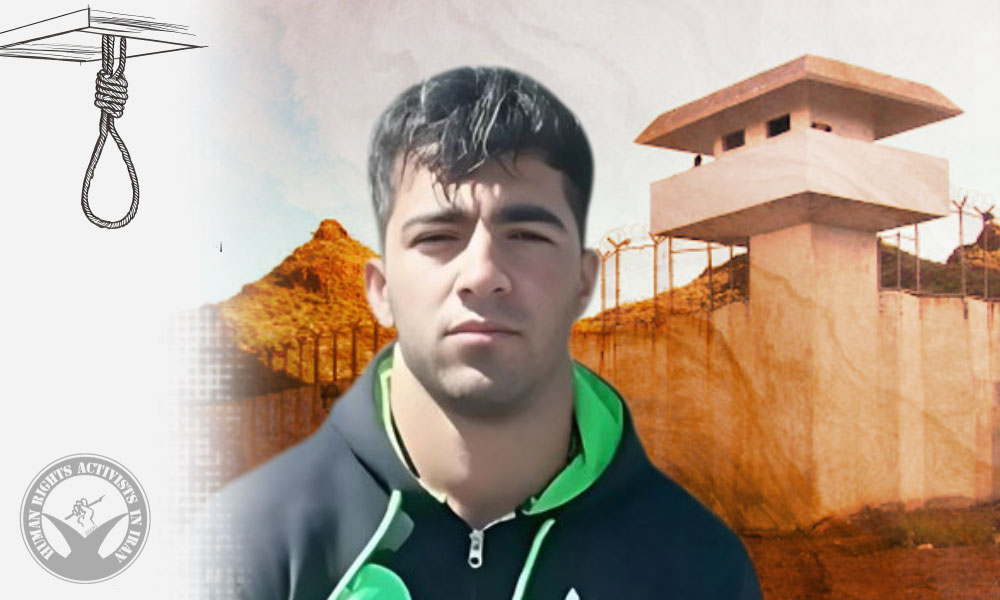
Prisoner Executed in Hamedan on Murder Charge

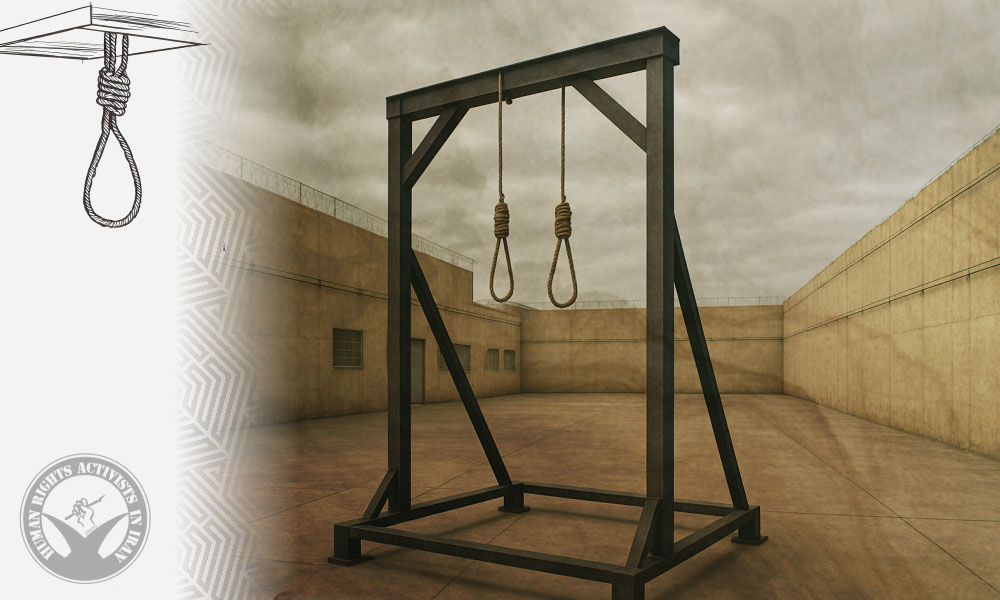
HRANA News Agency – At dawn today, May 5, the execution of a prisoner previously sentenced to death on a murder charge was carried out in Hamedan Prison.

The prisoner has been identified by HRANA as Amir Mohammad Tavakkoli, 32 years old. According to information obtained by HRANA, Mr. Tavakkoli had been arrested on murder charges and later sentenced to death by a judicial authority.

As of the time this report was published, prison officials and relevant institutions have not publicly announced the execution.

In 2024, according to 812 reports compiled by HRANA, the Iranian regime executed 930 individuals in its prisons—marking the highest number of executions in the past 12 years. Despite the scale of these executions, prison officials and other relevant authorities publicly acknowledged only 6% of them, highlighting the regime’s lack of transparency and accountability.

Younes Azadbar Arrested by Security Forces

HRANA News Agency – Younes Azadbar, a resident of Rasht County, was arrested today by IRGC Intelligence agents and transferred to their facility for interrogation.

A source close to Azadbar’s family confirmed the news to HRANA and said: “Mr. Azadbar was arrested a few minutes ago at his home by IRGC Intelligence agents without a court warrant and was taken for questioning. At the same time, his home was searched, and personal belongings, including his mobile phone, were confiscated.”

The source added: “Mr. Azadbar is 62 years old, suffers from epilepsy, and has a mechanical heart valve and a cardiac pacemaker. His physical condition is highly concerning, and his family is worried about the impact of interrogation pressure on his health.”

He was initially arrested on July 19, 2023 and then released on bail in December 2023 to receive medical treatment.

During his previous detention, he appeared before Branch 1 of the Public and Revolutionary Prosecutor’s Office, where he defended himself against charges including “enmity against God (moharebeh),” propaganda against the regime, and “membership in anti-government groups.”

Younes Azadbar, 62, is a resident of Sangar, a town in Rasht County. He has a prior conviction related to his activism.

Report on the Arrest of 9 Supporters of the “Yamani” Movement in Kashmar

HRANA News Agency – Hassan Davoudi, Hossein Davoudi, Ali Davoudi, Kazem Ghavidel, Hadi Aghaei, and four women—supporters of the “Yamani” movement—have been in detention by security forces in the city of Kashmar for the past 10 days. However, no information has yet been obtained regarding their place of detention.

A source with knowledge of the case has requested that the identities of the detained women not be disclosed.

According to information obtained by HRANA, these individuals were arrested on April 26, 2025, at their residences in Kashmar. As of now, their whereabouts remain unknown, and the authorities have refused to provide any information to their families.

Each year, individuals in Iran are arrested solely for claiming a connection with the Hidden Imam of Shia Islam. The “Yamani” movement, led by a figure named Ahmad al-Hasan Yamani, is known for making claims related to the Mahdist belief system.

Iran’s security apparatus—particularly the Ministry of Intelligence—has dedicated divisions for targeting religious minorities, spiritual movements, and ideological groups that fall outside the ideological framework of the Islamic Republic.

Mahboobeh Rezaei and Reza Mohammad-Hosseini Receives 5 Years in Prison After Retrial

HRANA News Agency – The prison sentences of political prisoners Reza Mohammad-Hosseini and Mahboobeh Rezaei have each been reduced to five years following the acceptance of their request for retrial and a re-examination of their cases by Branch 21 of the Tehran Province Court of Appeals. They were previously sentenced to six years and three months in prison.

Ali Sharifzadeh Ardakani, their attorney, announced today, Sunday, May 4, that following the Supreme Court’s acceptance of the retrial request in January 2025, their cases were referred to a parallel branch for review. Branch 21 of the Tehran Appeals Court reduced their sentences to five years each.

Mahboobeh Rezaei was arrested by security forces on May 22, 2023, and later transferred to the women’s ward of Evin Prison. She was ultimately sentenced by Branch 36 of the Tehran Appeals Court to 19 years and 9 months in prison and a fine of eight million tomans on charges including: “membership in anti-state groups with the aim of disrupting national security,” “assembly and collusion against national security,” “propaganda against the regime,” “blasphemy,” “removing hijab and showing the act of depravity on the Internet.”

Reza Mohammad-Hosseini was arrested in May 2023 at his home by security forces. In January 2024, he was sentenced by Branch 36 of the Tehran Appeals Court to 14 years and 6 months in prison and a fine on charges including: “membership in anti-state groups with the aim of disrupting national security,” “assembly and collusion to commit crimes against national security,” “propaganda against the Islamic Republic of Iran,” and “disobedience toward law enforcement officers during duty.” He is currently serving his sentence in Ghezel Hesar Prison in Karaj.

Subscribe to Our Newsletter

Now is definitely not the time to stop reading!

7 Prisoners Executed in Birjand Prison for Drug Offences

HRANA News Agency – On May 4, 2025, the death sentences of seven prisoners previously convicted of drug-related offenses were carried out in Birjand Prison, South Khorasan province, according to Haal Vsh.

The identities of the executed individuals have been reported as: Khosrow Sarani, Mahmoud Sarani (Rakhshani), Yousef Sorour Vash (Narouei), Alireza Laloozaei, Mousa Shokoohi, Mojtaba Lakzaei, and Ali Noori.

According to the report, Khosrow Sarani and Ali Noori were arrested in 2021, Mahmoud Sarani, Alireza Laloozaei, Yousef Sorour Vash, and Mousa Shokoohi were arrested in 2022, and Mojtaba Lakzaei was arrested in 2023. Following their arrests, they were all sentenced to death by the Revolutionary Court of Nehbandan on drug-related charges.

As of the time this report was prepared, the executions have not been officially announced by prison authorities or relevant institutions.

According to HRANA’s report, in 2024, over 52 percent of executed prisoners had been convicted on drug-related charges. Over the past ten years, individuals convicted of drug trafficking have accounted for 40 percent of all executions. Unfortunately, HRANA’s statistics show no progress in reducing executions for drug-related offenses.

Four Teachers’ Union Activists Held Without Charge After May Day Protest

HRANA News Agency – Vali Mirza Seyedi, Ahmad Heydari, Hossein Ebadian, and Mehdi Farahi Shandiz, four teachers’ union activists, remain held in Ward 209 of Evin Prison. They were arrested last week during a protest in Tehran on International Workers’ Day.

According to HRANA, quoting the Telegram channel of the Coordinating Council of Iranian Teachers’ Union Organizations, the four activists are still in custody.
The report states that Vali Mirza Seyedi, Ahmad Heydari, and Hossein Ebadian are retired teachers, while Mehdi Farahi Shandiz is a former part-time teacher. They are currently detained in Ward 209 of Evin Prison without formal charges.

As of the time this report was prepared, no information has been released about the charges brought against these union activists.

Hossein Ebadian, a retired teacher from Malayer and resident of Shahriar, was arrested on Thursday, May 1, during a teachers’ protest in Tehran held in conjunction with International Workers’ Day. Mehdi Farahi Shandiz and Ahmad Heydari were also arrested during the same protest.

Monthly Report – April 2025: Human Rights Situation in Iran

HRANA News Agency -In April 2025, HRANA, via its Statistics Department, documented a continued deterioration in Iran’s human rights conditions. April marked the highest number of executions since the beginning of the year, with 107 individuals executed. It also saw the highest number of prison sentences issued this year against citizens for expressing their beliefs and opinions. Numerous other instances of human rights violations were also reported, as detailed below. The findings presented here aim to inform the public and international community of the systemic challenges within Iran’s legal, political, and social institutions.

Executions

In the past month, Iran’s prisons witnessed the execution of 107 individuals—a 180% increase compared to the previous month. Of those executed, 100 were men, four were women, and the gender of three remains unknown. Among those executed were three Afghan nationals.

Fifty-six individuals had been sentenced to death on drug-related charges—an accusation that has led to the execution of 148 people in Iran since the beginning of the year. Forty-eight others were executed on murder charges. Most of these executions are not publicly announced by the judiciary or domestic media, underscoring the lack of transparency and the judiciary’s failure to provide public information about legal proceedings.

Among those executed was Mohsen Langar-Neshin, who was hanged on April 30 in Ghezel Hesar Prison in Karaj on charges of espionage and collaboration with hostile states.

This month, Iran’s courts sentenced seven individuals to death. Five were convicted of murder, and one was sentenced for rape. The charges against the seventh person remain unknown.

Among those sentenced to death this month are the singer Amirhossein Maghsoudloo (known as Tataloo) and political defendant Hamid Hosseinnejad Heydaranlou.


Freedom of Thought and Expression

In April, security forces arrested 18 individuals for expressing their beliefs and opinions. Two others were summoned by security agencies for the same reasons, 14 were summoned to judicial agencies, and the home of one citizen was searched by security agents. Notably, six of the 18 arrests were carried out without a warrant.

During this period, Iranian courts, in violation of citizens’ freedom of expression, sentenced 40 individuals to a total of 1,221 months (approximately 101 years) in prison on charges related to freedom of expression. Of this total, 143 months were suspended sentences. Additionally, the courts issued sentences including 12 months of exile, 184 lashes, and fines totaling 5.65 billion rials.

Women’s Rights

In the past month, 13 women were killed in Iran, including two victims of so-called “honor” killings—underscoring the Iranian regime’s failure to provide legal protection for women. Fourteen cases of sexual assault were also reported.

Continuing the pattern of repression by Iran’s police and security forces, seven female singers in Behbahan were summoned and interrogated by security agencies. They were threatened and pressured to abandon their profession. HRANA also documented one case of physical assault by police.

Workers’ Rights

In April, 34 labor protests were held across Iran, and in six cases, workers went on strike to press for their demands. Reports also documented the non-payment of wages for 1,856 workers, the unjustified dismissal of 30 workers, and 100 cases of job suspension or employment uncertainty.

In the same month, 78 workers lost their lives in workplace accidents, and 1,285 others were injured. The number of workplace fatalities was five times higher than the previous month.

Although the International Labour Organization (ILO) does not rank Iran in terms of occupational safety due to insufficient data, an analysis based on statistics gathered by HRANA places Iran 97th out of 109 countries in terms of workplace accident fatalities—a notably low ranking. According to these figures, in the past year, roughly 9 out of every 100,000 workers in Iran died in workplace accidents.

In April, professional guilds and unions held 57 protest gatherings, and two strikes were also reported.

Additionally, on April 12, Asghar Amirzadegan, a teachers’ union activist, was arrested. In two separate verdicts issued against labor activists, a total of 27 months of prison sentences were handed down. Two years of this imprisonment were issued against Mohsen Ramazanpour on charges of “spreading false information” and “disturbing public opinion.”

Kolbars and Fuel Carriers

This month, unregulated gunfire by military forces resulted in the deaths of two fuel carriers. Additionally, two kolbars and one fuel carrier were injured by military forces. Additionally, two kolbars lost their lives and one was injured due to hypothermia or falling from heights.

In the border region of Baneh, landmines left over from the Iran-Iraq war claimed more lives. Mohammadreza Sedaghatpour, a government employee, and Ali Karimi, a conscripted soldier, were killed in a landmine explosion.

Children’s Rights

HRANA documented one case of non-fatal suicide (a 15-year-old girl in Ardabil), four cases of murder, and six incidents of sexual assault involving minors. Additionally, 56 children were injured as a result of official negligence, including unsafe school conditions and the absence of basic public safety infrastructure.

Ten minors were also subjected to physical violence and corporal punishment, including nine schoolboys who were beaten and abused by a teacher at a school in Shahr-e Rey.

Religious Minorities

This month, four members of religious minorities were sentenced to a total of 510 months in prison. Three of them—Christian converts—were collectively sentenced to 41 years of imprisonment along with other penalties. Additionally, they were fined 910 million tomans.

Three members of religious minorities were also arrested, two were summoned to court, and the home of one individual was searched by security forces.

Prisoners’ Conditions

In Iran, prisoners’ rights are systematically violated, and numerous instances of unfair legal proceedings and legal uncertainty have been observed. This month alone, violations included: the denial of medical care to 17 prisoners (including renowned civil rights activist Mohammad Nourizad), 43 cases of legal limbo, 52 transfers to solitary confinement, four cases of denied access to legal counsel, eight cases of denied visitation, and 18 instances of threats or pressure against inmates.

In reponse to the hard prison conditions and legal limbo, five hunger strikes and one suicide were reported this month. On April 26, in Mahidasht Prison, Hamed Geravand, a 34-year-old inmate, died by suicide after ingesting pills, methadone, and crystal meth. He had been imprisoned on drug-related charges.

Ethnic Rights

Targeting of ethnic minorities—particularly Kurds and Azerbaijani Turks—persisted through arrests, interrogations, and surveillance. HRANA documented 4 arrests without presenting arrest warrant, and one house search

This month, Alireza Farshi, an Azerbaijani-Turk activist, was sentenced to eight months in prison for “propaganda against the regime.”


Legal Uncertainty for Four Political Detainees in Masjed Soleyman

HRANA News Agency – Karim Jalili, Moslem Alipour, Ali Soltani, and Hajat (also referred to as Hojjat) Susani, political defendants involved in a shared case, have been held in legal limbo for over 50 days in Masjed Soleyman Prison.

HRANA has learned that Branch 2 of the Masjed Soleyman Prosecutor’s Office has formally charged the four individuals, who share a joint case file, with offenses including “propaganda against the regime” and “insulting officials.”

A source close to the family of one of the defendants confirmed the report and told HRANA: “Their case has been transferred to the Dezful County Judiciary, but the presiding court branch has yet to be determined. They’ve been told that the court branch and hearing date will be set this week or next. According to officials, the hearing will be held remotely due to their detention in Masjed Soleyman Prison.”

Moslem Alipour was arrested by security forces in Masjed Soleyman on March 10, 2025. Hajat Susani was detained the following day, and Karim Jalili and Ali Soltani were arrested separately on March 12, all in the same city. Following their arrests, all four were transferred to Masjed Soleyman Prison.

Karim Jalili is 40 years old, Ali Soltani is 23, and both Moslem Alipour and Hajjat Sousani are also residents of Masjed Soleyman.

Political Prisoner Manoochehr Mehman-Navaz Re-Arrested and Returned to Prison

HRANA News Agency – Manouchehr Mehman-Navaz, a political prisoner who had been serving his sentence in an open prison arrangement, was arrested 16 days ago and transferred to Khurin Prison in Varamin.

Based on information received by HRANA, Mr. Mehman-Navaz, who had been serving his sentence outside of prison under an open prison system, was arrested at his private residence on Wednesday, April 16, and transferred to Khurin Prison in Varamin.

He had previously been released from Ghezel Hesar Prison in Karaj under the same open prison arrangement on November 19, 2023.

Mehman-Navaz was sentenced to five years in prison by Branch 29 of the Tehran Revolutionary Court, presided over by Judge Seyed Ali Mazloum, on charges of “assembly and collusion against internal national security” and “disrupting public order and security through causing commotion and unrest.”

In 2022, he had been sentenced to death by Branch 28 of the Tehran Revolutionary Court, presided over by Judge Mohammadreza Amouzad. However, that sentence was overturned following testimony from eyewitnesses. After submitting a request for a retrial, his case was re-examined in Branch 29 of the court.

This political prisoner was arrested during the 2022 nationwide protests and was tried in Branch 28 of the Tehran Revolutionary Court in November of that year.

The charges against him included arson of buildings with the intent to confront the Islamic government—an offense classified as moharebeh (waging war against God)—as well as “assembly and collusion against internal national security,” “disrupting public order and security through creating commotion and unrest,” and “participating in unlawful gatherings.”