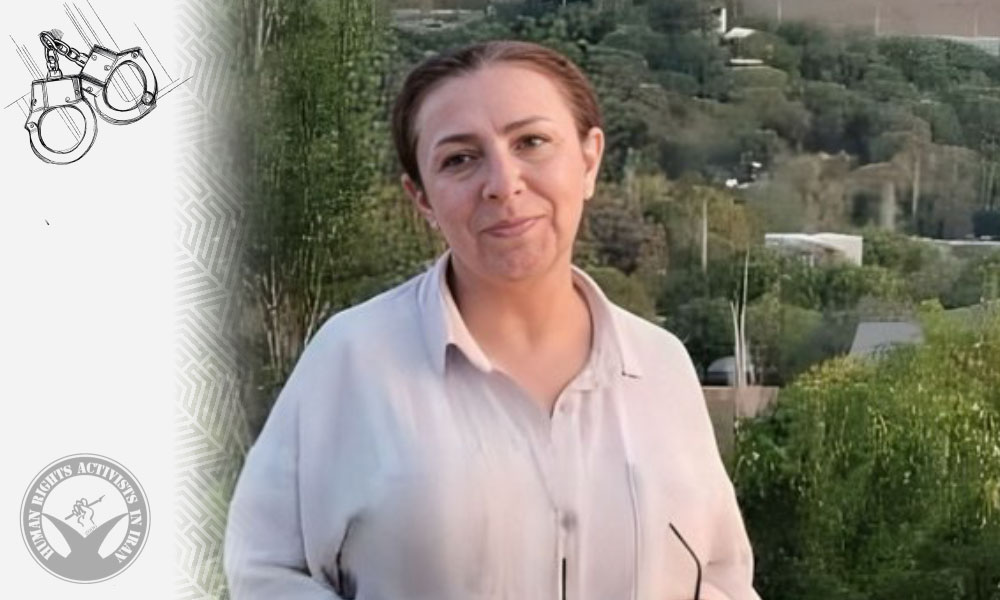
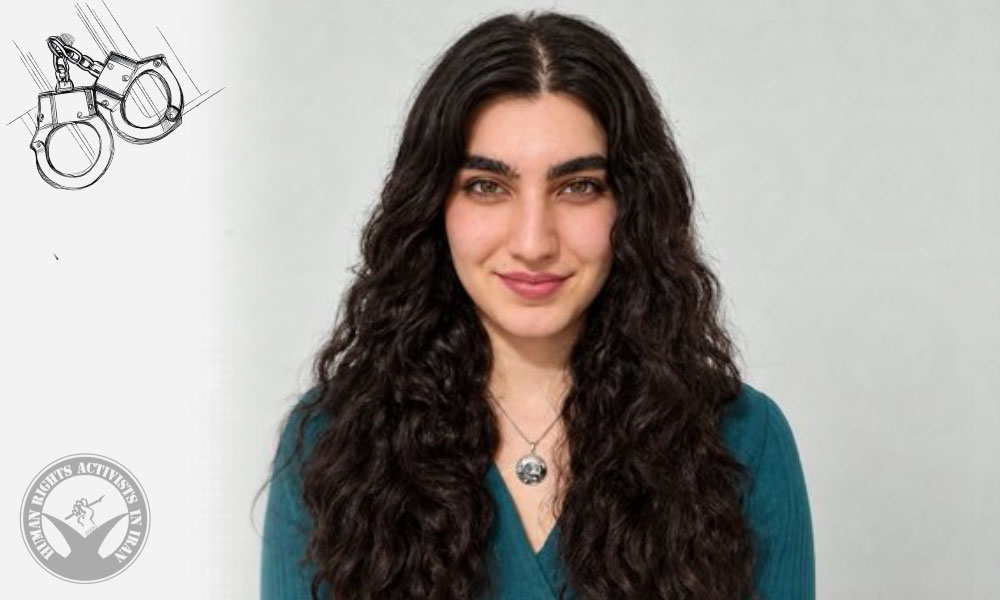
HRANA – Nahid Khodajou (Khodajoo), a labor activist, was arrested by security forces at her home six days ago. Her whereabouts remain unknown.
According to HRANA, citing the Free Union of Iranian Workers, labor activist Nahid Khodajou has been arrested.
According to the report, Nahid Khodajou was arrested by security forces at her home six days ago and transferred to an undisclosed location. Security agents also searched the labor activist’s residence.
At the time of this report, no information has been obtained regarding the reasons for Ms. Khodajou’s arrest or the charges brought against her.
HRANA – Zhila Sadeghi (Moghen), a Baha’i citizen residing in Isfahan, was arrested by agents of the Ministry of Intelligence on Tuesday, October 6, 2026. She is currently being held in solitary confinement at Dowlatabad Prison in the city.
According to HRANA, citing IranWire, Zhila Sadeghi, a Baha’i citizen, has been in detention for six days.
According to the report, Ms. Sadeghi was arrested at her home in Isfahan on Tuesday, October 6, 2026, by agents of the Ministry of Intelligence and transferred to Dowlatabad Prison in the city. She is currently being held in one of the prison’s solitary confinement cells.
The report further states that, in addition to arresting this Baha’i citizen, the agents confiscated her family’s vehicle.
At the time of this report, no information has been obtained regarding the reasons for Ms. Sadeghi’s arrest or the charges brought against her.
Zhila Sadeghi (Moghen), a Baha’i citizen residing in Isfahan, is the mother of Sarir Moqen, another Baha’i citizen imprisoned at Dowlatabad Prison. Sarir Moghen has also been held in solitary confinement at Dowlatabad Prison in Isfahan for more than a month and a half.
Over the past decade, the Baha’i community in Iran has been subjected to more security-related and judicial persecution than any other religious minority in the country. According to HRA’s annual reports, an average of 62.41% of all reported violations of the rights of religious minorities during the past calendar year involved violations of the rights of Baha’i citizens.
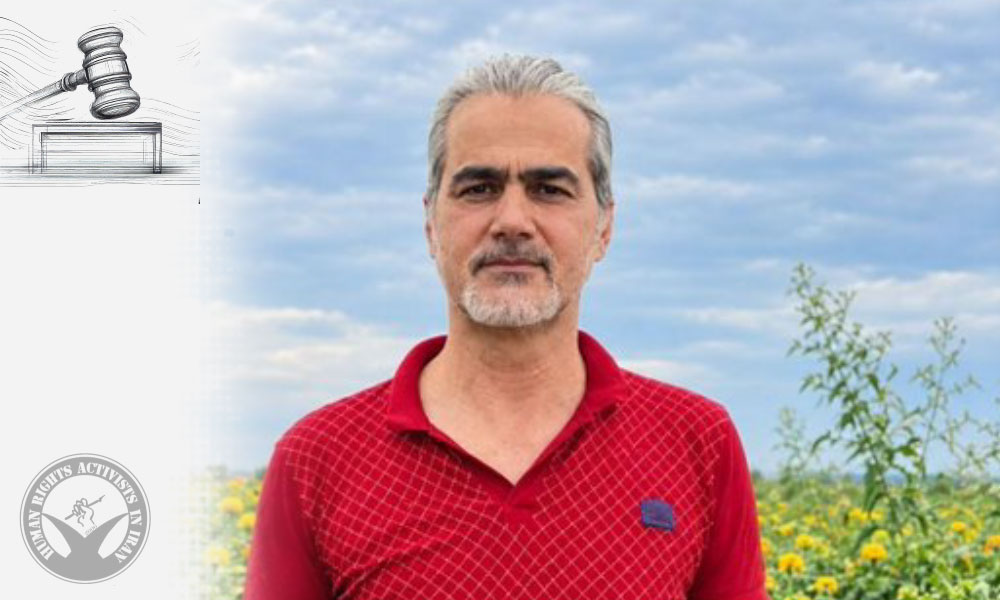
HRANA – Reza Shoja Mazraji, a teacher residing in Sarakhs County, located in Razavi Khorasan province, has been sentenced to four years, one month, and 17 days in prison by Branch 4 of the Mashhad Revolutionary Court.
According to HRANA, citing the Coordinating Council of Iranian Teachers’ Trade Associations, Reza Shoja Mazraji has been sentenced to prison.
Based on the verdict issued by Branch 4 of the Mashhad Revolutionary Court, Mr. Shoja Mazraji was sentenced to three years, six months, and one day in prison on the charge of “assembly and collusion to commit crimes against national security” and an additional seven months and 16 days on the charge of “propaganda against the Islamic Republic.”
According to the report, the court hearing in his case was held in absentia. If the verdict is upheld, the most severe sentence will be enforceable.
On January 9, 2026, Reza Shoja Mazraji was arrested at his home in Sarakhs County by security forces. He was released on February 7, from the Ministry of Intelligence’s detention facility in Sarakhs after posting bail set at two billion tomans.
Reza Shoja Mazraji is a formally employed teacher with the Sarakhs County Department of Education and has 21 years of teaching experience.
HRANA – Malikeh (Fatemeh) Haghighat, a resident of Gorgan who is being held in the city’s prison, remains in a state of legal uncertainty 80 days after her arrest.
According to HRANA, Malikeh (Fatemeh) Haghighat, a resident of Gorgan, remains in detention.
Based on information received by HRANA, Ms. Haghighat has been held in Gorgan Prison for 80 days, and her legal case remains unresolved. A source close to her family confirmed this information to HRANA, stating: “She faces charges including propaganda against the regime, and no court hearing has yet been held to address the accusations against her.”
The informed source added that her online activities, including publishing content on social media, are among the grounds cited for the charges brought against her.
Malikeh (Fatemeh) Haghighat, 29, was arrested on July 22, 2026, after appearing at the Public and Revolutionary Prosecutor’s Office in Gorgan and was subsequently transferred to the city’s prison. Prior to her arrest, she had received an official summons ordering her to appear before the judicial authority.
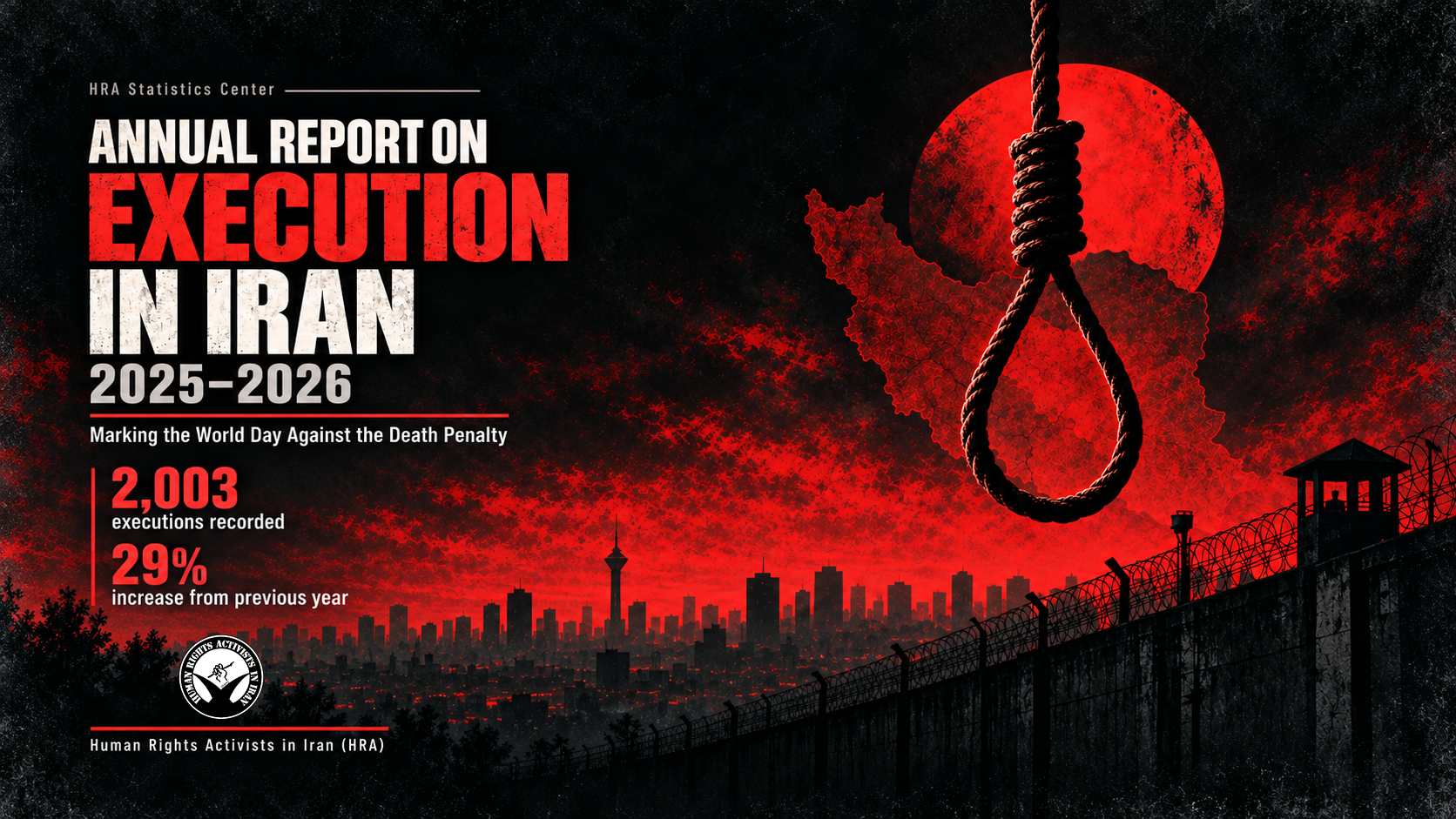
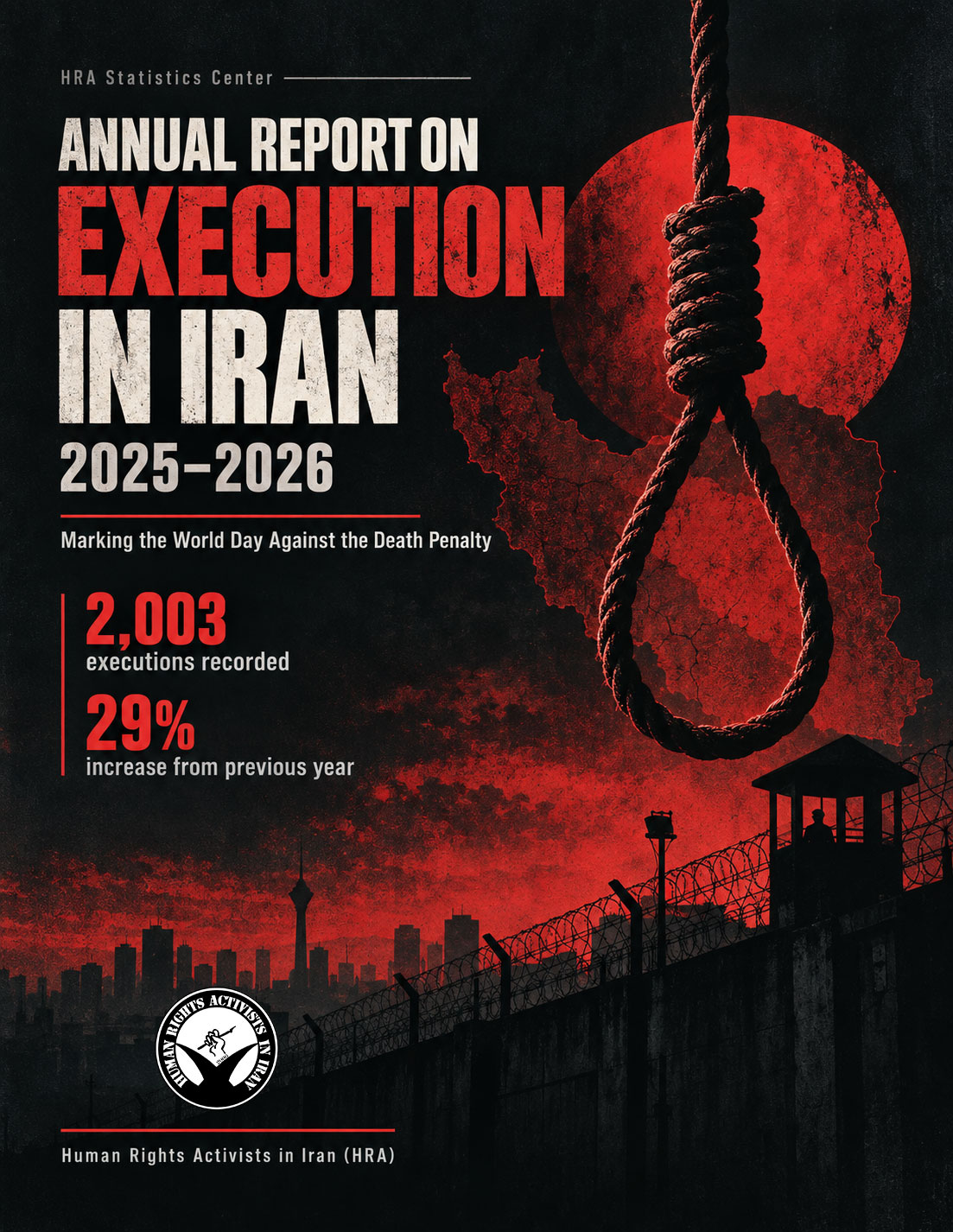
HRANA – Marking the World Day Against the Death Penalty, the Statistics Center of Human Rights Activists in Iran (HRA) has released its annual report on the use of capital punishment in Iran. The findings point to a sharp intensification in executions, continued secrecy surrounding implementation of death sentences, and an increase in political and security-related executions.
Between October 10, 2025 and October 8, 2026, HRANA documented at least 2,003 executions across Iran on the basis of 1,857 reports, an increase of approximately 29% compared with the previous reporting period. During the same period, 230 people were documented as having been sentenced to death. The full report also includes detailed statistical analysis, profiles of political and security-related executions, and documentation concerning judicial officials involved in issuing or upholding death sentences.
Executions in Iran: Key Figures
Indicator
Data
Total executions documented
2,003
Change from previous period
Approximately 29% increase
Average frequency of execution
Approximately one person every 4.35 hours
Death sentences issued
230
Women executed
47
Juvenile offenders executed
4
Public executions
9
Political and security-related executions
69
Executions unannounced by official sources
Approximately 95%
Rising Executions and the Monthly Pattern
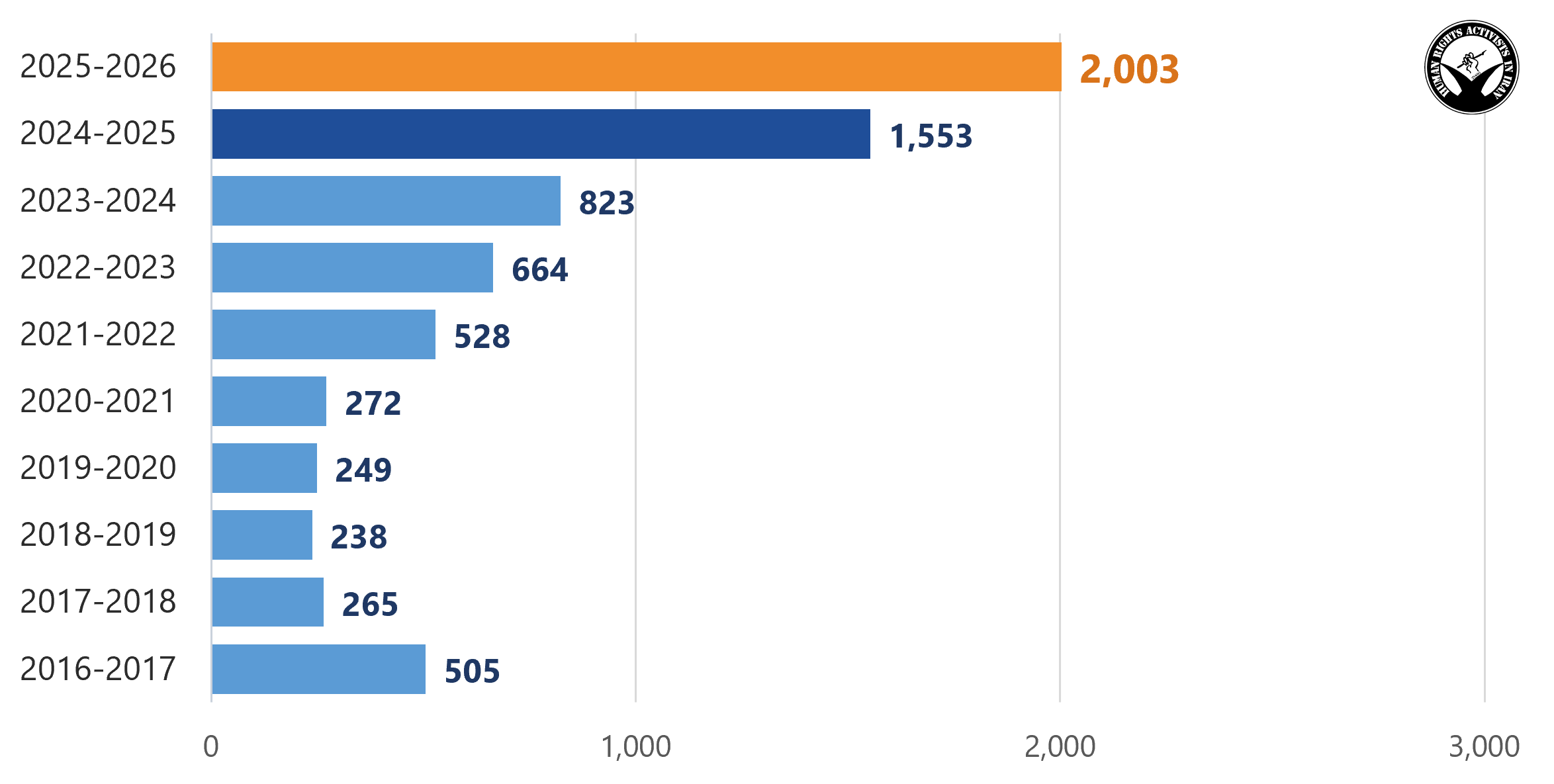
The 2,003 executions documented during the current reporting period represent the highest total recorded across the ten reporting periods examined in the report. Compared with 1,553 executions in 2024–2025, the total increased by approximately 29%. The current figure is also more than 182% above the ten-period average of 710 executions.
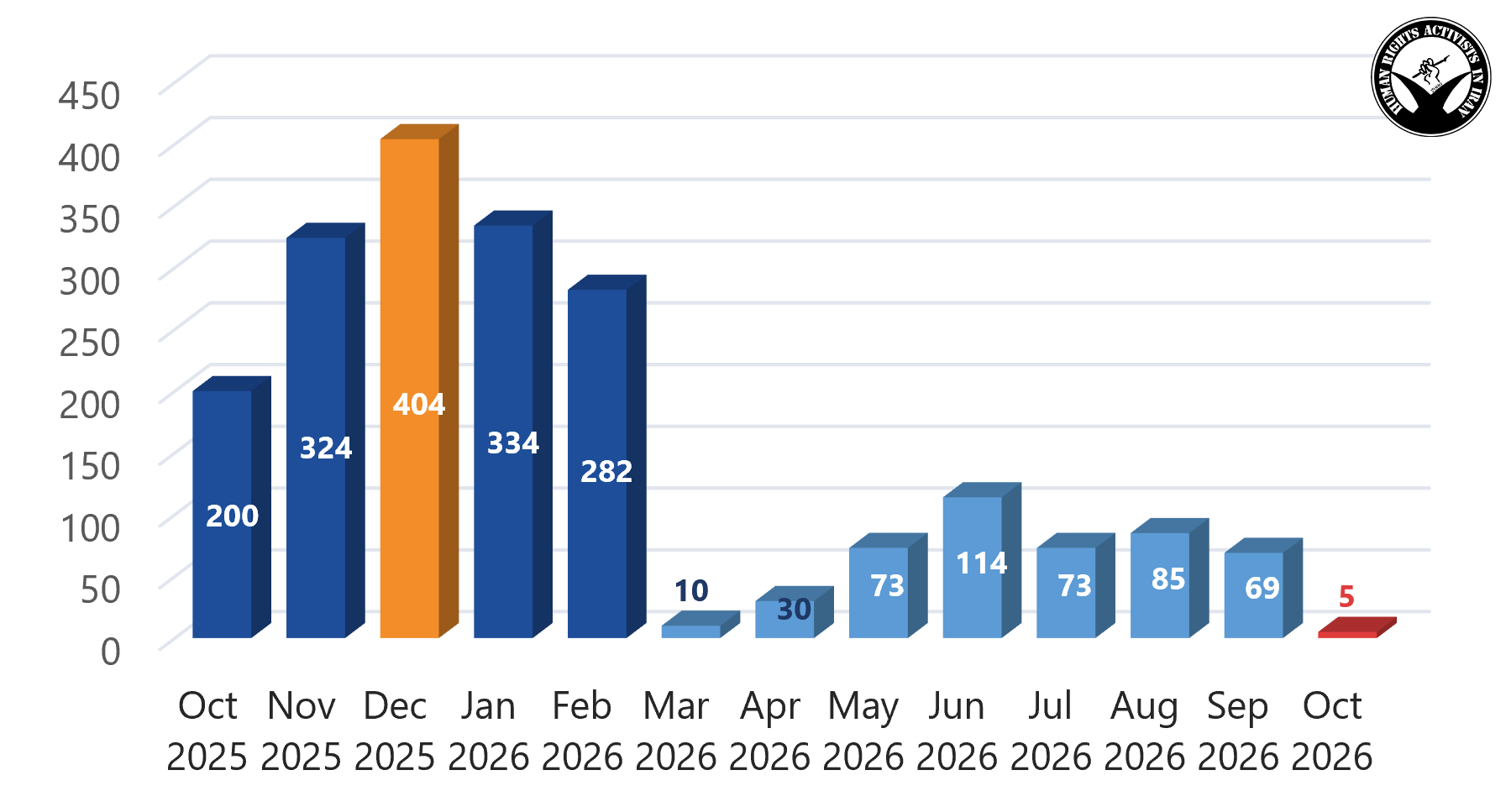
Monthly data show that executions peaked in December 2025. By contrast, March 2026 recorded the lowest total among complete months. The October 2026 figure covers only the first seven days of the month and therefore should not be compared directly with full-month totals.
CHART 1 — Monthly Executions
Charges: Murder and Drug Offenses Dominate
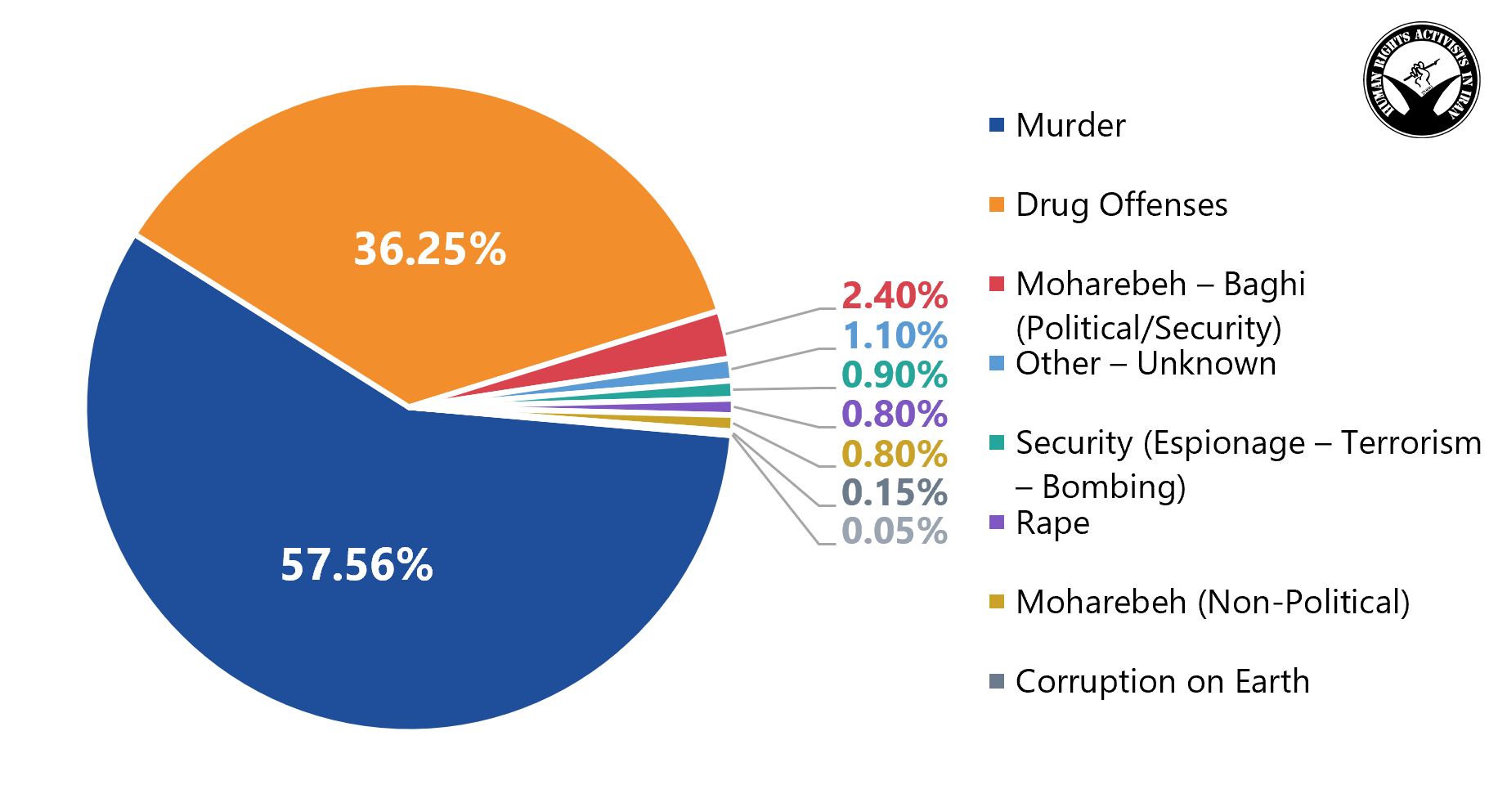
The distribution of charges resulting in execution shows a notable shift from the previous period. According to HRANA documentation, 57.56% of those executed were convicted of murder and 36.25% of drug-related offenses. Political and security-related moharebeh or baghi charges accounted for 2.40%; other or unknown charges for 1.10%; security charges including espionage, assassination or bombing for 0.90%; rape for 0.80%; non-political moharebeh for 0.80%; efsad-e fel-arz (corruption on earth) for 0.15%; and economic crimes for 0.05%.
Taken together, murder and drug-related offenses account for more than 93% of all documented executions. At the same time, the increase in political and security-related executions, and the connection of a significant number of those cases to protests, stands out as a defining feature of the current reporting period.
CHART 2 — Executions by Charge
Geography of Executions: Concentration in Several Provinces and Prisons
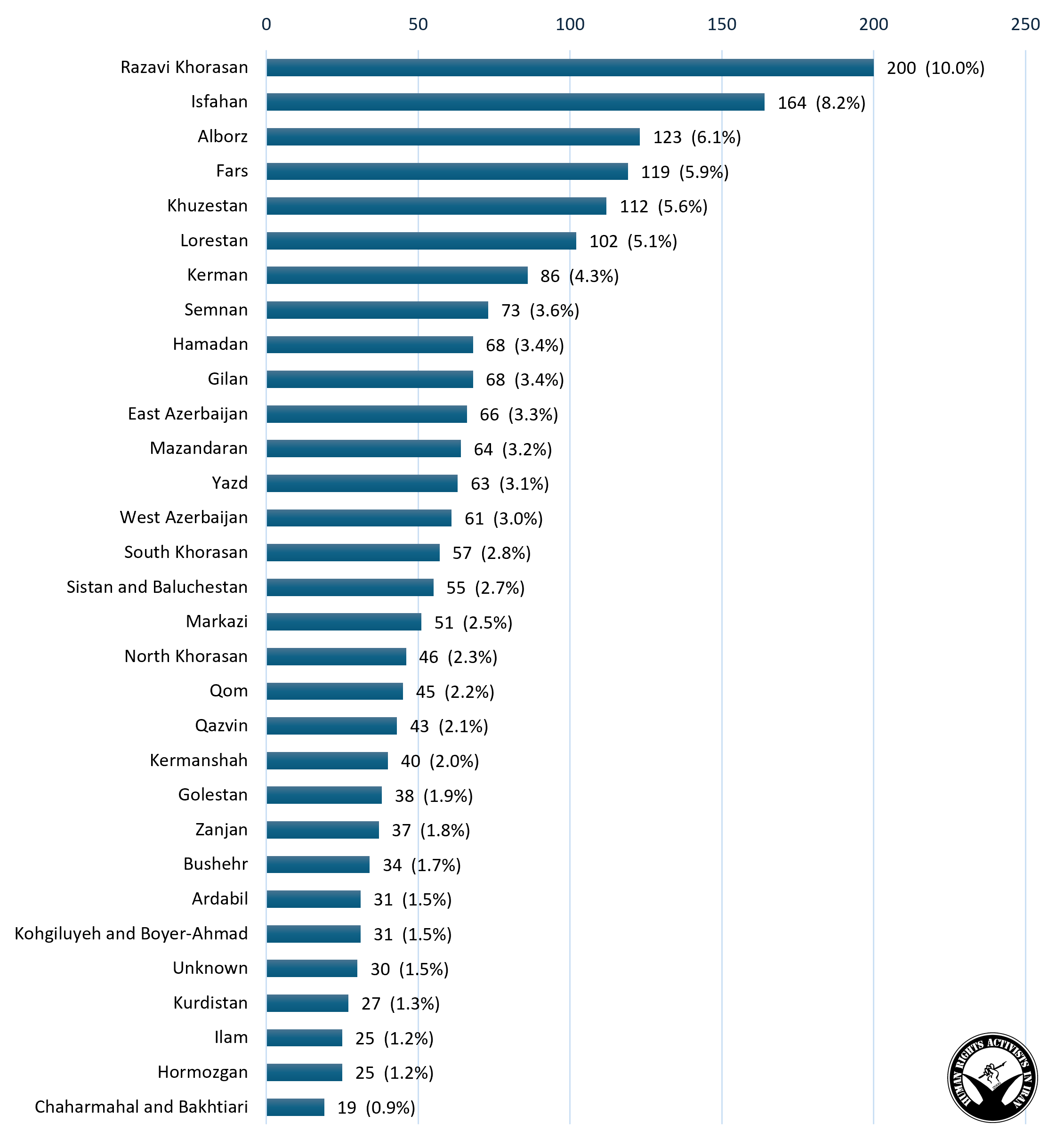
By location of execution, Razavi Khorasan recorded the highest number with 200 executions, followed by Isfahan with 164 and Alborz with 123. Fars recorded 119, Khuzestan 112 and Lorestan 102. These figures are calculated on the basis of prison location and do not necessarily reflect the place of residence or alleged offense of the person executed.
Per-capita figures provide a different picture, particularly in smaller provinces. The report cautions that prisoner transfers and executions carried out outside a prisoner’s province of origin can inflate provincial rates. Tehran is not included in the per-capita table because no executions were recorded there, and 30 executions with an unknown province were excluded from that calculation.
At the prison level, Dastgerd Prison in Isfahan and Adelabad Prison in Shiraz recorded the highest numbers of executions. The spread of executions across dozens of prisons, alongside clear concentration in several facilities, illustrates both the nationwide scope and localized intensity of the death penalty.
CHART 3 — Executions by Province
Secrecy, Public Executions and Gender
One of the report’s most significant findings is the continued lack of official transparency. Approximately 95% of documented executions were carried out secretly or without announcement in official or domestic media, while only about 5% were reported through official or domestic sources. This pattern sharply limits public oversight and independent assessment of execution practices.
Of the 2,003 executions documented, 9 were carried out in public, representing about 0.4% of the total. Forty-seven women were executed during the reporting period. Four people whose identities and case histories were verified were under the age of 18 at the time of the alleged offense. Overall, 2.3% of those executed were women, 88.8% were men, and the gender of 8.9% remained unknown in the available data.
In relation to sentencing, HRA documented 230 people sentenced to death. At least 16 of those sentenced were women, 6 were sentenced to public execution, and 74 death sentences were upheld by the Supreme Court.
Ten-Year Trend: The Highest Recorded Level
A review of ten reporting periods shows that, after executions declined from 505 in 2016–2017 to 238 in 2018–2019, the trend turned upward from 2019–2020 onward. The totals then rose through 249, 272, 528, 664, 823 and 1,553 before reaching 2,003 in 2025–2026.
This trajectory places the current one-year increase within a longer pattern of escalation. Continued restrictions on access to official information, together with the very high share of unannounced executions, mean that the documented figures should be understood as the minimum that could be independently verified rather than necessarily the complete number of executions carried out.
CHART 4 — Ten-Year Execution Trend
69 Political and Security-Related Executions
During the reporting period, HRANA documented 69 people executed on political and security-related charges. Of these, 35 people — approximately 51% — were executed in connection with the January 2026 (Dey 1404) protests. Twenty-nine people were executed in April and May 2026 alone, with 14 in April and 15 in May, marking the peak of executions in this category.
Among these 69 cases, 29 people were executed on charges of moharebeh, either alone or alongside other charges. Where the province was known, Alborz accounted for the largest share with 19 cases, followed by Isfahan with 10. The province was unknown in 20 cases.
The full report provides an individual case card for each of the 69 people, setting out the charge, date of execution, case background, province or city, and prison where available. This case-level documentation allows the aggregate figures to be examined in greater detail and shows the diversity of charges and case backgrounds included within the political and security-related category.
Judicial Actors Involved in Issuing or Upholding Death Sentences
For the first time in this format of the annual report, a dedicated section documents judges and courts identified in death-penalty cases. This research covers October 10, 2025 through September 26, 2026, meaning that its documentation window ends twelve days before the October 8, 2026 cutoff used for the report’s main statistical sections.
HRA’s review found that several judges identified during the current period had also appeared in earlier political, security-related or protest cases involving death sentences. Among the examples examined are Abolghasem Salavati of Branch 15 of the Tehran Revolutionary Court, Iman Afshari of Branch 26 of the Tehran Revolutionary Court, Vahid Hemmatnejad of Branch 5 of the Isfahan Revolutionary Court, Ahmad Darvish-Goftar of Branch 1 of the Rasht Revolutionary Court, Reza Najafzadeh of Branch 3 of the Urmia Revolutionary Court, and Seyed Mahmoud Sadati of Branch 1 of the Shiraz Revolutionary Court.
The report emphasizes that this list is not exhaustive. Iranian authorities routinely withhold information about capital proceedings, and public reporting often fails to identify the presiding judge or even the relevant branch. Accordingly, the absence of a judge’s name from the report should not be read as evidence that the judge was not involved; rather, it reflects the limits of independently verifiable information.
A separate section also addresses Supreme Court review and distinguishes between issuing a death sentence at trial and later upholding or reviewing that sentence. The available documentation identifies judges from Branches 9, 20, 39 and 41 of the Supreme Court in connection with specific death-penalty cases.
Methodology and Data Limitations
HRA’s Statistics Center relies on HRANA reporting, a nationwide volunteer network, verified open-source material, and official judicial announcements. Because independent human rights groups cannot operate freely in Iran, access to prisons and courts is restricted, and many executions are deliberately concealed, a margin of error is unavoidable.
The figures in this report therefore reflect the capacity of civil society to document and independently verify executions rather than a claim to a flawless count of every execution carried out. The fact that approximately 95% of executions were not announced by official sources underscores the importance of independent monitoring and verification in assessing the true scale of capital punishment in Iran.
Access the Full Report
The full report contains detailed statistical tables, charts, provincial and prison-level data, profiles of all 69 people executed on political and security-related charges, and the section documenting judicial officials. For case details, sources and supporting data, download and read the complete report.
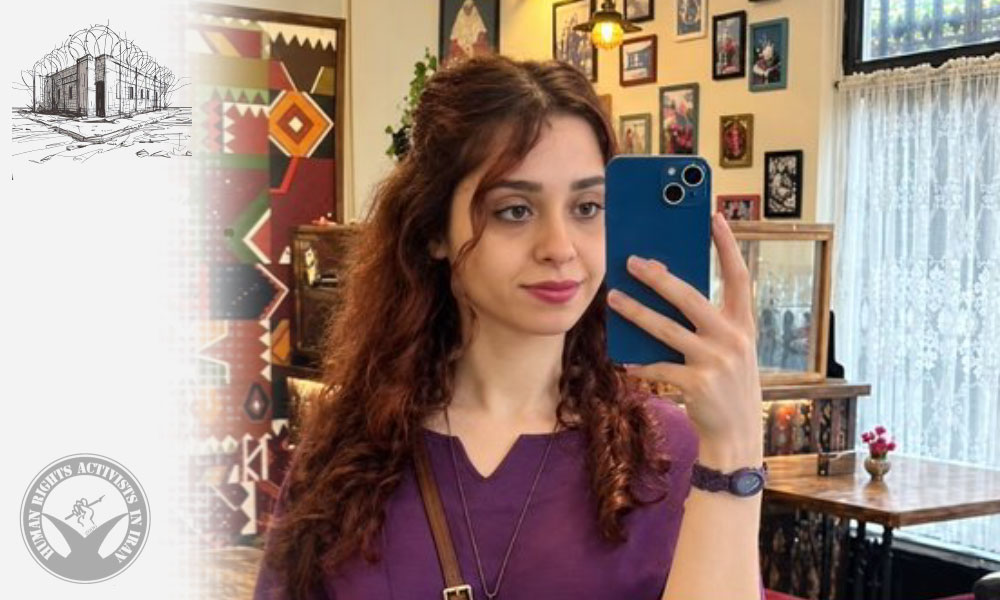
HRANA – Niloufar Haghi Boujani, a 22-year-old resident of Kermanshah, was arrested on Wednesday, October 7, 2026, by agents of the IRGC Intelligence Organization in the city and transferred to an undisclosed location.
According to HRANA,Niloufar Haghi Boujani has been arrested in Kermanshah.
Based on information received by HRANA, Ms. Haghi Boujani was arrested on Wednesday, October 7, by IRGC intelligence agents at her family home without the presentation of a judicial warrant.
A source close to the 22-year-old’s family confirmed the arrest to HRANA, stating: “Her social media activities, including publishing posts on her personal Instagram account, have been cited as reasons for Ms. Haghi Boujani’s arrest.”
At the time of this report, no information has been obtained regarding her whereabouts or the charges brought against her.
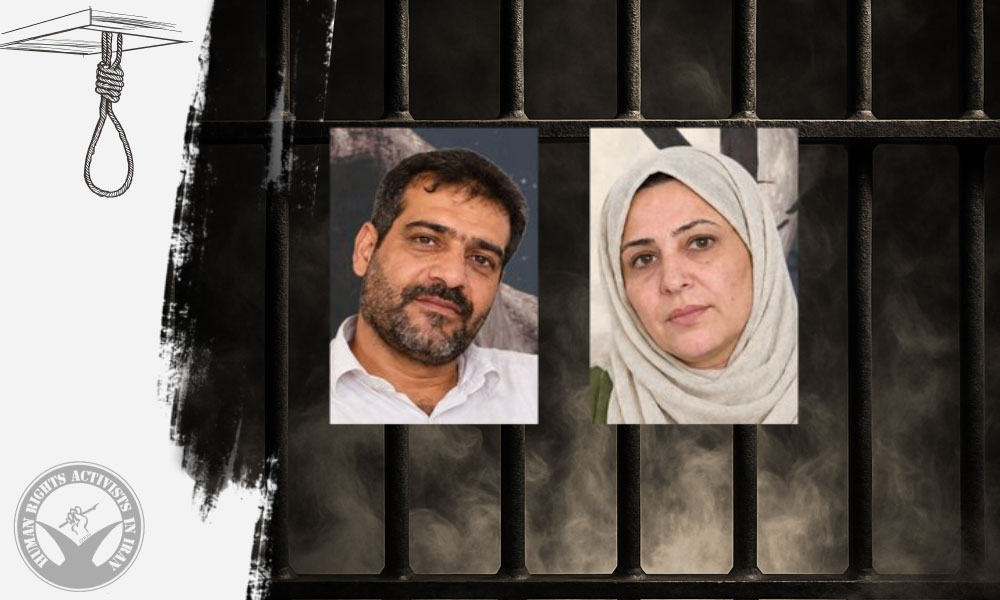
HRANA – The death sentences of five prisoners, including a woman, who had previously been sentenced to death in separate murder cases, were carried out in Dezful and Sari prisons.
According to HRANA, citing Iran Human Rights Organization, a prisoner was executed at Dezful Prison on Wednesday, October 7, 2026.
The prisoner has been identified as Ahmad Nikdel, 44, a father of three.
According to the report, Mr. Nikdel was arrested three years ago on charges of murdering one of his colleagues in an honor-related killing and was subsequently sentenced to death.
Number of Executions at Sari Prison Rises to Two
Iran Human Rights Organization reported that two prisoners, including a woman, were executed at Sari Prison on Wednesday, September 30, 2026.
On that day, Shahram Fazlollah-Tabar, 35, father of two, and a female prisoner identified as Ashraf Faraji, 57, a native of Ahvaz, a resident of Sari, and a mother of four, were executed.
According to the report, Mr. Fazlollah-Tabar was arrested approximately four years ago on charges of murder following a dispute and physical altercation. He was ultimately sentenced to death by judicial authorities.
Ms. Faraji, who suffered from mental health issues and was under medical care, killed her husband in 2022 during an argument and physical altercation. She was subsequently arrested and sentenced to death by Branch 2 of the Sari Criminal Court. The verdict was ultimately upheld by Branch 6 of the Supreme Court.
Two Prisoners Executed at Dezful Prison on September 23, 2026
According to Iran Human Rights Organization, on September 23, 2026, Emad Mirdoraghi, 28, a resident of Andimeshk, andMohammadreza Aziz-Haji, 30, a native of Dezful, were hanged at the city’s prison.
Ten years ago, Emad Mirdoraghi entered a house with the intention of committing theft. An elderly woman who was inside the house suffered a fatal stroke after being frightened. He was subsequently sentenced to death by judicial authorities on murder charges in connection with the incident. He was approximately 18 years old at the time of his arrest.
Four years earlier, Mr. Aziz-Haji had killed one person and caused permanent bodily injury to another during a dispute over financial matters. He was subsequently sentenced to death by judicial authorities.
As of the time of this report, the executions of these prisoners have not been officially announced by prison authorities or other relevant institutions.
According to HRA’s Annual Report, in 2025 at least 2,063 citizens, including 61 women and 2 juvenile offenders, were executed. Of these, the sentences of 11 individuals were carried out in public. During the same period, 172 other individuals were sentenced to death.
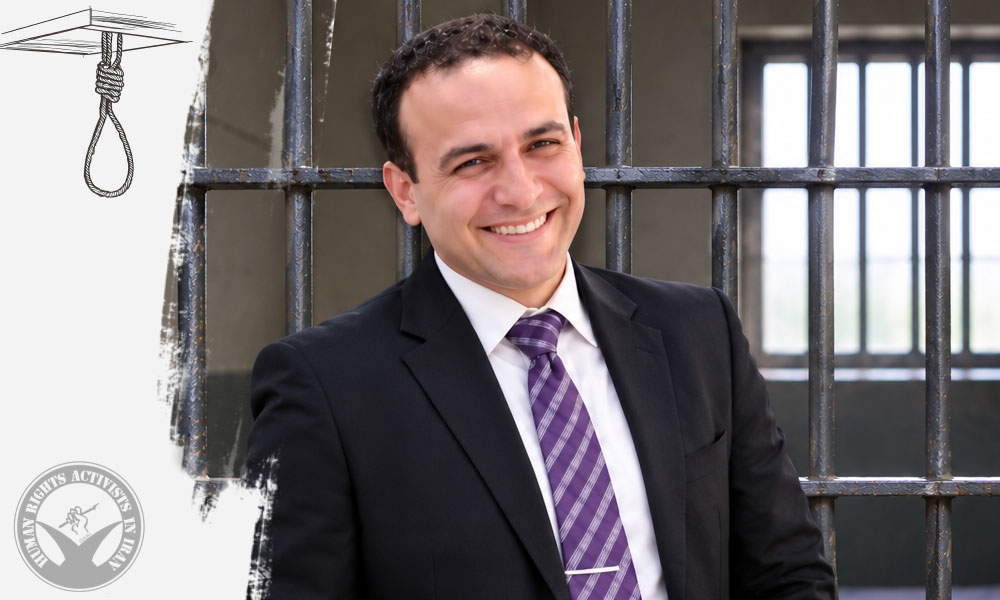
HRANA – Yesterday, October 8, the death sentence of a prisoner previously convicted of non-political offenses was carried out at Adelabad Prison in Shiraz.
According to HRANA, a prisoner was executed at Adelabad Prison in Shiraz.
HRANA has confirmed the identity of the prisoner, who was hanged at dawn yesterday, Thursday, October 8, as Mehdi Alizadeh.
According to the report, Mr. Alizadeh had previously been arrested on non-political charges and subsequently sentenced to death by judicial authorities.
As of the time of this report, the execution has not been officially announced by prison authorities or other relevant institutions.
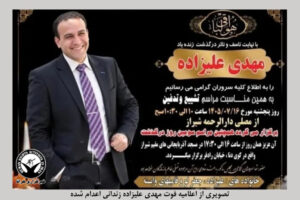
Alizadeh’s Obituary Notice
According to HRA’s Annual Report, in 2025 at least 2,063 citizens, including 61 women and 2 juvenile offenders, were executed. Of these, the sentences of 11 individuals were carried out in public. During the same period, 172 other individuals were sentenced to death.
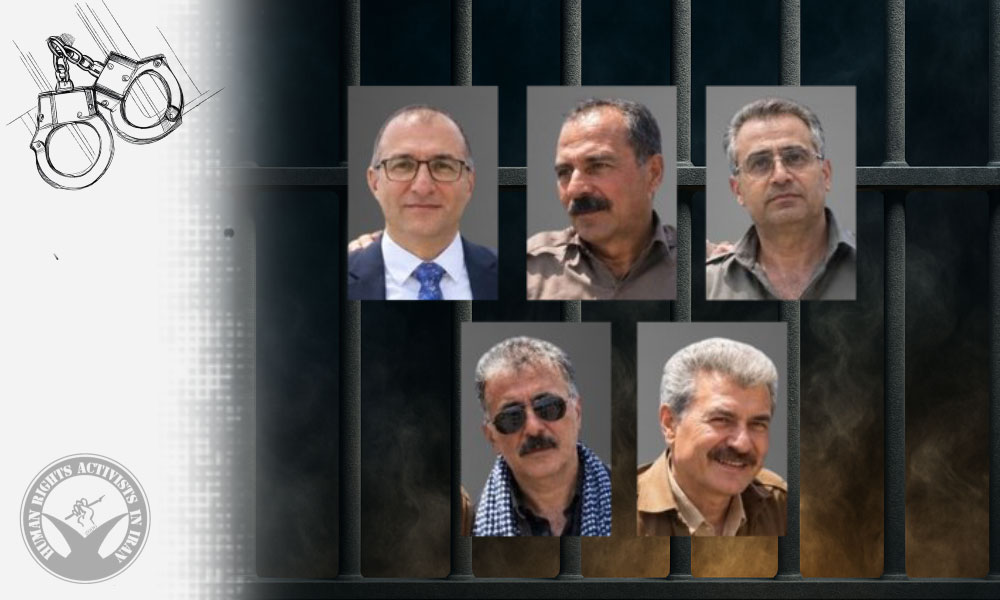
HRANA – Today, seven residents of Saqqez were arrested by agents of the Ministry of Intelligence in the city and taken to an undisclosed location.
According to HRANA, citing Kolbar News, today, Thursday, October 8, 2026, seven citizens were arrested in Saqqez.
The individuals have been identified as Abdullah Amini, Rahim Haghparast, Seyed Mohammad Saleh Hosseini, Mohammad Hakimpour, Mostafa Ghaderi, Khaled Rahimi, and Hossein Abdollahi, all residents of Saqqez.
According to the report, Ministry of Intelligence agents simultaneously arrested the seven individuals at their homes in Saqqez and subsequently transferred them to an undisclosed location.
The arrests reportedly involved the use of violence, with agents physically assaulting and beating the individuals.
At the time of this report, no information has been obtained regarding the reasons for their arrests or the charges brought against them.
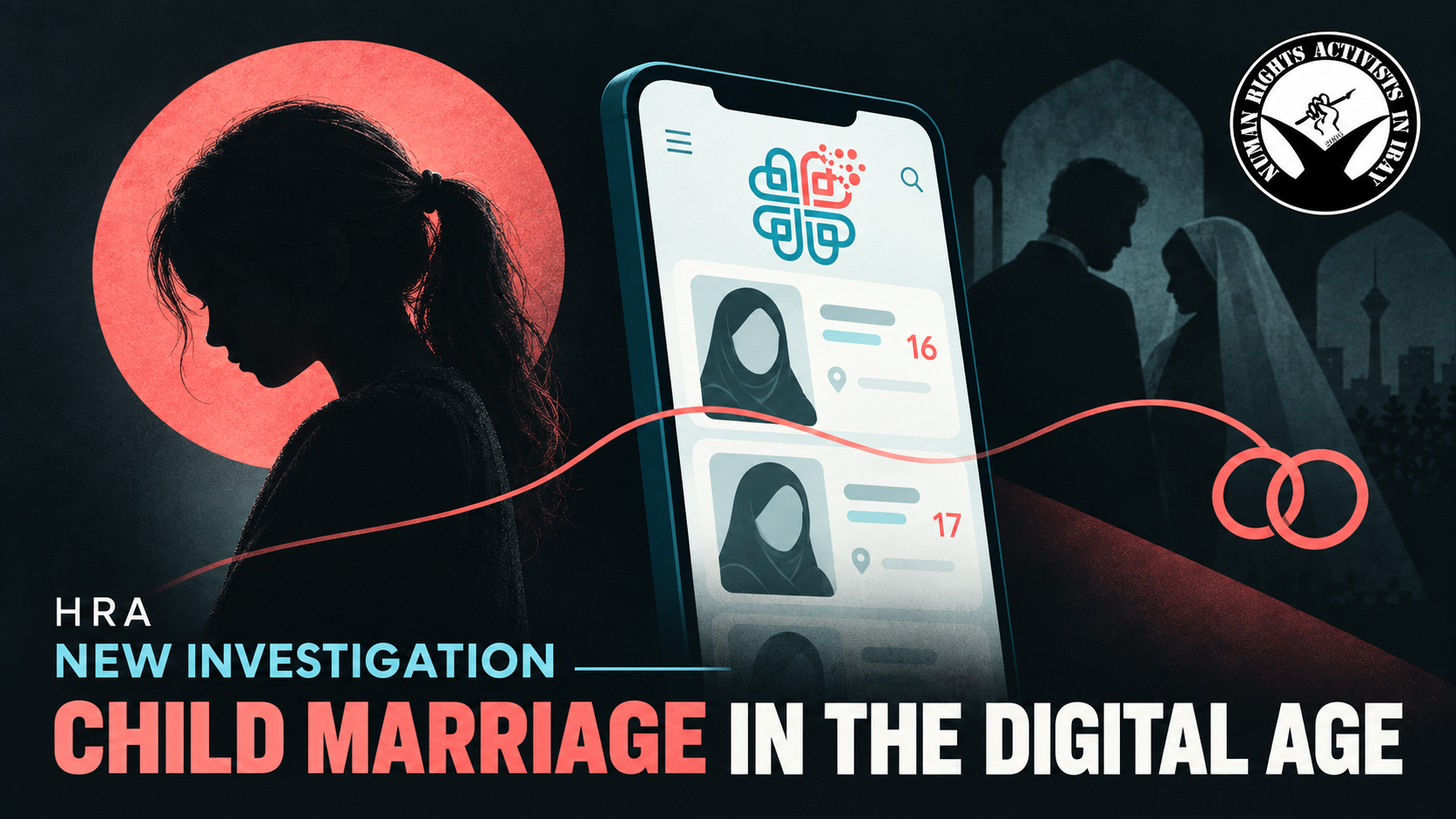
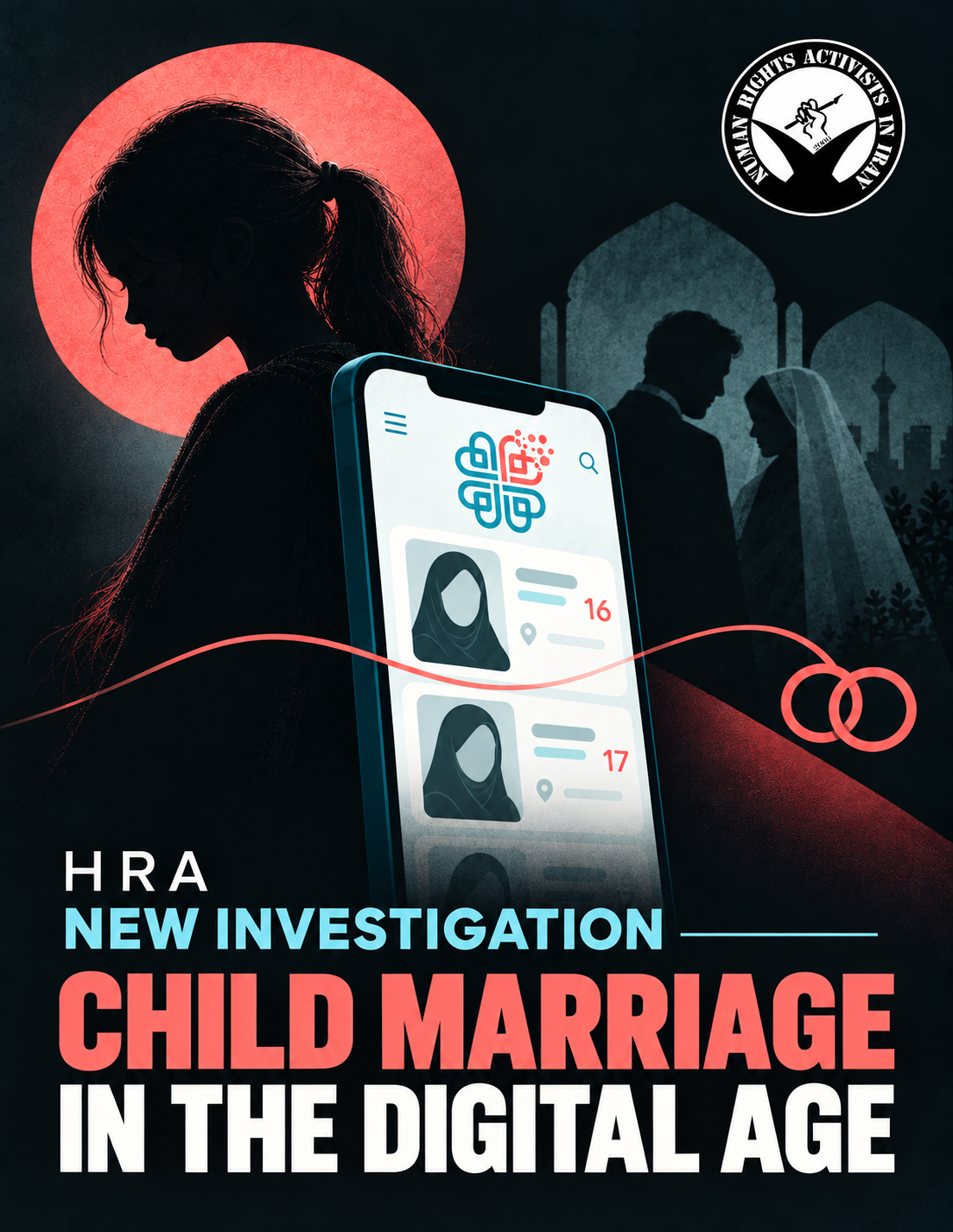
HRANA News Agency – A new investigation by Human Rights Activists (HRA) documents how Iran’s “Adam and Eve” matchmaking platform allows minors to be presented as prospective spouses, while operating within a broader system of state licensing, promotion, financial incentives, and institutional support. The report also examines the role of international technology companies—including Google and Meta—in distributing and promoting services that may expose children to marriage, exploitation, and other forms of harm.
Human Rights Activists (HRA) has published a new investigative report, Child Marriage in the Digital Age, examining how digital matchmaking services in Iran are creating new pathways through which child marriage can be facilitated and normalized.
The investigation focuses on Adam and Eve (Adam va Hava), a government-licensed Iranian matchmaking platform, but places the service within a much wider legal, political, financial, and technological ecosystem. The report examines Iran’s marriage laws and demographic policies, the state system for licensing and monitoring matchmaking services, state-media promotion, financial support for marriage initiatives, institutional links surrounding the platform, and the role played by international technology companies in providing access to and visibility for the service.
The investigation comes amid the rapid expansion of officially authorized matchmaking platforms in Iran. Iranian authorities reported only one licensed matchmaking platform in 2020. By 2023, the number had risen to 33, and by early 2025 more than 200 such services were reportedly operating with government authorization. This growth has taken place alongside state policies intended to encourage earlier marriage, higher fertility, and population growth.
Children Displayed as Prospective Spouses
Among the report’s most significant findings is evidence that minors can enter—and be publicly displayed within—the Adam and Eve matchmaking system.
Although the platform’s terms state that female users must be over 15 and male users over 18 to create accounts, HRA found that the system accepted a birth year corresponding to an age as low as 12, without presenting an age-specific warning or barrier. The platform also permits parents to establish matchmaking profiles for their children, creating another avenue through which minors can be entered into the system.
The platform’s search system allows users to filter prospective spouses beginning at age 13. When HRA searched for girls between 13 and 17 on October 5, 2026, the search returned the platform’s maximum display limit of 100 profiles, suggesting that additional profiles may exist beyond those shown. The results included girls as young as 13 and 14. The report also documents a marriage announcement published by Adam and Eve involving a 16-year-old bride and a 23-year-old groom.
The concerns extend beyond age eligibility. Users complete extensive questionnaires containing information about their location, education, religious beliefs, political views, dress and physical appearance, lifestyle, interactions with the opposite sex, and expectations for a future spouse. The platform also includes self-assessment questions addressing characteristics including physical appearance and sexual desire.
HRA found that information relating to minors could be browsed without logging in and observed no apparent distinction between how the platform displayed information belonging to children and adults. The report further documents how abbreviated matchmaking profiles—including information relating to minors—have been disseminated through messaging channels as advertisements for prospective spouses.
A Broader State Policy Framework
HRA’s investigation argues that the concerns surrounding Adam and Eve cannot be understood solely as the conduct of a private matchmaking company.
Iranian law itself permits marriage below 18. Article 1041 of the Civil Code permits marriage from age 13 for girls and 15 for boys, while marriages below those ages can also take place with guardian consent and court approval. Iran therefore has no absolute minimum age below which marriage is prohibited.
At the same time, the 2021 Law on the Protection of the Family and Youthful Population established a regulatory framework for licensing spouse-selection services and forms part of a broader pronatalist policy intended to reduce the average age of marriage and encourage childbirth.
The report documents several dimensions of state involvement: legal authorization of matchmaking platforms; regulatory monitoring of their activities; promotion through state media; and financial incentives supporting marriage and population policies.
Licensed spouse-finding platforms reportedly submit monthly information to the Ministry of Sports and Youth concerning new registrations, including applicants’ ages and marriages facilitated. According to the report, this means authorities are positioned to receive information concerning the ages of individuals using licensed services—an especially important issue where children are being displayed as prospective spouses.
State television has also actively promoted Adam and Eve. The report documents multiple appearances on Islamic Republic of Iran Broadcasting (IRIB), including calls encouraging young people to register with the platform.
Financial support forms another component of this framework. The report notes that government bodies are required to allocate portions of their budgets to organizations pursuing objectives such as facilitating marriage, encouraging childbirth, and strengthening families. According to figures cited in the investigation, a related 2025 budget line totaled approximately 180 billion tomans, while Adam and Eve reportedly received 17 billion tomans in March 2025 through registrations and marriages involving under-20 and under-15 age groups.
Institutional and Security Connections
The investigation also traces the organizational networks surrounding Adam and Eve.
The platform operates as an initiative of the Imam Reza Society, founded and led by Hossein Yekta, whom the report identifies as a senior Islamic Revolutionary Guard Corps (IRGC) commander. Yekta has publicly supported the platform and appeared in promotional material connected to it. He has also been sanctioned by the European Union and several European countries in relation to serious human rights violations.
The report goes on to document personnel and organizational connections involving the Imam Reza Society, Astan Quds Razavi-linked institutions, members of Adam and Eve’s leadership and academic structures, and other individuals with backgrounds in state and security institutions.
Taken together, HRA concludes that the facilitation of child marriage through Adam and Eve should not be viewed merely as an isolated failure of private-sector regulation. Rather, the platform functions within an environment of legal authorization, government oversight, state-media promotion, financial incentives, and institutional connections that collectively encourage earlier marriage and family formation.
The Role of Google and Meta
A major part of the report concerns the responsibilities of international technology companies whose services help distribute or promote Adam and Eve.
The Android application has been distributed through Google Play, where the report states it has received more than 100,000 downloads. Despite its matchmaking function and the evidence concerning minors, the application was listed with an “Everyone”/PEGI 3 rating, indicating suitability for all age groups.
The report notes that Google’s policies impose heightened child-protection requirements on dating and matchmaking applications and include mechanisms intended to restrict minors from age-inappropriate functionality. HRA therefore calls on Google to assess whether Adam and Eve complies with its policies concerning age verification, minor access, child safety, profile visibility, and content ratings.
The investigation also examines Meta, because Adam and Eve uses Instagram and Threads to promote its services and direct users toward the matchmaking platform. As of October 2026, its Instagram account had approximately 192,000 followers and nearly 800 posts, while its Threads account had almost 10,000 followers.
The report documents social-media posts explaining how to download and use the matchmaking service, as well as marriage announcements involving minors—including one involving a 17-year-old girl and a 30-year-old man.
The report argues that Google, Meta, and other technology providers should conduct enhanced human-rights and child-safeguarding due diligence where their products distribute, host, advertise, or otherwise facilitate access to services involving minors as prospective spouses.
It also calls for scrutiny of relevant ownership and institutional connections where sanctions-related concerns may arise.
From Domestic Reform to Corporate Accountability
The report concludes with recommendations directed at the Iranian government, United Nations mechanisms, international technology companies, and civil society.
Among them, HRA calls on Iran to establish 18 as the absolute minimum age of marriage, without exceptions; prohibit minors from being publicly displayed as prospective spouses; introduce meaningful age verification and child-safeguarding requirements; and suspend matchmaking services that register, display, or promote children.
The report urges UN mechanisms—including the Committee on the Rights of the Child—to examine the relationship between Iran’s marriage laws, pronatalist policies, and state oversight of digital matchmaking platforms. It also recommends examining child marriage within broader patterns of gender-based discrimination and potential gender persecution.
For technology companies, the recommendations include suspending distribution of matchmaking services pending child-safety review where credible evidence shows that minors are being presented as prospective spouses; independently reviewing age ratings; strengthening age verification and access controls; examining promotional activity; and conducting enhanced human-rights, child-safety, ownership, and sanctions due diligence.
Ultimately, the investigation argues that addressing child marriage in Iran requires looking beyond individual marriages or individual platforms. The issue increasingly intersects with state policy, digital infrastructure, corporate distribution systems, social media, and technology governance.
The report’s central warning is that digital systems through which children can be made visible and accessible as prospective spouses must themselves become part of efforts to end child marriage. Where credible evidence shows that children are being presented for marriage, governments, international institutions, civil society organizations, and technology companies all have responsibilities to examine the systems enabling that harm.