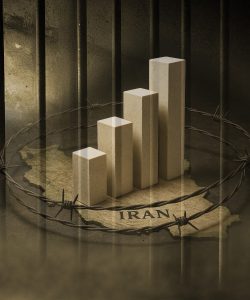
HRANA News Agency -In March 2025, HRANA, via its Statistics Department, documented a continued deterioration in Iran’s human rights conditions. The month witnessed a sharp rise in executions, persistent suppression of civil liberties, and intensified pressure on vulnerable groups such as women, children, ethnic and religious minorities, and border laborers. The findings presented here aim to inform the public and international community of the systemic challenges within Iran’s legal, political, and social institutions.
Executions
Iran carried out 58 executions in March 2025—51 men, 4 women, and 3 of unspecified gender. Most were related to murder (28) or drug offenses (27), with three cases lacking public charges. No public or juvenile executions were reported, but at least three Afghan nationals were among the executed, reinforcing concerns about due process and treatment of foreign nationals.
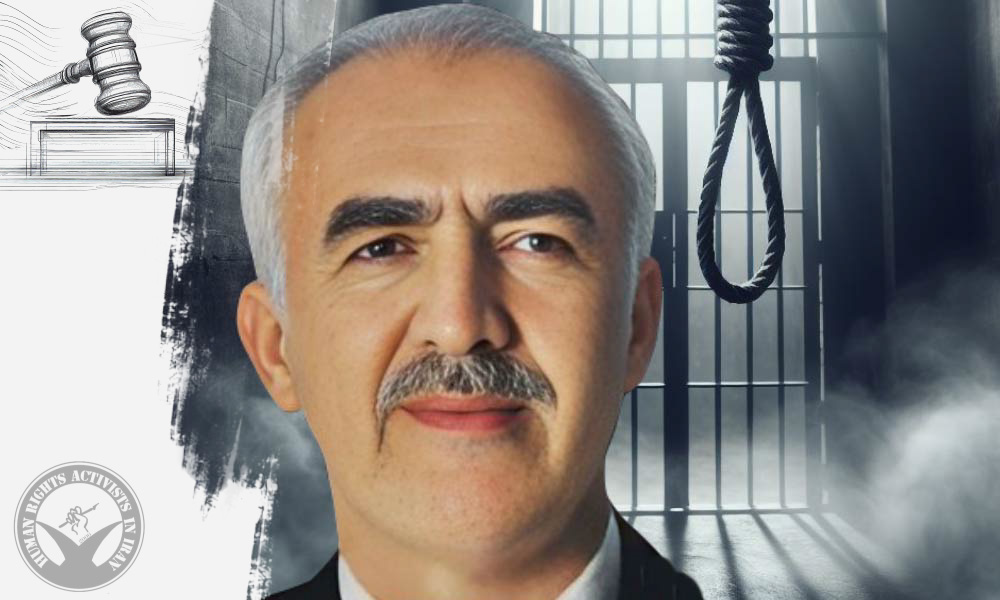
Notably, Nasrin Barani, convicted of murdering her abusive ex-husband, was executed on March 1 in Isfahan. That same day, seven prisoners—two Afghans—were hanged in Zahedan, mostly on drug charges. In a politically sensitive case, Kurdish political prisoner Hamid Hosseinnezhad’s death sentence for “armed rebellion” was upheld after a closed trial.
Additionally, 13 new death sentences were issued—mostly for murder—with no political or security-related charges reported. Though reconciliation spared some from execution, systemic issues such as vague charges and the disproportionate use of capital punishment persist.

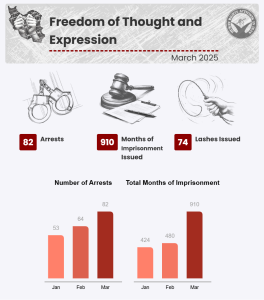
Freedom of Thought and Expression
At least 82 individuals were arrested, and 39 convicted, for expressing dissent or participating in civil activism. Courts issued over 900 months of prison time, 616 months of other discretionary penalties, and financial fines nearing 287 million tomans. At least 74 lashes were executed under these cases.
Targeted groups included journalists, poets, professors, and lawyers. Five cultural figures were sentenced in Abadan for participating in peaceful gatherings. Defense lawyer Behnam Nezadi began a four-month sentence despite appeals for alternative sentencing. Academic Hassan Bagherinia received over 10 years in penalties for political commentary.
Pop singer Sohrab Pakzad was arrested after a concert clip was labeled “immoral,” and his associates face legal proceedings. HRANA also documented 24 trials, 23 warrantless arrests, and various restrictions, including travel bans and home searches. Although four public protests were held, state pressure and isolated violence persisted.
Women’s Rights
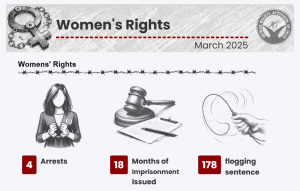
Iranian authorities intensified enforcement of compulsory hijab and politically charged gender laws. Four women were arrested for hijab-related violations, and four others were killed, including one in a suspected domestic violence case. Sentences totaling 18 months in prison and 178 lashes were issued for hijab defiance and protest activity.
Among key cases, activist Hamideh Zeraei was sentenced for refusing to wear hijab in court and for resisting arrest. Leila Pashaei, arrested after Women’s Day comments, remains in unknown custody. HRANA also recorded one rape, four summonses, and four cases of gender-based discrimination.
Although no businesses were sealed for hijab violations in March, judicial penalties reflect ongoing state control over women’s behavior and continued violations of gender equality principles under international law.
Workers’ Rights
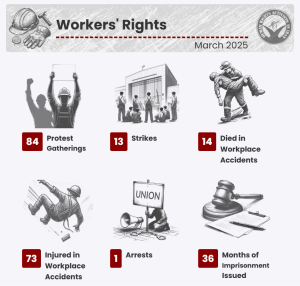
Labor conditions remained precarious. HRANA documented 84 protest gatherings, 13 strikes, and at least 14 worker deaths due to unsafe conditions, with 73 injuries also reported. Major cities like Tehran and Shiraz saw workplace accidents without employer accountability.
Wage delays were a key grievance. Nearly 770 complaints involved unpaid wages—equating to 96 months in delays—while 760 workers reported missing bonuses. Seventy-three workers were left in employment limbo. Protests arose in Izeh, Zahedan, and Chabahar due to layoffs and threats.
Authorities arrested one union activist, issued 3 prison sentences totaling 36 months, and imposed travel bans. Teacher and unionist Kobra Taherkhani was sentenced to three years for social media posts. Forty-eight businesses were also sealed for violating Ramadan norms.
Despite escalating hardship, organized labor resistance continues to highlight the need for meaningful protections, though legal retaliation remains widespread.
Kulbars and Fuel Carriers
HRANA recorded 4 deaths and 8 injuries among border laborers and civilians. In Baneh, a Kolbar named Sina was shot without warning, while others suffered injuries from exposure or violence. One fuel carrier was also injured in separate incidents.
In addition to targeting cross-border laborers, security forces killed three civilians, including Gholam Shahriari in Zabol and Farshad Maghami in Tehran. Five others were injured in shootings by security forces or landmine explosions, underscoring the persistent dangers in Iran’s border regions.
The use of live ammunition, absence of legal oversight, and economic desperation continue to endanger border workers and civilians, perpetuating cycles of poverty and violence.
Children’s Rights
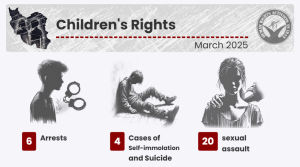
HRANA documented six child arrests, four suicides, one murder, and 20 sexual assaults involving minors. Additionally, 28 children were injured due to official negligence, including unsafe schools and lack of public infrastructure safeguards.
Twelve-year-old Fatima Soleimani died by suicide after being forced into marriage and subjected to abuse. In Bandar Lengeh, 16-year-old Yousef Rasaneh was detained without warrant. A viral case from Isfahan involved a student expelled due to unpaid tuition, prompting administrative investigations.
Although no juvenile executions occurred, these cases expose deep failures in child protection systems and reflect ongoing violations of the UN Convention on the Rights of the Child.
Religious Minorities
In March 2025, the persecution of religious minorities in Iran remained severe. HRANA recorded three convictions totaling 500 months in prison, two enforced sentences, and over 910 million tomans in fines. Social restrictions, travel bans, and targeted arrests reflect continued discrimination against non-Shia communities—particularly Baha’is and Christian converts.
Christian convert Narges Nasri received a 16-year sentence, 15 years of social deprivation, and substantial fines. Pregnant at the time of arrest, she now faces harsh incarceration conditions. Similarly, Baha’i citizen Anisa Fanaeian began serving a 7-year sentence in Semnan after being arrested while taking her daughter to a hospital. Her case involved confiscation of family funds and expansive social penalties.
Christian converts Mehran Shamlooei and Abbas Soori were also sentenced to a combined 25 years and over half a billion tomans in fines. The continued use of national security charges to criminalize peaceful religious activity highlights Iran’s failure to uphold constitutional and international protections for religious freedom.
Prisoners’ Conditions
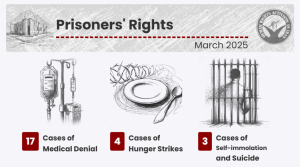
Detention conditions in Iran’s prisons remained dire throughout March. HRANA reported at least 17 cases of denied medical care, three deaths in custody, and multiple instances of solitary confinement, assault, and mental health deterioration.
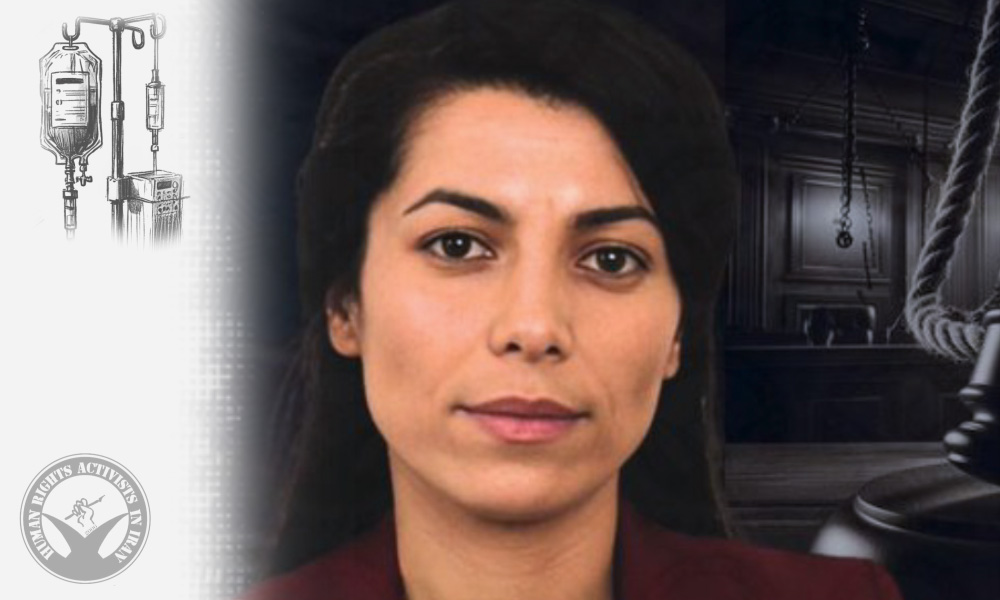
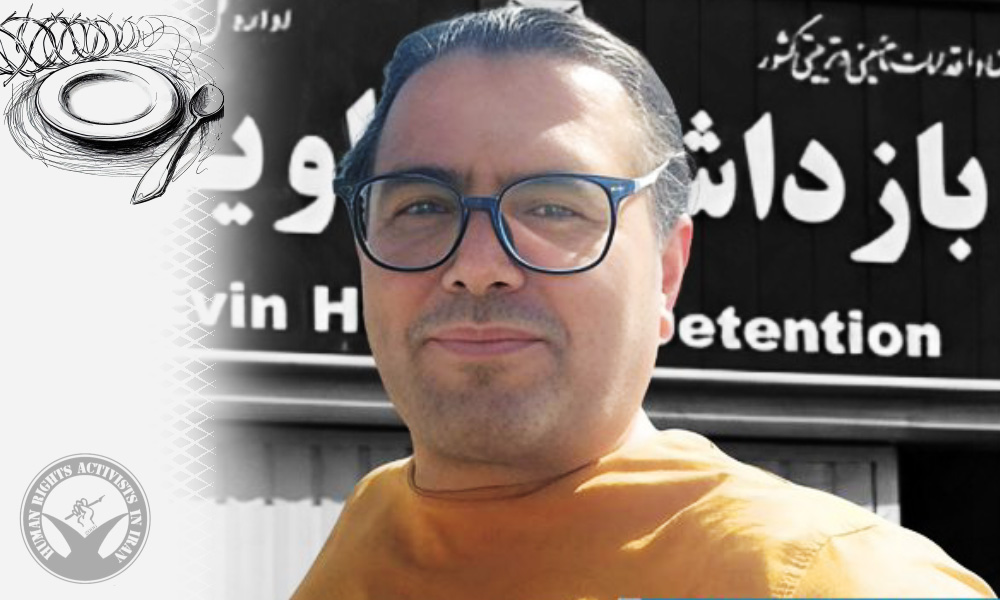
Heydar Mohammadi died under suspicious circumstances after arrest in Hamadan, with no official cause disclosed. In Evin Prison, political prisoner Varisheh Moradi was repeatedly denied spinal surgery despite medical urgency. Labor rights activist Morteza Saeedi launched a hunger strike after being forcibly transferred to quarantine.
Ten detainees were denied legal counsel, and four initiated hunger strikes to protest conditions. Three prisoners attempted suicide, while at least 14 suffered psychological pressure. Reports also included forced transfers, inappropriate confinement, and violations of classification standards.
Despite international norms such as the Mandela Rules, Iran’s detention system continues to foster abuse, neglect, and impunity, particularly for political prisoners and vulnerable detainees.
Ethnic Rights
Targeting of ethnic minorities—particularly Kurds and Azerbaijani Turks—persisted through arrests, interrogations, and surveillance. HRANA documented 14 arrests, five court summonses, and multiple house searches and interrogations without due process.
Azerbaijani activist Vadood Asadi was transferred to Evin Prison to serve a reduced nine-month sentence. Later, activists Amir Ebrahimlou and Soheil Daeiri were arrested and taken to unknown locations, with no charges disclosed. Most arrests were conducted without judicial warrants, and no new convictions were recorded, though prior sentences were enforced.
These patterns reflect systemic efforts to suppress ethnic and linguistic advocacy using national security pretexts, in violation of Iran’s obligations to uphold equality and cultural rights under international law.
Violation of Human Dignity
Corporal punishment continued to be used extensively. HRANA recorded at least 502 lashes issued during March. Though no amputations or lashings were carried out publicly, the practice remains prevalent and widely condemned.
In Sardasht, nine city council members were sentenced to flogging amid a corruption case. Another defendant in Tehran received a sentence including two executions and 80 lashes for a 2022 murder, despite retracted confessions and inconsistent testimony. Such rulings, based on judicial discretion rather than clear evidence, raise serious concerns about fair trial standards.
The continued use of flogging as legal punishment—often alongside imprisonment or capital sentences—reflects the Iranian judiciary’s ongoing reliance on practices that contravene the prohibition of cruel and degrading treatment.
International News Update
On March 18, 2025, the UN Special Rapporteur on human rights in Iran expressed alarm at the surge in executions—particularly among minorities and political prisoners—during an oral update to the Human Rights Council in Geneva. He urged Iran to adopt a moratorium on the death penalty and address systemic legal abuses [Source: https://www.ohchr.org/en/press-releases/2025/03/iran-un-expert-alarmed-execution-surge].
Separately, the U.S. Department of State released its annual human rights report on March 22, dedicating extensive coverage to Iran. The report cited routine torture, suppression of dissent, denial of fair trials, and targeting of ethnic and religious minorities, calling for the release of all prisoners of conscience [Source: https://www.state.gov/reports/2024-country-reports-on-human-rights-practices/iran/].
These international statements highlight growing global concern over Iran’s deepening human rights crisis and reinforce calls for accountability and reform.
Download the Full Report: