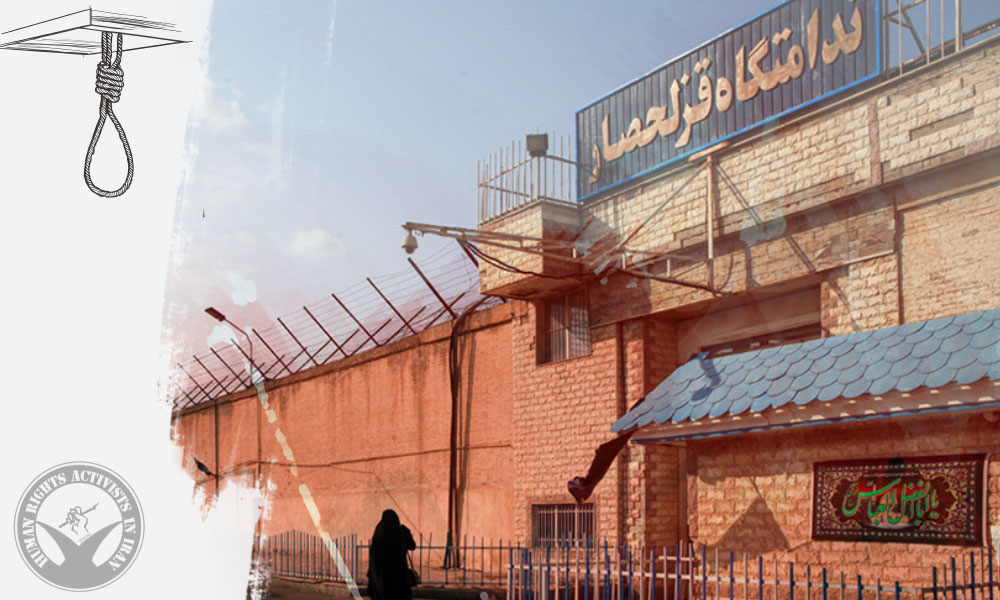
Death Sentence of Mohammad Abbasi, 25-Year Term for Daughter Upheld by Supreme Court

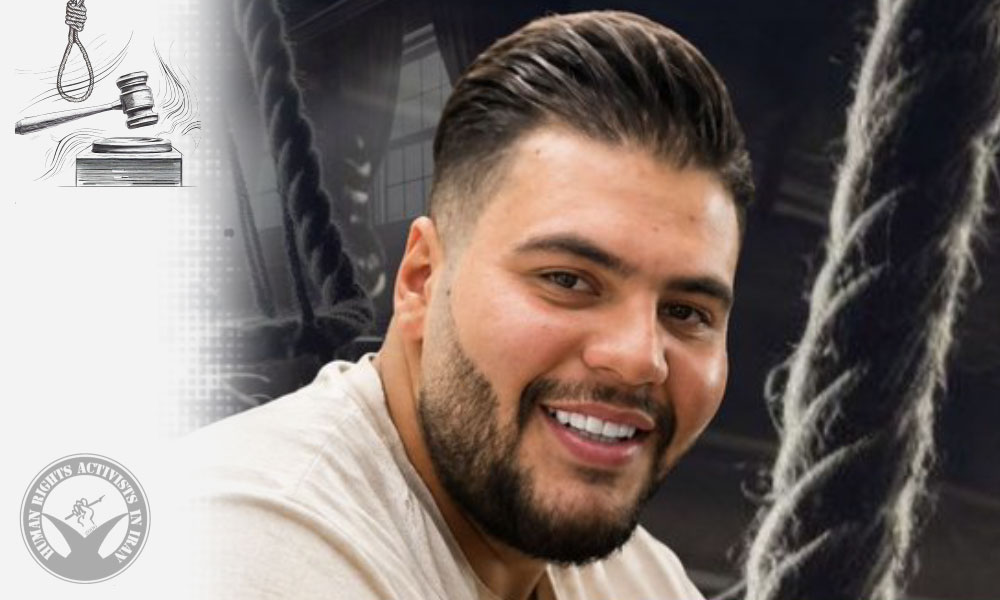
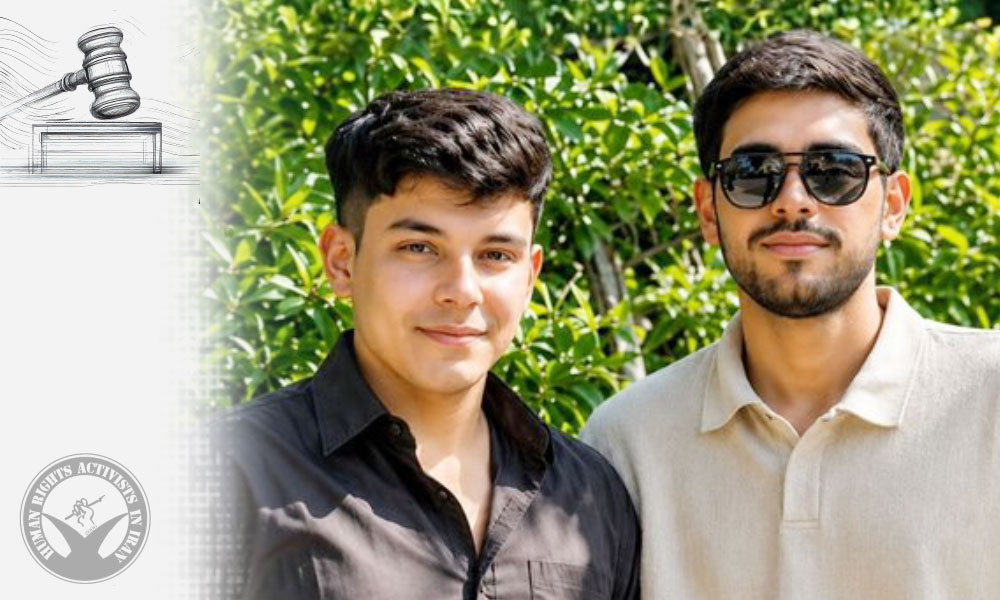
HRANA – The death sentence of Mohammad Abbasi, who was arrested during the January 2026 protests and is currently held in Ghezel Hesar Prison, has been upheld by Branch 39 of the Supreme Court. In addition, the Supreme Court has fully upheld the 25-year prison sentence of his daughter, Fatemeh Abbasi, who is detained in the women’s ward of Evin Prison.

Based on information received by HRANA, Branch 39 of the Supreme Court rejected the appeal and upheld Mohammad Abbasi’s death sentence.
Likewise, the 25-year prison sentence of Fatemeh Abbasi was fully confirmed by the same branch.
Currently, Mr. Abbasi is being held in Ghezel Hesar Prison, while his daughter Fatemeh Abbasi remains in the women’s ward of Evin Prison.

These individuals were arrested during the nationwide protests of January 2026 in connection with the case involving the killing of Second Lieutenant Shahin Dehghani Kakavandi in Malard. Following initial trial proceedings, Mr. Abbasi was sentenced to death on charges of moharebeh (enmity against God) by Branch 15 of the Tehran Revolutionary Court, presided over by Judge Abolghasem Salavati. His daughter, Fatemeh Abbasi, was also sentenced by the same branch to 25 years in prison.

After the initial verdict was issued, Ali Sharifzadeh Ardakani, an attorney, stated in an interview with Emtedad that the case had been referred to Branch 39 of the Supreme Court following an appeal by court-appointed counsel. He further noted that “Branch 39 of the Supreme Court, citing Note to Article 48 of the Criminal Procedure Code, prevented him and another colleague from representing the case.” The report by Emtedad added that there are numerous ambiguities surrounding the case of these two defendants, but independent lawyers have been unable to review the case due to lack of access.

Report on the Latest Status of Soheil Arabi in Ghezel Hesar Prison, Karaj

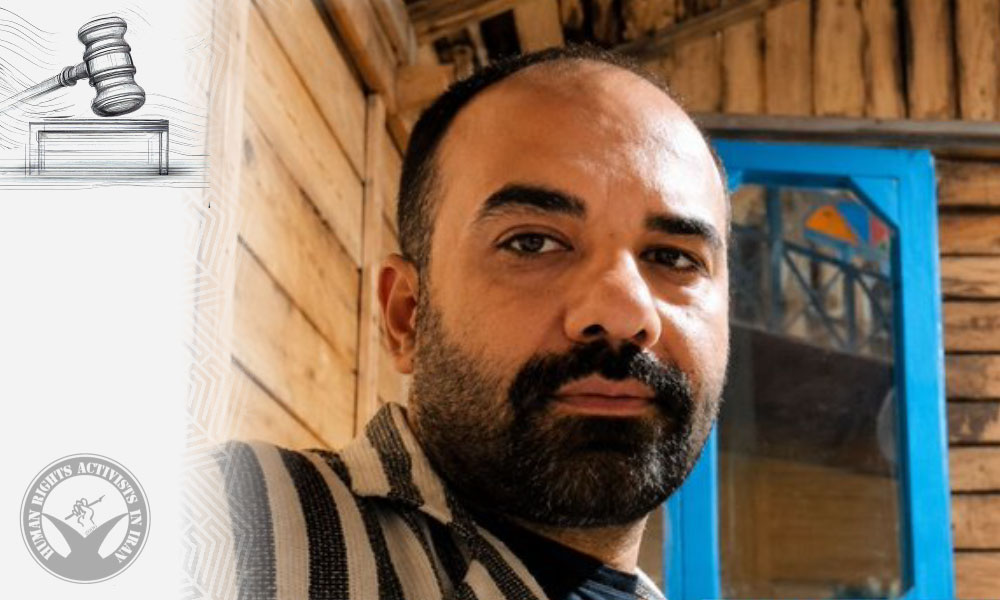
HRANA – Soheil Arabi, a political defendant imprisoned in Ghezel Hesar Prison in Karaj, is still being held in a state of uncertainty in this prison. He was recently summoned to attend an interrogation session after receiving an official notice.

An informed source close to Arabi’s family confirmed the news to HRANA, stating: “Mr. Arabi has been held in solitary confinement in Ghezel Hesar Prison since his arrest, without a clear status. During interrogations, he was beaten by prison officers. He was eventually transferred to a hospital outside the prison and then returned to solitary confinement.”

According to this source, Arabi, who is facing charges of membership in anti-government groups, was recently summoned to attend an interrogation session after receiving a formal notice.

In March 2026, Soheil Arabi was arrested by security forces and transferred to Ghezel Hesar Prison in Karaj.

Soheil Arabi has previously been arrested and faced judicial action due to his activities.

It is worth noting that Soheil Arabi is a blogger and citizen journalist who received the “Press Freedom Award” from Reporters Without Borders in 2017. He has previously faced multiple convictions and legal actions. In 2014, he was sentenced to death by Branch 76 of the Tehran Criminal Court on charges of “insulting the Prophet of Islam” on Facebook. This sentence was later overturned and commuted to other punishments.

The Bodies of Six Executed Political Prisoners Have Still Not Been Returned to Their Families

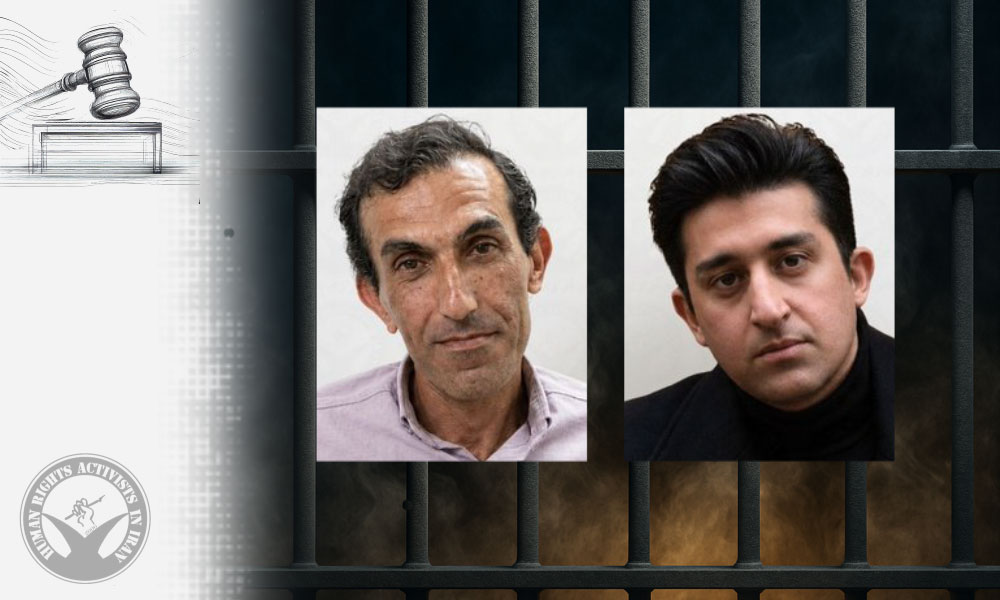
HRANA – The bodies of six political prisoners executed in Ghezel Hesar Prison, Akbar Daneshvar Kar, Seyed Mohammad Taghavi Sang-Dehi, Babak Alipour, Pouya Ghobadi Bistouni, Seyed Abolhassan Montazer, and Vahid Bani-Amerian, have still not been returned to their families more than a week after their executions. Their families, expressing deep concern, have called for transparent information regarding the fate of their loved ones.

Seyed Abolhassan Montazer and Vahid Bani-Amerian were executed on April 4, Babak Alipour and Pouya Ghobadi Bistouni on March 31, and Akbar Daneshvar-Kar and Seyed Mohammad Taghavi Sang-Dehi on March 30, all in Ghezel Hesar Prison. Despite more than a week having passed, their bodies have still not been handed over to their families. The families are demanding clarification about the status of the bodies and disclosure of their burial locations.

The death sentences for these political prisoners were issued in December 2024 on charges of baghi (“armed rebellion against the regime”) through alleged membership in anti-government groups. The ruling had previously been overturned by the Supreme Court in July 2024, and the case was referred to a parallel branch for retrial. Later, in mid-November 2025, they were retried in Branch 26 of the Tehran Revolutionary Court, presided over by Judge Iman Afshari. Finally, on December 7, 2025, the same branch reissued the death sentences, which were formally communicated to their lawyers.

On February 23, 2024, Seyed Mohammad Taghavi Sang-Dehi and Pouya Ghobadi Bistouni were arrested in Chaldoran County and transferred to Maku Prison. Taghavi Sang-Dehi was later transferred to Evin Prison on March 1, 2024. Vahid Bani-Amerian and Seyed Abolhassan Montazer were arrested by security forces in Tehran in January 2024 and were held for some time in Evin Prison. Akbar Daneshvar Kar had also previously been arrested by security forces and transferred to Evin Prison.

These prisoners were formally charged in late May 2024 at Branch 5 of the Tehran Public and Revolutionary Prosecutor’s Office, and were later transferred in the summer of that year to Ghezel Hesar Prison.

Seyed Abolhassan Montazer and Seyed Mohammad Taghavi Sang-Dehi were political prisoners from the 1980s generation of detainees, while Vahid Bani-Amerian, Pouya Ghobadi Bistouni, and Babak Alipour had also previously faced imprisonment and convictions due to their activism.

January 2026 Protests: Mohammadamin Biglari and Shahin Vahedparast Executed

HRANA – The Judiciary’s Media Center announced that the death sentences of Mohammadamin Biglari and Shahin Vahedparast have been carried out after being upheld by the Supreme Court. These political prisoners had been arrested in connection with the January 2026 protests in Tehran and were later sentenced to death by the Tehran Revolutionary Court.

The Judiciary’s Media Center stated that the sentences were carried out at dawn today, April 5, following review of the case and confirmation of the final verdict by the Supreme Court. The judiciary claimed that the two had “entered a military-classified location and, while participating in the destruction and burning of this sensitive site, attempted to gain access to the armory.”

The case was heard in Branch 15 of the Tehran Revolutionary Court, presided over by Judge Abolghasem Salavati, and death sentences had been issued for them on February 7, 2026.

Hassan Aghakhani, one of the privately retained lawyers for Mohammadamin Biglari, had previously pointed to existing ambiguities regarding the alleged “confession” attributed to his client. He said that the court-appointed lawyer at the preliminary stage had informed the family that the defendant had confessed, but the content of this confession, the conditions under which it was obtained, and the related documentation had never been clarified for the privately retained lawyers. He emphasized that attributing this confession to his client is subject to serious doubt.

The case was opened on the evening of January 8, 2026, following a fire at the “185 Martyr Mahmoud Kaveh” Basij base in eastern Tehran. According to reports and videos of forced confessions broadcast by the Islamic Republic’s state television, these individuals had not played a role in the arson or destruction of property at the site; rather, they had merely entered a building that had already been set on fire by others.

Mohammadamin Biglari and Shahin Vahedparast Kaloor, along with Abolfazl Salehi Siavashani, Amirhossein Hatami, and Ali Fahim, who had all been sentenced to death in a joint case, were transferred to solitary confinement cells in Ghezel Hesar Prison in Karaj last Sunday. Following the execution of these two individuals and the execution of Amirhossein Hatami on Thursday, April 2, 2026, concerns have intensified regarding the fate of Abolfazl Salehi Siavashani and Ali Fahim.

According to HRA’s annual report, in 2025, at least 2,488 citizens, including 63 women and 2 juvenile offenders, were executed. Of these, the sentences of 13 individuals were carried out in public. During the same period, 130 others, including 10 women and 1 juvenile offender, were sentenced to death.

After Four Executions, Five Political Prisoners Face Imminent Risk

HRANA – Mohammad-Amin Biglari, Shahin Vahedparast Kaloor, Abolfazl Salehi Siavashani, Amirhossein Hatami, and Ali Fahim, five political prisoners sentenced to death by the Tehran Revolutionary Court in connection with the burning of a Basij base during the January protests of 2026, have been transferred to solitary confinement in Ghezel Hesar Prison. Following the execution of four other political prisoners over the past two days, their transfer has intensified concerns over their fate and the imminent risk that their sentences may be carried out.

On the evening of Sunday this week, a large number of political prisoners in Ghezel Hesar were moved to an undisclosed location, including several political prisoners already sentenced to death.

Only hours after this transfer, the death sentences of Akbar Daneshvar-Kar and Seyed Mohammad Taghavi-Sangdehi, two political prisoners, were carried out. Today, from among the same group of transferred political prisoners, Babak Alipour and Pouya Ghobadi were also executed.

After a period of uncertainty regarding the fate of the remaining transferred prisoners, HRANA has learned that at least five of them have been transferred to solitary cells in Unit 3, Ward 35 of Ghezel Hesar Prison in Karaj.

These individuals had been sentenced to death in a case related to the January 2026 protests. Given the executions of four other political prisoners over the past two days, this transfer has raised serious concerns regarding their fate and the danger of their executions being carried out.

Their case was heard in Branch 15 of the Tehran Revolutionary Court, presided over by Judge Abolqasem Salavati, and on February 7, 2026, death sentences were issued against them.

Hassan Aghakhani, one of the privately retained lawyers for Mohammad-Amin Biglari, had previously pointed to serious ambiguities regarding the alleged “confession” attributed to his client. He stated that the court-appointed lawyer at the preliminary stage had informed the family that the defendant had confessed, but the content of this confession, the conditions under which it was obtained, and the supporting documentation had never been made clear to the defense lawyers. He stressed that attributing this confession to his client is subject to serious doubt.

This case was opened following the events of the evening of January 8, 2026, and the fire at a Basij base in eastern Tehran. According to reports and videos of forced confessions aired by state television, these individuals had not played any role in setting the fire or destroying property at the site, but had merely entered a building that had already been set ablaze by others.

It is worth noting that protests and strikes by shopkeepers and bazaar merchants began on Sunday, December 28, 2025, in Tehran. Within two days, they spread beyond markets and commercial centers. With the participation of students, citizens, and various social groups, these demonstrations became among the most widespread protests in recent years. Following the crackdown by security forces, thousands were killed or injured, and tens of thousands were arrested or summoned by security institutions. For further information, you can refer to HRANA’s comprehensive report titled “Crimson Winter” which documents the first fifty days following the onset of nationwide protests in Iran.

Subscribe to Our Newsletter

Now is definitely not the time to stop reading!

Political Prisoners Babak Alipour and Pouya Ghobadi Executed

HRANA – The Judiciary Media Center has announced the execution of death sentences against Babak Alipour and Pouya Ghobadi, two political prisoners held in Ghezel Hesar Prison in Karaj, carried out at dawn today, Tuesday, March 31.

According to Mizan, the Judiciary Media Center, the executions were carried out this morning after the sentences had been upheld by the Supreme Court and the defendants’ appeals had been rejected.

The death sentences against Babak Alipour and Pouya Ghobadi, along with four others, had previously been issued on the charge of “baghi” (armed rebellion) through alleged membership in groups opposed to the state. In July of last year, the Supreme Court overturned this ruling and referred the case to a parallel branch for reconsideration.

In November 2025, they were retried in Branch 26 of the Tehran Revolutionary Court, presided over by Judge Iman Afshari. Ultimately, on December 7, 2025, the same branch reissued the death sentences for these political prisoners and formally notified their lawyers.

Regarding Babak Alipour, the Judiciary Media Center has claimed that he had been in contact via cyberspace with one of the “liaisons” of the MEK (People’s Mojahedin Organization of Iran). It alleged that, “at this person’s request to carry out an armed operation, he traveled from Gilan to Tehran and fired a projectile weapon (launcher) at the building of one of the country’s institutions. Of the four launchers used, only two functioned.”

As for Pouya Ghobadi, the same institution claimed that he had also “participated in several terrorist actions under the direction of the MEK.” According to the report, Ghobadi “was in a safe house assembling parts of explosive packages.” It further alleged that he had been in contact with one of the group’s liaisons through Telegram and had intended to illegally cross the border in order to receive the training necessary for conducting operations in Tehran.

Babak Alipour was arrested by security forces in Tehran in autumn 2023. On February 23, 2024, Pouya Ghobadi was also arrested in Chaldoran County and transferred to Maku Prison.

These individuals were formally charged in May 2024 in Branch 5 of the Tehran Public and Revolutionary Prosecutor’s Office, and were later transferred in the summer of that year to Ghezel Hesar Prison in Karaj.

Yesterday, the death sentences of Akbar Daneshvar-Kar and Seyed Mohammad Taghavi-Sangdehi, other defendants in the same case, were also carried out.

According to HRA’s Annual Report, in 2025, at least 2,063 people were executed in Iran. Based on this report, executions increased by 119% compared to 2024.

Nationwide Protests: Arrest of 13 Citizens, Including 8 Teenagers, in Various Cities

HRANA – As mass arrests by security forces continue, the identities of 13 detainees arrested in connection with the protests have been confirmed.

Based on information received by HRANA, Sanaz Shah-Hosseini was arrested at her residence in Ekbatan, Tehran, on January 10, 2026, and transferred to Evin Prison. Additionally, Amirsam Heydarian, Amirhossein Raznahan, Arsam Safaei, Ilya Nekoouifar, Amirali Delrooz, Amirhomayoun Romina, Abolfazl Kenari, and Ali-Abbas Shamsaei Moghaddam, eight students under the age of 17, were arrested on February 14, 2026, in Yasuj by agents of the IRGC Intelligence. Mehdi Savareh-Ulia was also arrested on January 8, 2026, in Karaj by IRGC Intelligence agents. He is currently being held in a state of legal limbo in Ghezel Hesar Prison in Karaj.

It should be noted that Mehdi Savareh-Ulia sustained serious injuries to his head and spine due to beatings during his arrest and interrogation. Despite his poor physical condition, he has reportedly been denied medical treatment. He was initially transferred to Ward 16 (security ward) of the Central Prison of Karaj. His arrest was carried out by agents of the Islamic Revolutionary Guard Corps (IRGC).

An informed source close to the families of the eight detained students confirmed the matter to HRANA, stating: “These teenagers were interrogated after their arrest, and judicial cases have been opened against them. So far, no information has been obtained regarding their place of detention.” Meanwhile, the IRGC Fath Intelligence Organization claimed in a statement that the individuals, allegedly operating as an eight-member team, were identified and arrested before taking any destructive action, as they were reportedly attempting to prepare and distribute incendiary materials and Molotov cocktails. However, the statement did not mention the ages or identities of the accused.

The Telegram channel “United Students” also reported the arrest of Ali Parvin and Mohammadamin Soltanzadeh, students at Tabriz University of Medical Sciences. According to the report, the two students were arrested on Monday, February 16, by security forces and transferred to an undisclosed location.

In another development, the Telegram channel of the Coordinating Council of Iranian Teachers’ Trade Associations announced the release of a teacher named Reza Shoja Mazraji. According to the report, he was released on February 7, 2026, after posting bail set at 2 billion tomans from one of The Ministry of Intelligence’s detention facilities in Sarakhs. The charges brought against him include assembly and collusion and propaganda against the regime. He had been arrested at his private residence in Sarakhs on January 9, 2026, by security forces.

So far, no information has been obtained regarding the charges against 12 of these individuals.

Among these citizens, Ali Parvin and Mohammadamin Soltanzadeh have previously faced judicial action due to their activities. Sanaz Shah-Hosseini had also been arrested during the nationwide protests of 2022. She was released from Evin Prison after one month at that time.

It is worth noting that gatherings and strikes by shopkeepers and market merchants began on Sunday, December 28, in Tehran and, after two days, spread beyond bazaars and commercial centers. With the participation of students, citizens, and various social groups, these protests became one of the most widespread demonstrations in recent years. Following the crackdown by law enforcement and security forces, thousands were killed or injured, and tens of thousands were arrested or summoned by security institutions. For further information, readers may refer to HRANA’s detailed report on the fiftieth day since the beginning of the protests, published last night.

Execution of 17 Prisoners on Charges of Murder or Drug-Related Offenses

HRANA – Over the past two days, HRANA reported the execution of 17 prisoners in various prisons across the country on charges related to drug offenses or murder.

On Saturday, February 14, four prisoners were hanged in Urmia Prison on murder charges. Further details regarding this case, including the identification of these four prisoners, are still under review by HRANA.

On Sunday, February 15, Mohammadshah Rashidi and Ali Davtalab were executed on murder charges in Ghezel Hesar Prison in Karaj.

On the same day, Siros Alizadeh in Nowshahr Prison, Amir Khan Mohammadi in Bandar Abbas Prison, Sohrab Daei in Ardabil Prison, a woman identified as Esmat Najafi in Qom Prison, Sasan Pazouki in Semnan Prison, and Ali Ashraf Rahmati in Borujerd Prison were also executed. These prisoners had previously been arrested on murder charges and sentenced to death by criminal courts.

Meanwhile, the executions of Ali Nouri in Naein Prison, Foroud Khalili and another prisoner in Arak Prison, Hassan Doosti in Tabriz Prison, and Mostafa Cheshmi in Qazvin Prison were carried out on charges related to drug offenses.

At the time of this report, prison authorities and relevant institutions have not officially announced the executions of these prisoners.

According to HRA’s annual report, in 2025, at least 2,063 people were executed in Iran. Based on this report, the implementation of death sentences increased by 119% compared to the year 2024. In many of these executions, due to secrecy and lack of transparency, prisoners were even deprived of the right to a final visit with their families.

Three Prisoners Executed in Ghezel Hesar Prison in Karaj

HRANA – At dawn today, the death sentences of three prisoners previously convicted of murder were carried out in Ghezel Hessar Prison in Karaj.

HRANA has confirmed the identity of one of the prisoners hanged at dawn today, Wednesday, November 26, 2025, as Davood Najafi. Based on information received by HRANA, these individuals had earlier been arrested on murder charges and subsequently sentenced to death by criminal courts.

Further details, including confirmation of the identities of the two other prisoners, are still under investigation by HRANA.

As of the time of drafting this report, the execution of these prisoners has not been announced by prison authorities or relevant institutions.

According to HRANA’s statistics, Ghezel Hesar Prison in Karaj carried out the highest number of executions among all Iranian prisons, with 150 inmates hanged. This figure has nearly doubled compared to the previous year, a deeply alarming increase that underscores the escalating use of capital punishment in Iran.

Execution of Three Prisoners in Ghezel Hesar Prison

HRANA – On Wednesday, November 19, the death sentences of three prisoners who had previously been sentenced to execution on charges of murder were carried out in Ghezel Hesar Prison.

The identities of two of the prisoners, Hooshang Norouzi and Javad Sadeghi, have been verified by HRANA.

According to information received by HRANA, the three prisoners had earlier been arrested on murder charges and subsequently sentenced to death by Criminal Courts.

Further details, including the identity of the third prisoner, are still being investigated by HRANA.

As of the time of this reporting, the executions have not been announced by prison authorities or other responsible institutions.

According to HRANA’s statistics, Ghezel Hesar Prison in Karaj carried out the highest number of executions among all Iranian prisons, with 150 inmates hanged. This figure has nearly doubled compared to the previous year, a deeply alarming increase that underscores the escalating use of capital punishment in Iran.