State-Sponsored Discrimination against Iranian LGBTQI+ Communities Ramps up amidst a Growing and More Vocal Activist Community

The Islamic Republic has long criminalized homosexuality in its domestic legal systems while also actively fueling propaganda campaigns in both media and educational institutions including through discriminatory public media content, textbooks, and campaigns aimed at so-called “Conversion Therapy”

According to HRANA, the news agency of Human Rights Activists, as the number of LGBTQI+ activists in the country continue to grow, Iranian politicians, cultural public figures and celebrities have made public statements aimed at inciting public discrimination, hostility, and violence against the LGBTQI+ community inside of Iran.

Officials representing the government have gone on record with their discriminatory positions. The Iranian Government Spokesperson Ali Rabiei announced the allocation of loans for the “treatment of transgender people.” Abbas Masjedi Arani, the head of the Iranian Forensic Medicine Organization, while giving an interview regarding sex reassignment surgeries in 2019 (gender affirmation surgery), described transgender identity as a disorder.” On a prior occasion, the head of the Forensic Medicine Organization expressed concerns about increasing requests for gender affirmation surgeries, for which he blamed the Internet and social media, “It rings the alarm bell for both legal decision-makers in the parliament and society at large. Our initial research points to the unrestricted and inappropriate use of the internet as the major cause of the issue. In an interview with a foreign news agency, Minoo Mohraz, the head of the Iranian Research Center for HIV/AIDS (IRCHA) said, “for the sake of public health protection, sex workers, addicted people, and homosexuals have to be identified and treated.” Mohraz added, “[…] we have to treat them before they pollute the rest of society.”

‘Halalzadeha’

An apparent grassroots group known as ‘Halalzadeha’ has been circulating content on social media inciting discriminatory language against sexual and gender minorities. The group is also known to hold gatherings in Tehran aimed at condemning same-sex marriage in other countries. During the last 22 Bahman March (Anniversary of the 1979 Revolution), they stepped and marched on rainbow flags incitement hostility against members of the LGBTQI+ community. The lack of attempt by police or security forces to interfere in the gatherings, which is a routine activity in the case of similar gatherings, indicates that such groups are potentially supported by the regime.

“Conversion Therapy” and Unethical Medical Advice 

At odds with the body of knowledge in their respective field, several psychiatrists and psychologists employ unscientific treatment methods to change the gender identity of transgender people. Under pressure from their family, many transgender youths give in to unscientific treatment methods. Nonetheless, the Medical Council of the Islamic Republic of Iran has remained in a conspiracy of silence toward these unsubstantiated methods. The silent complicity in such methods is in stark contrast to the regime’s obligations under international law.

Social media has become a major channel of promotion for such treatments. In an article entitled, “Eight Guiding Methods to Cure Homosexuality”, which was widely disseminated online, a purported specialist in psychology and hypnosis, Davood Najafi Tavana, claimed that his methods could “change an LGBT person into a straight person.”

Tavana claimed that: “to cure homosexuality, one must see a psychiatrist as soon as possible to ensure the normal functioning of the endocrine glands.” He continued, “One can do this by running some tests. In this phase of treatment, with the help of medicine, your homosexuality will be cured.” He also stated that one must also, “Purify your mind also by appealing to God and holy Imams. In this way, you can overcome your diabolic thoughts and temptations.”

Mehr News Agency, which is affiliated with Islamic Development Organization, published an article criticizing a psychiatrist who had described homosexuality as a natural disposition. The report claimed “so far, no accredited laboratory has proven that homosexuality is a natural disposition. They asked, “How can a psychiatrist who is supposed to comply with scientific principles, expose his patients to damages of homosexual intercourse by saying that this is natural?” The report repeated Tavana’s claim that homosexuality can be cured with drugs, “In Iran, many physicians have the successful treatment of homosexual patients in their career. Therefore, the wrong assertion that homosexuality is incurable has to be debunked as a trick of political advocates of homosexuality.”

Anti-LGBT Statements in State Media

Director and screenwriter, Behrouz Afkhami has made several homophobic statements during a TV talk show. Answering an interview question about the conditions for awarding at Cannes Film Festival he asserted, “If a film about an LGBT person participates in this festival, they spare special points for such film to take precedence over others in the competition.”  In response, the program host agreed and went on to identify homosexuality as a “sexual perversion.”

Director and screenwriter, Ghotbeddin Sadeghi, in a speech defended the security fencing of Tehran City Theater premises and claimed, ” Theatre premises have been occupied by thugs, criminals and queer people who do not observe the cultural sanctity of this place.” In response to his homophobic statements, a group of artists and civil activists in the field of sexual and gender minorities published an open statement and condemned these statements as hate speech.

In the statement, activists stated:

“Closing their eyes to the root cause of social issues, they [government] introduce the gender minorities as the main cause or at least one of the major causes of social insecurity. They place blame on the queer community whose social presence and even gender expression are restricted and condemned due to the criminalization of their existence. They bring down the hammer on this part of the society because their quest for LGBTQI+’s exclusion is the most self-assured policy in such discriminative and injustice sphere.”

Incorporating Gender Stereotypes in Educational Materials

The regime continues incorporating gender stereotypes in educational materials particularly at lower-secondary level (middle school). Such stereotypes indirectly intensify violence against LGBTQI+ people. By enclosing the gender spectrum into a gender binary, these textbooks adversely impact a children’s perception of gender minorities and as such incite discrimination and hostility towards those minorities within their own society.

A textbook titled ‘Family Management and Lifestyles’, which is taught exclusively to girls in the 12th grade, the text advised girls, “If a man, from the outset of the marriage life, expects his wife to contribute to breadwinning, you better reconsider marrying this man, because, in such marriage life, you have to take over both men’s and women’s roles.” The underlying patriarchal structure of traditional culture as well as Iran’s domestic legal system puts all efforts to reinforce such strict gender roles and eliminate all gender-equal living patterns. For this purpose, the official education system plays a key role in the reproduction of gender discrimination and the upbringing of children in accordance with Islamic views on gender rather than gender equality.

Censorship

The regime vigorously censors any content about LGBTQI+ rights to cut the access of families of an LGBTQ member to these contents. None of the educational platforms, dating websites or computer games are immune to this type of censorship.

Recently, a Mobile game app called ‘Apex Legends’ was removed from the app store Kafe-Bazar by the order of the regime’s monitoring working group. Soon after, this application was taken down from the Myket App store as well. Activists believe that gay and lesbian characters in this game were the reason for this censorship.

Teacher Union Activist Reza Tahmasbi Arrested

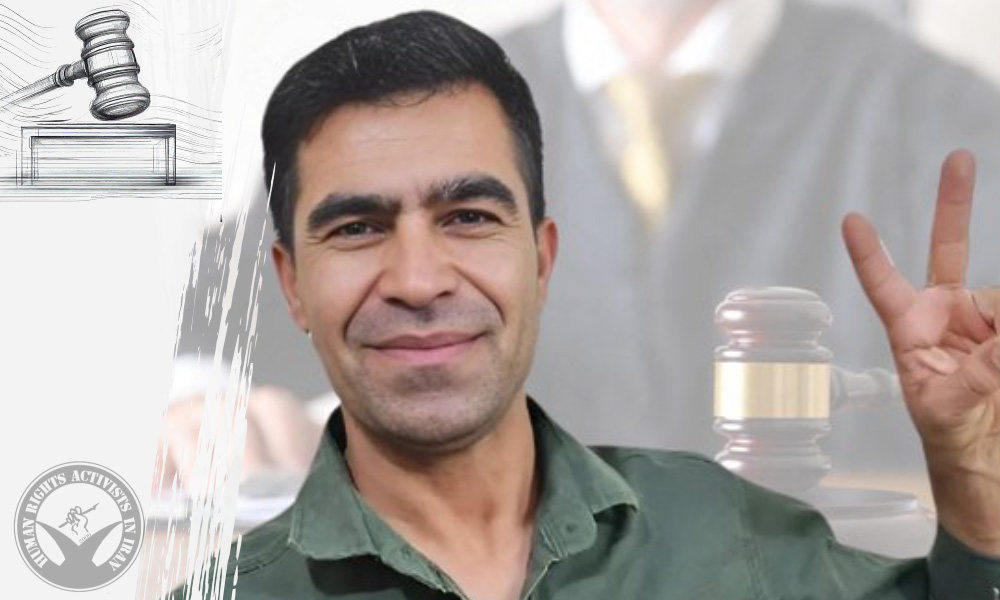
On Monday, June 20, 2022, Reza Tahmasbi, teacher union activist and a member of the Kurdistan Teachers’ Trade Associations, was arrested by security forces and transferred to an unidentified location.

According to HRANA, the news agency of Human Rights Activists, quoting Kurdpa, on Monday, June 20, 2022, security forces arrested teacher union activist Reza Tahmasbi without showing an arrest warrant

The reason for Tahmasbi’s arrest, the charges and his whereabouts are unknown so far.

In recent days, several teachers in cities across Iran have been arrested.

Anisha Asadollahi and Keyvan Mohtadi in Detention Extended for One Month

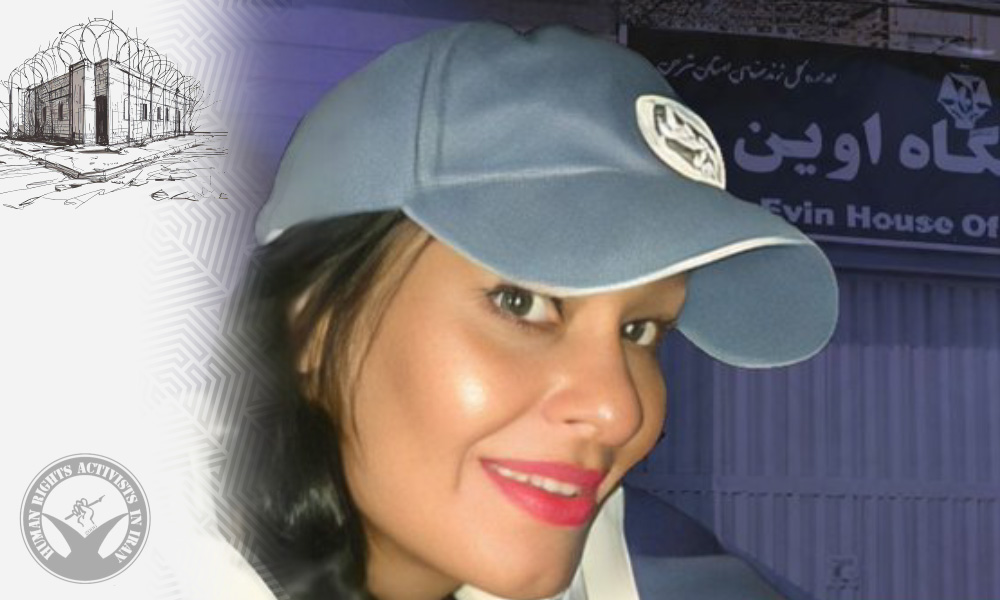
In recent days, Anisha Asadollahi and Keyvan Mohtadi’s detention was extended for one month. On Monday, May 9, 2022, security forces arrested these workers’ rights activists and jailed them in Ward 209 of Evin prison.

According to HRANA, the news agency of Human Rights Activists, Anisha Asadollahi and Keyvan Mohtadi’s detention was extended for one month.

Earlier, an informed source told HRANA, “Anisha Asadollahi is still held in solitary confinement and today was allowed to have a short visit from her mother. Keyvan Mohtadi is held along with three other inmates in a public cell of Ward 209.” The charges against these workers’ rights activists are still unknown.

Anisha Asadollahi and Keyvan Mohtadi had been arrested and convicted before for their civil activities. On May 1, 2019, along with many other workers and worker’s rights activists, Anisha Asadollahi was arrested at a gathering for the celebration of International Workers’ Day. Subsequently, the Revolutionary Court of Tehran sentenced her to one-year imprisonment (of which six months were suspended) and 74 lashes on the charge of “disturbing the public order”. She was jailed in Evin prison for sentencing on January 4, 2020, and was freed on January 21 of that year.

Anisha Asadollahi is an electrical engineer and a graduate of K. N. Toosi University of Technology. She works as an English teacher.

Seven Defendants Humiliated by Police through Shame-Parading in Tehran

In Tehran, the police paraded seven detainees through the streets for humiliation and public shaming. In recent years, Iran’s law enforcement officers have occasionally used shame parading as a punishment tool against both suspected and convicted offenders. 

According to HRANA, the news agency of Human Rights Activists, quoting IRIB News Agency, the police paraded seven defendants from the Mortezagard village in Tehran County for the purpose of humiliation and public shaming.

A video circulated on social media showed the police forced these defendants to humiliate themselves in public.

Shame Parading is a  blatant violation of both domestic laws, human rights treaties and human dignity.


HRANA Recap: This Week’s Protests in Iran

According to HRANA, the news agency of Human Rights Activists, a number of protests took place this week in Iran. Read our recap below for details, photos, and videos from the demonstrations

Thursday, June 2

A number of the residents of the Nikdasht village in Hormozgan Province gathered in front of the governorate building in the city of Bashagard.

They protested against the lack of facilities in schools and gas cylinder supply.

Friday, June 3

A group of shareholders of the housing cooperatives of the Justice Administrative Court office held a protest in a district in Tehran. Ten years ago, the cooperative sold them pieces of land, which have not yet been delivered.

Monday, June 6

The pensioners of the Social Security Organization held protests in the cities of Shiraz, Isfahan, Sari, Urmia, Bojnurd, Khorramabad, Arak, Ardabil, Ahvaz, Karaj, Mashhad, Dezful, Kerman, Zanjan, Bandar-Abbas, Shiraz, Rasht, Qazvin and Kermanshah, Shush, Shushtar and Tehran. They gathered in front of either the Social Security Organization’s building or the governorate building or the Ministry of Cooperatives, Labour, and Social Welfare. In Tehran, a number of pensioners also gathered before the parliament.

The pensioners protested against the government’s decision to increase the pensions by only 10 per cent which falls below the amount that the Supreme Labor Council has enacted.

In Tabriz, about a thousand pensioners gathered before the Social Security organization and then they rallied in the streets toward the governorate building. They chanted “Pensioners are awake and know his rights”, “living costs in dollar, wages in rials”, “inflation 100%, increase in wages 10%”, “incompetent Minister! Step down”, “Lying president! what happened to your promises.”

A group of personnel of the Ministry of Agriculture Jihad gathered before the governorate building in Ilam City to ask for their demands.

A group of workers of the Municipality of Shush gathered before the governorate building in this city. They said that the governor, the mayor and city council members have not yet fulfilled their promises and the workers have not yet received their wages.

A number of residents of Parand City in Tehran Province protested against water outages and the lack of accountability from the local authorities.

 Tuesday, June 7

The social security pensioners held protests in Rasht, Arak, Tabriz, Bandar-Abas, Isfahan, Zanjan, Kermanshah, Karaj, Borujerd, Shush, Dorud, Kerman, Ilam, Ardabil, Qazvin, Yazd and Ahvaz. These pensioners ask for raising pensions in accordance with inflation. However, the government has not increased the pensions as much as the Supreme Labor Council has enacted.

For the second consecutive day, a number of workers of the Shush Municipality gathered before the governorate building to ask for their demands.

The personnel of the Islamic Azad University gathered before the University Central Organization to ask for their wages and close wage disparities.

In Tabriz, a group of firefighters and the Municipal safety service workers held protests before the Municipal building to ask for increasing wages. According to them, a 10 per cent annual increase in wage cannot catch up with more than 40 per cent inflation.

A group of citizens who have pre-purchased apartments from a construction project known as Arya protested for not receiving their apartments.

Wednesday, June 8

The Social Security Organization pensioners continued their protests in Tehran Ahvaz, Shush, Yazd, Kermanshah, Arak, Mashhad, Karaj, Khorramabad and Kerman. They chanted slogans against the government and the Social Security Organization.

In this regard, in an open statement, the Tehran Retirement Centre asked the government to increase the pensions in compliance with the Supreme Labor Council’s enactment.

A number of citizens, who have lost their money in the recent robbery of Iran Safe Deposit Boxes of Melli Bank, protested in front of the Iran Ministry of Roads & Urban Development in Tehran.

This protest turned violent by police interference.  

In recent days, dozens of safe deposit boxes from Melli Bank were stolen by some burglars.

A group of citizens who have pre-purchased apartments in a housing construction project known as Mehr, assembled in front of the Ministry of Roads and Urban Development in Tehran. After 11 years, they still have not received their apartments.

In Gilan Province, a group of retirees held a protest to ask for raising pensions in accordance with Supreme Labor Council’s enactment.

In Kermanshah, working and retired teachers protested against the arrest of several teachers union activists. They also showed their concerns about detained teachers health conditions, who are on hunger strike and asked them to end the strike.

Thursday, June 9

For the fourth consecutive day, the pensioners of the Social Security Organization held protests in the cities of Karaj, Zanjan, Arak and Rasht. The protestors chanted slogans reflecting their poor living conditions and their frustration over inflation and the authorities’ incompetency.

The pensioners demand the 38% increase as it has been enacted by Supreme Labor Council.

A number of farmers from Lenjan in Isfahan Province protested in front of the governorate building to ask for their water portion.

A number of the residents of the Esfarjan village in Isfahan Province gathered and protested against a mining construction in the vicinity of their neighbourhood.


Subscribe to Our Newsletter

Now is definitely not the time to stop reading!

Teacher Union Activist Jabbar Doosti Arrested in Mariwan

On Tuesday, June 7, 2022, security forces arrested teacher union activist Jabbar Doosti at his house in Mariwan and transferred him to an unidentified location. During the arrest, the agents searched his house and confiscated some of his personal belongings, including his laptop and cell phone.

According to HRANA, the news agency of Human Rights Activists, quoting Kurdpa, on Tuesday, June 7, 2022, teacher union activist Jabbar Doosti was arrested by security forces at his house in Mariwan.

The reason for his arrest and the charges are unknown so far.

In recent months, teachers have organized nationwide rallies all across the country. In return, security and judicial authorities have repeatedly harassed, arrested and convicted teacher union activists.

Prisoners’ Living Conditions at Greater Tehran Central Penitentiary

Prisoners who are housed in Ward 1, Type 2 in the Greater Tehran Central Penitentiary are held in poor conditions, including frequent and prolonged water outages, poor sanitation, overcrowding and lack of proper air conditioning.

According to HRANA, the news agency of Human Rights Activists, the inmates of the Closed Ward of the Greater Tehran Central Penitentiary are held in poor living conditions.

An informed source told HRANA, “the inmates jailed in this ward face frequent and prolonged water outages. Sometimes, the water flow is completely cut off for a couple of days. Inmates are living in poor conditions and prison officials do nothing to resolve these issues.”

During the summer season, water flow for sanitation needs and cooling systems is critical.  

An informed source close to an inmate’s family told HRANA, “Ward 1, Type 2 of this prison is overcrowded. In this hot season, there is no air conditioning system.”

According to this source, the lack of air conditioning and healthy drinking water increases the risk of disease outbreaks.

Earlier, prison officials beat several political prisoners and relocated them to Ward 1. One day later, Mohammad Mehdi Haj Mohammadi, Iran’s head of Prisons Organization, confirmed this battery and the relocation on his social media page.

Report on Current Nationwide Protests: Hundreds Arrested; Dozens Killed and Injured

During the last two weeks, triggered by food price hikes, nationwide protests erupted in more than 31 cities across 10 provinces. HRANA, the news agency of Human Rights Activists, has recorded 53 demonstrations so far. 

According to HRANA, on Friday, May 6, 2022, following the government’s decision to cut subsidies on essential food items such as dairy products, flour, cooking oil, chicken, and eggs leading to soaring prices, the call for rallying against soaring prices went viral on social media. In the following days, several protests broke out in Khuzestan Province and soon swept through numerous cities across the country.

Prior to these protests, a series of protests and gatherings of teachers, labor workers and the retirees who had lost their pensions due to the government’s risky financial decisions had been sweeping across the country leading to dozens being arrested.

The new rounds of protests sparked initially in Susangerd City and other neighboring cities in Khuzestan Province. In the following days, at least 30 Arab-speaking citizens were arrested by security forces.

Soon after, the protests spread to other cities and provinces. The videos received from citizen journalists indicate that the protestors chanted slogans against inflation as well as the Iranian regime leaders, including President Ebrahim Raeisi and Supreme Leader Seyyed Ali Khamenei.

The map below shows the locations where the protests were.

As the map shows, the protests took place in the following cities: Izeh, Susangerd, Hamidieh, Ahvaz, Mahshahr, Masjed Soleiman, Shadegan, Jarahi Town Mahshahr, Dorud, Andimeshk, Dezful, Shahrekord, Junaqan, Fashafouyeh, Yasuj, Ardabil, Farsan, Khorramabad, Dehdasht, Borujerd, Suq, Yazd, Golpayegan, Cholicheh, Rasht, Neyshabur, Surshjan, Hafshejan, Babaheydar, Karevan Town and Pordanjan.

In total, 53 protests have been recorded. Moreover, 45 times, the attempts to start a protest were foiled due to the heavy presence of police and security forces in the streets. 

The map below shows the locations of 53 protests and the time periods.

During these protests, at least on 22 occasions in 14 cities, the police and security forces used tear gas, warning shots, pellet guns and in some cases heavy weapons against the protestors. In nine cities, tear gas and in 14 cities warning shots were used to scatter the crowds. In eight cities, security forces fired straight toward the crowds. Reportedly, security forces have used pellet guns, Kalashnikov assault rifles and paintball guns to disperse the protestors.

The map below shows the places where crackdowns and unrestrained shootings have been reported.

Since the beginning of the protests on Friday, May 6, the government disrupted the internet in several areas in Ahvaz in an attempt to prevent the protests. In the days that followed, Internet disruption was also reported in at least 10 cities.

In addition to intentional Internet disruption, the press was banned from covering the protests.

According to the reports obtained from local sources, at least 449 individuals were arrested during the protests.

So far, six people have been confirmed dead. These people have been identified as Pishali Ghalebi Hajivand (Dezful), Saadat Hadipour (Hafshejan), Jamshid Mokhtari Junaqani (Junaqan), Omid Soltani (Andimeshk), Hamid Ghasempour (Farsan City), and Behrooz Eslami (Babaheydar). HRANA can only confirm the reports on the death of the first two individuals mentioned above.

From all videos of protests which are circulating on social media, HRANA has verified the authenticity of 30 video reports which compilation you can watch below:


Protests Spread to at least 20 Cities in Iran 

According to HRANA, the news agency of Human Rights Activists, in recent days, triggered by soaring food prices, protests sparked in at least 20 cities in Iran. Protests took place in Dezful, Shahrekord, Andimeshk, Izeh, Junaqan, Khorramabad, Fashafouyeh, Farsan, Borujerd, Dehdasht, Dorud, Ardabil, Neyshabur, Suq, Rasht, Ahvaz, Yazd, Shadegan, Susangerd, and Yasuj. On Sunday, May 15, 2022, despite the tightening of security measures, the protest continued in several cities.

From the outset, the regime disrupted internet services in several cities in an attempt to prevent the protests.

On Friday, May 6, 2022, following the call on social media for rallying against soaring bread prices, in some cities in Khuzestan Province, the Iranian regime tightened security measures on the streets and disrupted internet and phone services to disrupt protests. Nonetheless, the day after, protests broke out in various cities of Khuzestan Province and beyond. Since then, the protests have continued in more than 20 cities. In most cases, protests turned violent by the police and security forces who used tear gas, warning shots, and pellet guns to scatter the crowds.

During the unrest, dozens of people were arrested. HRANA has obtained the identity of 20 of the individuals who were arrested in Ahvaz, 13 in Susangerd, 7 in Suq, and five in Shawr.

The regime forces have killed at least two protestors during the unrest, of which, one death has been confirmed by the city of Shahrekord’s representative in Iran’s Majles (parliament).

At Least Dozens of Teachers Arrested During Nationwide Protests

On Thursday, May 13, 2022, during the teachers’ protests in various cities across the country, several dozens of protestors were arrested. In Yasuj City, security forces arrested more than 20 protestors.

According to HRANA, the news agency of Human Rights Activists, on Thursday, May 13, 2022, more than 20 teachers were arrested during the protests in Yasuj.

In the protest, some of the individuals who were arrested were identified as Yaghoub Zare, Rahim Zare, Hajir Hojjati, Khadigeh Mobaraki, Behnam Asef-Jah, Kourush Jalil, Saeed Taheri, Soraya Aghai, Sasan Zarghampour. Moreover, Masoumeh Dehghan, Masoud Farhikhteh, Jaleh Roohzad and Lotfollah Jamshid in Tehran, Masoud Nikkhakh in Mariwan, and Siamak Chehrazi in Ahvaz were arrested.

On Thursday, in response to the call of the Coordinating Council of the Iranian Teachers’ Union, both retired and working teachers in dozens of cities held protests in front of the Ministry of Education in several cities and across from Iran’s Parliament in Tehran. The protestors chanted slogans in support of the detained teachers.

According to reports obtained by HRANA, many individuals other than teachers had also joined the protests. The government has tightened security measures around the country’s main streets to prevent such protests.