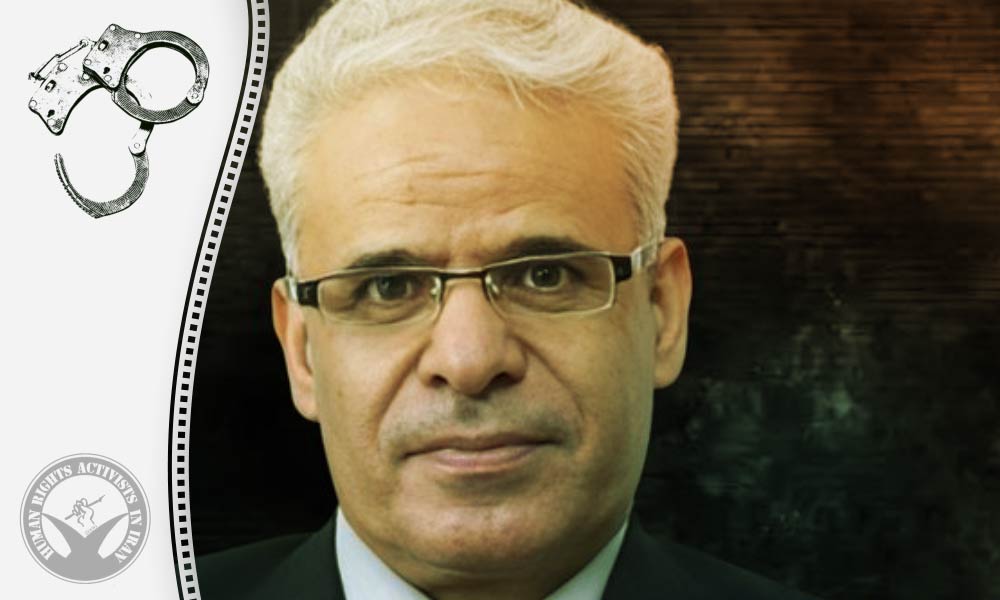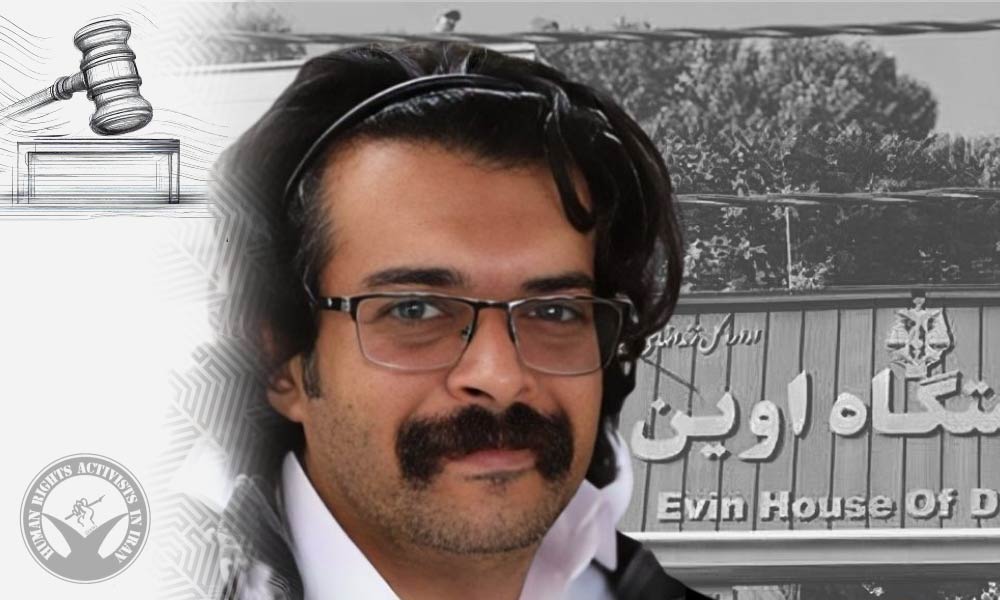
Gonabadi Dervish Arash Moradi Faces Eight-Year Prison Term

Arash Moradi, a Gonabadi Dervish currently held in Evin Prison, has been handed an eight-year prison sentence by the Tehran Revolutionary Court.

Presiding over Branch 29 of the Tehran Revolutionary Court, Judge Ali Mazloum detailed Moradi’s sentencing as follows: two years for “disturbing public opinions,” one year for “propaganda against the regime,” three years for “blasphemy,” and two years for “insulting the former and current Supreme Court of Iran.” The cumulative punishment amounts to eight years of imprisonment.

Citing Article 134 of the Islamic Penal Code, which stipulates that the most severe penalty should be applied in cases involving multiple charges, Moradi is slated to serve three years in prison.

A reliable source close to Moradi’s family informed HRANA of a notable development during the legal proceedings, where the charge of “disseminating false information” was altered to “disturbing public opinions.”

Furthermore, the court had previously dismissed charges of “assembly and collusion against national security” and “inciting people to violence.”

Moradi was apprehended on October 17 by security forces at his workplace in Kashan and subsequently confined to Ward 4 of Evin Prison.

This is not Moradi’s first encounter with the legal system, as he was previously detained during the 2018 Dervish protests, resulting in a one-year prison sentence. Following the completion of his sentence, Moradi was released from the Great Tehran Penitentiary.

Twelve Inmates Executed Across Various Prisons

In a recent escalation of capital punishment, a total of twelve inmates faced execution in different Iranian prisons. The executions took place at Qezel Hesar Prison in Karaj, Lakan Prison in Rasht, Kashan Prison, and Khorramabad Prison.

On Wednesday, Qezel Hesar Prison recorded the highest number of executions, totaling seven inmates. Among them, three individuals, including one identified by HRANA as Hamed Bakhshayesh, were convicted of murder, while two others received the death penalty for drug offenses. Another inmate, Ayoub Karimi, a Sunni prisoner, faced charges of “enmity against God (Moharebeh) through sympathizing with Salafism.” HRANA is actively working to identify the seventh executed inmate.

On Wednesday, Qezel Hesar prison witnessed the highest number of executions, totaling seven inmates. Among them, three individuals, including one identified by HRANA as Hamed Bakhshayesh, were convicted of murder, while two others received the death penalty for drug offenses. Another inmate, Ayoub Karimi, a Sunni prisoner, faced charges of “enmity against God (Moharebeh) and spreading corruption on earth through sympathizing with Salafism.” HRANA is actively working to identify the seventh executed inmate.

On November 25, 2023, Mohsen Sedaghat, and Geda-Ali Saber Motlagh (62) were also executed in Lakan Prison in Rasht. Motlagh was a political prisoner in the 1980s. In 2020-2021, he was rearrested and sentenced to death. He was accused of killing a government official which he was consistently refuted. Sedaghat was convicted of murder.

Lastly, Iran Human Rights Organization reported the execution of Masoud Basak, aged 33, in Kashan Prison and Morad Biranvand, aged 40, and Morad Geravand in Khorramabad Prison.


Execution of Three Inmates in Kashan and Tabriz

On November 8, officials at Kashan Prison carried out the execution of two inmates convicted of drug-related crimes, according to the Iran Human Rights Organization.

The individuals executed have been identified as Khodadad Rahimi, 40, and Saber Alikhani, 31. Rahimi and Alikhani received their death sentences three and two years ago, respectively.

Additionally, Rokna reported the recent execution of an inmate for murder in Tabriz Prison last week. The report did not disclose the identity of the individual. In July-August 2019, he committed murder by fatally stabbing someone during a group brawl.

According to data compiled by the Center of Statistics of Human Rights Activists in Iran (HRA), between October 10, 2022, and October 8, 2023, a total of 659 individuals were executed by hanging in Iran, representing a 24% increase compared to the corresponding period in the previous year. Seven of these executions were conducted publicly. Concerningly, many of the defendants were denied access to a fair trial and due process. For details and statistics, read HRANA’s report.

Gonabadi Dervish Arash Moradi Arrested in Kashan

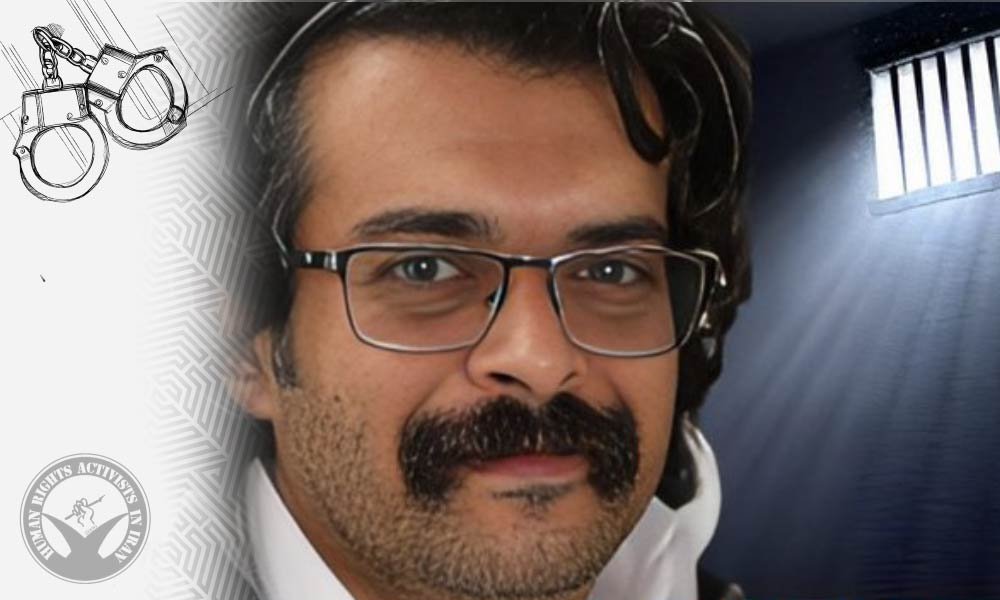
On October 17, Arash Moradi, a Gonabadi Dervish, was arrested by security forces in Kashan and promptly taken to an undisclosed facility.

A source with close ties to his family has informed HRANA that Moradi’s arrest unfolded at his place of work, where the agents conducted a search and confiscated some of his personal belongings.
The motivations behind Moradi’s arrest, his current whereabouts, and the specific charges brought against him remain shrouded in uncertainty.
Moradi was previously detained during the 2018 Dervish protests and subsequently sentenced to one year in prison. After serving his sentence, Moradi was released from the Great Tehran Penitentiary.
This development takes place against the backdrop of a broader pattern of suppression and persecution faced by the Gonabadi Dervish community in Iran, who have long struggled against government restrictions on their religious practices and their peaceful expressions of dissent.

Journalist Ali Moslehi Arrested in Kashan

On Thursday, July 20, security forces apprehended Ali Moslehi, a Kashan resident, and transferred him to an undisclosed location.

According to a credible source who spoke to HRANA, this journalist was taken into custody at his residence. A few hours later, security agents contacted his relatives to notify them about the arrest.

As of now, the reasons behind Moslehi’s arrest and the location of his detention remain shrouded in uncertainty.

It is essential to note that Moslehi has a history of previous arrests and convictions, raising concerns about his well-being and right to a fair legal process.

Subscribe to Our Newsletter

Now is definitely not the time to stop reading!

Execution of Five Inmates in Shiraz, Isfahan, and Kashan

Five Inmates convicted of drug-related crimes were executed in Shiraz, Isfahan, and Kashan Prisons.

According to Haal Vsh, on June 1, 2023, Aghil Arab, age 27, was executed in Dastgerd Prison, Isfahan. On the same day, Nemat Arzani, 33, and Rasoul Sheikh Arpanahi, 27, were also executed in Kashan Prison.

Furthermore, the Iran Human Rights Organization reported the execution of two inmates in Adelabad Prison on May 24, 2023. The individuals have been identified as Ali Mohammad Zera’at, a father of a young child, and Esmaiel Nasiri.

All these executed prisoners have been convicted of drug-related crimes several years ago.

At the time of writing, no official sources or domestic media outlets within the country have reported on these executions.

In 2022, the Department of Statistics and Publication of Human Rights Activists in Iran registered 457 reports related to the death penalty. This included 92 death sentences, including the conviction of 6 people to public execution and 565 execution sentences were carried out, 2 of which have been carried out in public. Based on the announced identifications of some of the executed individuals, 501 were male and 11 were female. In addition, 5 juvenile offenders were executed in 2022, meaning they were under the age of 18 at the time they committed the crime.


Dozens of Businesses Closed for Breaking Islamic Rules of Dress Code and Behavior

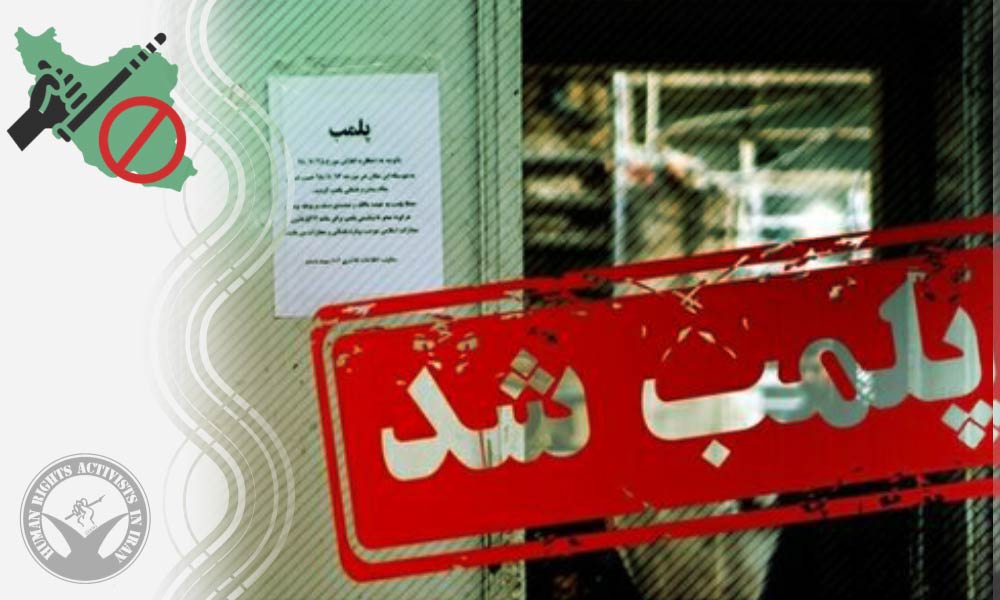
In recent days, dozens of businesses in several cities across Iran were closed for allegedly violating the Islamic dress code (Hijab) and behaviour rules.

An official from the IRGC announced the closure of at least 40 businesses in Kashan due to “female customers’ lack of Hijab.” Earlier, a hotel and a tourist complex were also shut down for this reason.

Similarly, in Khorramabad, one restaurant and one wedding hall were closed, and in Mianeh, seven businesses were shut down. In Babolsar, six businesses were closed, and several others in Shiraz were also affected due to violations of the Islamic dress code and behaviour rules.

Iran’s regime routinely violates its citizens’ privacy and right to choose their clothing. Imposing a certain lifestyle on citizens stands in blatant violation of Article 3 of the Universal Declaration of Human Rights which entitles everyone to the right to life, liberty and security of person. Additionally, Article 12 of this declaration affirms, “One shall be subjected to arbitrary interference with his privacy, family, home or correspondence, nor to attacks upon his honor and reputation. Everyone has the right to the protection of the law against such interference or attacks.”


Teacher Hamid Jafari Nasrabadi Sentenced to Three Years of Suspended Imprisonment

The Kashan Court of Appeals recently sentenced Hamid Jafari Nasrabadi to three years in prison. This sentence has been suspended for five years.

According to HRANA, the news agency of Human Rights Activists, quoting Iran Teachers’ Trade Association, the Kashan Court of Appeals upheld a three-year sentence against teacher Hamid Jafari Nasrabadi. This sentence has been suspended for five years.

Initially, the Kashan Criminal Court sentenced Nasrabadi to two years for “spreading falsehood” and one year for “contempt of the order.”

In the other part of his legal case, Nasrabadi was previously sentenced to 22 months and social deprivations.
According to this report, 15 months of this sentence was quashed by the Revolutionary Court in accordance with a recent directive to “pardon or commute” the sentences of some prisoners.

On October 19, 2022, security forces arrested Nasrabadi and jailed him in Kashan Prison.

Earlier, the head of the Judiciary proposed to pardon or commute the sentences of some prisoners as an enactment of Article 110, paragraph 11 of the constitution, which was approved by Ali Khamenei under some conditions which the legal case should meet.


Iran Protests: Two Students Sentenced to a Total of Six Years

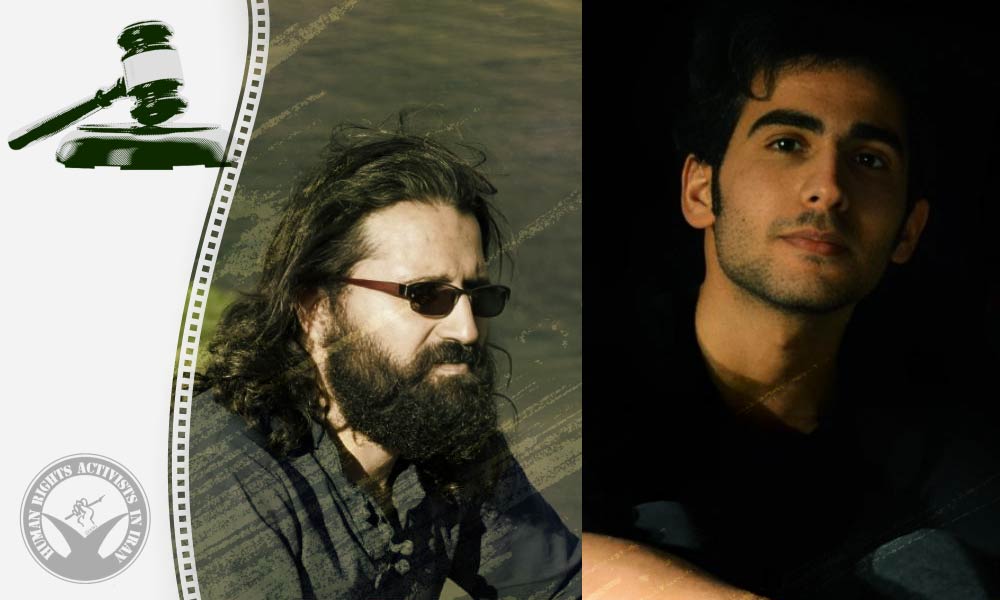
The Kashan Revolutionary Court sentenced Alireza Ghamgosar, a student at the University of Kashan, to two years in prison. Also, Alborz Adi, a student at Islamic Azad University in Najafabad, was sentenced to four years in prison, of which two years are suspended. Both students were arrested during recent nationwide protests.

According to HRANA, the news agency of Human Rights Activists, Alireza Ghamgosar was sentenced to two years in prison on the charge of “assembly and collusion against national security.”

On September 20, 2022, security forces arrested Ghamgosar at nationwide protests in the city of Rasht.

Alborz Adi was sentenced to two years in prison and two years suspended imprisonment. He was arrested two times by security forces on October 3 in Najafabad, Isfahan Province, and then on October 31, 2022, in Langarud. For the second time, he was released on bail on December 31, 2022.


Two Inmates Executed in Kashan and Vakilabad Prisons

On the morning of February 21, two inmates convicted for murder were executed in Kashan and Vakilabad prisons.

According to HRANA, the news agency of Human Rights Activists, quoting ILNA, an unidentified inmate was executed in Kashan Prison. On the same day, another inmate identified by the first name Reza was executed in Vakilabad Prison in Mashhad city.

Regarding the first case, Kashan prosecutor Ruhollah Dehghani stated that “in June 2017, the defendant, age 49, killed a woman with whom he was acquainted on the Internet. Thereafter, he was arrested by the police”.

As for the second case, on September 30, 2014, Reza brought a 29 year old man injured by stabbing to a hospital in Mashhad. When he realized the man had passed away from the injuries, he fled the hospital. In November of 2018, Reza was arrested and sentenced to death.

The most recent report from the Statistics and Publication Center of the Human Rights Activists in Iran (HRA) states that between January 1 of 2021 and December 20 of 2021, at least 299 citizens, including four juvenile offenders, were executed. In addition, 85 citizens were sentenced to death in this period.