At Least 10 Prisoners Executed On Drug-Related Charges and Murder

HRANA – At dawn today, the death sentences of at least 10 prisoners were carried out in the prisons of Gorgan, Qaemshahr, Dorud, Isfahan, Neyshabur, Kerman, Kashan, Saveh, Quchan, and Zanjan. These prisoners had previously been sentenced to death on charges related to drug offenses and murder.

Based on information received by HRANA, Ilya Saei was executed in Gorgan Prison; Navid Shahsavar in Qaemshahr Prison; Ali Safar Goodarzi in Dorud Prison; Saman Joozi in Isfahan Prison; Yaghoub Shafieizadeh in Neyshabur Prison; Heshmat Shokri in Kerman Prison; Sultan-Morad Shabani in Kashan Prison; and Keyvan Aminpour in Saveh Prison. These individuals had previously been arrested in separate cases on murder charges and sentenced to death by criminal courts.

Meanwhile, the executions of Siavash Amouzad in Quchan Prison and Roozbeh Zamani in Zanjan Prison were carried out on charges related to drug offenses.

As of the time of this report, prison officials and relevant authorities have not officially announced these executions.

According to HRA’s annual report, at least 2,063 individuals were executed in Iran during 2025. This represents a 119% increase in executions compared to 2024. In many of these cases, due to secrecy, prisoners were even deprived of the right to a final visit with their families.

Twenty Prisoners Executed on Murder and Drug-Related Charges

HRANA- Over the course of today and yesterday, at least twenty prisoners were executed in various prisons across Iran on charges related to murder and drug-related offenses.

The names of those executed yesterday are as follows:

On murder charges:

  • • Khaled Hosseini – Nowshahr Prison

  • • Mehdi Jafarian – Ardabil Prison

  • • Abbas Khordbin – Semnan Prison

  • • Shah Mirza Ghaedrahmati – Borujerd Prison

On drug-related charges:

  • • Rahman Najafi – Arak Prison

  • • Nezam Tajik, an Afghan national – Bandar Abbas Prison

  • • Younes Bagheri – Tabriz Prison

  • • Parsa Taghizadeh – Qazvin Prison

  • • Danial Abdi – Qom Prison

  • • Hamid Kariyabi – Naein Prison

Today, February 9, the death sentences of ten additional prisoners were carried out in various prisons:

On murder charges:

  • • Shayan Tojihi – Qaemshahr Prison

  • • Rouzbeh Amanatdoust – Quchan Prison

  • • Mohammad Zalitabar – Gorgan Prison

  • • Abedin Ahmadi – Neyshabur Prison

  • • Mohsen Rezaei – Dorud Prison

  • • Karim Javadi – Zanjan Prison

  • • Shahla Dowlatabadi – Kerman Prison

  • • Hooshang Shokouhi – Saveh Prison

On drug-related charges:

  • • Keyvan Akbari – Isfahan Prison

  • • Seyed Ali Kalami – Kashan Prison

As of the time of this report, the executions of these prisoners have not been officially announced by prison authorities or relevant institutions.

According to HRANA’s annual report, in 2025, at least 2,063 people were executed in Iran. Based on this data, the implementation of death sentences has increased by 119% compared to 2024. In many of these executions, due to secrecy, prisoners were denied even a final visit with their families.

Report on the Execution of at Least 26 Prisoners on Murder and Drug-Related Charges

HRANA – At least 26 prisoners were executed in the prisons of Arak, Naein, Tabriz, Bandar Abbas, Qazvin, Ardabil, Qom, Semnan, Borujerd, Sanandaj, Nowshahr, Lahijan, and Qaemshahr. These prisoners had previously been sentenced to death on charges related to drug-related offenses and murder.

The identities of the prisoners have been confirmed by HRANA as: Shahriar Farahani, Manoochehr Mehrabi, Nasser Hosseini, Behrouz Hazrati, Fardin Kalami, Mohammadali Moridan, Amin Nasiri, Sajjad Dousti, Peyman Shiri, Hekmat Daryaei, Mostafa Minavand, Shahab Karami, Nemat Mehraban, Azim Nourzad, Noushad Alipour, Shahrouz Hosseini, Yousef Eini, Meysam Rafiei, Jaber Mohammadi, Payam Nouri, Omid Hatami, Samir Ajamloo, Iman Nejati, Ghorban Rashidi, Kourosh Zamani, and Kianoush Rostami.

Based on information received by HRANA, today, Sunday, February 1, Shahriar Farahani was executed in Arak Prison, Manoochehr Mehrabi in Naein Prison, Nasser Hosseini in Qazvin Prison, Behrouz Hazrati in Ardabil Prison, Fardin Kalami in Qom Prison, Mohammadali Moridan in Borujerd Prison, Amin Nasiri in Sanandaj Prison, and Sajjad Dousti in Nowshahr Prison on murder charges.

Additionally, Peyman Shiri in Tabriz Prison, Hekmat Daryaei in Bandar Abbas Prison, and Mostafa Minavand in Semnan Prison were hanged on charges related to drug-related crimes.

Additionally, HRANA has received reports of executions carried out in recent months. From October to December of 2025, at least eight prisoners were executed in Qaemshahr Prison. Shahab Karami on October 6, Nemat Mehraban on October 20, Azim Nourzad on November 17, Noushad Alipour on December 1, and Shahrouz Hosseini on January 12 were executed on murder charges. Furthermore, Yousef Eini on November 2, Meysam Rafiei on December 15, and Jaber Mohammadi on December 29 were executed on charges related to drug-related offenses.

The death sentences of at least seven other prisoners were also carried out in Lahijan Prison. Ghorban Rashidi on  December 3, Kourosh Zamani on December 15, and Kianoush Rostami on December 31 were executed on charges related to drug-related crimes. Payam Nouri on October 29, Omid Hatami on November 12, Samir Ajamloo on November 19, and Iman Nejati on December 17 were sentenced to death and executed on murder charges.

As of the time of this report, the executions of these prisoners have not been officially announced by prison authorities or relevant institutions.

According to HRA’s annual report, at least 2,063 people were executed in Iran. Based on this report, the implementation of death sentences increased by 119% compared to 2024. In many of these executions, due to secrecy, prisoners were even deprived of the right to a final visit with their families.

Appeals Court: Baha’i Citizen Maryam Zabihi Sentenced to Imprisonment

HRANA – The prison sentence of Maryam Zabihi, a Baha’i citizen residing in Qaemshahr, has been reduced by the Mazandaran Province Court of Appeals to three months and one day. She had initially been sentenced to ten months in prison by a lower court.

According to Hyrkani news, Ms. Zabihi’s ten-month prison sentence was reduced to three months and one day by the Mazandaran Province Court of Appeals in late September.

The initial verdict against Ms. Zabihi was issued by Branch 104 of the Qaemshahr Criminal Court (Category Two) on the charge of “educational activities contrary to and disruptive of the sacred Islamic law.”

The charge reportedly stemmed from holding university examination sessions for students of the Baha’i Institute for Higher Education (BIHE) at her private residence. It is worth noting that, since Baha’is are denied access to higher education in Iran, this unofficial university was established by members of the Baha’i community to provide Baha’i students with access to higher education.

On Monday, February 12, 2024, security agents searched Maryam Zabihi’s home, seizing all electronic devices, textbooks, laptops, and tablets belonging to five Baha’i youths who were present at the time.

Over the past decade, the Iranian Bahá’í community has been disproportionately targeted by Iran’s security forces and judiciary—more than any other minority group. In the past three years, an average of 72 percent of the reports on religious rights violations collected by HRANA have documented the Iranian regime’s repression of the Bahá’í community.

Baha’i Citizen Soheil Haghdoost Arrested During Home Raid in Qaemshahr

HRANA – On July 3, security forces arrested Soheil Haghdoost, a Baha’i citizen living in Qaemshahr, at his home. Officers searched the residence and confiscated several personal items.

According to HRANA, eight agents from the Ministry of Intelligence and Public Security carried out the arrest, reportedly using force during the operation. A source close to Haghdoost’s family confirmed the incident and noted the seizure of personal belongings during the search.

Earlier this week, on Tuesday, July 1, Haghdoost’s wife, Raquel Ataeian, was also arrested by IRGC Intelligence agents.

As of this report, the reasons behind the couple’s arrests, their current whereabouts, and the charges they face remain undisclosed.

Haghdoost has previously faced legal persecution due to his Baha’i faith.

Over the past decade, the Iranian Bahá’í community has been disproportionately targeted by Iran’s security forces and judiciary—more than any other minority group. In the past three years, an average of 72 percent of the reports on religious rights violations collected by HRANA have documented the Iranian regime’s repression of the Bahá’í community.

Subscribe to Our Newsletter

Now is definitely not the time to stop reading!

Raquel Ataeian, Baha’i Citizen, Arrested by Security Forces

HRANA News Agency – On Tuesday, July 1, Raquel Ataeian, a Baha’i citizen residing in Qaemshahr, was arrested at her home by security forces and taken to an undisclosed location. Agents also confiscated several personal items belonging to her and her family.

The arrest was carried out by seven IRGC Intelligence agents who presented a judicial warrant before detaining Ms. Ataeian and searching her home.

A source close to the family confirmed the incident, telling HRANA: “This morning, seven IRGC Intelligence agents arrived at Ms. Ataeian’s residence with a judicial warrant. During the search, they seized religious books, mobile phones, and laptops belonging to her and her family.”

As of the time of this report, no information has been released about the charges against Ms. Ataeian, the reasons for her arrest, or her whereabouts.

Raquel Ataeian has previously faced security-related harassment due to her Baha’i faith.

Over the past decade, the Iranian Bahá’í community has been disproportionately targeted by Iran’s security forces and judiciary—more than any other minority group. In the past three years, an average of 72 percent of the reports on religious rights violations collected by HRANA have documented the Iranian regime’s repression of the Bahá’í community.

Nazanin Abedini, Baha’i Citizen, Arrested in Qaemshahr

HRANA News Agency – On the morning of Wednesday, June 25, Nazanin Abedini, a Baha’i citizen residing in Qaemshahr, was arrested by security forces and taken to an undisclosed location.

According to HRANA, Nazanin Abedini was arrested by security forces in Qaemshahr, Mazandaran province, without the presentation of a judicial warrant. Agents reportedly entered her home by climbing over the wall and breaking down the front door. After searching the house, they transferred her to an unknown location.

The reasons for her arrest and the charges against her remain unknown at the time of this report.

Nazanin Abedini is a children’s music instructor.

Over the past decade, the Iranian Bahá’í community has been disproportionately targeted by Iran’s security forces and judiciary—more than any other minority group. In the past three years, an average of 72 percent of the reports on religious rights violations collected by HRANA have documented the Iranian regime’s repression of the Bahá’í community.

Maryam Zabihi, a Baha’i Citizen from Qaemshahr, Receives 10 Months in Prison

HRANA News Agency – Maryam Zabihi, a Baha’i citizen residing in Qaemshahr, has been sentenced to 10 months in prison by the Criminal Court of this city.

Based on a verdict issued by Branch 104 of the Second Criminal Court of Qaemshahr, Mazandaran provinceو this Baha’i citizen was sentenced to 10 months in prison on the charge of “educational activities contrary to and disruptive of Islamic Sharia.” The court session addressing Ms. Zabihi’s charges was held on April 16, 2025, and the verdict was issued the same day.

Holding examination sessions for students of the unofficial Baha’i university of Iran at her private residence was cited as the basis for the charge against Ms. Zabihi.

On Monday, February 12, 2024, Maryam Zabihi’s home was searched by security forces. Officers confiscated all electronic devices, textbooks, laptops, and tablets belonging to five young Baha’is who were guests at her residence.

After Baha’is in Iran were barred from attending public universities due to their religious beliefs, the Baha’i Institute for Higher Education (BIHE) was established by the Iranian Baha’i community in 1987. This unofficial university, operating under highly restricted conditions with the help of volunteer professors, provides opportunities for Baha’i citizens to pursue higher education. Over the years, many professors and administrators associated with this educational system have faced judicial and security pressures.

According to the Department of Statistics and Publications of the Human Rights Activists in Iran (HRA), between January 1, 2024, and December 20, 2024, a total of 157 reports were recorded in the category of religious and faith-based minority rights. Among these, Baha’is accounted for 67.54% of the reports, ranking as the most observed group in human rights monitoring.

The Baha’i faith is not recognized as a legitimate religion by Iranian authorities, leading to systematic and longstanding violations of the rights of Baha’is in the country. This includes the denial of their fundamental right to practice their religion, which constitutes a clear breach of both Article 18 of the Universal Declaration of Human Rights and Article 18 of the International Covenant on Civil and Political Rights. The United Nations covenant holds that every person has the right to freedom of religion, freedom of converting religion, as well as freedom of expression, individually or collectively; openly or secretly.

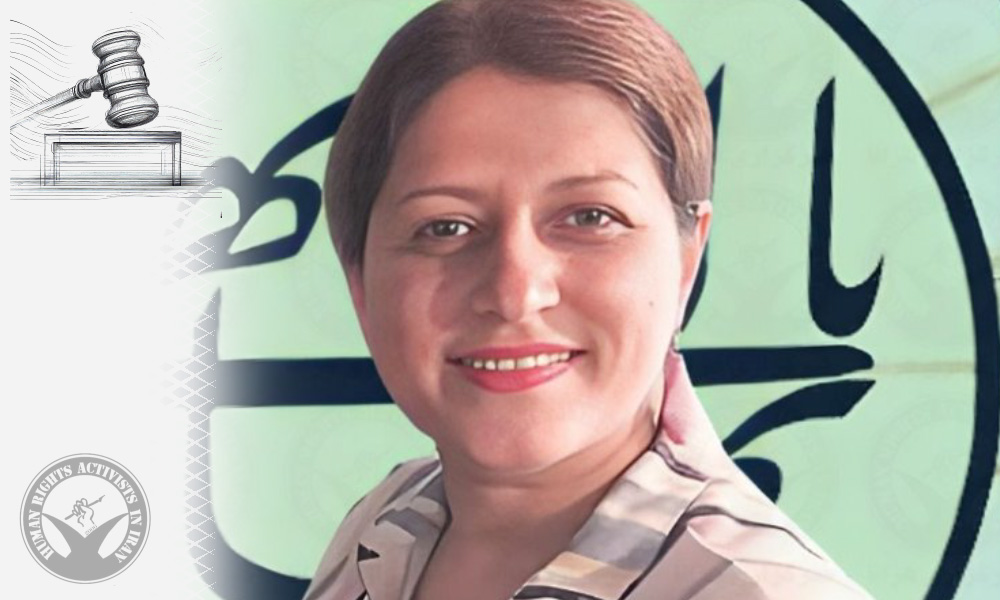
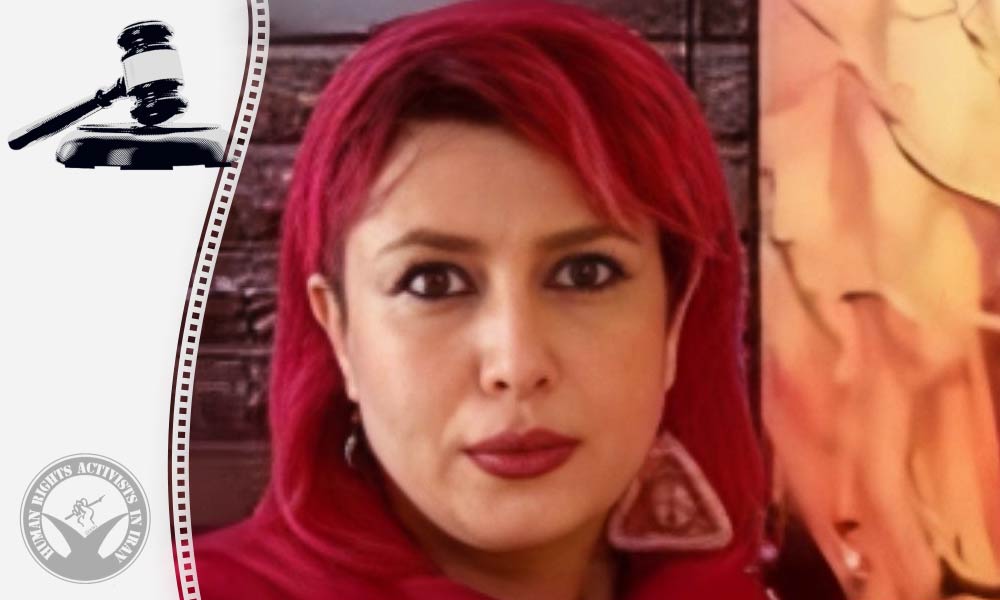
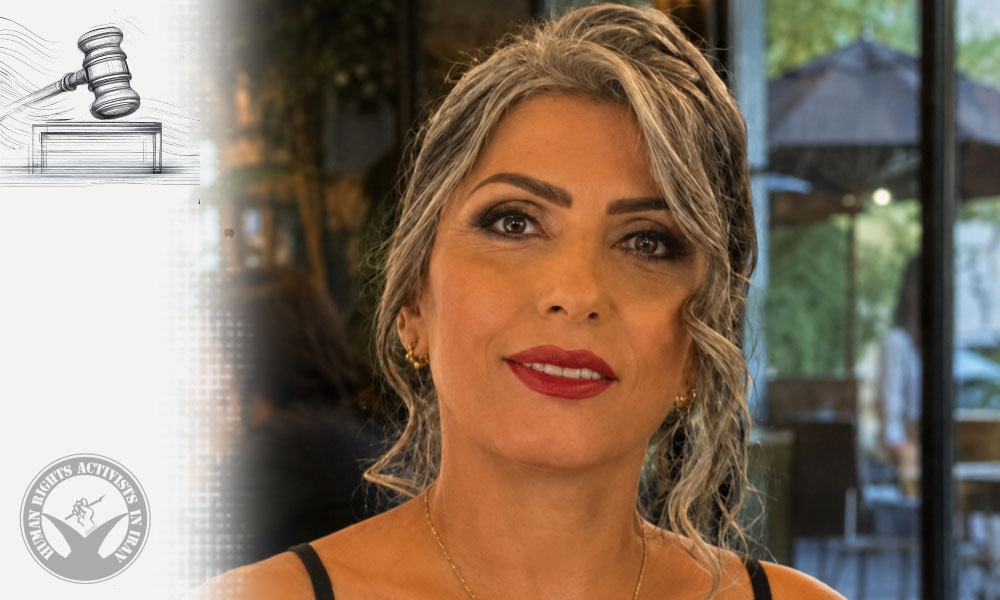
Iran Protests: Farnaz Nazeri Sentenced to Ten Years in Prison

The Revolutionary Court sentenced Farnaz Nazeri, arrested in recent protests in Qaemshahr, to ten years in prison. She was also banned from leaving the country for two years.

According to HRANA, the news agency of Human Rights Activists, Farnaz Nazeri was sentenced to imprisonment over protests.
On November 6, 2022, security forces arrested Nazeri in Qaemshahr. She was released on three-billion-toman bail temporarily until the end of legal proceedings.

An informed source told HRANA that her lawyer has not yet had access to the documents of her case.
Farnaz Nazeri is a painter and sculptor, and mother of two daughters.

Since the outbreak of nationwide protests, about 19500 people, including journalists, artists, lawyers, teachers, students and civil rights activists, have been arrested. So far, over protests, about 730 people have been sentenced to a total of about 12000 months imprisonment.

Baha’i Individuals Arrested in Qaemshahr and Sari

On August 31, 2022, intelligence agents arrested 14 Baha’is in Sari and Qaemshahr, Mazandaran Province.

According to HRANA, the news agency of Human Rights Activists, on August 31, 2022, 14 Baha’is identified as Mahsa Fathi, Samieh Gholinejad, Negar Darabi, Basir Samimi, and Hengameh Alipour were arrested in Sari. Also, Afnaneh Naeimian, Mojir Samimi, Mani Gholinejad, Nazanin Goli, Sam Samimi, Sananz Hekmat Shoar, Bita Haghighi, Anis Senai, and Golin Falah were arrested in Qaemshahr.

All these individuals were transferred to the Ministry of Intelligence office in Sari.

The reasons for these arrests and the charges are unknown so far.