Update on Six Death-Row Prisoners in Vakilabad Prison

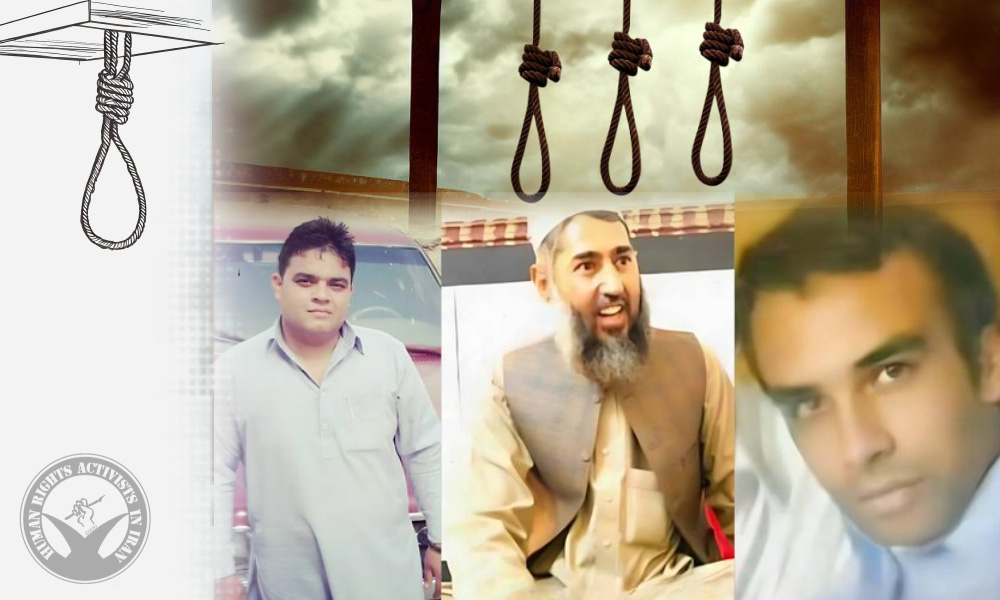
Malek Ali Fadaie-Nasab, Farhad Shakeri, Isa Eyd-Mohammadi, Abdolhakim Azim Gorgij, Abdolrahman Gorgij, and Taj-Mohammad Khormali, currently incarcerated in Ward 1/6 of Vakilabad Prison in Mashhad, face imminent execution. In late July 2023, the Mashhad Revolutionary Court sentenced these defendants, part of the same legal case, to death in a retrial.

These six individuals, along with six others—Abdolbaset Avarsan, Mohammad-Reza Sheikh Ahmadi, Morteza Fakoori, Hamid Rast Bala, Kabir Saadat Jahani, and Mohammad-Ali Arayesh—were detained by the Ministry of Intelligence in 2015 and imprisoned in Vakilabad Prison after one year. Except for Fadaie-Nasab, all these prisoners are members of the Sunni minority in Iran.

In 2019, the Mashhad Revolutionary Court sentenced Ahmadi, Avarsan, and Fakoori to 15 years in prison for “armed rebellion (Baghi) through membership in a Salafi-ISIS group.” The remaining 9 defendants were sentenced to death for “armed rebellion through membership in the Salafi group known as Al-Furqan and the Iranian Sunni front known as Hambastegi Melli.”

Rast-Bala, Saadat Jahani, and Arayesh were executed in this prison on December 31, 2020. The case of the six other defendants was overturned by the Supreme Court, and it was forwarded to another court branch for a retrial. In July 2023, Branch 4 of the Mashhad Revolutionary Court, presided over by Judge Ahmadian Salami, sentenced these six prisoners to death again. The verdict is currently under review by branch 39 of the Supreme Court.

A source close to one of their families informed HRANA that after the issuance of the death sentence, Shakeri and Abdolrahman Gorgij initiated a hunger strike that lasted for a while.

“The case has many flaws, and there is no substantial evidence to support the charges,” the source clarified. The source also confirmed that the prisoners have been subjected to torture during their detention.

Political Prisoner Nayeb Askari Faces Execution in Urmia Prison on Baghi Charges

Nayeb (Naeb) Askari, held in Urmia Prison, is at risk of execution after the Urmia Revolutionary Court sentenced him to death for Baghi (armed rebellion) in a recent retrial.

Initially sentenced to death for “enmity against God (Moharebeh)” on April 15, 2023, his plea for a retrial was accepted, leading to a charge change to Baghi. In October 2023, the court reaffirmed the death sentence, with the hearings reportedly conducted without his lawyer’s presence. The charge is supported by his alleged membership in a Kurdish political opposition party.

Arrested by IRGC intelligence agents on March 27, 2021, in Urmia, Askari was later moved to a detention facility and, on June 17, 2021, to Urmia Prison.

HRANA’s source reveals another ongoing case accusing Askari of the murder of IRGC member Mostafa Soltani. In 2013-2014, Soltani was injured during a clash with a political opposition party member, passing away six years later from COVID-19. Soltani’s family claims alleged Askari’s involvement in the altercation caused the sustained injury leading to his eventual death.

A new case, opened on July 12, 2021, based on a complaint from the Urmia Prison head, resulted in a three-month imprisonment extension and 50 lashes for “disrupting prison order.”

According to HRA’s annual report, in 2023, Urmia Prison officials executed 29 inmates, positioning this facility as the sixth highest in terms of executions among the ranked prisons.

Execution of Inmate in Urmia Prison

Update: HRANA has received reports indicating the execution of another inmate, Hossein Habibi, convicted of murder, on January 31 in Urmia Prison.


On January 31, 2024, Urmia Prison carried out the execution of Mehdi Azarioon, a resident of Urmia, convicted of murder.

HRANA has identified the executed individual as Mehdi Azarioon, who had been transferred to solitary confinement in anticipation of his imminent execution the day before.

As of now, there is no official confirmation from government sources or domestic media outlets in the country regarding these executions. The absence of official information raises apprehensions about transparency and accountability in the execution process.

According to HRA’s annual report, in 2023, Urmia Prison officials executed 29 inmates, positioning this facility as the sixth highest in terms of executions among the ranked prisons.

In 2023, the Department of Statistics and Publication of Human Rights Activists in Iran registered the execution of  746 individuals. Out of these, 6 were carried out in public. Among the executed individuals whose genders were identified, 597 were male and 20 were female. Additionally, 2 juvenile offenders, defined as individuals under the age of 18 at the time of their alleged crimes, were also executed. For a comprehensive examination of the details and statistics surrounding the executions in Iran, refer to HRANA’s annual report.

Iranian-Swedish Dual National Ahmad Reza Jalali Facing Execution

Ahmad Reza Jalali, currently held in Evin Prison, is confronting the threat of execution.

Arrested by security forces in May 2016, he was subsequently sentenced to death on charges of “spying.” The Supreme Court affirmed the verdict in the following year, and last year, the then-judiciary’s spokesperson, Zabihollah Khodaian, announced the finalization of this sentence.

While addressing the potential prison swap between Jalali and Hamid Nouri during a press conference, Khodaian asserted that “these two issues are not related, and there is no ongoing discussion about such a swap.” However, Amnesty International stated in a release that Iran’s authorities are using the threat of Jalali’s execution as leverage for the proposed prison swap.

Professor Jalali, invited to Iran by the University of Tehran in May 2016, was arrested on charges of “enmity against God (Moharebeh) through espionage for Israel.” Moharebeh, interpreted as “waging war against God,” is a component of Sharia Law typically applied to those suspected of involvement in acts against the state. The Tehran Prosecutor accused him of “transferring information about confidential projects in research, military, defense, and nuclear fields in exchange for citizenship for him and his family from Sweden.”

Execution of Female Inmate in Sabzevar Prison

In Sabzevar Prison, Razavi Khorasan province, an inmate convicted of murder was executed on January 31, 2024. The hanged individual has been identified as 27-year-old Zahra Nazarian.

A reliable source confirmed Nazarian’s execution, revealing that she had been found guilty of killing her sister’s husband four years ago.

No official sources or domestic media outlets within the country have provided coverage of this execution at the time of writing. The lack of official information raises concerns about transparency and accountability in the execution process.

In 2023, the Department of Statistics and Publication of Human Rights Activists in Iran registered the execution of  746 individuals. Out of these, 6 were carried out in public. Among the executed individuals whose genders were identified, 597 were male and 20 were female. Additionally, 2 juvenile offenders, defined as individuals under the age of 18 at the time of their alleged crimes, were also executed. For a comprehensive examination of the details and statistics surrounding the executions in Iran, refer to HRANA’s annual report.

Subscribe to Our Newsletter

Now is definitely not the time to stop reading!

Two Political Prisoners Face Execution in Zahedan Prison

Mohammad Zeineddine and Adham Narui, currently incarcerated in Zahedan Prison, are under the threat of execution following the confirmation of their death sentences by Iran’s Supreme Court in November 2023.

In March 2023, the Criminal Court of Zahedan sentenced Zeineddine and Narui to the death penalty for “enmity against God (Moharebeh) through armed action.” On November 20, 2023, this verdict was upheld by the Supreme Court.

Security forces apprehended Zeineddine in September-October 2020 and Narui on May 25, 2021, in Lashar, Sistan and Baluchestan Province. After completing the interrogation process in a security detention facility, they were transferred to Zahedan Prison and are currently held in Ward 9.

Subsequently, they were accused of killing three security forces, an allegation they consistently denied throughout the trial.

A reliable source close to the family of one of the prisoners has confirmed to HRANA: “Mohammad and Adham are innocent, and the charges against them are unfounded. Earlier, during a confrontation with security forces in the Sirchah region, several relatives of Mohammad were killed, resulting in the death of three security personnel. In this confrontation, the individual who had shot at these three officers was also killed. However, these two individuals, who had no involvement in this incident, were arrested.”

The source further added that the families of these prisoners have been subjected to verbal insults by judicial officials during their inquiries about the well-being and condition of their sons.

Political Prisoner Mohammad-Javad Vafaie at Risk of Death Penalty

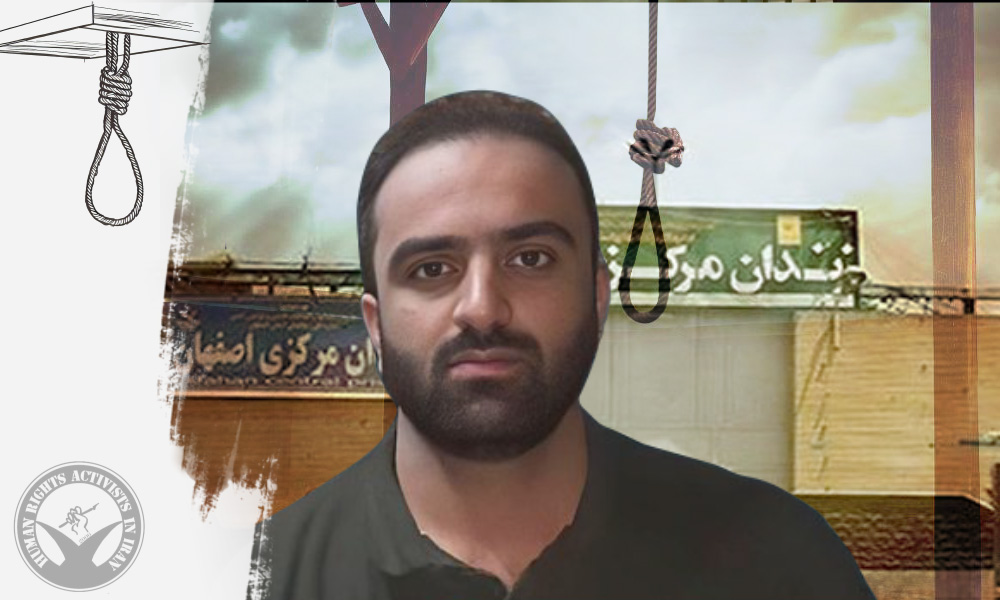
Political prisoner Seyed Mohammad-Javad Vafaie, currently held in Vakilabad Prison, Mashhad, is facing the threat of execution. The Revolutionary Court of Mashhad handed down a death sentence after a retrial in July 2023.

Vafaie, a 28-year-old boxing coach, was arrested by security forces in Mashhad in March 2020 and subsequently incarcerated in Vakilabad Prison. In January 2020, Babak Paknia, Vafaie’s lawyer, revealed that his client had been convicted of “spreading corruption on earth through arson and intentional destruction of public property, including the penitentiary building.” However, the Supreme Court later overturned the initial verdict, leading to a retrial in another branch.

Despite the retrial, the Revolutionary Court once again sentenced him to death. Notably, following the verdict, Vafaie was granted a substantial bail, which he was unable to afford.

The reissuance of the death sentence after the retrial has raised serious concerns about the potential imminent execution of Mohammad-Javad Vafaie.

Execution of Three Inmates for Drug Offenses in Karaj

On January 29, 2024, authorities at the Central Prison of Karaj executed three individuals convicted of drug-related crimes.

HRANA has identified two of them as Ajamian and Jafari (first names unknown). These inmates had previously received death sentences for drug offenses. HRANA had reported their relocation to solitary confinement the day before.

No official sources or domestic media outlets within the country have provided coverage of these executions at the time of writing. The lack of official information raises concerns about transparency and accountability in the execution process.

The reports from the Department of Statistics and Publication of Human Rights Activists for the year 2023 reveal a concerning prevalence of executions for drug offenses in Iran, constituting 56.4% of the total executions. For a comprehensive examination of the details and statistics surrounding the executions in Iran, refer to HRANA’s report.

Four Political Prisoners on Death Row Executed

On January 29, 2024, a somber day unfolded at Ghezel Hesar Prison in Karaj as four political prisoners on death row—Mohsen Mazloum, Pezhman Fatehi, Vafa Azarbar, and Hazhir Faramarzi—were executed. The previous day, they were transferred from Evin Prison to Ghezel Hesar in anticipation of their impending execution.

Despite international efforts urging Iran’s regime to halt the execution, these prisoners met their fate. Masoud Shams-Nejad, their legal representative, expressed his dismay, stating, “My clients were executed this morning, notwithstanding the fact that both preliminary and final indictments had established that the defendants were arrested before the alleged operation. It’s retribution before the crime, an irony which has now a reality.”

On July 23, 2022, Iran Police Intelligence (FARAJA) arrested them in the Sumay-ye Beradust District of Urmia County. Tasnim, a security-institution-affiliated news agency, reported their arrest as part of “a network of Israeli spies.” The agency claimed they possessed operational and communication equipment, along with explosive materials, and had entered the country from the Kurdistan region with plans to carry out unprecedented terrorist operations in sensitive, secure locations.

Approximately 80 days after their arrest, Iran’s state TV aired their coerced confessions, accusing them of spying for foreign intelligence and stating they had been apprehended in sensitive sites in Isfahan.

Their lawyer had earlier decried the due process and conviction as unjust and unfair, asserting that he and his clients were denied their rights throughout the proceedings.

Human rights organizations had questioned the details of these individuals’ legal cases, including the credibility of the charges, evidence, legal proceedings, and the performance of security institutions. In recent weeks, prominent groups and figures emphasized that the Iranian regime had scapegoated them through a setup case, mirroring a precedent set by the regime.

Execution of Three Inmates in Shirvan and Sabzevar Prisons

In a recent development, three inmates were executed in Shirvan and Sabzevar Prisons for crimes related to murder and drug offenses.

On January 22, 2024, the Iran Human Rights Organization reported the execution of 37-year-old Hossein Ali Shakurian and 51-year-old Naser Mavedat at Sabzevar Prison. Both individuals had been convicted of drug offenses in separate legal cases three and five years ago, respectively.

Additionally, on January 21, Shirvan Prison carried out the execution of 40-year-old Moslem Aliyari, who had been convicted of murder. The circumstances surrounding these executions raise concerns and prompt discussions on the broader issues related to capital punishment.

No official sources or domestic media outlets within the country have provided coverage of these executions at the time of writing. The lack of official information raises concerns about transparency and accountability in the execution process.

In 2023, the Department of Statistics and Publication of Human Rights Activists in Iran registered the execution of  746 individuals. Out of these, 6 were carried out in public. Among the executed individuals whose genders were identified, 597 were male and 20 were female. Additionally, 2 juvenile offenders, defined as individuals under the age of 18 at the time of their alleged crimes, were also executed. For a comprehensive examination of the details and statistics surrounding the executions in Iran, refer to HRANA’s annual report.