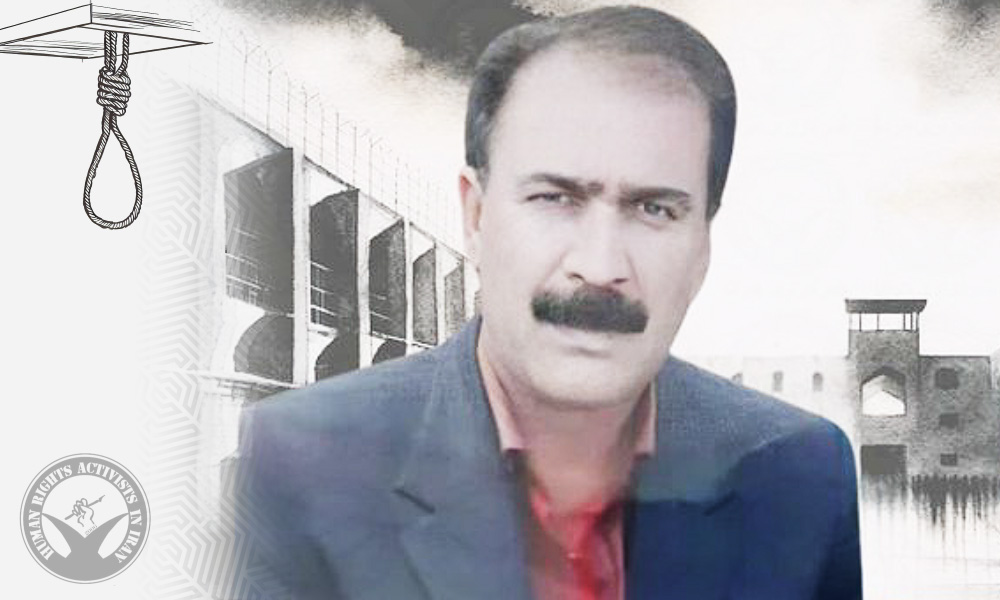
Executions of Three Inmates for Drug Offenses and Murder in Shiraz Prisons

On January 24, 2024, three inmates were executed for drug offenses and murder in Adelabad and Pir-bano Prisons in Shiraz, according to Iran Human Rights Organization.

The executed individuals include Fazel Shafiei, 40, and Morteza Nadimi, 35, both identified as having been executed in Adelabad Prison. They were convicted of drug offenses four and two years ago, respectively. The third inmate, convicted of murder five years ago, was executed in Pir-Bano Prisons.

As of the time of writing, no official sources or domestic media outlets within the country have provided coverage of these executions. The absence of official information raises concerns about transparency and accountability in the execution process.

In 2023, the Department of Statistics and Publication of Human Rights Activists in Iran registered the execution of  746 individuals. Out of these, 6 were carried out in public. Among the executed individuals whose genders were identified, 597 were male and 20 were female. Additionally, 2 juvenile offenders, defined as individuals under the age of 18 at the time of their alleged crimes, were also executed. For a comprehensive examination of the details and statistics surrounding the executions in Iran, refer to HRANA’s annual report.


Supreme Court Upholds Death Sentence for Yousef Ahmadi

Branch 39 of the Supreme Court in Iran has confirmed the death sentence for political prisoner Yousef Ahmadi, according to Kurdpa.

Currently incarcerated in Sanandaj Prison, Ahmadi was initially condemned for Baghi (armed rebellion) by the Sanandaj Revolutionary Court, presiding over by Judge Saeed, in September 2023.

In the same legal proceeding, co-defendants Mohammad Karimi, Baset Karimi, and Mohammad Feyzi were handed prison sentences of 25, 20, and 20 years, respectively. These individuals were first apprehended by security forces in April 2020 and later transferred to Sanandaj Prison after the completion of the interrogation process at a security detention facility.

One of Kurdpa’s sources revealed that collaboration with a Kurdish opposition party was cited during the trial as an example supporting this charge. However, specific details regarding their case and the actions underlying the charges remain undisclosed.

Dual Execution in Hamedan Prison for Drug-Related Crimes

On January 21, 2024, Hamedan Prison officials carried out the execution of two inmates convicted of drug-related offenses.

HRANA has identified the individuals as Salman Salimi from Kermanshah and Ahmad Haeri.

As of the current writing, there have been no reports on these executions from official sources or domestic media outlets within the country.

The reports from the Department of Statistics and Publication of Human Rights Activists for the year 2023 reveal a concerning prevalence of executions for drug offenses in Iran, constituting 56.4% of the total executions. For a comprehensive examination of the details and statistics surrounding the executions in Iran, refer to HRANA’s report.


Execution of Inmate in Ghezel Hesar Prison, Karaj

On January 23, 2024, Ghezel Hesar Prison officials carried out the execution of inmate Ahmad Asgarat, convicted of murder.

According to HRANA, Asgarat was implicated in the murder of a man, allegedly in collaboration with his wife, following an extramarital affair.

As of now, there have been no reports on this execution from official sources or domestic media outlets within the country.

It’s worth noting that on the same day, two other prisoners, Mohammad Ghobadloo and Farhad Salimi, were also executed.

According to data gathered by the Department of Statistics and Publication of Human Rights Activists, Ghezel Hesar Prison in Karaj witnessed the highest number of executions in 2023, with Zahedan Prison following closely behind. For a comprehensive examination of the details and statistics surrounding the executions in Iran, refer to HRANA’s report.

Sunni Prisoner Farhad Salimi Executed in Ghezel Hesar, Karaj

On January 23, 2024, Sunni Prisoner Farhad Salimi was executed in Ghezel Hesar, Karaj, following more than 13 years of incarceration.

In this legal case, three other Sunni defendants—Ghasem Abasteh, Ayoub Karimi, and Davoud Abdollahi—were executed on November 5, November 29, 2023, and January 2, 2024, respectively.

A source close to Salimi’s family informed HRANA that they had not received any phone calls from him in the days leading up to the execution, and the family was not formally notified about the carrying out of the sentence.

The unnamed source, citing security concerns, expressed, “A psychological game was played with the Salimi family; no official took responsibility to inform them about his whereabouts, status, or any plans they had for him. The family was not even formally notified about the execution; we only learned about it through his fellow inmates. The family is actively seeking further inquiries and custody of the body.”

The roots of the case trace back to September 2008 when Abdolrahim Tina, the Imam of a mosque in Mahabad, was assassinated by unidentified individuals. In January-February 2010, Salimi and six other Sunni suspects were arrested in connection to the assassination.

During his detention, Salimi faced multiple charges, including enmity against God (Moharebeh), allegedly through sympathizing with Salafism—a charge he consistently refuted. After spending fourteen months in legal limbo, Salimi was transferred to Rajai Shahr Prison, Karaj, where he remained until his relocation to Ghezel Hesar Prison in August of the current year.

Initially sentenced to death by Branch 28 of the Tehran Revolutionary Court, presided over by Mohammad Moghiseh, the verdict was later overturned by the Supreme Court. The case was then assigned to Branch 15 of the court, presided over by Judge Salavati, who reinstated the death sentences for him and six other defendants—Anvar Khezri, Kamran Sheikheh, Davoud Abdollahi, Khosro Besharat, Ghasem Abasteh, and Ayoub Karimi. This time, the Supreme Court confirmed the death sentences for him and his co-defendants.
Subscribe to Our Newsletter

Now is definitely not the time to stop reading!

Mohammad Ghobadloo Executed in Ghezel Hesar Prison, Karaj

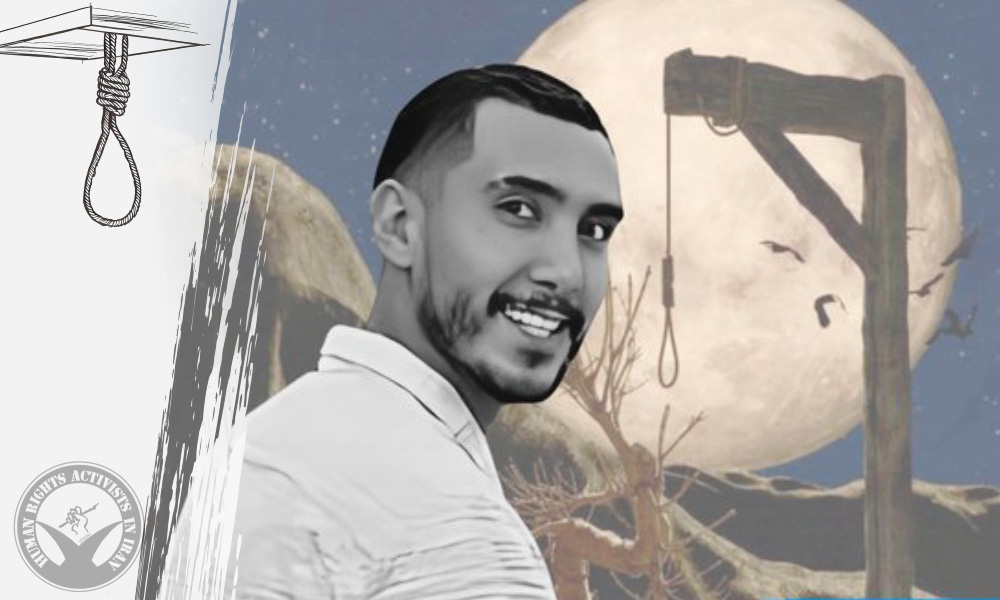
Mizan, the judiciary’s news agency, has reported the execution of Mohammad Ghobadloo, a detainee connected to the 2022 nationwide protests, in Ghezel Hesar Prison, Karaj.

Amidst growing controversy, Amir Raisian, Ghobadloo’s lawyer, publicly disclosed yesterday that despite the Supreme Court overturning the death sentence, he was informed of the imminent execution scheduled for Tuesday, January 23.

Raisian clarified, “The death sentence (Qisas or reprisal) had been overturned by the Supreme Court, and the case was transferred to another branch (Branch 5 of the Criminal Court of Tehran), awaiting the results of forensic re-examinations for the verdict. However, after several months, the case was unexpectedly reassigned to Branch 39 following a Supreme Court directive. Now, just hours before the scheduled execution, we have been notified of this sudden development.”

Raisian strongly denounced the execution, asserting, “This execution lacks any legal basis and should be considered a case of manslaughter.”

The execution of Ghobadloo has triggered widespread condemnation on Farsi-speaking social media platforms. Concurrently, Mizan released a video featuring Ghobadloo’s coerced confessions. The judiciary’s news agency has dismissed claims that Ghobadloo suffered from major mental disorders, including bipolar disorders.

Initially sentenced to death by Branch 15 of the Tehran Revolutionary Court, presided over by Judge Abolghasem Salavati, Ghobadloo faced charges such as “spreading corruption on earth through crimes against the physical integrity of people.” Additional allegations included “destruction of public property” and “acting against national security by causing unrest.”

During the court proceedings, Ghobadloo emphasized “being influenced by the psychological consequences resulting from the non-use of his medications on the night of the incident.” Simultaneously, the prison doctor of the Great Tehran Penitentiary and the prison supervisor confirmed the mentally precarious condition of the accused, a factor overlooked by forensic experts during the trial.

Inmate Executed by Hanging in Ilam Prison for Murder

On January 16, 2024, authorities at Ilam Prison carried out the hanging execution of an inmate convicted of murder.

The executed individual has been identified as Mohsen Mehri, originally from Ilam County.

As of the time of writing, there have been no reports from official sources or domestic media outlets within the country regarding this execution.

In 2023, the Department of Statistics and Publication of Human Rights Activists in Iran registered the execution of  746 individuals. Out of these, 6 were carried out in public. Among the executed individuals whose genders were identified, 597 were male and 20 were female. Additionally, 2 juvenile offenders, defined as individuals under the age of 18 at the time of their alleged crimes, were also executed. For a comprehensive examination of the details and statistics surrounding the executions in Iran, refer to HRANA’s annual report.

Twelve Individuals Facing Execution for Alleged Security-Political Charges

As of now, a minimum of twelve prisoners in Iran are on the verge of execution, convicted of security-political charges such as “enmity against God (moharebeh), spreading corruption on the Earth, and collaboration with adversary countries.”

HRANA has confirmed their imprisonment in various facilities, including Evin (Tehran), Ghezel Hesar (Karaj), Sheyban Prison (Ahvaz), Dizelabad (Kermanshah), and Zahedan Prisons.
The Tehran Revolutionary Court, specifically Branch 26 and 28 led by Judges Iman Afshari and Mohammad Moghiseh, respectively, is responsible for the majority of these verdicts.

Below is a detailed account of some of these individuals and their current legal status:

Mohsen Mazloum

Mohsen Mazloum

  • Prison: Evin Prison, Ward 209
  • Most Serious Charges: Due to the denial of access to case details for his lawyer, the precise charges leading to the verdict remain undisclosed. However, following the arrest, the Ministry of Intelligence accused him of collaborating with Israel, attempting to sabotage a military facility in Isfahan, and affiliating with the Komala Party (a Kurdistan organization associated with the Communist Party of Iran).
  • Court: Branch 26 of the Tehran Revolutionary Court, Judge Iman Afshari
  • Current Status: Death sentence confirmed in Branch 9 of the Supreme Court. Retrial request rejected.


Pezhman Fatehi

Pezhman Fatehi

  • Prison: Evin Prison, Ward 209
  • Most Serious Charges: Due to the denial of access to case details for his lawyer, the precise charges leading to the verdict remain undisclosed. However, following the arrest, the Ministry of Intelligence accused him of collaborating with Israel, attempting to sabotage a military facility in Isfahan, and affiliating with the Komala Party (a Kurdistan organization associated with the Communist Party of Iran).
  • Court: Branch 26 of the Tehran Revolutionary Court, Judge Iman Afshari
  • Current Status: Death sentence confirmed in Branch 9 of the Supreme Court. Retrial request rejected.


Vafa Azarbar

Vafa Azarbar

  • Prison: Evin Prison, Ward 209
  • Most Serious Charges: Due to the denial of access to case details for his lawyer, the precise charges leading to the verdict remain undisclosed. However, following the arrest, the Ministry of Intelligence accused him of collaborating with Israel, attempting to sabotage a military facility in Isfahan, and affiliating with the Komala Party (a Kurdistan organization associated with the Communist Party of Iran).
  • Court: Branch 26 of the Tehran Revolutionary Court, Judge Iman Afshari
  • Current Status: Death sentence confirmed in Branch 9 of the Supreme Court. Retrial request rejected.


Mohammad (Hazhir) Faramarzi

Hazhir Faramarzi

  • Prison: Evin Prison, Ward 209
  • Most Serious Charges: Due to the denial of access to case details for his lawyer, the precise charges leading to the verdict remain undisclosed. However, following the arrest, the Ministry of Intelligence accused him of collaborating with Israel, attempting to sabotage a military facility in Isfahan, and affiliating with the Komala Party (a Kurdistan organization associated with the Communist Party of Iran).
  • Court: Branch 26 of the Tehran Revolutionary Court, Judge Iman Afshari
  • Current Status: Death sentence confirmed in Branch 9 of the Supreme Court. Retrial request rejected.


Description:
On July 23, 2022, Mohsen Mazloum (28), Pezhman (Pejman) Fatehi (28), Vafa Azarbar (29), and Hazhir (Hajir) Faramarzi (29) were apprehended by Iran Police Intelligence (FARAJA) in Sumay-ye Beradust District, Urmia County.

Tasnim, a news agency affiliated with security institutions, reported their arrest, alleging the formation of “a network of Israeli spies.” According to Tasnim, the individuals were in possession of operational and communication equipment, as well as explosive materials. The agency claimed they had entered the country from the Kurdistan region with intentions of conducting unprecedented terrorist operations in strategically sensitive locations.

Approximately 80 days post their arrest, Iran’s state TV broadcasted coerced confessions, accusing them of espionage for foreign intelligence. The confessions stated they had been apprehended in sensitive sites in Isfahan.

In response to what he deemed an unjust and unfair trial, their attorney, Masoud Shams Nejad, asserted, “Since taking on this case as their legal representative, my clients and I have been denied any rights as a lawyer and defendants, rendering my role as their legal representative existing only on paper.”

Anvar Khezri

Anvar Khezri

  • Prison: Ghezel Hesar Prison, Karaj
  • Most Serious Charges: Enmity against God (Moharebeh) through membership in a Salafi group, and involvement in the assassination of Mamusta Abdolrahim Tina.
  • Court: Branch 28 of the Tehran Revolutionary Court, Judge Mohammad Moghiseh
  • Current Status: Death sentence confirmed by the Supreme Court.
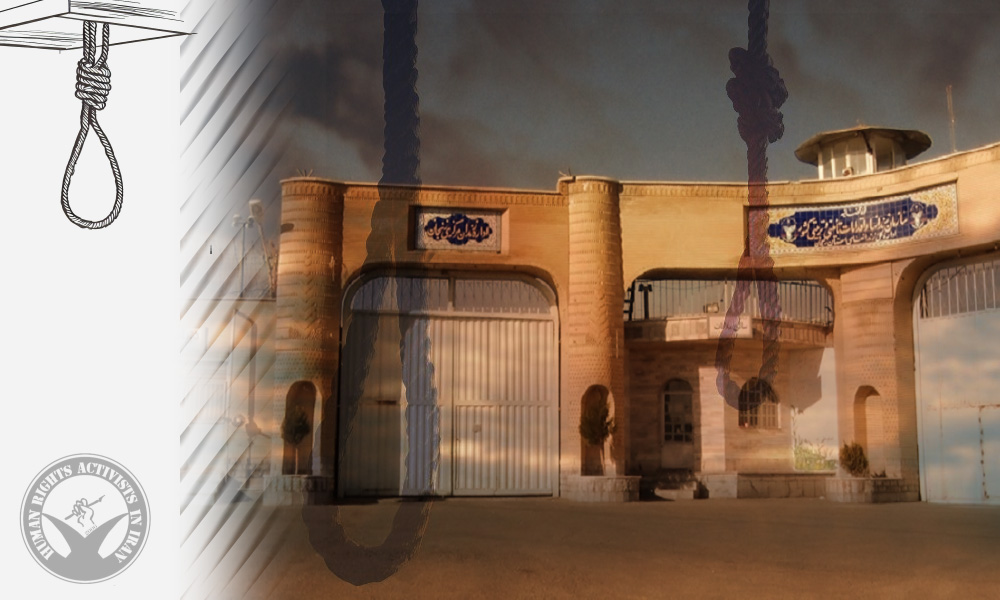
 

Kamran Sheikheh

Kamran Sheikheh

  • Prison: Ghezel Hesar Prison, Karaj
  • Most Serious Charges: Similar to Anvar Khezri
  • Court: Branch 28 of the Tehran Revolutionary Court, Judge Mohammad Moghiseh
  • Current Status: Death sentence confirmed by the Supreme Court.
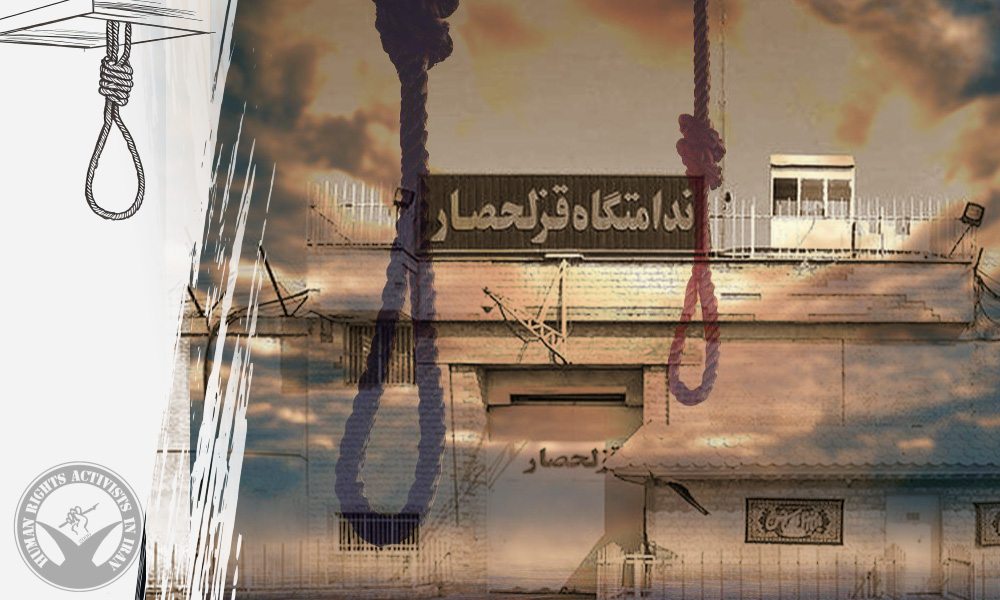


Farhad Salimi

Farhad Salimi

  • Prison: Ghezel Hesar Prison, Karaj
  • Most Serious Charges: Similar to Anvar Khezri
  • Court: Branch 28 of the Tehran Revolutionary Court, Judge Mohammad Moghiseh
  • Current Status: Death sentence confirmed by the Supreme Court.


Khosrow Besharat

Khosrow Besharat

  • Prison: Ghezel Hesar Prison, Karaj
  • Most Serious Charges: Similar to Anvar Khezri
  • Court: Branch 28 of the Tehran Revolutionary Court, Judge Mohammad Moghiseh
  • Current Status: Death sentence confirmed by the Supreme Court.

Currently incarcerated in Ghezel Hesar Prison in Karaj, these four Sunni prisoners were part of a group arrested in January-February 2010, accused of aiding in the assassination of Abdolrahim Tina, the Imam of a mosque in Mahabad, which occurred in February 2010.


Description:
Originally sentenced to death by Branch 28 of the Tehran Revolutionary Court, presided over by Mohammad Moghiseh, the verdict was later overturned by the Supreme Court. Subsequently, the case was transferred to Branch 15 of the court, led by Judge Salavati, who reinstated the death sentences for Davoud Abdollahi, Anvar Khezri, Kamran Sheikheh, Farhad Salimi, Khosro Besharat, Ghasem Abasteh, and Ayoub Karimi. On this occasion, the Supreme Court confirmed the death sentences for them and their co-defendants. Among them, Abasteh, Karimi, and Abdollahi have been executed.

Reza Rasaei

Reza Rasaei

  • Prison: Dizelabad, Kermanshah
  • Most Serious Charges: Involvement in the killing of Nader Beyrami, head of IRGC Intelligence, during protests in Sahneh County, Kermanshah province.
  • Court: Branch 1 of the Criminal Court of Kermanshah
  • Current Status: Death sentence confirmed by the Supreme Court.


Description:
Rasaei, 34 years old and known as a Yarsan follower residing in Sahneh County, was arrested on November 24, 2022, by the police and subsequently detained in Sahneh County. After the completion of the interrogation process, he was transferred to Dizel-Abad prison in Kermanshah.

His arrest followed the murder of Nader Beyrami, the head of IRGC Intelligence, in Sahneh County during the 21st annual commemoration ceremony of the death of Seyeed Khalil Alinejad, a leader of the Yaresan community.

Farshid Hassan-Zahi

Farshid Hassan-Zahi

  • Prison: Ward 9 of Zahedan Prison
  • Most Serious Charges: Shooting at the police station vehicle, causing the death of a conscript and a first lieutenant.
  • Court: Branch 1 of the Criminal Court of Zahedan
  • Current Status: Death sentence issued, awaiting confirmation by the Supreme Court.


Description:
Arrested for shooting at a police vehicle, Hassan-Zahi, aged 26, currently awaits confirmation of his death sentence.

Mansour Dahmardeh

Mansour Dahmardeh

  • Prison: Ward 9 of Zahedan Prison
  • Most Serious Charges: Spreading Corruption on Earth
  • Court: Branch 2 of the Criminal Court (Shahid Nouri) in Zahedan
  • Current Status: Death sentence issued.


Description:
Dahmardeh, a 23-year-old citizen with disabilities, was apprehended during the 2022 nationwide protests in Zahedan and confined to the city’s prison. In January 2023, Branch 2 of the Criminal Court (Shahid Nouri) sentenced him to death on charges of “spreading corruption on earth.” Despite his poor health condition, he has been denied sufficient medical care in Zahedan Prison.

Abbas (Mojahed) Korkori

Mojahed Korkori

  • Prison: Sheiban Prison, Ahvaz
  • Most Serious Charges: Enmity against God (Moharebeh) through using a weapon, spreading corruption on earth, and forming a rebellion group.
  • Current Status: Death sentence confirmed by the Supreme Court


Description
Mizan, the judiciary’s news agency, claims that Korkori is responsible for killing 10-year-old Kian Pirfalak during protests in Izeh. However, Pirfalak’s parents have repeatedly denied these accusations and claimed that their son was killed in a shooting by regime forces. Zeinab Molaei-Rad, Kian’s mother, said during his funeral, “On the way back home, the regime agents opened fire on our car.”


The due process involving these twelve death-row convicts reveals a troubling trend of violations against the rights of citizens and prisoners in Iran. Some prisoners, who have managed to communicate from within prison, claim they have endured torture and coerced confessions. In cases where communication was restricted, families have attested to confessions obtained under duress, highlighting the inhumane treatment by judicial and security officials and a blatant disregard for human rights.

Iran’s judicial-security institutions have a long history of constructing legal cases, leveling false accusations, and engaging in torture and mistreatment against political prisoners. These actions constitute a clear violation of the Universal Declaration of Human Rights and other internationally ratified conventions.

Article 10 of the Universal Declaration of Human Rights emphasizes that “Everyone is entitled in full equality to a fair and public hearing by an independent and impartial tribunal, in the determination of his rights and obligations and of any criminal charge against him.”

Furthermore, Article 5 of the declaration unequivocally states that “no one shall be subjected to torture or to cruel, inhuman, or degrading treatment or punishment.”

Execution of Inmate Convicted of Drug Crimes in Hamedan

On January 17, 2024, Jalil Soleimani, convicted of drug-related offenses, was executed in Hamedan Prison, according to Kurdpa.

Soleimani was sentenced to death for drug offenses three years ago.

At the time of writing, no official sources or domestic media outlets within the country have reported on this execution.

In 2023, the Department of Statistics and Publication of Human Rights Activists in Iran registered the execution of  746 individuals. Out of these, 6 were carried out in public. Among the executed individuals whose genders were identified, 597 were male and 20 were female. Additionally, 2 juvenile offenders, defined as individuals under the age of 18 at the time of their alleged crimes, were also executed. For a comprehensive examination of the details and statistics surrounding the executions in Iran, refer to HRANA’s annual report.


Execution of Three Inmates in Ghezel Hesar Prison for Drug Offenses

On January 17, 2024, Ghezel Hesar Prison executed three inmates convicted of drug-related crimes.

HRANA has identified two of them as Iman Sha’abani and Bahman Fathollahzadeh. The third inmate is an Afghan national whose name remains undisclosed.

Sha’abani and Fathollahzadeh received the death penalty in a legal case. Another co-defendant, Bamyar Fathollahzadeh, met the same fate last month.”

No official sources or domestic media outlets within the country have provided coverage of these executions at the time of writing. The lack of official information raises concerns about transparency and accountability in the execution process.

According to data gathered by the Department of Statistics and Publication of Human Rights Activists, Ghezel Hesar Prison in Karaj witnessed the highest number of executions in 2023, with Zahedan Prison following closely behind. For a comprehensive examination of the details and statistics surrounding the executions in Iran, refer to HRANA’s report.