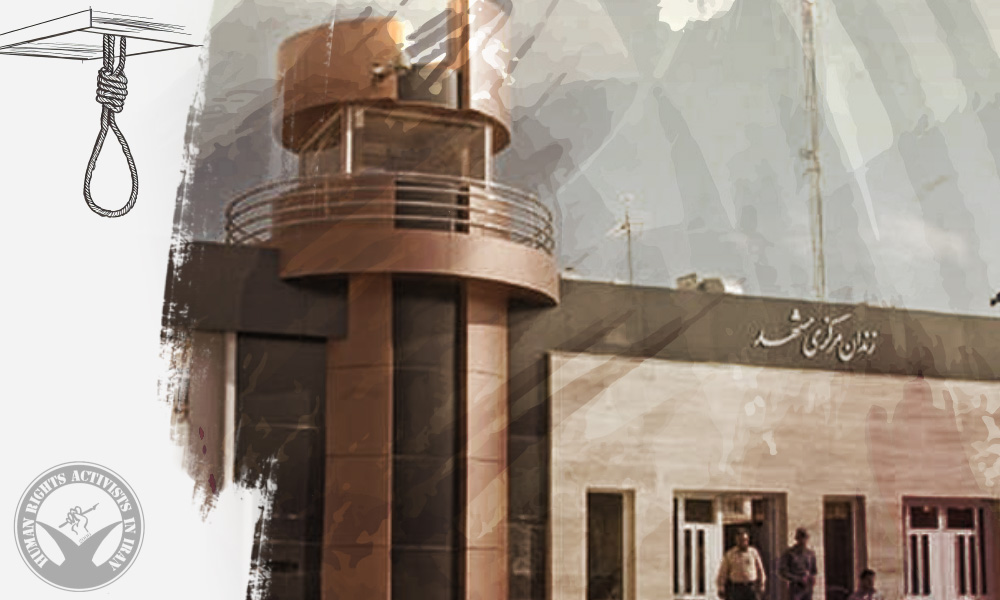
Siavash Soltani Arrested by Security Forces

On September 3, Siavash Soltani, the son of Kobra Shaykheh, who was one of the victims of the 2022 nationwide protests, was arrested by security forces in Mahabad and transferred to an undisclosed location, according to Kurdpa.

The report states that early this morning, security forces entered Mr. Soltani’s home without presenting a judicial warrant, arrested him, and transferred him to an undisclosed location. The arrest of this citizen was carried out with violence.

No information is available about the reasons for his arrest or the charges against him.

Kabri Shaykheh, a 59-year-old resident of Mahabad, was shot and killed by security forces on October 5, 2022, during gatherings held after the funeral of Esmaeil Moloudi, another victim of the 2022 nationwide protests.

Teenager Arrested by Security Forces in Mahabad

On September 3, security forces arrested 16-year-old Ramyar Abubakri, a resident of Mahabad, and transferred him to an undisclosed location, according to Kurdpa.

Ramyar is the brother of Zaniar Abubakri, who was killed by regime forces during the 2022 nationwide protests.

The arrest was reportedly carried out without a judicial warrant, using violence, and took place in the family’s home.

As of the time of this report, there is no information regarding the reasons for Ramyar’s arrest, his current location, or the charges against him.

It is worth noting that Zaniar Abubakri, a 22-year-old resident of Mahabad, was shot and killed in this city during the nationwide protests in November 2022.

Although precise statistics on child arrests are not available, the Department of Statistics and Publication of Human Rights Activists in Iran reports that at least 130 individuals under the age of 18 have been detained by security forces. For a detailed analysis of these figures and more information on executions in Iran, please refer to HRANA’s annual report.

Denial of Medical Treatment for Masoud Jamaei in Sheiban Prison, Ahvaz

Masoud Jamaei, a political detainee who has been held in Sheiban Prison in Ahvaz for over thirteen months without a clear resolution, is suffering from physical health issues and has been denied adequate medical care.

A source close to the political detainee’s family confirmed to HRANA, saying: “Mr. Jamaei suffers from stomach and liver cancer as well as high blood pressure. Despite his need for treatment, he has been deprived of specialized medical care and transfer to medical facilities.”

He was previously charged in the prosecutor’s office with “spreading corruption on earth,” “membership in anti-regime groups,” and “asembly and collusion to disrupt national security.” However, no court has been convened for his case to date.

Jamaei, approximately 47 years old, is a resident of Ahvaz. He was arrested by security forces in Ahvaz on August 1, 2023.

Drugs in Iranian Prisons: The Role of Corruption and Weak Oversight in the Entry of Drugs into Ghezel Hesar Prison

HRANA News Agency – Drug use is a pervasive issue within Iran’s prison system, driven by systemic corruption and inadequate oversight. These factors not only jeopardize the health and safety of inmates but also undermine their chances for rehabilitation. This report, based on interviews with prisoners’ families, former inmates of Ghezel Hesar Prison, and some of its staff members, delves into the mechanisms by which drugs enter the prison, the impact on inmates, and potential solutions to address this critical problem.

According to HRANA, the news agency of Human Rights Activists in Iran, drugs pose a major challenge in Iranian prisons, particularly in Ghezel Hesar Prison. The presence of drugs not only endangers the physical and mental health of inmates but also severely disrupts the security and overall functioning of the prison system.

Reports from the families of prisoners, individuals released from Ghezel Hesar Prison, prison staff, and HRANA’s independent analysis highlight the ease of access to various drugs, fueled by corruption among prison staff and a lack of effective oversight. Using this information, HRANA investigates the access to and distribution of drugs in Ghezel Hesar Prison in Karaj.

Access to Drugs in Prison

According to a former inmate of Ghezel Hesar Prison who reported to HRANA, access to drugs in this prison is surprisingly easy. Drugs are available at all hours of the day and in large quantities. Testimonies from families and relatives of those incarcerated in this prison indicate that the vast majority of inmates in Ghezel Hesar Prison are drug users, reflecting the widespread and severe nature of this problem. Drugs are easily found in all areas of the prison, from general wards to solitary confinement, and some inmates even openly use drugs in front of others.

Drug use in Ghezel Hesar Prison is not limited to habitual addicts; even inmates who were not addicted outside the prison turn to drugs due to psychological pressures and lack of supportive programs. These conditions have turned Ghezel Hesar into a place where addiction is rampant, rendering rehabilitation programs ineffective.

HRANA’s investigations from the families of prisoners indicate that the prison environment has become contaminated due to the abundance of drugs; the smell of drugs is constantly present, and even non-using inmates are affected by this environment. This situation not only harms the health of prisoners but also negatively impacts their morale and behavior, gradually pushing them towards drug use.

The Role of Corruption and Weak Oversight in the Entry of Drugs into Prisons

Drugs enter Ghezel Hesar Prison through various methods, with corruption among prison staff being the primary factor. A former staff member of Ghezel Hesar explained to HRANA that drug smuggling into the prison is carried out by certain groups that have close connections with some prison staff. These individuals include ward managers, jail trustees, and other influential groups who exploit weaknesses in oversight and corruption within the system.

This individual, whose identity HRANA has kept confidential, explained that corrupt prison staff, including guard officers, often turn a blind eye to drug-related activities in exchange for bribes. In some instances, these officers are directly involved in the smuggling and distribution of drugs. Rather than confronting those engaged in drug sales, they frequently accept payments from the sellers to allow the illicit activities to continue unchecked.

This issue clearly demonstrates the systemic failure of laws within the prison and proves that a serious and decisive response to this phenomenon is necessary.

Reports indicate that drugs also enter the prison through visitors and even the internal prison postal system. Inmates, often with the complicity of prison staff, use covert methods to smuggle drugs into the facility. The widespread and varied means of drug entry underscore the lack of effective oversight and control over the movement of inmates and their belongings.

Corruption in the Internal System and the Role of Prison Staff in Drug Distribution

HRANA’s findings reveal that prison staff play a significant role in the distribution of drugs within Ghezel Hesar Prison. Instead of preventing drug entry, staff members frequently participate—directly or indirectly—in the distribution process. Interviews with 30 former inmates indicate that some prison staff, particularly guard officers and security personnel, benefit financially from the drug trade, fully aware of the trafficking activities. According to these former inmates, guard officers often collaborate with drug dealers and protect them in exchange for bribes.

Jail trustees in each ward and other staff members also play crucial roles in the drug distribution network. Under the guise of their official duties, they deliver drugs to inmates and, in some cases, are involved in setting prices and managing the internal drug market. This entrenched corruption makes it nearly impossible to address the drug problem without a fundamental overhaul of the oversight system.

Inmates are also compelled to cooperate with these corrupt networks; otherwise, they may face violent actions and informal punishments from prison staff. These complex and intertwined relationships between inmates and staff pose a serious obstacle to any reform within the prison system.

Drug Pricing and Payment Methods in Prison

The prices of drugs inside Ghezel Hesar Prison are significantly higher than on the outside. A former inmate reported that drug prices inside the prison are, on average, ten times higher than outside, driven by the scarcity created by restrictions and the high profitability for sellers. Drug importers, often in collaboration with prison staff, manipulate prices, deliberately limiting supply when demand is high to drive prices even further.

HRANA’s research indicates that payments for drugs within the prison are not made in cash; instead, inmates use external bank accounts, often belonging to their family members, to transfer funds. This system allows sellers to profit from their illegal trade without the risks associated with handling cash inside the prison. Additionally, cigarettes are sometimes used as currency, illustrating the development of an internal economy within the prison walls.

This complex economic structure, fueled by a lack of financial control and oversight, enables the drug trade to thrive within the prison. Sellers and importers, protected by unofficial support and the absence of effective regulation, continue to reap substantial profits.

The Impact of Drug Use on the Health and Behavior of Inmates

Drug use within Ghezel Hesar Prison has severe consequences for the physical and mental health of inmates. Families of prisoners report that drug use has significantly deteriorated the mental and physical well-being of their loved ones, turning them into passive and unmotivated individuals. The presence of drugs in the prison environment has led to widespread physical ailments and psychological disorders, creating a toxic and dangerous atmosphere.

A recently released inmate told HRANA that the pervasive smell of drugs within the prison even affects non-users, who are often driven to start using due to the contaminated environment. The availability and use of drugs harm not only the users but also the entire inmate population, gradually leading to widespread addiction.

Drug Gangs and Control of the Drug Market in Prison

HRANA’s investigations, supported by inmate testimonies, indicate that the drug market within Ghezel Hesar Prison is dominated by internal drug gangs who exploit the system’s corruption. These gangs manipulate the supply of drugs, intentionally creating shortages to drive up prices and maximize profits. A former prison staff member, whose identity HRANA has kept confidential, revealed that these gangs distribute approximately five kilograms of drugs daily among inmates, with no oversight of their activities.

The individual further explained that these gangs, with the assistance of some prison staff and influential figures, control the drug market and effortlessly evade any legal repercussions.

Ineffectiveness of Current Treatment Programs

Although prisons offer programs intended to help inmates overcome addiction, these efforts are largely ineffective due to inadequate oversight and poor quality. According to informed sources, counseling and treatment sessions held in prisons are mostly symbolic and have not successfully reduced drug use. When the prison environment itself is the primary source of drug distribution and consumption, there is little motivation for inmates to quit.

Ghezel Hesar Prison, in particular, holds Narcotics Anonymous (NA) classes aimed at supporting addicts, but research shows that many participants in these sessions continue to use drugs. This underscores the fact that without structural reforms and the creation of a drug-free environment, treatment programs cannot succeed.

Conclusion

The Necessity of Adhering to International Commitments and Implementing Domestic Laws

The drug problem in Iranian prisons, particularly in Ghezel Hesar, is the result of systemic corruption, inadequate oversight, and the influence of mafia gangs within the prison system. This situation not only endangers the physical and mental health of inmates but also destabilizes the security and order of prisons. Addressing this crisis requires coordinated and decisive action by judicial, security, and prison management authorities.

As a member of the United Nations Office on Drugs and Crime (UNODC), Iran is committed to implementing drug control programs, preventing addiction, and providing treatment services to inmates. These commitments oblige Iran to take preventive measures and reduce demand, particularly in sensitive environments like prisons, to curb the spread of drugs. Furthermore, based on international prisoner rights conventions, the Iranian government is responsible for providing humane and healthy conditions for inmates, including preventing addiction and offering appropriate treatment services.

Failure to uphold these commitments and address the current situation constitutes a clear violation of the international rights of prisoners, to which the Iranian government is bound.

According to Iran’s domestic laws, particularly the regulations set the Iran’s Prisons Organization, prison officials are obligated to maintain a safe and drug-free environment. These laws also mandate that inmates must have access to therapeutic and counseling services and undergo thorough medical and psychological supervision.

However, numerous reports indicate that these laws and regulations are often ignored in many prisons, with some staff directly involved in drug smuggling and distribution. This situation reveals that the existing legal framework remains largely theoretical, with little practical enforcement.

Proposed Solutions for Reform

  • Stricter Oversight and Firm Implementation of Domestic Laws: There is a need for continuous and effective oversight of prison staff’s performance. Addressing corrupt staff members and establishing incentive systems for reporting violations could significantly reduce corruption and help control the drug problem.
  • Strengthening Treatment and Rehabilitation Programs: The Prisons Organization should prioritize the quality and effectiveness of treatment programs rather than implementing them symbolically. This includes continuous staff training, employing scientific methods for addiction treatment, and providing specialized counseling to inmates.
  • Increasing Transparency and Direct Communication Between Inmates and Judicial Authorities: Establishing direct communication channels between inmates and judicial and supervisory authorities, without the mediation of prison staff, could enhance transparency and reduce corruption.
  • Utilizing Advanced Technologies in Monitoring: Installing and upgrading surveillance systems, such as CCTV cameras, and using advanced equipment for body searches could help reduce the entry of drugs into prisons.
  • Pursuing International Commitments: The Iranian government should seriously pursue its commitments to the UN and other international bodies and provide accurate reports on its situation and progress. This not only helps improve prison conditions but also enhances Iran’s international credibility.

Ultimately, implementing fundamental changes and adhering to both domestic and international commitments can help reduce the drug problem in Iranian prisons, creating a safer and more humane environment for inmates. Without a strong commitment and effective collaboration among all responsible agencies, this crisis will persist, negatively impacting the health and security of society at large.

Monthly Report – August 2024: Human Rights Situation in Iran

HRANA – HRA’s Statistics Department has released its monthly report for August 2024, highlighting ongoing human rights violations across Iran. This month, 92 individuals were executed, comprising 68 men and 24 whose gender is unknown. A total of 14 individuals were sentenced to death, underscoring a persistent use of capital punishment in Iran, often for offenses that do not meet international standards, notably drug-related crimes. This practice starkly contradicts the right to life as articulated in the International Covenant on Civil and Political Rights (ICCPR). Notably, 45 people were executed for drug-related offenses this month.

On a single day, 22 prisoners were executed in Qazalhisar prison in Karaj for crimes including murder, drug-related crimes, and rape. Among them were six individuals sentenced to death for drug-related offenses: Ismail Sharfi, Mohammad Gholami, Abdullah Shahnawazi, Shahab Maleki, Rasul (last name unknown), and Ghanbari (first name unknown). These prisoners were placed in solitary confinement in their final days, and their families were summoned for final goodbyes. Additionally, one protester from the 2022 nationwide protests, Reza Rasaei, was executed on August 6, 2024, for a non-violent crime, with the conviction reportedly based on forced confessions.

Freedom of expression remains severely curtailed, with 25 individuals arrested in relation to this issue during August. This includes the arrest of journalist Omid Pahuda, who was sentenced to six months in prison on charges of propaganda against the regime. Additionally, two prominent journalists, Niloufer Hamedi and Elaha Mohammadi, had their sentences reduced by the Tehran Court of Appeal to six years each after initially receiving a combined 25-year sentence. Both journalists were initially charged for their reporting related to the death of Mahsa Amini and played significant roles in the subsequent protests.

Prison conditions remain dire, with 47 cases of medical neglect reported and 21 cases where no information about the person has been available after their arrest. Political prisoners like Sara Jahani, a women’s rights activist suffering from multiple sclerosis, continue to face severe mistreatment, including denial of necessary medical care despite serious health conditions. Additionally, a prisoner named Ruhullah Mohammadi died in Urmia prison due to delayed medical attention, highlighting the life-threatening neglect faced by prisoners in Iran.

Women’s rights violations persist under Iran’s “Operation Noor,” with several incidents of violence and arrests for non-compliance with mandatory hijab laws. This month, eight women were killed and six were raped. Notably, Arezou Badri, a 31-year-old woman from Noor city, was shot by police for hijab-related issues, leaving her with severe injuries and possible paralysis. Two teenage girls in Tehran were also violently assaulted and arrested under the same crackdown.

Workers in Iran endure hazardous conditions, with 41 fatalities and 60 injuries recorded from work-related accidents in August. Additionally, over 3,640 workers reported unpaid wages, exacerbating economic hardships in the face of unsafe working environments. Alireza Abdullahzadeh, a worker at a petrochemical plant in Khuzestan, died from heatstroke due to extreme working conditions. In addition, military forces shot and injured at least four Kolbers (border porters) in the “Henge Jhal” border area of Baneh city.

This report underscores ongoing human rights abuses in Iran, including executions without transparency, suppression of dissent, dire prison conditions, systematic violations of women’s rights, and unsafe labor practices, warranting urgent international attention and action.

Executions

This month in Iran, the execution of 92 individuals took place, comprising 68 men and 24 where the gender of the individual is unknown. A total of 14 individuals were sentenced to death. Iran persists in executing individuals for offenses falling short of the standards outlined in the International Covenant on Civil and Political Rights. Notably, there remains a consistent trend of individuals being executed for drug-related crimes, a practice in clear contravention of the right to life as stipulated by the ICCPR. This month, 45 people were executed for drug-related offenses.

This month, in one day 22 prisoners were executed, for crimes including murder, drug-related crimes and rape in in Qazalhisar prison in Karaj.  The identity of six of these prisoners who were sentenced to death due to charges related to drug crimes, Ismail Sharfi, Mohammad Gholami, Abdullah Shahnawazi, Shahab Maleki, Rasul (unknown last name) and (unknown first name) Ghanbari. On their last days they were sent to solitary confinement and their families were told to come to say their final goodbyes. 

Additionally, one of the protestors of the 2022 nationwide protests was executed on August 6th, 2024. Reza Rasaei was charged with a non-violent crime and the judge relied on forced confessions in order to reach a conviction. 

The Supreme Court of Iran has confirmed the death sentences of six political prisoners—Malik Ali Fadaei Nasab, Farhad Shakri, Isa Eidmohammadi, Abdul Hakim Azim Gergij, Abdul Rahman Gergij, and Taj Mohammad Kharmali—who are currently imprisoned in Vakil Abad Prison in Mashhad. These prisoners were initially sentenced to death in 2018 by the Mashhad Revolutionary Court on charges of “treason” related to their alleged membership in the Salafi group Hezb al-Furqan and the Sunni National Solidarity Front of Iran. Although their sentences were initially overturned by the Supreme Court for re-examination, the Revolutionary Court reissued the death sentences after a retrial in August 2023. The case was then reviewed and confirmed by Branch 39 of the Supreme Court. A source close to the prisoners’ families highlighted severe flaws in the case and reported instances of torture, including the use of pepper spray on one prisoner, which have left lasting effects on their bodies.

Kamran Sheikhe, a Sunni prisoner, was executed in Urmia prison on Thursday, August 4, after spending over fourteen years in imprisonment. He was the last of seven Sunni religious prisoners who were sentenced to death in a joint case and have all now been executed. The group was originally arrested in connection with the murder of a teacher named Abdul Rahim Tina in 2007. Their death sentences were issued by Branch 28 of the Tehran Revolutionary Court, led by Judge Mohammad Moqiseh, and later reaffirmed by Branch 15 of the Tehran Revolutionary Court under Judge Abolqasem Salavati, despite a temporary overturning by the Supreme Court. The six other prisoners—Qasim Abasteh, Ayoub Karimi, Dawood Abdulahi, Farhad Salimi, Anwar Khezri, and Khosro Besharat—were executed earlier this year and in late 2022 in Qazalhasar and Urmia prisons, concluding the case with Sheikhe’s execution.


Freedom of Thought and Expression 

Iran continues to crack down on anyone who protests or criticizes the regime, persistently violating the right to freedom of expression and thought. This month alone, 25 individuals have been arrested related to freedom of expression, 11 trials, and 2 cases of assault and battery by police. 

This month 3 journalists were convicted. Omid Pahuda was sentenced to six months in prison on the charge of propaganda against the regime.

Niloufer Hamedi and Elaha Mohammadi, two Iranian journalists, were initially sentenced to a total of 25 years in prison by the Tehran Revolutionary Court for charges including “collaborating with a hostile foreign government” (the United States), “gathering and collusion against the security of the country,” and “propaganda activity against the regime.” However, the Tehran Court of Appeal reduced their sentences to six years each. They were acquitted of the charge of collaboration with the U.S., but their sentences of five years for “gathering and collusion” and one year for “propaganda against the regime” were upheld.

Their lawyers expressed hope that the remaining charges would be pardoned under the 2022 amnesty directive, as both journalists meet the conditions for amnesty. Hamedi was originally charged after publishing a photo of Mahsa Amini in a coma, while Mohammadi reported on Amini’s death, both of which played a significant role in the protests that followed. After spending time in Qarchak and Evin prisons, both journalists were released on bail in December 2022. However, a new case was later opened against them, reportedly related to the hijab issue.

On Tuesday, August 9, Ahmad Hassanzadeh and Solmaz Hassanzadeh, the father and sister of Mohammad Hassanzadeh—a victim of the 2022 nationwide protests in Iran—were arrested by security forces in Bukan. According to reports, they were detained at their home, where they were also subjected to beatings. The security forces confiscated their mobile phones and those of other family members. The arrests are believed to be connected to the family’s attempt to hold a ceremony in honor of Mohammad Hassanzadeh’s birthday. As of now, there is no information on their whereabouts or the charges against them. Previously, both Ahmad and Solmaz were summoned and interrogated by the Bukan Intelligence Department, and Solmaz was briefly detained at a checkpoint in October last year. Mohammad Hassanzadeh, aged 28, was shot during the 2022 protests.

Prison Conditions

In August, there were 47 cases of prisoners lacking medical care and there were 21 cases where no information about the person has been available after their arrest, leaving families in the dark about the prisoners’ fates due to a lack of contact. Meanwhile, 49 prisoners have been deprived of any form of contact and 47 have had their visitation rights prevented. Furthermore, 38 prisoners have been transferred to solitary confinement, 5 prisoners have had no access to a lawyer, and 0 have gone on hunger strikes in protest of their conditions.

Sara Jahani, a women’s rights activist imprisoned in Lakan prison in Rasht, is being denied specialized medical treatment despite her deteriorating health. Jahani, who suffers from multiple sclerosis (MS), recently experienced a severe muscle spasm that caused her to fall in the prison bathroom, further aggravating her physical condition. Despite her need for hospital care and specialized treatment, prison authorities have refused to transfer her to a medical facility. This is not the first time Jahani has faced such neglect; a previous incident resulted in a tear and bleeding above her eye.

Jahani was arrested on August 8, 2023, and transferred to Lakan prison to serve her sentence, despite her medical condition. She was initially detained by security forces in August 2022 in Gilan province and was later sentenced to six years, one month, and seventeen days in prison for charges related to “membership in a group and society” and “collusion with the aim of disrupting national security.” Her case, along with those of ten other women’s rights activists in Gilan, was confirmed by the Court of Appeal in June 2023. Although her prison sentence was temporarily postponed in late July due to her medical condition, Jahani remains in prison without proper medical care, exacerbating her already serious health issues.

A prisoner named Ruhullah Mohammadi, aged 48, died in Urmia prison on Tuesday, August 16, due to a delay in receiving necessary medical attention. Mohammadi, who was serving time for non-political crimes, fell ill and was taken to the prison hospital. Despite the prison doctor’s recommendation that he be transferred to an external hospital for further treatment, the transfer did not occur in time. The prison authorities reported that Mohammadi suffered a fatal heart attack before he could be sent to the hospital, highlighting the severe consequences of inadequate medical care in Iranian prisons.

More than a week after the death of Seyyed Mohammad Mirmusavi in a police station in Lahijan, Iran’s police command issued a notice attributing his death to the “lack of control of anger and emotions” by police officers, who allegedly beat him during his arrest. The police claimed Mirmusavi was confrontational and disobedient, leading to the altercation. The announcement followed reports that Mirmusavi’s body showed signs of severe beating, and possibly a gunshot wound. In response, five police officers were arrested, and involved agents were suspended. Despite the ongoing investigation, details remain scarce, adding to concerns over the increasing number of suspicious deaths in police custody in Iran.


Women 

This month, 8 women were killed, and 6 were raped. Women continue to face harassment and arrests for not wearing hijab properly. 

Several more incidents have occurred as part of a broader crackdown under Iran’s “Noor” plan, launched on April 25 to enforce the mandatory hijab more strictly. Since its implementation, there have been numerous reports of violent actions and arrests targeting women who do not comply with these requirements.

On June 21, two teenage girls in Tehran were violently assaulted and arrested by agents enforcing the “Noor Plan,” a crackdown on women who do not comply with mandatory hijab regulations. The girls were taken to the Morality Police in a white van, where one of them, 14-year-old Nafas Haji-Sharif, sustained serious injuries, including a bruised face, swollen lips, and a bruised neck. According to Nafas’s mother, Maryam Abbasi, her daughter was beaten by the agents, who dragged her by the hair and slammed her head into an electric post. Despite providing evidence, including CCTV footage, Abbasi’s complaints have been dismissed by authorities. The Morality Police have claimed that a female officer was injured during the altercation and have warned Abbasi against pursuing legal action. 

Arezou Badri, a 31-year-old woman from Noor city in Mazandaran province, was shot by police about ten days ago while driving, due to issues related to the mandatory hijab. The incident left her severely injured, with significant damage to her lungs and spinal cord. Arezou currently has no sensation from the waist down, and it is uncertain whether she will be completely paralyzed.

The shooting occurred after her car was impounded for not complying with the mandatory hijab regulations. Although doctors managed to remove the bullet from her back, her injuries are severe, and her long-term prognosis remains unclear.

Workers 

Workers in Iran face ongoing challenges and hazardous workplaces. In a tragic turn of events, this month saw 41 fatalities resulting from work-related accidents, with an additional 60 workers left injured. Moreover, 3640  workers reported unpaid wages. This month there were also 23 strikes and 1055 people dismissed from their work.

Alireza Abdullahzadeh, a worker at a petrochemical plant in Khuzestan died from heatstroke due to extreme working conditions, including temperatures over 50 degrees Celsius and humidity above 90 percent. Abdullahzadeh suffered a seizure and lost vital signs before reaching the hospital. The harsh environment in oil-rich regions, exacerbated by polluted air from petrochemical complexes, poses significant risks to workers. This occurrence, along with others, emphasizes the need for protective measures, such as shorter working hours, increased rest periods, and access to water and shade, to ensure worker safety.

Security forces searched the home of labor activist Ismail Garami, seizing personal and digital devices, including his laptop, mobile phone, and national ID card. This search occurred on Wednesday, August 17. Alongside the search, Garami was summoned to appear at the Shahid Moghads courthouse (Evin) within five working days. Previously, in July, he was fined by Branch 1027 of Tehran Criminal Court. Garami has a history of arrests and legal issues related to his activism, including a brief arrest during a retirees’ protest in Tehran.

At least six protest rallies were held recently across Iran. These included protests by:

  1. Pars Wagon factory workers in Arak: Workers protested the lack of attention to their demands, particularly the equalization of wages. They noted that the factory was closed after their earlier protest, and their demands remain unmet. The factory’s CEO mentioned financial difficulties, only offering limited support to workers with medical issues.
  2. Farmers in Kermanshah: Farmers gathered in front of the provincial governor’s building to protest the non-payment for their wheat and frequent power cuts affecting their agricultural wells.
  3. Nurses at Valiasr Noorabad Mamsani Hospital and Tabriz Health Hospital: Nurses protested at their workplaces, demanding tariff reforms, the elimination of mandatory overtime, and increased pay for overtime work.
  4. Workers and drivers of Ilam municipality’s urban services: They protested the non-payment of their salaries and several months of arrears.
  5. Victims of the Mehr Pardis residential units project in Tehran: These individuals protested in front of the army headquarters, expressing frustration over the unresolved issues related to their investments in a housing project supervised by the army, which has been ongoing for three years.

Each group expressed dissatisfaction with unaddressed grievances, ranging from unpaid wages to unmet housing promises.

On Thursday, August 18, military forces shot and injured at least four Kolbers (border porters) in the “Henge Jhal” border area of Baneh city . The identity of one injured Kolber, named Kamal (surname unknown), has been reported.

International News Update:

The Independent International Fact-Finding Mission on Iran reported that ethnic and religious minorities, especially Kurds and Baluch, have been disproportionately impacted by the government’s crackdown since the 2022 protests. The report details severe human rights violations, including unlawful killings, torture, rape, and gender persecution—many of which may constitute crimes against humanity. Children from these communities suffered particularly harsh abuses.

The protests, triggered by the death of Jina Mahsa Amini, saw significant participation from minorities already facing poverty and discrimination. The state’s militarized response in minority regions resulted in the highest death tolls. Security forces carried out mass arrests, subjecting detainees to torture and sexual violence, with unfair trials leading to a surge in executions.

The Mission highlighted that these actions intersected with ethnic, religious, and gender-based persecution. Despite the gravity of these violations, there has been no accountability for high-ranking officials. The Mission called for comprehensive reparations and accountability at national and international levels to protect the rights of victims, particularly women and children from minority groups.

The UN High Commissioner for Human Rights, Volker Türk, voiced alarm over Iran’s execution of at least 29 people in just two days, contributing to a total of 345 executions this year, including 15 women. Many were convicted of drug-related offenses, which do not meet international standards for the death penalty. Concerns were also raised about the lack of fair trials and the disproportionate impact on ethnic minorities like Kurds, Ahwazi Arabs, and Baluch. The UN urged Iran to impose a moratorium on executions and move towards abolishing the death penalty.

UN human rights experts have raised urgent concerns over the denial of necessary medical care to Iranian human rights defender Narges Mohammadi and other detainees. Mohammadi, who suffers from severe back and knee pain, was reportedly subjected to physical violence in Evin Prison, leading to further injuries. Despite her requests for legal and medical assistance, these were denied by prison authorities.

The experts emphasized that denying medical care to prisoners could amount to torture and inhuman treatment, which are absolute violations of international human rights law. They also highlighted a troubling pattern of ill-treatment in Iranian prisons, calling for the immediate release of Mohammadi and other arbitrarily detained individuals, including Fatemeh Sepehri and Reza Shahabi Zakaria, who also need urgent medical attention. The experts urged Iran to uphold its obligations under international human rights agreements.


Download Full Pdf: Monthly Report August

Subscribe to Our Newsletter

Now is definitely not the time to stop reading!

Political Prisoner Shakila Monfared Sentenced to Prison and Flogging

Shakila Monfared, a political prisoner held in Evin Prison, has been sentenced to a total of seven years and seven months in prison and 10 lashes in connection with a new case recently opened against her during her imprisonment, according to a report by Emtedad.

Ali Sharifzadeh Ardakani, a lawyer, told Emtedad that Ms. Monfared was sentenced to six years and seven months in prison for the charge of “destroying public property” (breaking a glass table at District 8 Prosecutor’s Office) and one year in prison and 10 lashes for “disturbing public order and peace.”

This case against Shakila Monfared was initiated following a complaint by Ms. Shaqaqi, the Deputy Prosecutor. On July 24, 2024, an indictment was issued against this political prisoner by Tehran’s District 8 Prosecutor’s Office, charging her with destroying public property and disturbing public order and peace.

On June 26, 2024, while on medical furlough, Shakila Monfared was arrested and returned to Evin Prison after appearing at the District 8 Prosecutor’s Office for an extension of her furlough, despite her medical treatment being incomplete.

Ms. Monfared, aged around 31, a resident of Tehran, was initially arrested by security forces in Tehran on August 31, 2020, while leaving her home. After completing her interrogation at one of the IRGC’s detention centers, she was transferred to Evin Prison. Finally, on September 14, she was released on bail.

The court session for the joint case against Shakila Monfared and two others was held on January 20, 2021, in Branch 26 of the Tehran Revolutionary Court. After the session, Monfared was re-arrested by IRGC intelligence agents and taken back to prison.

Ultimately, Branch 26 of the Tehran Revolutionary Court, presided over by Judge Iman Afshari, sentenced her to six years of imprisonment and four months of compulsory labor in Ministry of Agriculture Jihad for charges of “propaganda against the regime” and blasphemy.” Branch 36 of the Tehran Appeals Court later reduced her sentence to four years and two months of definitive imprisonment.

In January 2022, Monfared was tried in Branch 26 of the Tehran Revolutionary Court for another case opened during her imprisonment. In June 2023, Branch 36 of the Tehran Appeals Court sentenced her to two years and eight months of imprisonment for “membership in anti-regime groups” and a fine for “spreading falsehoods.”

It should be noted that on June 6, 2023, Monfared faced new charges for “assembly and collusion to commit crimes against national security,” but this case was ultimately dismissed.

Additionally, in April of this year, Shakila Monfared was sentenced to twelve months of imprisonment, two years of exile, and additional punishments by Branch 36 of the Tehran Appeals Court for another case opened during her imprisonment.


Hamid Bidar Arrested in Tehran

Hamid Bidar, a graduate of Iran University of Science and Technology, was arrested by security forces yesterday afternoon and transferred to an unknown location.

Amirkabir Newsletter reported that this student activist from Iran University of Science and Technology was arrested by security forces. The newsletter also stated that after the arrest of Mahmoud Momtazpour, an assistant professor at the Faculty of Computer Engineering at Amirkabir University of Technology in Tehran, pressure on students who had issued a statement in support of this dismissed professor has increased. Recently, 15 signatories of this statement have been summoned by security agencies.

Bidar, a graduate of computer engineering, had previously been sentenced by the disciplinary committee to a two-semester suspension from studies, including the academic year, in 2013.

No information has yet been obtained regarding the charges against Mr. Bidar or his current whereabouts.

A 16-Year-Old Teenager Arrested in Rask

On Saturday, August 31, Hesam Dorzadeh Naz, a 16-year-old teenager from Rask, was arrested by military forces in this city and transferred to an undisclosed location, as reported by the Baloch Activists Campaign.

His identity has been reported as Hesam Dorzadeh-Naz, 16 years old, a resident of the Pishin district of Rask County, Sistan and Baluchestan Province.

As of the time of this report, no information is available regarding the reasons for the arrest, the charges against him, or his current whereabouts.

Prisoner Executed in Hamedan Prison

At dawn on September 1, 2024, a prisoner who had been sentenced to death on murder charges was executed in Hamedan Prison.

HRANA has identified the individual as Saber Jamali, 29 years old, from Kangavar. According to information received by HRANA, Mr. Jamali had been arrested on murder charges and subsequently sentenced to death by the judiciary.

As of the time of this report, prison officials and relevant authorities have not announced the execution of this prisoner.

According to the Department of Statistics and Publication of Human Rights Activists in Iran, in 2023, at least 767 citizens, including 21 women and 2 juvenile offenders, were executed. Of these, the executions of 7 individuals were carried out in public. Additionally, during this period, 172 others were sentenced to death, with 5 of them sentenced to public execution. It is worth noting that during the same period, the initial death sentences of 49 other individuals were also upheld by the Supreme Court.

Hossein Shanbehzadeh Sentenced to 12 Years in Prison and a Fine

Branch 26 of the Tehran Revolutionary Court sentenced Hossein Shanbehzadeh, a media activist and Tehran resident, to 12 years in prison and a fine of 50 million tomans.

Amir Raeisian, a defense attorney, announced on his personal page that based on a ruling issued yesterday, August 31, 2024, by Branch 26 of the Tehran Revolutionary Court and delivered to Mr. Shanbehzadeh’s lawyers, he was sentenced to five years in prison for “propaganda in favor of Israel,” four years for “blasphemy,” one year for “propaganda against the regime,” and two years in prison as well as a 50 million tomans fine for “spreading falsehoods.” Under Article 134 of the Islamic Penal Code, the most severe punishment, which is five years of imprisonment, will be enforceable.

Regarding the specifics of the charges, Mr. Raeisian told Shargh Network: “One of our objections to the case is that the charge of propaganda in favor of the Zionist regime lacks a clear material basis and only refers to the defendant’s private chats. The publication of content on social media has been considered as insulting to religious sanctities. Additionally, the ruling mentions that Mr. Shanbehzadeh’s support for other political prisoners, along with his negative portrayal of the current situation, use of the hashtag ‘No to Execution,’ support for removing the hijab, his expression of joy over the assassination of President Raisi, and creating media hype against the elections are other instances of his alleged crimes.”

Shanbehzadeh was arrested by security forces on June 4, 2024, in Ardabil. Following his arrest, Tasnim News Agency, close to security agencies, reported, citing the Ardabil Public and Revolutionary Prosecutor, that Hossein Shanbehzadeh was arrested on charges of espionage for Israel. Jalal Afaqi, the Public and Revolutionary Prosecutor of Ardabil, claimed that “Hossein Shanbehzadeh was in contact with high-ranking officers of Mossad through a social network and gathered information needed by Mossad under the guise of editorial activities.”

Shanbehzadeh was previously arrested for his activities on the social network X (formerly Twitter) and was released on bail later.

The trial of Hossein Shanbehzadeh on these charges was held on September 12, 2020, in Branch 28 of the Tehran Revolutionary Court. He was sentenced to three years and six months in prison for “blasphemy,” eighteen months for “insulting the Supreme Leader,” and ten months for “propaganda against the regime.” This verdict was upheld by Branch 36 of the Tehran Court of Appeals.

In June 2022, Shanbehzadeh posted on his page on social media that he was summoned to begin serving his sentence in Evin Prison. Shanbehzadeh was ultimately released from prison in April 2023.