Reza Rasaei Executed in Dizelabad Prison, Kermanshah

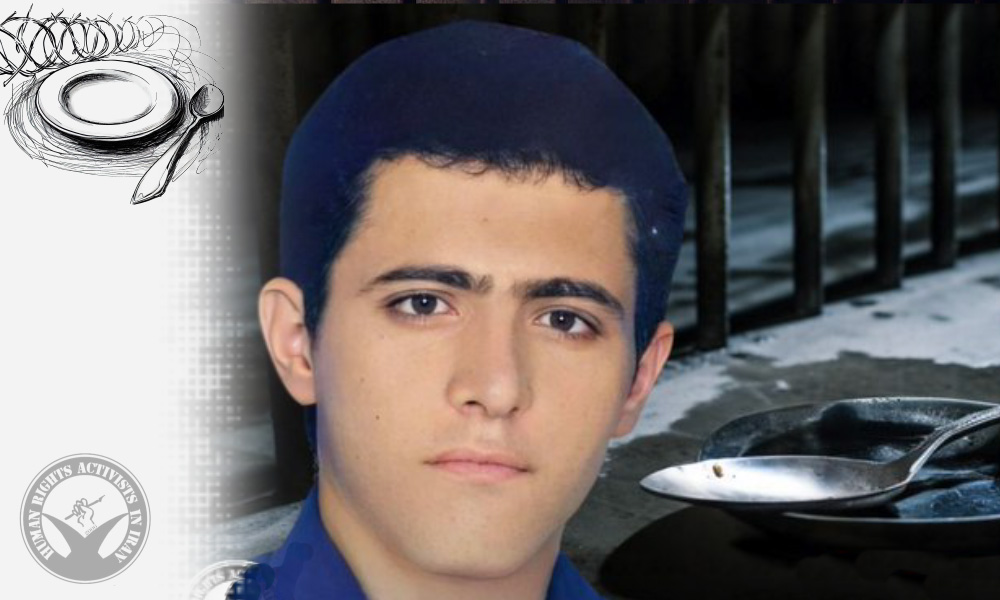
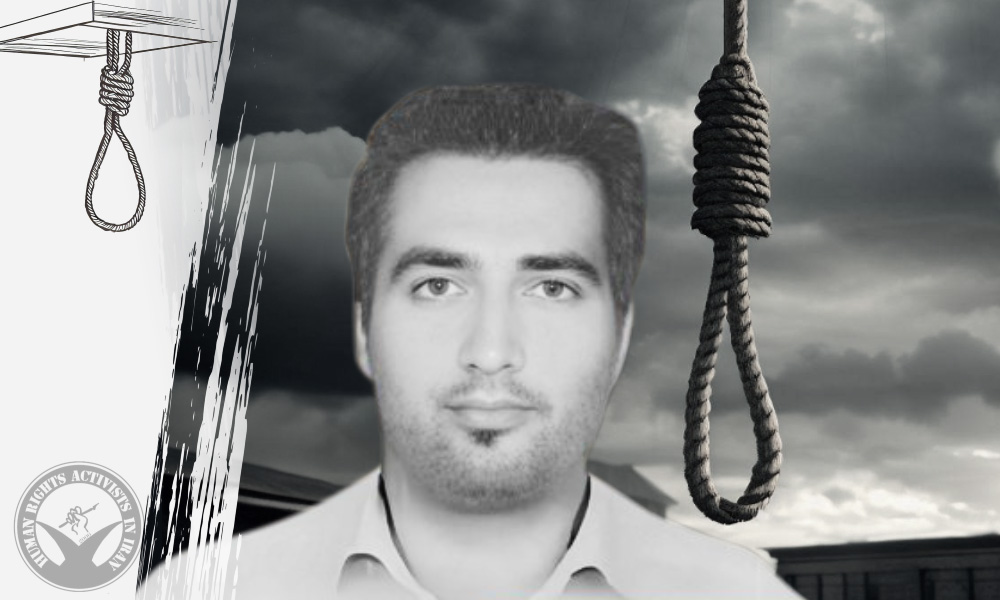
On Tuesday, August 6, Reza Rasaei, arrested during the nationwide protests of 2022, was executed in Dizelabad Prison, Kermanshah.

Mr. Rasaei’s execution took place at dawn today, Tuesday, August 6, in Dizelabad Prison, Kermanshah, without prior notice to his family or the opportunity for a final meeting with them.

Reza (Gholamreza) Rasaei, 34 years old, a follower of the Yarsan faith and a resident of Sahneh County, was sentenced to death by Branch 2 of the Criminal Court of Kermanshah in mid-October last year for the charge of “involvement in the intentional murder of Nader Birami, the head of the IRGC’s intelligence in Sahneh County.”

Following the confirmation of Reza Rasaei’s death sentence by the Seventeenth Branch of the Supreme Court, presided over by Judge Mohammad Barani, his case was referred to the Judgment Enforcement office on December 31, 2023.
A while ago, Branch 1 of the Supreme Court rejected the request for a retrial for this prisoner, calling it “lacking legal requirements.”

In addition to the capital punishment, Rasaei faces other charges, including non-fatal injury, threatening with a knife, and disturbing public order by causing unrest. Initially, he received additional penalties such as Diya (wergild), a year sentence, and 74 lashes.

The judge’s reliance on “forced confessions obtained from Rasaei during interrogation” played a significant role in his conviction and the imposition of the death penalty.

Rasaei was apprehended on November 24, 2022, by the police and subsequently detained in Sahneh County. Following the completion of the interrogation process, he was transferred to Dizel-Abad prison in Kermanshah.

Several other detainees of protests in Sahneh County on the November 18, 2022, also faced charges of murdering the head of the IRGC’s intelligence in this county. Seyed Masoum Razavi and (first name unknown) Beigi were among the other defendants in this case, with Masoum Razavi reportedly acquitted of the charges. The fate of the other defendant in this case remains unknown.

Varuzh Moradi Arrested by Ministry of Intelligence

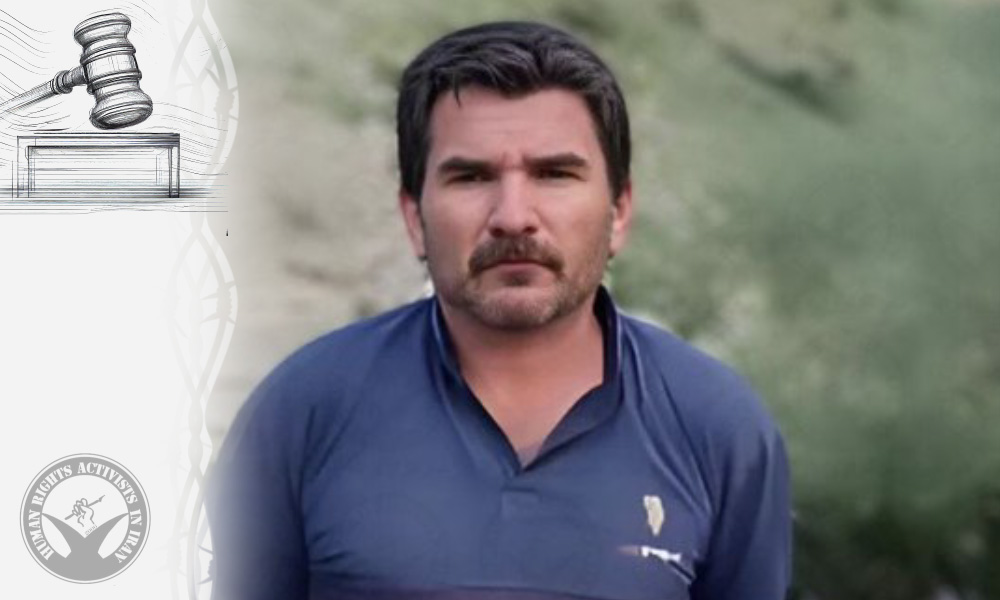
Varuzh (Edris) Moradi, a resident of Ravansar, was arrested and transferred to an unknown location on Sunday, August 4, following a summons to the Ministry of Intelligence Office of this county.

A source close to Moradi’s family confirmed the news to HRANA, stating: “Mr. Moradi was summoned to the Ministry of Intelligence Office of Ravansar County on Sunday, August 4. After appearing at this security institution, he was arrested.”

As of the time of this report, there is no information available on the reasons for the arrest, his whereabouts, or the charges against him.

Varuzh (Varouj) Moradi, a resident of Ravansar in Kermanshah province, has previously been arrested and faced judicial actions due to his activities.

Sixteen Prisoners Transferred to Solitary Confinement for Execution in Ghezel Hesar Prison, Karaj

On August 4th, sixteen prisoners in Ghezel Hesar Prison in Karaj, who had previously been sentenced to death for non-political crimes, were transferred to solitary confinement for the execution of their sentences.

This transfer is for the execution of their death sentences. Four of them had previously been sentenced to death for murder charges. Additionally, five of these prisoners are Afhghan national.

Further details, including the identities of these prisoners and the charges against the remaining tweleve prisoners, are being investigated by HRANA.

In 2023, the Department of Statistics and Publication of Human Rights Activists in Iran registered the execution of 767 individuals. Out of these, 7 were carried out in public. Among the executed individuals whose genders were identified, 21 were female. Additionally, 2 juvenile offenders, defined as individuals under the age of 18 at the time of their alleged crimes, were also executed.

Maryam Mehrabi Sentenced to Six Years in Prison and Additional Punishments

Branch 1 of the Revolutionary Court of Isfahan sentenced Maryam Mehrabi, a teacher residing in Isfahan, to six years in prison and additional punishments.

Based on a verdict recently issued by Branch 1 of the Isfahan Revolutionary Court, presided over by Mohammadreza Tavakoli, and delivered to Ms. Mehrabi yesterday, she has been sentenced to one year in prison for “propaganda against the regime” and five years for “inciting people to wage war and killing to undermine national security.” Additionally, she has been sentenced to two years of dismissal from service and a two-year travel ban as complementary punishments.

According to HRANA reports, Mehrabi has been denied access to a lawyer. Another part of her case, concerning the charge of “spreading false information”, is under review by Criminal Court 2 of Isfahan.

Mehrabi was arrested by security forces in Isfahan on June 18th. Recently, she went on a hunger strike in solitary confinement to protest her prolonged detention.

Mehrabi was previously arrested in March 2023 while pursuing her brother Mahmoud Mehrabi’s case. She was detained by security forces at the Mobarakeh County Prosecutor’s Office and transferred to Dolatabad Prison in Isfahan. She was released on bail three days later. Last September, she was sentenced by Branch 102 of the Criminal Court Two of Mobarakeh City to seventy-four lashes and three months in prison, which was later converted to a fine.

Maryam Mehrabi is a teacher and resident of Isfahan. She is the sister of political prisoner Mahmoud Mehrabi, who was sentenced to death in May this year by Branch 5 of the Isfahan Revolutionary Court for “spreading corruption on earth.” His appeal was filed with the Supreme Court in June.

Four Azerbaijani-Turk Activists Sentenced to Prison

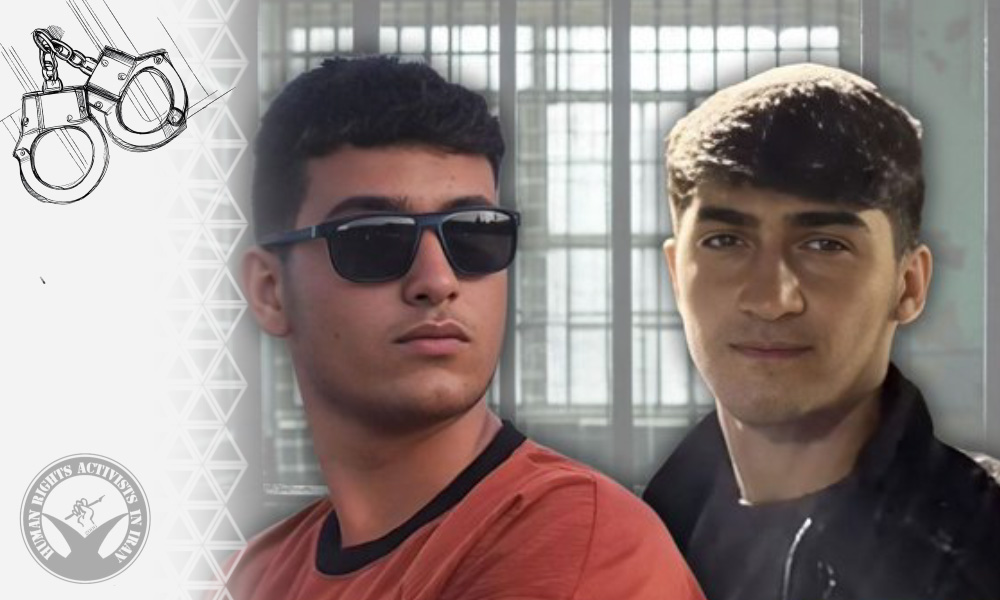
Ata Karimi, Gholam Gholizadeh, Sina Hassani, and Ali Azizi, Azerbaijani-Turk activists, have each been sentenced to two years in prison by the Revolutionary Court of Urmia.

Based on a verdict issued by Branch 3 of the Urmia Revolutionary Court and delivered to these activists on Wednesday, July 31st, each of these individuals has been sentenced to two years in prison for the charge of “membership in a group aiming to disrupt national security.”

A source close to one of the families confirmed this news to HRANA, stating: “Previously, this case had been dismissed twice, but following an appeal by Mr. Khodaei, the Deputy Prosecutor, the case was reopened, and after nine years, this verdict was issued.”

In June 2015, these four citizens were arrested by security forces in Urmia in connection with this case and were released after about a week.

Gholam Gholizadeh, Ali Azizi, and Sina Hassani have faced legal actions and convictions in recent years due to their activities.


Subscribe to Our Newsletter

Now is definitely not the time to stop reading!

Singer Zara Esmaeili Detained in Legal Uncertainty for Over Nine Days

Zara Esmaeili, a singer and resident of Karaj, has been detained for over nine days, with her legal status remaining uncertain. The lack of information about her condition has heightened the concerns of her family and friends.

A source close to her family confirmed this news to HRANA, stating: “Ms. Esmaeili was arrested by security forces at her private residence in Karaj on Friday, July 26th. We have no information about her fate and are extremely worried about Zara’s well-being.”

Zara (Zahra) Esmaeili, a 29-year-old resident of Karaj, has performed numerous street performances in various parts of Tehran, such as Ekbatan town and Ferdows Garden.

According to information obtained by HRANA, Ms. Esmaeili was subjected to violence and mistreatment by officers the day before her arrest while trying to prevent the arrest of a friend by Tehran’s security police.

So far, there is no information available regarding the reasons for her arrest, her whereabouts, or the charges against her.

Hooman Seydali Detained for over 19 Months in Legal Limbo

Hooman Seydali, arrested during the nationwide protests of 2022, has remained in an uncertain state in Sheiban Prison, Ahvaz, for over nineteen months.

Based on information received by HRANA, Mr. Seydali has been held in Ward 8 of Sheiban Prison, Ahvaz, for 592 days. Branch 2 of the Ahvaz Revolutionary Court has issued a hefty bail of fifty billion tomans for his temporary release, but his family’s inability to provide this amount has led to the continuation of his detention.

A source close to Seydali’s family confirmed this news to HRANA, stating, “Seydali has been charged with suspicion of membership in opposition groups.”

Hooman Seydali, 47 years old and a resident of Izeh, was arrested by security forces on December 20, 2022, during the nationwide protests and subsequently transferred to Sheiban Prison, Ahvaz.

Nasimeh Eslam-Zahi Detained for Over 11 Months in Evin Prison

Nasimeh Eslam-Zahi, a Sunni defendant facing security charges, remains in a state of uncertainty in the women’s ward of Evin Prison despite being detained for over eleven months.

Based on HRANA’s information, Ms. Eslam-Zahi and her husband have been held without trial for more than eleven months in Evin Prison. They were charged in August-September of 2023 in the prosecutor’s office with suspicion of “membership in the militant group ISIS,” but no court hearing has been held for them. Additionally, the couple has not had any in-person visits since their arrest.

A source close to the family of the couple confirmed this news to HRANA, saying, “About three months ago, Nasimeh gave birth to her second child in prison. Her first child, Aisha, who is about two years old and was with them at the time of their arrest, has been handed over to welfare services and is being cared for there. Despite requests, Aisha has not been returned to Nasimeh or her family.”

In August-September last year, Ms. Eslam-Zahi, along with her husband and child, was arrested in Malard and transferred to Zahedan for interrogation. Security forces reported that they were in possession of weapons at the time of their arrest.

Ms. Eslam-Zahi and her husband were charged in the Sistan and Baluchestan Province Prosecutor’s Office in September 2023 and then transferred to Evin Prison.

Eslam-Zahi, approximately 40 years old, spent three months in solitary confinement in the Ministry of Intelligence’s detention facility known as Ward 209 of Evin Prison and another three months in shared cells in the same detention facility. Finally, on March 4, 2024, she was transferred to the women’s ward of this prison.

Previously, an informed source without knowledge of the identity of Ms. Eslam-Zahi’s husband told HRANA, “Nasimeh’s husband is originally from the Kurdish provinces and is being held in one of the shared rooms in Ward 209 of Evin Prison.”

Two Prisoners Executed in Mashhad Prison

The death sentences of two prisoners, previously convicted of murder in separate cases, were carried out in Mashhad Prison, as reported by Iran Human Rights Organization.

Their identities have been reported as Ramazan Gholamian, 32, and Musa Najjar, 38, both residents of Mashhad.

The report states that Najjar was convicted and sentenced to death for killing a motorcyclist with a knife during a fight in Mashhad, in July 2021. Additionally, Gholamian’s death sentence was issued approximately two years ago for premeditated murder.

No official sources or domestic media outlets within the country have provided coverage of these executions at the time of writing.
In 2023, the Department of Statistics and Publication of Human Rights Activists in Iran registered the execution of 767 individuals. Out of these, 7 were carried out in public. Among the executed individuals whose genders were identified, 21 were female. Additionally, 2 juvenile offenders, defined as individuals under the age of 18 at the time of their alleged crimes, were also executed.

Monthly Report – July 2024: Human Rights Situation in Iran

HRANA – HRA’s Statistics Department has released its monthly report for July 2024, highlighting ongoing human rights violations across Iran. This month, 43 individuals were executed, comprising 36 men and 2 women, with only a few executions officially reported. Alongside these executions, 14 individuals were sentenced to death, underscoring a persistent use of capital punishment in Iran, often for offenses that do not meet international standards, notably drug-related crimes. This practice starkly contradicts the right to life as articulated in the International Covenant on Civil and Political Rights (ICCPR). 

Freedom of expression remains severely curtailed, with 144 individuals arrested in relation to this issue during July. Among them was Iranian singer Shervin Hajipour, who was summoned to serve his prison sentence for his song “Brai,” which led to charges of “propaganda against the regime” and “inciting people to disturbances.” Additionally, journalists and activists such as Salahuddin Khalaj Asadi faced harsh penalties, with Asadi receiving a sentence of 40 lashes for insulting a government official. The Court of Appeals upheld a two-year prison sentence and a fifteen million toman fine for journalist Dina Ghalibaf.

Prison conditions remain dire and continue to be a place of serious human rights violations, with reports of 25 cases of medical neglect and significant delays in judicial processes affecting 13 cases, where no information about the person has been available after their arrest. Political prisoners like Meisham Dehbanzadeh and Gholamhossein Kolbi faced severe mistreatment, including beatings and medical neglect. Mahnaz Desha, a political prisoner in Evin prison, attempted suicide in protest against the death sentence of another political prisoner and was returned to prison shortly after hospital treatment.

Women’s rights violations persist . This month, two women were executed, and two others were sentenced to death. Women continue to face harassment and arrests for improper hijab wear; in July, one woman was arrested for this reason. Additionally, there was an honor killing, and another woman fell victim to an acid attack in Haftkel.

Workers in Iran endure hazardous conditions, with 24 fatalities and 60 injuries recorded from work-related accidents in July. Additionally, over 3,988 workers reported unpaid wages, exacerbating economic hardships in the face of unsafe working environments. In one incident, an 18-year-old teenager named Habib Ghafran died due to indiscriminate shooting by police forces in Zabul. Five workers, including an emergency rescuer, faced accidents due to unsafe working conditions, resulting in three deaths and two injuries. On July 18th, military forces shot at Kolbers in Nowsud, resulting in one death and five injuries.

This report underscores ongoing human rights abuses in Iran, including executions without transparency, suppression of dissent, dire prison conditions, systematic violations of women’s rights, and unsafe labor practices, warranting urgent international attention and action.


Executions

This month in Iran, the execution of 43 individuals took place, comprising 36 men and 2 women. A total of 14 individuals were sentenced to death. Iran persists in executing individuals for offenses falling short of the standards outlined in the International Covenant on Civil and Political Rights. Notably, there remains a consistent trend of individuals being executed for drug-related crimes, a practice in clear contravention of the right to life as stipulated by the ICCPR. This month, 26 people were executed for drug-related offenses.

Kamran Sheikha, a Sunni prisoner, was executed in Urmia prison after more than fourteen years of imprisonment. He was sentenced to death along with six other Sunni prisoners and was the last to be hanged in this case.

The case began in October 2007 with the killing of teacher Abdul Rahim Tina by unknown assailants. Sheikha and the six others were arrested and sentenced to death by Branch 28 of Tehran Revolutionary Court, a sentence later upheld by Branch 41 of the Supreme Court.

Despite an initial overturning by the Supreme Court, the death sentences were reissued by Judge Abolqasem Salavati of Branch 15 of Tehran Revolutionary Court and ultimately confirmed by the Supreme Court on February 14, 2018.

Kamran Sheikha was transferred from Mahabad prison to Urmia prison the day before his execution. Other prisoners in the same case, Qasim Abasteh, Ayoub Karimi, Dawood Abdulahi, and Farhad Salimi, were executed in Qazalhasar prison in Karaj on various dates. Anwar Khezri and Khosro Besharat were also executed in Urmia prison in May of this year.

This month, Sharifeh Mohammadi was sentenced to death by Branch 1 of the Revolutionary Court of Rasht on charges of “Baghi” (armed rebellion) due to her alleged membership in an opposition group. Her court session, held on June 8th, addressed accusations of propaganda against the regime, actions against national security, and “Baghi” through her involvement with an opposition group. The Ministry of Intelligence apprehended Mohammadi at her Rasht residence on December 5, 2023. She was transferred from Lakan Prison to Sanandaj Prison on December 30, 2023, and later returned to Lakan Prison.

Similarly, this month, Pakhshan Azizi, a political detainee held in Evin Prison, was sentenced to death by Judge Iman Afshari of Branch 26 of the Tehran Revolutionary Court. Azizi faced multiple charges, including “membership in anti-regime groups.” A source close to the labor activist’s family told HRANA, “Sharifeh was a member of the Association of Labor Organizations until 2013, which has no connection to the Komala group she is accused of being a member of, leading to the charge of ‘Baghi’.”


Freedom of Thought and Expression 

Iran continues to crack down on anyone who protests or criticizes the regime, persistently violating the right to freedom of expression and thought. This month alone, 144 individuals have been arrested related to freedom of expression, 32 trials, and 2 cases of assault and battery by police. Iran also continues to sentence individuals based on their posts on social media platforms, this month Hamidreza Shirzadi, was sentenced to one year in prison on charges of “blasphemy, his posts on Instagram were used against him. 

A spokesman for the judiciary announced the arrest of 113 people, the summoning to the courts of 100 people, for charges related to the presidential elections. Additionally, 4500 instagram pages have been identified for “trying to encourage people to boycott the elections and create despair and despair in the society”. Lastly, also two cases were filed against Telegram channels related to the presidential election. Additionally, the spokesperson of the Judiciary stated that 30 individuals were summoned to the Prosecutor General’s Office for what he called “promoting rumors in cyberspace”.

Shervin Hajipour, an Iranian singer, has been summoned to serve his prison sentence. His sentence of three years and eight months was confirmed by the appeals court. During the 2022 nationwide protests, Hajipour was arrested for his song “Brai” and was later charged with “propaganda against the regime” and “inciting people to disturbances.” Although his travel ban was lifted, he must present himself to prison soon. Additionally, he faces a two-year travel ban and other penalties. Hajipour’s song “For” won the “Song for Social Change” award at the 55th Grammy Awards.

Additionally, a charge was filed against “Jehan Sanat” newspaper”publishing material regarding the results of the presidential election. 

Salahuddin Khalaj Asadi, a journalist, was sentenced to 40 lashes by the Court of Appeal of Central Province. This sentence followed a complaint by Massoud Piraysh, the Director General of the Sports and Youth Department of Central Province, accusing Asadi of insulting a government official. 

While Asadi was acquitted of personal insult, defamation, and publication of falsehoods, the court upheld the lashing sentence for the charge of insulting a government official. Despite international prohibitions against inhumane and degrading punishments, including execution, Iran continues to use such punitive measures.

The Court of Appeals of Tehran Province has upheld a two-year prison sentence and a fifteen million toman fine for journalist and Shahid Beheshti University student Dina Ghalibaf, for “spreading falsehoods.” Both penalties are suspended for five years, requiring her to avoid political and social activists during this period. Ghalibaf, arrested on April 16 and later transferred to Evin Prison, was reportedly abused during detention. She was released on bail on May 1. At 23, Ghalibaf has worked with ISNA and EghtesadOnline and faced disciplinary action for participating in a university protest in 2023.

On 24 July, 10 individuals were arrested in Kamyaran and transferred to an undisclosed location. The arrest took place during the funeral of Esmaeil Karimi, a forest ranger who was fatally injured while extinguishing the fire in Kamyaran.


Prison Conditions

In July, there were 25 cases of prisoners lacking medical care and there were 13 cases where no information about the person has been available after their arrest, leaving families in the dark about the prisoners’ fates due to a lack of contact. Meanwhile, 13 political prisoners have been granted medical leave.  Furthermore, 18 prisoners have been transferred to solitary confinement, 6 prisoners have had no access to a lawyer, and 4 have gone on hunger strikes in protest of their conditions.

Meisham Dehbanzadeh, a political prisoner in Qazalhasar prison, Karaj, has suffered irreversible damage to the nerves in his left eye after being beaten by prison guards last year. Following a conflict in the 5th Division of the Greater Tehran Prison in June 2022, six guards beat him on the head and handcuffed him to a bar for a day. He was recently transferred to Farabi Hospital due to vision loss and headaches, where doctors confirmed his condition is untreatable. Dehbanzadeh, sentenced to six years in prison and 74 lashes for property destruction and other charges, faces daily difficulties due to his vision impairment, causing concern among his family. He was previously released under an amnesty decree in June 2023 but remains imprisoned following additional sentences by the Tehran Revolutionary Court.

Gholamhossein Kolbi, a political prisoner in Shiban Ahvaz prison, is serving the 24th year of his life sentence. Despite suffering from hernia and ear infections, he has been deprived of proper medical care and hospitalization. Kolbi, 66, has been limited to basic examinations and pills from the prison infirmary, though he requires specialized treatment. He was arrested on January 19, 2000, with Saeed Masouri for alleged membership in the People’s Mojahedin Organization of Iran, Kolbi was initially sentenced to death in 2001 for moharebeh, later commuted to life imprisonment. He spent 14 months in solitary confinement and was transferred between various prisons before landing in Shiban Prison.

Mahnaz Desha, a political prisoner in Evin prison, attempted suicide by swallowing pills on the evening of Tuesday, August 2. She was taken to Luqman Hospital and returned to Evin Prison shortly after. Desha’s suicide attempt was in protest against the death sentence of another political prisoner, Azizi. Desha was arrested on November 13, 2023, in Tehran and transferred to Evin Prison on December 3, 2023. In December 2023, she was sentenced to three years and eight months for conspiracy and eight months for propaganda against the regime. Her sentence was later reduced to two years and nine months. Desha has a history of judicial and security issues.

In conclusion, the treatment of prisoners in Iran remains a critical human rights concern, with ongoing reports of medical neglect, violence, lack of legal representation, and punitive actions against political dissent.


Women 

This month, 2 women were executed, and 2 others were sentenced to death. Women continue to face harassment and arrests for not wearing hijab properly. In July, 1 woman was arrested for improper

 hijab wear. Additionally, there was an honor killing, and another woman in Haftkel fell victim to an acid attack.

A video showing teenage girls without hijabs participating in the mourning processions of the third Shiite Imam was circulated on social networks. Following the video’s release, the police chief of Alborz province announced that these girls have been summoned to the police.

Hamid Hedavand, the police chief, stated that the video caused hurt feelings among mourners and prompted police action. He labeled the girls as violators and confirmed that all identified individuals have been summoned by the Alborz province police.

Sepideh Rashno, a writer, student, and anti-hijab protester, has been summoned to Evin Prison on July 27 to serve her sentence. Despite attempts to delay her sentence, the Supreme Court converted another prison sentence to a fine, but the previous suspended sentence will be enforced.

In July 2022, a video showed Rashnu confronting a religious vigilante on a bus, leading to her arrest and a suspended three-years, seven-months prison sentence in December 2022. In 2023, she faced additional charges, resulting in a reduced sentence, which was converted to a fine. Rashnu, about 30, is a painting student at Alzahra University and was suspended for not complying with mandatory hijab rules.


Workers 

Workers in Iran face ongoing challenges and hazardous workplaces. In a tragic turn of events, this month saw 24 fatalities resulting from work-related accidents, with an additional 60 workers left injured. Moreover, 3988  workers reported unpaid wages, while 3418 others were denied their insurance rights. 

On Friday, July 15th, an 18-year-old teenager named Habib Ghafran (Taymuri) from Zabul died due to indiscriminate shooting by police forces. The anti-narcotics forces fired at a car without warning, seriously injuring the driver with a bullet to the head. Ghafran, who worked at his father’s supermarket on Zabul Army Blvd, died after 24 hours in the hospital.

Five workers, including an emergency rescuer, faced accidents due to unsafe working conditions in Kerman, Dezful, Qazvin, and Isfahan, resulting in three deaths and two injuries.

  • In Kerman, a 30-year-old worker died after falling into a well while digging on a cattle farm near Akhtiar Abad. Rescuers retrieved his body after two to three hours.
  • In Dezful, a 38-year-old emergency rescuer, Ebrahim Harisi, drowned in the Dez River. His body was found by fire department divers.
  • In Isfahan, a worker fell into a canal during a water transfer project and was injured when soil fell on his head.
  • In Qazvin, two elevator repairmen experienced an electric shock while fixing a broken elevator, resulting in one death and one injury.

On Monday, July 18th, military forces shot at Kolbers in the border areas of Nowsud, resulting in one death and five injuries. Ayoub Mohammadi, a married father from Kogah village, Salas Babajani county, and resident of Javanrud, was killed. The injured Kolbers were taken to Quds Hospital in Paveh for treatment. The military has not yet handed over Mohammadi’s body to his family. The Kolbar work is a hazardous and difficult job pursued due to lack of opportunities, often leading to fatalities or injuries from natural hazards or shootings by border guards. 


International News Update:

The campaign to defend labor activist Sharifeh Mohammadi is gaining strong international support. Recently, the French trade union collective, comprising five major unions with hundreds of thousands of workers, and the Confederation of Danish Trade Unions condemned her death sentence and demanded her immediate release. They emphasized that fighting for workers’ rights should never be a crime and criticized the Iranian regime’s repressive actions.

Various other international organizations, including Amnesty International, the Swedish-Iran trade union platform, and unions from Spain, Germany, and Australia, have also supported the campaign. The campaign “Free Them Now” has called for global support to pressure the International Labour Organization (ILO) to expel Iran from the organization and to secure Mohammadi’s release. The collective efforts aim to amplify the voice of Mohammadi and her family worldwide and ensure her immediate freedom.

UN Special Rapporteur, Dr. Javaid Rehman, emphasized the need for an international mechanism to investigate and prosecute those responsible for “atrocity crimes” in Iran, including the extrajudicial killing of thousands of arbitrarily arrested prisoners during the 1980s crackdown on political dissent.

Dr. Rehman, whose mandate ends on July 31 and is now being taken over by Mai Sato, stated that the summary, arbitrary, and extrajudicial executions during 1981-1982 and in 1988 amounted to crimes against humanity, including murder, extermination, and genocide. The victims included women, some reportedly raped before execution, and many children. Crimes against humanity also included imprisonment, torture, and enforced disappearances.

Dr. Rehman highlighted that the Bahá’ís were targeted with genocidal intent, and persecution of religious, ethnic, and linguistic minorities and political opponents continued with impunity since the Islamic Republic’s establishment in 1979. The Special Rapporteur’s final findings call for an investigative and accountability mechanism to conduct impartial investigations, preserve evidence, and aim for criminal prosecutions under international law. Rehman stressed that the ongoing concealment of the fate of political opponents and the whereabouts of their remains amounts to the crime against humanity of enforced disappearance.

Dr. Rehman noted the failure to ensure justice and accountability in Iran and its impact on the families of victims and the current human rights situation. Despite the Iranian government’s denial of these “atrocity crimes,” perpetrators have not been brought to justice. Rehman reiterated that there should be no impunity for gross human rights violations, regardless of when they were committed. He called for an independent international investigative and accountability mechanism for Iran to ensure that the regime and its leaders face consequences for their crimes against humanity and genocide.


Download Full Pdf: Monthly Report July