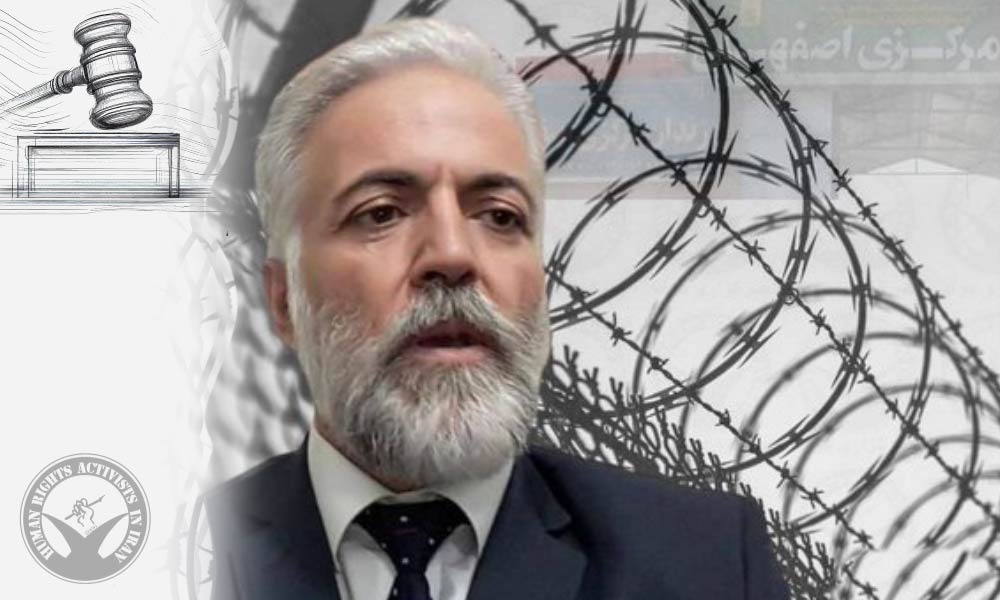
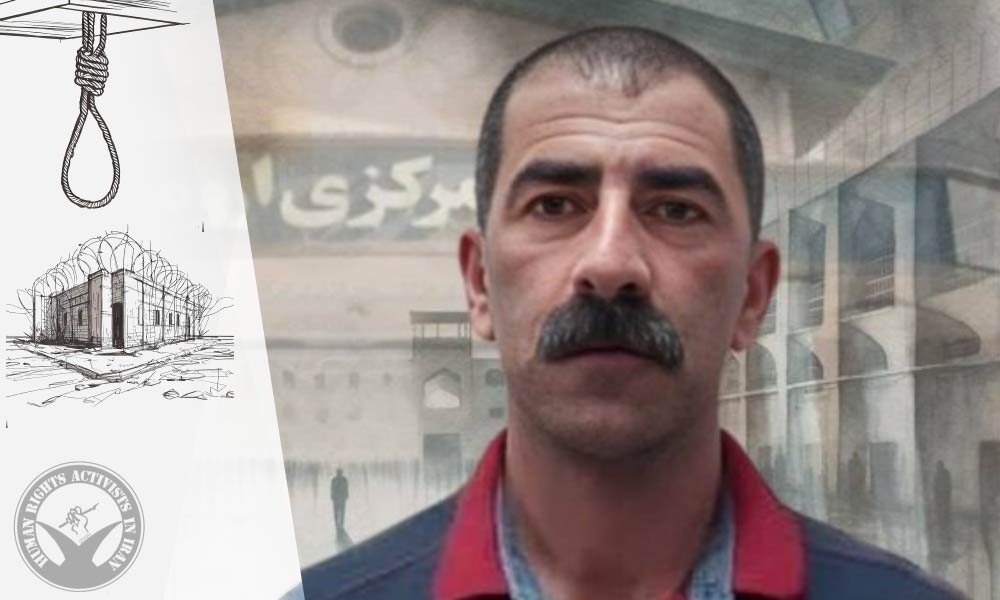
Civil Rights Activist Mohammad Nourizad Faces New Legal Case During Imprisonment

Imprisoned civil rights activist Mohammad Nourizad has been brought to trial for a new legal case while serving his existing sentence. The Tehran Revolutionary Court conducted a session on June 14, 2023, to address the charges against him.

According to Mohammad Hossein Aghasi, Nourizad’s lawyer, his client is facing charges of “assembly and collusion against national security, propaganda against the regime, and destruction of property within the prison head’s office.”

The initial phase of Nourizad’s legal case began on August 11, 2019, when he was arrested by security forces for his involvement in issuing an open letter with 13 other civil rights activists, calling for the Supreme Leader of Iran to step down. In this first case, he was sentenced to 15 years in prison, three years of exile in Izeh, and a two-year travel ban. While the prison sentence was upheld on appeal, the duration of exile and travel ban were reduced to two years.

In late April 2020, Nourizad received an additional one-year imprisonment for expressing support towards Baha’i citizens of Eyvanki in Semnan Province.

Regarding the second part of his legal case, the Mashhad Criminal Court sentenced Nourizad to 8 months in prison and 74 lashes, with exile to Tabas, for “disturbance of public order,” and an additional 74 lashes for “spreading falsehood.” This verdict was also upheld on appeal.

On November 17, 2021, Nourizad was released from Evin Prison based on an early release order. However, on January 23, 2022, he was summoned and re-incarcerated in Evin Prison to complete his remaining sentence.

Nourizad’s history includes prior arrests and convictions related to his peaceful activism. He is a renowned filmmaker, writer, director, and journalist from Iran. While previously known as an outspoken religious journalist, he has become an active critic of the Islamic Republic in recent years.

Update on Bahai Citizen Payam Vali’s Condition in Ghezel Hesar Prison

Payam Vali, a Baha’i citizen, is currently serving a six-year sentence in Ghezel Hesar Prison, located in Karaj. He has been denied access to make a phone call to his family, as ordered by prison officials.

According to a reliable source who spoke to HRANA, Vali’s phone card has been blocked. He is also prohibitd from purchasing any item from the prison store. The source revealed that this prohibition was imposed after Vali gave a message via phone addressing the speakers of the Iranian Parliament.

In addition, another source close to Vali’s family informed HRANA that since late May, he has only had one visitation with his family. Furthermore, other prisoners have been threatened to refrain from providing Vali with their phone cards.

On September 24, 2022, security forces arrested Vali at his residence in Karaj, subsequently conducting a search of his house and detaining him in Rajai Shahr Prison. He was later relocated to Ghezel Hesar prison.

On May 10, 2023, the Alborz Court of Appeals sentenced Vali to six years for “collaboration with adversary countries,” three years and one month for “inciting people to commit violence,” and eight months for “propaganda against the regime.” According to Article 134 of the Islamic Penal Code, the first charge carries an enforceable prison term of six years. It is worth noting that Vali had initially been sentenced in February 2023 to ten, five, and one-year terms for the respective charges mentioned above.

According to HRANA annual report, from the full human rights reports regarding the violation of religious minorities’ rights, 64.63% belonged to the violation of the rights of Baha’is.

The deprivation of the freedom to practice their religion is a breach of Article 18 of the Universal Declaration of Human Rights and Article 18 of the International Covenant on Civil and Political Rights. The United Nations covenant holds that every person has the right to freedom of religion, freedom of converting religion, as well as freedom of expression, individually or collectively; openly or secretly.

Civil Rights Activist Mohammad Abolhassani Brutally Assaulted by Prison Guards

On June 12, 2023, Mohammad Abolhassani, a civil rights activist, was subjected to a violent attack by prison guards at Choobindar Prison in Qazvin Province. The assault occurred after Abolhassani voiced his concerns about the deplorable conditions within the prison.

An informed source, speaking to HRANA, disclosed that Abolhassani was confronted by a prison officer, leading to a physical altercation involving the deputy head of the prison and two other guards. The incident resulted in Abolhassani losing consciousness, after which he was taken to the prison infirmary. He later regained consciousness.

Presently serving his sentence at Choobindar Prison in Qazvin, Abolhassani is housed among inmates convicted of violent crimes, contrary to prison regulations. Moreover, he has been subjected to limitations when making phone calls, including the mandatory presence of prison guards during these conversations.

In January 2021, Abolhassani while serving his sentence for a previous legal case, was sentenced to 15 months in prison by the Tehran Revolutionary Court for “propaganda against the regime.” In addition to the prison term, he was assigned four hours of penal labor per day for four months. This ruling was subsequently upheld on appeal.

On January 1, 2022, Abolhassani was transferred to Evin Prison to commence his sentence.
In October 2022, he found himself facing further legal actions, resulting in an additional four-year imprisonment term.
On February 6, 2023, he was violently relocated from Evin Prison to Choobindar Prison in Qazvin.

Report on Conditions of Female Prisoners at Ilam Prison

The women’s ward at Ilam Prison faces numerous challenges, including overcrowding, inadequate facilities, substandard food quality, cohabitation with violent offenders, restricted communication and family visits.

According to a reliable source interviewed by HRANA, the presence of violent crime convicts in the same ward poses difficulties for political prisoners and those detained in connection with the 2022 nationwide protests. Other issues highlighted include limitations on phone calls and family visitations, intrusive surveillance, compulsory participation in religious ceremonies, neglect of prisoners’ concerns, and verbal abuse by male prison guards towards female inmates.

Overcrowding remains a significant problem, forcing many inmates to sleep on the floor. The outdoor area is also notably small. In case of illness, access to the prison infirmary and necessary medication is severely restricted, with prison officials often dismissing requests for medical care as feigned ailments.

A family member of one prisoner expressed concern, stating that prisoners who refuse to participate in religious ceremonies are subjected to harassment and threats, often with the support of religious extremist inmates. Furthermore, the quality of prison food is poor, and the prison store fails to provide essential items, raising concerns about the health conditions of the inmates.


Union Activist Davoud Razavi to Five Years in Prison

Davoud Razavi, a union activist and member of the Tehran bus workers’ syndicate, has recently been handed a five-year prison sentence along with additional penalties by the Tehran Revolutionary Court.

According to HRANA, the news agency for Human Rights Activists, the Tehran bus workers’ syndicate reported on June 7 that Razavi has been convicted of “assembly and collusion against national security,” resulting in a five-year prison term. Additionally, he has been banned from engaging in social activities online and participating in political groups for a duration of two years. Presently, Razavi is being held in Evin prison.

During the court proceedings, the prosecution highlighted various activities undertaken by Razavi, including his membership in the Tehran bus workers’ syndicate, involvement in protest gatherings, participation in union organizing, attendance at the ILO summit, and association with other workers’ rights activists. These activities were cited as evidence to support the aforementioned charges.

Razavi was arrested on September 27, 2023, and initially confined to Ward 209 of Evin Prison. Subsequently, on December 18, he was transferred to the Great Tehran Penitentiary before being relocated back to Evin Prison on April 9, 2023.

It’s worth noting that Razavi has a history of prior arrests and convictions related to his activism. In 2019, he received a five-year suspended prison sentence.

Subscribe to Our Newsletter

Now is definitely not the time to stop reading!

Update on Iranian-German Nahid Taghavi’s Condition in Evin Prison

HRANA, Human Rights Activists News Agency – Nahid Taghavi, an Iranian-German citizen, is currently serving her sentence in Evin Prison, where her health condition continues to deteriorate. She is being denied access to essential medical care despite her urgent needs.

Renowned human rights activist Narges Mohammadi, who has had the opportunity to observe Taghavi’s condition, expressed her concerns, saying, “This is the second time I have seen 68-year-old Mrs Taghavi in prison. The pain is evident on her face. She rarely leaves her bed, except to visit the prison infirmary to receive a strong pain reliever injection.”
On October 16, 2020, security forces arrested Taghavi at her residence in Tehran, subsequently subjecting her to solitary confinement in IRGC’s Ward 2A of Evin Prison. After enduring five long months in isolation, she was eventually transferred to the Women’s Ward within Evin Prison. Out of her 220 days of incarceration, she has spent a staggering 200 days in solitary confinement.

Since her arrest, she has undergone eighty interrogations, totalling nearly one thousand hours of questioning.
Ultimately, the Tehran Revolutionary Court, under the jurisdiction of Judge Iman Afshari, sentenced her to ten years and eight months in prison on charges of “accomplice in running illegal groups and propaganda against the regime.”

Despite suffering from severe spinal injuries and carpal tunnel syndrome, Taghavi has consistently been denied adequate medical care and the ability to make phone calls to her family, further exacerbating her already dire situation.

Maryam Jalal Hosseini and Fatemeh Tadrisi Go on Hunger Strike, Demanding Improved Prison Conditions

HRANA, Human Rights Activists News Agency- Maryam Jalal Hosseini and Fatemeh (Mojgan) Tadrisi, who have endured more than 24 days of detention in Qarchak Prison, have resorted to a hunger strike in protest against the dismal conditions they face behind bars.

According to an informed source, these women are currently confined in Ward 5 of Qarchak Prison, located in Varamin. On Sunday, May 28, they commenced the hunger strike to draw attention to the inadequate conditions within the prison and the prison officials’ refusal to transfer them to Evin Prison.

Jalal Hosseini was apprehended by security forces during a teachers’ protest on May 9, 2023, while Tadrisi was arrested in Baharestan Square in Tehran on the same day. It is important to note that Tadrisi had previously been arrested twice during the 2022 nationwide protests, spending one month in Kachooie Prison and some time in Evin Prison.

The specific allegations against these women remain unknown.

Three Political Prisoners Beaten by Prison Officials in Great Tehran Penitentiary

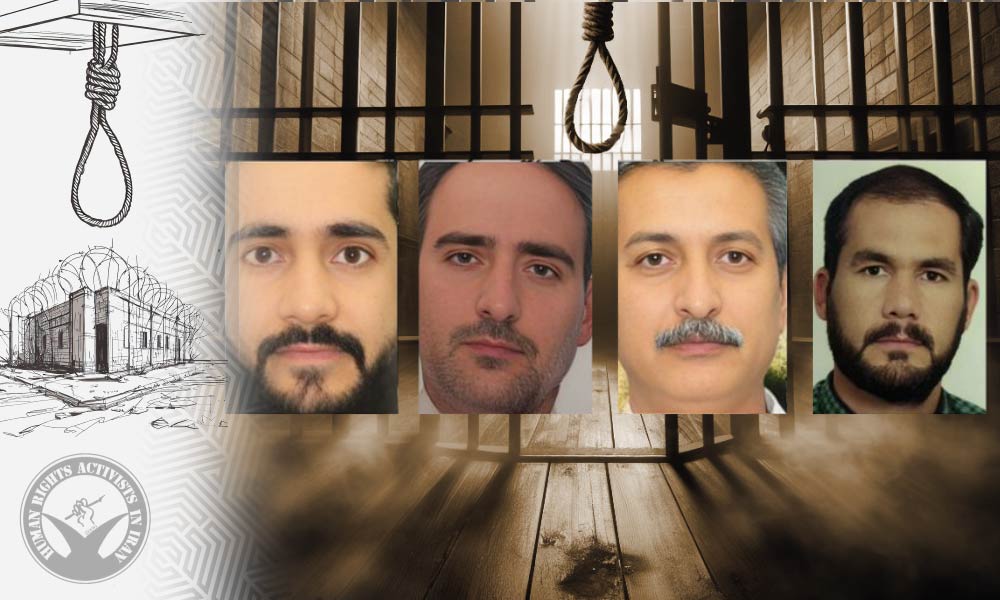
On May 25, 2023, political prisoners Meysam Dehbanzadeh, Reza Nowrouzi and Majid Roshan-Nejad were beaten by prison officers at Great Tehran Penitentiary.

On May 25, 2023, Meysam Dehbanzadeh, Reza Nowrouzi, and Majid Roshan-Nejad, political prisoners at Great Tehran Penitentiary, were subjected to a violent beating by prison officials.

Their legal representative, Erfan Karam Veisi, reported, “Yesterday, at approximately 11 am, my clients were assaulted by six prison guards in Ward Type 5. Dehbanzadeh endured repeated strikes from batons on his head and body. He was then shackled to a bar for an entire day. Despite his injuries, the prison infirmary only provided him with a pill and refused proper medical attention. Currently, he is held in another ward.

On May 3, 2023, they were transferred from Rajai Shahr Prison to Great Tehran Penitentiary. These prisoners had previously faced an attack from a violent crime prisoner on May 10, 2023.

Nowrouzi is presently serving a five-year sentence and received an additional punishment of 74 lashes and a fine in August 2022, for “disturbing prison order.”

Bahai Citizen Payam Vali Sentenced to Nine Years and Nine Months in Prison

Bahai citizen Payam Vali has been sentenced to nine years and nine months in prison by the Alborz Court of Appeals, with six years to be served. Previously, he had received a 16-year prison sentence.

The verdict, issued on May 10, 2023, states that Vali was given six years for “collaboration with adversary countries,” three years and one month for “inciting people to commit violence,” and eight months for “propaganda against the regime.” The first count carries an enforceable six-year prison term under Article 134 of the Islamic Penal Code.
Initially, in February 2023, Vali had been sentenced to ten, five, and one-year terms for the aforementioned charges, respectively.

On September 24, 2022, security forces arrested Vali at his house in Karaj, searched the house, and detained him in Rajai Shahr Prison.

According to HRANA annual report, from the full human rights reports regarding the violation of religious minorities’ rights, 64.63% belonged to the violation of the rights of Baha’is.

According to unofficial sources, it is estimated that more than 300,000 Baha’is live in Iran, but the Iranian Constitution recognizes only Islam as the official religion, in addition to Christianity, Judaism, and Zoroastrianism. Bahai faith is not considered legitimate by the authorities, and the rights of Baha’is in Iran have been systematically violated for years.

Freedom of religion is a breach of Article 18 of the Universal Declaration of Human Rights and Article 18 of the International Covenant on Civil and Political Rights. The United Nations Covenant holds that every person has the right to practice religion freely, freedom of converting to a religion, as well as freedom of expression, individually or collectively; openly or secretly.


Update on Health Condition of Political Prisoner Hamzeh Savari in Rajai Shahr Prison

HRANA, Human Rights Activists News Agency- Hamzeh Savari Laftah, a political prisoner serving a life sentence in Karaj’s Rajai Shahr Prison, continues to face health challenges as he battles lung disease while being denied adequate medical care.

According to a reliable source interviewed by HRANA, SSavari has not received the necessary medical attention for his lung disease during his imprisonment.

The source added, “Last year, prison officials denied his request for temporary release to attend his mother’s funeral.”

Arrested at the age of 16 on September 2, 2005, Savari was initially sentenced to death by the Ahvaz Revolutionary Court on charges of “spreading corruption on earth, enmity against God (Moharebeh), and acting against national security.” However, the sentence was later commuted to life imprisonment.

Throughout his time in prison, Savari has been coping with various health issues, including knee lumps, lumbar disc problems, spinal issues, and varicocele.