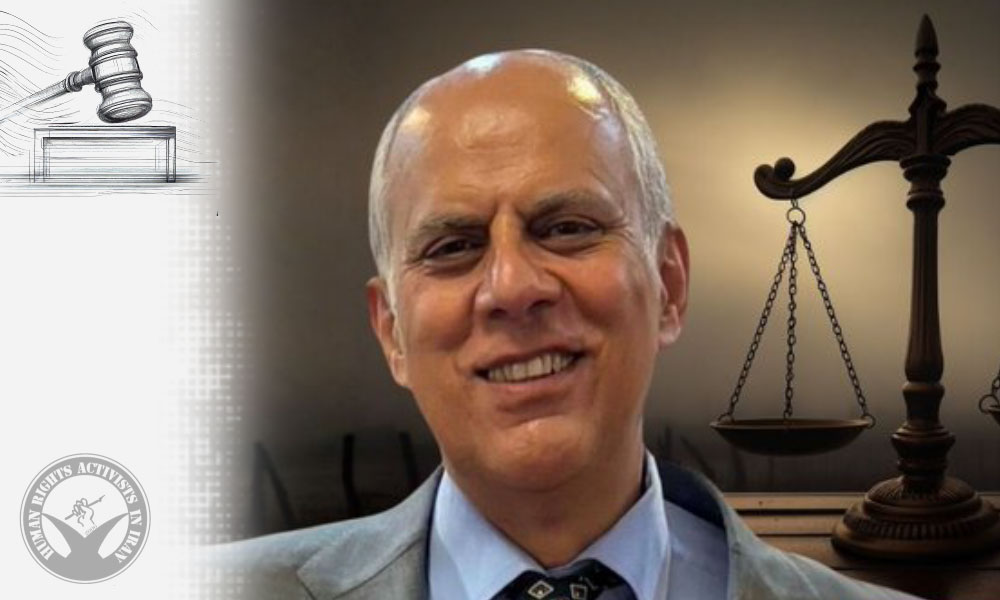
Baha’i Citizen Arman Nikaein Arrested in Shiraz

HRANA News Agency – On Monday, June 23, Arman Nikaein, a Baha’i citizen, was arrested in Shiraz and taken to an undisclosed location.

A source close to Nikaein’s family told HRANA that around 10 IRGC intelligence agents raided the Momtazian family home in Shiraz on Monday night. During the operation, agents searched the property, confiscated electronic devices from those present, and arrested Nikaein—who is the family’s son-in-law—without presenting a court warrant.

The source added that Mr. Nikaein’s mother suffered a nervous breakdown during the raid and was transported to a hospital by ambulance due to the severity of her condition.

As of this report, the reasons for his arrest, the charges against him, and his whereabouts remain unknown.

Arman Nikaein, who resides in Qeshm, is a Baha’i composer and music instructor.

Iman Rahmat Panah, Baha’i Citizen, Arrested in Shiraz

HRANA News Agency – On Sunday, June 22, Iman Rahmat Panah, a Baha’i citizen residing in Shiraz, was arrested by security forces and transferred to The Ministry of Intelligence’s detention facility in the city, known as “Plaque 100.”

Based on information received by HRANA, Mr. Rahmat Panah was arrested at 11 p.m. on Sunday, June 22, by eight security agents at his private residence, in the presence of his children. The agents also searched the premises and confiscated several personal belongings, including mobile phones, a laptop, and his Baha’i books.

A source close to the Rahmat Panah family confirmed the news to HRANA, stating: “Following repeated inquiries by the family to judicial and security authorities, it was eventually confirmed that Mr. Rahmat Panah had been transferred to The Ministry of Intelligence’s detention facility in Shiraz, known as Plaque 100.”

As of the time of this report, the reasons for his arrest and the charges against him remain unknown.

Iman Rahmat Panah has previously faced arrest and legal action due to his activities.

Over the past decade, the Iranian Bahá’í community has been disproportionately targeted by Iran’s security forces and judiciary—more than any other minority group. In the past three years, an average of 72 percent of the reports on religious rights violations collected by HRANA have documented the Iranian regime’s repression of the Bahá’í community.

Appeals Court Upholds 51-Year Prison Sentences for Three Baha’i Citizens

HRANA News Agency – The prison sentences of Ne’matollah Shadpour, Nima Shadpour, and Shafigh Eslami, three Baha’i citizens residing in Yazd, have been upheld in full by the Appeals Court of Yazd Province. These individuals were initially sentenced by the Revolutionary and Criminal Courts of Yazd County to a combined total of 51 years in prison.

In the initial trial, Shafigh Eslami was sentenced to 17 years by the Criminal Court and an additional two years and seven months by the Revolutionary Court. Nima Shadpour received 15 years from the Criminal Court and two years and seven months from the Revolutionary Court. Ne’matollah Shadpour was sentenced to 10 years by the Criminal Court and three years and ten months by the Revolutionary Court. These sentences were issued on March 5, 2025, by Branch 2 of the Yazd Revolutionary Court and Branch 105 of the Yazd Criminal Court.

The charges against them include “membership in groups and organizations opposed to the regime” and “propaganda against the Islamic Republic.” Additional accusations include “insulting the Supreme Leader,” “blasphemy,” and “collecting classified information with the intent to disrupt national security.”

On July 19, 2022, Ne’matollah Shadpour, Nima Shadpour, and Shafigh Eslami were arrested by security forces and later released on bail.

Six Baha’i Women in Hamedan Sentenced to a Total of 38 Years and 11 Months in Prison

HRANA – six Baha’i women residing in Hamedan—have been collectively sentenced to 38 years and 11 months in prison by Branch 2 of the Hamedan Revolutionary Court.

According to HRANA, the news agency of Human Rights Activists in Iran, the sentences were recently issued and formally communicated to the defendants. The charges include “membership in the Baha’i community” and “teaching and promoting activities deemed contrary to Islamic principles.”

The details of the verdict for each individual are as follows:

  • Neda Mohebi was sentenced to five years in prison for teaching and promoting the Baha’i faith, and an additional two years and eight months for membership in the Baha’i community. Three years of her sentence have been suspended for five years.

  • Atefeh Zahedi, Farideh Ayoubi, Noora Ayoubi, Zarrindokht Ahadzadeh, and Zhaleh Rezaei were each sentenced to two years and eight months for Baha’i community membership, and three years and seven months for promoting activities against Islamic law. For Noora Ayoubi, Ahadzadeh, and Rezaei, two years of their prison sentences were suspended for five years.

All six were previously released on bail in December 2023 after being detained by security forces on November 7, 2023. They were held in The Ministry of Intelligence’s detention facility in Hamedan. Security forces also searched the homes of Zhaleh Rezaei and Farideh Ayoubi following their arrests.

Over the past decade, the Iranian Bahá’í community has been disproportionately targeted by Iran’s security forces and judiciary—more than any other minority group. In the past three years, an average of 72 percent of the reports on religious rights violations collected by HRANA have documented the Iranian regime’s repression of the Bahá’í community.
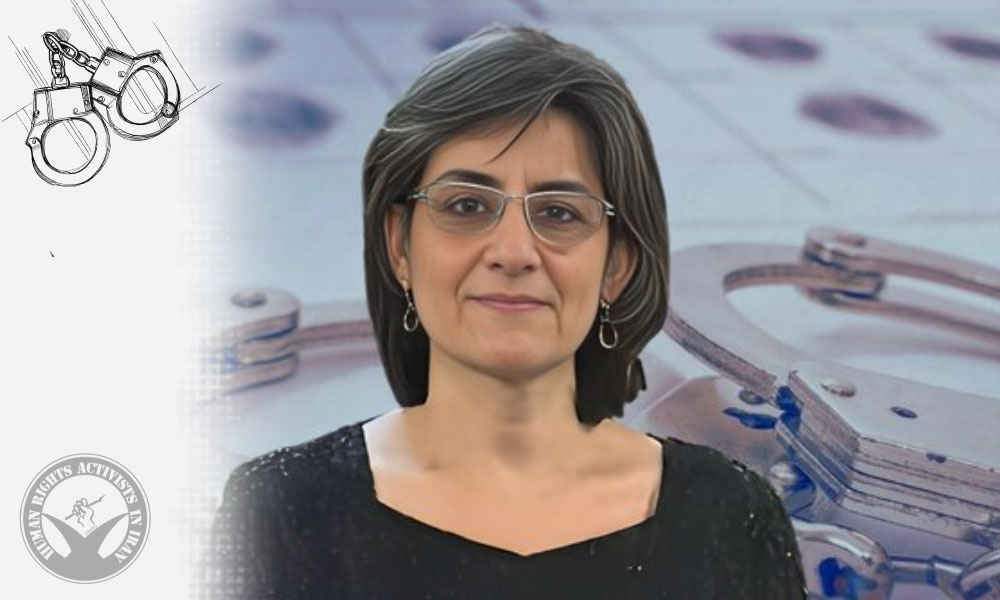
Ongoing Detention of 19 “Yamani” Followers in Mashhad’s Vakilabad Prison

HRANA News Agency – Nineteen individuals affiliated with the “Yamani” religious movement, remain in legal limbo in Vakilabad Prison in Mashhad, one week after their arrest.

These detainees are Amir Zorami, Amin Akbari, Reza Ghiasi, Amir Zohan, Seyed Yahya Tarrahomi, Hamed Nejad-Nik, Emad Eftetahi, Alireza Salim Kaviani, Ghasem Hatami, Seyed Ali Hosseini, Sajjad Rezvan, Mohammad Hossein Nazarnajhad, Mostafa Tavana, Mohammad Kazem Fathi, and five others.

Based on information received by HRANA, these individuals were arrested by IRGC forces while attending a religious gathering.

As of the time of this report, no information has been released regarding the charges brought against these citizens.

Every year in Iran, individuals are arrested merely for claiming a connection to the Shi’a messianic figure, the Hidden Imam. The “Yemeni” movement, led by Ahmad al-Hasan Yamani, operates based on messianic claims related to Mahdism.

Iran’s security apparatus—particularly the Ministry of Intelligence—maintains dedicated divisions tasked with confronting religions, spiritual groups, and ideological-religious communities that do not align with the state’s official ideology.

Subscribe to Our Newsletter

Now is definitely not the time to stop reading!

Baha’i Mother and Son Interrogated in Isfahan Following Intelligence Raid

Arman Bahrami and his mother, Elham Siadat, two Baha’i citizens in Isfahan, were summoned and interrogated by the Ministry of Intelligence following a search of their home.

According to a source close to the family, the two appeared at the Ministry’s office in Isfahan on Tuesday, June 3, 2025, where they were interrogated for nine hours before being released. Their summons came days after agents searched their home on May 28, during which several personal belongings — including cash, gold, and electronic devices — were seized. The source noted that the search warrant did not authorize the confiscation of property, and that damage was done to household items during the raid.

“The agents explicitly said their aim was to harass,” the source told HRANA. “They mentioned they are trying to fabricate a case by locating a private complainant and threatened that if the matter is publicized, more serious charges would follow.”

At the time of this report, no information has been released about the interrogation details or potential charges.

Bahrami and Siadat have previously faced security-related pressures from Iranian authorities due to their religious beliefs.

Over the past decade, the Iranian Bahá’í community has been disproportionately targeted by Iran’s security forces and judiciary—more than any other minority group. In the past three years, an average of 72 percent of the reports on religious rights violations collected by HRANA have documented the Iranian regime’s repression of the Bahá’í community.
Supreme Court Overturns Acquittal of 26 Baha’i Citizens; Re-summoned to Court

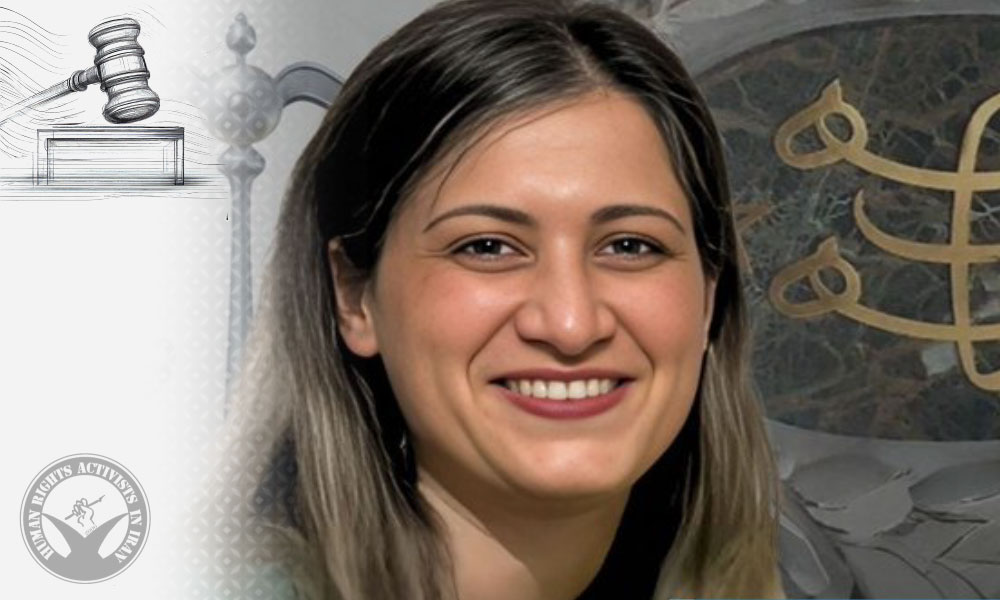
HRANA News Agency – Following an objection by the Chief Justice of Fars Province to the acquittal of 26 Baha’i citizens residing in Shiraz, the Supreme Court has referred their case to a parallel court branch for reconsideration. These citizens have now been summoned to Branch 2 of the Fars Province Court of Appeals.

Based on information obtained by HRANA, the following individuals received official summonses to appear before Branch 2 of the Fars Province Court of Appeals:
Parisa Rouhi-Zadegan, Esmaeil Roosta, Bahareh Norouzi, Behnam Azizpour, Samareh Ashnaei, Ramin Shirvani, Rezvan Yazdani, Soroush Aghaei Saghadi, Saeed Hasani, Shadi Sadegh Aghdam, Shamim Akhlaqi, Sahba Farahbakhsh, Sahba Moslehi, Ahdiyeh Enayati, Farbod Shadman, Farzad Shadman, Lala Salehi, Mojgan Gholampour Saadi, Marjan Gholampour, Maryam Eslami Mahdiabadi, Mahyar Sefidi Miyandoab, Nabil Tahzib, Nasim Kashani Nejad, Noushin Zenhari, Vargha Kaviani, and Yekta Fahandezh Saadi. They have been instructed to appear before the court July 1.

The source added that recently, Seyed Kazem Mousavi, Chief Justice of Fars Province, filed an objection to the acquittal under Article 477 of the Criminal Procedure Code. As a result, Branch 1 of the Supreme Court referred the case again to a parallel court—this time Branch 2 of the Fars Province Court of Appeals.

In June 2022, these Baha’i citizens had initially been sentenced by Branch 1 of the Shiraz Revolutionary Court to a total of 85 years in prison, exile, and travel bans. That verdict was upheld in full by Branch 37 of the Fars Province Court of Appeals.

Parisa Rouhi-Zadegan and Nasim Kashani Nejad served prison terms in 2022 in connection with this case.

The case was originally opened in 2016, and some of the individuals were detained at that time.

Additionally, Yekta Fahandezh Saadi was arrested in December 2023 in a separate case by security forces and released on bail after about five months. She has previously been arrested and sentenced due to her activities.

Baha’i Citizen Sheida Rouhani Arrested in Tehran

HRANA News Agency –Sheida Rouhani, a Baha’i resident of Tehran, was arrested by security forces on Tuesday, May 27, at her home and taken to an undisclosed location.

According to HRANA, the news agency of Human Rights Activists in Iran, Rouhani was arrested despite ongoing efforts by her family to obtain information about her situation. As of this report, her whereabouts remain unknown, raising serious concerns among her relatives.

A source close to the family told HRANA that around 5 p.m., ten security agents arrived at Rouhani’s apartment building. After convincing a neighbor to open the door, they entered her unit with a search warrant. The agents searched the home extensively and seized three laptops, two mobile phones, three tablets, three property deeds, a vehicle registration, academic documents, as well as books and photographs related to the Baha’i faith. Gold and a sum of U.S. dollars were also confiscated.

Before leaving, the agents told Rouhani she needed to accompany them to speak with a prosecutor. She was then taken into custody.

Rouhani is married and the mother of one child.

Over the past decade, the Iranian Bahá’í community has been disproportionately targeted by Iran’s security forces and judiciary—more than any other minority group. In the past three years, an average of 72 percent of the reports on religious rights violations collected by HRANA have documented the Iranian regime’s repression of the Bahá’í community.

Three Baha’i Women Sentenced to Prison by Kerman Appeals Court

HRANA News Agency – The Kerman Province Court of Appeals has sentenced three Baha’i citizens from Rafsanjan — Elna Naeimi, Didar Ahmadi, and Boshra Mostafavi — to a total of one year in prison.

They were tried on May 14, 2025, on the charge of “propaganda in favor of anti-regime groups.”

Previously, Branch 3 of the Rafsanjan Criminal Court had acquitted them due to lack of evidence, but the prosecutor challenged the ruling, leading to the appeal.

These women were initially arrested on June 7, 2020, after security agents searched their homes. They were later released on a temporary basis.

HRANA’s compiled reports show that in 2024 alone, the Iranian regime’s judiciary sentenced 82 members of religious minorities to nearly 400 years in prison on charges solely related to their religious beliefs and sharing those beliefs. This alarming figure highlights the regime’s relentless persecution of religious communities through its judicial system.

Homes of Six Baha’i Citizens Raided in Yazd

HRANA News Agency – On the evening of Thursday, May 22, security forces raided the homes of six Baha’i citizens in Yazd.

According to HRANA, the news agency of Human Rights Activists in Iran, agents from the Yazd branch of the Ministry of Intelligence conducted the coordinated raids on Thursday evening. Security forces searched the homes of Ramin Jiveh, Jamal Ghadirzadeh, and Ghodrat Mirzaei, and later targeted the residences of Manouchehr Sobhani, Farrokh Shadpour, and Taraz Amiri. During the raids, agents confiscated personal belongings including Baha’i religious books, mobile phones, and laptops.

It is worth noting that Jamal Ghadirzadeh is currently facing legal proceedings related to his Baha’i faith and activities.

Over the past decade, the Iranian Bahá’í community has been disproportionately targeted by Iran’s security forces and judiciary—more than any other minority group. In the past three years, an average of 72 percent of the reports on religious rights violations collected by HRANA have documented the Iranian regime’s repression of the Bahá’í community.