





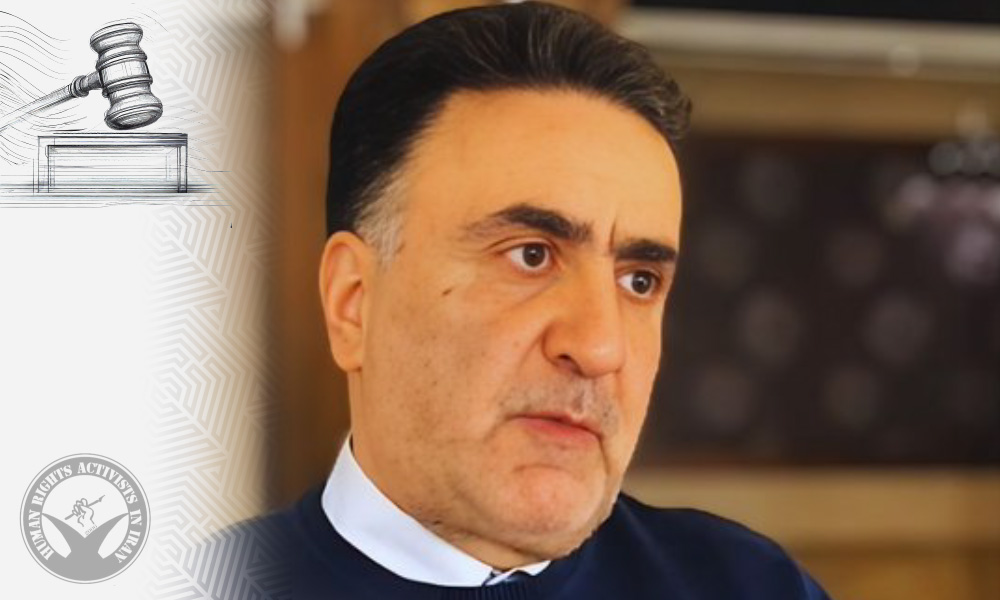
HRANA News Agency – The Tehran Court of Appeals Branch 36 has upheld the 6-year prison sentence and supplementary penalties for Taher Naghavi, a lawyer currently held in Evin Prison. Previously, Judge Abolghasem Salavati sentenced him to imprisonment along with a 2-year ban on leaving the country, deprivation of social rights, and membership in political parties.
According to HRANA, the news agency of Human Rights Activists in Iran, the Appeals Court recently upheld Mr. Naghavi’s sentence, which was officially communicated to his defense lawyer yesterday. He was sentenced to 1 year in prison for “propaganda against the regime” and 5 years for “assembly and collusion against national security.” His additional penalties include a 2-year travel ban, deprivation of social rights, and prohibition from joining political parties.
A source close to Mr. Naghavi’s family confirmed the news to HRANA, stating: “One of the reasons cited by the Appeals Court for affirming the initial ruling was the support Mr. Naghavi received from foreign news networks and TV stations.”
In late October of this year, Branch 15 of the Tehran Revolutionary Court, presided over by Judge Abolghasem Salavati, convicted Naghavi of the charges.
Naghavi was arrested on February 6, 2023, by security forces and subsequently transferred to Evin Prison.
It is noteworthy that Naghavi, who suffers from prostate issues, spinal problems, and joint pain in his hands and knees, has been denied adequate medical care during his detention.
Additionally, in July 2024, prison officials filed a new case against him, accusing him of “disrupting public order” and “insulting prison officials.”




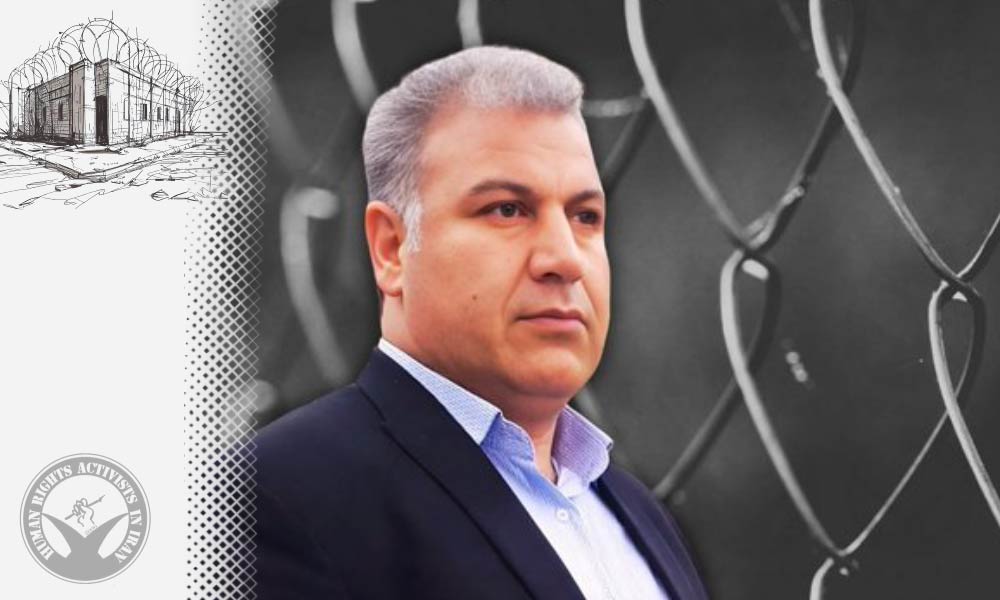


 HRANA News Agency – Vahid Asghari, Iranian imprisoned blogger in Ward 350 of Evin prison began hunger strike due to he was transferred to Solitary Confinement in Ward 240 and banned of visiting for three weeks by judge Salavati.