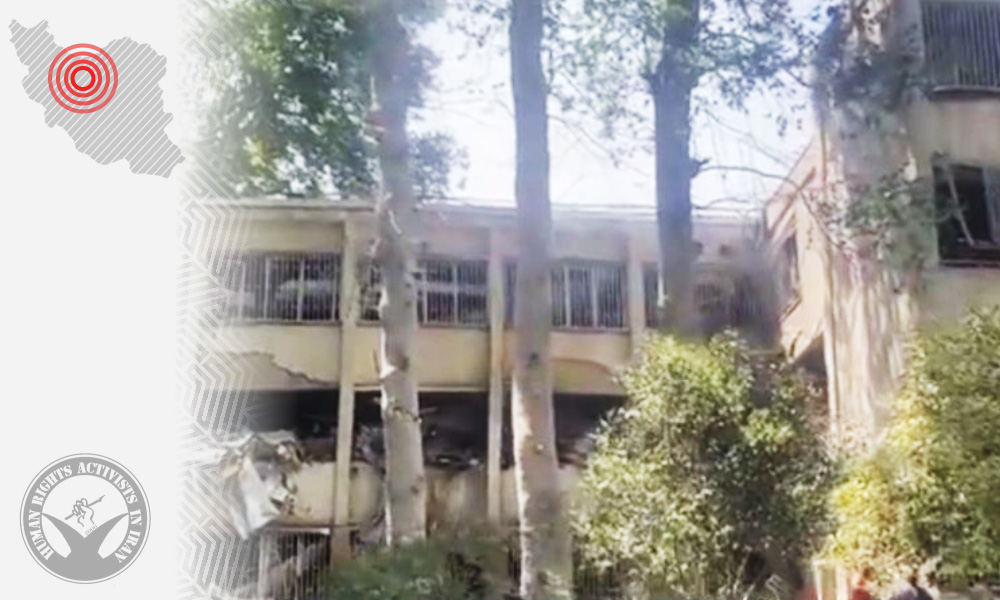
HRANA News Agency – On June 23, Israel’s military attacks on Iran entered their eleventh consecutive day. Since the onset of the conflict, strikes have extended to 26 provinces across the country. As of 21:00 UTC on June 23, including the casualties from the most recent attacks, the total number of victims has risen to 4,432, with 974 confirmed fatalities and 3,458 injuries. Over the same period, 705 individuals have been arrested in Iran on political or security-related charges.
Geographic Scope and Course of Events
Over the past eleven days, military strikes in Iran have targeted infrastructure, military and civilian facilities, residential areas, and industrial zones across 26 provinces.
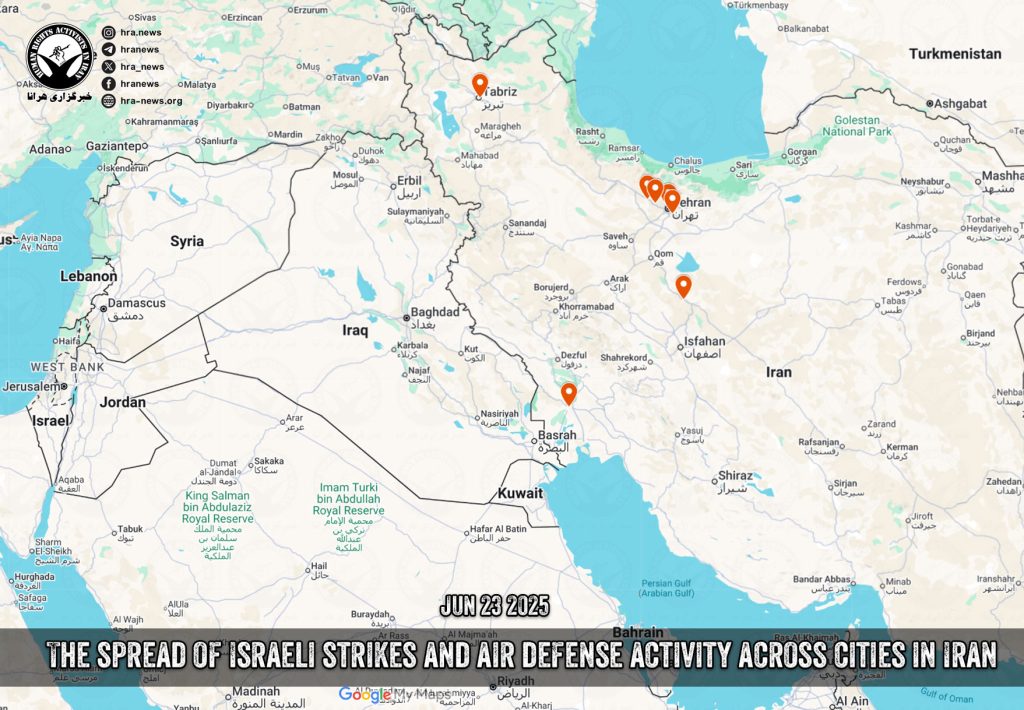
Yesterday, Monday, June 23, attacks continued for the eleventh day, striking the provinces of West Azerbaijan, Kermanshah, Fars, Yazd, East Azerbaijan, Isfahan, Tehran, Alborz, Qom, and Khuzestan. The continuation of attacks on this day indicates that the security situation remains critical, with no immediate prospect for de-escalation in sight.
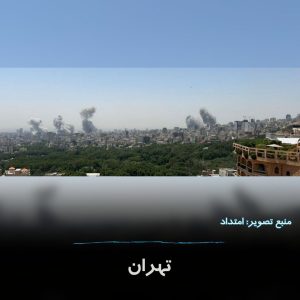
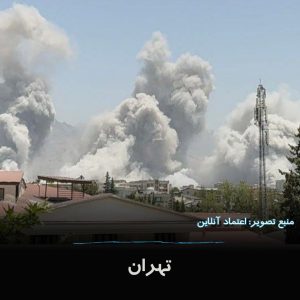
Tehran has consistently been among the most heavily targeted areas. Mohammad Sadegh Motamedian, the governor of Tehran, stated yesterday that Israel has attacked over 200 locations in Tehran province over the past ten days.
The provinces that have been directly attacked since June 13 are as follows:
Tehran, East Azerbaijan, West Azerbaijan, Ardabil, Isfahan, Ilam, Kermanshah, Markazi, Hamadan, Fars, Khuzestan, Kurdistan, Alborz, Zanjan, Bushehr, Qazvin, Gilan, Hormozgan, Qom, Razavi Khorasan, Chaharmahal and Bakhtiari, Kerman, Semnan, Mazandaran, Yazd, and Golestan.
Latest Statistics on Human Casualties and Losses So Far
Since the beginning of Israeli attacks on Iran, hundreds of military and civilian individuals have been killed or wounded. The military or civilian status of a significant number of victims mentioned in this report is still under investigation.
Last night, channels affiliated with security agencies published images of an attack on an ambulance. According to official sources, following an attack by several Israeli drones on an ambulance on duty in Najafabad, Isfahan, three occupants — including the driver, a patient, and the patient’s companion — lost their lives.
State media announced yesterday that Yaser Zeyvari, a firefighter from Asadabad county in Hamadan province, who had been struck while on duty during the initial days of Israel’s attacks on Iran, has died due to the severity of his injuries.
Tasnim News Agency also reported that Abbas Es-haqi, a shooter athlete, and Rouhollah Giyahdusti Arani, a karate coach, were killed as a result of Israel’s attacks on Iran.
The Judiciary’s media center, Mizan, announced that Kian Ghasemian, a 5-year-old child who, along with three members of his family, had been targeted at their residence, has died from the severity of his injuries.
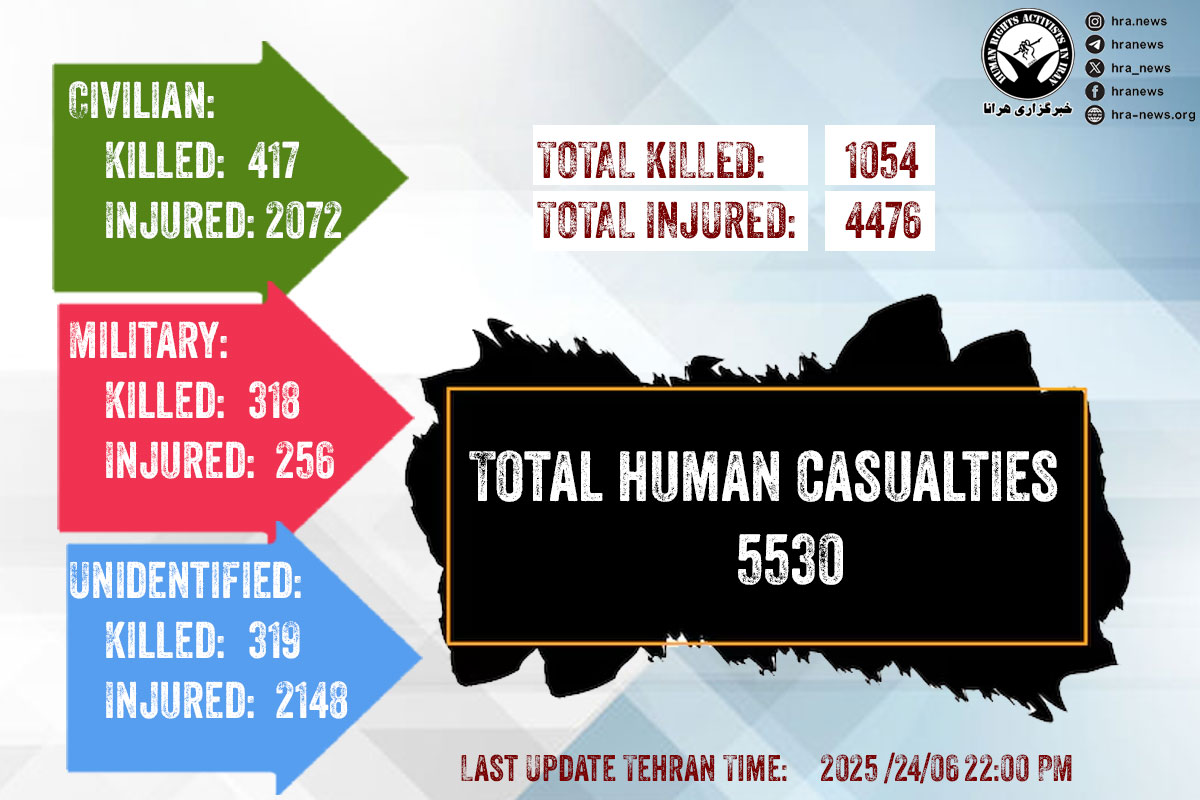
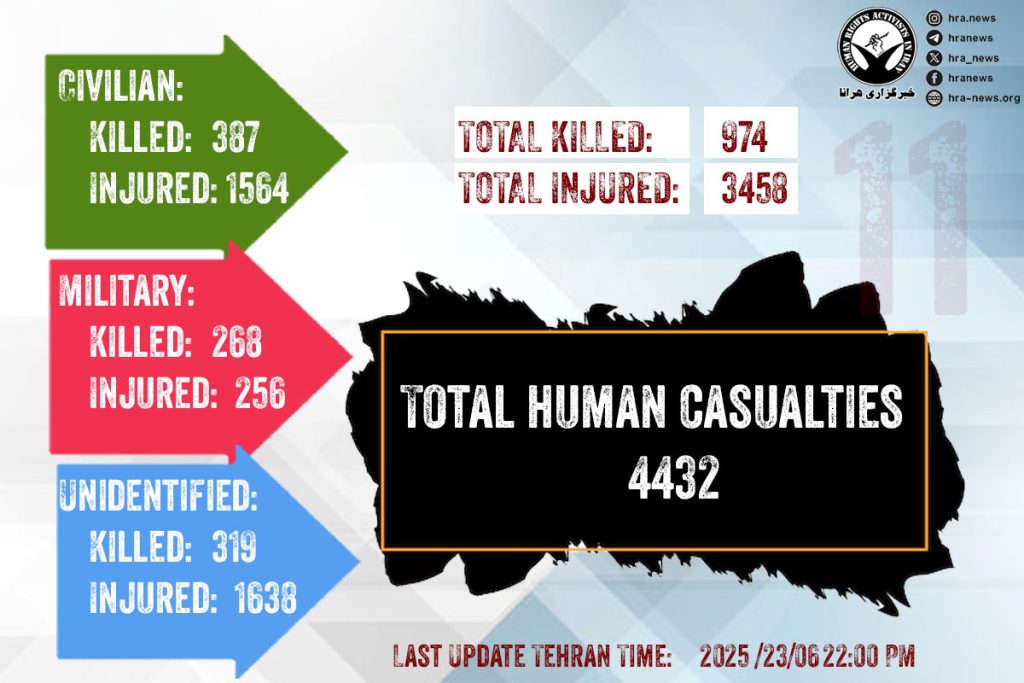
According to the latest updates from HRANA— which collects information through a network of volunteers and independent non-governmental sources — the casualty figures, including newly received documents from recent days as well as yesterday’s reports, are as follows:
▫️Civilians:
Killed: 387
Injured: 1,564
▫️Military personnel:
Killed: 268
Injured: 256
▫️Undetermined:
Killed: 319
Injured: 1,638
Total fatalities: 974
Total injured: 3,458
Total human casualties: 4,432
According to reports gathered by HRANA, dozens of children have lost their lives since the first day of Israel’s attacks on Iran.
Israeli Attacks on Civilian Infrastructure
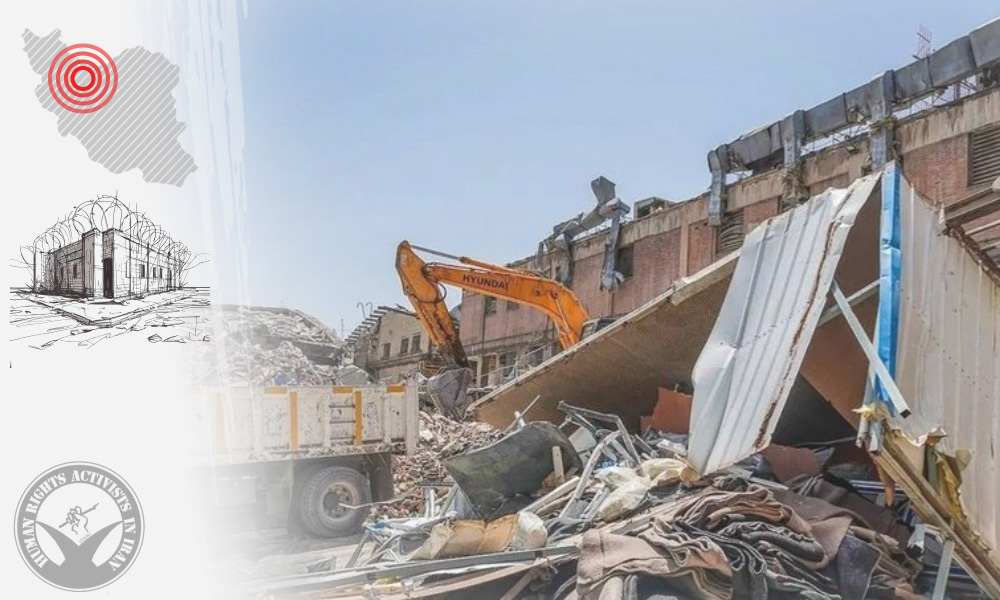
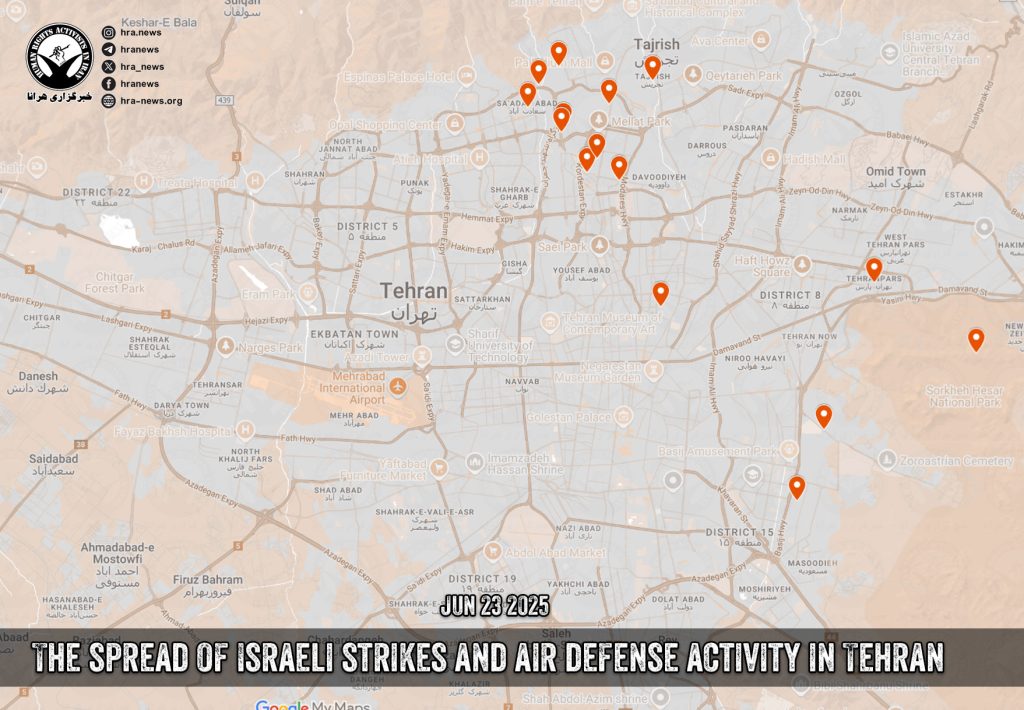
Yesterday, several civilian areas in the country were also targeted. During these attacks, damage was inflicted on locations such as parts of the Handball Federation, the Fakhr Iran spinning and weaving factory, as well as civilian areas in the south and west of Tabriz, Tajrish, District 3, Saadat Abad, Afsarieh, and parts of eastern Tehran. One of the buildings of the Ministry of Energy and infrastructure near the Red Crescent Peace Building were also affected.
The CEO of Alborz Province Electricity Distribution Company reported power outages in parts of Karaj city due to the ongoing Israeli attacks on Iran. According to him, the company’s operational teams are working to restore electricity.
At the same time, state media, quoting Tehran Regional Electricity Company’s public relations office, announced that the blackout in northern Tehran has been resolved. Previously, Tavanir (Iran Power Generation, Transmission and Distribution Company) had stated that one of the main power lines supplying northern Tehran had been damaged due to Israeli attacks, causing power outages in parts of Districts 2 and 3.
The head of Tehran Province’s Emergency Medical Services stated that field observations by rescue teams indicate that “more than 90 percent of the 206 sites attacked by Israel have been residential homes.”
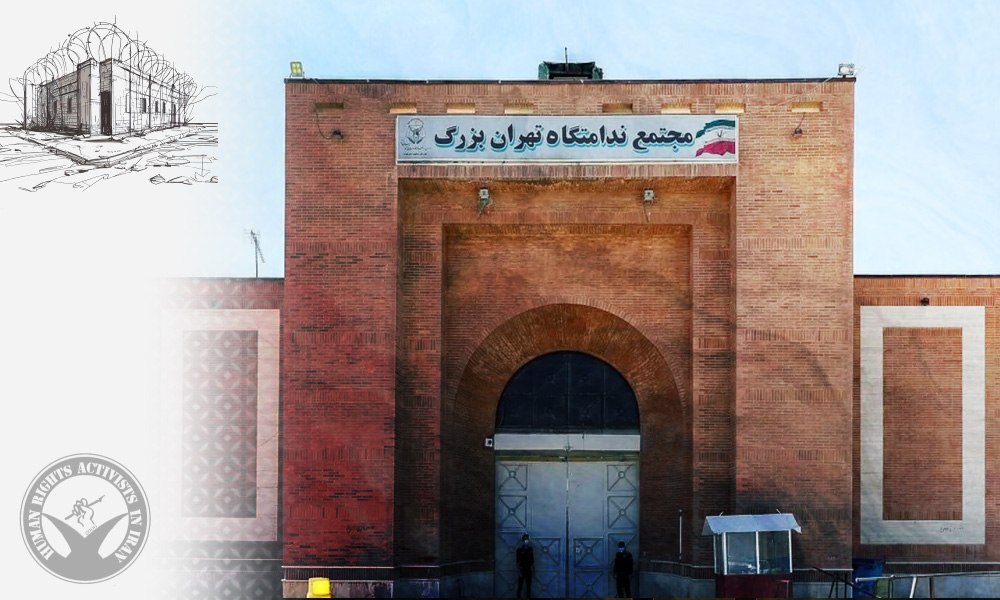
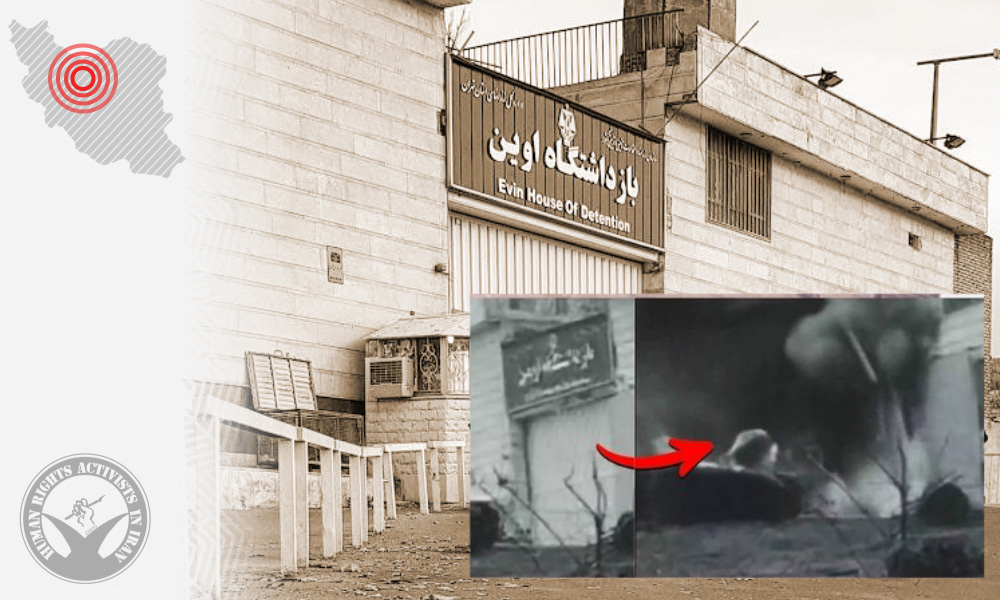
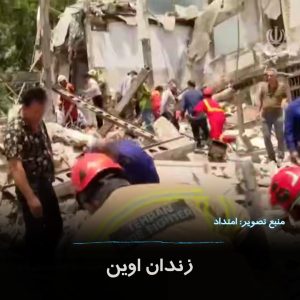
In one of the most significant attacks yesterday, Evin Prison — one of the main detention centers for political and financial prisoners in Tehran — was directly struck. According to information received by HRANA, the windows of Ward 4 were shattered, and parts of the women’s ward ceiling partially collapsed. The prison’s infirmary and visitation hall were also damaged. Following the attack, phones in most wards were disconnected, visitations were canceled, and ward doors were locked. According to a knowledgeable source, the prison warden, accompanied by armed forces, entered Ward 4 and, threatening prisoners with forced transfer to Greater Tehran Prison, ordered the immediate evacuation of the ward without personal belongings. Simultaneously, the wall between Wards 4 and 6 was demolished to enable internal transfers of prisoners. This attack has raised serious concerns among families and human rights organizations.
Yesterday, the cities of Tabriz, Kermanshah, Ahvaz, Tehran, Shiraz, Yazd, and Karaj were among the areas where air defense activity was reported.
Methodological Note: The classification of targeted locations in this report as “military” or “civilian” is based on publicly available information, visible indicators, and testimonies from local residents. A definitive determination of the nature of these sites requires further verification through official documents, satellite imagery, and comprehensive analysis, which are currently not accessible. Therefore, this categorization is provisional and intended to provide an initial overview rather than a conclusive judgment about the nature of the targets.
Israeli Attacks on Iran’s Military Infrastructure
In addition to civilian areas, yesterday the Fordow nuclear site was once again targeted by Israeli forces. The General Command Headquarters of the Law Enforcement Command, the Human Resources Department of Faraja (Law Enforcement Command), and the central headquarters of the Cyber Police (FATA) were among other military targets struck yesterday.
Military facilities near the Sarkeh Hesar mountain, the Basij building in eastern Tehran, an IRGC garrison in downtown Karaj, and the Seyyed al-Shohada IRGC building in Shahr-e Rey on Deylaman Street were also among yesterday’s military infrastructures targeted by the Israeli army.
Arrests and Crackdowns on Citizens
Baha’i citizens in Iran have reported to HRANA an intensification of security crackdowns on this religious minority following Israeli attacks on Iran. According to HRANA’s information, since the beginning of the military attacks, the homes of at least 19 Baha’i families in Baharestan and Qaemshahr have been searched—15 homes in Baharestan and 4 in Qaemshahr. Additionally, Navid Tashakor, a Baha’i citizen residing in Baharestan, was arrested by Ministry of Intelligence forces at his home on June 21. His arrest was accompanied by a home search and the confiscation of his digital devices. He had previously been arrested on June 14 and released after one day.
A Baha’i citizen from Baharestan, whose home was searched, told HRANA: “The agents presented no warrant during the search and behaved inappropriately with my family. They claim that my family and I are cooperating with Israel, but they have no evidence to support this accusation.”
This morning, the prosecutor of Zarand reported the arrest of a citizen in the city, accusing him of “propaganda against the state, demoralizing the public, and supporting Israel.” Reza Yaghoubi also stated that 10 others have been summoned to court on charges of propaganda against the regime.
The IRGC Intelligence Organization in Mazandaran announced in a statement that several individuals have been arrested for their online activities and connections with Israeli media. In its sixth statement, no details on the number, identity, or current status of the detainees were provided.
The police commander of Rezvanshahr announced that a 36-year-old man connected to the Mojahedin-e Khalq Organization (MEK) has been arrested and imprisoned.
The deputy police commander of Kermanshah province reported the arrest of two individuals on charges of “disturbing public opinion” through posts on social media.
With the addition of these recent arrests, 281 Iranian citizens have been detained over the past 11 days for online activity and publishing content related to Israel’s attack on Iran.
Security Arrests
Besides those arrested for political statements or online activities, another group of detainees faces much more serious charges, often made by security agencies, including espionage, armed activity, terrorism, and similar offenses. Given the Iranian government’s history of labeling its opponents with such charges to suppress dissent, these accusations alone cannot be taken as proof of guilt. Only a fair trial and an impartial judicial process can validate the government’s claims against these defendants, according to human rights groups.
In this context, yesterday the prosecutor of Hamadan announced the arrest of a European national on espionage charges.
The spokesperson for Faraja (Iran’s Law Enforcement Command) stated that several individuals belonging to a “micro-drone smuggling network in the mountains northwest of Tehran” have been arrested. Significant amounts of drone control and guidance equipment were reportedly seized.
The Hamshahri newspaper reported that security forces seized a truck loaded with numerous drones in western Tehran and arrested an individual accused of ties to Israel.
Iranian state TV reported the arrest of three Afghan nationals in Pakdasht, claiming that rockets and explosive devices were seized from them.
According to official reports, a foreign woman (nationality undisclosed) was arrested in Chalous on espionage charges.
Two suspects accused of espionage and links to Israel were also arrested by police in Astara, Gilan province.
The Islamic Republic’s Law Enforcement Command announced the arrest of two individuals who allegedly attempted to manufacture bombs and handmade grenades to create fear and panic in the Andisheh township near Tehran.
Fars News Agency, affiliated with security bodies, quoted the Lorestan prosecutor saying that “10 individuals have been arrested under court orders for espionage, propaganda against the regime, and disturbing public opinion.”
The police commander of Gilan province announced: “36 people have been arrested for disturbing public opinion, collaborating with hostile enemies, filming military sites with micro-drones, arson, making handmade bombs, and cooperating with opposition groups.”
Security-affiliated channels reported yesterday that three individuals identified as “members of Ukraine’s intelligence service” were arrested, accused of plotting an attack on a drone factory in Isfahan.
Including the 61 people arrested yesterday, the total number of individuals arrested for security-related reasons by police and security forces over the past 11 days has reached 424.
Separately, yesterday, Monday, June 24, the Judiciary’s media center announced the execution of Mohammad Amin Mahdavi Shayesteh, a prisoner convicted of espionage for Israel. Since the start of Israel’s attacks on Iran on June 13, at least three individuals have been executed on espionage charges for Israel in various Iranian prisons.
Communication Disruptions and Secondary Consequences
Yesterday marked the fifth consecutive day of widespread internet outages in Iran. Although there has been slight improvement, the country remains largely offline. Reports indicate that connectivity significantly worsened again in the afternoon hours.
The extensive internet disruptions, which began alongside the military attacks, have become one of the most serious secondary consequences of the crisis. Internet shutdowns not only hinder the free flow of information but also severely disrupt access to vital services such as banking, education, healthcare, and communication with relatives in affected areas. This situation has left many people, especially in rural and underprivileged regions, isolated and uninformed.
Tonight, IRIB’s News Network interrupted regular programming to broadcast continuous military marches, without any official explanation from authorities.
Some reports suggest that this broadcast coincided with special security conditions in Tehran, including Israeli missile strikes on targets in the capital such as Evin Prison. However, any direct link between this programming change and the attacks has not been officially confirmed.
The Islamic Republic’s media networks sometimes broadcast military marches to signal special conditions or officially declare states of emergency. Nonetheless, the authorities’ silence has fueled speculation on social media.
Ehsan Chitsaz, Deputy Minister of Policy and Digital Economy at the Ministry of Communications, published an image of a downed Israeli drone, claiming it was transmitting data using an advanced American satellite modem during its recent attack on Iran. Previously, the Ministry of Communications had stated that internet restrictions were imposed to “prevent Israel from using the country’s communication network for military purposes.”
The Judiciary’s news agency also reported that the news website Entekhab has been blocked for “ignoring multiple warnings about publishing reports that disturb public mental security.”
Around noon yesterday, amid widespread Israeli attacks on Tehran, IRIB News Network’s live broadcast and its on-screen news ticker were disrupted for about 30 minutes. The authorities have not explained the cause of this incident.
In the early hours of yesterday, a hacker group claimed responsibility for hacking Bank Melli and leaking data from 73 million accounts. Bank Melli denied the claim, stating that the leaked data only included “card numbers, national IDs, names, birth dates, and phone numbers of some users,” likely from previous breaches.
Reports have also emerged of increased suspicious text messages containing malicious links and expert warnings about organized cyberattacks against the country’s infrastructure. Many small and home-based businesses reliant on the internet have completely shut down, placing thousands of livelihoods in crisis.
As the situation continues, concerns over human rights violations — particularly freedom of expression and access to information — have grown. International digital rights organizations have warned that internet blackouts amid military conflict limit the ability to document human rights abuses and deliver targeted humanitarian aid. Additionally, many small businesses dependent on internet access have faced closure, endangering the livelihoods of thousands.
International Reactions: Global Calls for Restraint and Concerns Over Escalation
The United Nations fact-finding mission announced that Israel’s attack on a residential complex in Tehran has left dozens dead, stating that these attacks violate international humanitarian law. In Tehran alone, three Red Cross staff members have been killed. The UN fact-finding mission expressed concern over Israel’s potential violation of the principle of distinction between military and civilian targets.
Images from yesterday’s attacks:
 |  |  |
| A park in Tehran | Around the Red Crescent
building in Tehran | Evin Prison |
 |  |  |
| Evin Prison | Tehran | Tehran |