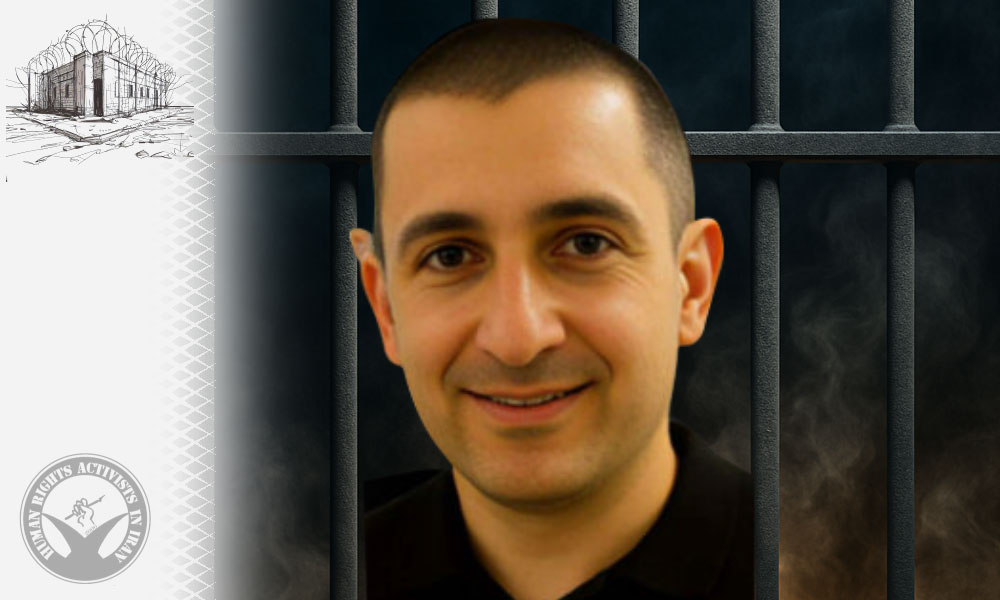
Singer Danial Moghaddam Arrested in Shiraz

HRANA– Danial Moghaddam, a dissident singer, was once again arrested by security forces in Shiraz on Tuesday, July 29, and transferred to the Greater Tehran Prison. He had previously stated in a video that, during the early days of his recent detention in Evin Prison and amid an Israeli airstrike on the facility, he was evacuated due to the post-bombing conditions and never returned.

According to HRANA, the news agency of Human Rights Activists in Iran, Danial Moghaddam, a dissident singer, has been re-arrested.

His arrest took place on Tuesday, July 29, in Shiraz, and he was subsequently transferred to Greater Tehran Prison.
During his earlier detention in Evin Prison, Moghaddam released a video on his personal page describing the crisis inside the prison during the Israeli airstrike. In the video, he stated that following the shockwaves and emergency situation caused by the bombing, he unintentionally left the prison while in a disoriented and semi-conscious state and did not return.

In the same video, Moghaddam cited the reasons for his arrest as supporting the families of those killed during protests, calling for the release of political prisoners, and demonstrating in front of Evin Prison to oppose executions.

On June 25, 2025, Mohammad-Hadi Jafarpoor, Moghaddam’s attorney, announced in a post that his client had been detained by order of Branch 3 of the Tehran Revolutionary Court’s Prosecutor’s Office due to his inability to post bail.

Danial Moghaddam has previously been arrested and sentenced for his activism.

Behrooz Ehsani Eslamlou and Mehdi Hasani Executed

HRANA– On Sunday, July 27, the Judiciary’s Media Center announced the execution of Behrooz Ehsani Eslamlou and Mehdi Hasani, two political prisoners accused of baghi (armed rebellion). Their death sentences had previously been upheld by the Supreme Court of Iran.

Mizan described them as “operational members” of the Mojahedin-e Khalq Organization (MEK) and claimed they were involved in activities such as “establishing a safe house in Tehran, building and launching mortars, attacking public places, promoting the MEK’s agenda, damaging public property, and transmitting information and images to the group’s overseas contacts.”

Mehdi Hasani’s requests for retrial were rejected multiple times by the Supreme Court — the fourth and final rejection came recently. His third and second retrial requests were also denied earlier in the spring of 2025, with the first rejection occurring on February 23, 2025.

Similarly, Behrooz Ehsani Eslamlou’s retrial request was also rejected by Branch 39 of the Supreme Court in February 2025.

On January 26, 2025, Hasani and Ehsani Eslamlou, both sentenced to death, were transferred from Evin Prison to Ghezel Hesar Prison in Karaj under the pretext of medical treatment. Their executions were temporarily halted after their retrial requests were submitted and accepted for review by the Supreme Court.

In late September 2024, both men were tried at Branch 26 of the Tehran Revolutionary Court, presided over by Judge Iman Afshari. They were convicted of charges including baghi, moharebeh (enmity against God), efsad-e-fel-arz (corruption on Earth), collecting classified information, and collusion against national security. The court sentenced them to death, and the verdicts were later upheld by Iran’s highest judicial authority and communicated to their lawyers.

Their membership in the Mojahedin-e Khalq Organization was one of the primary bases for the charges.

Mehdi Hasani, aged around 48, was married and the father of two. He was arrested on September 9, 2022, while attempting to leave the country through Zanjan Province and was later transferred to Evin Prison. Behrooz Ehsani Eslamlou, 64 years old and a resident of Tehran, was arrested in December 2022 and also taken to Evin Prison.

Abolfazl Ghadiani Sentenced to 10 Months in Prison Over New Case

HRANA – Abolfazl Ghadiani, an 80-year-old political prisoner, has been sentenced to 10 months in prison over a new case opened against him while in custody.

According to HRANA, the news agency of Human Rights Activists in Iran, Ghadiani was convicted of “propaganda against the regime” in connection with this new case. The news was announced by his son, Ahmad Ghadiani, via social media.

Following an Israeli attack on Evin Prison on June 23, Ghadiani and several other prisoners were transferred to Greater Tehran Prison.

On September 30, 2024, he had been arrested by security forces in Tehran to begin serving a previous sentence of three years and six months. He was subsequently transferred to Ward 6 of Evin Prison. Charges against him included “insulting the Supreme Leader” and “propaganda against the regime.”

Ghadiani faces multiple legal cases. In July 2023, Branch 28 of Tehran’s Revolutionary Court had sentenced him to 10 months for “propaganda against the regime” and summoned him to Branch 1 of the Tehran Prosecutor’s Office to enforce the sentence.

He has also faced another case in Branch 1025 of Tehran’s Government Employees Court on the charge of “spreading falsehoods online.”

Abolfazl Ghadiani, 80, has a history of arrest and imprisonment due to his political activities.

Bijan Kazemi Remains Detained Without Charges After More Than 170 Days

HRANA – More than 170 days after the arrest of Bijan Kazemi, a resident of Kuhdasht, he remains in detention with no clear legal status. He was recently transferred from the Greater Tehran Prison to an undisclosed location and has had no contact with his family or relatives for the past 10 days.

Yesterday, Kazemi’s mother, Shahnaz Khosravi, posted an update stating that her son has been denied visitation with both his family and legal counsel for 176 days. She said he was recently transferred from Greater Tehran Prison to one of the Ministry of Intelligence’s so-called “safe houses” and has not made any contact in the past 10 days. The family’s growing concern is fueled by this prolonged silence.

Kazemi was previously transferred to Greater Tehran Prison alongside ten other detainees following an Israeli military strike on Evin Prison.

He was first arrested by Ministry of Intelligence agents in Kuhdasht on January 19, 2025, and was subsequently transferred to Ward 209 of Evin Prison—a detention facility operated by the Ministry of Intelligence—on January 22.

As of this report, no information has been made available regarding the reasons for his arrest or the charges against him.

Bijan Kazemi has previously faced legal action due to his activism.

No News After 17 Days: Continued Detention of Children’s Rights Advocate Hossein Mirbahari

HRANA – Seventeen days after his arrest, Hossein Mirbahari, founder of the Society for the Protection of Working and Street Children, remains in detention with no information available about his whereabouts, health condition, or the reasons behind his arrest.

According to HRANA, the news agency of Human Rights Activists in Iran, Mirbahari—a long-standing children’s rights advocate who founded the Society in 2003 to combat child exploitation and promote children’s welfare—was arrested on Saturday evening, June 21, at his home in Pardis by security forces.

A source close to his family told HRANA that Mirbahari was initially held in Ward 209 of Evin Prison. However, following a recent airstrike on the facility, all contact with him was lost. “The family has no idea where he is being held. He was allowed only one brief phone call since the arrest, during which he said he didn’t know his location,” the source added. No charges or legal justification for his detention have been disclosed.

Mirbahari’s family is deeply concerned for his health. He has a history of major stomach surgery and suffers from multiple chronic conditions that require a strict diet and regular medication. The lack of access to the essential medications and proper nutrition has caused growing alarm among his family and colleagues.

Another informed source, who spoke on condition of anonymity for security reasons, told HRANA: “The family has no information about his medical care or nutrition in detention. This uncertainty is taking a serious emotional toll on them.”

As of this report, authorities have not released any details regarding the charges or the legal basis for Mirbahari’s arrest.

Subscribe to Our Newsletter

Now is definitely not the time to stop reading!

Evin Prison: Fate of Prisoners in Security Wards Remains Unknown

HRANA News Agency – On June 23, Israeli military strikes targeted multiple locations in Tehran, including Evin Prison, which sustained several direct hits. A week after the attack, the fate of prisoners held in the facility’s high-security wards remains unknown, fueling growing alarm among their families.

On June 29, without addressing the condition or whereabouts of these detainees, the judiciary spokesperson announced that at least 71 people were killed in the attacks. HRANA has so far verified the identities of 47 of the deceased.

Following the strike, approximately 120 political prisoners were transferred from Evin to other prisons in Tehran Province. However, no information has emerged regarding those held in the prison’s high-security sections—Ward 209 (The Ministry of Intelligence’s detention facility), Ward 2-A (IRGC Intelligence detention facility), and units operated by the Judiciary’s security apparatus. Neither government officials nor state-affiliated media have offered any transparent updates, intensifying the anxiety of families.

Human rights organizations have little to no information about the identities and status of detainees in these high-security wards, where the total population is estimated to exceed 300. These wards operate outside the oversight of Iran’s prison organization, and the lack of accessible records has made it nearly impossible to trace the fate of those detained there.

Footage released by judiciary-affiliated media shows extensive damage to Ward 209 but provides no details regarding its detainees.

Most post-strike reports have focused on the prison’s general wards. According to accounts from those areas, heavily armed special forces stormed the prison in the early hours following the attack. Using force, they removed political prisoners without explaining the reason or destination. Detainees were violently and inhumanely restrained—handcuffed, shackled, and marched into the prison yard in groups—before being loaded onto buses, some of which were damaged and barely operable due to the blasts. As the sounds of missile strikes and air defense continued, prisoners were held for hours under the sun before being transferred under tight security later that night to Greater Tehran Prison. Several detainees likened the transfer to being used as “human shields.”

Beyond structural damage, the attack on Evin Prison resulted in the deaths of multiple inmates and staff. The judiciary spokesperson confirmed that at least 71 people were killed but did not disclose the number of wounded. Among the dead, he said, were prison personnel, military conscripts, detainees, and civilians—family members who had come to visit or follow up on cases at the Evin courthouse.

Below is a list of 47 individuals confirmed dead by HRANA so far:

Evin Prison Staff:

1. Ali Ghanatkar, head of the Evin Prosecutor’s Office and Deputy Security Prosecutor of Tehran;
2. Davood Shirvani Boroujeni, a prison physician;
3. Atefeh Ba’ajzadeh, a counselor and social worker;
4, 5. Zahra Ebadi, an employee of the Evin Prosecutor’s Office enforcement division, along with her 9-year-old child.

Fourteen additional staff members whose identities have been verified include:
6. Mehrad Kheiri
7. Vahid Vahidpour
8. Hassan Shojaei
9. Bahareh Lotfi
10. Hamid Saeedi
11. Hassan Salehi
12. Hassan Nazari Kalur
13. Hossein Ali Ahmadi
14. Rouhollah Tavassoli
15. Pourandokht Sa’adatnejad
16. Mohammad Mir
17. Akram Mohammad Salimi
18. Mahnaz Khosh Kerdar
19. Zohrehsadat (surname unknown).

Military Conscripts:

Confirmed fatalities among conscript soldiers include:
20. Amirali Fazeli
21. Mahan Setareh.
22. Ilya Nobakht

Other confirmed fatalities whose identities have been verified by HRANA, but whose classifications (such as prisoner, staff member, conscript, or visitor) are still under investigation:

23. Fatemeh Siahpush
24. Fatemeh Ghanbari
25. Hossein Zolfaghari
26. Ahmad Morad Arasteh
27. Hossein Yavaryar
28. Hassan Yousefkani
29. Mehdi Shahmoradi
30. Abbas Shafiei
31. Mojtaba Agha Babaei
32. Farhad Fallahi
33. Omid Molashahri
34. Javad Saeedi
35. Mehdi Sarempour
36. Masoud Sabzi
37. Kourosh Molayousefi
38. Hamid Ranjbar
39. Mohammad Hemmati
40. Masoud Karami
41. Seyed Amirhossein Khademi
42. Shirin Esmaeili
43. Zohreh Hosseini
44. Mojtaba Omidi
45. Leila Jafarzadeh
46. Hasti (surname unknown)
47. Hajar Mohammadi

Hajar Mohammadi, the niece of Azizollah Mohammadi, former head of Iran’s Soccer Premier League Organization, and Mehrangiz Imanpour, a painter and former wife of Reza Khandan Mahabadi, a member of the Iranian Writers Association, were also killed.

Mr. Khandan Mahabadi stated: “On Tuesday, June 23, Mehrangiz left her home on Evin Street for a walk. About 40 minutes later, she died in the explosion caused by the attack on Evin Prison. When she didn’t return, we assumed she was injured and began searching for her. Despite visiting several hospitals, we received no information. Other families were also searching for their loved ones. Eventually, on Tuesday, June 24, we discovered at Behesht Zahra Cemetery and the Kahrizak Forensic Center that Mehrangiz had died.”

Read HRANA’s report on the plight of prisoners transferred to other prisons here.

Evin Prison Evacuated After Airstrikes: Detainees Transferred Amid Inhumane Conditions and Family Blackout

HRANA News Agency – Following the mass transfer of political and security prisoners from Evin Prison to facilities such as Qarchak Varamin, the Greater Tehran Penitentiary, and Ghezel Hesar in Karaj, reports indicate that these relocations were conducted without regard for fundamental standards — including separation based on offense type, adequate living conditions, access to basic services, and the right to contact family members. These abrupt and forced transfers were made without transparent communication from the responsible authorities, sparking serious concern among the prisoners’ families.

A photo showing damage to Ward 209, the bakery, and the medical clinic at Evin Prison.

In addition to causing infrastructural damage, the attack on Evin Prison has led to psychological distress and serious concerns for the families of prisoners. As of the time of this report, officials have not provided clear information about the status and conditions of the transferred prisoners.

Overcrowding

According to information obtained by HRANA, following the mass transfer of male political prisoners from Evin Prison, more than 70 individuals were relocated to Quarantine Unit 3 at Ghezel Hesar Prison in Karaj. These prisoners are enduring severe shortages of basic necessities and face tight restrictions on communicating with their families.

Female political prisoners who were abruptly and forcibly transferred to Qarchak Varamin Prison were initially confined in a cramped, unsanitary quarantine ward. They were later moved to a gymnasium lacking even the most basic facilities, including beds, and equipped with only a few restrooms. Eventually, they were returned to the quarantine ward, where they continue to be held in conditions that disregard crime-based classification and fail to meet minimum living standards.

At Greater Tehran Prison, inmates housed in Halls 3 and 4 of Ward 2 are being held in rooms that far exceed their intended capacity of 20 people. This extreme overcrowding has led to widespread floor-sleeping, heightened tensions among inmates, and a serious deterioration in sanitary conditions.

Poor Sanitation and Living Conditions

Sanitary conditions in Qarchak and Greater Tehran prisons have been reported as extremely poor. A family member of one of the women transferred to Qarchak told HRANA that in the prison’s gym and quarantine ward, there are only two toilets and one shower for dozens of inmates. The quarantine space is very small and unhygienic, and in the hot summer weather, access to outdoor areas is practically impossible. Reports speak of infestations of insects and pests such as mice, and even snakes in prisoners’ sleeping quarters.

According to HRANA, similar conditions exist in Greater Tehran Prison, where 70 to 80 inmates must share one toilet, one sink, and one shower. This lack of sanitary facilities significantly raises the risk of infectious and skin diseases, endangering prisoners’ health.

Limited Access to Food and Drinking Water

The food and clean water situation in Qarchak and Greater Tehran prisons is described as critical. In Qarchak, the tap water is salty and contaminated, making it undrinkable, and many prisoners must pay for bottled water. The prison has only one central kitchen that provides low-quality, insufficient food. Dinner is distributed at 4 p.m., and prisoners are forced to eat cold, tasteless meals at any later time. There is a fast food outlet in the prison, but prices are high and unaffordable for most inmates.

In Greater Tehran Penitentiary, the increase in prisoner numbers has seriously disrupted food distribution. According to a prisoner’s family, some inmates receive meals late or receive incomplete portions. Drinking water is also undrinkable due to its poor quality and high salinity, with no suitable alternatives available. Combined with the lack of hygiene facilities, this has created serious physical problems for prisoners.

Lack of Medical Services

Female prisoners in Qarchak and many of the inmates transferred to Greater Tehran Prison have been denied access to medical services. According to a relative of one prisoner, Qarchak provides no medical care or basic health facilities for women, who are held in security conditions without sanitary support. Greater Tehran Prison faces similar issues; for example, Morteza Seydi, who was injured during the Israeli airstrike, has been denied even the most basic treatment despite having a severe hand infection.

Restricted Contact with Families

Prisoners transferred to Qarchak and Ghezel Hesar are facing severe restrictions on contact with their families. At Qarchak, political prisoners held in the quarantine ward have been almost completely cut off from the outside world. According to a relative of one incarcerated woman, phone calls were still prohibited as of yesterday, with only a single malfunctioning phone available—enabling some prisoners to place short calls lasting just two to five minutes. Meanwhile, political and security detainees sent to Ghezel Hesar are being held under strict security conditions and have been entirely denied access to phone communication with their families.

On social media, relatives and friends of political prisoners transferred to Greater Tehran and Qarchak prisons have shared posts raising concerns about their conditions. Keyvan Mohtadi stated that his wife Anisha Asadollahi, along with Raheleh Rahemipour and Kobra Beiki, were transferred to Qarchak. He reported a lack of basic facilities, overcrowding, and that prisoners’ belongings were left behind in Evin. He emphasized that the situation is even harder for elderly inmates like Rahemipour and Beiki.

A social media page associated with Varisheh Moradi expressed concern about her health in Qarchak, stating that the transfer has disrupted access to medical care for ill prisoners.

Another page associated with Mostafa Mehraeen, who was arrested on June 15, reported that he was transferred to Greater Tehran Penitentiary but remains in solitary confinement and has so far had only one brief phone call with his family.

It is important to note that on Monday, June 23, amid Israeli airstrikes on Tehran, Evin Prison was directly hit. Multiple sections of the facility were damaged, including the main entrance gate, the on-site courthouse, the medical clinic, Ward 209, the bakery, and the visitation hall. The attack resulted in the death or injury of several conscripted soldiers, while dozens of prison staff and inmate laborers—some of whom were gardening at the time—were also reported wounded. In the aftermath, the Prisons Organization announced the transfer of Evin’s inmates to various detention facilities across Tehran Province.

Political Prisoners Face Overcrowding and Unsafe Conditions After Transfer from Evin to Greater Tehran Penitentiary

HRANA News Agency – Following Israeli airstrikes on June 23 that directly targeted Evin Prison, Iranian authorities have initiated the mass transfer of inmates to other prisons across Tehran Province. Most political prisoners from Ward 4 of Evin have been moved to the Greater Tehran Penitentiary, where they now face harsh and deteriorating conditions, including extreme overcrowding, lack of access to clean drinking water, and the absence of separation between inmates by the nature of their charges.

HRANA has learned that political prisoners including Morteza Parvin, Abdolaziz Azimi Ghadim, Mahmoud Ojaghlou, Taher Naghavi, Mehdi Mahmoudian, Abolfazl Ghadiani, Mohammad Bagher Bakhtiar, and Hossein Shanbehzadeh are among those transferred.

A source close to Taher Naghavi reported that he is being held in a hall with at least 120 inmates—despite the space being designed for no more than 40 people—and is not separated from those convicted of non-political offenses.

Additional reports highlight the facility’s inadequate water supply. Inmates have described the available water as too salty to drink. According to a source close to Morteza Parvin, he and Mahmoud Ojaghlou were moved late Monday night without being allowed to bring any of their personal belongings.

Family members have also confirmed these developments. Ahmad Ghadiani and Alireza Bakhtiar, sons of Abolfazl Ghadiani and Mohammad Bagher Bakhtiar, respectively, shared on social media that their fathers had been transferred. Alireza noted that many inmates now sleep on the floor and that only one bottle of mineral water is provided for every four political prisoners.

Fatemeh Alvandi, the mother of Mehdi Mahmoudian, told Emtedad News Agency that the detention conditions are extremely poor. She reported overcrowded quarters, unsanitary facilities, and a lack of basic necessities. According to her, her son and others lacked even food containers upon arrival, and the lack of hygiene products is now threatening inmates’ health.

Abbas Shanbehzadeh confirmed that his brother, Hossein, was also among those moved from Ward 4 of Evin to the Greater Tehran Penitentiary.

UN Special Rapporteur on the situation of human rights in Iran, Mai Sato, has expressed concern about the treatment of these transferred inmates. She also noted receiving reports of arbitrary arrests and expedited trials lacking due process, particularly since the onset of the Israeli strikes.

The June 23 airstrikes struck Evin’s entrance gate and the judiciary building within the prison compound. Several conscripted soldiers were reportedly killed or injured, along with some prison staff and inmate workers who were gardening at the time. Following the attack, Iran’s Prisons Organization confirmed the transfer of Evin inmates to other facilities in the province.

Twelve Days of War: Israel-Iran Ceasefire Comes into Force

HRANA News Agency – Yesterday, June 24, a ceasefire agreement between Iran and Israel took effect. In the lead-up to the truce, the Israeli military carried out strikes for twelve consecutive days, targeting multiple military and civilian sites and expanding the conflict’s reach to 26 provinces across Iran.

Since the onset of the attacks, Iranian security forces have arrested at least 286 citizens for expressing opinions related to recent events, while an additional 537 individuals have been detained on security-related charges, including espionage.

The total number of casualties from Israel’s attacks has reached 5,530, including 1,054 dead and 4,476 injured.

Geographic Scope and Course of Events

Over the past 12 days, until the announcement of the ceasefire, Israeli attacks targeted Iran’s infrastructure, military and civilian facilities, residential areas, and industrial zones across 26 provinces.

Yesterday, prior to the announcement of the ceasefire on the twelfth day of the conflict, the provinces of Fars, Tehran, West Azerbaijan, Gilan, and Alborz were targeted.

The Governor of Tehran stated that, in the early hours of yesterday, 12 locations in Tehran city and province were targeted by Israeli attacks.

The provinces that have been directly attacked since June 13 are as follows:

Tehran, East Azerbaijan, West Azerbaijan, Ardabil, Isfahan, Ilam, Kermanshah, Markazi, Hamedan, Fars, Khuzestan, Kurdistan, Alborz, Zanjan, Bushehr, Qazvin, Gilan, Hormozgan, Qom, Razavi Khorasan, Chaharmahal and Bakhtiari, Kerman, Semnan, Mazandaran, Yazd, and Golestan.

The Latest Casualty and Damage Figures

Since the beginning of Israel’s military attacks on Iranian soil, thousands of citizens have been killed or injured. The military or civilian status of some of the victims is still under investigation. According to aggregated figures announced by official bodies such as the Ministry of Health, the Red Crescent, and provincial authorities, as of 12 PM Tehran time on June 24, the total number of casualties has reached 5,356.

According to Hossein Kermanpour, head of the Public Relations and Information Center of the Ministry of Health, among these, 610 people have died and 4,746 have been injured. Additionally, 971 people remain hospitalized, 3,436 have been discharged after treatment, and 255 received on-site medical care. So far, 687 surgeries have been performed on the wounded.

Among the dead, 49 are women, including two pregnant women in Tehran and Isfahan, and 13 are children, the youngest being only two months old. Among the injured, there are 185 women and 65 children under the age of 20; the youngest known injured person is a three-year-old child.

Kermanpour also reported that 25 medical personnel have been affected, including 20 injured and 5 killed. The attacks have also inflicted considerable damage on healthcare infrastructure, including 9 ambulances, 7 hospitals, 4 health centers, and 6 emergency stations.

Earlier, Mohammadreza Zafarghandi, the Minister of Health, had stated that 95% of the deceased died under the rubble, while only 5% passed away after being transferred to hospitals. He did not comment on whether the victims were military personnel or civilians.

In terms of relief efforts, the spokesperson for the Red Crescent Society announced that its relief workers have so far transported 288 injured individuals, treated 109 on site, and provided emergency shelter for 1,087 people. The Deputy Minister of Nursing also reported that at least 10 ambulances were directly attacked during relief operations, leading to the deaths of 4 medical personnel.

In Ahvaz, the president of Ahvaz Jundishapur University of Medical Sciences reported the highest death toll over two consecutive days, with approximately 200 people injured.

The Governor of Tehran also reported the complete destruction of more than 120 residential units and serious damage to over 500 others in the province. According to him, public infrastructure, including water, electricity, gas, and even medical centers, were targeted in Tehran.

In Gilan Province, according to the Deputy Governor, last night’s attacks on Astaneh Ashrafieh resulted in 16 deaths, 33 injuries, and the complete destruction of 4 residential units.

Finally, the Iranian Medical Council announced that five doctors have lost their lives in these attacks.

It should be noted that, in line with its commitment to maximum transparency and independent reporting, HRANA does not rely solely on government figures for its statistics.

According to the latest updates from HRANA News Agency, based on information gathered through its network of volunteers and independent, non-governmental sources, and incorporating newly received documents and yesterday’s reports, the casualty figures are as follows:

▫️Civilians:
Killed: 417
Injured: 2,072

▫️Military personnel:
Killed: 318
Injured: 256

▫️Unspecified:
Killed: 319
Injured: 2,148

Total fatalities: 1,054
Total injuries: 4,476
Total casualties: 5,530 people

Israeli Attacks on Civilian Infrastructure

As on previous days, multiple civilian areas across the country came under attack yesterday, with several residential buildings in Gilan and two hospitals in Tehran sustaining damage.

The Deputy Minister of Nursing at the Ministry of Health reported that Motahari Burn Hospital and Labbafi Nejad Hospital in Tehran were struck during the overnight attacks. Shahid Motahari Hospital was fully evacuated, and patients were transferred to other medical facilities. Portions of Labbafi Nejad Hospital were also damaged, prompting the relocation of patients.

Strikes were also reported yesterday in the cities of Tehran, Karaj, Rasht, Urmia, Astaneh Ashrafieh, and Lahijan.

One of the most significant attacks on civilian infrastructure occurred at Evin Prison. The Judiciary’s spokesperson announced that the prison was hit during family visiting hours. Asghar Jahangir stated that part of the administrative building was destroyed, leading to the deaths of “some of our colleagues and members of the public.”

Following the attack, the Prisons Organization announced that Evin prisoners have been transferred to other facilities within Tehran province.

A source close to one Evin prisoner’s family told HRANA that most inmates were moved to Greater Tehran Prison. The source described severe overcrowding: “Each prisoner has been given only one blanket. Conditions are so cramped that prisoners don’t even have space to sit.”
Furthermore, yesterday, air defense activity was reported in cities including Shiraz, Tehran, Urmia, Rasht, Babol, Tabriz, and Babolsar.

Methodological Note: The classification of targeted locations in this report as “military” or “civilian” is based on publicly available information, visible indicators, and testimonies from local residents. A definitive determination of the nature of these sites requires further verification through official documents, satellite imagery, and comprehensive analysis, which are currently not accessible. Therefore, this categorization is provisional and intended to provide an initial overview rather than a conclusive judgment about the nature of the targets.

Israeli Attacks on Iran’s Military Infrastructure

In addition to civilian areas, yesterday Israel targeted the Parchin missile site.

The Joint Headquarters of the IRGC in Kolahdouz Square, Tehran, was also among the military targets struck by the Israeli army prior to the ceasefire announcement.

Arrests and Crackdown on Citizens

Baha’i citizens in Iran continue to report to HRANA an escalation of security crackdowns against this religious minority following Israel’s attacks on Iran. So far, HRANA has received reports of one arrest and home searches of 20 Baha’i citizens in the cities of Baharestan, Qaemshahr, and Bushehr.

Meanwhile, yesterday the Chief Prosecutor of Qazvin Province announced that 19 legal cases have been opened for individuals arrested in recent events. HRANA had previously reported the arrest of 16 of these individuals.

It has also been documented that Morteza Asadi, a political science researcher, was arrested without a court warrant at his home by security agents on June 20. His and his wife’s personal belongings were confiscated. After three days, his family remains unaware of his whereabouts or health condition. He suffers from a digestive illness and does not have access to his necessary medication.

Including the most recent arrests, in the past 12 days, 286 Iranian citizens have been detained for their online activity and for posting content related to Israel’s attack on Iran.

Security-Related Arrests

In addition to those detained for expressing opinions or political activities, there is another category of arrestees about whom little information is available. These individuals are typically accused by security agencies of more serious charges such as espionage, armed activities, terrorism, and similar offenses. The mere filing of such charges, given the Iranian government’s history of labeling opponents in order to suppress dissent, cannot by itself serve as a basis for judgment. Fair trial and due process remain the only standards for human rights organizations to assess and validate such accusations.

Yesterday, the Deputy for Public Relations of the IRGC in Hamedan Province reported the arrest of 6 individuals in the cities of Razan, Nahavand, and Hamedan, accusing them of espionage for Israel. The head of the Hamedan Judiciary also stated that 24 cases have been opened for individuals allegedly involved in espionage, sending information, photos, and videos to Israel.

The deputy police chief of Kermanshah Province reported the arrest of two individuals in this city, accusing them of “disturbing public opinion” through online posts. At the same time, the Chief Prosecutor of Kermanshah stated that since the beginning of the conflict, 115 people have been arrested, 54 of whom have since been released on bail. According to him, only a small number face espionage charges, while the majority are accused of propaganda against the regime.

Yesterday, there was also a report of the arrest of a European national in Hormozgan. The semi-official Fars news agency reported that this individual was detained “while spying on sensitive and military sites.”

Additionally, the Chief Prosecutor of Sistan and Baluchestan Province announced the arrest of several individuals in this province, claiming that a “large shipment of American weapons and ammunition” was seized from them.

On the other hand, state media released a video yesterday showing the arrest of 6 individuals in Tehran, in which the detainees, under unclear circumstances, confess to cooperating with Israeli intelligence.

With these new cases, the total number of individuals arrested on security charges by law enforcement and intelligence agencies since the start of the military conflict has reached 537.

New Legislative Proposals to Increase Penalties

In this context, yesterday, members of parliament approved an emergency bill to increase the punishments for citizens arrested on espionage charges. yesterday, Judiciary spokesperson Ali Asghar Jahangir stated: “If we wanted to prosecute many of those we arrested during the war with Israel under the existing espionage law, we would have faced restrictions and limitations. However, the parliament has now given us greater legal latitude.”

Communication Disruptions

Yesterday marks the sixth day of internet disruptions in Iran. Although there has been slight improvement in connectivity, the country remains largely offline. Citizens continue to rely on VPNs to access global social networks.

The news outlet Ham-Mihan, citing its sources, reported that Telegram may soon be unblocked, while WhatsApp will remain banned due to its alleged involvement in espionage for Israel.

International Reactions: Global Consensus on Restraint and Concern over Escalation

Yesterday, the UN Human Rights Office condemned Israel’s attack on Evin Prison as a “gross violation” of international law. The spokesperson stated: “Evin Prison is not a military target, and striking it constitutes a serious breach of international humanitarian law.”

The UN fact-finding mission also reported yesterday that Israel’s strike on a residential complex in Tehran had resulted in dozens of fatalities. According to the mission, these attacks violate international humanitarian law and have so far led to the deaths of three Red Cross staff members in Tehran. The mission expressed concern that Israel may be failing to uphold the principle of distinction between military and civilian targets.

Astaneh-ye Ashrafiyeh
Gilan Province
Astaneh-ye Ashrafiyeh
Gilan Province
Astaneh-ye Ashrafiyeh
Gilan Province
A residential building in
Astaneh Ashrafieh
Bokharest Street in District 6 of TehranFire in Tehran following
the crash of a Hermes drone
Fire in Tehran following
the crash of a Hermes drone
Khajeh Nasir neighborhood – TehranHakimiyeh neighborhood – Tehran
District 7 of TehranTehranEast Tehran
Tehransar neighborhood – TehranPich Smeiran neighborhood -TehranPasdaran neighborhood -Tehran
Babolsar

Israel’s Strike on Evin Prison: Damage to Infrastructure, Widespread Transfers, and Mounting Concerns

HRANA News Agency — On June 23, during airstrikes by the Israeli Air Force on Tehran, Evin Prison was directly targeted. The attack took place during family visitation hours, resulting in the deaths and injuries of several administrative staff, conscripted soldiers, and prison personnel. Significant damage was also inflicted on key prison infrastructure, including the administrative building, entrance gate, infirmary, central kitchen, and visitation hall.

According to HRANA, the extent of the destruction has forced the evacuation of the prison. Beyond the immediate casualties and physical destruction, the assault has triggered a humanitarian and psychological crisis for the families of the prisoners. At the time of this report, calls for the immediate release of political prisoners and for transparent information about the fate and whereabouts of those transferred remain unanswered.

Destruction and Damage

Reports from various sources, including eyewitness accounts, indicate widespread destruction in several parts of the prison:
● The entrance gate, the court building, and the prison infirmary were completely destroyed.
● The visitation hall and central kitchen were also destroyed during the attack.
● Windows in Ward 4 and the women’s ward were shattered, and parts of their walls collapsed.
● The prison infirmary sustained serious damage, disrupting medical services.
● According to an official report by Fars News Agency, Dr. Seyed Davood Shirvani Boroujeni, one of the prison’s infirmary doctors, was killed in the attack.

Security Situation and Reactions
Following the attack, a state of emergency was declared at the prison:

● Telephone lines in most wards were cut or limited.
● Visitations and outdoor time for prisoners were suspended.
● The judiciary spokesperson confirmed the attack occurred during visitation and stated that some staff and family members were also casualties.
● Official reports stated that bomb disposal teams successfully neutralized two unexploded missiles in the prison area.

Prisoner Transfers and Family Concerns

In response to the extensive destruction, the Prisons Organization initiated the emergency relocation of inmates to other facilities within Tehran Province, including Greater Tehran Prison and Qarchak Prison in Varamin. According to the organization, the transfers began in the early hours following the strike and have since been completed. However, many families report being left in the dark about the exact whereabouts of their loved ones.

In an open letter, one political prisoner described the ordeal as “the worst day of my life,” adding: “Evin Prison essentially ceased functioning. The longstanding desire of the security apparatus to evacuate Evin was realized through Israeli missiles.” The prisoner also highlighted a more than 24-hour communication blackout with the women’s ward, confirming that inmates from Wards 4 and 8 were transferred to Greater Tehran Prison, while female prisoners were moved to Qarchak. The absence of official documentation and continued lack of contact have fueled severe anxiety and uncertainty among the prisoners’ families.

Doctor’s Death and Official Visit to the Injured

Following the attack, Abbas Masjedi, head of the National Forensic Medicine Organization, visited the wounded. At the same time, it was announced that Dr. Davood Shirvani Boroujeni, a member of the prison’s medical staff, was killed during the attack.

Human Rights Implications

Evin Prison, with its long-standing history of holding political and ideological prisoners, has long been a focus of human rights scrutiny. The direct attack on the facility — especially at a time when many of its inmates were financial offenders or low-risk prisoners — has sparked serious concerns over violations of human rights standards and the laws of war. According to witness accounts, several conscripted soldiers, guards, and even staff family members were killed in the strike. One witness described the scene: “All the conscripts at the gate were completely obliterated… and we, the prisoners and their families, were hugging them.”