Semnan: 7 Citizens Arrested on Accusations of Contact with Foreign Media and “Anti-Security Activities”

HRANA – The police commander of Semnan announced the arrest of seven citizens, citing what was described as “contact with media outlets outside the country and anti-security and norm-breaking activities.”

According to Fars News Agency, the Semnan police commander stated that the reasons for these arrests included “ongoing contact with foreign-based media outlets, carrying out anti-security and norm-breaking acts, sending the geographic coordinates of sensitive locations, and insulting and using abusive language.”

The report does not mention the identities of the detainees or their place of detention.

It is worth noting that the U.S. and Israeli military attacks on Iran began on February 28, 2026, and on April 8, 2026, a two-week ceasefire between the parties was announced. Since the beginning of these attacks, HRANA has been documenting and recording related incidents across various parts of the country on a daily basis. For more information, readers may refer to HRANA’s latest detailed report covering the first forty days of the conflict.

Report on the Arrest of Ali Ardaneh in Behbahan

HRANA – Ali Ardaneh, a resident of Behbahan, was arrested on Tuesday, March 17, 2026, by forces of IRGC Forces. There is still no information available regarding his place of detention. He had previously been wounded by birdshot pellets during the January 2026 protests and is still in the recovery period.

Based on information received by HRANA, this citizen was arrested by IRGC forces, and so far no information has been obtained regarding the reasons for his arrest or his place of detention. Mr. Ardaneh had been severely injured by security forces’ pellet rounds during the January 2026 protests. He underwent surgery to remove some of the pellets and is still continuing his recovery.

Ali Ardaneh had also been arrested during the same protests and was released after some time.

According to an informed source, IRGC forces in Behbahan have recently been temporarily detaining suspects for several hours, then releasing them after subjecting them to violence and beatings. The source added that during these detentions, individuals’ mobile phones are confiscated and are not returned upon release.

It is worth noting that gatherings and strikes by shopkeepers and bazaar merchants began in Tehran on Sunday, December 28, 2025, and after two days spread beyond markets and commercial centers. With the participation of students, ordinary citizens, and various social groups, these protests became one of the broadest protest waves in recent years. Following the crackdown by law enforcement and security forces, thousands were killed or injured, and tens of thousands more were arrested or summoned by security institutions. For more information, readers may refer to HRANA’s comprehensive report titled “Crimson Winter,” documenting the first fifty days after the start of Iran’s nationwide protests.
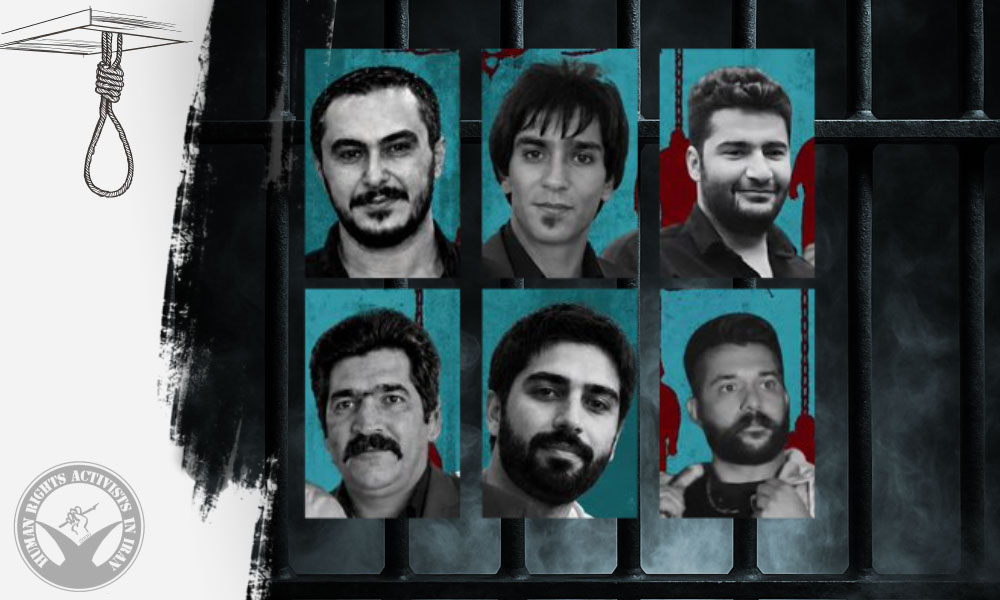
The Bodies of Six Executed Political Prisoners Have Still Not Been Returned to Their Families

HRANA – The bodies of six political prisoners executed in Ghezel Hesar Prison, Akbar Daneshvar Kar, Seyed Mohammad Taghavi Sang-Dehi, Babak Alipour, Pouya Ghobadi Bistouni, Seyed Abolhassan Montazer, and Vahid Bani-Amerian, have still not been returned to their families more than a week after their executions. Their families, expressing deep concern, have called for transparent information regarding the fate of their loved ones.

Seyed Abolhassan Montazer and Vahid Bani-Amerian were executed on April 4, Babak Alipour and Pouya Ghobadi Bistouni on March 31, and Akbar Daneshvar-Kar and Seyed Mohammad Taghavi Sang-Dehi on March 30, all in Ghezel Hesar Prison. Despite more than a week having passed, their bodies have still not been handed over to their families. The families are demanding clarification about the status of the bodies and disclosure of their burial locations.

The death sentences for these political prisoners were issued in December 2024 on charges of baghi (“armed rebellion against the regime”) through alleged membership in anti-government groups. The ruling had previously been overturned by the Supreme Court in July 2024, and the case was referred to a parallel branch for retrial. Later, in mid-November 2025, they were retried in Branch 26 of the Tehran Revolutionary Court, presided over by Judge Iman Afshari. Finally, on December 7, 2025, the same branch reissued the death sentences, which were formally communicated to their lawyers.

On February 23, 2024, Seyed Mohammad Taghavi Sang-Dehi and Pouya Ghobadi Bistouni were arrested in Chaldoran County and transferred to Maku Prison. Taghavi Sang-Dehi was later transferred to Evin Prison on March 1, 2024. Vahid Bani-Amerian and Seyed Abolhassan Montazer were arrested by security forces in Tehran in January 2024 and were held for some time in Evin Prison. Akbar Daneshvar Kar had also previously been arrested by security forces and transferred to Evin Prison.

These prisoners were formally charged in late May 2024 at Branch 5 of the Tehran Public and Revolutionary Prosecutor’s Office, and were later transferred in the summer of that year to Ghezel Hesar Prison.

Seyed Abolhassan Montazer and Seyed Mohammad Taghavi Sang-Dehi were political prisoners from the 1980s generation of detainees, while Vahid Bani-Amerian, Pouya Ghobadi Bistouni, and Babak Alipour had also previously faced imprisonment and convictions due to their activism.

Hamedan Province: Confiscation of Assets Belonging to 25 Citizens, Including 19 Foreign Nationals and Residents

HRANA – The judiciary in Hamedan has announced the confiscation of the assets of 25 citizens in the province, including 19 foreign nationals and residents of other countries, over what it described as “cooperation with Israel and propaganda, political, and media activities against national interests.”

According to Tasnim, the assets of a number of citizens in Hamedan Province have been confiscated. The confiscated assets belonged to two British nationals, two Swiss nationals, one Russian national, three German nationals, three Turkish nationals, eight Iraqi nationals, as well as six citizens residing inside the country. The order to seize these individuals’ assets was issued through the Public Prosecutor’s Office.

The Hamedan judiciary claimed that these individuals were accused of cooperating with Israel and had engaged in “propaganda, political, and media activities against the country’s national interests.” In line with the implementation of the “Law on Intensifying the Punishment for Espionage and Cooperation with Israel and Hostile Countries,” their assets were seized and confiscated in favor of the state.

The report did not mention the identities of these individuals or provide details regarding the confiscation of their assets.

Previously, the Public and Revolutionary Prosecutor of Hamedan had announced that criminal cases had been opened against 23 citizens in this county and that orders had been issued to seize their assets.

Following the start of the military attacks on Iran, Gholamhossein Mohseni Ejei, head of the judiciary, announced that judicial orders had been issued to seize and confiscate assets linked to what he described as “elements cooperating with the enemy inside and outside the country.” He also threatened these individuals with execution, stating: “One of the prescribed punishments in this case is execution, and after the investigations, one of the legal punishments will be applied to the individuals concerned.”

It should be noted that the military attacks by the United States and Israel on Iran began on February 28, 2026. Since the beginning of these attacks, HRANA has been documenting and recording events related to these conflicts across various parts of the country on a daily basis. For more information, you may refer to HRANA’s detailed report on the 40th day of the conflict, which was published last night.

Arrest of 23 Citizens on Accusations of Foreign Contacts and Anti-Government Activities

HRANA – Iranian domestic media have reported the arrest of 23 citizens in the provinces of Lorestan, Hormozgan, Mazandaran, and Gilan on accusations including “sending information to foreign countries and links to groups opposed to the government.”

According to IRIB, 19 citizens were arrested by forces of The Ministry of Intelligence’s detention facility. In a statement, Iran’s Ministry of Intelligence announced that seven individuals accused of “communicating with pages attributed to Israel on social media and sending information about sensitive, military, and infrastructure sites” were arrested in the provinces of Lorestan and Hormozgan.

Officers of this institution also arrested eight citizens in Mazandaran Province and four individuals in Gilan Province, who were alleged to have intended to “take action against law enforcement centers and security forces.”

Separately, according to Fars, four citizens were arrested in Tonekabon. The county’s law enforcement command claimed that these individuals were “affiliated with groups opposed to the government,” and that a number of unauthorized hunting weapons were also discovered in their possession.

These reports did not provide further details, including the identities or places of detention of these citizens.

It should be noted that the military attacks by the United States and Israel on Iran began on February 28, 2026. Since the beginning of these attacks, HRANA has been documenting and recording events related to these conflicts across various parts of the country on a daily basis. For more information, you may refer to HRANA’s detailed report on the 40th day of the conflict, which was published last night.

Subscribe to Our Newsletter

Now is definitely not the time to stop reading!

Report on the Arrest of a Citizen in Astara County

HRANA – The police commander of Astara has announced the arrest of a citizen and the opening of a judicial case against them on charges including “propaganda against the system, insulting religious sanctities, and ties to espionage networks.”

According to ILNA, the police commander of Astara County claimed in this regard that one of the main leaders of anti-security activities had been arrested on accusations including “propaganda against the country, disturbing public opinion, insulting religious sanctities, and ties to espionage networks during the tensions between the United States and Israel with Iran.” According to Morteza Ahadi, this citizen had also played a “leadership” role during the January protests and had previously been arrested in connection with that matter.

According to the report, after a preliminary case file was prepared, this citizen was referred to judicial authorities for the legal process.

As of the time of this report, no information has been obtained regarding the identity or place of detention of this citizen.

It should be noted that the military attacks by the United States and Israel on Iran began on 28 February 2026. Since the beginning of these attacks, HRANA has been documenting and recording related events across different parts of the country on a daily basis.

Day 40 of U.S. and Israeli Attacks on Iran: Announcement of a Two-Week Ceasefire

HRANA – In the early hours of Wednesday, an agreement for a two-week ceasefire between Iran and the United States was announced. This report is being prepared under circumstances in which, although the ceasefire has been officially declared, some attacks were reported before its implementation time and in limited cases even after it took effect. Nevertheless, the sharp decline in the number of incidents, targets, and casualties is clearly assessed as being linked to the implementation of the ceasefire.

According to information recorded and verified by HRANA, at least 20 attacks were documented in the past 24 hours, presented across 16 separate reports in 4 provinces of the country. No reports of human casualties (killed or injured) resulting from these incidents were recorded, which indicates a significant decrease compared with previous days.

1. Overview of Incidents in the Last 24 Hours

Today’s data indicates a noticeable reduction in the intensity and geographic scope of the conflict. During this period:

• Total number of attacks: 20

• Number of reports: 16

• Affected provinces: 4

The geographic distribution of the recorded attacks shows:

• Sistan and Baluchestan: 50%

• Tehran: 25%

• Hormozgan: 20%

This decline in both the geographic spread and overall volume of attacks is assessed as consistent with the ceasefire conditions.

Map of Attacks Day 40

2. List of Objects Reported Hit

In the past 24 hours, at least 2 specific targets were struck or damaged:

• Multiple explosions at the refinery (Lavan Island)

• Air base (Konarak)

In total, 2 infrastructure targets were recorded during this period.

3. Casualties

No reports of military or civilian casualties were received during this period.

On this day, 4 burials were recorded, all of which were related to casualties from previous days.

Note on Official Statements:

Alongside the field data, some cumulative statistics from official sources were also published:

The Director General of the Martyrs and Veterans Affairs Foundation in Mazandaran reported 61 deaths from this province since the start of the conflict.

The Ministry of Education announced that the number of students and teachers killed has reached 312, with 207 injured.

The Ministry of Health also released broad figures on the state of the healthcare system, including:

• 518 current hospitalizations

• More than 30,000 treated and discharged cases

• 26 deaths among medical staff

• Damage to dozens of medical centers and emergency facilities

• Hundreds of children and women among the dead and injured

Due to their cumulative nature, these figures are not included in calculations based on daily incidents and are presented solely as a record of official statements.

Summary and Notice

The Day 40 report is being published under conditions in which the implementation of the two-week ceasefire has directly led to a sharp decline in field indicators, including the number of attacks, targets, and casualties.

Given the change in the situation on the ground and the uncertainty surrounding whether the ceasefire will hold or collapse, HRANA News Agency announces that the process of publishing daily reports will be suspended from this point forward. This suspension will continue until the final status of the ceasefire becomes clear.

Should hostilities resume or a meaningful change occur in field conditions, the publication of daily reports will begin again.

A Note on HRANA Methodology

The information in this report has been compiled based on HRANA’s same previously established methodological framework and includes a combination of field, local, medical, media, and public data sources. Given the fluid nature of the situation, the data may be subject to revision as new information becomes available.


Continuation of Mock Executions Against Baha’is; Global Baha’i Community Raises Concern Over Borna Naimi’s Fate

HRANA – Borna Naimi, a Baha’i citizen residing in Kerman, remains in a state of uncertainty after 39 days in detention and is still being held in solitary confinement in Kerman Prison.

In a statement, the global Baha’i community expressed concern over his situation, announcing that he has been subjected to mock executions twice in order to extract forced confessions. Previously, the organization had also reported mock execution practices against Peyvand Naimi, another detained Baha’i citizen in the same case. The statement notes that the treatment of these two young Baha’is has heightened concerns over the intensification of persecution against Baha’is in Iran.

The global Baha’i community, expressing concern over Borna Naimi’s fate, stated in a declaration, shared with HRANA, that: he has “endured at least two mock executions, electric shocks causing severe burns to his feet, and other forms of torture, since his arrest in Kerman on 1 March.”

The statement emphasizes that following Peyvand Naimi, Borna Naimi is the second Baha’i detainee in Kerman to be subjected to mock execution, “raising concerns regarding the intensification of the persecution against the Baha’is in Iran, the country’s largest non-Muslim religious minority.”

According to the statement, this is the second case involving detained Baha’i citizens in Kerman accused of involvement in the killing of Basij agents during the protests of January 7, 2026. However, “Borna’s torture was so extensive that he was forced to sign a false confession in which he implicated himself and his cousin, Peyvand Naimi, in killing Basij guards during 8 January protests. No evidence exists for this charge, and neither Borna nor Peyvand could have committed these crimes, as they occurred after Peyvand had been detained and while Borna was surrounded by family at home. The text of his forced confession had been prepared beforehand and handed to him to read. No trial has been held for either prisoner.”

The statement continues: “During the first days of detention, Borna was repeatedly beaten, receiving multiple blows to his sides, ribs, beneath the chest, and his back. He was transferred several times to places near his residence, where he was pressured with threats concerning his wife and young daughter, including threats that his child would be sent to a state orphanage if he did not cooperate. ”

In this context, a representative of the global Baha’i community at the United Nations in Geneva stated: “During the initial days of detention, Borna was held in a special section of the prison known as the ‘death suite,’ where prisoners sentenced to execution are kept 48 hours before their sentence is carried out. Reports indicate that during this period, he was held in a small solitary cell of approximately two by two meters and was unable to distinguish day from night.”

Simin Fahandej added: “During his first days in prison, Borna was held in a special section of the prison called the “suite”—the “the death suite”—in which death row prisoners are held 48 hours before execution. Reports indicate that, during this time, he was held under solitary confinement in a small room about two-by-two metres in size, in such a way that he could not distinguish between night and day.”

She further stated: “The treatment of Borna and Peyvand is a stark indication of the Islamic Republic’s relentless efforts to fabricate accusations against the Baha’is and falsely present them as responsible for crimes they did not commit. It raises grave concerns about the plans and intentions of the Iranian government for the Baha’is in Iran, who have, time and again, been scapegoated at moments of national crisis as a means of deflecting attention from its own deepening repression. Such actions not only endanger innocent lives but further entrench a pattern of systematic persecution that seeks to isolate, dehumanize, and ultimately silence an entire minority community.”

Previously, HRANA had reported on the use of mock execution and abuse against Peyvand Naimi in an effort to extract forced confessions.

Borna Naimi, a 29-year-old Baha’i citizen, father of a three-year-old child and resident of Kerman, was arrested on March 1, 2026, by security forces.

Over the past decade, the Baha’i community in Iran has faced more security and judicial pressure than any other religious minority. A review of HRA’s annual reports shows that in the past year, an average of 62.41% of reports concerning religious minorities involved violations of the rights of Baha’is.

At Least 9 Citizens Arrested in Various Provinces

HRANA – Domestic media have reported that nine citizens were arrested in the provinces of North Khorasan, Semnan, and Tehran on accusations of “sending videos and images to foreign media outlets” and “sending information to countries involved in the war.”

According to Mehr News Agency, six citizens were arrested in North Khorasan. In this regard, the Public and Revolutionary Prosecutor of Bojnord claimed that these citizens were arrested on charges of “acting against national security and interests” through “sending images and videos to foreign media outlets, especially Iran International and Manoto, in order to identify locations that could be subject to military attack.”

In another report by Mehr News Agency, the IRGC Intelligence Organization announced the arrest of two citizens in Semnan. This security body claimed that the reason for their arrest was “communication with the Israeli intelligence service and sending information about sensitive sites and centers to Israel” from the time of the 12-day war until now, under accusations of “espionage.”

Also, according to Tasnim News Agency, one citizen was arrested in Tehran. The report states that after returning to Iran and staying at a relative’s house, he was identified and arrested by security forces on accusations of “sending the location of security forces’ deployment sites to the intelligence services of countries involved in the war, including the United States and Israel.”

The report did not provide further details, including the identities of these citizens or where they are being held.

It should be noted that the military attacks by the United States and Israel against Iran began on February 28, 2026. Since the beginning of these attacks, HRANA has been documenting and recording developments related to these conflicts across different parts of the country on a daily basis. For more information, readers may refer to HRANA’s detailed report on the 39th day of the conflict, published last night.

Day 39 of U.S. and Israeli Attacks on Iran: Extensive Damage to the Rail Network and Roads

HRANA– In the last 24 hours, and as of April 7, 2026, at 18:00 ET, HRANA has recorded at least 425 attacks across 177 incidents in 16 provinces, resulting in a total of at least 101 casualties (killed and injured, both civilian and military). The attack on railway routes, key bridges, and several major transportation corridors across the country were among the developments that drew widespread public attention over the past 24 hours.

According to information recorded and verified by HRANA, from the first minutes of the day through the end of April 7, 2026 (Tehran time), at least 36 civilians were killed and 48 others were injured.

Aggregated data since the beginning of the conflict on February 28, 2026, based on incidents recorded in the incident tab and using minimum values for figures marked “more than”:

• Civilian fatalities: 1,701 people (including at least 254 children)

• Military fatalities: 1,221 people

• Unclassified fatalities (civilian/military): 714 people

Note on Official Statements: Alongside HRANA’s independent reporting, several official aggregated figures were also recorded today from state-affiliated media, including:

The Deputy for Family Support and Welfare at the Relief Committee said: “From the beginning of the Ramadan War until today, 32 members of families supported by the Relief Committee have been killed as a result of the criminal attacks by American and Zionist forces against civilian citizens.”
The Red Crescent spokesperson said: “Forty-nine medical and pharmaceutical centers were particularly damaged. Ninety-eight thousand commercial units, 326 medical units, 763 educational centers and schools, and 20 relief workers and rescue/Red Crescent bases were damaged.”
The head of Tehran Province Emergency Services said: “We have had more than 700 fatalities, all of them ordinary civilians. In the past two nights alone, 10 children and 18 women were among the victims across the province. Up to today, more than 8,600 injured people have received services across Tehran Province, 87 percent of whom were ordinary civilians. We have had more than 700 fatalities, all of them civilians, children, and women. In the past two nights, 10 children under the age of 10 and 18 women were added to the number of our fatalities in Tehran Province.”

Since these figures are presented in aggregate form and cannot be precisely matched to specific incidents, they have not been included in the event-based calculations used in HRANA’s independent reporting section of this review. They are mentioned here solely as a record of official statements.

1. Overview of Incidents in the Last 24 Hours

In the last 24 hours, incidents were reported across multiple provinces, reflecting a geographically dispersed pattern of hostilities. In a large portion of the incidents, the method/type of attack has not yet been confirmed and has been recorded as “undetermined.” In cases where the attack type was identifiable, airstrikes and drone attacks were reported.

Preliminary analysis shows that Tehran Province, with a 27% share, ranks first among the provinces that have come under attack. Tehran Province is followed by Alborz Province with a 19% share in second place, and Khuzestan Province with 17% in third. The list continues with the provinces of Isfahan Province, Qazvin Province, and Qom Province, respectively.

Map of Attacks Day 39

2. List of Objects Reported Hit

In the past 24 hours, the recorded attacks have damaged 53 distinct objects or facilities. These include a range of different types of targets. In some cases, damage caused by nearby strikes or secondary consequences of the attacks has also been reported.

Examples of targets recorded over the past 24 hours:

• 8th Division Barracks (Isfahan)

• 4th Tactical Air Base (Dezful)

• Defense Facilities (Khark Island)

• Southern Border Outpost (Minoo Island)

• Ashura Garrison (Najafabad)

For a number of the listed targets, the exact nature of the target (civilian/military/dual-use) is still under review, and classifications may be revised as additional information becomes available.

Facilities Protected Under International Humanitarian Law:

Under international humanitarian law, medical facilities, educational institutions, humanitarian facilities, religious sites, and emergency service centers are among the many objects that maintain special protected status and are afforded special protection. In the past 24 hours, HRANA has preliminarily recorded the following cases:

• Khorasani Jews Synagogue (Tehran)

• Alborz–Zanjan Railway Line (Karaj)

• Haft Cheshmeh Railway Bridge (Mianeh)

• Tabriz–Tehran Freeway (Tabriz)

• Sorkheh Hesar River Bridge (Ray)

3. Civilian Casualties

In the past 24 hours, at least 36 civilian citizens, including 6 children and 3 women, have been killed, and 48 other civilians have been injured. All classifications are preliminary and may be updated if new information becomes available.

4. Military Casualties

During the period covered by this report, no reports of military casualties were received. Military casualties are generally reported in the context of attacks on Army and Islamic Revolutionary Guard Corps (IRGC) bases. Where possible, organizational affiliation and operational context are being assessed; however, not all details have yet been independently verified.

In some incidents, individuals have been killed in the vicinity of military targets; however, their official status has not yet been definitively determined. These cases remain under review, and if reliable information indicating a different status becomes available, the classification may be revised accordingly.

It is believed that military casualties are significantly higher than the figures reported in these reports. However, due to the sensitive nature of military information and the limited access of human rights groups and media to locations where military forces are present, this section largely reflects reports of senior officers or military personnel who were present in urban areas.

5. Confirmed but Unspecified Casualties

Three deaths and 14 injuries reported in the past 24 hours remain classified as undetermined. This means that HRANA has not yet been able to establish with sufficient certainty whether these individuals were civilians or military personnel.

Burials: Today, 1 burial related to attacks from previous days was recorded.

A Note on HRANA Methodology

Note that, in line with HRANA policy, this report reflects only incidents that occurred within the territorial borders of Iran.

The information contained in this report is compiled through HRANA’s established documentation network. Data is collected from a combination of field reports, local contacts, medical and emergency sources, civil society networks, and open source materials, including publicly available images, videos, and official statements where relevant. Each reported incident is logged and assessed through an internal review process before publication.

Given the evolving nature of hostilities, information is gathered on a rolling basis and reflects the status of documentation at the time of publication.

The figures presented in this report may not reflect the full scope of harm. Ongoing hostilities, damage to infrastructure, communication disruptions, restricted access to affected areas, and security risks for sources may limit the ability to document incidents comprehensively.

Delays in medical reporting, difficulties in confirming identities, and restricted access to certain provinces may result in temporary undercounting. As access improves or additional evidence emerges, casualty figures and incident classifications may be revised accordingly.

HRANA remains committed to transparency, methodological rigor, and the continual updating of its findings as new verified information becomes available.