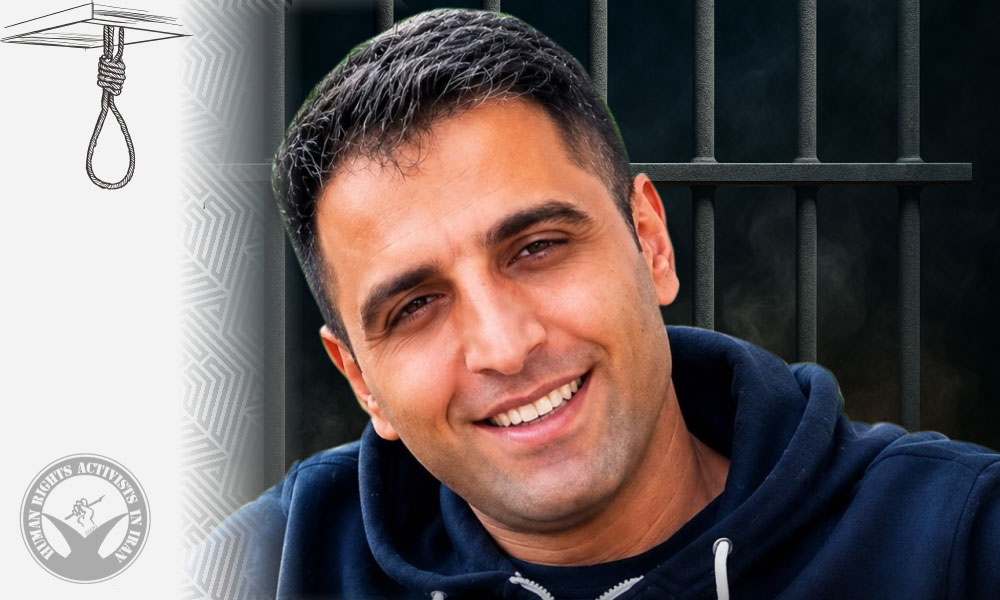
More than Two Decades Behind Bars, Prisoner Profiles – No. 7: Gholamhossein Kalbi

HRANA – Many political and religious prisoners in Iran have endured over twenty years behind bars. To prevent their cases from fading from public memory in the flow of daily news, HRANA has launched a series of reports highlighting their situations. Each installment outlines the prisoner’s legal case, detention conditions, access to rights, and immediate needs.

In this report, HRANA, the news arm of Human Rights Activists in Iran, examines the latest situation of Gholamhossein Kalbi after more than twenty years of imprisonment.


Information Sheet

• Name: Gholamhossein Kalbi

• Year of arrest: 2000 (1379 in the Iranian calendar)

• Charge: Moharebeh (“enmity against God”) through membership in the Mojahedin-e Khalq Organization (MEK)

• Initial sentence: Death penalty

• Current sentence: Life imprisonment (commuted with one degree of reduction)

• Places of detention: After arrest, he spent 14 months in solitary confinement at The Ministry of Intelligence’s detention facility in Ahvaz, later held in Ward 209 and then Ward 350 of Evin Prison. In October 2007, following conviction, he was transferred to Mahshahr Prison, and later to Karoon Prison in Ahvaz. After the closure of Karoon Prison in February 2016, he was moved to Sheiban Prison in Ahvaz, where he remains incarcerated to this day.

• Furlough / Access: No reports of furlough in recent years; limited access to family and lawyer.

• Current status: Still serving a life sentence, despite legal changes that could allow for review or reduction.

Case Narrative and Judicial Process

On January 8, 2001, Gholamhossein Kalbi was arrested in Dezful on charges of membership in the Mojahedin-e Khalq Organization. In 2002, the Tehran Revolutionary Court sentenced him to death on the charge of Moharebeh. His sentence was later commuted to life imprisonment. While this commutation avoided the escalation of punishment, it placed him in a category of indefinite imprisonment, which in practice can extend for decades and limit access to review mechanisms.

Key Points in the Case:

• Severe security charge: The label of Moharebeh in political-security cases in Iran is among the heaviest accusations, usually carrying wide-ranging judicial and executive consequences.

• Sentence reduction: The initial death sentence and its conversion to life imprisonment show both the gravity of the charges and the scope for judicial intervention—but do not necessarily correct potential injustices in the trial process.

• Continued imprisonment despite legal changes: Although legal reforms have made retrial, sentence reduction, or conditional release possible in some cases, Kalbi remains in prison.

Detention Conditions and Transfers

Over his decades in prison, Kalbi has been moved between several facilities. After his arrest, he spent 14 months in solitary confinement at The Ministry of Intelligence’s detention facility in Ahvaz, then was transferred to Ward 209 and later Ward 350 of Evin Prison. In October 2007, he was moved to Mahshahr Prison, where he was held for several years. Despite his family residing in Mahshahr, he was later transferred to Karoon Prison in Ahvaz. After that prison was closed, in February 2016, he was transferred to Sheiban Prison in Ahvaz, where he has been held in various wards ever since.

In July 2021, after protesting prison conditions, officials at Sheiban Prison punished him by binding his hands and feet and leaving him for hours under the scorching sun. He was then transferred to a ward worse than the previous one, prompting him to go on hunger strike.

In April 2024, he was placed in Ward 5 of Sheiban Prison without regard for the principle of separation of crimes. Later, in November 2024, he was transferred to the prison’s security ward, under overcrowded conditions without adequate space for walking. He remains there today.

Observations on Standards of Detention

• Repeated transfers: Frequent movements between wards and prisons disrupt access to family, lawyer, and medical care.

• Solitary confinement as punishment: Kalbi spent 14 months in solitary confinement at The Ministry of Intelligence’s detention facility in Ahvaz. International standards require solitary confinement to be exceptional, time-limited, and supervised.

• Exposure to violence: Reports document both physical and verbal abuse during his imprisonment in Sheiban Prison. Notably, in July 2021, he was tied up and left under extreme heat as punishment for protesting prison conditions. Such incidents highlight the need for independent documentation and legal accountability.

• Medical neglect: Despite suffering from heart disease, hernia, dental infections, jaw and gum problems, spinal and neck arthritis, fungal infection leading to severe toenail disease, high cholesterol, chronic ear infection with hearing loss, Kalbi has consistently been denied transfer to hospitals or specialized treatment. “Access to medical care” is a fundamental right recognized in Iranian law, international treaties, and human rights standards. Systematic denial of medical care constitutes inhuman treatment and violates both the right to health and, in some cases, the right to life, often being used as an instrument of coercion and repression.

Access to Family, Lawyer, and Furlough

In recent years, Kalbi has not been granted furlough. His access to his family and lawyer has been reported as limited. These restrictions not only have psychological and social consequences but also undermine his ability to mount an effective legal defense or pursue retrial mechanisms.

Potential Legal Remedies (General Recommendations)

1. Retrial: Based on new evidence or substantive/procedural flaws in the original ruling.

2. Sentence reduction or conversion: If legal grounds exist.

3. Conditional release / suspension of sentence: Subject to conditions such as time served, good behavior, or health status.

4. Redress for rights violations during detention: Including access to healthcare, protection from violence, and regular visits.

5. International advocacy and documentation: If domestic remedies are blocked, use of international reporting and human rights mechanisms.


Summary Timeline

• 2001: Arrest; charge of Moharebeh through MEK membership.

• Initial sentence: Death; commuted to life imprisonment.

• Post-arrest: 14 months in solitary at The Ministry of Intelligence’s detention facility in Ahvaz, then Ward 209 and 350 of Evin.

• 2007 (1386): Transferred to Mahshahr Prison.

• 2016 (1394): Transferred to Sheiban Prison in Ahvaz.

• July 2021 (Tir 1400): Punitive torture reported—hands and feet tied, left for hours under scorching sun.

• April 2024 (Farvardin 1403): Moved to Ward 5 of Sheiban Prison without separation of crimes.

• November 2024 (Aban 1403): Transferred to security ward of Sheiban Prison.

• Recent years: No furlough, denial of medical care, restricted access to family and lawyer.

• Current status: Serving life sentence despite potential legal changes allowing review.


Conclusion and Importance of Case Review

Despite legal changes that allow retrials, sentence reductions, or conditional release for those convicted of Moharebeh, Kalbi remains imprisoned. His case illustrates the plight of long-term political-security prisoners in Iran, whose files deserve review as a crucial step toward freedom and justice.

His situation highlights both the denial of fundamental rights during detention (furlough, visits, legal representation) and the urgent need to use all domestic and international legal mechanisms for review and reduction of such lengthy sentences.

Urgent Needs

Regular, non-discriminatory access to lawyer and family.

Independent medical evaluation, especially regarding torture allegations and chronic illnesses.

Consideration for retrial or other legal remedies for sentence reduction/termination under current laws.

Enforcement of prison regulations regarding calls, visits, and furlough.

Adequate medical services and treatment.


About this Series

This report is part of the “Two Decades Behind Bars” series, which aims to document the cases of long-term prisoners and to highlight the collective responsibility to ensure their visibility and pursue their rights.

More than Two Decades Behind Bars, Prisoner Profiles – No. 4: Abdul-Zahra Halichi

HRANA – Many political and religious prisoners in Iran have endured over twenty years behind bars. To prevent their cases from fading from public memory in the flow of daily news, HRANA has launched a series of reports highlighting their situations. Each installment outlines the prisoner’s legal case, detention conditions, access to rights, and immediate needs.

In this installment, HRANA, the news agency of Human Rights Activists in Iran, examines the latest status of Abdul-Zahra Halichi (Haliji) after more than two decades of imprisonment.


Case Information

• Name: Abdul-Zahra Halichi (Haliji)

• Year of arrest: 2005

• Charges: “Acting against national security, moharebeh (enmity against God), and efsad-e fel-arz (corruption on earth)”

• Initial sentence: Life imprisonment

• Current sentence: Life imprisonment

• Places of detention: Served his sentence in Karun Prison, Ahvaz; currently held in Ward 5 of Sheiban Prison, Ahvaz.

• Leave / access: No prison leave reported in recent years; limited access to family and lawyer.

• Current status: Still serving a life sentence despite legal changes that could allow for review or commutation.

Case Background and Judicial Process

In 2005, Abdul-Zahra Halichi was arrested by security forces. Shortly thereafter, Branch 1 of the Revolutionary Court of Ahvaz convicted him of “acting against national security, moharebeh, and corruption on earth,” sentencing him to life imprisonment. This verdict placed him among those serving indefinite terms, effectively extending incarceration for decades and severely limiting access to judicial review.

Key points in the process:

• Heavy security charges: The charge of moharebeh is among the most severe in Iran’s political-security cases and typically carries wide-ranging judicial and executive consequences.

• Continued imprisonment despite legal reforms: Although legislative changes allow for retrial, sentence reduction, or parole in some cases, Halichi remains incarcerated.

Conditions of Detention and Transfers

Throughout his imprisonment, Halichi has been held in Karun and Sheiban prisons in Ahvaz. He spent several years in Karun Prison following his sentencing.

• Feb 2019: Reports of beatings in Sheiban Prison.

• Apr 2020: Subjected to torture after being transferred to The Ministry of Intelligence’s detention facility in Ahvaz.

• Apr 2024: Reported beatings by prison guards and intelligence protection officers in Ward 5 of Sheiban Prison.

• Dec 2024: Threatened with solitary confinement or exile to remote areas after protesting authorities’ failure to enforce the principle of separation of crimes.
Since then, he has remained imprisoned in Sheiban.

Observations on Detention Standards

• Frequent transfers: Repeated relocations between wards and prisons disrupt access to family, lawyers, and medical care.

• Violence in custody: Multiple reports of beatings (2019, 2020, 2024) highlight the need for independent documentation and legal follow-up.

• Denial of medical care: Despite suffering from right leg infections, knee pain, and requiring urgent surgery to remove a metal rod from his leg, Halichi has been systematically denied hospital transfer and specialized treatment. Denying prisoners access to healthcare constitutes inhuman treatment and a violation of the right to health and even the right to life, often used as a tool of further pressure and repression.

Access to Family, Lawyer, and Leave

In recent years, Halichi has not been granted leave, and his access to family and legal counsel has been restricted. Such limitations not only have psychological and social consequences but also undermine his ability to mount an effective legal defense or pursue retrial procedures.

Potential Legal Avenues (General Recommendations)

1. Retrial: Assessing new evidence or procedural flaws.

2. Sentence reduction or commutation: If legal grounds are met.

3. Conditional release or suspension: Based on time served, good conduct, or health conditions.

4. Addressing rights violations in custody: Including access to treatment, protection from violence, regular visitation rights, and legal access.

International documentation and advocacy: Utilizing UN reporting mechanisms when domestic avenues are blocked.

Timeline (Summary)

• 2005: Arrested; charged with “acting against national security, moharebeh, and corruption on earth.”

• Initial verdict: Life imprisonment.

• Following years: Held in Karun Prison, Ahvaz.

• Feb 2019: Reported beating in Sheiban Prison.

• Apr 2020: Tortured in The Ministry of Intelligence’s detention facility, Ahvaz.

• Apr 2024: Beaten by prison guards and intelligence officers in Sheiban Prison.

• Dec 2024: Threatened with solitary confinement or exile after protesting non-segregation of prisoners.

• Recent years: No leave granted; deprived of adequate medical care; limited access to family and lawyer.

• Current status: Continues to serve life imprisonment despite potential eligibility for legal review.

Conclusion and Need for Review

Despite legal reforms enabling retrial, sentence reduction, or release in moharebeh cases, Halichi remains behind bars. His case exemplifies long-term political-security imprisonment in Iran, underscoring the urgent need for review mechanisms.

Halichi’s situation highlights both the systematic denial of fundamental rights in detention (such as visitation, legal access, and healthcare) and the importance of using all available domestic and international legal avenues to reduce sentences and secure freedom.

Urgent Needs

Regular, unrestricted access to lawyer and family.

Independent medical evaluation following allegations of torture and long-term health issues.

Review of eligibility for retrial or other mechanisms to reduce/terminate his sentence under current law.

Enforcement of prison regulations regarding visitation, calls, and leave.

Access to appropriate medical care and treatment.

About this Series

This report is part of the “Two Decades Behind Bars” series, which aims to document the cases of long-term prisoners and to highlight the collective responsibility to ensure their visibility and pursue their rights.

More than Two Decades Behind Bars, Prisoner Profiles – No. 3: Abdolemam Zaeri

HRANA – Many political and religious prisoners in Iran have endured over twenty years behind bars. To prevent their cases from fading from public memory in the flow of daily news, HRANA has launched a series of reports highlighting their situations. Each installment outlines the prisoner’s legal case, detention conditions, access to rights, and immediate needs.

In this installment, HRANA – the news arm of Human Rights Activists in Iran – reviews the current situation of Abdolemam Zaeri after two decades in prison.


Information Summary

• Name: Abdolemam Zaeri

• Year of Arrest: 2005

• Charges Announced: “Acting against national security, moharebeh (enmity against God), and corruption on earth”

• Initial Sentence: Life imprisonment

• Current Sentence: Life imprisonment

• Detention Facilities: Initially held in Karun Prison of Ahvaz; later transferred to Ward 5 of Sheiban Prison in Ahvaz, where he remains.

• Furlough/Access: No furlough reported in recent years; access to family and lawyer reported as limited.

• Current Status: Still serving a life sentence despite legal changes that could allow for review or reduction.

Case History and Judicial Process

Zaeri was arrested by security forces in 2005. Shortly after, Branch 1 of the Ahvaz Revolutionary Court sentenced him to life imprisonment on charges of “acting against national security, moharebeh, and corruption on earth.”

This life sentence placed him among prisoners with indefinite incarceration—effectively subjecting him to decades of confinement while restricting his access to review mechanisms.

Key Points:

• Severe security charges: The label moharebeh is one of the most severe charges in political-security cases in Iran and carries broad judicial and executive consequences.

• Continued imprisonment despite legal reforms: Although legal changes allow for retrials, sentence reductions, or parole in some cases, Zaeri has remained in prison.

Detention Conditions and Transfers

Over the course of his imprisonment, Zaeri has been held in Karun and Sheiban prisons in Ahvaz. He spent several years in Karun Prison before being transferred.

Reports from February 2019 and April 2024 indicate that he was beaten by prison guards and the intelligence protection unit of Sheiban Prison. He remains incarcerated in Sheiban.

Observations on Detention Standards

• Frequent transfers: Moving between wards and prisons can disrupt access to family, lawyers, and medical care.

• Exposure to violence: Documented beatings in 2019 and April 2024 highlight the need for independent monitoring and legal follow-up.

• Denial of medical care: Despite suffering from stomach bleeding, prostate inflammation, infection and bleeding in the left ear, and stomach ulcers, Zaeri has repeatedly been denied transfer to a hospital or access to specialized treatment. Prison authorities have obstructed care on various pretexts.
Denial of medical treatment is a violation of the fundamental right to health and can amount to inhumane treatment, even endangering life. It is often used as a tool of additional pressure and repression against prisoners.

Access to Family, Lawyer, and Furlough

Zaeri has not been granted furlough in recent years. His access to family visits and legal counsel has been restricted. These limitations, beyond their psychological and social toll, also undermine his ability to mount an effective defense or pursue retrial mechanisms.

Potential Legal Avenues (General Recommendations)

1. Retrial: Reviewing new evidence or substantive/procedural flaws in the ruling.

2. Sentence reduction or conversion: If legal conditions apply.

3. Parole or suspension: Based on time served, good conduct, health status, etc.

4. Pursuing violations of rights during detention: Including denial of medical care, exposure to violence, right to visits, and lawyer access.

5. International documentation and advocacy: Using reporting and human rights mechanisms if domestic avenues remain blocked.

Timeline Summary

• 2005: Arrest; charged with “acting against national security, moharebeh, and corruption on earth.”

• Initial ruling: Life imprisonment.

• Following years: Held in Karun Prison, Ahvaz.

• Feb 2019: Reported beating in Sheiban Prison, Ahvaz.

• Apr 2024: Reported beating in Ward 5, Sheiban Prison.

• Recent years: No furlough, denied medical care, restricted family and lawyer access.

• Present status: Still serving life imprisonment despite legal reforms that could allow review.

Summary and Importance of Review

Despite legal changes enabling retrial, sentence reduction, or release for those convicted of moharebeh, Zaeri remains imprisoned.

His case exemplifies the plight of political-security prisoners serving long sentences in Iran. Reviewing such cases is a critical step toward justice and securing their rights.

Zaeri’s file highlights both the deprivation of fundamental rights during incarceration (such as furlough, visitation, and legal access) and the urgent need to utilize all domestic and international mechanisms to seek case review and sentence reduction.

Urgent Needs

Unrestricted and regular access to lawyer and family.

Independent medical evaluation, especially regarding reported beatings and chronic conditions.

Assessment of eligibility for retrial or sentence reduction under updated regulations.

Enforcement of prison regulations on calls, visits, and furloughs.

Access to adequate medical services and treatment.

About This Series

This report is part of the “Two Decades Behind Bars” series, which aims to document the cases of long-term prisoners and to highlight the collective responsibility to ensure their visibility and pursue their rights.

Eskandar Bazmandegan and Mohammad Kashefi Executed on Charge of Moharebeh

HRANA – Eskandar Bazmandegan and Mohammad Kashefi, two prisoners previously sentenced to death on the charge of moharebeh (enmity against God), were executed at dawn on Sunday, August 24, in Adelabad Prison, Shiraz.

The two prisoners, both Sunni, have been identified as Eskandar Bazmandegan, from Bandar Khamir in Hormozgan Province, and Mohammad Kashefi, from Khour in Fars Province.

They were arrested approximately two years ago and later sentenced to death by Revolutionary Courts on the charge of moharebeh. According to information obtained by HRANA, authorities accused them of membership in an operational support team connected to the attack on the Shah Cheragh Shrine in Shiraz. Their families, however, have consistently stated that both men denied the allegations throughout interrogation and trial.

A source close to the families told HRANA: “During their detention, these two prisoners were denied access to legal counsel. Their trial was conducted behind closed doors.”

Reports received by HRANA indicate that the executions of Mr. Bazmandegan and Mr. Kashefi were carried out without prior notice to their families, who were therefore deprived of the right to a final visit. Additionally, their bodies have not yet been returned to their families since the execution.

According to HRANA’s statistics, in 2024, Adelabad Prison in Shiraz witnessed the execution of 92 inmates — an 88% increase compared to the previous year. This sharp rise places Adelabad as the second deadliest prison in Iran after Ghezel Hesar Prison in Karaj.

Two Prisoners Executed in Dizel Abad Prison, Kermanshah

On Sunday, August 3, Dizelabad Prison in Kermanshah carried out the executions of two prisoners convicted of enmity against God (moharebeh) and drug-related offenses.

HRANA has identified one of the prisoners as Moslem Jalali, who had previously been sentenced to death on charges of moharebeh through armed robbery. The second prisoner has been identified as Fariborz Haghi, who had been arrested on drug-related charges and sentenced to death by the Revolutionary Court.

As of the time of this report, the executions have not been officially announced by prison authorities or relevant state institutions.

In 2024, according to 812 reports compiled by HRANA, the Iranian regime executed 930 individuals in its prisons—marking the highest number of executions in the past 12 years. Despite the scale of these executions, prison officials and other relevant authorities publicly acknowledged only 6% of them, highlighting the regime’s lack of transparency and accountability.

Subscribe to Our Newsletter

Now is definitely not the time to stop reading!

Rezgar Beigzadeh Babamiri Sentenced to Death

HRANA – Rezgar Beigzadeh Babamiri, a detainee from the 2022 nationwide protests currently held in Urmia Prison, has been sentenced to death by Branch 1 of the Urmia Revolutionary Court.

His attorney, Othman Mozayan, told HRANA: “The verdict was issued by Branch 1 of the Urmia Revolutionary Court. Yesterday, a notice was sent to the legal team for the formal delivery and transcription of the ruling. It is still unclear which specific security-related charge the death sentence is based on.”

Beigzadeh Babamiri’s indictment had previously listed multiple charges, including moharebeh (enmity against God), baghi (armed rebellion), assembly and collusion against national security, financing terrorism, propaganda against the regime, espionage, and collaboration with hostile governments. Other allegations included possession of a Starlink device, unlawful possession of weapons, membership in banned groups, and orchestrating an assassination. His case had been referred to both the Revolutionary and Criminal Courts by Branch 10 of the Urmia Prosecutor’s Office.

Beigzadeh Babamiri, a farmer from Bukan, was arrested in April 2023 in connection with the 2022 protests. After four months in the custody of security agencies, he was transferred to Urmia Prison.

Majid Mosayebi Executed

HRANA News Agency – Today, Sunday, June 22, Mizan, the Judiciary’s Media Center announced the execution of Majid Mosayebi, a prisoner convicted of corruption on earth and waging war against God (moharebeh) through espionage for Israel.

Mizan claimed: “Majid Mosayebi was arrested and prosecuted on charges of espionage and intelligence cooperation in favor of Israel, leading to charges of “moharebeh’ (enmity against God) and spreading corruption on earth. After a full criminal trial process and confirmation of the verdict by the Supreme Court, he was hanged this morning.”

The judiciary media further stated that he had been in contact with a person named “David,” identified as a Mossad agent, in one of the Persian Gulf countries, and had been submitting weekly reports of his activities.

The report did not provide further details, including the location where the execution was carried out.

In 2024, according to 812 reports compiled by HRANA, the Iranian regime executed 930 individuals in its prisons—marking the highest number of executions in the past 12 years. Despite the scale of these executions, prison officials and other relevant authorities publicly acknowledged only 6% of them, highlighting the regime’s lack of transparency and accountability.

Mojahed Korkor Executed

HRANA – The Judiciary’s Media Center announced today, Wednesday, June 11, that Abbas (Mojahed) Korkor (Korkori), a prisoner held in Sheiban Prison in Ahvaz, has been executed.

The report from Mizan, the Judiciary’s media outlet, states that Korkor had been sentenced to death on three separate counts by the Ahvaz Revolutionary Court. The Supreme Court upheld the verdict. He was convicted on charges including moharebeh (enmity against God) for allegedly brandishing a weapon with intent to kill and intimidate the public; corruption on earth through acts of violence using military-grade firearms; and forming and participating in an armed group opposed to the Islamic Republic.

In late-December 2024, Korkor was sentenced to death for the second time by the Revolutionary Court. A previous death sentence had been overturned by the Supreme Court in early-December 2024 and sent back to a parallel court branch for reconsideration.

Korkor had initially been sentenced to death in April 2023 by Branch 1 of the Ahvaz Revolutionary Court on charges including moharebeh and corruption on earth.

He had been held in solitary confinement at Sheiban Prison since December 20, 2022, and was later transferred to Ward 8 of the prison in August 2024.

The judiciary accused Abbas Korkor of involvement in the killing of Kian Pirfalak, a child who was fatally shot during the nationwide protests. However, the Pirfalak family has publicly rejected this claim. Kian’s mother stated, “On our way home, officers opened fire on our car.”

Korkor was charged with disrupting public order, inflicting fatal injuries resulting in the deaths of seven individuals including Kian Pirfalak, causing serious damage to public and private property, and forming or joining anti-government groups engaged in armed rebellion against the Islamic Republic.

In January 2023, the prosecutor of Izeh announced that 70 people had been charged in connection with the protests held on November 16, 2022. On that day, at least seven people, including Kian Pirfalak, were fatally shot by security forces.

While authorities continue to describe the events of November 16 in Izeh as a “terrorist attack,” eyewitnesses and the families of victims have presented accounts that contradict the government’s narrative.

Death Sentences of 9 Prisoners Convicted of Moharebeh Carried Out

HRANA News Agency – The death sentences of 9 prisoners who had previously been convicted of moharebeh (enmity against God) through baghi (armed rebellion) and armed uprising were carried out.

According to Mizan, Judiciary’s media outlet, after court sessions were held in the presence of the defendants and their lawyers, the court sentenced these 9 individuals to death. Ultimately, after the Supreme Court upheld the verdict, the executions were carried out.

The case against these defendants, based on charges of moharebeh through baghi and armed uprising and possession of military-grade weapons, had been referred to the Tehran Public and Revolutionary Prosecutor’s Office via judicial delegation. After investigations were completed and an indictment was issued, the case was sent to court.

Regarding the details of the case, the report claims: “In February 2018, the commander of the IRGC Ground Forces announced the dismantling of a team affiliated with ISIS in western Iran. According to General Pakpour, ISIS had planned to carry out several terrorist operations in Iran’s border and central cities by sending its members into the country. In a military operation, several ISIS-linked individuals were killed and others were arrested. Three military personnel were also killed in the operation. A variety of military weapons, ammunition, machine guns, 50 grenades, several thermal cameras, pistols, and a large quantity of bullets and magazines were reportedly seized from the suspects.”

In 2024, according to 812 reports compiled by HRANA, the Iranian regime executed 930 individuals in its prisons—marking the highest number of executions in the past 12 years. Despite the scale of these executions, prison officials and other relevant authorities publicly acknowledged only 6% of them, highlighting the regime’s lack of transparency and accountability.

Rasht Revolutionary Court Sentences Poet Peyman Farah-Avar to Death

HRANA News Agency – Peyman (Amin) Farah-Avar (Farahavar), a poet from Gilan currently held in Lakan Prison in Rasht, has been sentenced to death by Branch 1 of the Rasht Revolutionary Court.

According to HRANA, the news agency of Human Rights Activists in Iran, the sentence was issued by Judge Ahmad Darvish Goftar and is based on charges of “baghi” (armed rebellion against the state) and “moharebeh” (enmity against God).

A source close to Farahavar’s family confirmed the ruling and told HRANA: “The charges are based on his poetry and protest-related activities focused on social justice and civil rights. His trial was held behind closed doors, without access to a chosen lawyer, and the verdict was issued without due process or transparency.”

The court session took place on May 1, 2025, at the mentioned branch. Specific evidence cited in the charges has not been made public.

Farah-Avar was arrested by security forces in September 2024 and taken to The Ministry of Intelligence’s detention facility. He was later transferred to Lakan Prison following the interrogation phase.

A father of a 10-year-old boy, Peyman (Amin) Farah-Avar has previously been detained for his activism.