Four Prisoners Executed at Ghezel Hesar Prison in Karaj

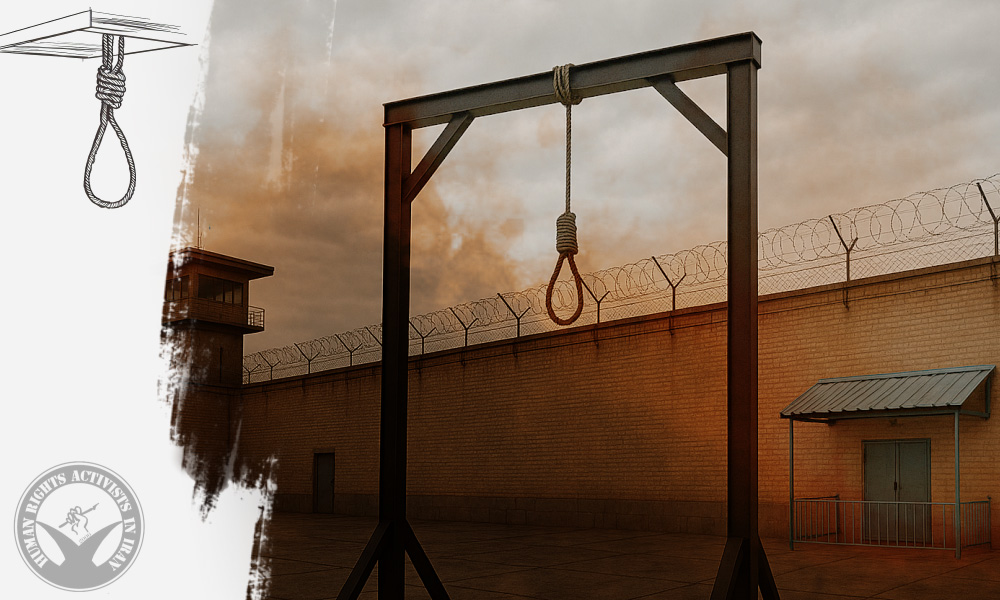
At dawn on October 30, four prisoners were executed at Ghezel Hesar Prison in Karaj. Two of these individuals had been sentenced to death on drug-related charges, while the other two were convicted of “moharebeh” (enmity against God) due to armed robbery.

HRANA, the news agency of Human Rights Activists in Iran, identified the executed prisoners as “Abdullah Tajik, an Afghan national, Mostafa Gholamzadeh, Mohammad Jalali, and Saman Anbari.” According to HRANA, Mr. Tajik and Mr. Gholamzadeh were sentenced for drug-related offenses, while Mr. Jalali and Mr. Anbari were convicted of moharebeh for their involvement in armed robbery.

Earlier, on Monday, HRANA reported that eight prisoners had been moved to solitary confinement in Ghezel Hesar Prison, all of whom were facing death sentences on drug-related charges. Except for Abdullah Tajik and Mostafa Gholamzadeh, the remaining prisoners were subsequently returned to the general ward.

As of this report, prison authorities and relevant institutions have not officially announced these executions.

According to data gathered by the Department of Statistics and Publication of Human Rights Activists, Ghezel Hesar Prison in Karaj witnessed the highest number of executions in 2023, with Zahedan Prison following closely behind. For a comprehensive examination of the details and statistics surrounding the executions in Iran, refer to HRANA’s report.

Nayeb Askari Sentenced to 15 Years in Prison and Heavy Fine After Death Sentence Overturned

Nayeb Askari, a political prisoner detained in Urmia Prison, has been re-sentenced by Branch 2 of the Urmia Revolutionary Court to 15 years in prison and a fine of 900 million tomans, following the Supreme Court’s decision to overturn his prior death sentence and refer his case for retrial.

This updated sentence was issued last week by Branch 2 of the Urmia Revolutionary Court. According to HRANA’s sources, the fine was imposed on Askari as compensation for alleged damage to government property.

Initially, on April 15, 2023, Askari was sentenced to death in absentia and without legal representation by Branch 2 on charges of “enmity against God (moharebeh).” After he appealed, the court downgraded the charge from “moharebeh” to “armed rebellion (baghi)” but re-issued a death sentence in late October 2023.

Askari’s alleged membership in a Kurdish opposition party was cited as evidence supporting the charges in his case.

Arrested by IRGC intelligence agents on March 27, 2021, in Urmia, Askari was later moved to a detention facility and, on June 17, 2021, to Urmia Prison.

HRANA’s source reveals another ongoing case accusing Askari of the murder of IRGC member Mostafa Soltani. In 2013-2014, Soltani was injured during a clash with a political opposition party member, passing away six years later from COVID-19. Soltani’s family claims alleged Askari’s involvement in the altercation caused the sustained injury leading to his eventual death.

A new case, opened on July 12, 2021, based on a complaint from the Urmia Prison head, resulted in a three-month imprisonment extension and 50 lashes for “disrupting prison order.”

According to HRA’s annual report, in 2023, Urmia Prison officials executed 29 inmates, positioning this facility as the sixth highest in terms of executions among the ranked prisons.

Maryam Akbari Monfared’s Imprisonment Extended by Two Years After Completion of 15-Year Sentence

On October 11, Maryam Akbari Monfared completed her 15-year prison sentence, but she remains behind bars due to the enforcement of a new two-year sentence. This extension means the political prisoner, who is the second longest-held female political detainee in Iran, will continue her incarceration.

Akbari Monfared’s lawyer, Hossein Taj, commented on the situation: “After 15 years of imprisonment with exile and not a single day of furlough, my client’s sentence ended. Over the years, several cases were initiated against her, most of which ended in acquittal. However, the latest case, presented without evidence, resulted in a two-year sentence. According to the law, the new sentence should be served in Tehran.”

Akbari Monfared was arrested on December 31, 2009, following the Ashura protests, demonstrations that erupted in response to the disputed results of the 2009 presidential election. In June 2010, she was sentenced by Branch 15 of Tehran’s Revolutionary Court, led by Judge Abolqasem Salavati, to 15 years in prison. She was charged with “enmity against God (Moharebeh)” for alleged membership in the People’s Mojahedin Organization of Iran, an accusation she has consistently denied.

On March 9, 2021, Akbari Monfared was transferred from Evin Prison to Semnan Prison, where she has been held in the general ward. Her detention conditions violate the principle of separating prisoners based on the nature of their crimes, and she has had limited access to health facilities.

In July 2022, two new cases were brought against her in the courts of Evin and Semnan. A year later, in July 2023, her lawyer confirmed that she had been sentenced to an additional two years in prison by the Revolutionary Court.

Akbari Monfared’s family has a history of political persecution. Two of her brothers were executed in 1981 and 1984 by Iran’s Revolutionary Courts for alleged membership in the People’s Mojahedin Organization of Iran. In 1988, her younger brother and sister were also executed during the mass killings of political prisoners.

A mother of three daughters, Maryam Akbari Monfared now holds the position of the second longest-serving female political prisoner in Iran, following Zeinab Jalalian.

Hatem Ozdemir’s Death Sentence Upheld by the Supreme Court

The Supreme Court has upheld the death sentence of Hatem Ozdemir, a Turkish citizen currently imprisoned in Urmia. In late May of this year, Branch 3 of the Revolutionary Court of Urmia sentenced Mr. Ozdemir to death on charges of “enmity against God” (Moharebeh).

According to HRANA, the Supreme Court recently confirmed Mr. Ozdemir’s death sentence, and this decision has been communicated to his defense attorney.

In late winter 2021, Branch 1 of the Revolutionary Court of Khoy initially sentenced Ozdemir to death on charges of “armed rebellion” (Baghi). This verdict was delivered to him on March 15 of that year. However, the Supreme Court later overturned the ruling, sending the case back for a retrial in a parallel court.

Following a re-examination of the case and a new hearing, the Revolutionary Court of Urmia, presided over by Judge Najafzadeh, reaffirmed the death sentence in late May, again on charges of “enmity against God.”

Ozdemir was first arrested by security forces in Maku in the early summer of 2019. After two months, he was transferred to the political ward of Urmia Prison. On September 18 of the same year, he was moved to the Ministry of Intelligence’s detention facility in Urmia and, shortly afterward, returned to Urmia Central Prison.

Political Prisoner Afshin Baymani Transferred from Ghezel Hesar Prison to Hospital

Afshin Baymani, a political prisoner held in Ghezel Hesar Prison in Karaj, was transferred to a hospital outside the prison yesterday, August 28, following a deterioration in his health and symptoms of a heart attack.

This political prisoner, serving a life sentence and suffering from coronary artery disease, has long been deprived of adequate medical services and access to specialized treatment centers due to obstruction by prison authorities. Ultimately, last evening, he was transferred to a hospital outside the prison after showing symptoms of a heart attack.

On July 28, 2024, Mr. Baymani fainted and fell in prison due to a severe drop in blood pressure. He suffered a head injury and bleeding after hitting a wall. After examining him, the prison nurse emphasized the necessity of transferring him to a hospital for an angiography procedure. Mr. Baymani requested medical leave to receive treatment under the care of his specialist doctor, but his request was denied by prison authorities as before.
Previously, on January 29, 2024, Baymani was transferred to Rajai Shahr Hospital in Karaj due to poor physical condition but was returned to prison the next day without receiving specialized medical care. At the hospital, only a few tests, including an echocardiogram and a stress test, were conducted, and heart and blood pressure medications were prescribed. He had previously been granted medical leave for open-heart surgery, but was arrested in Isfahan and returned to prison.

Also in November 2023, this political prisoner was granted medical leave from Ghezel Hesar Prison for treatment and medical care after posting bail. However, on December 21 of the same year, he was re-arrested for unknown reasons and transferred to Asadabad Prison in Isfahan. He was eventually transferred back to Ghezel Hesar Prison in January of 2024.

Baymani, father of two children, was arrested in September 2000 and was sentenced to death by the Tehran Revolutionary Court on charges of “enmity against God (moharebeh).” This sentence was later reduced to life imprisonment after six years. Since then, he has been serving his sentence in various prisons.

Afshin Baymani has been suffering from coronary artery disease since July 2017. In July 2021, he underwent heart angioplasty surgery at Amirabad Hospital in Tehran.

The denial of adequate medical treatment for political prisoners in Iran constitutes a form of torture and a grave violation of human rights. This systematic and deliberate deprivation is often employed as a tool for political repression, aiming to intimidate and silence dissent. In numerous instances, prison authorities not only withhold essential medical care but also obstruct the transfer of critically ill prisoners to specialized hospitals, further endangering their lives.

Subscribe to Our Newsletter

Now is definitely not the time to stop reading!

A Report on the Current Status of Zeynab Jalalian in Yazd Prison in the Seventeenth Year of Imprisonment

Zeynab Jalalian, a political prisoner, is serving her seventeenth year of a life sentence in Yazd Prison. Despite numerous physical ailments, she has been denied proper medical care and hospital transfer.

In violation of prison rules that dictate housing prisoners according to the nature of their offenses, she has been held in the same ward as those convicted of violent crimes.

Ms. Jalalian suffers from pterygium (an eye disease) as well as kidney and gastrointestinal diseases. Recently, due to pain in her right side, she was transferred to the prison infirmary. She was examined by the prison doctor, but no specialized treatment was provided. This political prisoner requires hospitalization and specialized care, yet the relevant authorities continue to prevent her transfer.

Zeynab Jalalian was arrested in 2008 and in 2009 was sentenced to death for “moharebeh” (enmity against God) due to her membership in opposition groups. Additionally, she received one year in prison for illegal exit from the country. Her death sentence was upheld by both the Court of Appeal and the Supreme Court but was later commuted to life imprisonment.

Ms. Jalalian has reported being subjected to various forms of torture during her detention, including flogging on the soles of her feet, punches to the stomach, head banging against the wall, and threats of sexual assault.

Her physical condition and deprivation of appropriate treatment have raised serious concerns about her health. This situation not only highlights the human rights violations against her but also reveals the alarming conditions of political prisoners in Iran.

Iranian-Swedish Dual National Ahmad-Reza Jalali on Fourth Day of Hunger Strike in Evin Prison

Ahmad-Reza Jalali, a dual-national death-row political prisoner currently held in Evin Prison, began a hunger strike on June 25th in protest of not being included in the recent prisoner exchange between Iran and Sweden.

Vida Mehrannia, Mr. Jalali’s wife, announced on her personal page: “My husband, who faces imminent execution by the Islamic Republic, started a hunger strike on Tuesday, June 25th, in protest of not being included in the recent prisoner exchange between Iran and Sweden.”

Mrs. Mehrannia added: “He has endured nearly 3,000 days in the notorious Evin Prison. The UN and many human rights organizations have declared my husband innocent, confirming that he was arbitrarily detained and used as a pawn in Iran’s cruel hostage diplomacy. They have called for his unconditional release.”

Recently, the Swedish Prime Minister announced the exchange of Hamid Nouri with Saeed Azizi and Johan Floderus, a Swedish diplomat.

Mr. Jalali was arrested by security forces in May 2016 and sentenced to death on charges of espionage. This sentence was ultimately upheld by the Supreme Court in December 2017.

On May 10, 2022, former Judiciary spokesperson Zabihollah Khodaeian stated in a press conference that Ahmadreza Jalali’s death sentence was final. He also claimed that there was no connection between the cases of Ahmadreza Jalali and Hamid Nouri, asserting, “The exchange of these two individuals is not under discussion.” However, Amnesty International issued a statement indicating that Iranian authorities aimed to exchange Jalali by threatening his execution.
Professor Jalali, invited to Iran by the University of Tehran in May 2016, was arrested on charges of “enmity against God (Moharebeh) through espionage for Israel.” The Tehran Prosecutor accused him of “transferring information about confidential projects in research, military, defense, and nuclear fields in exchange for citizenship for him and his family from Sweden.”

Four Protestors Remain in Detention Amid Legal Uncertainty

Milad Armoon, Seyed Mohammad-Mehdi Hosseini, Mehdi Imani, and Navid Najaran, four defendants in the so-called “Ekbatan Township” case, remain in indefinite detention for over a year.

These individuals were transferred from Ward 2-A of Evin Prison, which is under the control of IRGC Intelligence, to Qezel Hesar Prison in Karaj in mid-June of this year, after completing the interrogation process. Their case is still in Branch 4 of the Criminal Court Prosecutor’s Office of District 27 in Tehran and has not yet been referred to Branch 13 of the Tehran Criminal Court. According to the defense attorney for one of the defendants, their transfer to the IRGC Intelligence Detention Center was for completing court-requested investigations.

In early November 2022, amid nationwide protests, at least 50 young residents of Ekbatan Township were arrested by security forces for their alleged involvement in an incident that resulted in the death of a Basij member named Arman Aliverdi.

Indictments were issued for 14 of them. In April 2023, the Judiciary spokesman announced charges of “enmity against God (Moharebeh) through the use of cold weapons and actions against national security” for three defendants. According to the issued indictment, these citizens are accused of charges including “assisting in intentional murder,” and “disruption of public order and peace.”

In late September 2023, after four court hearings, the court did not refer their case for further investigations and Branch 13 of the Tehran Criminal Court intervened to expedite the process and determine the status of the defendants. Another part of their case has been referred to Branch 15 of the Tehran Revolutionary Court, presided over by Judge Abolghasem Salavati.

Of the eight defendants, Hossein Nemati, Alireza Barmarz Pournak, Alireza Kafaie, and Amir-Mohammad Khosh-Eghbal were released on bail from Qezel Hesar Prison in February of last year.

Previously, defense attorney Payam Derafshan confirmed that four individuals face the charge of ‘Moharebeh.’

In April of this year, the case was returned to the Prosecutor’s Office for what was described as addressing a “confidential deficiency.”

Below are the details and arrest dates of the defendants in the so-called “Ekbatan Township” case who remain in detention and uncertainty:

  • Milad Armoon – aged 25 – Arrest Date: November 2, 2022
  • Seyed Mohammad-Mehdi Hosseini – aged 25 – Arrest Date: December 6, 2022
  • Mehdi Imani – aged 29 – Arrest Date: December 15, 2022
  • Navid Najaran – aged 32 – Arrest Date: Unknown

Rapper Saman Seydi Sentenced to Five Years in Exile

Saman Seydi, known as Yasin, was arrested during nationwide protests in 2022 and has been sentenced to five years of exile in a city in Kerman Province.

Seydi’s lawyer, Hossein Sartipi, announced that according to a verdict issued by Branch 15 of the Revolutionary Court of Tehran, his client will serve five years in exile. Sartipi plans to appeal to the Supreme Court, arguing that Seydi has already been detained for over 18 months, suggesting he has effectively served his time.

In mid-April 2024, Seydi was taken from Ghezel Hesar Prison in Karaj to a hospital for one day for nasal surgery, following an injury sustained during his incarceration.

Seydi was arrested on October 2, 2023, in Tehran during the protests and subsequently transferred to Rajai Shahr Prison.

On November 8, 2023, Seydi was convicted on charges including “enmity against God” (Moharebeh) and “assembly and collusion against national security,” and was initially sentenced to death. However, the Supreme Court overturned the death sentence, leading to the transfer of his case to another court branch for retrial.

On August 2, 2023, Seydi, along with six other political prisoners, was moved from Rajai Shahr Prison to Evin Prison. On September 3, 2023, he was transferred again with 12 inmates to Ghezel Hesar without prior notice and was held in a ward with prisoners convicted of drug offenses, violating regulations that require political prisoners to be housed separately.

Death-Row Political Prisoner Nayeb Askari Moved to Solitary Confinement, Heightening Fear of Imminent Execution

Nayeb Askari, a political prisoner on death row in Urmia Prison, was transferred to solitary confinement at Urmia prison on March 27, 2024, sparking fears among his family that his execution may be imminent.

A source with close ties to Askari’s family has confirmed his relocation. While the exact reason for the transfer remains unclear, it is customary for prison authorities to move death-row inmates to solitary confinement before executing them.

Initially sentenced to death for “enmity against God (Moharebeh)” on April 15, 2023, his plea for a retrial was accepted, leading to a charge change to Baghi. In October 2023, the court reaffirmed the death sentence, with the hearings reportedly conducted without his lawyer’s presence. The charge is supported by his alleged membership in a Kurdish political opposition party.

Arrested by IRGC intelligence agents on March 27, 2021, in Urmia, Askari was later moved to a detention facility and, on June 17, 2021, to Urmia Prison.

HRANA’s source reveals another ongoing case accusing Askari of the murder of IRGC member Mostafa Soltani. In 2013-2014, Soltani was injured during a clash with a political opposition party member, passing away six years later from COVID-19. Soltani’s family claims alleged Askari’s involvement in the altercation caused the sustained injury leading to his eventual death.

A new case, opened on July 12, 2021, based on a complaint from the Urmia Prison head, resulted in a three-month imprisonment extension and 50 lashes for “disrupting prison order.”

According to HRA’s annual report, in 2023, Urmia Prison officials executed 29 inmates, positioning this facility as the sixth highest in terms of executions among the ranked prisons.