Update on Bahai Citizen Payam Vali’s Condition in Ghezel Hesar Prison

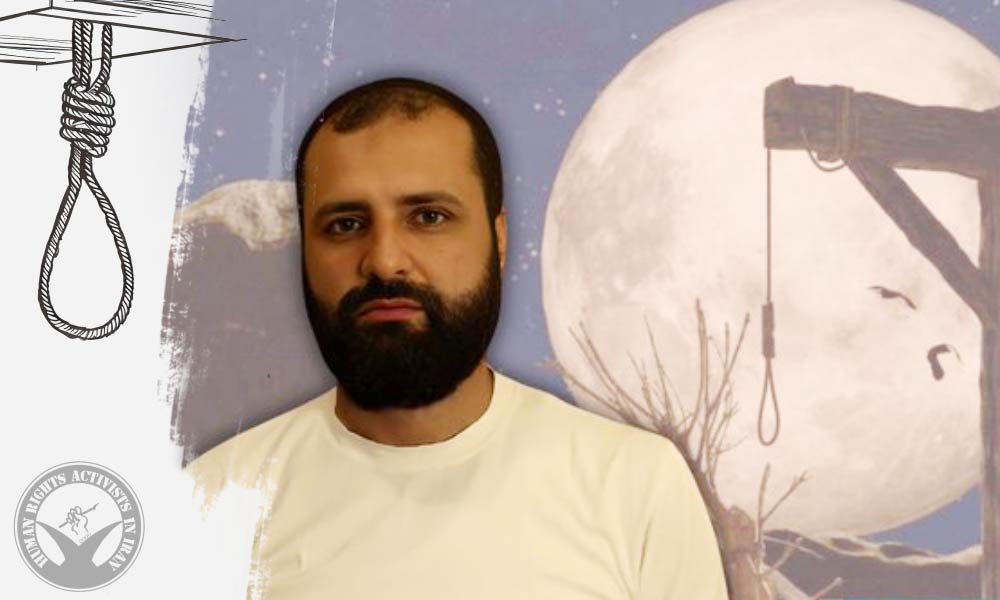
Payam Vali, a Baha’i citizen, is currently serving a six-year sentence in Ghezel Hesar Prison, located in Karaj. He has been denied access to make a phone call to his family, as ordered by prison officials.

According to a reliable source who spoke to HRANA, Vali’s phone card has been blocked. He is also prohibitd from purchasing any item from the prison store. The source revealed that this prohibition was imposed after Vali gave a message via phone addressing the speakers of the Iranian Parliament.

In addition, another source close to Vali’s family informed HRANA that since late May, he has only had one visitation with his family. Furthermore, other prisoners have been threatened to refrain from providing Vali with their phone cards.

On September 24, 2022, security forces arrested Vali at his residence in Karaj, subsequently conducting a search of his house and detaining him in Rajai Shahr Prison. He was later relocated to Ghezel Hesar prison.

On May 10, 2023, the Alborz Court of Appeals sentenced Vali to six years for “collaboration with adversary countries,” three years and one month for “inciting people to commit violence,” and eight months for “propaganda against the regime.” According to Article 134 of the Islamic Penal Code, the first charge carries an enforceable prison term of six years. It is worth noting that Vali had initially been sentenced in February 2023 to ten, five, and one-year terms for the respective charges mentioned above.

According to HRANA annual report, from the full human rights reports regarding the violation of religious minorities’ rights, 64.63% belonged to the violation of the rights of Baha’is.

The deprivation of the freedom to practice their religion is a breach of Article 18 of the Universal Declaration of Human Rights and Article 18 of the International Covenant on Civil and Political Rights. The United Nations covenant holds that every person has the right to freedom of religion, freedom of converting religion, as well as freedom of expression, individually or collectively; openly or secretly.

Two Baha’i Citizens Arrested

HRANA, Human Rights Activists news agency– Two Baha’i citizens, Afif Naeimi (Naimi) and Valliollah Ghadamian, were arrested by security forces on April 29 and May 1, 2023, respectively.

According to a source close to Naimi’s family, on April 29, Naeimi and several of his relatives were gathered in a garden near Karaj when security forces raided the location and arrested Naeimi. He was then taken to Rajai Shahr Prison.

Naeimi is a former member of a now-disbanded Baha’i group known as the “Yaran e Iran” or “Friends of Iran” that addressed the spiritual and social needs of the Baha’i community.

n 2018, Naeimi was released from Ghezel Hesar prison after serving approximately 10 years in prison. However, on July 31, 2022, he was arrested again, and the Karaj Revolutionary Court sentenced him to seven years in prison in a legal case along with twelve other Baha’i co-defendants.

On May 1, 2023, Valliollah Ghadamin was also arrested by security forces and taken to an undisclosed location.

On May 1, 2023, security forces also arrested Valliollah Ghadamian at his residence in Tehran and took him to an undisclosed location. Ghadamian is a member of a Baha’i association that maintains a Baha’i cemetery in Tehran known as Golestan-e-Javid. In recent days, regime officials have refused to issue burial permits to Baha’is in this cemetery.
The reason for these arrests is currently unknown.

According to HRANA annual report, from the total human rights reports regarding the violation of religious minorities’ rights, 64.63% belonged to the violation of the rights of Baha’is. The Baha’i community in Iran has been subjected to various forms of discrimination and persecution for decades. The Iranian government has imposed severe restrictions on Baha’is’ religious practices, education, employment, and civil rights.


Baha’i Citizen Payam Vali Sentenced to 16 Years

The Alborz Revolutionary Court sentenced Baha’i citizen Payam Vali, imprisoned in Ghezel Hesar Prison, to 16 years imprisonment, pre-trial detention included. He was also banned from leaving the country for two years and sentenced to two years in exile in Yasuj.

According to HRANA, the news agency of Human Rights Activists, Baha’i citizen Payam Vali was sentenced to 16 years in prison.

According to this verdict, Vali received ten years for “collaboration with hostile countries,” five years for “inciting people to commit violence,” and one year for “propaganda against the regime.” As additional punishment, he was banned from leaving the country for two years and sentenced to a two-year compulsory residence in Yasuj County.

If the verdict is upheld on appeal, based on Article 134 of the Islamic Penal Code, ten years in prison for “collaboration with hostile countries”, will be enforceable.

On September 24, 2022, security forces arrested Vali at his house in Karaj, searched the house, and detained him in Rajai Shahr Prison. He was later relocated to Ghezel Hesar prison.


Two Inmates Executed in Ghezel-Hesar Prison

On January 5, 2023, two death-row inmates previously convicted of drug-related crimes were executed in Ghezel-Hesar Prison, Karaj.

According to HRANA, the news agency of Human Rights Activists, two inmates identified by HRANA as Mehdi Asgari and Rostam Abbaszadeh were executed in Ghezel-Hesar prison.

An informed source told HRANA that Abbaszadeh had been released after serving out his sentence for drug offences in 2006. However, when he was arrested for the second time, he received a life sentence after reviewing the first case and a death sentence for the second case.

None of the official sources and media outlets inside the country has reported these executions at the time of writing.

In 2022, the Department of Statistics and Publication of Human Rights Activists in Iran registered 457 reports related to the death penalty. This included 92 death sentences, including the conviction of 6 people to public execution and 565 execution sentences were carried out, 2 of which have been carried out in public. Based on the announced identifications of some of the executed individuals, 501 were male and 11 were female. In addition, 5 juvenile offenders were executed in 2022, meaning they were under the age of 18 at the time they committed the crime.


HRANA’s Daily Review of Protests in Iran

On September 10-11, 2022, at least eleven protests and two labour strikes took place in Iran.

Saturday, September 11

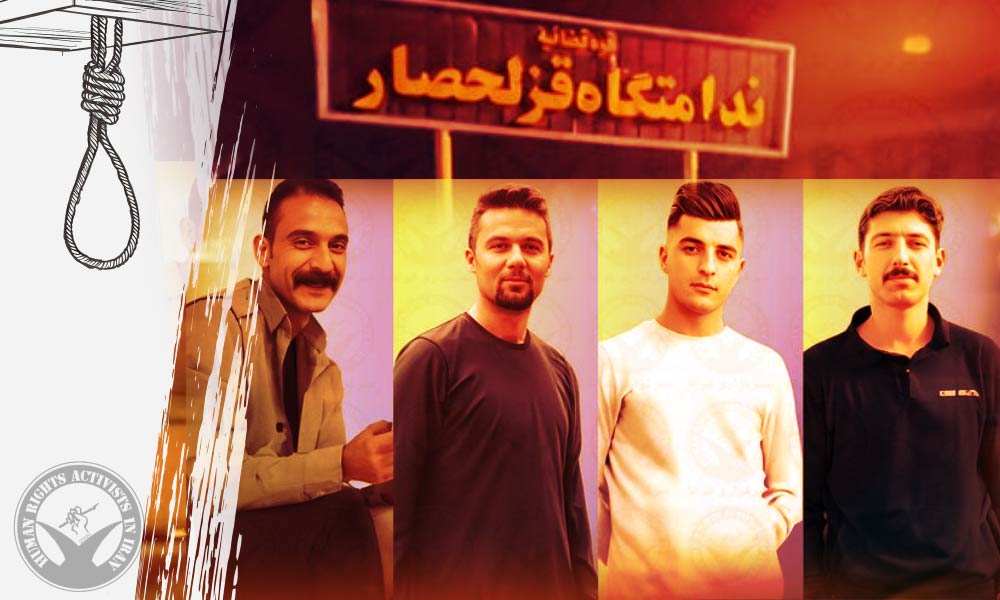
The families of prisoners who are on death row continued their protests before the Justice Building in Tehran. They asked judicial authorities to stop executions. According to HRANA’s latest statistics, there are 46 death-row convicts in Ghezel Hesar Prison in Karaj.


In Sanandaj, Kurdistan Province, a group of women’s rights activists gathered in front of the Justice Building to ask for safety for women following Shalir Rasouli’s death at a hospital last Thursday. Rasouli threw herself out of the window of her apartment to escape an assailant.

Along with their families, Achondroplasia (a genetic disorder) patients held a protest before the Food and Drug Administration in Tehran. They demanded supplying and importing their needed drugs such as Voxzogo.

In Alborz province, a group of citizens protested against demolishing a ski resort which is a tourist attraction.

A group of Urmia residents demonstrated to demand rescuing Urmia Lake from drying up completely.


Sunday, September 11

The families of prisoners presently on death row continued their protests before the Headquarters of the Judiciary in Tehran. They demanded stopping the executions.

The pensioners of the Fulad Pension Fund demonstrated in front of the building of this fund in Isfahan, Tehran and Ahvaz. They demanded addressing pensions disparities and a 38% increase in pensions.

The workers of the Rudbar’s Municipality protested to demand unpaid wages for the last two months and accumulated unpaid wages equivalent to four-month wages during the last year. Moreover, there are some unpaid benefits like severance and overtime pay accumulated during the past nine years.

In Tehran, a group of teachers and families with exceptional children protested against new restrictions on school transport service in front of the Special Education Organization.

In Asaluyeh, The workers of the petrochemical company Dena went on strikes to protest against the two months of non-payment.

The temporary workers of the Islamabad Petrochemical Company staged a labour strike to demand the last two months’ wages.

Subscribe to Our Newsletter

Now is definitely not the time to stop reading!

HRANA’s Daily Review of Protests in Iran

On Thursday, September 8, 2022, at least two protests took place in Iran.

The families of prisoners presently on death row in Ghezel Hesar Prison and Karaj Central Penitentiary protested before the Judiciary building in Tehran. These protestors held placards asking to stop executions.

Residents of Mariwan held a protest demanding security for women, following Shalir Rasouli’s death at a hospital, a woman who threw herself out of the window of her apartment to escape an assailant.


HRANA’s Daily Review of Protests in Iran

On Wednesday, September 7, 2022, at least three protests took place in Iran.

For the second consecutive day, a group of families and relatives of prisoners presently on death row protested before the Judiciary building in Tehran and the Revolutionary Court in Karaj. These protestors held placards asking to stop executions. In August, HRANA identified 46 death row convicts in Ghezel Hesar Prison.

In Pardis Town, Tehran, several individuals protested in front of the Prosecutor’s Office to claim property rights. Pardi Omran Company obstructs the enforcement of the court order confirming the ownership of these individuals, protesters said.


HRANA’s Daily Review of Protests in Iran

On Tuesday, September 6, 2022, at least seven protests and one labour strike took place in Iran.

A group of families of prisoners presently on death row gathered in front of the Karaj Revolutionary Court to demand the end of executions. Three inmates were executed in Karaj Central Penitentiary and six are at risk of imminent execution in Ghezel Hesar Prison.

A group of Women Rights Activists protested at the Justice Building in Marivan, Kurdistan Province. The protestors demanded security for women, following a recent incident.


For the third consecutive day, the workers of Kian Tire Manufacturing Company went on strike and assembled at their workplace to protest unpaid wages and job uncertainty.

A group of contract teachers gathered before the Governorate Building in Arak to demand official recruitment by the Ministry of Education.

The residents of the Morgmalek village in Shahrekord County held a protest against slow court proceedings in handling a lawsuit in regard to their lands.

A number of school service workers held a protest in Mahabad and Kermanshah.

The workers of Ardestan Cement Factory gathered before the Ministry of Labour in Ardestan, Isfahan Province.

Christian Convert Hamed Ashouri Sent to Karaj Central Prison

On Tuesday, July 27, Christian convert Hamed Ashouri was sent to Karaj Central Prison to endure his sentence.

According to HRANA, the news agency of Human Rights Activists, quoting the website Article 18, the Court of Appeals upheld Ashouri’s ten-month prison sentence the previous day.

Hamed Ashouri had been arrested by security forces in Fardis city in Karaj, in March 2017, and transferred to Ghezel Hesar Prison in Karaj for interrogation. He was temporarily released after ten days. It is alleged that security forces raided Mr. Ashouri’s home while he was in custody.

A hearing on the charges against this citizen was held in February 2020 in Branch 4 of the Revolutionary Court of Karaj. Finally, in April of this year, Mr. Ashouri was sentenced to 10 months in prison on charges of propaganda against the regime.

Despite the fact that Christians are recognized as a religious minority under Iranian law, security forces nevertheless pursue the issue of Muslims converting to Christianity with particular sensitivity.

The Iranian regime targets Christian converts despite Article 18 of the Universal Declaration of Human Rights and Article 18 of the International Covenant on Civil and Political Rights, which state that every individual has the right to freedom of religion and belief and freedom to express it openly or secretly.

Coronavirus outbreak in Iranian prisons

On February 29, 2020, Ebrahim Raisi, the Chief Justice of Iran, issued a circular laying out policies to prevent the spread of Coronavirus in prisons.  This order mandates giving 15 -30 days furlough to prisoners with sentences less than five years. Another part of this order is about reducing entries into prisons, temporary releases, and public activities in prisons. In addition, this order mandates to increase alternative sentences and suspended prison terms instead of imprisonments.

Although the Chief Justice of Iran announced that the prisoners with less than five years prison term will be granted furlough, the prison authorities are not cooperative with political prisoners and prisoners of conscience to implement this regulation. As an example, Esmaeil Abdi and Negin Ghadamian were sentenced to five years imprisonment and after spending four and three years in prison respectively, they were not granted any furlough. Nazanin Zaghari’s husband reported that she is suspected to have Coronavirus. She is serving the 4th year of her five-year imprisonment sentence. Reportedly, three women were diagnosed with Coronavirus in Evin Prison.

The number of prisoners suspected of having coronavirus is increasing. Several prisoners suspected of having coronavirus were identified in Urmia, Khorramabad, Gorgan, Sanandaj, Qom, and other prisons.


A letter from political prisoner’s families

With the current spread of Coronavirus in prisons in Iran, some of the families of the political and security prisoners have written a letter to the judicial authorities on February 26, 2020, requesting furlough for prisoners until this crisis (Coronavirus) is over in the prisons. Considering the closed environment of the prison, malnutrition of the prisoners, shortage of medical care and facilities, high density of prisoners, and the occurrence of some cases suspected to be related to coronavirus has raised concerns of the families of prisoners.

The families of the following prisoners have signed this letter:

Mahmoud Beheshti Langeroudi, Esmaeil Abdi, Mohammad Habibi, Narges Mohammadi, Amir Salar Davoudi, Farhad Meisami, Roeen Otoufat, Jafar Azimzadeh, Shahnaz Akmali, Majid Azarpey, Atena Daemi, Sam Rajabi, Morad Tahbaz, Niloufar Bayani, Abdolreza Kouhpaieh, Amirhossein Khaleghi, Houman Jokar, Taher Ghadirian, Neda Naji, Mehrdad Mohammadnejad, Mohammad Abolhasani, Peyman Koushkbaghi, Aras Amiri, Jafar Fazel, and Alireza Golipour.

In some of the prisons, such as Khorramabad or Sanandaj Prisons, the prisoners asked the authorities to provide them with medical and hygiene necessities and to quarantine the prisoners who are suspected to be infected and have threatened that if this negligence is continuous, they will go on hunger strike. Other prisons such as Karaj, Tabriz, Evin and many other prisons across the country are also demanding similar precautions.


A death in Greater Tehran Central Penitentiary

It should be noted that on the same day, a prisoner of Greater Tehran Central Penitentiary who had symptoms similar to that of Coronavirus passed away after the prison authorities delayed in transferring him to the hospital to receive proper medical care. His name was Hamid Reza and he was 44 years old. He was convicted of a financial felony who was serving his sentence in Greater Tehran Central Penitentiary. He was initially diagnosed with symptoms of flu but after a few days, he started to cough and eventually passed away in the prion.

In addition, 60 prisoners of Greater Tehran Central Penitentiary who were working in the kitchen or service sector, were transferred to Rajai Shahr Prison. Moreover, 7 other prisoners in section 5 ward 2 have Coronavirus symptoms; they were kept in the medical ward without receiving medical care and were not transferred to the hospital.


Evin Prison and the violation of the Prisoners Classification Regulation

Amir Hossein Moradi, Saeed Tamjidi, Mohammad Rajabi, Milad Arsanjani, Jamil Ghahremani, and 15 other arrestees of the last November’s protests who were kept in Greater Tehran Central Penitentiary, were moved from their cell after an inmate was diagnosed with Coronavirus in their cell. Amir Hossein Moradi returned to prison on February 29, 2020, after spending a week in the hospital for another disease. He returned to his cell but after an hour he was transferred to the medical ward for his positive test results of Coronavirus. Although they were told that they will be transferred to Yaft Abad Hospital, they were transferred to ward 1 of this prison, which belongs to the prisoners who committed violent crimes. In June 2019, Alireza Shir Mohammadi, a political prisoner, was fatally stabbed in this ward by two other inmates of this ward who were charged with a drug felony. After this incident, the prison authorities moved other political prisoners from this ward to avoid future incidents. This is against prisoners’ segregation rule. According to a close source “section, 1 of the Greater Tehran Central Penitentiary has 10 wards and one suite which had been used as an exile to punish the prisoners who get in the fight or carry drugs. Since 2018, the political prisoners have been transferred to this suite. This suite has limited facilities and does not even have access to prison commissaries. Their door should be locked all the time however, in the case of Mr. Shir Mohammadi, the warden intentionally did not lock the door which was illegal.

Alireza Shir Mohammadi, a 21-year-old political prisoner at the Greater Tehran Central Penitentiary was murdered in prison on June 10, 2019. He was attacked by two other prisoners, who were later convicted of murder and sentenced to death. The prisoner in question was stabbed in the neck and stomach and died before arriving at the hospital. Shir Mohammad Ali was arrested on July 14, 2018, and was sentenced to eight years in prison on charges of “blasphemy”, “insulting the former and current Supreme Leaders”, and “propaganda against the state”.  He was detained in a solitary confinement cell for 36 days after being arrested. His bail was set at 80 million Tomans but the Revolutionary Court illegally rejected his release on bail. Throughout his prosecution process, he did not have access to an attorney because of his financial conditions. He was waiting for the decision of the appeal’s court when he was murdered. He protested his detention along with non-political prisoners and went on a hunger strike on March 14, 2019, which ended on April 16 after prison authorities accepted his demands. He also wrote open letters criticizing the “unsafe” and “inhumane” conditions of Greater Tehran’s Penitentiary Prison. He wrote an open letter five days into his hunger strike on March 18, 2019. In this letter, he explained the awful condition he was experiencing in prison. In addition, he claimed that he was denied regular social rights that any prisoner is entitled to have. However, his main request, reflected in this letter, was to be transferred to another prison (Evin prison). No judicial authorities or prison officials reacted to his open letter. 

A prisoner of ward 4 of Evin Prison was transferred to an unknown place for his positive test results of Coronavirus. He kept with several other prisoners and political prisoners of this ward who are on hunger strike and are more vulnerable to this disease.


Khorramabad and Ghezel Hesar Prisons

On March 1, 2020, the prisoners of Khorramabad Prison have started a sit-in to protest not being sent to furlough although Coronavirus has spread in this prison. There is a shortage of access to medical care and hygiene products for the diagnosis and treatment of Coronavirus. Several prisoners who have symptoms of this disease did not receive any treatment and were kept with other prisoners. Several prisoners who went on furlough were returned to prison. A close source to a family of a prisoner in this prison told HRANA that a sick inmate with severe coughs received neither medical care nor disinfecting substances and hygiene products such as alcohol, mask, and gloves.

Two prisoners of Qezelhesar Prison, Basat Ali Khazaei, and Gholamhossein Abolfavaei were moved to the quarantine section in the health ward due to having positive test results of Coronavirus. They were charged with drug felony and kept in a ward with 500 other inmates.


Rajai Shahr and Urmia Prisons

The prisoners are deprived of medical care, disinfecting substances, and hygiene products such as alcohol, mask, and gloves.  Payam Shakiba, Mohammad Banazadeh Amirkhizi, and Majid Asadi are serving their third year in prison. Arash Sadeghi, who is diagnosed with Chondrosarcoma (bone cancer), has had an infection in his right hand, digestion issues, and because of his weak immune system should be prioritized to be granted a furlough. Saeed Shirzad is spending the last months of his prison sentence.

On March 2, 2020, Mohammad Ghanbardoost, a political prisoner, was transferred to the hospital due to having symptoms of coronavirus disease. He kept with other political prisoners and may infected others. He was arrested on August 16, 2017, and was sentenced to five years in prison on the charge of “cooperating with Takfiri groups”.

Several Coronavirus suspected patients in Urmia Prison were transferred to hospitals outside the prison. One Urmia prisoner died in hospital, but prison authorities claimed that he was infected outside the prison.


Update on political prisoners temporary releases

On March 3, 2020, Mohammad Karimi granted a furlough and temporarily released until April 3, 2020. Mr. Karimi was sentenced to one-year imprisonment on the charge of “propaganda against the state” which was upheld by the appeals court. on July 3, 2020, he was arrested and transferred to Evin Prison to serve his sentence.

On March 2, 2020, Shahnaz Akmali, political prisoner, was granted a furlough and temporarily released until April 3, 2020. She was arrested on January 15, 2020. She was sentenced to one-year imprisonment and was banned from having any social media account, membership in any group, and leaving the country on the charge of “propaganda against the state”. An appeals court upheld her sentence without hearing either Ms. Akmali or her attorney. She is the mother of Mostafa Karim Beygi one of the people who was killed by security forces during green movement uprising in 2009.

On February 29, 2020, Reza Gholamhosseini, a political prisoner of Bandar Abbas Prison, was granted a furlough and temporarily released until April 3, 2020. He was arrested on September 25, 2019, and was sentenced to three years imprisonment on the charges of “propaganda against the state” and “insulting supreme leader”. His sentence was reduced to 18 months later because he did not request an appeal.