Day Thirty of the Protests: From Internet Disruptions to the Pursuit of the Injured

HRANA – According to the latest aggregated data compiled by HRANA, on the thirtieth day since the start of the protests, the total number of confirmed deaths has reached 6,126. Of these, 5,777 were protesters, 86 were children under the age of 18, 214 were forces affiliated with the government, and 49 were non-protesters or civilians. The number of deaths still under investigation stands at 17,091.
The total number of arrests has reached 41,880, the number of severely injured individuals 11,009, and 245 cases of forced confessions broadcast have been reported. The number of individuals summoned by security institutions is 11,024. Overall, 651 protest-related incidents have been recorded across 200 cities in 31 provinces.

On the thirtieth day of the protests, the continuation of communication control policies, the ongoing wave of arrests, and growing concerns over the safety of medical centers for the injured have been among the most significant developments. In addition, government pressure on journalists and the transfer of injured protesters from hospitals to detention facilities persisted, prompting international reactions.

Ongoing Internet Disruptions and Shutdowns: Pressure on Information Flow and Economic Impact

On the thirtieth day of the protests, widespread internet disruptions and shutdowns have remained one of the government’s main tools for restricting the flow of information and reducing protesters’ ability to organize. NetBlocks has reported that the internet shutdown has entered its eighteenth day, while restrictions on circumvention tools have simultaneously intensified. This situation has effectively caused serious disruption to citizens’ access to information, communication with family members, online services, and independent media. In this context, Iran’s Minister of Communications, referring to the economic consequences, stated that the cost of the internet shutdown amounts to “five trillion tomans per day” (approximately 35 million dollars). Beyond its impact on online businesses, this figure reflects direct repercussions for household livelihoods and small and medium-sized economic activities.

At the same time, Sazandegi newspaper, in an analytical report, described the nationwide internet shutdown as a sign of policy failure and a crisis in communications governance. It emphasized that broad blockage not only prevents the transmission of news and images about the protest situation, but also leads to declining public trust, heightened uncertainty, and deepening economic damage.

Meanwhile, the International Federation of Journalists has issued statements in response to the security forces’ crackdown on journalists and media activists, reporting the arrest of two photojournalists: Hamed Araghi, arrested in Tehran, and Artin Ghazanfari, arrested in Mashhad following a search of his home and the seizure of his equipment. This stance, alongside the ongoing internet shutdown, presents a clear picture of the government’s systematic efforts to control the public narrative: cutting communications to limit the spread of news, while simultaneously arresting and pressuring journalists and photographers to restrict content production and on-the-ground documentation. Taken together, developments on the thirtieth day of the protests show that information control remains one of the central pillars of the repression policy, extending beyond “filtering” to “complete blockage,” “increased social and economic costs,” and the “securitization of media activity.”

Escalation of Mass Arrests and Intensified Security Measures

In recent days, reports indicate widespread arrests across various cities. Alongside scattered detentions of citizens in multiple locations, news has emerged of the arrest of more than 300 citizens in Semnan Province, as well as the detention of at least 54 citizens in cities including Yazd, Zanjan, and Malard. On an individual level, cases such as the arrest of a poet and writer in Tehran and the arrest of a Bahá’í citizen in Mashhad (followed by transfer to Vakilabad Prison) reflect the wide range of individuals targeted by security measures.

Security measures have not been limited to arrests alone, with labor activists, religious minorities, and athletes also facing pressure, alongside efforts to control the flow of information. Reports also point to the ongoing broadcast of “forced confessions” as part of an intimidation strategy and the state’s narrative-building around the protests, while some arrests have been accompanied by families being kept uninformed of detainees’ whereabouts. Taken together, these developments indicate that on the thirtieth day of the protests, security agencies continue to pursue an approach centered on mass arrests, intimidation, and control of the narrative.

Updated (Cumulative) Statistics as of the End of the Thirtieth Day of the Protests

• Number of recorded gatherings/protests: 651

• Number of cities (no repetition): 200

• Number of provinces (no repetition): 31

• Total arrests: 41,880

• Arrested students: 62

• Broadcast of forced confessions: 245

• Summoned to intelligence/security agencies: 11,024

• Severely injured individuals: 11,009

• Confirmed fatalities: 6,126

▪️ Protesters: 5,777
▪️ Children (under 18): 86
▪️ Forces affiliated with the government: 214
▪️ Non-protesters/civilians: 49

• Fatalities under investigation: 17,091

Concerns Over Seeking Medical Care and Reports of the Pursuit and Arrest of the Injured

One of the key developments in recent days has been the growing number of reports about injured individuals fearing visits to medical centers, as well as reports of wounded protesters being pursued and arrested in hospitals. Iran’s Ministry of Health has implicitly acknowledged the existence of such concerns and, while emphasizing that seeking treatment at medical facilities “poses no concern,” has urged the injured to refrain from treating themselves at home. In this context, it has been stated that approximately 3,000 injured individuals have sought medical care at treatment centers in recent days.

At the same time, the UN Special Rapporteur on the situation of human rights in Iran has expressed serious concern over numerous reports of the “abduction of injured individuals from hospitals” and their transfer to detention facilities, describing these actions as a clear violation of the right to access medical treatment. According to published accounts, security forces identify individuals wounded in connection with the protests and remove them from hospitals for arrest. This practice not only discourages the injured from seeking medical care, but also increases the risk of aggravated injuries and higher mortality due to lack of treatment. In addition, reports have emerged of pressure on medical staff, including threats or arrests of doctors and nurses who have treated the injured. In response, more than 4,000 physicians have signed a statement condemning security forces’ crackdown with medical personnel. These conditions indicate that in recent days, the “medical space” itself has become securitized, and free and safe access to healthcare is facing serious threats.

Domestic Positions, Denials, and Official Narratives

The hardline, pro-regime newspaper Kayhan has strongly opposed proposals for the “pardon or release of detainees,” effectively rejecting any form of retreat in the face of the protests. This stance can be interpreted as an effort by the government’s hardline factions to prevent the emergence of fractures within the ruling establishment and to preserve a security-driven, repressive policy. By emphasizing harsh measures against protesters, Kayhan effectively calls on the government to continue arrests, threats, and control of the public sphere rather than pursuing de-escalation.

On the other hand, Tehran Province Prisons Organization has denied reports regarding the detention of injured protesters in Fashafuyeh Prison and their lack of access to medical services. These official denials come despite numerous reports of families being kept uninformed, concerns over detainees’ health conditions, and difficulties in accessing medical care. Given past experiences with officials’ statements, as well as media and human rights reports, these denials have been met with serious doubt, particularly as simultaneous United Nations reports emphasize the abduction of injured individuals from hospitals and their transfer to detention facilities.

Alongside these developments, some local and security officials have also sought to present a more acceptable narrative of the deadly crackdown by citing casualty figures from both sides of the conflict. For example, the commander of the IRGC in Lorestan Province reported that 334 people were injured during protests in the province and also cited the deaths of two IRGC members and three Basij forces. This type of narrative-building is typically aimed at highlighting casualties among government forces and creating justification for intensified repression. Reports of widespread arrests in certain provinces (including Semnan) have also been published, indicating the continued reliance on a security-based approach to managing the protests.

Overall, the government’s domestic positions on the thirtieth day of the protests can be summarized as follows: denying or rejecting reports of human rights violations against protesters in prisons and medical centers; emphasizing threats and harsh measures through outlets such as Kayhan; presenting security-driven narratives of the protests by commanders and officials; and maintaining arrests and pressure as primary tools of social control. These positions indicate that the government continues to frame the situation as a national security crisis, with no signs of reduced violence or a move toward accountability.

In Conclusion

The thirtieth day of the nationwide protests passed amid the continued shutdown and disruption of internet access as a constant element of the policy to control narratives. At the same time, widespread arrests, an increase in summonses, and the ongoing broadcast of forced confessions were reported. Concurrently, concerns over the safety of medical centers for the injured and reports of the pursuit and arrest of wounded individuals have generated new human rights concerns regarding the right to access medical care. Domestically, some media outlets and official bodies have emphasized the continuation of a hardline approach, while reports on the condition of detainees and the injured have been met with official denials. Collectively, these developments indicate that on the thirtieth day as well, repression and communication control continued, the cumulative figures indicate that the social consequences of this crackdown are becoming increasingly widespread.

Day Twenty-Four of the Protests: Continued Communications Blackout and International Warnings of Crimes Against Humanity

HRANA – On the twenty-fourth day of nationwide protests, according to aggregated data compiled by HRANA, the number of confirmed deaths has reached 4,519, while the number of deaths still under investigation stands at 9,049. At least 5,811 people have sustained serious injuries during the protests, and the total number of arrests has risen to 26,314. These figures, amid a communications blackout, security pressure on families, and restricted access to information, likely reflect only a portion of the reality on the ground.

At the same time, developments such as the release of an unprecedented statement by physicians and forensic medicine specialists regarding the alarming treatment of those injured and killed during the protests, the announcement of an emergency session of the United Nations Human Rights Council, and warnings by the body’s Special Rapporteur about the potential commission of crimes against humanity all indicate that Iran’s human rights crisis has entered a new and deeper phase.

Nationwide protests in Iran continued into their twenty-fourth day under conditions of widespread internet shutdowns and severe communication restrictions, while judicial and security pressures on media outlets, public figures, and protesting citizens intensified. On that day, the announcement of an emergency session of the United Nations Human Rights Council signaled the scale and severity of the human rights crisis in Iran.

Disruption of communications and uncertainty over the timing of restored internet access

On the twenty-fourth day of protests, widespread internet shutdowns and disruptions continued. According to data from global traffic monitoring organizations, Iran is experiencing one of the lowest levels of international internet connectivity in the world. This blackout, now entering one of the longest periods of nationwide communications disruption in recent years, has become a key tool for controlling public space, suppressing the flow of information, and limiting independent documentation of the protests.

While there have been reports of brief and extremely limited internet connections for some users, these instances appear less indicative of a sustained restoration of access and more reflective of shifts in how restrictions are being enforced. At the same time, there are indications of the government’s efforts to implement selective internet access and expand the use of a domestic network (intranet), a move that, if enforced, would further restrict citizens’ free access to the global internet and independent platforms.

Statements by government officials have added to the existing ambiguity. On the one hand, promises have been made regarding the restoration of internet access in the coming days; on the other, the head of the Digital Transformation Commission of the Iran Computer Trade Organization has stated that even if general connectivity is restored, reconnecting foreign platforms will not be possible. These positions indicate that the government’s communications policy is aimed less at returning to the previous status quo and more at managing access in a controlled manner.

The consequences of this situation extend beyond the media and information sphere. Internet shutdowns have seriously disrupted economic activities, online services, family communications, access to medical and emergency services, and the ability to track the status of detainees and the injured. According to human rights organizations, these conditions have increased the risk of enforced disappearances, pressure on families, and the concealment of the true scale of the crackdown.

Escalating Pressure on the Media: Charges Brought Against Two Publications Following the Suspension of Hammihan

As part of ongoing efforts to control the media narrative surrounding the protests, the Tehran Prosecutor’s Office announced that criminal cases have been filed against two additional media outlets. This move came just one day after the suspension of Hammihan newspaper, whose editor-in-chief stated that the ban was imposed due to the publication of reports on violations of medical privacy during the protests.

According to the prosecutor’s statement, the new cases have been opened on charges of “spreading false news” related to the nationwide protests. These actions are taking place amid internet shutdowns and widespread restrictions that have severely curtailed the ability of independent media to operate freely, effectively allowing the government’s official narrative to dominate the domestic public sphere. Observers view the simultaneous suspension of media outlets and the internet blackout as evidence of intensified information control and an effort to prevent the dissemination of on-the-ground reporting about the suppression of protests.

Statement by Physicians and Forensic Specialists: Warning of Systematic Violations of Medical and Autopsy Standards

On the twenty-fourth day, a group of medical doctors, paramedics, and forensic medicine specialists released an analytical statement examining publicly available images and videos of those injured and killed during the protests. The statement points to serious and alarming patterns indicating violations of fundamental principles of medicine, forensic practice, and medical neutrality.

The report cites evidence suggesting that some of the deceased had undergone medical intervention prior to death. The presence of equipment such as angiocatheter lines, urinary catheters, breathing tubes, and cardiac monitoring devices on bodies found outside medical settings strengthens the possibility that some injured individuals died after treatment had begun or were removed from medical facilities without confirmation of death.

Other sections of the statement refer to cases in which gunshot-wounded individuals were abandoned without triage or treatment, extensive abdominal incisions carried out outside recognized forensic protocols, signs of severe physical violence, mutilation, decapitation, and the collective relocation of bodies. There are also reports of evidence consistent with exposure to toxic chemical substances and severe thermal destruction of remains, factors that severely limit the possibility of conducting independent forensic examinations.

The signatories emphasized that although the report faces methodological limitations due to the lack of direct access to bodies and medical records, the overall findings are consistent with patterns of systematic mistreatment in mass casualties and serious human rights violations, and could serve as a basis for future independent investigations.

Heightened Security Atmosphere: Widespread Presence of Forces and Mass Arrests

Field reports received from various cities across the country indicate the persistence of a heavy security atmosphere. A widespread presence of law enforcement, security forces, Basij units, and plainclothes agents has been reported in public spaces, high-traffic areas, and at city entry and exit points. Checkpoints, motorcycle patrols, and on-the-ground controls have increased noticeably. This situation becomes particularly intense after nightfall, contributing to an atmosphere of deterrence and fear in urban areas.

At the same time, large-scale arrests continue across multiple provinces. According to HRANA reports, at least dozens of citizens have been arrested in provinces including Qazvin, Fars, Razavi Khorasan, Ilam, Semnan, and Kerman. In some cases, security agencies have labeled detainees as “protest leaders” or accused them of serious charges such as killing security personnel. The release of official or semi-official arrest figures, beyond their operational function, also serves as a warning and intimidation tactic aimed at suppressing protests through social pressure.

Judicial Action Against Public Figures: Cases Filed Against Athletes, Artists, and Business Owners

The Tehran Prosecutor’s Office has announced that judicial cases have been opened against 15 athletes and actors, 10 signatories of a statement by the Iranian House of Cinema, and 60 business units for supporting the nationwide protests. According to the statement, the assets of some of these individuals have also been seized.

These measures are part of a broader pattern of judicial action against well-known figures and cultural activists and are assessed as an effort to increase the social and economic costs of supporting the protests. At the same time, the failure to disclose the names of the accused and detailed information about the cases has added to the legal ambiguity surrounding these actions.

International Reactions: Escalating Political and Diplomatic Pressure

At the international level, reactions to the suppression of protests in Iran have continued and intensified. The European Parliament, strongly condemning the use of violence against protesters and the internet shutdown, has called for accountability from Iranian authorities, with some lawmakers emphasizing the need to tighten sanctions and diplomatic restrictions.

It has also been reported that several European airlines have suspended or halted their flights to Iran, and the European Union Aviation Safety Agency has advised airlines to avoid Iranian airspace. These decisions reflect growing concerns over the country’s security situation and the political consequences of recent developments.

Emergency Session of the UN Human Rights Council and Warning of Crimes Against Humanity

The United Nations Human Rights Council has announced that it will hold a special emergency session on Friday to address the human rights situation in Iran. The stated aim of the session is to examine violence against protesters, communications shutdowns, and other serious human rights violations.

In this context, the UN Special Rapporteur on the human rights situation in Iran has stated that existing evidence, including images and videos showing direct gunfire at unarmed civilians, raises the need to examine the possible commission of crimes against humanity. She described the internet shutdown as one of the main obstacles to independent investigations and called for unrestricted access by international bodies to information and evidence.

Evidence Pointing to the Military’s Role in the Crackdown

In recent days, uncertainty and speculation regarding the role of the military in the ongoing events have increased. The announcement of the identity of the first army casualty during the recent protests, along with the lack of transparent explanation regarding his mission, has raised questions about the level of the military’s involvement in confronting the protests. Although officials have not confirmed a direct role for the army in street-level repression, certain statements and field evidence have fueled these speculations.

Government Responses: Emphasis on a Security and Judicial Approach

On the twenty-fourth day of the protests, government officials’ responses became increasingly focused on controlling the narrative, managing international repercussions, and intensifying domestic judicial action. While no nationwide official casualty figures have been released, scattered remarks by some local officials have created cracks in the official narrative.

In this context, the deputy for security and law enforcement affairs of the Razavi Khorasan Governor’s Office stated that “around 400 people” had been killed in Mashhad (a remark that were first published by pro-government media and later removed). These statements were immediately followed by efforts to discredit them, with the deceased largely described as “martyrs” or as victims of “rioters.” The rapid removal of these remarks from official media outlets is seen as a sign of the authorities’ sensitivity to the publication of any uncontrolled casualty figures.

On the security front, military and law enforcement officials continue to emphasize a narrative of “confronting organized and terrorist riots.” At the same time, some official statements have attempted to deny or downplay the use of live ammunition by government forces—a position that contradicts extensive medical evidence, published videos, and field reports documenting direct gunfire against unarmed protesters.

Overall, the government’s responses on the twenty-fourth day were focused less on transparent accountability regarding casualties and the handling of protesters, and more on information control, deterrent judicial measures, and managing political and international consequences.

Updated Statistics

Based on aggregated data recorded up to the end of the twenty-third day of protests:

• Number of recorded gatherings/protests: 629

• Number of cities involved (non-duplicated): 188

• Number of provinces involved (non-duplicated): 31

• Confirmed deaths: 4,519

Protesters: 4,251

Children (under 18): 33

Government/affiliated forces (military and civilian): 197

Non-protesters/civilians: 38

• Deaths under investigation: 9,049

• Seriously injured: 5,811

• Total arrests: 26,314

• Broadcast forced confessions: 167 cases

Note: Given the widespread internet shutdowns, the pervasive security environment, and restricted access to information, the actual figures are likely significantly higher. The data presented above is based exclusively on individually verified cases.

Summary

The twenty-fourth day of nationwide protests passed amid the continued internet blackout, intensified pressure on media outlets and public figures, and growing alarming reports regarding the treatment of the injured and the deceased. At the same time, international reactions and the convening of an emergency session of the United Nations Human Rights Council increasingly placed Iran’s human rights crisis at the center of global attention.

Day Twenty-Two of the Protests: The Scale of the Killings Grows as the Internet Shutdown Continues

HRANA – On the twenty-second day of nationwide protests in Iran, amid the continued widespread internet shutdown and reports of limited and unstable connections in some areas, the wave of arrests continued in various cities. At the same time, senior government officials intensified their threatening rhetoric in response to external pressure. According to verified case-based statistics as of the end of this day, 3,919 people have been killed, while 8,949 additional deaths are still under investigation by HRANA. Additionally, 2,109 people have been severely injured, and the number of confirmed detainees has reached 24,669. Alongside these developments, numerous reports have emerged of increased pressure on families, difficulties in handing over the bodies of those killed, and the continuation of a heavy security atmosphere in some regions.

Amid the ongoing severe disruption of internet access and communications, reports point to rising fatalities, widespread arrests, and an intensified security presence across cities nationwide.

Disruption of Communications

On the twenty-second day, following several days of an almost complete internet shutdown, reports emerged of limited and unstable internet connectivity in some parts of the country. These intermittent connections allowed a portion of the accumulated information and images from previous days to reach independent sources with delay, revealing the broader scope of the crackdown and killings.

According to information received, with the partial restoration of internet access, images and reports from forensic medicine centers, morgues, and burial sites of those killed were published, indicating a high number of bodies that had not been handed over and pressure on families to remain silent and conduct nighttime burials. In some cases, families reported that the delivery of their loved ones’ bodies was made conditional on signing written pledges or accepting the official narrative.

Despite these intermittent connections, global internet access remains severely disrupted in most parts of the country. The sending and receiving of information is widely reported as unstable, and many citizens are only able to communicate during short time windows. This situation continues to seriously hinder independent reporting, accurate documentation of events, and the completion of human rights statistics.

Foreign Reactions

At the international level, reactions to the crackdown on protests and the internet shutdown continued, with harsher positions voiced in some political circles compared to previous days. In the United States, statements circulated emphasizing the need for change in Iran’s leadership structure and holding the highest levels of the ruling establishment responsible for the violence.

At the same time, discussions about expanding sanctions, limiting diplomatic relations, and preventing the normalization of engagement with the Islamic Republic were raised in political circles and parliaments of several countries. A number of governments also issued new security advisories for their citizens, warning about Iran’s unstable domestic situation.

Government Responses

Inside the country, government officials responded to foreign positions by reinforcing a security-based narrative of the protests, describing protesters using rhetoric such as “affiliation with the enemy” and “threats to national security.” At the same time, Iran’s president warned that any “attack” on the Supreme Leader would amount to “all-out war,” a stance that received widespread attention in both domestic and international media.

On the security front, the Ministry of Intelligence announced in a statement that more than 300 citizens had been arrested on charges it described as “leading the protests.” In addition, numerous reports emerged of arrests in various cities, including the detention of a lawyer in Tehran and scattered arrests in several other cities.

Some military and security institutions have also reported the arrest of protesters in different provinces. In some cases, videos of so-called “confessions” by detainees have been released, though the circumstances under which they were recorded remain unclear. The continuation of this trend has heightened concerns about increased pressure on detainees and the use of forced confessions.

The judiciary has likewise defended the ongoing measures, stating that cases related to detainees are being processed swiftly.

Government Responses

Inside the country, government officials responded to foreign positions by reinforcing a security-based narrative of the protests, describing protesters using rhetoric such as “affiliation with the enemy” and “threats to national security.” At the same time, Iran’s president warned that any “attack” on the Supreme Leader would amount to “all-out war,” a stance that received widespread attention in both domestic and international media.

On the security front, the Ministry of Intelligence announced in a statement that more than 300 citizens had been arrested on charges it described as “leading the protests.” In addition, numerous reports emerged of arrests in various cities, including the detention of a lawyer in Tehran and scattered arrests in several other cities.

Some military and security institutions have also reported the arrest of protesters in different provinces. In some cases, videos of so-called “confessions” by detainees have been released, though the circumstances under which they were recorded remain unclear. The continuation of this trend has heightened concerns about increased pressure on detainees and the use of forced confessions.

The judiciary has likewise defended the ongoing measures, stating that cases related to detainees are being processed swiftly.

Statistics (Cumulative as of the End of Day Twenty-Two)

Based on verified, case-by-case data through the end of the twenty-second day of protests:

• Number of recorded protests: 624

• Total confirmed fatalities: 3,919

Protesters: 3,685

Children under 18: 25

Military and government forces: 178

Non-protesting civilians: 31

• Deaths under investigation: 8,949

• Severely injured: 2,109

• Detainees (arrested or identified): 24,669

• Broadcast forced confessions: 145 cases

These figures are based solely on verified individual reports. Given the internet shutdown, communication restrictions, and limited independent access to information, the actual numbers are likely significantly higher than reported.

Summary

The twenty-second day of protests was marked by the continued widespread internet disruption, reports of limited and unstable connectivity, and an intensified security atmosphere accompanied by ongoing arrests. At the political level, the escalation of threatening rhetoric by government officials, alongside continued international reactions, indicates that the crisis remains on an upward trajectory. With communication restrictions persisting, a substantial number of casualties and instances of repression remain under investigation, and confirmed figures are likely to increase in the coming days.

Day 20 of Protests: Continued Internet Blackout and Human Rights Groups Focus on Documenting the Crackdown

HRANA – By the end of the twentieth day of the protests, the total number of confirmed deaths has reached 3,090, with 3,882 additional cases still under review. At least 2,055 people have been reported with severe injuries, and the number of arrests has risen to 22,123. The continuation of the nationwide internet shutdown, intensified diplomatic and security reactions at the international level, and the persistence of security and judicial crackdowns inside the country were among the most notable developments of the day.

Alongside developments on the ground, foreign reactions, centered on concerns over the human rights situation, the withdrawal of diplomats, and increased political pressure, continued. Domestically, government officials, while blaming foreign actors, emphasized a security-based narrative of the protests.

Disruption of Communications

The widespread shutdown and disruption of communications, which began on the evening of January 8, continued into the twentieth day and, according to reports, has entered its second week after more than 190 hours. During this period, access to both fixed-line and mobile internet in large parts of the country has faced severe restrictions, with messaging services, internet calls, access to public information, and media communications cut off.

The consequences of this situation have gone beyond limitations on information flow. Reports indicate difficulties for citizens in accessing basic services (including online banking and administrative services), heightened concern among families about the condition of detainees, and increasing obstacles to documenting and following up on human rights violations. At the same time, the internet shutdown has posed serious challenges to field verification and the collection of evidence.

Some foreign institutions and officials have explicitly emphasized that cutting communications can facilitate the concealment of violence and repression. Inside the country as well, scattered reports have emerged of increased security controls over access to information and intensified pressure on alternative communication channels.

In response to this information vacuum, HRANA today issued a public call urging citizens, eyewitnesses, and individuals with access to reliable documents, images, and videos to participate in the independent documentation of the protests. Emphasizing the vital role of citizen witnesses under conditions of internet shutdown, the call stressed the need to prevent the distortion of facts and to accurately record human rights violations.

International Reactions

At the international level, Iran remained at the center of attention. In the United States, the U.S. president stated that Iran had refrained from carrying out more than 800 execution sentences due to political pressure, remarks that were accompanied by renewed calls to halt violence against protesters.

In Europe, the cancellation of invitations to officials of the Islamic Republic to attend the Munich Security Conference drew widespread attention and was seen as a sign of Iran’s growing diplomatic isolation. At the same time, some governments expressed concern over the safety of their nationals in Iran and advised them to leave the country or reduce the level of diplomatic presence.

Continuing these reactions, a number of governments and international bodies once again emphasized the need for accountability for perpetrators of human rights violations. In this context, international documentation and accountability initiatives have received increased attention, a development directly linked to the situation on the ground and communication restrictions in Iran.

Alongside growing international focus on accountability, legal documentation projects have also gained greater importance. Within this framework, Spreading Justice, HRA’s database of human rights violators in Iran, announced that information received about human rights violators, after multi-layered verification, will be recorded in the form of documented case files and legal analyses, to serve as a basis for international legal action and to counter the systematic impunity of human rights violators.

Government Responses

In response to external pressure, Iran’s Ministry of Foreign Affairs condemned the G7 statement on the suppression of protests as “interventionist.” At the same time, Iranian officials have sought to justify the crackdown by emphasizing security imperatives and asserting its legal basis, while rejecting or downplaying international criticism.

Meanwhile, in several high-profile cases involving detainees, Iran’s judiciary has stated that the charges do not necessarily carry the death penalty. At the same time, law enforcement and judicial authorities have continued to emphasize a policy of “swift and harsh” responses to protests, a stance that has intensified concerns over escalating violence, mass arrests, and mounting pressure on detainees’ families.

Statistics Through the End of Day 20

By the end of the twentieth day, based on aggregated recorded data:

• Number of protests recorded: 619 (across 187 cities in 31 provinces)

• Total confirmed deaths: 3,090

Of these, at least 2,885 were protesters, 165 were government/security forces, and 21 were non-protesting civilians

Children (under 18) among the deceased: at least 19

• Deaths under review: 3,882

• Severely injured: 2,055

• Arrests: 22,123 cases

• Broadcast forced confessions: 132 cases

Conclusion

The twentieth day was marked by the continuation of the nationwide internet shutdown, which entered its second week, alongside escalating diplomatic and security pressure on the Islamic Republic. Internationally, developments ranging from formal meetings to governments advising their nationals to leave Iran reflected growing concern over the situation in the country. Domestically, the persistence of hardline security and judicial positions has reinforced fears of increased violence and intensified repression.

Day Seventeen of Iran’s Protests: Continued Internet Shutdown, Spike in Figures, and Intensifying Global Reactions

HRANA – The seventeenth day of Iran’s nationwide protests unfolded amid the continued severing of the country’s communications with the outside world, limiting access to verifiable on-the-ground evidence, as in previous days. Within this context, three main developments stood out: the continuation of the nationwide internet shutdown and the resulting restrictions on independent documentation; a noticeable surge in the cumulative figures for casualties and arrests based on HRANA’s data; and a more pronounced wave of international reactions and diplomatic actions.

The disruption of communications on the seventeenth day continued to be described as one of the defining elements of the crisis. The prolonged internet blackout not only narrowed the channels for verification and for conveying an accurate picture of conditions inside the country, but also caused a significant portion of information to reach the outside world with delays, in fragmented form, and with limited ability to be verified. In this context, some internet monitoring organizations reported that the blackout had extended over several days, while certain European officials described the situation as one that could increase the possibility of repression under a “news blackout.”

On the seventeenth day of the protests, some media outlets continued to report on the “ongoing protests” in Iran, while at the same time stressing that the communications shutdown had made it extremely difficult to present a precise picture of developments on the ground.

At the international level, reactions on the seventeenth day were more explicit and more extensive. The UN Secretary-General, referring to reports of violence and excessive use of force, called on Iranian authorities to exercise restraint and to refrain from the unnecessary or disproportionate use of force. In Europe, senior European Union officials, while condemning the violent crackdown, emphasized the need to release detainees and fully restore internet access. At the same time, reports emerged of Iranian ambassadors being summoned in several European capitals and formal protests being conveyed over the crackdown; some governments, including Finland, spoke of summoning the ambassador and reviewing coordinated measures within the framework of the European Union.

Alongside these positions, some governments intensified their security and consular advisories. Among them, Canada urged its citizens to leave Iran if possible and with due regard for safety considerations, pointing to alternative overland routes. Reports also surfaced regarding a reduction in diplomatic presence or the departure of non-essential staff from some foreign missions in Tehran.

In the U.S. political arena, messages concerning Iran also continued. The President of the United States, in statements addressed to protesters, emphasized the continuation of protests and spoke of “help on the way”; in some media narratives, these positions were accompanied by speculation about tougher options or broader pressure. At the same time, some outlets reported on more hardline positions taken by certain figures and officials regarding the future of Iran’s government.

Concurrently with these developments, the Human Rights Activists in Iran issued a statement condemning the use of lethal force against protesters amid the nationwide internet shutdown and expressing grave concern over the escalation of violence across the country. In its statement, the group stressed that the deliberate shutdown of the internet has disrupted access to vital information, emergency services, and the ability to independently document and verify violations, thereby creating conditions for the continued excessive use of force. The statement emphasized the need for an immediate halt to the use of lethal force, the full restoration of internet access, guaranteed unhindered access to medical services, and the conduct of independent, impartial, and effective investigations into human rights violations, and called on the international community to take action to ensure accountability and prevent further abuses.

The organization also stated that under the current conditions it will continue documentation and verification efforts at the highest possible standards and will publish updates as information is confirmed.

HRANA Statistics as of the End of the Day

According to HRANA’s aggregated data through the end of the seventeenth day, a total of 614 protest gatherings have been recorded nationwide. These demonstrations took place in 187 cities and covered all 31 provinces of the country. Regarding arrests, the detention of 18,434 individuals has been confirmed. At the same time, 97 cases of forced confessions have been broadcast, and 1,134 people with severe injuries have been reported.

In terms of human losses, the deaths of 2,403 protesters have been confirmed. Among those killed, 12 children (individuals under 18 years of age) have been recorded. Additionally, nine non-protesting civilians (neither military personnel nor protesters) are included among the deceased. On the other side, 147 members of security forces and government supporters have been killed, including at least five civilian supporters of the government.

In Conclusion

The seventeenth day of the protests was less a day of “visible expansion on the streets” and more a day marking the consolidation of a high-risk situation under conditions of communications blackout. At the same time, HRANA’s cumulative data indicate a significant surge in the figures for fatalities, arrests, and injuries. Internationally, condemnations and diplomatic actions intensified, and security advisories issued by some governments urging their nationals to leave Iran became more prominent. Within this context, the statement issued by the Human Rights Activists in Iran further amplified concerns over the use of lethal force and the consequences of the internet shutdown for monitoring and accountability.

Subscribe to Our Newsletter

Now is definitely not the time to stop reading!

Day Fifteen of Iran’s Nationwide Protests: Sharp Rise in Human Casualties

HRANA – According to the latest data from HRANA, the deaths of 544 people during the protests have been confirmed, and dozens of additional cases remain under review. More than 10,681 individuals have also been transferred to prisons following arrest. Protests have taken place at 585 locations across the country, in 186 cities, spanning all 31 provinces.

On the fifteenth day of Iran’s nationwide protests, HRANA received a new wave of data and visual documentation over the past 24 hours. This comes amid an internet shutdown that has been in place since day thirteen, severely disrupting the collection and independent verification of information.

These data, particularly visual documentation and evidence related to body-holding facilities around Tehran, have greatly aided the verification process and indicate that the death toll is far higher and that the crackdown has been carried out on a much broader scale. At the same time, the government’s official narrative has grown increasingly harsh and securitized, with officials placing responsibility on “terrorists” and “armed rioters.”

Internet Shutdown and Its Impact on Access to Information

The internet shutdown has now entered its third day, heightening concerns over “severe repression.” NetBlocks has reported that Iran’s connectivity to the outside world remains at around only one percent of normal levels, a situation that has effectively minimized public access to information and the ability of individuals to communicate with one another.

Within this context, the UN Independent International Fact-Finding Mission has called on the Iranian government to immediately restore internet and mobile connectivity and to put an end to “violent repression.” The mission has also expressed concern over information indicating that the Supreme National Security Council has instructed security forces to carry out repression in a “decisive and unrestrained” manner.

HRANA’s Statistical Summary up to January 11

Based on HRANA’s latest aggregated and verified data to date, protests have taken place at 585 locations nationwide, including 186 cities across all 31 provinces. As of this date:

47 members of military/law enforcement forces have been killed.
One government-affiliated non-civilian (a prosecutor) has been killed.
483 protesters have been killed.
Eight children (under 18) are recorded among the dead (not included in the above figures).
Five people have been killed as non-protesting civilian citizens.

Accordingly, the total number of confirmed fatalities has reached 544 so far. In addition, HRANA has received 579 other reports of deaths that remain under investigation.

In the area of arrests, with access to new data from several prisons (as transfer locations for detainees from the recent protests), the number of confirmed detainees has so far been recorded at 10,681. Additionally, 96 cases of forced confessions by detainees have been broadcast in state media or outlets close to the government to date.

Key Data Today: Visual Evidence and the “Concentration of Bodies” in a Single Location

The most significant development of the past 24 hours has been the widespread circulation of videos and information related to the holding of bodies at the Kahrizak Legal Medicine Organization and/or facilities affiliated with Tehran’s Legal Medicine Organization. These videos have both heightened public concern over the death toll and significantly strengthened the capacity of human rights organizations to verify death cases.

The circulated videos show a “large number of bodies” at the Kahrizak Legal Medicine facility. In these videos, families can be seen identifying bodies, and based on information visible in some of the footage, the number of bodies may be estimated at up to around 250.

In the published videos, many citizens are seen identifying their loved ones among the bodies.

In a significant step, state broadcaster IRIB also released a video report from a “large warehouse” in which numerous bodies are visible; however, the official narrative attributed the killings to “protesters.” This report was released after earlier footage (received by HRANA on the evening of January 10) had shown the concentration of dozens of lifeless bodies in a large hall and the presence of families searching for and identifying them, an indication of the scale of casualties during the crackdown.

This overlap of evidence (unofficial videos, media reports, and ultimately limited reflection in state media), alongside other non-public documentation received by HRANA, is precisely what has led today to a “statistical surge” and has accelerated the process of case review for monitoring and human rights bodies.

The Government’s Official Narrative and the Intensification of Security Rhetoric

At the level of official positions, on the evening of Sunday, January 11, the Iranian government declared “three days of public mourning” and, without referencing the role of security forces, attributed the deaths of protesters and security personnel to “urban terrorist criminals,” even likening the violence to ISIS.

Additionally, Iranian President Masoud Pezeshkian, in a televised interview, described protesters as “terrorists,” called for “decisive” action by security forces, and claimed that protesters were “taking orders” from the United States and Israel. This framing has emerged at the same time as numerous reports and images circulating on social media showing violence and direct gunfire against protesters.

In this context, reports have also been published indicating that the government is attempting to present an alternative narrative about how the victims were killed, including claims that a “significant portion” of those killed died from sharp weapons, or that shots were fired from a “very close distance” but not by security forces, claims which, when viewed alongside published images showing bullet wounds on some bodies, require closer scrutiny and independent verification.

Field Indicators: Limited but Concerning Reports

Despite the internet shutdown, some field reports from Tehran continue to be transmitted through alternative channels. Alongside emphasis on the continuation of protests in certain areas, these reports confirm that text messaging and other communication methods, even landline telephones, are completely cut off in many areas from 8:00 p.m. onward.

Today, videos were also received of protests in Tehran and Bandar Abbas, in which the sound of gunfire can clearly be heard.

International Reactions Over the Past 24 Hours

At the international level, a series of positions and consultations have been reported in response to the situation in Iran:

The UN fact-finding mission (operating under the mechanisms of the Human Rights Council) has called for the immediate restoration of internet access and an end to violent repression, and has expressed concern over orders for repression “without restraint” issued by the Supreme National Security Council.

Amnesty International, issuing an “urgent action,” has called for the submission of visual evidence and detailed information about victims, stating that the aim is to compile legal documentation to inform the international community about ongoing crimes against protesters.

The deputy spokesperson for the U.S. State Department reported that Marco Rubio held talks with his French counterpart regarding Iran, although details of the discussion have not been made public.

According to a report by The Wall Street Journal, Donald Trump is expected to meet with senior members of his administration to discuss “specific options” for responding to developments in Iran, including options such as additional sanctions, cyber measures, and consideration of providing Starlink access.

The UK Secretary of State for Transport described Iran as a “hostile and repressive state,” emphasizing the need to “contain violence” and highlighting the prospect of a “peaceful transition.”

Additionally, the foreign ministers of Australia, Canada, and the European Union, in a joint statement, praised the “courage of the Iranian people” and declared their support for the protesters’ demands.

In Conclusion

The fifteenth day of protests passed amid ongoing internet shutdowns and widespread communication disruptions that have systematically limited the capacity for information dissemination and documentation. Nevertheless, the release of videos related to the Kahrizak Legal Medicine Organization and their subsequent reflection in a state television report marked a turning point and, in practice, accelerated the verification process and the completion of death case files. At the same time, the government’s declaration of public mourning and its attribution of violence to “terrorists,” alongside the president’s explicit labeling of protesters as “terrorists,” have revealed clear signs of an intensified security approach and efforts to manage the narrative. Internationally, pressure to restore internet access and halt repression, particularly from UN mechanisms and human rights organizations, as well as consultations and official positions by governments, have continued.

Day Thirteen of the Protests: Nighttime Demonstrations Continue Amid Internet Shutdown

HRANA – Iran’s nationwide protests continued into their thirteenth day amid a widespread internet shutdown. According to HRANA reports, over the past 13 days at least 65 people have been killed, 2,311 individuals have been arrested, and protests have been recorded at 512 locations across 180 cities in 31 provinces. On this day, despite severe restrictions on the flow of information, reports indicated the continuation of nighttime gatherings, an intensification of security crackdowns, and an increase in judicial threats against protesters.

Nationwide protests continued on the thirteenth day, Friday, January 9, while a broad internet blackout severely limited the dissemination of news and the verification of events. Nevertheless, a collection of citizen reports and media coverage pointed to the continuation of nighttime protests in Tehran and several large and small cities. At the same time, security responses intensified, including reports of gunfire, the use of tear gas and pellet shotgun rounds, as well as explicit judicial threats against protesters. Some indications of disruptions to international flights or flight returns, along with official travel warnings issued by foreign governments regarding travel to Iran, were also reported.

Background and Drivers of the Protests

On the thirteenth day, the underlying drivers of the protests remained a combination of political and governance-related grievances and economic pressures. Field reports and published accounts particularly emphasized the following:

• Livelihood crisis and the collapse of the national currency’s value: Some accounts explicitly referred to economic hardship and difficulties in meeting daily needs. Within the protests themselves, the link between street demonstrations and livelihood-related grievances was especially prominent.

• Continuation of the nighttime protest pattern: Calls for nighttime presence and chanting (including from within neighborhoods and from rooftops) continued to be reflected in several cities as a lower-cost method of participation.

• Rising security and judicial costs of participation: Official threats of arrest, “identification at homes,” and the filing of serious judicial charges became more pronounced that same day as tools of deterrence and intimidation.

Geographic Scope and Focal Points of the Protests

Reports received from Tehran indicate that the protest pattern on the thirteenth day was neighborhood-based and dispersed, yet dense. The dominant pattern included “localized neighborhood gatherings and chanting,” “scattered reports of gunfire and a heavy security atmosphere,” and “symbolic actions (such as setting fire to banners and billboards).” Neighborhoods in Tehran that witnessed protests on the thirteenth day included Chitgar, Moshiriyeh, Punak, Ashrafi Esfahani, Qeytarieh, West Ferdows Boulevard, Tehranpars, Rahahan Town (Railway Town), and Moqaddas Ardabili Street.

In addition to Tehran, received reports also indicate protests in the cities of Mashhad, Tabriz, Shiraz, Abhar, Zahedan, and Karaj.

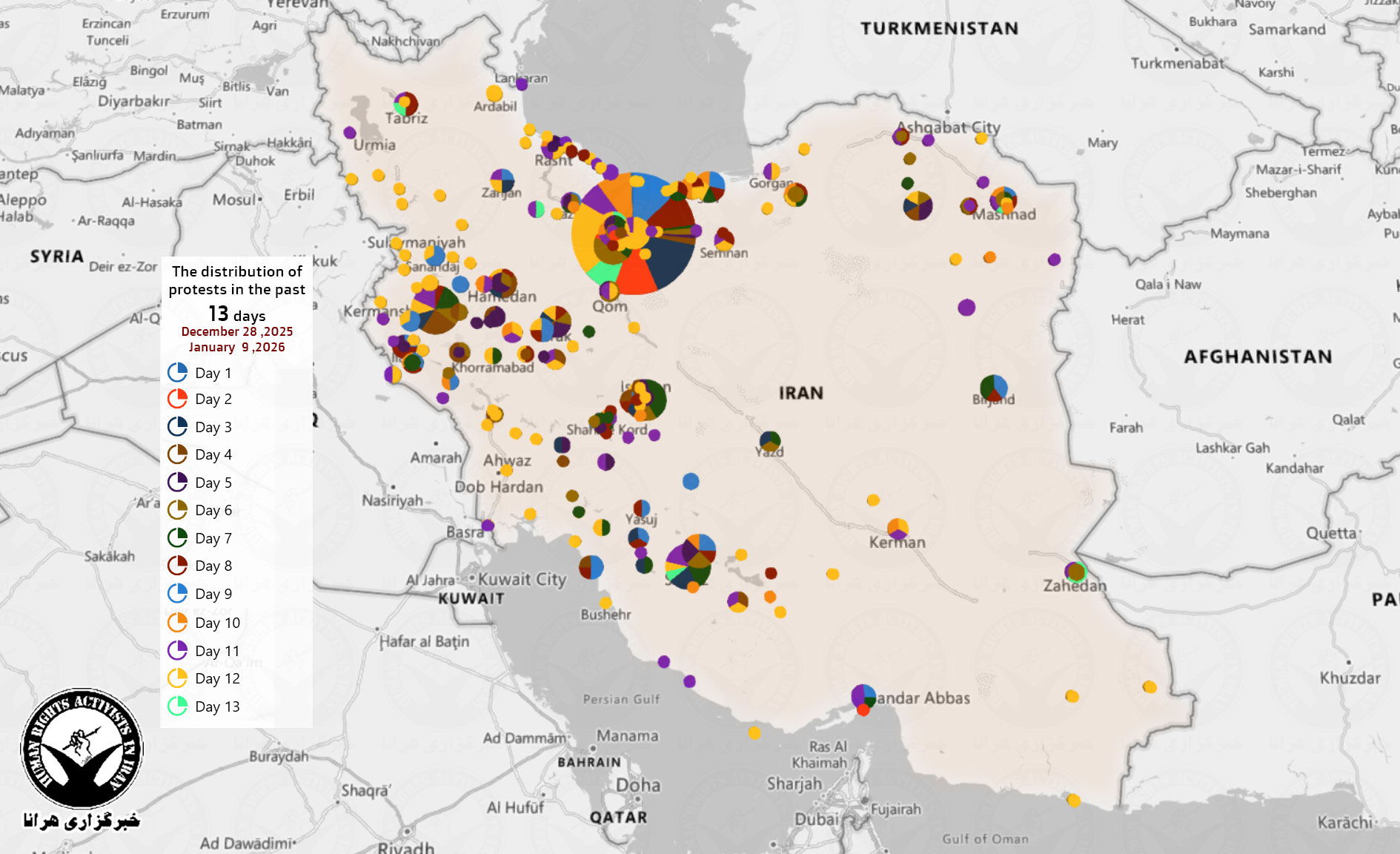
Based on reports compiled up to the thirteenth day of the protests, 512 locations nationwide across 180 cities in 31 provinces have witnessed demonstrations. Thirty-five universities have also taken part in these protests.

Distribution of Protests Day 13

Fatalities and Victims of the Protests

Although on the thirteenth day, due to communication shutdowns and the lack of independent access, it has not been possible to definitively establish an exact death toll, HRANA’s verified reports assess the total number of fatalities over the past 13 days as follows:

• Total deaths: 65
• Protesting citizens: 50
• Children and adolescents (under 18): 7 of the 50
• Law enforcement and security forces: 14
• Government-affiliated civilian: 1

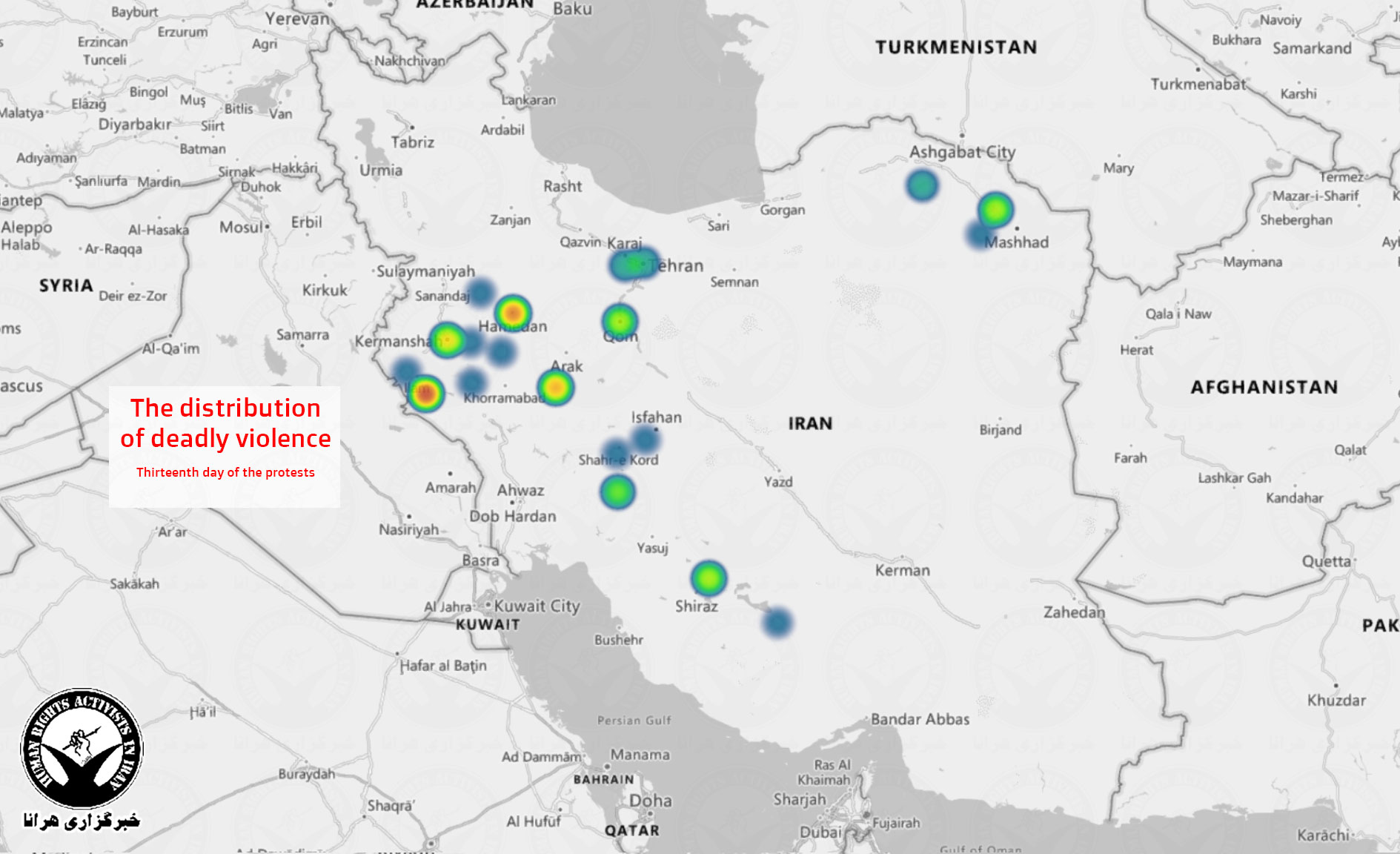
Among the deceased, the provinces of Chaharmahal and Bakhtiari, Ilam, Kermanshah, and Fars, with a combined total of 38 fatalities, rank highest in protest-related deaths.

At the same time, the head of the judiciary in North Khorasan announced that the prosecutor of Esfarayen, along with a number of law enforcement and security forces in the county, had been killed. According to the official account, the portable cabin where they were stationed was set on fire, and “rescue operations were not permitted.”

In addition to those killed, numerous reports have emerged of citizens being injured during street clashes and security operations. However, due to restricted access to field information and ongoing communication disruptions, the exact number of injured individuals is still being compiled.

Arrests and Escalation of Security Crackdowns

Arrest Trends

According to aggregated recorded data, by the end of the thirteenth day of the protests, at least 2,311 arrests have been confirmed or reported. Of these, 624 were individual arrests and 1,687 were mass arrests, indicating the predominance of large-scale, on-the-ground detention patterns during security operations.

The temporal distribution of arrests shows a significant surge from the seventh day onward. The highest number of daily arrests occurred on the tenth day of the protests, followed by the seventh and eighth days, a pattern consistent with the intensification of security presence and coinciding with the expansion of strikes and nighttime gatherings.

Among those detained, at least 167 children, adolescents, and school students, as well as 48 university students, have been recorded, reflecting the widening scope of crackdowns across different age groups and social sectors. In addition, 50 cases of forced confessions have been reported during the protest period, assessed as part of security and media pressure tactics.

Internet shutdowns in Iran have had a serious impact on the speed of verification, information gathering, and identification of detainees. As a result, only 34 newly detained individuals were identified by HRANA today, a sharp decline compared to previous days.

Judicial and Security Threats

Alongside the rise in arrests, official judicial and security positions were articulated in more explicit and forceful language. The Tehran Public and Revolutionary Prosecutor announced that individuals accused of “destruction and arson of public and private property” would be charged with moharebeh (enmity against God) and dealt with “decisively.” In explaining this stance, he referred to incidents from the previous night in Tehran, including the burning of an ambulance, a bus, and a mosque, emphasizing a policy of “zero tolerance.”

Within the same framework, the head of the judiciary warned that punishments for those labeled as “rioters” would be imposed to the maximum extent and without leniency, a position viewed as further increasing the cost of participation in protests.

In the communications sphere, the Ministry of Communications issued a statement saying that the internet shutdown was a decision made by competent security authorities, linking it to the “prevailing conditions.” This position was announced as numerous reports simultaneously documented a widespread nationwide internet blackout.

Alongside these official stances, reports also emerged indicating police and security warnings about identifying, warning, and arresting individuals who chant slogans inside their homes, a narrative suggesting that part of the security pressure has shifted from public streets to private and non-field spaces.

Universities and the Role of Students

Based on aggregated data, 35 universities have witnessed protest activity over the past twelve days, with 47 student gatherings recorded on university campuses. The temporal distribution shows that the peak of student protests occurred on the third, tenth, and eleventh days.

However, on the thirteenth day, no new university gatherings were reported, a development that may be attributed to the intensification of security pressure and control policies in higher education institutions.

Within this context, patterns of university control through postponements, shifts to online instruction, and physical restrictions became more pronounced. A notable example is the Khwarazmi University women’s dormitory (Hesarak campus in Karaj), which, according to reports, received orders for immediate evacuation. Student accounts attribute this action to university management’s concern over the spread of protests on campus.

Forms of Protest and Slogans

On the thirteenth day, protest tactics remained diverse and multi-layered. Street demonstrations and neighborhood-based protest presence, particularly at night, alongside strikes and market closures in several cities, constituted the most prominent forms of protest. This pattern indicates that demonstrations have not been confined to a single format and, under security pressure, have been reproduced in lower-cost and more decentralized forms.

At the field level, reports described neighborhood gatherings, continuous car horn honking, temporary road blockages, and symbolic actions.

At the same time, reports of tear gas use by security forces and, in some areas, the sound of gunfire were published, indicating the continued on-the-ground pressure exerted on protest gatherings.

Summonses and Security Pressure Beyond the Streets

Alongside street-level confrontations, data and reports from the thirteenth day indicate an expansion of security pressure beyond public spaces. Open threats regarding the identification and punishment of individuals chanting slogans inside their homes, an increase in reports of the arrest of activists, particularly in sensitive areas, and judicial warnings of harsh crackdown all point to efforts to contain the protests through social, psychological, and judicial control.

In the professional and commercial sphere, reports indicate that shopkeepers were contacted and pressured to reopen their businesses. At the same time, judicial cases were initiated against certain individuals and business units on charges of directly or indirectly supporting protest calls.

Internet Disruptions and Communication Restrictions

The communications blackout was one of the central features of the thirteenth day. Internet access was widely cut off from the previous evening, and according to technical data, national connectivity dropped to around one percent of normal levels, a situation described by internet-monitoring bodies as a violation of fundamental rights and a tool for concealing violence.

NetBlocks also confirmed the situation as a widespread internet shutdown.

In response, the Ministry of Communications stated that the decision to cut internet access was security-related and promised follow-up efforts to restore services. At the same time, reports emerged of severe disruption or complete loss of mobile phone signals in cities such as Karaj, Khorramabad, Nishapur, and Bijar, further restricting field coverage and the flow of information.

Reactions

1. Domestic Reactions (Governmental)

In response to the continuation of protests and the spread of strikes and nighttime gatherings, a series of official positions were issued by government officials, security institutions, and the judiciary. A common thread among many of these statements was the securitization of the protests and an emphasis on decisive action.

Ali Khamenei, warning against what he described as “destructive acts,” stated that the Islamic Republic would “not back down” in the face of such actions and stressed the need to confront them. This position is assessed as part of an effort to draw a formal distinction between “protest” and “destruction” and to legitimize security crackdowns.

On the diplomatic front, Abbas Araghchi downplayed the likelihood of any foreign military intervention in Iran’s developments, describing it as a “failed experience.” At the same time, Iran’s Ministry of Foreign Affairs characterized the support and statements of U.S. officials and some Western countries as “interventionist,” framing the protests as Iran’s internal affairs.

In the judicial–security domain, the judiciary and law enforcement bodies once again emphasized harsh, deterrent, and uncompromising measures against protesters. These stances were accompanied by announcements of case-building against certain individuals, as well as monitoring of cyberspace and professional and economic activities.

2. Domestic Reactions (Non-Governmental, Civil, and Social)

In contrast to the official narrative, a number of religious, civil, cultural, artistic, and sports figures reacted to the suppression of protests through messages and statements.

Molavi Abdolhamid described the protests as a “popular uprising for major change,” emphasized the right to peaceful protest, and called on demonstrators to avoid destruction and violence. At the same time, he urged security forces to stand with the people and refrain from repression.

In the cultural and artistic sphere, 184 Iranian filmmakers issued a joint statement condemning the suppression of protests and describing the shooting of unarmed people as a “crime against the right to life.” The House of Cinema also stated that, in the absence of effective channels for expressing dissent, people have “no path but the streets,” and described violence against protesters as illegitimate.

Among academic and social figures, statements and commentaries were published focusing on a governance crisis, the need for dialogue with the public, and the release of detainees. Some civil activists, pointing to the arrest of children, adolescents, and students, called for an end to security crackdowns on vulnerable groups.

In the fields of sports and performing arts, figures such as Voria Ghafouri and Alireza Faghani, along with others, expressed solidarity with protesters through messages or symbolic actions. Critical positions taken by some well-known figures were also met with reactions and attacks from media outlets close to the authorities.

3. Foreign and International Reactions

At the international level, the continuation of protests and reports of repression received widespread attention. The leaders of France, Germany, and the United Kingdom issued a joint statement condemning the killing of protesters and calling for restraint, respect for freedom of expression, and the right to assembly.

The United Nations High Commissioner for Human Rights called for “independent, transparent, and impartial” investigations into the deaths and expressed concern over internet shutdowns and restrictions on access to information.

In Europe, the European Parliament president and a number of its members issued supportive messages emphasizing solidarity with protesters and the need to prevent repression. Some European officials also assessed the internet shutdown as an attempt to conceal violence.

Donald Trump also commented on several occasions about the possibility of a harsh response if protesters were killed, and claimed that some of the deaths were the result of crowd congestion.

Detainees

Individual Arrests with Confirmed Identities

  1. 1. Salam Aref Khanlari – Place of arrest: Darreh Shahr (Ilam Province) – Place of detention: Unknown – Current status: Detained – Source: Kurdpa

  2. 2. Bardia Darvishi – Place of arrest: Gilan-e Gharb (Kermanshah Province) – Place of detention: Unknown – Current status: Detained – Source: Kurdpa

  3. 3. Behnam Bolandbakht – Place of arrest: Gilan-e Gharb (Kermanshah Province) – Place of detention: Unknown – Current status: Detained – Source: Kurdpa

  4. 4. Vahid Shadman – Place of arrest: Qasr-e Shirin (Kermanshah Province) – Place of detention: Unknown – Current status: Detained – Source: Kurdpa

  5. 5. Ali Shah Shirmohammadpour – Place of arrest: Gilan-e Gharb (Kermanshah Province) – Place of detention: Unknown – Current status: Detained – Source: Kurdpa

  6. 6. Navid Najafi – Place of arrest: Gilan-e Gharb (Kermanshah Province) – Place of detention: Unknown – Current status: Detained – Source: Kurdpa

  7. 7. Armin Pirani – Place of arrest: Abdanan (Ilam Province) – Place of detention: Unknown – Current status: Detained – Source: Kurdpa

  8. 8. Ali Ahmadi – Place of arrest: Abdanan (Ilam Province) – Place of detention: Unknown – Current status: Detained – Source: Kurdpa

  9. 9. Behnam Fathi – Place of arrest: Yasuj (Kohgiluyeh and Boyer-Ahmad Province) – Place of detention: Unknown – Current status: Detained – Source: HRANA

  10. 10. Rahmat Rashidi – Place of arrest: Abdanan (Ilam Province) – Place of detention: Unknown – Current status: Detained – Source: Kurdpa

  11. 11. Behrouz Sheikhi – Place of arrest: Abdanan (Ilam Province) – Place of detention: Unknown – Current status: Detained – Source: Kurdpa

  12. 12. Ashkan Sabzi – Place of arrest: Abdanan (Ilam Province) – Place of detention: Unknown – Current status: Detained – Source: Kurdpa

  13. 13. Arman Karami – Place of arrest: Abdanan (Ilam Province) – Place of detention: Unknown – Current status: Detained – Source: Kurdpa

  14. 14. Aref Mirzaei – Place of arrest: Abdanan (Ilam Province) – Place of detention: Unknown – Current status: Detained – Source: Kurdpa

  15. 15. Amirhossein Khan-Mohammadi – Place of arrest: Abdanan (Ilam Province) – Place of detention: Unknown – Current status: Detained – Source: Kurdpa

  16. 16. Mostafa Saffar – Place of arrest: Abdanan (Ilam Province) – Place of detention: Unknown – Current status: Detained – Source: Kurdpa

  17. 17. Saeed Abolhasani – Place of arrest: Nishapur (Razavi Khorasan Province) – Place of detention: Nishapur Prison – Current status: Detained – Source: HRANA

  18. 18. Ehsan Ahmadi – Place of arrest: Dehloran (Ilam Province) – Place of detention: Unknown – Current status: Detained – Source: Kurdpa

  19. 19. Hossein Karami – Place of arrest: Dehloran (Ilam Province) – Place of detention: Unknown – Current status: Detained – Source: Kurdpa

  20. 20. Mohammad Moradi – Place of arrest: Dehloran (Ilam Province) – Place of detention: Unknown – Current status: Detained – Source: Kurdpa

  21. 21. Ahmad Khosravi – Place of arrest: Dehloran (Ilam Province) – Place of detention: Unknown – Current status: Detained – Source: Kurdpa

  22. 22. Ahmadi Zeini – Place of arrest: Dehloran (Ilam Province) – Place of detention: Unknown – Current status: Detained – Source: Kurdpa

Mass Arrests or Arrests Without Identity Confirmation

  1. 1. Seven citizens – Place of arrest: Lorestan Province – Place of detention: Unknown – Current status: Detained – Source: State Broadcasting (IRIB)

  2. 2. Four citizens – Place of arrest: Hamedan (Hamedan Province) – Place of detention: Unknown – Current status: Detained – Source: Young Journalists Club – Notable point: Forced confessions

  3. 3. One citizen – Place of arrest: Hamedan (Hamedan Province) – Place of detention: Unknown – Current status: Detained – Source: Young Journalists Club – Notable point: Under 18 years old; forced confessions

In Conclusion

  1. 1. Protests on the thirteenth day simultaneously displayed three prominent characteristics: neighborhood-based dispersion (particularly in Tehran) and high levels of violence in certain areas (such as Fardis and Zahedan).

  2. 2. The internet shutdown, as a central tool of control and concealment, effectively disrupted verification and access to information, while at the same time limited circulation of some videos continued through alternative channels.

  3. 3. The judicial and security apparatus, by emphasizing serious charges along with arrests and identification efforts, sought to raise the cost of participation; nevertheless, signs of continued social mobilization (from the streets to the marketplaces) remained visible.

  4. 4. Alongside domestic developments, international pressure and reactions, ranging from European statements to calls for UN investigations, intensified, further highlighting Iran as a crisis of human security and governance.