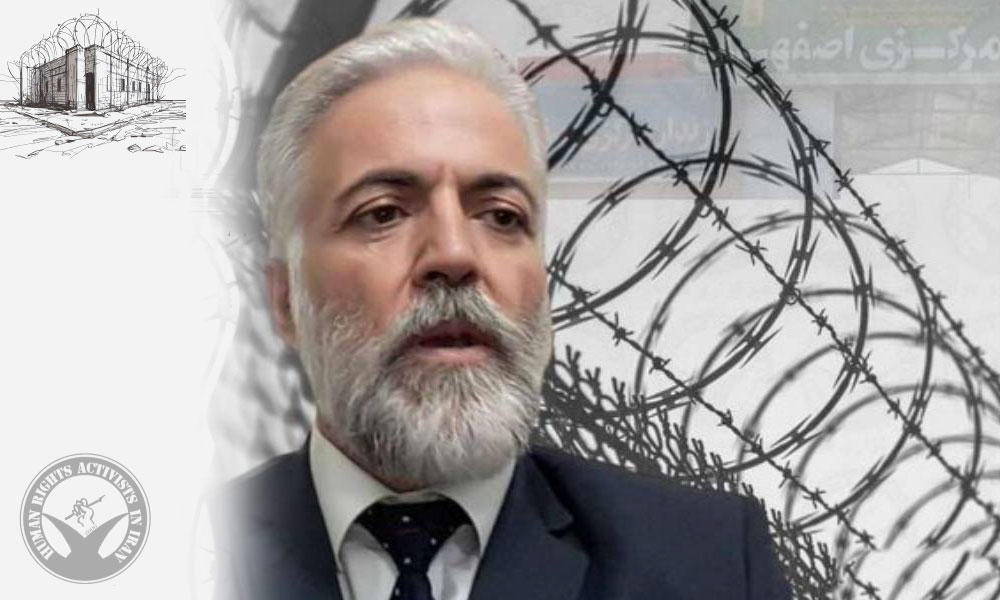
At Least 45 Citizens Arrested by The Ministry of Intelligence Across 7 Provinces

HRANA – At least 45 citizens have been arrested by agents of the Ministry of Intelligence in the provinces of Khuzestan, Gilan, Isfahan, Hormozgan, Hamedan, Kerman, and Kermanshah. Alleged links to Israeli and U.S. intelligence services, as well as media outlets based outside the country, were cited among the reasons for these arrests. A video containing the forced confession of one of these citizens has also been released, although the circumstances under which it was recorded remain unclear.

According to Tasnim News Agency, the Ministry of Intelligence of Iran claimed that 11 citizens, including the main network leader allegedly linked to Israeli intelligence services, were identified and arrested in Isfahan Province.

The statement further alleged that these citizens are accused of killing a Basij member and one Ministry of Intelligence agent in Khuzestan, as well as injuring several other Basij members. It also claimed that over the past two months, 11 other members of this “terrorist group” had been arrested, while five others were killed during an armed clash with security forces.

Separately, a video of the forced confession of one of these citizens has been published, though the conditions under which it was recorded are unknown.

The Ministry of Intelligence also announced the arrest of four citizens in Khuzestan and Kermanshah Provinces. The agency alleged that these individuals intended to carry out “sabotage” operations and were identified and arrested in the cities of Andimeshk and Qasr-e Shirin. According to the Ministry, “a number of weapons were discovered and seized from these citizens.”

In the same statement, the Ministry of Intelligence reported the arrest of 30 more citizens in four provinces, describing them as “members of a terrorist group linked to Israeli intelligence services.”

According to the agency, four citizens were arrested in Gilan Province, eight in Kerman Province, six in Hamedan Province, and 12 in Hormozgan Province. It also claimed that quantities of homemade bombs and weapons were discovered and confiscated from them.

The report did not provide further details, including the identities of these citizens or their place of detention.

It is worth noting that the U.S. and Israeli military attacks on Iran began on February 28, 2026, and on April 8, 2026, a two-week ceasefire between the parties was announced. Since the beginning of these attacks, HRANA has been documenting and recording related incidents across different parts of the country on a daily basis. For further information, readers may refer to HRANA’s detailed reports covering the forty days of the conflict.

Zeinab Shafizadeh Arrested by Security Forces in Isfahan

HRANA – Zeinab Shafizadeh, a resident of Isfahan, was arrested by security forces last night and transferred to an undisclosed location.

Based on information received by HRANA, Ms. Shafizadeh was arrested on the evening of Sunday, April 2, 2026, at her home in Isfahan.

As of the time of this report, no information has been obtained regarding the reasons for her arrest, her place of detention, or the charges brought against her.

It is worth noting that on January 5, 2026, Zeinab Shafizadeh’s home was searched by security forces, and her personal belongings, including her passport, were confiscated. She was later summoned to one of the security agencies.

Day 28 of U.S. and Israeli Attacks on Iran: Strikes on Industrial Units and Infrastructure

HRANA– In the last 24 hours, and as of March 27, 2026, at 17:00 ET, HRANA has recorded at least 541 attacks across 164 incidents in 18 provinces, resulting in a total of at least 171 casualties (killed and injured, both civilian and military). In addition to the fact that the number of attacks and casualties marks the highest rate in the past week, today Iran’s steel industry and two related power plants witnessed a large-scale wave of attacks and destruction.

According to information recorded and verified by HRANA, from the first minutes of the day until the end of March 27, 2026 (Tehran time), at least 35 civilians were killed and 60 civilians were injured.

Aggregated data since the beginning of the conflict on February 28, 2026, based on incidents recorded in the incident tab and using minimum values for figures marked “more than”:

• Civilian fatalities: 1,527 people (including at least 228 children)

• Military fatalities: 1,167 people

• Unclassified fatalities (civilian/military): 695 people

Note on official statements: Alongside the independent reports published by HRANA, several aggregated official statistics were also recorded today from state media, including:

The Red Crescent announced: “More than 92,000 civilian units have been damaged, and 1,621 children under the age of 18 have been injured.”

The head of the Emergency Organization said: “In this war, more than 200 individuals under 18 and 237 women have been killed.”

The governor of Isfahan stated: “25 workers were killed in recent enemy attacks across different parts of Isfahan province, one of whom was from the province’s Armenian and Christian community.”

1. Overview of Incidents in the Last 24 Hours

In the last 24 hours, incidents were reported across multiple provinces, reflecting a geographically dispersed pattern of hostilities. In a large portion of the incidents, the method/type of attack has not yet been confirmed and has been recorded as “undetermined.” In cases where the attack type was identifiable, airstrikes and drone attacks were reported.

Preliminary analysis indicates that Tehran Province, with a 36% share, ranks first among the provinces that have been targeted. Isfahan Province, with an 18% share, is in second place, followed by Fars Province with 9% in third. Further down the list are Alborz Province, Khuzestan Province, and East Azerbaijan Province, respectively.

Map of Attacks Day 28

2. List of Objects Reported Hit

In the past 24 hours, the recorded attacks have damaged 42 distinct objects or facilities. These include a range of different types of targets. In some cases, damage caused by nearby strikes or secondary consequences of the attacks has also been reported.

Examples of targets recorded over the past 24 hours:

• Parchin Military Complex (Tehran)

• Army Helicopter Base Isfahan (Isfahan)

• Garrison 06 Tehran (Tehran)

• Ahmad Kazemi Garrison Vilashahr (Isfahan)

• 4th Tactical Fighter Base Dezful Andimeshk (Andimeshk)

For a number of the listed targets, the exact nature of the target (civilian/military/dual-use) is still under review, and classifications may be revised as additional information becomes available.

Facilities Protected Under International Humanitarian Law:

Under international humanitarian law, medical facilities, educational institutions, humanitarian facilities, religious sites, and emergency service centers are among the many objects that maintain special protected status and are afforded special protection. In the past 24 hours, HRANA has preliminarily recorded the following cases:

• Mobarakeh Steel Company (Isfahan)

• Khuzestan Steel Company (Khuzestan)

• Firoozabad Cement Plant and Mine (Firoozabad)

• Ardakan Uranium Processing Facility (Ardakan)

• Arak Heavy Water Facility (Arak)

3. Civilian Casualties

In the past 24 hours, at least 35 civilian citizens, including 7 children and 6 women, have been killed, and 60 civilians, including 1 child, have been injured. All classifications are preliminary and may be updated as new information becomes available.

4. Military Casualties

During the period covered by this report, no reports of military casualties have been received. Military casualties are generally reported in the context of attacks on Army and Islamic Revolutionary Guard Corps (IRGC) bases. Where possible, organizational affiliation and operational context are being assessed; however, not all details have yet been independently verified.

In some incidents, individuals have been killed in the vicinity of military targets; however, their official status has not yet been definitively determined. These cases remain under review, and if reliable information indicating a different status becomes available, the classification may be revised accordingly.

It is believed that military casualties are significantly higher than the figures reported in these reports. However, due to the sensitive nature of military information and the limited access of human rights groups and media to locations where military forces are present, this section largely reflects reports of senior officers or military personnel who were present in urban areas.

5. Confirmed but Unspecified Casualties

In the past 24 hours, 25 deaths and 51 injuries have been reported but remain classified as undetermined. This means that HRANA News Agency has not yet been able to establish with sufficient certainty whether these individuals were civilians or military personnel.

A Note on HRANA Methodology

Note that, in line with HRANA policy, this report reflects only incidents that occurred within the territorial borders of Iran.

The information contained in this report is compiled through HRANA’s established documentation network. Data is collected from a combination of field reports, local contacts, medical and emergency sources, civil society networks, and open source materials, including publicly available images, videos, and official statements where relevant. Each reported incident is logged and assessed through an internal review process before publication.

Given the evolving nature of hostilities, information is gathered on a rolling basis and reflects the status of documentation at the time of publication.

The figures presented in this report may not reflect the full scope of harm. Ongoing hostilities, damage to infrastructure, communication disruptions, restricted access to affected areas, and security risks for sources may limit the ability to document incidents comprehensively.

Delays in medical reporting, difficulties in confirming identities, and restricted access to certain provinces may result in temporary undercounting. As access improves or additional evidence emerges, casualty figures and incident classifications may be revised accordingly.

HRANA remains committed to transparency, methodological rigor, and the continual updating of its findings as new verified information becomes available.

Dozens of Citizens Arrested in Connection with the War Across Several Provinces

HRANA – Domestic media have reported the arrest of more than 84 citizens in Hamedan, Dezful, Semnan, and the provinces of Golestan, West Azerbaijan, Kerman, Isfahan, and Ilam on charges such as “cooperating with foreign media and sending images of missile impact sites and the locations of military centers to these outlets.” A video has also been published showing the forced confession of one of these citizens, though the conditions under which it was recorded remain unclear.

According to Tasnim, several citizens were arrested in Semnan. The report claims that these individuals were in contact with accounts affiliated with the Israeli government and had gathered information and facilitated potential attacks on areas in Semnan Province before being identified and arrested. The provincial police commander of Semnan further alleged that one of the detainees confessed to having requested a missile strike on the city of Semnan in communications with an alleged Israeli agent.

Meanwhile, IRIB reported that 46 citizens were arrested in the provinces of Golestan, West Azerbaijan, Kerman, Isfahan, and Ilam. According to this report, the arrests were carried out by agents of the Ministry of Intelligence on charges such as collecting images and sending them to Iran International.

The report also claimed that six of those arrested were members of opposition groups in the northwest of the country. Additionally, during these arrests, “a number of handguns and two Starlink devices” were discovered and confiscated.

In a separate report, Young Journalists Club announced the arrest of at least 36 citizens across three provinces. According to this report, 21 individuals were arrested in Kerman Province, 10 in Isfahan Province, and 5 others in Ilam Province by agents of the Ministry of Intelligence.

The report alleges that these individuals had sent information and images of certain locations to a foreign media outlet and opposition groups. It also stated that two Starlink devices were discovered and confiscated from them.

According to a report by Fars News Agency, one citizen was also arrested by security forces in Dezful. At the same time, a video of this individual’s forced confession was published, though it is unclear under what conditions it was recorded.

Mehr News Agency reported that the public relations office of the IRGC in Hamedan announced the arrest of an individual accused of recording and sending videos and images to foreign media outlets.

These reports did not provide information regarding the identities or places of detention of the arrested citizens.

It is worth noting that military attacks by the United States and Israel on Iran began on February 28, 2026. Since the start of these attacks, HRANA has been documenting and recording related events across different parts of the country on a daily basis. For further information, you can refer to HRANA’s detailed report on the twenty-seventh day of the conflict, published last night.

Report on the Arrest of Christian Convert Mohammad Nikbakht

HRANA – Mohammad Nikbakht, a Christian convert, has been detained by security forces for over 10 days and is currently being held in Dastgerd Prison in Isfahan.

Based on the report by Article 18, Mr. Nikbakht was arrested by security forces on March 15, 2026. He is currently being held in Ward 2-A of Dastgerd Prison in Isfahan.

The report states that the arrest of this Christian citizen was accompanied by the use of violence.

As of the time of this report, no information has been obtained regarding the reasons for his arrest or the charges brought against him.

The treatment of Christian converts in Iran takes place despite Article 18 of the Universal Declaration of Human Rights and Article 18 of the International Covenant on Civil and Political Rights, which affirm that every person has the right to freedom of religion, including the freedom to change their religion and to manifest it individually or collectively, in public or in private.

Subscribe to Our Newsletter

Now is definitely not the time to stop reading!

Over 15 Citizens Arrested by IRGC Intelligence Agents in Isfahan

HRANA – The IRGC Intelligence Organization in Isfahan has reported the arrest of more than 15 citizens in the province on charges described as “cooperating with foreign media and sending images of missile strike locations and the positions of military, relief, and checkpoint centers to these outlets.” Images of the forced confessions of three of these citizens have also been released, though the conditions under which they were recorded remain unclear.

According to Mehr News Agency, IRGC Intelligence in Isfahan has claimed that these individuals were cooperating with foreign media and sending images of locations targeted by missiles from countries involved in the war with Iran, as well as the positions of forces and military, rescue, and checkpoint sites.

At the same time, images of the forced confessions of three of these citizens have been published, though the circumstances of their recording are unknown.

The report does not provide further details, including the identities of the detainees or their place of detention.

It is worth noting that U.S. and Israeli military attacks on Iran began on February 28, 2026 . Since the start of these attacks, HRANA has been documenting and recording related developments across the country on a daily basis. For more information, readers can refer to HRANA’s detailed report on the 26th day of the conflict, published last night.

Day 25 of U.S. and Israeli Attacks on Iran: Heavy Strikes in Isfahan and Khuzestan

HRANA– In the last 24 hours, and as of March 24, 2026, at 17:00 ET, HRANA has recorded at least 108 attacks across 57 incidents in 10 provinces, resulting in a total of at least 61 casualties (killed and injured, both civilian and military). Isfahan and Khuzestan provinces experienced the highest waves of attacks, respectively, while Tehran province ranked third in terms of strikes.

According to information recorded and verified by HRANA, from the first minutes of the day until the end of March 24, 2026 (Tehran time), at least 12 civilians were killed and 38 civilians were injured.

Aggregated data since the beginning of the conflict on February 28, 2026, based on incidents recorded in the incident tab and using minimum values for figures marked “more than”:

• Civilian fatalities: 1,455 people (including at least 217 children)

• Military fatalities: 1,167 people

• Unclassified fatalities (civilian/military): 669 people

Note on Official Statements: Alongside HRANA’s independent reporting, several aggregated official figures were also published today by state media, including:

The Ministry of Education announced: “Since the start of the brutal Zionist–American aggression against our beloved homeland, 230 students and teachers have been killed, 177 students and educational staff injured, and more than 600 educational and cultural facilities destroyed.”

The Deputy for Security and Law Enforcement of the Khuzestan Governor’s Office stated: “So far, 950 people have been injured in Khuzestan Province and 25 innocent civilians have been killed, the oldest being a 70-year-old woman and the youngest a 2.5-year-old child.”

1. Overview of Incidents in the Last 24 Hours

In the last 24 hours, incidents were reported across multiple provinces, reflecting a geographically dispersed pattern of hostilities. In a large portion of the incidents, the method/type of attack has not yet been confirmed and has been recorded as “undetermined.” In cases where the attack type was identifiable, airstrikes and drone attacks were reported.

For the second time since the start of the war, Isfahan Province was targeted more heavily than Tehran Province, accounting for 31% of all attacks. Khuzestan Province follows with 19%, while Tehran Province, for the first time, ranks third with a 16% share of the attacks. Fars, East Azerbaijan, and Yazd provinces follow next in the ranking.

2. List of Objects Reported Hit

In the past 24 hours, the recorded attacks have damaged 21 distinct objects or facilities. These include a range of different types of targets. In some cases, damage caused by nearby strikes or secondary consequences of the attacks has also been reported.

Examples of targets recorded over the past 24 hours:

• Ammand Missile Site (Tabriz)

• Meysam Tammar Basij Base (Tehran)

• Missile Site (Borazjan)

• SAIRAN Optics Building (Isfahan)

• Ammunition Manufacturing Facility (Isfahan)

For a number of the listed targets, the exact nature of the target (civilian/military/dual-use) is still under review, and classifications may be revised as additional information becomes available.

Facilities Protected Under International Humanitarian Law:

Under international humanitarian law, medical facilities, educational institutions, humanitarian facilities, religious sites, and emergency service centers are among the many objects that maintain special protected status and are afforded special protection. In the past 24 hours, HRANA has preliminarily recorded the following cases:

• Gas Company Facility on Kaveh Street (Isfahan)

• Power Plant Gas Pipeline (Khorramshahr)

• Four Residential Buildings (Tehran)

• Swimming Pool and Multi-Purpose Hall at Kargar Sports Complex, Kooy-e Qaem (Andimeshk)

• Damage to 30 Shops and Businesses (Isfahan)

3. Civilian Casualties

In the past 24 hours, at least 12 civilian citizens, including two women, have been killed, and 38 civilians, including 2 children, have been injured. All classifications are preliminary and may be updated as new information becomes available.

4. Military Casualties

During the period covered by this report, no reports of military casualties have been received. Military casualties are generally reported in the context of attacks on Army and Islamic Revolutionary Guard Corps (IRGC) bases. Where possible, organizational affiliation and operational context are being assessed; however, not all details have yet been independently verified.

In some incidents, individuals have been killed in the vicinity of military targets; however, their official status has not yet been definitively determined. These cases remain under review, and if reliable information indicating a different status becomes available, the classification may be revised accordingly.

It is believed that military casualties are significantly higher than the figures reported in these reports. However, due to the sensitive nature of military information and the limited access of human rights groups and media to locations where military forces are present, this section largely reflects reports of senior officers or military personnel who were present in urban areas.

5. Confirmed but Unspecified Casualties

Eleven reported fatalities over the past 24 hours remain classified as ‘undetermined,’ meaning HRANA has not yet been able to confirm whether the individuals were civilians or military personnel.

Today, 12 burials were recorded, related to casualties from attacks in previous days.

A Note on HRANA Methodology

Note that, in line with HRANA policy, this report reflects only incidents that occurred within the territorial borders of Iran.

The information contained in this report is compiled through HRANA’s established documentation network. Data is collected from a combination of field reports, local contacts, medical and emergency sources, civil society networks, and open source materials, including publicly available images, videos, and official statements where relevant. Each reported incident is logged and assessed through an internal review process before publication.

Given the evolving nature of hostilities, information is gathered on a rolling basis and reflects the status of documentation at the time of publication.

The figures presented in this report may not reflect the full scope of harm. Ongoing hostilities, damage to infrastructure, communication disruptions, restricted access to affected areas, and security risks for sources may limit the ability to document incidents comprehensively.

Delays in medical reporting, difficulties in confirming identities, and restricted access to certain provinces may result in temporary undercounting. As access improves or additional evidence emerges, casualty figures and incident classifications may be revised accordingly.

HRANA remains committed to transparency, methodological rigor, and the continual updating of its findings as new verified information becomes available.

Report on the Arrest of Four Individuals, Including a Minor

HRANA – In recent days, Mansour Abdollahzadeh and Manouchehr Abdollahzadeh were arrested in Naqadeh, while Nima Hemmati and Mahan Hemmati, a 17-year-old minor, were arrested in Isfahan by security forces. Among these individuals, Manouchehr Abdollahzadeh has been released after the completion of interrogation procedures.

According to Kurdpa, two citizens were arrested in Naqadeh. The individuals have been identified as Mansour Abdollahzadeh, 41 years old, married and a father of two, and Manouchehr Abdollahzadeh, 27 years old, two brothers from the village of Khalifan, a district of Naqadeh.

Based on this report, the arrests took place on March 14 at their homes, carried out separately and with the use of violence. Manouchehr Abdollahzadeh was released on March 16 after the conclusion of interrogation procedures. It is worth noting that during the arrest, agents confiscated his digital devices, including his laptop and mobile phone.

In another report, Kurdpa announced the arrest of two individuals identified as Nima Hemmati, a student, and Mahan Hemmati, a 17-year-old, two brothers from Abdanan, Ilam Province, in Isfahan.

According to this report, the two brothers were arrested on March 18 on one of Isfahan’s highways without a judicial warrant and were subsequently transferred to Security Ward “A-T” of the Ministry of Intelligence’s detention facility in Isfahan Prison.

As of the time of this report, no information has been obtained regarding the reasons for their arrest or the charges brought against them.

Two Citizens Arrested in Shahin Shahr and Kermanshah

HRANA – Moslem Zarei, a resident of Kermanshah, was arrested yesterday by security forces and transferred to an undisclosed location. Hossein Afrasiab was also arrested on Saturday, March 14, 2026, in Shahin Shahr and subsequently transferred to Dastgerd Prison in Isfahan.

The citizen’s sister announced in a post on her personal page that Mr. Afrasiab was arrested on Saturday, March 14, 2026, by security agents in Shahin Shahr, accompanied by physical violence, and was transferred to Ward “A-T” of Dastgerd Prison in Isfahan.
The lack of information regarding his health condition, along with his deprivation of phone contact with his family or access to a lawyer, has increased concerns among his relatives.

As of the time of this report, no information has been obtained regarding the charges against this citizen, who was active in rap music.

Meanwhile, according to Kurdpa, on Tuesday, March 17, 2026, Moslem Zarei, a citizen from Kermanshah, was arrested by security forces in the city and transferred to an undisclosed location.

According to the report, Mr. Zarei’s arrest was carried out without a judicial warrant, and no information is available regarding the charges against him.

This citizen had previously faced security-related encounters. His sister, Mahsa Zarei, had also been arrested in recent months and was later released on bail.

Report on the Arrest of Three Members of a Baha’i Family in Isfahan

HRANA – Arshad Afshar, Bahareh Afshar, and Arshia Afshar, three members of a Baha’i family living in Shahin Shahr, Isfahan, were arrested by security forces more than two months ago. They are currently being held in Dastgerd and Dowlatabad prisons in Isfahan.

Based on information received by HRANA, more than 65 days have passed since the arrest of Arshad Afshar, his wife Bahareh Afshar, and their son Arshia Afshar. Arshad and Arshia Afshar are currently being held in Dastgerd Prison in Isfahan, while Bahareh Afshar is being held in Dowlatabad Prison in the same county. So far, no information has been obtained regarding the reasons for their arrest or the charges brought against them.

A knowledgeable source close to the family confirmed the news to HRANA, stating:
“For follow-up on their situation, we have repeatedly referred to judicial authorities, but so far we have not received any clear response about their status. Previously, families were told that there was a possibility of their release on bail before February 11, but they were not released, and for some time now their families have had no information about their condition.”

Arshad Afshar, Bahareh Afshar, and Arshia Afshar were arrested by security forces in Shahin Shahr, Isfahan, on January 9.

It should be noted that on July 31 of this year, the home of this Baha’i family had also been searched by security forces.

Over the past decade, the Baha’i community in Iran has been targeted by security and judicial actions more than any other religious minority. A review of annual reports by the Statistics, Publication, and Works Center of the Human Rights Activists in Iran shows that over the past year, on average, 62.41% of reports concerning religious minorities were related to violations of the rights of Baha’i citizens.