Five Prisoners Transferred to Solitary Confinement for Execution in Ghezel Hesar Prison

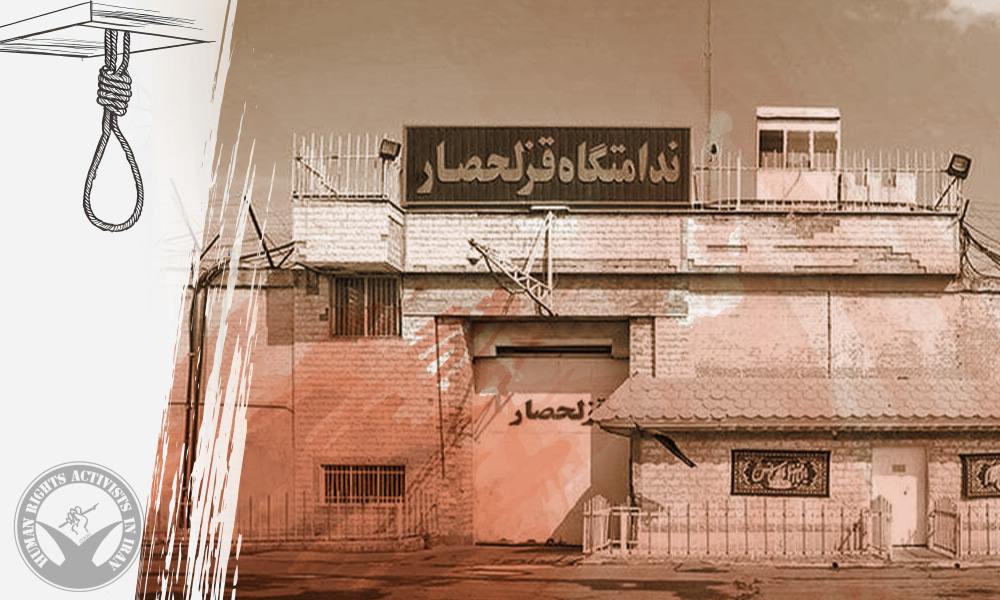
Today, December23, five prisoners in Ghezel Hesar Prison, Karaj, who were previously sentenced to death on charges of murder and armed robbery, were transferred to solitary confinement in preparation for their executions.

According to HRANA, the news agency of Human Rights Activists in Iran, the transfer occurred on Monday, December 23, 2024.

Further details, including the identities of these prisoners, are under investigation by HRANA.

According to data gathered by the Department of Statistics and Publication of Human Rights Activists, Ghezel Hesar Prison in Karaj witnessed the highest number of executions in 2023, with Zahedan Prison following closely behind. For a comprehensive examination of the details and statistics surrounding the executions in Iran, refer to HRANA’s report.

Six Prisoners Executed in Ghezel Hesar Prison, Karaj

At dawn on Wednesday, December 18, 2024, the death sentences of at least six prisoners were carried out in Ghezel Hesar Prison in Karaj.

Among those executed, one had been convicted of murder, four were sentenced on drug-related charges, and one was condemned for “spreading corruption on Earth” by instilling fear among women and causing injuries.

The identities of the prisoners have been confirmed by HRANA as Hassan Ali Yousefi, Majid Jamshidi, Sohrab Ahmadipour, Abdolbari Pakouhi (an Afghan national), Farzad Nowruzi, and Rastgouyi Kondelaj.

According to reports, Yousefi, Jamshidi, Ahmadipour, and Pakouhi were arrested on drug-related charges and sentenced to death by Revolutionary Courts. Farzad Nowruzi received a death sentence from a Criminal Court for murder. Rastgouyi Kondelaj, the sixth prisoner executed, was sentenced to death for “spreading corruption on Earth.”

The Judiciary’s media center provided details on Kondelaj’s case, which began in late 2018. He used a motorcycle and concealed his face to approach women and girls from behind, attacking them with an awl—a sharp iron tool with a wooden handle typically used in leatherworking—before fleeing. These assaults injured 59 women and girls in Tehran.

Following his arrest, Kondelaj was charged with “spreading corruption on Earth by instilling fear among women and injuring them.” He was sentenced to execution and ordered to pay compensation to the victims.

As of this report, no official statements have been issued by the Judiciary’s media center, prison officials, or other authorities regarding the executions of the other five prisoners.

According to data gathered by the Department of Statistics and Publication of Human Rights Activists, Ghezel Hesar Prison in Karaj witnessed the highest number of executions in 2023, with Zahedan Prison following closely behind. For a comprehensive examination of the details and statistics surrounding the executions in Iran, refer to HRANA’s report.

Ghezel Hesar Prison: 3 Prisoners Transferred to Solitary Confinement for Execution

Today, December 17, three prisoners in Ghezel Hesar Prison in Karaj, who had previously been sentenced to death on drug-related charges, were transferred to solitary confinement in preparation for the execution of their sentences.

The transfer of these prisoners, sentenced to death for drug-related offenses, was carried out in preparation for their executions. Further details, including the identities of the prisoners, are under investigation by HRANA.

According to data gathered by the Department of Statistics and Publication of Human Rights Activists, Ghezel Hesar Prison in Karaj witnessed the highest number of executions in 2023, with Zahedan Prison following closely behind. For a comprehensive examination of the details and statistics surrounding the executions in Iran, refer to HRANA’s report.

At Least Nine Prisoners Executed in Ghezel Hesar Prison

At dawn on December 11, 2024, the death sentences of at least nine prisoners were carried out in Ghezel Hesar Prison, Karaj. Five of the individuals had been convicted of murder, while four were sentenced to death on drug-related charges.

HRANA, the news agency of Human Rights Activists in Iran, has confirmed the identities of five of the executed prisoners: Ahmad Jahan Khani, Nasser Tokhchi, Iman Moghadam, Rahman Sarlak, and Abdullah Tajik.

According to HRANA, Jahan Khani and four others had been convicted of murder. Tokhchi, Moghadam, Sarlak, and Tajik were sentenced to death for drug-related offenses. Abdullah Tajik was identified as an Afghan national.

On December 9, HRANA reported that the prisoners had been transferred to solitary confinement in preparation for their executions.

At the time of this report, neither prison authorities nor relevant officials have officially announced or confirmed the executions.

According to data gathered by the Department of Statistics and Publication of Human Rights Activists, Ghezel Hesar Prison in Karaj witnessed the highest number of executions in 2023, with Zahedan Prison following closely behind. For a comprehensive examination of the details and statistics surrounding the executions in Iran, refer to HRANA’s report.

Ghezel Hesar Prison: Six Inmates Transferred to Solitary Confinement for Execution

Today, December 9, 2024, six inmates in Ghezel Hesar Prison in Karaj, who were previously sentenced to death on drug-related charges, were transferred to solitary confinement in preparation for their executions.

The transfer was carried out to prepare for the implementation of their death sentences. Among the six inmates is a citizen of Afghanistan.

Further details, including the identities of the prisoners, are under investigation by HRANA.

According to data gathered by the Department of Statistics and Publication of Human Rights Activists, Ghezel Hesar Prison in Karaj witnessed the highest number of executions in 2023, with Zahedan Prison following closely behind. For a comprehensive examination of the details and statistics surrounding the executions in Iran, refer to HRANA’s report.


Subscribe to Our Newsletter

Now is definitely not the time to stop reading!

Four Prisoners Executed in Ghezel Hesar Prison, Karaj

The death sentences of four prisoners, convicted on charges related to drug offenses and murder, were carried out yesterday in Ghezel Hesar Prison, Karaj.

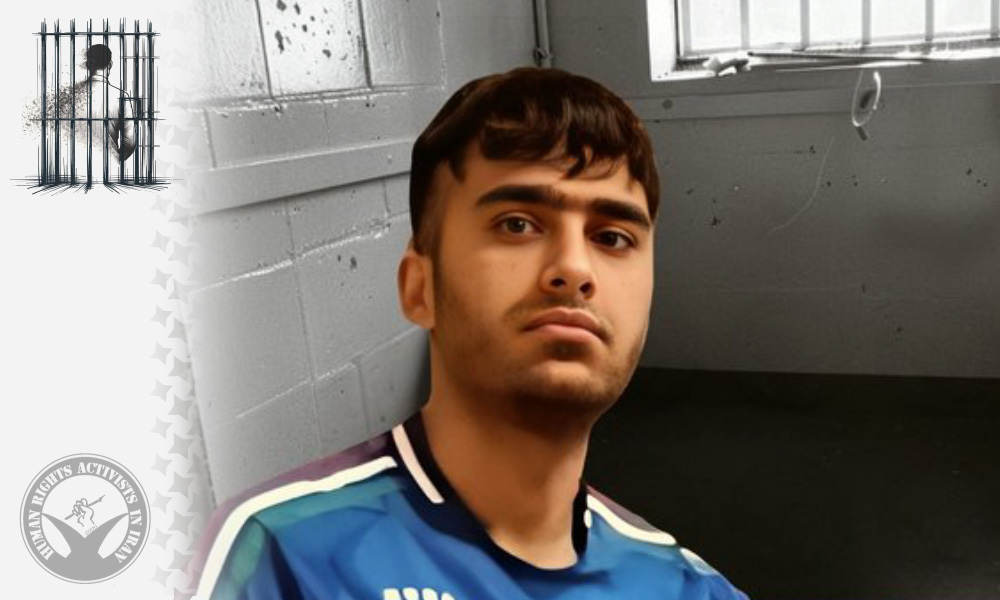
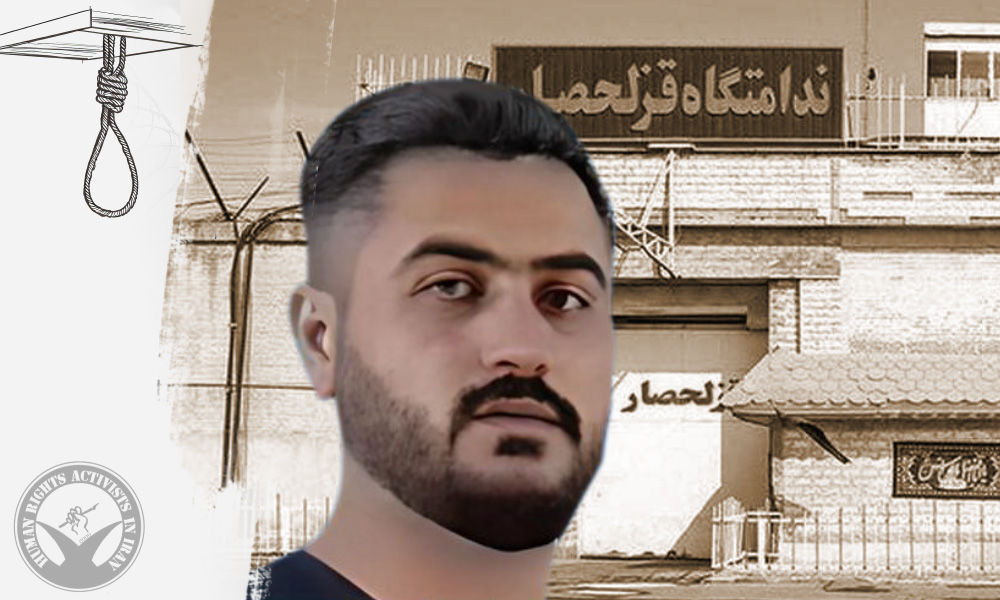
According to HRANA, the news agency of Human Rights Activists in Iran, the executions took place at dawn on Saturday, November 30, 2024. Among the executed was Amir Moradi, who had been arrested on drug-related charges and sentenced to death by the Revolutionary Court. The other three prisoners had been convicted and sentenced to death for murder.

HRANA is working to verify additional details, including the identities of the three prisoners convicted of murder.

As of this writing, neither prison authorities nor relevant institutions have officially announced the executions.

According to data gathered by the Department of Statistics and Publication of Human Rights Activists, Ghezel Hesar Prison in Karaj witnessed the highest number of executions in 2023, with Zahedan Prison following closely behind. For a comprehensive examination of the details and statistics surrounding the executions in Iran, refer to HRANA’s report.

Amir Moradi
Amir Moradi

Revolutionary Court Sentences Four Political Defendants to Over 14 Years in Prison

Azam Ahooghalander, Hossein Jafari, Nematollah Afshar, and Mehdi Touhidi, political defendants, have been collectively sentenced to 14 years and 10 months in prison and additional penalties by Branch 3 of the Revolutionary Court in Karaj. Another defendant in the case, Mohammad Azizi, was acquitted of the charges against him.

On November 26, Branch 3 of the Revolutionary Court in Karaj, presided over by Judge Mostafa Narimani, issued its verdict. Azam Ahooghalander was sentenced to six years and two months in prison for “forming and leading a criminal group aimed at disrupting national security.” The other three defendants were convicted of “membership in a group with the same objective: Nematollah Afshar received three years and six months, Mehdi Touhidi-Asl was sentenced to three years and two months, and Hossein Jafari to two years in prison.

In addition, all four were sentenced to two years of travel bans and a two-year prohibition on online activities as supplementary punishments.

Mohammad Azizi, another defendant in the case, was acquitted of all charges.

The trial for these political defendants was held on November 9, 2023, in Branch 3 of the Revolutionary Court in Karaj.

These individuals were arrested on September 16, 2023, coinciding with the first anniversary of Mahsa (Jina) Amini’s death, during a gathering at Azam Ahooghalander’s home. They were later released temporarily on bail.

Kiana Dalvand, the 16-year-old daughter of Azam Ahooghalander, was also arrested alongside the other defendants. She was detained in Kachouei Prison in Karaj and released after 20 days upon providing a written pledge.

Azerbaijani-Turk Activist Sayyad Mohammadian Arrested in Karaj

On Monday, November 25, 2024, Azerbaijani-Turk activist Sayyad Mohammadian was arrested by security forces at his home in Karaj and transferred to Kachooie Prison.

A source close to his family confirmed the arrest, stating: “Sayyad Mohammadian was detained by security forces at his residence in Karaj. Following inquiries by his family, they were informed that he was arrested to begin serving his six-month sentence.”

Mohammadian was previously arrested in Karaj by security forces on May 15, 2024, and later released on bail on June 15, 2024, from Karaj Central Prison.

He was convicted by the Karaj Revolutionary Court of “propaganda against the regime” and sentenced to six months in prison. The sentence was upheld by the Alborz Province Court of Appeals.

Sayyad (Ovchu) Mohammadian, from Miandoab, currently resides in a village near Karaj. He has previously faced arrest and interrogation for his activism.

Three Prisoners Executed on Drug Charges in Karaj Central Prison

At dawn on Monday, November 25, 2024, three prisoners convicted on drug-related charges were executed in Karaj Central Prison.

The identities of the executed individuals have been confirmed as Ashkan Moradi, Jalal Haj Babayi, and Davood Heidari. All three had been arrested on charges related to drug offenses and subsequently sentenced to death by the judiciary.

Two days prior to the executions, on Saturday, November 23, the prisoners were transferred to solitary confinement in preparation for their sentences to be carried out.

Notably, another prisoner, Ehsan Basati, who was also on death row for similar charges, had his execution postponed and was returned to the prison’s general ward.

As of the time of publication, neither prison officials nor relevant authorities have officially announced these executions.

The reports from the Department of Statistics and Publication of Human Rights Activists for the year 2023 reveal a concerning prevalence of executions for drug offenses in Iran, constituting 56.4% of the total executions. For a comprehensive examination of the details and statistics surrounding the executions in Iran, refer to HRANA’s report.

Workers’ Rights Activist Farhad Sheikhi Faces Ongoing Imprisonment Amidst History of Targeted Punishment

Farhad Sheikhi, a labor activist, is currently serving an eight-month prison sentence in the Central Prison of Karaj, following a ruling by the Alborz Province Court of Appeals.

According to HRANA, the news agency of Human Rights Activists in Iran, Sheikhi was arrested in late September 2024 after appearing at the Criminal Enforcement Office in Hashtgerd and was transferred to Karaj Central Prison to serve his sentence.

On November 5, a source informed HRANA that Sheikhi was punitively transferred to solitary confinement for five days before being returned to his ward.

Sheikhi’s legal troubles began on May 28, 2023, when security forces arrested him at his home in Hashtgerd. Initially detained in Rajai Shahr Prison, he was later charged at the Hashtgerd Prosecutor’s Office on June 13, 2023. He was released on a bail of 100 million tomans pending trial.

In June 2024, Branch 1 of the Karaj Revolutionary Court, presided over by Judge Seyed Musa Asef al-Hosseini, convicted Sheikhi of “propaganda against the regime.” He was sentenced to one year in prison, two years of exile to Divandarreh in Kurdistan Province, a two-year travel ban, and a two-year ban on residing in Alborz and Tehran Provinces following the completion of his exile.

On August 29, 2024, the Court of Appeals reduced his prison sentence to eight months, while the other aspects of his punishment remained unchanged.

Sheikhi, a dedicated workers’ rights advocate, has faced repeated arrests and convictions for his activism. On February 7, 2023, he was released from a prior imprisonment following an amnesty directive.

Sheikhi’s case exemplifies the ongoing challenges faced by labor activists in Iran, who continue to face judicial and extrajudicial pressures for their advocacy.