“Ekbatan Town” Case in the Revolutionary Court; 4 Defendants Sentenced to Death and 4 Others to Prison

HRANA – Milad Armoun, Navid Najaran, Mehdi Imani, and Seyed Mohammad-Mehdi Hosseini, defendants in the so-called “Ekbatan Town” case and detainees from the 2022 nationwide protests, were sentenced to death by the Tehran Revolutionary Court on charges of “enmity against God” (moharebeh). Amir Mohammad Khosh-Eghbal, Alireza Bormarz Pournak, Alireza Kafaei, and Hossein Nemati, other defendants in the case, were each sentenced to seven years in prison along with additional punishments. Another part of this case had previously been reviewed in criminal court and recently resulted in prison sentences and the payment of blood money (diyeh) for some of the defendants.

According to HRANA, eight defendants in the Ekbatan case were sentenced by the Revolutionary Court. Based on a ruling issued by Branch 15 of the Tehran Revolutionary Court, presided over by Judge Abolghasem Salavati, Milad Armoun, Navid Najaran, Mehdi Imani, and Seyed Mohammadmehdi Hosseini were sentenced to death on charges of “enmity against God” (moharebeh). In addition, Amir Mohammad Khosh-Eghbal, Alireza Bormarz Pournak, Alireza Kafaei, and Hossein Nemati were each sentenced to five years in prison on charges of “assembly and collusion against national security”, two years for “propaganda against the regime,” a two-year ban on online activities, and a two-year residency ban from Tehran and Alborz provinces.

A source familiar with the case told HRANA that the verdict was verbally communicated to the defendants yesterday without the presence or prior notification of their lawyers. According to the source, the ruling has still not been officially served to the defense attorneys, effectively depriving them of the opportunity to file appeals.

Background:

At the beginning of November 2022, during the nationwide protests and following the killing of a Basij force member named Arman Aliverdi in Ekbatan Township, at least 50 young residents of Ekbatan Township were arrested by security and law enforcement forces. Indictments were ultimately issued against 14 of them.

The case was reportedly divided into two sections. One section was referred to Branch 15 of Tehran Revolutionary Court, presided over by Judge Abolqasem Salavati, and the other to Branch 13 of Tehran Criminal Court One. So far, no verdict has been issued for those defendants whose cases in the Revolutionary Court involve security-related charges and moharebeh.”

In May 2023, the spokesperson for Iran’s Judiciary announced that three defendants in the “murder of Arman Aliverdi” case had been charged with “enmity against God (moharebeh) through the use of cold weapons and acting against national security.” According to the indictment, these individuals were charged with “moharebeh,” “participation in intentional murder,” and “disrupting public order and peace.”

In late October 2023, after four court sessions were held, the court did not return the case to the prosecutor’s office for further investigation. Instead, Branch 13 of Tehran Criminal Court One intervened to conduct supplementary investigations, expedite proceedings, and determine the defendants’ status. Another part of the case was referred to Branch 15 of Tehran Revolutionary Court.

Further, Four of the defendants , Nemati, Barmarz Pournak, Kafaei, and Khosh-Eghbal, were released from Ghezel Hesar Prison on bail in February 2024.

The case involving Milad Armoun, Seyed Mohammad Mehdi Hosseini, Mehdi Imani, and Navid Najjaran, designated as confidential, had been returned in late April 2024 from Branch 13 of Tehran Province Criminal Court One to Branch 4 of the Prosecutor’s Office for Criminal Affairs in Tehran’s District 27 to address deficiencies in the case. In early September that year, after the deficiencies were addressed, the case was referred back to Branch 13 of Tehran Criminal Court One and Branch 15 of Tehran Revolutionary Court, presided over by Judge Abolqasem Salavati.

In November 2024, these individuals had each been sentenced to death by Branch 13 of Tehran Criminal Court. In September 2025, the Supreme Court overturned the death sentences and referred the case back to Branch 13 for retrial. Ultimately, on December 3 of that year, a new hearing was held in the same branch.

Following the overturning of the death sentences of six defendants in this case by the Supreme Court and the retrial in a parallel branch, new verdicts were recently issued by Branch 13 of Tehran Province Criminal Court One. According to the ruling, Milad Armoun, Alireza Kafaei, and Amir Mohammad Khosh-Eghbal were each sentenced to pay an equal share of the full blood money for one person and to serve five years in prison on charges of participation in intentional murder. Meanwhile, Alireza Barmarz Pournak, Hossein Nemati, and Navid Najaran, the three other defendants in the case, were acquitted of participation in intentional murder due to the lack of evidence showing they had inflicted blows on a specific part of Arman Aliverdi’s body.
Four Protestors Remain in Detention Amid Legal Uncertainty

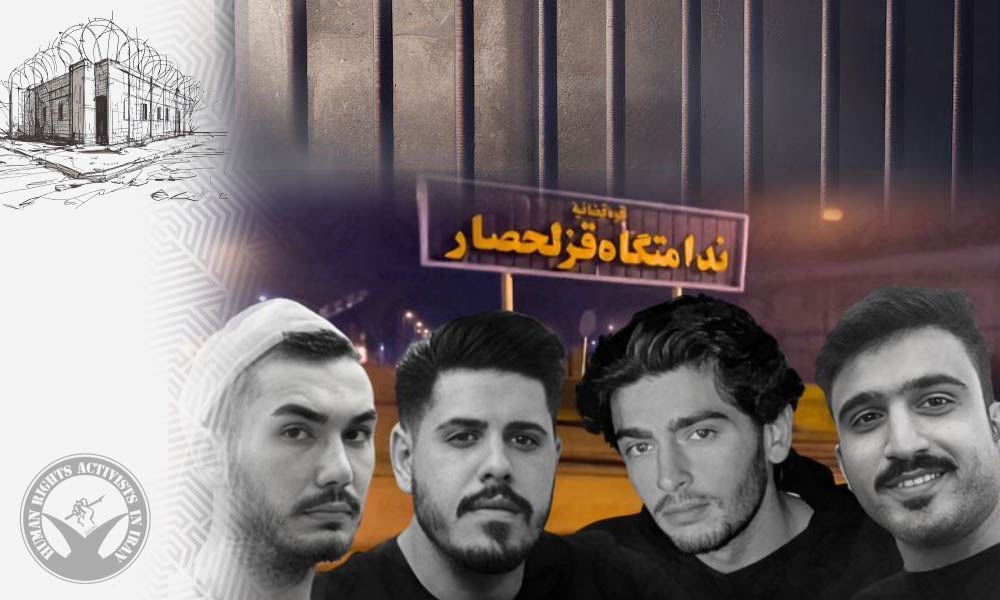
Milad Armoon, Seyed Mohammad-Mehdi Hosseini, Mehdi Imani, and Navid Najaran, four defendants in the so-called “Ekbatan Township” case, remain in indefinite detention for over a year.

These individuals were transferred from Ward 2-A of Evin Prison, which is under the control of IRGC Intelligence, to Qezel Hesar Prison in Karaj in mid-June of this year, after completing the interrogation process. Their case is still in Branch 4 of the Criminal Court Prosecutor’s Office of District 27 in Tehran and has not yet been referred to Branch 13 of the Tehran Criminal Court. According to the defense attorney for one of the defendants, their transfer to the IRGC Intelligence Detention Center was for completing court-requested investigations.

In early November 2022, amid nationwide protests, at least 50 young residents of Ekbatan Township were arrested by security forces for their alleged involvement in an incident that resulted in the death of a Basij member named Arman Aliverdi.

Indictments were issued for 14 of them. In April 2023, the Judiciary spokesman announced charges of “enmity against God (Moharebeh) through the use of cold weapons and actions against national security” for three defendants. According to the issued indictment, these citizens are accused of charges including “assisting in intentional murder,” and “disruption of public order and peace.”

In late September 2023, after four court hearings, the court did not refer their case for further investigations and Branch 13 of the Tehran Criminal Court intervened to expedite the process and determine the status of the defendants. Another part of their case has been referred to Branch 15 of the Tehran Revolutionary Court, presided over by Judge Abolghasem Salavati.

Of the eight defendants, Hossein Nemati, Alireza Barmarz Pournak, Alireza Kafaie, and Amir-Mohammad Khosh-Eghbal were released on bail from Qezel Hesar Prison in February of last year.

Previously, defense attorney Payam Derafshan confirmed that four individuals face the charge of ‘Moharebeh.’

In April of this year, the case was returned to the Prosecutor’s Office for what was described as addressing a “confidential deficiency.”

Below are the details and arrest dates of the defendants in the so-called “Ekbatan Township” case who remain in detention and uncertainty:

  • Milad Armoon – aged 25 – Arrest Date: November 2, 2022
  • Seyed Mohammad-Mehdi Hosseini – aged 25 – Arrest Date: December 6, 2022
  • Mehdi Imani – aged 29 – Arrest Date: December 15, 2022
  • Navid Najaran – aged 32 – Arrest Date: Unknown

Eight Protestors Remain in Detention Amid Legal Uncertainty

Milad Armoon, Alireza Kafaie, Amir-Mohammad Khosh Eghbal, Alireza Barmarz Pournak, Mohammad-Mehdi Hosseini, Hossein Nemati, Mehdi Imani, and Navid Najaran are detained in Qezel (Ghezel) Hesar Prison with an uncertain legal status.

The arrest of these individuals during the 2022 nationwide protests links them to a legal case stemming from an incident in Ekbatan town, Tehran, resulting in the death of Basij Militia agent Arman Aliverdi.

According to a source with close ties to one defendant’s family, the Tehran Criminal Court had previously confirmed the release of two detainees on bail. However, Judge Salavati, presiding over Branch 15 of the Revolutionary Court, rejected their release and asserted control over the entire case. Such discrepancies within Iran’s judicial system contribute to legal insecurity and uncertainty, causing distress for the detainees and their families.

Another source reports that, despite multiple court sessions in October and November of this year, the defendants await a verdict. Earlier, it was revealed that the case had been divided between the Revolutionary and Criminal Courts. The Criminal Court initiated proceedings on October 7, 2023, addressing charges of “assisting in murder, assembly and collusion against national security, and enmity against God (Moharebeh).”

The protests in Ekbatan Town in Tehran in 2022 resulted in the death of Basij Militia agent Arman Aliverdi. Subsequently, in November 2022, police and security forces arrested over 50 young residents of the district, with 14 individuals facing legal action. The indictments detail charges such as “enmity against God” for Azmoon, Hosseini, and Imani, while Kafaie, Khosh Eghbal, Barmarz Pournak, and Nemati face charges of “assisting in murder and disturbing public order.” The charges against Najaran, arrested in Ahvaz, remain unknown.

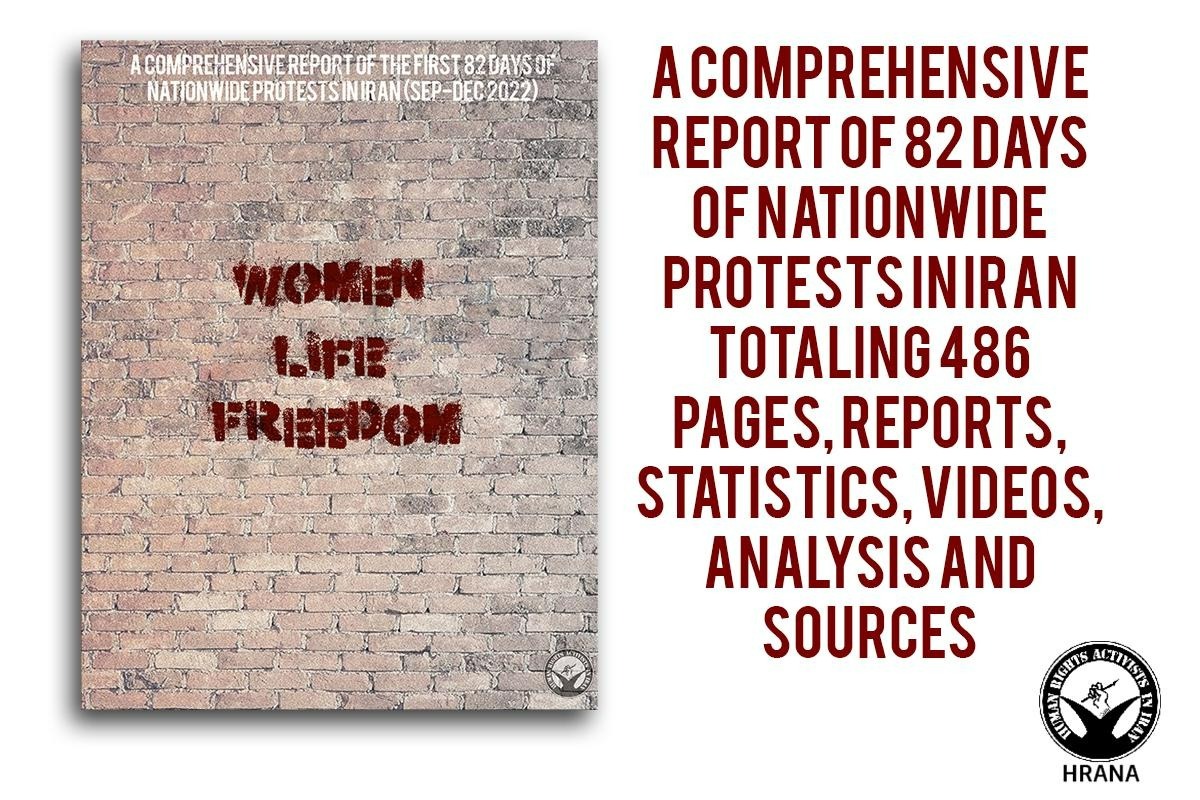
A Comprehensive Report of the First 82 days of Nationwide Protests in Iran

  HRANA – Mahsa Amini, a 22-year-old young woman, was arrested by the morality police for the crime of improper hijab. Her arrest and death in detention fueled nationwide protests in Iran. Protesters came to the streets with the central slogan “Women, Life, Freedom” in protest against the performance, laws, and structure of the regime. The following 486-page report is dedicated to the statistical review, analysis, and summary of the first eighty-two days of the ongoing protests (September 17 to December 7, 2022). In this report, in addition to the geographic analysis and the presentation of maps and charts, the identity of 481 deceased, including 68 children and teenagers, an estimated of 18,242 arrested along with the identity of 3,670 arrested citizens, 605 students and 61 journalists or activists in the field of information is compiled. In addition, the report includes a complete collection of 1988 verified video reports by date and topic. The report examines protests across 1115 documented gatherings in all 31 provinces of the country, including 160 cities and 143 universities.

Summary

Mahsa (Zhina) Amini, a young 22-year-old woman from Saqqez, Kurdistan was visiting Tehran, when she was taken into custody on Tuesday, September 13, 2022, by the Morality Police officers at the Haqqani metro station in Tehran. The reason for her arrest: not properly observing the strict Islamic dress code. Mahsa/Zhina was taken to the infamous detention center of Moral Security Police known as Vozara.
Shortly after Mahsa’s arrest, she went into a coma with level three concussion, and her partially alive body was transferred to the intensive care unit of Kasra Hospital. Given the track record of the police and Guidance Patrols in mistreating the arrestees and similar previous incidents, with the believe that Mahsa was beaten during the arrest people were outraged.

Download full report in PDF format

Unpersuasive explanations given by the Central Command of the Islamic Republic Police Force (FARAJA) in defense of its actions regarding the death of Mahsa, the past performance of the police force, along with widespread dissatisfaction with the existence of a body called the Moral Security Police, fueled widespread protests in Iran.
The widespread protests sparked at the time Mahsa Amini was announced dead in front of Kasra Hospital on Argentina Street in Tehran, and then quickly spread to the streets despite the intimidating presence of Iran’s security forces. The protests intensified after Mahsa’s burial in a Saqqez cemetery. To the extent that after eighty-two days of nationwide protests between September 17, 2022, to December 7, 2022, they have spread to Iran’s all 31 provinces, 160 cities, and 143 major universities.
The protests did not stay limited to Mahsa’s death, it rather, quickly targeted the Iranian government’s political and ideological foundations. These protests were violently quashed by the anti-riot police and Iran’s militia force (Basij). teargas, pellets, and live ammunition were used in the repression of protestors. This widespread crackdown has led to the death of dozens of people and the wounding of hundreds of protestors.
Despite sever communication restrictions imposed by the Islamic Republic, this report attempts to give a clearer picture of the first 82 days of the protests between September 17, to December 7, 2022. It’s worth mentioning at the time of this report the protests are still ongoing in various forms.

Table of Contents


For further inquiries please contact Skylar Thompson, Senior Advocacy Coordinator Human Rights Activists in Iran (HRA) at [email protected]