Report on the Arrest and Release of Eight Citizens in Various Cities

HRANA –  several citizens have been arrested in Mashhad and Tehran.

Based on information received by HRANA, Javad Saraki was arrested by security forces in Mashhad about a week ago and transferred to Vakilabad Prison. No information is available regarding the charges against him.

Mohammad Moradi, 48, was also arrested in Tehran on February 8 and subsequently transferred to Ward 209 of Evin Prison. About one month after his arrest, he informed his family during a phone call that he had been transferred to an undisclosed location.

Hamed Rasoulkhani was also arrested on either January 8 or January 9 during protests in Mashhad and transferred to Vakilabad Prison in the city. Efforts by Rasoulkhani’s family to allow a lawyer access to his case have so far been unsuccessful. Rasoulkhani, one of the individuals previously detained in connection with the memorial ceremony marking the seventh day after the death of Khosrow Alikordi in Mashhad, had earlier been released from Vakilabad Prison in December after posting bail.

Meanwhile, according to Kurdpa, on Saturday, March 14, Khabat Dehdar, who had previously been arrested on February 10, was released from Sanandaj Prison after posting bail. This Sanandaj resident has previously faced security-related pressure due to his activities.

BBC Persian also reported the arrest of documentary filmmaker Mojgan Ilanlou along with her husband and daughter, Mohammad Pirhadi and Leila Pirhadi. These individuals were arrested yesterday morning by security forces and transferred to an undisclosed location. Ms. Ilanlou has previously faced judicial action due to her activities.

According to Kolbar News, Pishva Aghapour, a 22-year-old resident of Bukan, was arrested on March 5 and his place of detention remains unknown. The report states that his arrest was accompanied by physical violence. It also notes that he has previously faced security-related pressure.

It is worth noting that gatherings and strikes by shopkeepers and bazaar merchants began on Sunday, December 28, in Tehran, and after two days expanded beyond markets and commercial centers. With the participation of students, citizens, and various social groups, the protests became one of the largest waves of demonstrations in recent years. Following the crackdown on the protests by law enforcement and security forces, thousands of people were killed or injured, and tens of thousands were arrested or summoned by security institutions. For more information, readers can refer to HRANA’s comprehensive report titled “Crimson Winter,” which documents the first fifty days after the start of Iran’s nationwide protests.

Afshin Hosseinpanahi and Khabat Dehdar Arrested by Security Forces

HRANA – Today, Afshin Hosseinpanahi and Khabat Dehdar, residents of Sanandaj, were arrested by security forces and transferred to an unknown location.

According to Kurdpa, the arrests were carried out today by security forces without the presentation of a judicial warrant. As of the time of this report, no information has been obtained regarding the reasons for their arrest, the charges brought against them, or their place of detention.

Afshin Hosseinpanahi and Khabat Dehdar, both residents of Sanandaj, have previously faced security-related confrontations due to their activities.

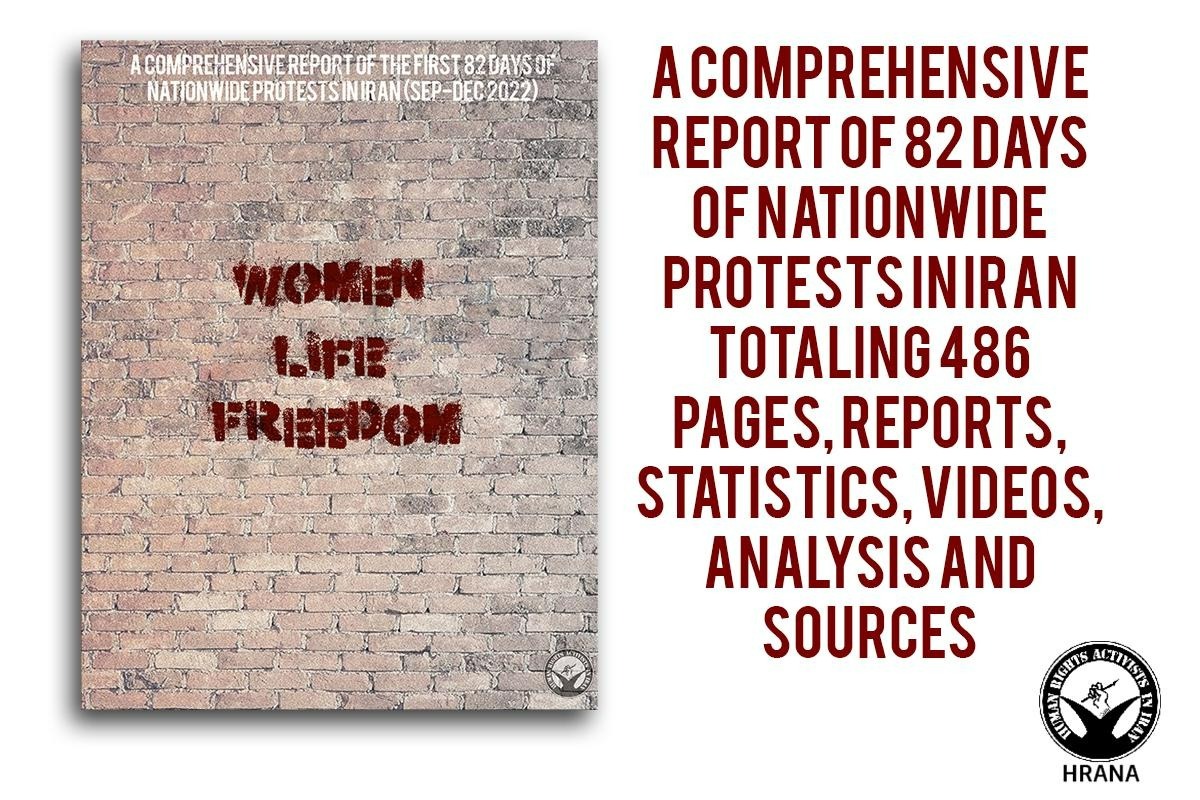
A Comprehensive Report of the First 82 days of Nationwide Protests in Iran

  HRANA – Mahsa Amini, a 22-year-old young woman, was arrested by the morality police for the crime of improper hijab. Her arrest and death in detention fueled nationwide protests in Iran. Protesters came to the streets with the central slogan “Women, Life, Freedom” in protest against the performance, laws, and structure of the regime. The following 486-page report is dedicated to the statistical review, analysis, and summary of the first eighty-two days of the ongoing protests (September 17 to December 7, 2022). In this report, in addition to the geographic analysis and the presentation of maps and charts, the identity of 481 deceased, including 68 children and teenagers, an estimated of 18,242 arrested along with the identity of 3,670 arrested citizens, 605 students and 61 journalists or activists in the field of information is compiled. In addition, the report includes a complete collection of 1988 verified video reports by date and topic. The report examines protests across 1115 documented gatherings in all 31 provinces of the country, including 160 cities and 143 universities.

Summary

Mahsa (Zhina) Amini, a young 22-year-old woman from Saqqez, Kurdistan was visiting Tehran, when she was taken into custody on Tuesday, September 13, 2022, by the Morality Police officers at the Haqqani metro station in Tehran. The reason for her arrest: not properly observing the strict Islamic dress code. Mahsa/Zhina was taken to the infamous detention center of Moral Security Police known as Vozara.
Shortly after Mahsa’s arrest, she went into a coma with level three concussion, and her partially alive body was transferred to the intensive care unit of Kasra Hospital. Given the track record of the police and Guidance Patrols in mistreating the arrestees and similar previous incidents, with the believe that Mahsa was beaten during the arrest people were outraged.

Download full report in PDF format

Unpersuasive explanations given by the Central Command of the Islamic Republic Police Force (FARAJA) in defense of its actions regarding the death of Mahsa, the past performance of the police force, along with widespread dissatisfaction with the existence of a body called the Moral Security Police, fueled widespread protests in Iran.
The widespread protests sparked at the time Mahsa Amini was announced dead in front of Kasra Hospital on Argentina Street in Tehran, and then quickly spread to the streets despite the intimidating presence of Iran’s security forces. The protests intensified after Mahsa’s burial in a Saqqez cemetery. To the extent that after eighty-two days of nationwide protests between September 17, 2022, to December 7, 2022, they have spread to Iran’s all 31 provinces, 160 cities, and 143 major universities.
The protests did not stay limited to Mahsa’s death, it rather, quickly targeted the Iranian government’s political and ideological foundations. These protests were violently quashed by the anti-riot police and Iran’s militia force (Basij). teargas, pellets, and live ammunition were used in the repression of protestors. This widespread crackdown has led to the death of dozens of people and the wounding of hundreds of protestors.
Despite sever communication restrictions imposed by the Islamic Republic, this report attempts to give a clearer picture of the first 82 days of the protests between September 17, to December 7, 2022. It’s worth mentioning at the time of this report the protests are still ongoing in various forms.

Table of Contents


For further inquiries please contact Skylar Thompson, Senior Advocacy Coordinator Human Rights Activists in Iran (HRA) at [email protected]