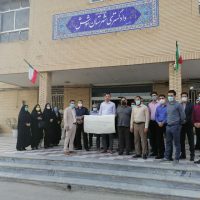
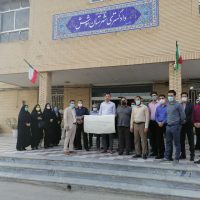
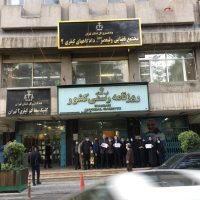
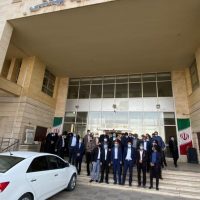
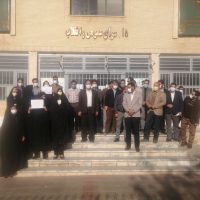
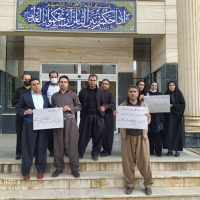
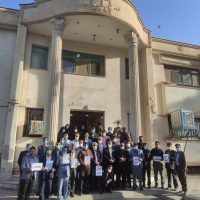
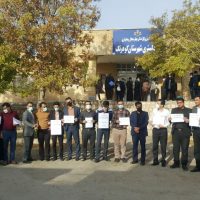
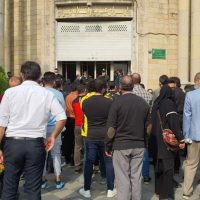
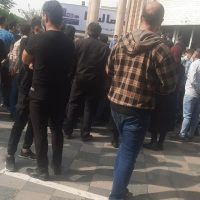
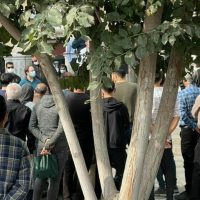
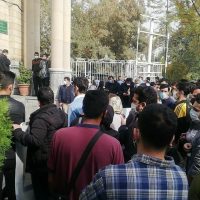
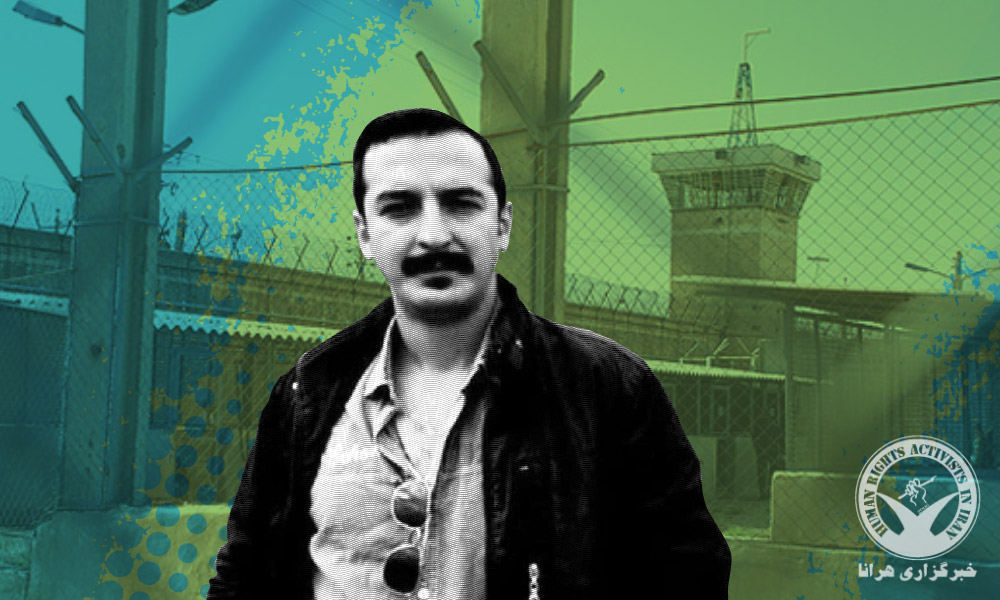
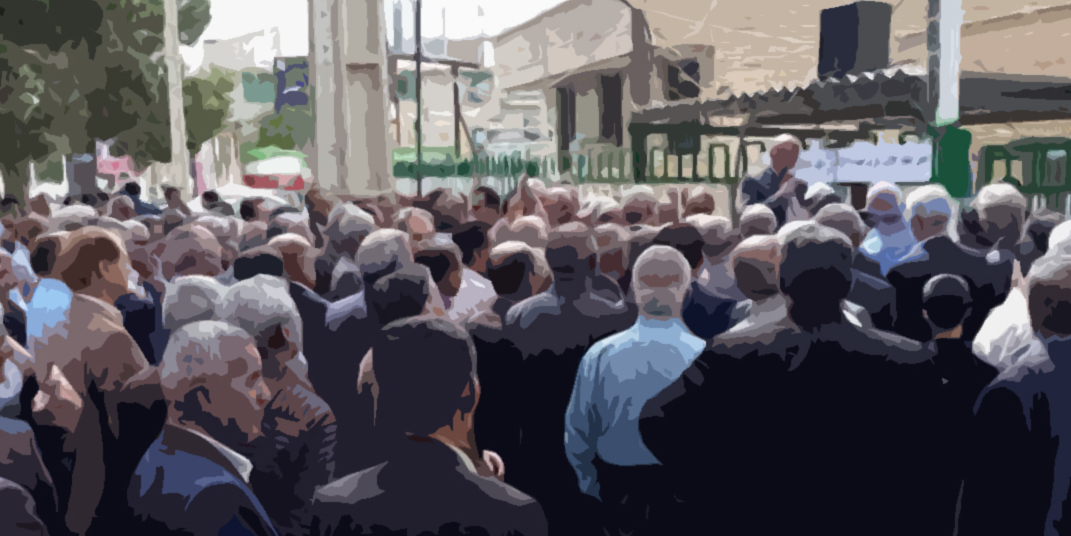
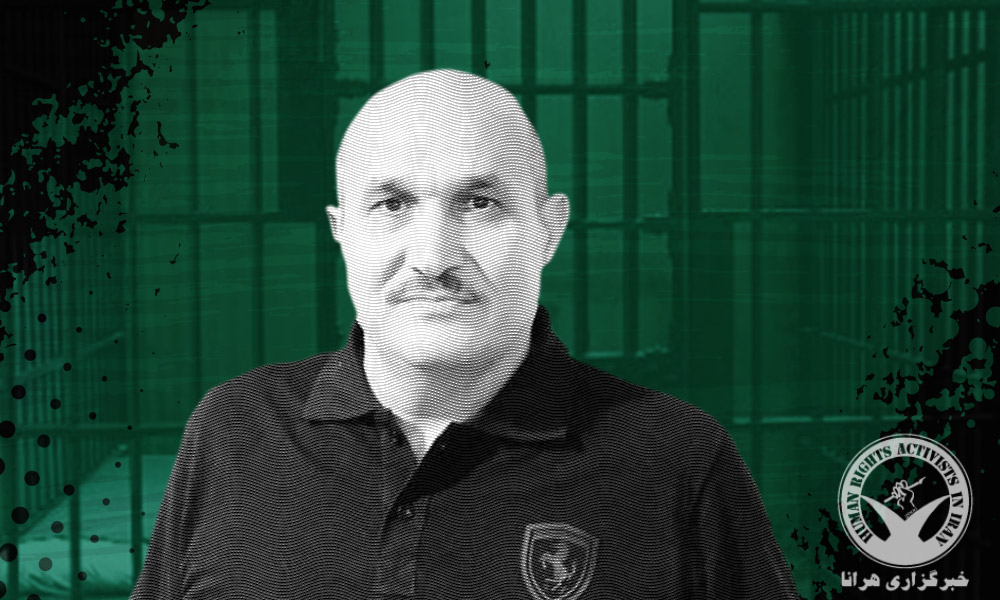
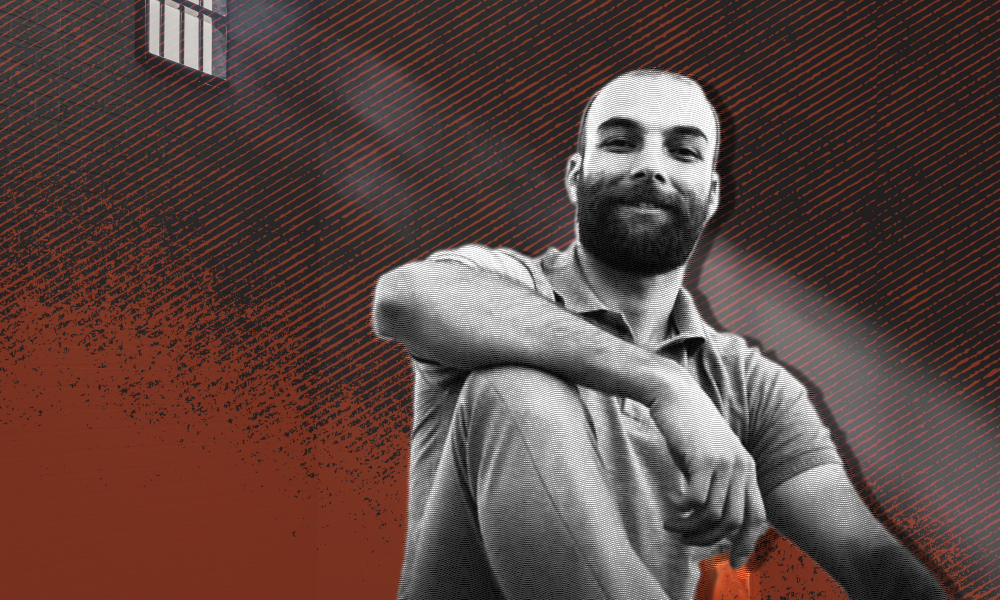
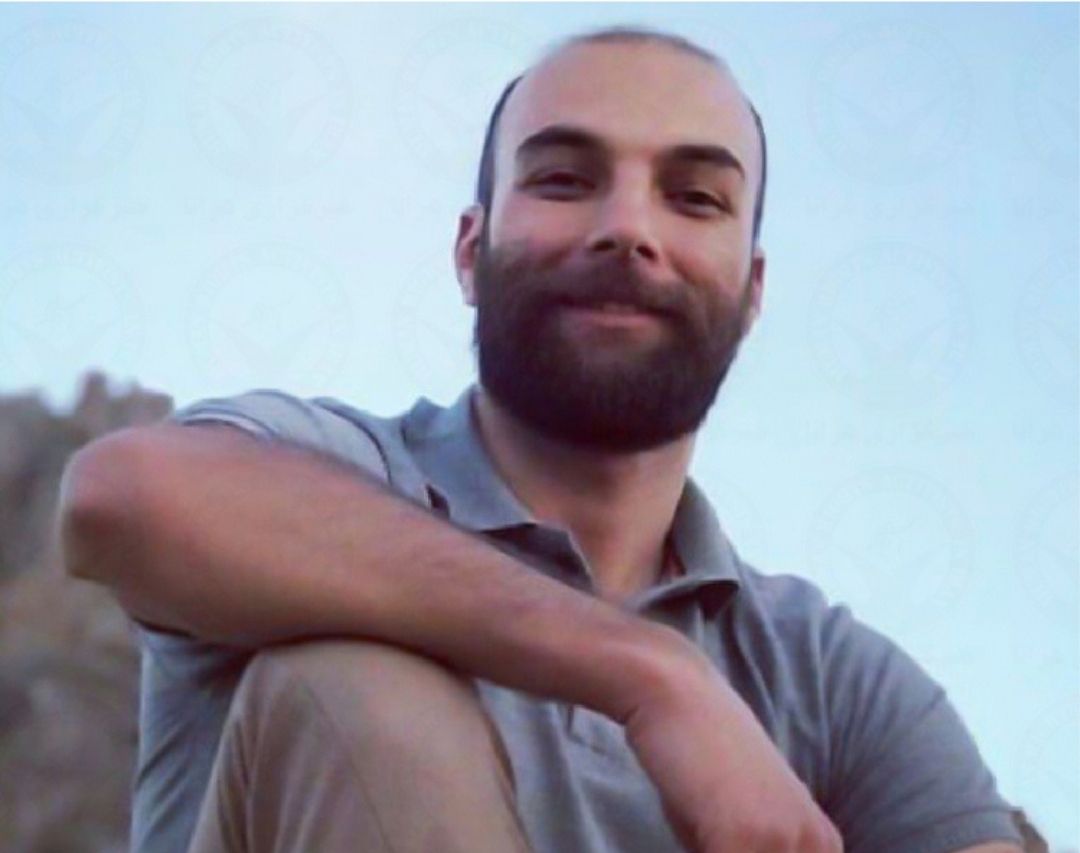
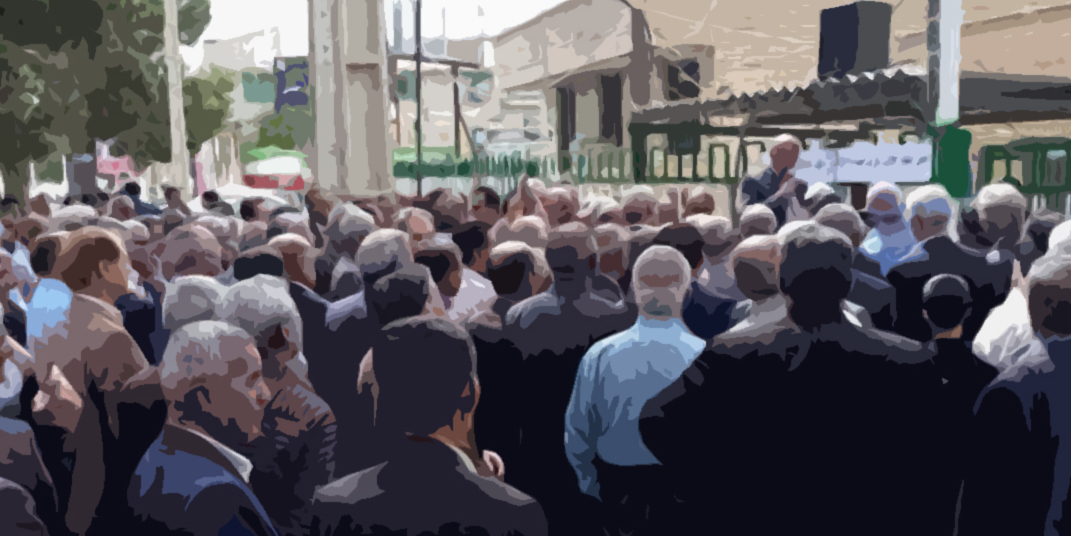
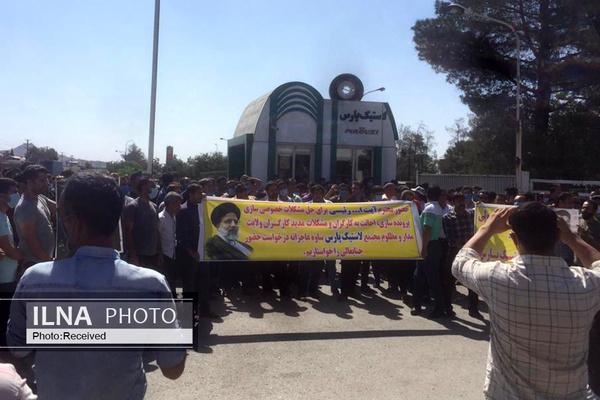
Yesterday, October 21, due to acute pain in his knees and backbone, Azerbaijani Turk activist Abbas Lessani was dispatched to a medical clinic outside Ardabil Prison.
According to HRANA, the news agency of Human Rights Activists, Lessani was dispatched to a clinic for an MRI test due to acute pain in knees and backbone. This is the third time that he has been dispatched outside of the prison for treatment.
Lessani has been held in Ardabil Prison since January 2019. In two separate cases, he has been sentenced to ten years and ten months combined.
On May 25, 2021, he was sent off to the hospital for the treatment of painful backbone and knees.
On June 24, 2021, due to a number of medical problems including high blood pressure, he was sent off shortly to a medical clinic in Ardabil for a medical test. After echocardiography, he was diagnosed with stenosis (a widening of the opening of a heart valve). Therefore he requires further treatment outside of the prison.
On January 15, 2019, Abbas Lessani was summoned by Branch 2 of the Revolutionary Court in Tabriz and, following his appearance at the court, he was arrested and transferred to Ardabil Prison.
Thereafter, the Ardabil Revolutionary Court sentenced him to eight years imprisonment and 2 years exile in Yazd City on a charge of “forming a group with the purpose to disrupt national security”.
This verdict was increased to 15 years imprisonment and two years exile on appeal. In July 2020, his appeal against the conviction to the supreme court of Iran was dismissed. Under Article 134, a maximum sentence of 10 years is enforceable. In addition, earlier Branch 1 of the court of appeal in Ardabil had dismissed the request of applying ” Punishment Reduction Law”.
In May 2019, in another case, Branch 26 of the Court of appeal in Eastern Azerbaijan sentenced Lessani to ten months in prison on a charge of “propaganda against the regime and in favour of opposition political groups”.
Abbas Lessani has faced other arrests and convictions due to his civil activities. In the last instance, on July 2, 2018, together with three residents of Ardabil, he was arrested by the county intelligence agents, several days before holding an annual gathering in Babak Fort (a gathering to celebrate the Babak Khorramdin’s birthday).
He was reportedly arrested for publishing a video in which he had encouraged people to attend the gathering. After spending nine days in detention, Lessani was released on bail.
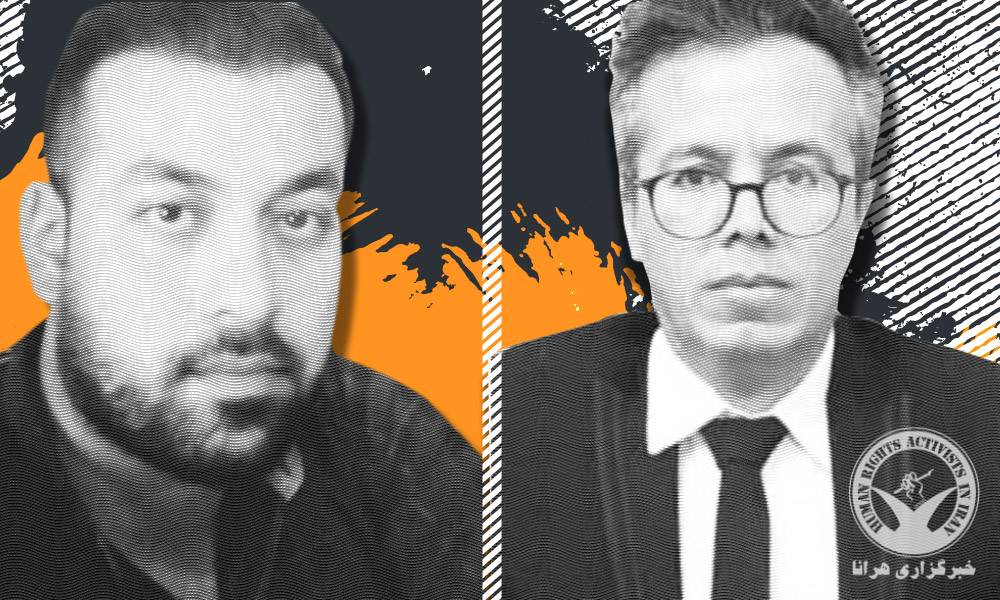
On Monday, October 18, Yousef Salahshour and Amir Sattari Rauf were summoned to Branch 111 of the Criminal Court of Tabriz.
According to HRANA, the news agency of Human Rights Activists, they have received separate summons, issued through the online system of Judiciary (SENA), to appear in court. Salahshour and Sattari Rauf are to appear in court on October 27 and October 30 respectively.
As mentioned in the summons, the charges against Salahshour are “disturbing public order by participation in illegal protests and assembles”, “agitating people for violent act through telecommunication systems in cyberspace” and “propaganda against the regime”.
On July 25, Yousef Salahshour was arrested by the intelligence agents and transferred to the detention center of the Ministry of Intelligence in Tabriz. On August 11, in a phone call, he informed his family that he had been transferred to Tabriz Prison. He was released on bail on August 14, and then on October 3, the Revolutionary Court of Tabriz held the first court session addressing one of his charges.
Mr. Sattari Rauf was arrested on July 22 by security forces and transferred to Tabriz Prison. He was released from Tabriz prison on August 15.
On July 24, a number of citizens in Tabriz marched and protested in support of the protest of Khuzestan against water shortage and mismanagement of the government. During the protests, a number of these citizens were arrested.
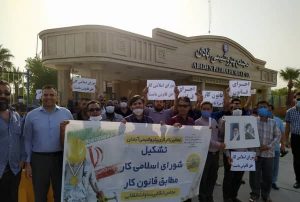
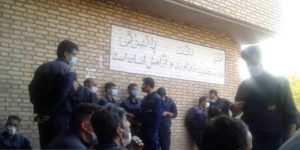
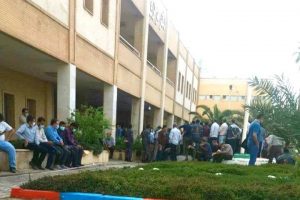
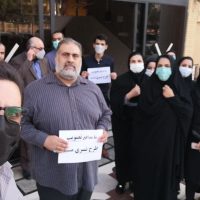
According to HRANA, the news agency of Human Rights Activists, a number of protests took place this week in Iran, many of which were continuations of ongoing movements. Read our recap below for details, photos, and videos from the demonstrations.
Saturday, October 9
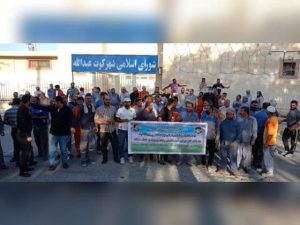
In Rameshk city, in Sistan and Baluchestan Province, a number of citizens assembled in front of a copper mining company called “Rameshk” to protest the company’s confiscation of their pieces of land without providing compensation.
Sunday, October 10
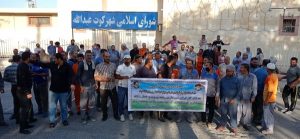
On the thirteen day of their strike, Haft-Tappeh’s workers assembled in front of the governorate building in Shush city and then marched in the streets. They chanted “this revolutionary government has just empty slogans”.
These workers demand paying delayed wages, immediate returning the company from the private sector to state section, returning fired workers to work, extending the contracts of both seasonal workers and workers of the pest control department, carrying out repair operations.
A group of depositors of Caspian, a finance and credit institution, assembled in front of the building of the Central Bank in Tehran to protest against the sham investment scheme of the institution and ask for the return on their investment.
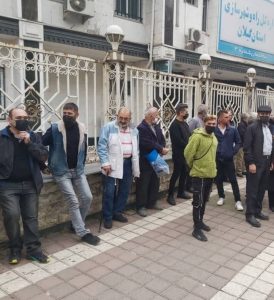
A number of retirees of the pension fund of steel corporation Fulad assembled in front of the company’s buildings in Isfahan and Khuzestan. They asked for levelling up their pension in proportion with the poverty line, enjoying adequate benefits and the supplementary insurance as set by the by-laws of this corporation.
Monday, October 11
For the second consecutive day, a number of workers of Jovein cement company in Mashhad assembled at company premises to ask for implementing Job Classification Plan and holding the employers to his promises.
A group of poultry farm workers assembled in front of the Governor’s office in Shahrekord city in Chaharmahal and Bakhtiari Province. They protested against the high costs of feeding and chicks for incubators in comparison to the low chicken prices.
On the fourteenth consecutive day, Haft-Tappeh workers assembled in front of the governorate building in Shush city and then marched in the streets.
The contracted workers the company SAAPEC in Asaluyeh went on strike and assembled in company premises in protest against two-months unpaid wages.
For the second consecutive day, a number of citizens in Rameshk city, in Sistan and Baluchestan Province, assembled in front of a copper mining company Rameshk. Reportedly, to build a copper mine site, this company has confiscated their pieces of land without paying any compensation.
Tuesday, October 12
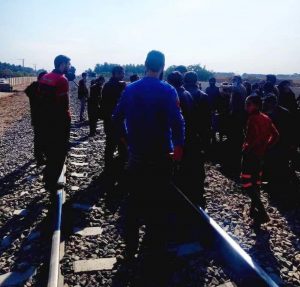
The workers of Abnieh Fanni, a railway company in the Azerbaijan zone, which are working on rail lines of counties Salmas, Jolfa, Azarshahr, Marand and Ajabshir, went on strike in protest against the two-month delay in payment and employer’s contribution in the health insurance. According to these workers, their problems began when the project was outsourced to private-sector companies.
On the fifteenth consecutive day of the strike, workers of Haft-Tappeh Company assembled at their workplace. These worker demands, among other things, paying delayed wages, immediate returning the company from the private sector to state section, returning fired workers to work, extending the contracts of both seasonal workers and workers of the pest control department, Carrying out repair operations.
The workers of the Isfahan municipality assembled to ask for levelling up wages and other demands in front of the municipality headquarter.
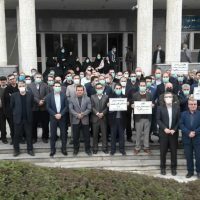
In front of the building of the Tehran Planning and Budget Organization, a number of last-year-retired teachers protested unpaid pension income.
Wednesday, October 13
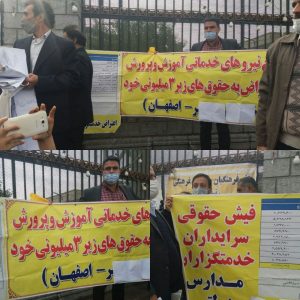
A number of school service personnel working for the Ministry of Education of Qom assembled in the premises of the Ministry of education’s building. They protested low wages,forced and unpaid overworking, cutting off work uniform quota and the lack of promotion and other job-related improvements for those who have obtained the university degree
On the sixteenth day of their strike, Haft-Tappeh’s workers assembled in front of Labor office in Shush city.
A number of contractual teachers assembled in front of the Provincial Government building in Shahrekord in Chaharmahal and Bakhtiari Province. These teachers protested against the lack of job security and low wages in comparison to teachers who are hired by the ministry of education. They demanded to come under contract with the ministry of education.
Thursday, October 14
In response to the call of the Coordinating Council of Iranian teacher Unions, working and retired teachers and educators in at least 40 cities assembled to ask for their demands.
A number of workers of the municipality in Khorramshahr city assembled to ask for six months unpaid wages.
The workers of private companies which are working as contractors on coal mines in Kerman assembled in front of the Provincial Government building. They asked for implementing the Job Classification plan and other demands.
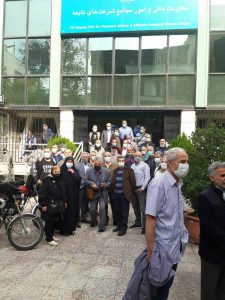
The retirees of Gilan Ministry of Health assembled in the premises of the University of Medical Sciences in Rasht to ask for closing pension gap and other demands.
On the Seventeenth day of their strike, the workers of Haft-Tappeh Company assembled at their workplace.
According to HRANA, the news agency of Human Rights Activists, a number of protests took place this week in Iran, many of which were continuations of ongoing movements. Read our recap below for details, photos, and videos from the demonstrations.
Saturday, October 2
This Saturday and Sunday, a group of environmental activists of Sanandaj in the vicinity of Vahdat Dam gathered to protest against the years-long negligence from local authorities in addressing the area’s unsafe drinking water. Because of the city water is contaminated, residents are forced to carry water from the springs surrounding the city.
Sunday, October 3
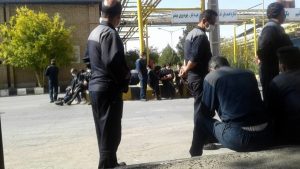
Employees of coal mining company Pabdana in Kerman Province assembled this Sunday at their workplace entrance gate and protested the company’s low wages, arguing that, compared to state-owned mining companies, private companies such as Pabdana pay employees less for longer hours.
About 400 drivers of the transport unit of South Zagros Oil and Gas Production Company, for a second consecutive day, assembled to protest the company’s decision to change their contracts. The new agreements are set up so that that workers will be employed by a contractor rather than the company, meaning lower wages and fewer benefits.
In Bandar Imam Khomeini, a number of workers working for subsidiary companies of Persian Gulf Holding in the petrochemical special zone assembled to protest against wage discrimination. They asked for a direct contract with the company rather than contractors who enforce lower wages and harder work.
The retirees of the Social Security Organization assembled in front of this organization’s buildings in cities of Ahvaz, Rasht, Kermanshah, KHORAM-Abad, Tehran, Mashhad, Tabriz, and Qazvin, to ask for their demands. Their demands included levelling up pensions in proportion with the poverty line, enforcing the equating wages act, enforcing Article 96 of Social Security Act, addressing the issues regarding supplementary insurance, receiving end-of-year bonuses and taking work records in difficult-dirty-and-dangerous jobs into pension calculations.
A number of teachers and educators protested in front of the Parliament building in Tehran and the Ministry of Education’s buildings in the cities of Ahvaz, Shiraz, Zanjan, Darab, Bandar-Abbas and Isfahan. They asked for better enforcement of the Equating Wages Act for retirees and the Ranking Plan Act.
Personnel of the Municipality of Khorramshahr assembled in front of the government building to protest against a 6-month payment delay and a 10-month-unpaid insurance premium.
Retirees of the steel company Fulad protested in front of the company’s headquarters in Isfahan and Khuzestan provinces. They asked for levelling up their pension in proportion with the poverty line and enforcing the Equating Wages Act and addressing the problems of supplementary insurance.
A number of Haft-Tappeh’s workers continued to protest on the sixth day of their strike.
Monday, October 4
A number of students and alumni of pharmacology assembled in front of the building of the Ministry of Health and Medical Education in Tehran to protest against the monopoly on establishing pharmacies. They asked for the acceleration in enforcing the new regulations thereby the establishment of pharmacies in deprived areas would be facilitated.
On the seventh day, the workers of Haft-Tappeh company went out on strike. They assembled in front of the governorate building in Shush city.
Several workers for private coal mining companies in Kuhbanan county went on strike for the sixth consecutive day at their place of work. The workers said that, despite higher productivity and better quality of coal, they have been paid 4 to 5 million tomans less than workers of state-owned companies. Reportedly, in Kuhbanan County, more than 3000 workers are working for these private coal mining companies.
A group of personnel of social emergency workers of state welfare organization assembled in front of the parliament in Tehran and demanded changing work contract party from private to state section as well as the approval of the social emergency bill by parliament.
A group of retirees and working personnel of airline company Homa assembled in front of the building of Planning and Budget Organization. The retirees said that, despite promises from their supervisors, pensionsv for last month have not been paid.
Tuesday, October 4
On the eighth day of their strike, Haft-Tappeh’s workers assembled in front of the governorate building in Shush city and then marched through the streets.
More than 500 workers of private companies, who are working on copper mining Sungun Varzaghan, assembled and went out on strike against low wages and hard work conditions.
Workers of the petrochemical special zone, including Persian Gulf Holding, assembled and demanded equal wage for equal work according to article 38 of Iran’s labour code and ILO Convention No. 100.
Wednesday, October 5
In response to recent violence against women (such as Faezeh Maleki-Nia who was burned to death by her father) and the negligence of the police and judiciary to prosecute and punish the offenders, a group of civil activists assembled in front of the Building of the Ministry of Justice in Sanandaj.
On the ninth day of the strike, in Shush city, Haft-Tappeh workers assemble again in front of the governorate building and then marched toward the building of the ministry of the judiciary.
For the second day, workers of private companies working on copper mining Sungun Varzaghan, refused to work and assembled at their workplace. These workers had spent last night in their tents in the same place of assembly.
Thursday, October 6
Following the protest of women in Sanandaj on previous day, several women protested in Marivan and asked that the case of Faezeh Maleki-Nia (who was burned by her father) be addressed, and called for an end to violence against women.
In Khorramshahr, a number of citizens assembled to protest against negligence and shortcomings of the municipality in collecting garbage. As a demonstration of protest, they piled up garbage bags in front of the municipality building.
In their tenth days of strike, Haft-Tappeh workers continued to protest in front of the governorate building in Shush.
A number of workers of Non-Industrial Operations Company Pazargad in Pardis Jam Town went out on strike at the workplace.
Azerbaijani Turk activist Roozbeh Piri has been transferred to Tabriz Prison following his violent arrest by security forces.
According to HRANA, the news agency of Human Rights Activists, Iran’s intelligence and security police arrested Piri on September 9 in Tabriz, and, as an act of “enforced disappearance”, transferred him to an unidentified location.
According to reports he is currently in quarantine has suffered injuries from being beaten by police during the arrest.
His family has filed a complaint in the prosecutor’s office in Tabriz and asked to bring those who are responsible for beating Roozbeh Piri to justice.
Mr. Piri has already been subjected to unlawful arrest and conviction over his non-violent civil activities. At the time of nationwide protests in November 2019, he was arrested and subsequently sentenced to 10 months imprisonment later on reduced to 91 days on appeal. He was released on July 5 2020 after serving out his sentence.
After a while, a judge in Tabriz sentenced him to pay the fine on a charge of the so-called “spreading lies” on the internet. Reportedly, his brother was also subjected to police harassment and torture.
Yesterday, September 9, Azerbaijani Turk activist Roozbeh Piri was beaten, arrested, and transferred to an unknown location by security forces in Tabriz.
According to HRANA, the news agency of Human Rights Activists, the reasons for Mr. Piri’s detention and his current whereabouts are still unknown.
Earlier, Branch 103 of the Criminal Court of Tabriz, presided over by Judge Mikael Vatankhah Alvar, sentenced Roozbeh Piri to pay a fine of 5 million tomans for “publishing lies in cyberspace”. The Court of Appeal of East Azerbaijan Province upheld the verdict of the primary court.
Piri had previously been arrested and convicted for his peaceful activities. He was arrested during the nationwide protests in Tabriz in November 2019 and sentenced by the court of appeals to 91 days in prison. Mr. Piri was released from Tabriz Prison in July 2020 after enduring his sentence.
Roozbeh Piri is the editor of Tabriz Magazine and the founder of Navid Etedal, an independent student organization at Tabriz Azad University.
According to HRANA, the news agency of Human Rights Activists, a number of protests took place this week against the results of cities’ local elections and inadequate labor conditions. This week also featured the continuation of widespread labor strikes across the country. The oil industry, petrochemical industry and power stations experienced strikes in Abadan, Isfahan, Assaluyeh, Kerman, Qeshm Island, Yasuj, Bid Boland, and Urmia and Bushehr. Below is a brief recap and footage from some of the week’s demonstrations.
Saturday and Sunday, June 19-20
Several citizens in Yasuj protested the results of the city’s local elections in front of the Boyer-Ahmad government building. A group of Tehran Metro staff held protest rallies in front of the metro operating company in Tehran. Project workers of Farab Company of Bidkhoon refinery in Assaluyeh went on strike and left their jobs.
Citizens in Yasuj:
Tehran Metro staff:
Project workers in Bidkhoon refinery in Assaluyeh:
Monday and Tuesday, June 21-22
9 protest rallies and 11 workers’ strikes took place. A group of pharmacists in front of the Ministry of Health building in Tehran. Workers of Pars Tire in Saveh in Markazi Province rallied in front of the local factory. Workers of Sepahan Cement Company protested at their workplace, and a group of resident doctors in protested in the cities of Tehran, Urmia, Zanjan, Babol, Shiraz and Tabriz. Workers in Tehran Oil Refinery, Gachsaran Petrochemical Company, phases 13 and 14 of Assaluyeh, phase 13 of Kangan, Lidoma Company located in phase 13 of South Pars, AJC Company working in Abadan Refinery, Bidboland Refinery of Behbahan, Bushehr Petrochemical Company, Sina Palayesh Company Qeshm Island, and workers of Tehran Metro Line 5 went on strike.
Workers of Bidboland Gas Refinery in Behbahan:
Workers of Gachsaran Petrochemical Company:
Workers of Tehran Oil Refinery:
Workers of Lidoma Company located in phase 13 of South Pars:
Pharmacists in Tehran:
Resident doctors in Tehran, Urmia, Zanjan, Babol, Shiraz and Tabriz:
Pars Tire workers:
Wednesday, June 23
Workers of recently-closed stoning units of Hana Industrial Town located in Neyriz city in Fars gathered in front of the city government building. A group of employees of Ramin power station in Ahvaz city in front of the office building of the station, and a group of employees of Abadan refinery in front of the entrance door.
Ramin power station workers in Ahvaz:
Abadan refinery employees:
Thursday, June 24
Several residents of Maravneh village of Ahvaz city, workers of Mapna 3 Qeshm power Station continued their participation in the nationwide protests of the workers of the country’s oil industry.
Mapna 3 power Station employees:
Residents of Maravneh village:
Friday, June 25
Workers of refineries, petrochemicals and power plants, workers of Yazd Steel, went on strike.
Protests have erupted across Iran after the government unexpectedly announced it is rationing petrol and increasing its price. The protests took place across the country following the decision of the Iranian president, Hassan Rouhani, at midnight of November 14, 2019, to cut petrol subsidies to raise funds for social assistance to the poor. Petrol price was increased to a minimum of 15,000 Rials per liter, 50% increase from the day before.
Nationwide protests in the last three days were in at least 48 cities such as: Ahvaz, Shooshtar, Dezful, Gachsaran, Abadan, Khorramshahr, Bandar Mahshahr, Rasht, Shiraz, Bandar Abbas, Gorgan, Khorramabad, Qom, Ilam, Karaj, Sanandaj, Dorud, Qazvin, Arak, Mahdi Shahr, Garmsar, Shahroud, Najafabad, Mariwan, Tehran, Tabriz, Ardabil, Urmia, Saveh, Pasargadae, Qods (Qal’eh Hasan Khan), Varamin, Sari, Yasuj, Qaemshahr, Shahrekord, Malek Shahr, Parand, Damavand, Pol Dokhtar, Neyshabur, Sarepol Zahab, Kahnooj, Yazd, Bandar Bushehr, Bahmai, Shahriar, etc. They are still ongoing in several cities.
Peaceful demonstrations turned violent in Sanandaj, Mahshahr, and Shiraz, with online videos purporting to show police officers firing teargas at protesters and mobs setting fires. Several people were injured or killed in the first three days of protests as a result of the police’s direct shots. On November 17, 2019, students of Tehran University and Tabriz University protested inside the university. Shops at Tehran Grand Bazaar went on strike on November 17, 2019.
The protests started on November 15, 2019, and are still ongoing. The arrest of more than 1000 people across the country was confirmed. More than 150 banks and supermarkets were set on fire and a police officer was killed. Two Hawzas -a seminary where Shi’a Muslim clerics are educated- were set on fire in Shiraz and Kazerun. According to unconfirmed reports, at least 36 people were killed in Sirjan, Shiraz, Behbahan, Marivan, Khoramshahr, Isfahan, and Shahriar.
According to Fars News, protests were held in 100 cities and at least 100 banks and 57 supermarkets were set on fire. Based on this report, the number of protesters were 87400 from which 82200 are men and 5200 women. At least 1000 people were arrested. Yazd prosecutor confirmed the arrest of 40 people in the city of Yazd. Bam Prosecutor also confirmed the arrest of 15 people in the city of Bam. The prosecutor of Robat Karim confirmed the arrest of 34 protesters for vandalism. According to Mohammad Reza Amoui, Kermanshah’s chief of Law Enforcement Force of the Islamic Republic of Iran, on November 16, Major Iraj Javaheri was killed fighting with protesters in Kermanshah. A journalist resided in Mariwan, Adnan Hasanpour, reported that security forces shot people directly and at least seven people were killed in Javanrud, one person was killed in Sanandaj, and several people were injured. According to unconfirmed reports, 15 of the killed people are identified as following:
Meisam Adgipour, Khaled Maniat, Ali Ghazlavy, Milad Hamidavi, Ali Boghlani, Hamzeh Savari, Mohammad Asafi Zargani, Ehsan Abdollahnejad, Mehdi Nikouei, Osman Naderi, Mehran Tak, Shahou Validi, Javad Nazari Fathabadi, Mehrdad Dashtizadeh, Mohammad Hossein Ghanavati.
Iran has almost completely shut off access to the internet across the country. On November 16, 2019, by the approval of the National Security Supreme Council, the government has completely blocked Internet access in Iran to stymie protests. Due to the internet shut down and the lack of access to freelance reporters and citizen journalists, confirming news about demonstrations and deaths is difficult. It also caused difficulty for Iranian citizens to have access to news agencies websites. On Monday, November 18, schools are closed in 17 cities across Iran:
Shiraz, Kazerun, Alborz, Fereydun, Fereydun Shahr, Farsan, Kuhrang, Laran, Taleqan, Astara, and Najafabad. In addition, universities are closed in Shiraz.
Iran’s supreme leader, Ayatollah Ali Khamenei, has backed petrol price increases claiming opponents of the Islamic Republic and foreign enemies were guilty of sabotage and not ordinary people. According to Khabar Online, Mojtaba Zonnour, a parliament member representing Qom, is collecting parliament members signatures to impeach Ali Larijani, the head of parliament. He gathered 50 signatures so far. Mohammad Qasim Osmani, a parliament member representing Bukan, filed his resignation and added that he resigned to announce that he was not involved in this decision [raising petrol price]. Today, with respect to Ayatollah Khamenei’s views, the Ministry of Intelligence announced that the protesters will face harsh punishments. Reportedly, people received threatening text messages in Khuzestan and Karaj from the prosecutor’s offices of their province. People were warned about attending protests and not to disturb public order and facilitate the abuse of opposition groups.
The following is an overview of human rights
violations in Iran on January 7th, 2019 based on the information compiled and
verified by Human Rights Activists News Agency (HRANA).
(1) Nasrollah Lashani a political prisoner, began his hunger strike protesting mistreatment by the prison officials. Lashani is a Nationalist-Religious Activist who was accused of ‘propaganda against the state’ and sentenced to six years in prison. He was beaten and insulted in front of his wife and his 8-years-old son during a family visit on December 26, 2018.
(2) Two detained workers of Iran National Steel Industrial Group Mostafa Obiat and Kazem Heydari were released on bail on January 7, 2019. Tarogh Khalafi, Mohammadreza Nematpour, Behzad Alikhani, Karim Syahi, Meisam Ali GHanavati, and Gharib Hoveizavi are the six other workers of NISCO who are still in prison.
(3) Mohmmad Yousefi, a political prisoner who is serving his two years sentence in Evin prison, requested for an appeal but it was denied. He was charged with ‘insulting the Supreme Leader’.
(4) Mohammad Najafi ‘s appeal request was denied. He is a lawyer and human rights activist who is serving his three years sentence in prison and faced 74 lashes and 14 more years imprisonment for his new charges of ‘spreading lies and disturbing public opinion’.
(5) Abbas Lesani, Azerbaijani Turkic minority rights activist, was released on bail. He was tried in absentia and sentenced to 10 months imprisonment on charge of ‘propaganda against the state’.
(6) Expulsion of Sima Nazifi, a Baha’i architecture student from Azad University of Shahriyar due to her faith. Baha’i students in Iran routinely experience either denial of entrance to university or removal from student lists during their studies. Numerous reports are published annually regarding the barring of Baha’i citizens from education.
(7) A member of Isfahan city council, Nahid Khodakarami, was charged with ‘promoting de-veiling’ through her interviews and tweets.
(8) The forced closure of a Baha’i citizen, Farshid Deymi’s business in Birjand which had been permitted by Judicial authorities.
(9) The workers of Ahvaz sugar refining company have six months unpaid wages.
(10) Morteza Oustad, a prisoner of Tabriz prison, began hunger strike on December 26, 2018 protesting ‘unfair judicial system’. He was transferred to medical ward due to his deteriorating health condition.
(11) The parole request of a detained Nationalist-Religious Activist, Reza Aghakhani, was denied for the second time despite his eligibility due to having served a third of his sentence. He was sentenced to three years in prison on a charge of “acting against national security.”
(12) Three protests were organized on January 7. The farmers of Varzaneh in Isfahan, the customers of Saipa Citroen Company in Tehran, and the workers of Doroud-KhorramAbad railway held separate protests to request their demands.
(13) Esmail Bakhshi ‘s torture complaint raises sensitivity among people and now he is forced to deny it. He wrote a letter explaining his torture in prison and called on the Minister of Intelligence for a debate concerning torture and abuse in prisons.
(14) A prisoner charged with murder in Miandoab, was saved from gallows by victim’s family’s consent after spending 15 years in prison.
(15) Atena Daemi’s mother wrote an open letter and questioned the minister of intelligence, about her daughter’s tortures in prison. Recently, Esmail Bakhshi has written a letter about physical and psychological abuse and tortures in prison.
Human Rights Activists News Agency (HRANA)- Security agents arrested Azerbaijani activist and Tabriz resident Gholamreza Rashidi on Sunday, October 28th and transferred him to an undisclosed location.
A source close to Rashidi told HRANA that he was assaulted during the arrest. No information is currently available on the reasons behind his detainment.
Tabriz is the capital of the northwestern province of East Azerbaijan, which borders the Republic of Azerbaijan and is home to Iran’s Azerbaijani ethnic minority.