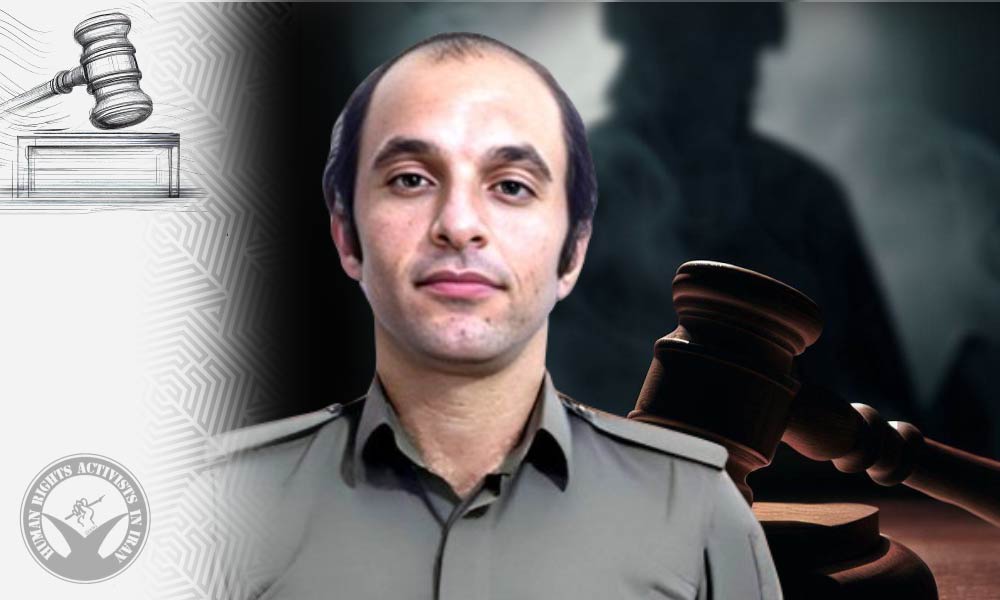
The Criminal Court of Sanandaj has issued a verdict, sentencing Edris Menbari, one of the individuals detained during the nationwide protests of 2022, to a one-year prison term and 40 lashes.
Menbari was found guilty of “disturbing public order.” He is mandated to serve his sentence at Dizelabad Prison in Kermanshah for a duration of one year, which includes time spent in custody.
The court session addressing Menbari’s charges took place on October 1, 2023, notably without the presence of his legal counsel.
Previously, on December 18, 2022, security forces apprehended Menbari at his residence in Sanandaj during the nationwide protests, and he was released on bail in February 2023.
Edris Menbari is a board member of the Nozhin Socio-Cultural Association.
It is important to highlight that the International Covenant on Civil and Political Rights expressly forbids flogging as a form of cruel and inhumane punishment.
On October 11, 2023, an inmate who had been convicted of murder faced execution at Qezel Hesar (Ghezel Hesar) Prison in Karaj, as revealed by Etemad News.
The prisoner who met his fate through hanging was found guilty of the murder of a friend in a coffee house seven years ago. Following the crime, he fled to Turkey, where Turkish authorities apprehended him. He was subsequently transferred to Interpol and later into the custody of Iranian authorities.
HRANA had reportedjust yesterday about the transfer of six death-row inmates to solitary confinement in Qezel Hesar, indicating their impending executions.
According to data compiled by the Center of Statistics of Human Rights Activists in Iran (HRA), between October 10, 2022, and October 8, 2023, a total of 659 individuals were executed by hanging in Iran, representing a 24% increase compared to the corresponding period in the previous year. Seven of these executions were conducted publicly. Concerningly, many of the defendants were denied access to a fair trial and due process. For details and statistics, read HRANA’s report.
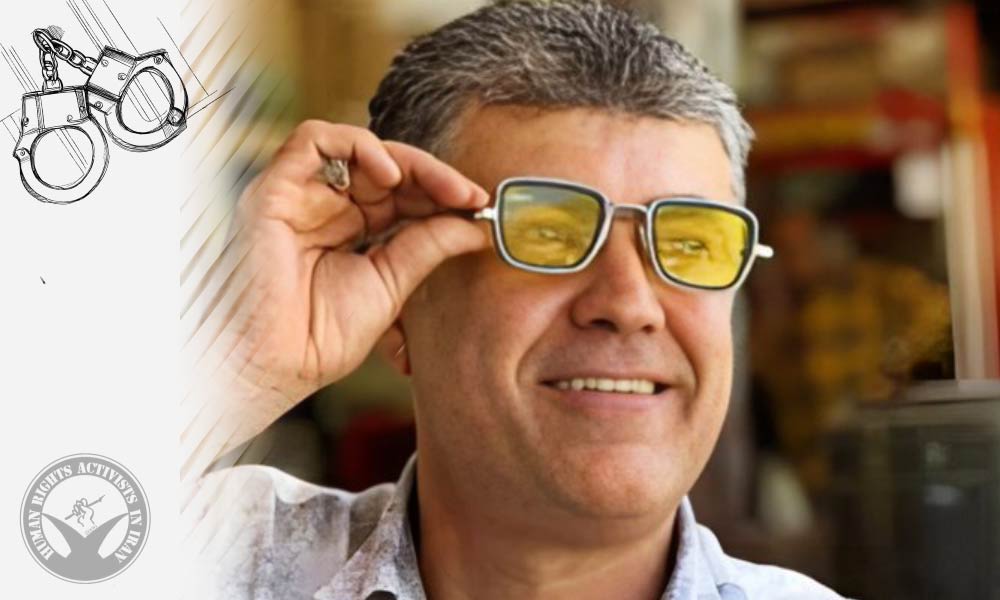
On Monday, October 9, security forces detained Bakhtiar Sasani in Marivan and transported him to an undisclosed location, as reported by Kolbar News.
Bakhtiar Sasani, a 42-year-old resident of Marivan in Kurdistan Province, was allegedly apprehended at his residence. As of now, the grounds for his arrest, his current whereabouts, and the specific accusations against him remain undisclosed.
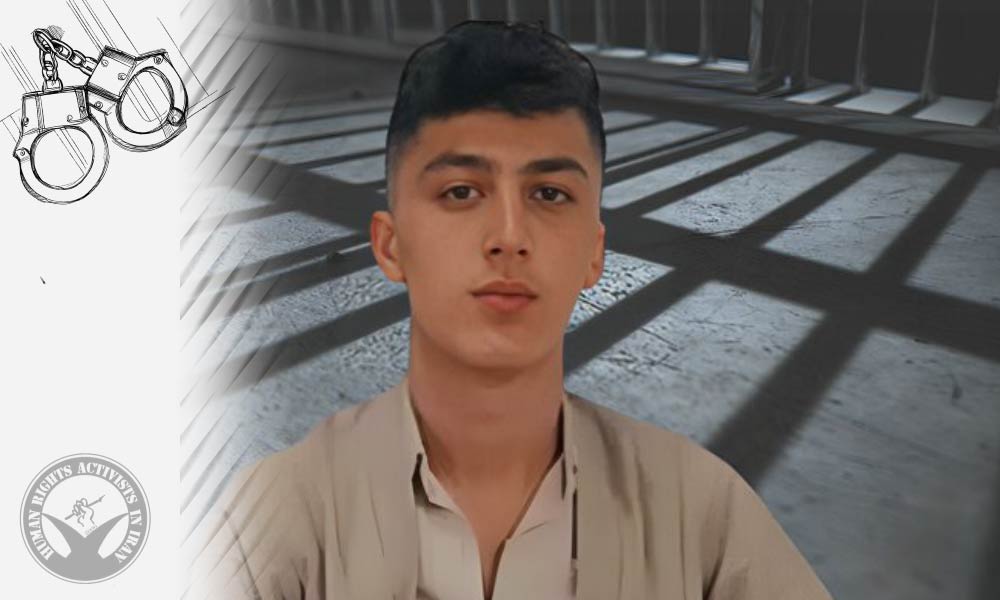
On October 10, Pouya Khezri, a minor resident of Mahabad, was apprehended within the city and subsequently transferred to a detention facility in Urmia, as per reports by Kurdpa.
The arrest of Khezri took place at his family’s residence, and notably, no arrest warrant was presented by the security forces.
The specific grounds for Khezri’s detention and the allegations against him remain
On Sunday, October 8, two inmates met their fate with executions, one in Torbat-e Heydariyeh Prison and another in the Central Prison of Karaj.
In the Central Prison of Karaj, Mehrab Sin-Tab, a 38-year-old inmate, was executed for the murder of his wife, a crime committed two years ago, as per HRANA reports.
Additionally, HRANA has disclosed that six death-row inmates, all convicted of murder, were transferred to solitary confinement in Qezel Hesar Prison, Karaj, on October 10, awaiting imminent execution. Notably, two of these individuals are Afghan nationals, and one is a Baluchi Citizen.
Furthermore, Haal Vsh has reported the execution of Emam-Baksh Gorgij in Torbat-e Heydariyeh Prison. Gorgij was convicted of drug offenses and was hanged without prior notice to his family, denying him a final family visit.
At the time of writing, no official sources or domestic media outlets within the country have reported on these executions.
According to data compiled by the Center of Statistics of Human Rights Activists in Iran (HRA), between October 10, 2022, and October 8, 2023, a total of 659 individuals were executed by hanging in Iran, representing a 24% increase compared to the corresponding period in the previous year. Seven of these executions were conducted publicly. Concerningly, many of the defendants were denied access to a fair trial and due process. For details and statistics, read HRANA’s report.
On Tuesday, October 10, Bam Prison in Kerman province bore witness to the execution of an inmate convicted of murder.
The inmate has been identified as Hossein Alizadeh, aged 30, originally from Iranshahr, according to Haal Vsh.
Alizadeh had been sentenced to death a decade ago. Two days prior to his execution, he was transferred to the quarantine section of the prison.
According to data compiled by the Center of Statistics of Human Rights Activists in Iran (HRA), between October 10, 2022, and October 8, 2023, a total of 659 individuals were executed by hanging in Iran, representing a 24% increase compared to the corresponding period in the previous year. Seven of these executions were conducted publicly. Concerningly, many of the defendants were denied access to a fair trial and due process. For details and statistics, read HRANA’s report.
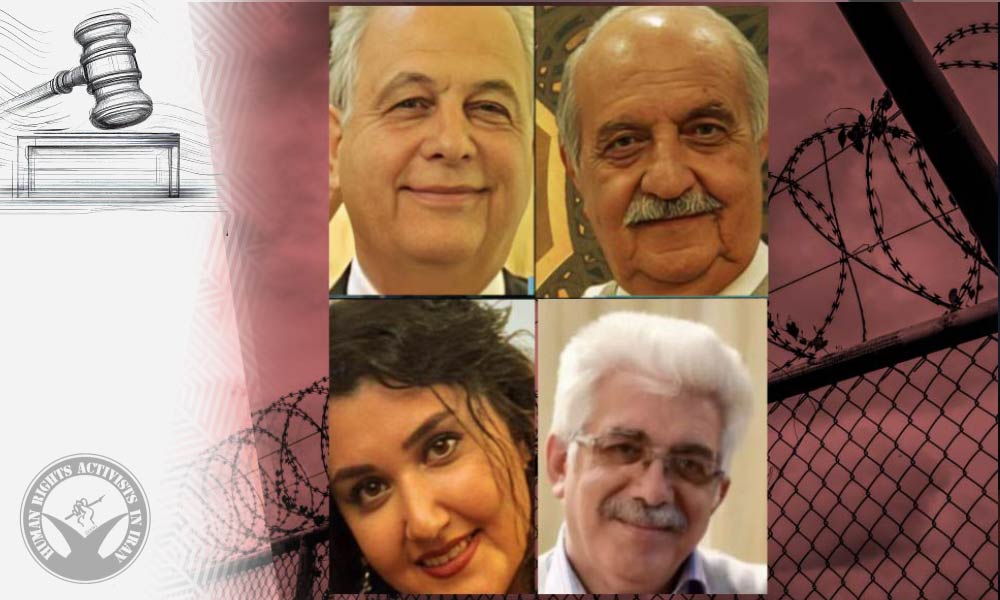
In a recent development, the Tehran Court of Appeal has issued a collective 12-year prison sentence to Baha’i citizens Shadi Shahidzadeh, Mansour Amini, Valiollah Ghadamian, and Ataollah Zafar.
Presiding over the case, Judge Abbasali Hoozan has pronounced the following sentences: Shahidzadeh will serve five years, while Zafar and Ghadamian will each serve two years, and Amini will face a three-year term.
It is worth noting that initially, the Tehran Revolutionary Court had sentencedall four individuals to five years in prison on charges of “membership in illegal groups aimed at disrupting national security.”
These Baha’i citizens were apprehendedby security forces on May 1, 2023, and subsequently transferred to Ward 209 of Evin Prison.
HRANA’s annual report has highlighted a concerning trend where, in 2022, 64.63% of reported human rights violations against religious minorities are directed toward the Baha’i community.
The Baha’i faith is not recognized as a legitimate religion by Iranian authorities, leading to systematic and longstanding violations of the rights of Baha’is in the country. This includes the denial of their fundamental right to practice their religion, which constitutes a clear breach of both Article 18 of the Universal Declaration of Human Rights and Article 18 of the International Covenant on Civil and Political Rights. The United Nations covenant holds that every person has the right to freedom of religion, freedom of converting religion, as well as freedom of expression, individually or collectively; openly or secretly.
On October 10, 2023, Isfahan Prison carried out the execution of an inmate who had been convicted of murder, according to a report by Hamshahri Newspaper.
Two years ago, this 25-year-old inmate was sentenced to death for fatally stabbing a friend during a violent altercation. Notably, he voluntarily surrendered to the police just one day after the tragic incident occurred.
According to data compiled by the Center of Statistics of Human Rights Activists in Iran (HRA), between October 10, 2022, and October 8, 2023, a total of 659 individuals were executed by hanging in Iran, representing a 24% increase compared to the corresponding period in the previous year. Seven of these executions were conducted publicly. Concerningly, many of the defendants were denied access to a fair trial and due process. For details and statistics, read HRANA’s report.
Kerman Prison conducted the execution of three inmates on October 9, as reported by Haal Vsh.
One of the inmates has been identified as Narui (Narooie)(first name unknown), who was convicted of drug-related offenses. The identities and convictions of the other two inmates remain undisclosed, though there are indications that they may be Afghan nationals.
As of the time of writing, there have been no official statements or reports from domestic media sources within the country regarding these executions.
According to data compiled by the Center of Statistics of Human Rights Activists in Iran (HRA), between October 10, 2022, and October 8, 2023, a total of 659 individuals were executed by hanging in Iran, representing a 24% increase compared to the corresponding period in the previous year. Seven of these executions were conducted publicly. Concerningly, many of the defendants were denied access to a fair trial and due process. For details and statistics, read HRANA’s report.
Human Rights Activists News Agency (HRANA)- On the World Day against the Death Penalty, the Center of Statistics of Human Rights Activists in Iran (HRA) has published its annual report in an effort to sensitize the public about the death penalty situation in Iran, particularly thousands of death-row convicts awaiting their looming executions.
HRA’s Statistics Center relies on the work of HRANA reporters, as well as a network of independent and verifiable sources. It also incorporates the judicial authorities’ announcements or confirmations of prisoner executions on media, and as such, is exposed to a margin of error representing efforts by the Iranian authorities to omit, conceal, or restrict the collection of such data.
Click on the picture to download the report in PDF format
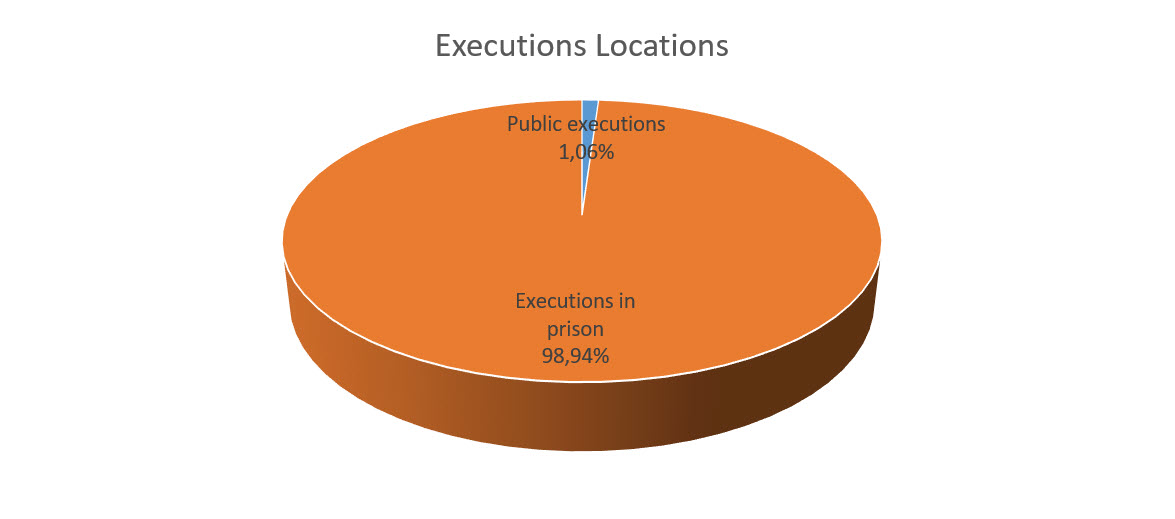
Between October 10, 2022, and October 8, 2023, at least 659 convicts were executed by hanging in Iran, rising to 24% compared to the same period last year. Of these executions, Seven were carried out in public. Many of the defendants were denied a fair trial and due process.
HRANA obtained 580 reports regarding executions and the death penalty in Iran during this period. The identified executed individuals, include 17 women and 1 juvenile offender under the age of 18 at the time of the alleged crime. Compared to the last period, the execution of female offenders has decreased 15%.
According to the reports obtained by HRANA, over this period, Iranian authorities sentenced at least 164 defendants to the death penalty, including at least 5 women, and 2 public executions. Issuing death sentences rose by 84% compared to the last year.
As the chart below shows a breakdown of executions by capital offense: 56.60% for drug and narcotic offenses, 35.05% for murder, 2.58% for rape, 2.28% for unknown reasons, 1.21% for political or security-related offenses, 0.61% for “Corruption on Earth”, 0.61% for spying, terror, and bombing, 0.46% for “Corruption on Earth” (non-political), 0.46% for ideological, political, or religious reasons, 0.15% for Adultery – Types of consensual sexual relations
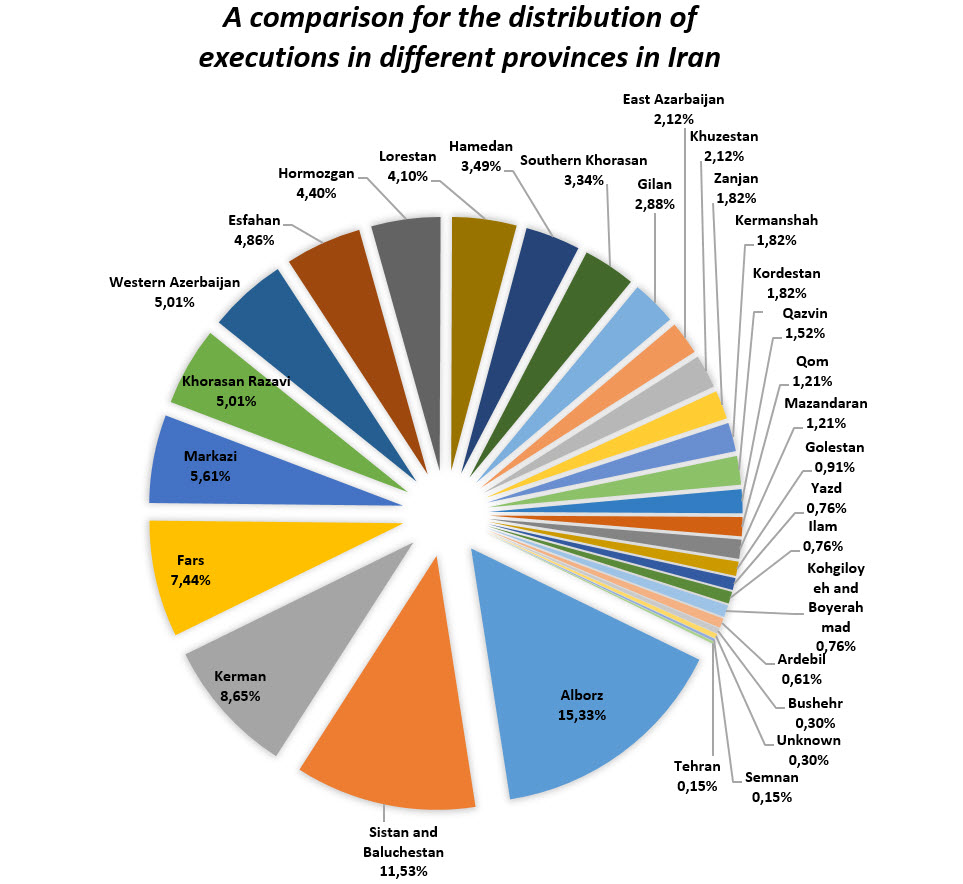
The pie chart below displays execution numbers by the province in which they took place. According to this chart, the Alborz (where three overcrowded prisons are located) had the highest number of executions at 15.33%. Sistan and Baluchestan and Kerman Provinces come second and third, with 11.53% and 8.65%, respectively.
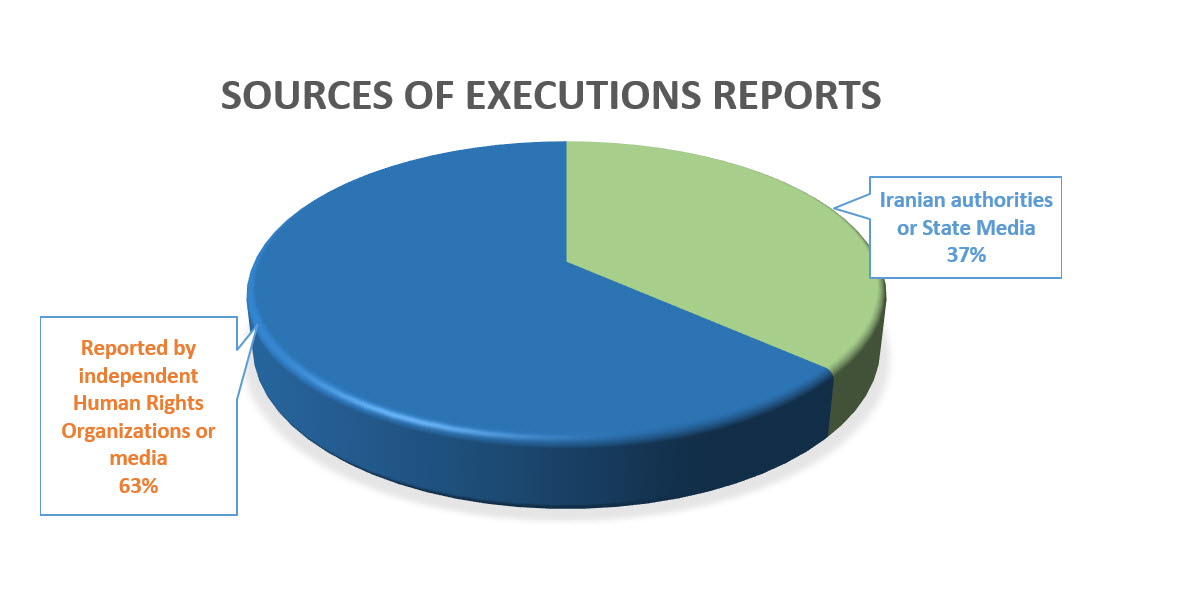
The chart below depicts the distribution of execution information sources. The chart indicates that 63% of HRANA-confirmed executions were not announced by official Iranian sources. Undisclosed executions are referred to as “secret” executions.
The chart down shows the execution numbers by gender.
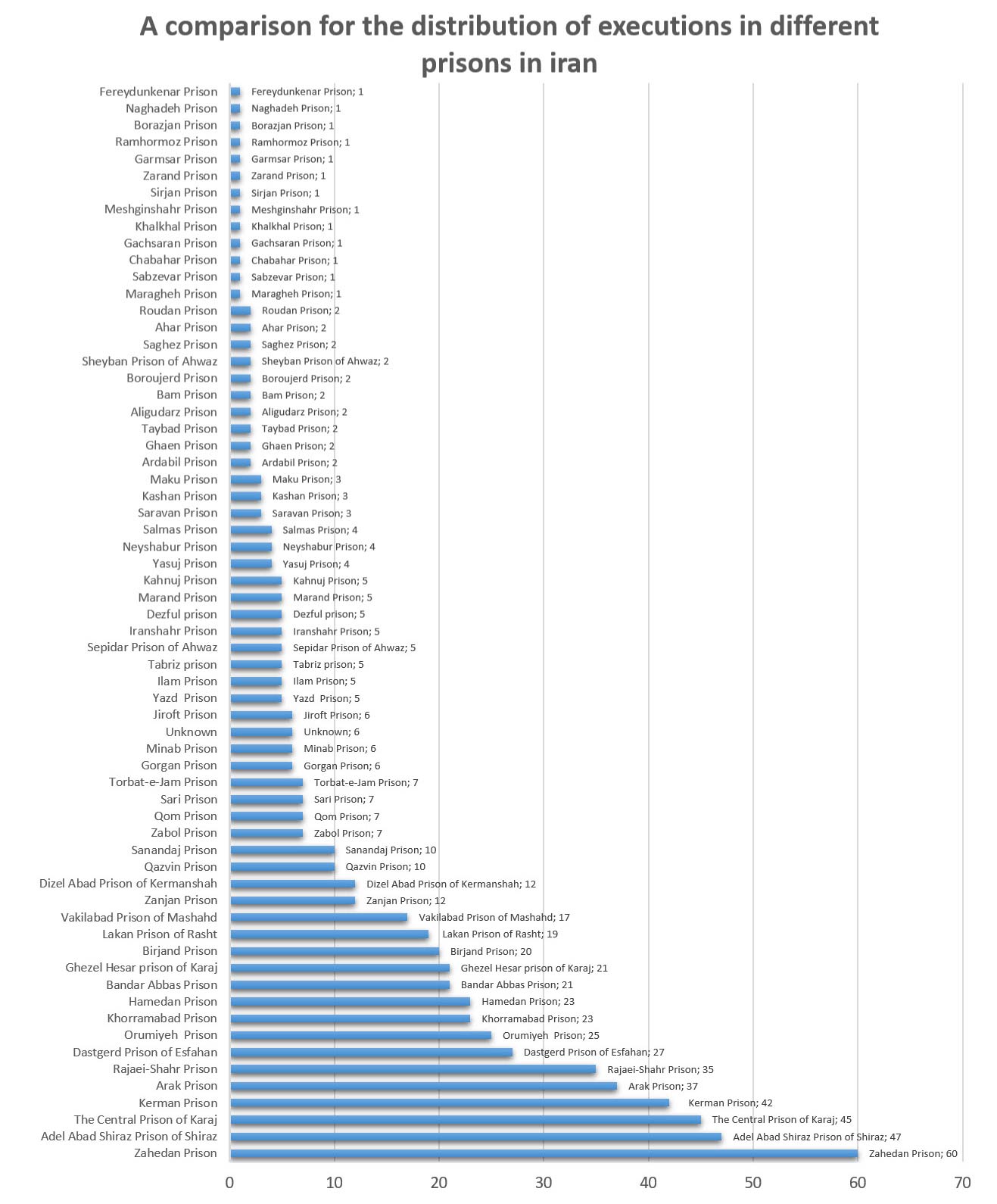
The chart below displays execution numbers by the prison where the executions were carried out. The Zahedan Prison And Adel Abad of Shiraz officials have carried out the highest number.
The chart below displays the percentage of executions carried out in public Vs the number of executions that were carried out in prison. According to statistics, 1.06% of the executions in Iran were carried out in public.