Cultural Activist Ehsan Rostami Charged With “Armed Rebellion”

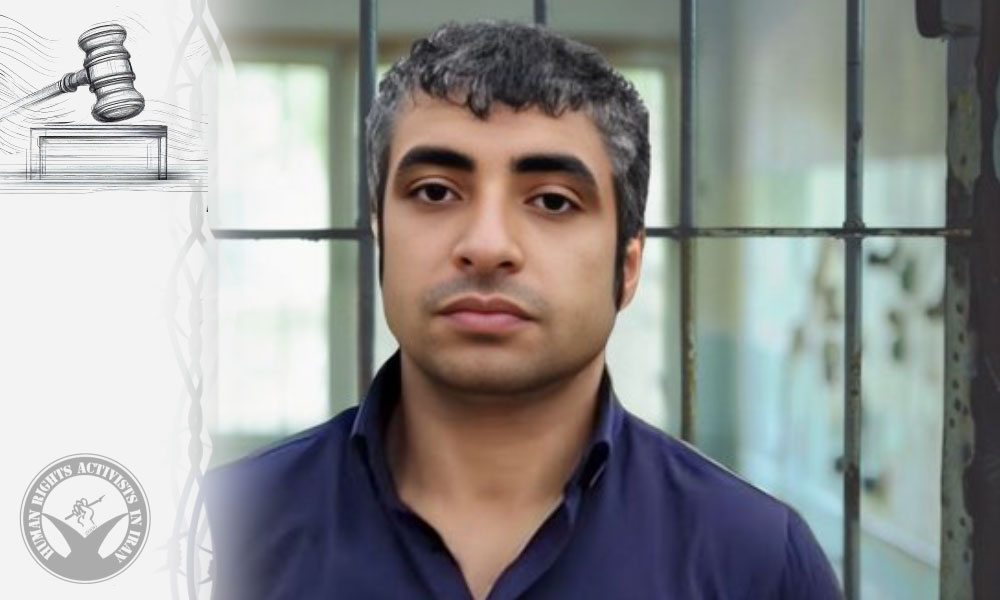
HRANA – Branch Five of the Tehran Public and Revolutionary Prosecutor’s Office formally charged Ehsan Rostami with the offense of “baghi” (armed rebellion). He was subsequently transferred to the quarantine ward of Evin Prison. The charge of “baghi” can lead to severe sentences, including the death penalty.

Based on information received by HRANA, on December 10, Mr. Rostami was summoned to Branch Five of the Investigative Office of the Tehran Public and Revolutionary Prosecutor’s Office, presided over by Investigator Mr. Jalayer. He was charged with “baghi” on suspicion of membership in groups opposed to the regime. Following the session, he was transferred to the quarantine ward of Evin Prison.

This political defendant was arrested on August 19 at his personal residence in Tehran by security forces and transferred to The Ministry of Intelligence’s detention facility, known as Ward 209 of Evin Prison.

Ehsan Rostami is a cultural activist working in the field of publishing and books.

It is worth noting that the charge of baghi may result in severe penalties including execution.

At Least Eight Prisoners Executed in Iran on December 11

HRANA – Yesterday, Thursday, December 11, at least eight more prisoners were executed in Iran on charges of murder and drug-related offenses. In addition, the execution of two other prisoners was reported on Wednesday, December 10.

On this day, HRANA reported the execution of the following individuals:

Ali Shamloo, on drug-related charges, in Bojnurd Prison;

Kavian (first name only, last name unknown), on a murder charge, in Bukan Prison;

Kabir Mahmoudvand, on a murder charge, in Mahshahr Prison;

Yaser Jahantigh, on a murder charge, in Sari Prison;

Mohammad Ghahramani, on a murder charge, in Ferdows Prison;

Sasan Sheikhi, on a murder charge, in Behbahan Prison.

Additionally, two prisoners were executed in Taybad Prison on drug-related charges. HRANA has identified one of them as Manouchehr Navabi.

Furthermore, on Wednesday, December 10, the execution of two prisoners in Lakan Prison in Rasht was reported by the Iran Human Rights. The identities of these prisoners were reported as Mehrdad Rezaei, 31 years old, from the village of Chaperpard in Rasht County, and Saeed Khoshkalam, 27 years old, from Karaj. Mehrdad Rezaei was arrested four years ago and Saeed Khoshkalam three years ago in separate cases on drug-related charges and were subsequently sentenced to death by judicial authorities.

As of the time of this report, the executions of these prisoners have not been officially announced by prison officials or relevant authorities.

Ramin Zeleh, Political Prisoner, Sentenced to Death

HRANA – Ramin Zeleh, a political prisoner held in Naqadeh Prison, has been sentenced to death by Branch 1 of the Mahabad Revolutionary Court on the charge of “baghi” (armed rebellion).

According Kurdpa, the political prisoner was sentenced to death by Branch 1 of the Mahabad Revolutionary Court, presided over by Judge Siyami, on the charge of “baghi.” The verdict was formally issued to him on December 6.

Mr. Zeleh was arrested on July 22, 2024, after security forces raided his family home without presenting a judicial warrant, and he was subsequently transferred to Naqadeh Prison.

Prison Sentence of Azerbaijani-Turk Activist Ata Karimi Upheld by the Supreme Court

HRANA – The prison sentence of Ata Karimi, an Azerbaijani-Turk activist, has been fully upheld by Branch 9 of the Supreme Court. He had previously been sentenced to two years in prison by Branch 3 of the Urmia Revolutionary Court.

Following the rejection of his request for appeal by Branch 9 of the Supreme Court, presided over by Judge Ghasem Mazinani, Karimi’s two-year sentence was confirmed without modification. In August, 2024, Branch 3 of the Urmia Revolutionary Court had sentenced this Azerbaijani-Turk activist to two years in prison.

Mr. Karimi was previously arrested by security forces in Urmia in June 2015 and was released about a week later.

Ata Karimi has also faced prior judicial actions due to his activism.

According to HRANA’s report, in 2024, 20 ethnic minority rights activists were sentenced to a total of 471 months (nearly 40 years) in prison. Over the past seven years, the total length of such prison sentences has reached 913 years.

Fourteen Executions in Iran Reported on December 10

HRANA – Yesterday, Wednesday, December 10, HRANA reported the execution of thirteen prisoners on charges of murder and drug-related offenses. Heirkani also reported the execution of one prisoner in Lakan Prison in Rasht.

According to HRANA, on this day, the following individuals were executed:

Sohail Hamidi, on a murder charge, in Mahabad Prison;

Noormohammad Shabani, on a murder charge, in Sabzevar Prison;

Mohammadkarim Siadi, on a murder charge, in Shahr-e Kord Prison;

Nemat Behiraei, on a murder charge, in Bushehr Prison;

Kourosh Sabzi, on drug-related charges, in Kashmar Prison;

Reza Sabzi, on a murder charge, in Malayer Prison;

Hassan Morad Haqi, on drug-related charges, in Damghan Prison;

An Afghan national, identity unknown, on drug-related charges, in Chabahar Prison;

Two prisoners, including a woman, in Vakilabad Prison in Mashhad on murder charges; HRANA has confirmed the identity of the woman as Elnaz Azizi.

Three prisoners in Adelabad Prison in Shiraz on drug-related charges; HRANA has confirmed the identity of one of them as Khoda-Bakhsh Elyasi.

Additionally, according to Hyrcani News, a prisoner named Mehrdad Mirzaei, 38 years old, was executed in Lakan Prison in Rasht on drug-related charges.

Subscribe to Our Newsletter

Now is definitely not the time to stop reading!

Giliard: Historic Jewish Cemetery Surrounded by Waste and Widespread Grave Destruction

HRANA - The historic Giliard Cemetery, registered on Iran’s National Heritage List, has now seen parts of its grounds turned into dumping areas for garbage and debris, and a large number of headstones have been broken, displaced, or otherwise damaged.

HRANA – The historic Giliard Cemetery, registered on Iran’s National Heritage List and considered one of the most important burial sites belonging to the Jewish community in the country, has in recent months faced escalating destruction, neglect, and pollution. This cemetery, located west of Damavand, has now seen parts of its grounds turned into dumping areas for garbage and debris, and a large number of headstones have been broken, displaced, or otherwise damaged.

According to HRANA, the news agency of Human Rights Activists in Iran, reports from local sources indicate that in addition to waste accumulation, numerous signs of illegal excavations can be seen across the cemetery. In some areas, these excavations appear as deep pits between graves, likely carried out in search of historical artifacts or belongings buried with the deceased, acts that, aside from being criminal, have inflicted serious damage on the cemetery’s historical structure.

Local observations and reports suggest that the Giliard Cemetery, located in Mazandaran Province, lacks secure fencing, guards, and any routine cleaning or maintenance program. A local witness who spoke with HRANA said: “This place has been completely abandoned. There is no protection, no restoration, and no effort to stop nighttime digging. Local follow-ups have gone unanswered.”

Local channels and activists in the area have also released visual reports in recent days, urging authorities to address the deteriorating condition of this historic burial ground.

The Giliard Cemetery is considered one of the most significant sites belonging to Jewish citizens in northern Iran. Historical research shows that the cemetery includes both old and new sections, and many of the headstones feature Hebrew inscriptions, images of the menorah, and the Star of David. Some parts of the grounds date back several centuries, serving as evidence of the long-standing presence of the Jewish community in the Damavand region.

Earlier research sources had already noted waste accumulation, the destruction of headstones, and the gradual encroachment upon surrounding lands, indicating that today’s problems are part of a long-standing pattern of neglect toward this historical heritage.

The current neglect of the Giliard Cemetery not only results in the destruction of cultural heritage but also constitutes a violation of multiple legal obligations of the government regarding the rights of religious minorities and the protection of registered heritage sites. According to Article 13 of the Constitution, Judaism is recognized as one of the country’s official religious minorities, and the government is required to protect their religious and cultural sites; therefore, the abandonment and damage to this cemetery constitutes a direct breach of that obligation.

Furthermore, cultural heritage laws clearly stipulate that nationally registered sites,under the 1930 Law on the Preservation of National Monuments, must be fully protected, and any destruction, boundary violations, removal of stones, or excavations within such sites is considered a crime. This is reinforced by Articles 558 to 569 of the Islamic Penal Code, which provide criminal penalties for such offenses.

Additionally, under Article 114 of the Sixth National Development Plan and related regulations, the Ministry of Cultural Heritage is obligated to provide active protection, cleaning, restoration, and prevention of encroachment or illegal excavations in registered sites. Failure to do so may constitute administrative misconduct or even a criminal offense.

Internationally, by accepting the International Covenant on Civil and Political Rights, Iran has committed to ensuring the preservation of minority cultural sites and enabling free use of religious and historical identity. The destruction or neglect of sites belonging to religious minorities may simultaneously violate Article 18 of the Covenant, on freedom of religion, and Article 27, on the rights of minorities to preserve their culture, sites, and traditions.

This is not the first time that religious or cultural sites belonging to minorities in Iran have faced abandonment, encroachment, or destruction. In recent years, multiple similar cases have been reported involving cemeteries of Jews, Bahá’ís, Armenians, and other minorities. The repetition of this pattern has intensified concerns about structural discrimination and the absence of effective oversight mechanisms for minority sites.

The Giliard Cemetery is part of Iran’s shared cultural heritage, and its current condition not only reflects a failure of responsible institutions to fulfill their legal duties but also threatens an important part of the historical memory and identity of Iran’s Jewish community.


Urmia Prison: Updated Report on the Detention of Iraqi National Hemin Watman

HRANA – Hemin Watman, an Iraqi national, is currently serving a five-year prison sentence in Urmia Prison. His sentence was issued by Branch 2 of the Urmia Revolutionary Court on charges of membership in one of the Kurdish opposition parties.

According to information obtained by HRANA, Mr. Watman, a resident of the Kurdistan Region of Iraq, is being held in the ward designated for political prisoners inside Urmia Prison.

In the spring of 2024, Watman legally entered Iran from Iraq through the city of Sardasht. Shortly after his arrival, he was arrested, and a judicial case was opened against him.

Death Sentence of Varisheh Moradi Overturned

HRANA – The death sentence of Varisheh (Verisheh) Moradi, a political prisoner held in Evin Prison, has been overturned by the Supreme Court, and her case has been sent to an equivalent branch for retrial.

Her lawyer, Mostafa Nili, announced moments ago that the Supreme Court has nullified his client’s death sentence after reviewing her appeal. According to him, the ruling was overturned due to procedural violations and the failure to properly inform the defendant of the charges used as the basis for issuing the death sentence during proceedings in Branch 15 of the Tehran Revolutionary Court.

In November 2024, Ms. Moradi had been sentenced to death on the charge of baghi (armed rebellion) by Branch 15 of the Tehran Revolutionary Court, presided over by Judge Abolghasem Salavati.

In October 2024, in a separate joint case opened against her and four other prisoners inside the prison, Ms. Moradi was sentenced by Branch Two of the Qods Judicial Complex in Tehran to six months’ discretionary imprisonment. In that case, she faced charges of assaulting an officer and disobedience. The case stemmed from an incident on August 6, when Evin women’s ward prisoners protested after learning of the execution of Reza Rasaei, leading to confrontations with prison guards.

Varisheh Moradi was arrested in August 2023 by security forces in the outskirts of Sanandaj. She was eventually transferred on December 26 of that year from The Ministry of Intelligence’s detention facility, known as Ward 209 of Evin Prison, after the completion of interrogation, to the women’s ward of the same prison.

Six Citizens Arrested by Security Forces in Mahabad

HRANA – Saman Ghorbani, Kazem Azadeh, Naser Azarm, Akam Sheikheh, Hazhar Mohammadzadeh Aghdam, and Iman Mohammadzadeh, residents of Mahabad, were arrested by security forces and taken to an undisclosed location.

Kurdpa has identified the arrestees as :

Saman Ghorbani from the village of Yal-Temer
Kazem Azadeh and Naser Azarm, two citizens from the Khalifan district
Akam Sheikheh, from the village of Qara Gheshlagh
Hazhar Mohammadzadeh Aghdam and Iman Mohammadzadeh, from the village of Khorkhoreh.

According to the report, Ghorbani, Sheikheh, Mohammadzadeh, and Mohammadzadeh Aghdam were arrested early this morning at their family homes without a judicial warrant and with the use of force. The arrests of Kazem Azadeh and Naser Azarm were carried out on yesterday, December 9, by security forces.

As of the time of this report’s publication, no information has been obtained regarding the reasons for their arrest, their place of detention, or the charges brought against them.

Arbitrary arrests, transferring detainees to undisclosed locations, and leaving families in the dark about the fate of their loved ones are routine practices of the Iranian regime’s security agencies, such as the Ministry of Intelligence and the IRGC Intelligence Unit. This pattern of behavior stands in clear violation of the United Nations Standard Minimum Rules for the Treatment of Prisoners, known as the Nelson Mandela Rules.

Shabnam Hosseinzadeh Sentenced to Prison

HRANA – Shabnam Hosseinzadeh, the wife of Amirhossein Mousavi, has been sentenced to five years in prison by Branch 15 of the Tehran Revolutionary Court.

Reza Shafakhah, her attorney, announced that on December 8, the court’s ruling was delivered to him verbally. Without specifying the charges brought against her, he added that Ms. Hosseinzadeh has been sentenced to five years in prison.

Further details, including the specific charges against this political defendant, are still under HRANA’s review.

Shabnam Hosseinzadeh is the wife of Amirhossein Mousavi, who remains detained in Evin Prison without due process nearly one year after his arrest.