Day 21 of the U.S.-Israeli War on Iran: New Year begins with 640 strikes

HRANA– In the last 24 hours, and as of March 20, 2026, at 17:00 ET, HRANA has recorded at least 640 attacks across 130 incidents in 17 provinces, resulting in a total of at least 68 casualties (killed and injured, both civilian and military). These numerous attacks took place simultaneously with the arrival of the New Year in Iran. Reports received indicate that many citizens viewed the Nowruz holidays as an opportunity to leave major cities, and heavy traffic formed on routes out of cities, particularly along routes toward the northern provinces of Gilan and Mazandaran.

According to information recorded and verified by HRANA, from the first minutes of the day until the end of March 20, 2026 (Tehran time), at least 4 civilians were killed and 8 civilians injured.

Aggregated data since the beginning of the conflict on February 28, 2026, based on incidents recorded in the incident tab and using minimum values for figures marked “more than”:

• Civilian fatalities: 1,398 people (including at least 210 children)

• Military fatalities: 1165 people

• Unclassified fatalities (civilian/military): 657 people

Note on official statements: Alongside HRANA News Agency’s independent reports, several aggregated official statistics were also recorded today by state-affiliated media, including:

The Deputy Security Governor of Lorestan stated: “Of the total recorded fatalities from the American–Zionist attacks in the province, 80 were military personnel and 64 were civilian citizens. During this period, 2,427 people were injured in Lorestan, of whom 266 were military personnel and 2,161 were civilians.”

The Ministry of Health announced: “At present, 1,016 individuals injured in the American–Zionist attacks are hospitalized in medical centers. From the beginning of the war until today, 208,073 people have been treated and discharged.”

1. Overview of Incidents in the Last 24 Hours

In the last 24 hours, incidents were reported across multiple provinces, reflecting a geographically dispersed pattern of hostilities.  In a large portion of the incidents, the method/type of attack has not yet been confirmed and has been recorded as “undetermined.” In cases where the attack type was identifiable, airstrikes and drone attacks were reported.

Preliminary analysis indicates that Tehran Province, having borne 36% of all recorded attacks, ranks first among the provinces targeted. Semnan Province, with 17%, and Isfahan Province, with 14%, follow in the next positions. Continuing down the list are Hormozgan, Alborz, and Khuzestan provinces, respectively.

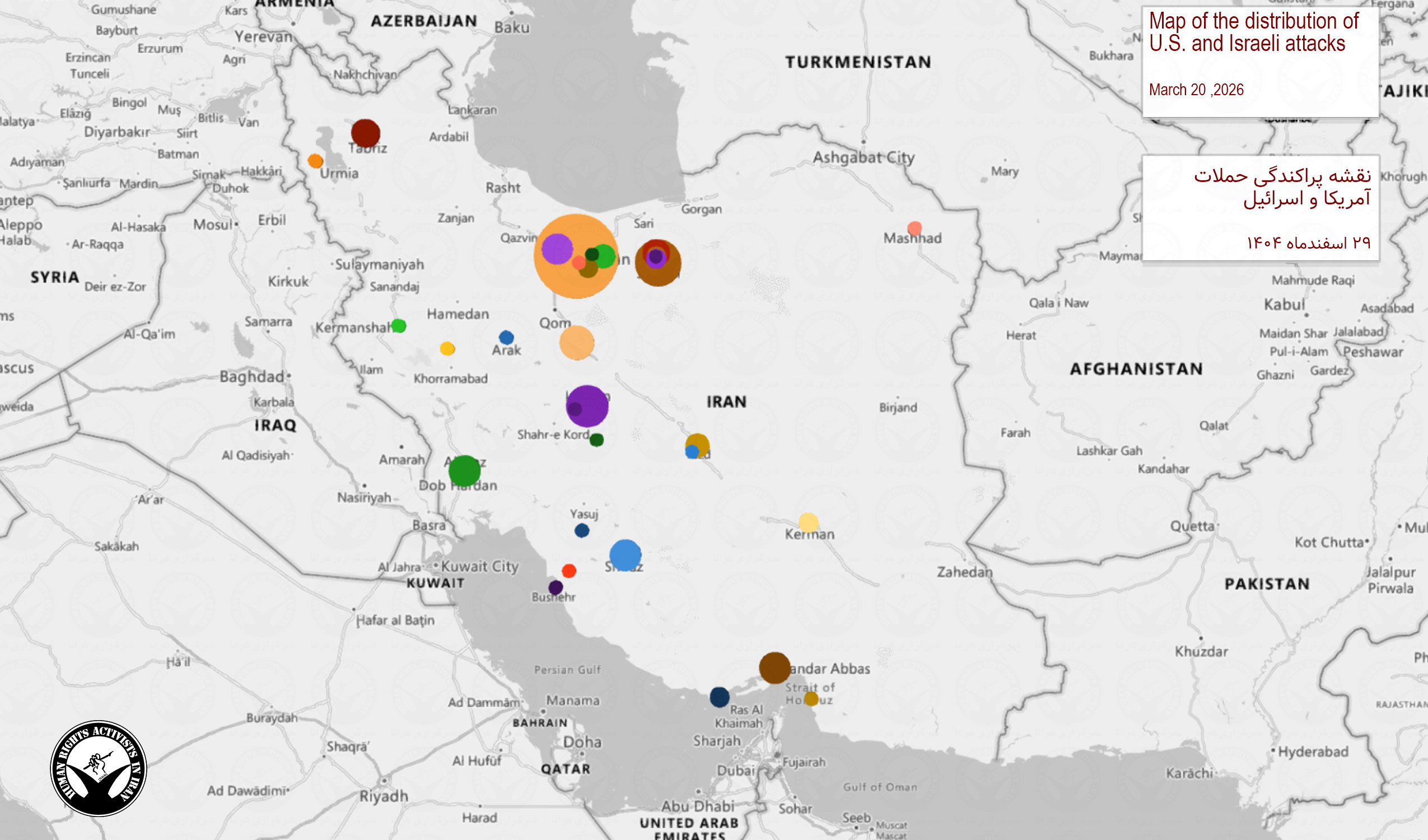
Distribution of attacks-Day 21

2. List of Objects Reported Hit

In the past 24 hours, the recorded attacks have damaged 21 distinct objects or facilities. These include a range of different types of targets. In some cases, damage caused by nearby strikes or secondary consequences of the attacks has also been reported.

Examples of targets recorded over the past 24 hours:

• Al Mohammad Corps Headquarters (Semnan)

• 92nd Armored Division (Ahvaz)

• Army Air Base (Bandar Abbas)

• Al-Mahdi Corps Garrison (Urmia)

• Basij Resistance Base (Semnan)

For a number of the listed targets, the exact nature of the target (civilian/military/dual-use) is still under review, and classifications may be revised as additional information becomes available.

Facilities Protected Under International Humanitarian Law:

Under international humanitarian law, medical facilities, educational institutions, humanitarian facilities, religious sites, and emergency service centers are among the many objects that maintain special protected status and are afforded special protection. In the past 24 hours, HRANA has preliminarily recorded the following cases:

• Three residential and commercial buildings (Tehran)

• Falak-ol-Aflak Historic Site (Khorramabad)

• Accommodation complex of the Sepah Kolahdooz Complex (Shahmirzad)

• A residential building (Karaj)

• An administrative building on Palestine Street (Tehran)

3. Civilian Casualties

In the past 24 hours, at least 4 civilians have been killed and 8 civilians, including one child, have been injured. All classifications are preliminary and may be updated as new information becomes available.

4. Military Casualties

During the reporting period, 12 military personnel were killed. Military casualties are generally reported in the context of attacks on Army and Islamic Revolutionary Guard Corps (IRGC) bases. Where possible, organizational affiliation and operational context are being assessed; however, not all details have yet been independently verified.

In some incidents, individuals have been killed in the vicinity of military targets; however, their official status has not yet been definitively determined. These cases remain under review, and if reliable information indicating a different status becomes available, the classification may be revised accordingly.

It is believed that military casualties are significantly higher than the figures reported in these reports. However, due to the sensitive nature of military information and the limited access of human rights groups and media to locations where military forces are present, this section largely reflects reports of senior officers or military personnel who were present in urban areas.

5. Confirmed but Unspecified Casualties

Of the reported casualties in the past 24 hours, 18 deaths and 26 injuries remain classified as unverified, meaning that HRANA has not yet been able to determine with sufficient certainty whether these individuals were civilians or military personnel.

Burials: Today, 21 burials resulting from attacks in previous days have been recorded.

A Note on HRANA Methodology

Note that, in line with HRANA policy, this report reflects only incidents that occurred within the territorial borders of Iran.

The information contained in this report is compiled through HRANA’s established documentation network. Data is collected from a combination of field reports, local contacts, medical and emergency sources, civil society networks, and open source materials, including publicly available images, videos, and official statements where relevant. Each reported incident is logged and assessed through an internal review process before publication.

Given the evolving nature of hostilities, information is gathered on a rolling basis and reflects the status of documentation at the time of publication.

The figures presented in this report may not reflect the full scope of harm. Ongoing hostilities, damage to infrastructure, communication disruptions, restricted access to affected areas, and security risks for sources may limit the ability to document incidents comprehensively.

Delays in medical reporting, difficulties in confirming identities, and restricted access to certain provinces may result in temporary undercounting. As access improves or additional evidence emerges, casualty figures and incident classifications may be revised accordingly.

HRANA remains committed to transparency, methodological rigor, and the continual updating of its findings as new verified information becomes available.

At Least 220 Citizens Arrested Across Various Provinces

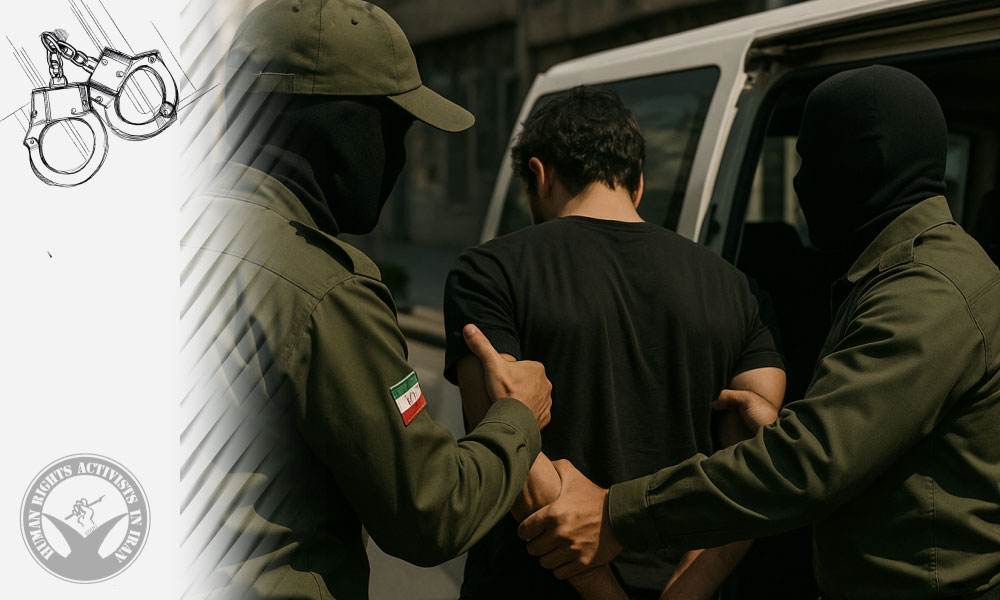
HRANA – Domestic media have reported the arrest of at least 220 citizens across several provinces in Iran, including Tehran, Alborz, Hamedan, and West Azerbaijan.

According to Fars News Agency, 75 citizens were arrested in Alborz Province. The IRGC in Alborz stated that these individuals were “key elements linked to anti-regime groups.” The report claims that they had sent images of projectile impacts on locations and arrests of individuals to foreign media outlets. It also alleges that some of them were involved in insulting the Supreme Leader, online activities, and connecting to satellite internet.

Meanwhile, Tasnim News Agency released a video report showing the arrest of several citizens. In the footage, eight individuals are seen being detained in Tehran. The forced confessions of two of them were also broadcast, although it is unclear under what circumstances these statements were obtained. The report claims that these individuals were in contact with opposition groups and intended to carry out related activities.

Additionally, according to Tasnim, agents of the Ministry of Intelligence arrested at least 111 citizens in operations across 26 provinces. These individuals have been accused of supporting opposition groups and maintaining connections with foreign countries.

Furthermore, four citizens in Hamedan and West Azerbaijan provinces were arrested on charges of “espionage and sending the locations of headquarters, equipment, and troop deployments to the enemy.” Another 21 individuals, accused of “sending information and images to foreign media,” were also identified and detained.

According to Jamaran, one citizen was arrested by security forces in Valiasr Square. The reason for his arrest was reported to be the alleged throwing of an explosive object.

These reports did not disclose the identities of the detainees or their place of detention.

Since February 28, 2026, Iranian territory has been targeted by military attacks by Israel and the United States. For further details, you can refer to HRANA’s report published last night on the eighteenth day since the beginning of these attacks.

Nationwide Protests: Arrest of Seven Citizens in Taleqan

HRANA – Seven citizens were arrested by security forces in connection with the protests in Taleqan County, Alborz Province.

Based on information received by HRANA, Alborz Sadeghian, Ali Ghorbani, Ebrahim Gharghi, Ahmad Sadat-Rasoul, Ali Shahbazi, Mohammad Akbarian, and Mostafa Vatan-Khah were detained following the January 8 protests in Taleqan. Despite more than a month having passed since their arrest, their place of detention remains unknown.

No information has yet been obtained regarding the charges brought against these individuals.

It is worth noting that gatherings and strikes by shopkeepers and bazaar merchants began on Sunday, December 28, in Tehran. After two days, the scope of the protests extended beyond markets and commercial centers. With the participation of students, citizens, and various social groups, the protests became one of the most widespread demonstrations in recent years. Following the crackdown by law enforcement and security forces, thousands were killed or injured, and tens of thousands were arrested or summoned by security institutions. For more information, readers may refer to HRANA’s detailed report published on the fiftieth day since the start of the protests.

Dual National Accused of Espionage

HRANA – The Chief Justice of Alborz Province announced that an indictment has been issued in the case of an Iranian citizen who also holds citizenship of a European country, stating that the case is now open at the Karaj Revolutionary Court.

According to Mizan, the Chief Justice of Alborz Province stated that this Iranian citizen, who also holds the nationality of a European country, is accused of espionage for Israel. The case is currently under review by Branch 2 of the Karaj Revolutionary Court.

Hossein Fazeli-Harikandi, without mentioning the accused person’s identity, claimed: “After two years of communication and training by Mossad officers in the capitals of several European countries and the occupied territories, the defendant entered the country via air about one month before the 12-day war to carry out a mission.”

According to the Chief Justice, the arrest was carried out by Alborz IRGC Intelligence agents on the fourth day of the 12-day conflict between Israel and Iran. Fazeli-Harikandi also claimed that “certain complex espionage equipment and items” were discovered at the time of arrest.

Although combating espionage is not considered a human rights violation in itself, the Iranian government’s history of using such accusations as a tool against political dissidents, and the lack of clarity regarding the details and judicial process, has led such claims to be viewed with consistent skepticism.

Karaj Court Sentences Four to Death and Prison on Espionage Charges

HRANA – The head of Alborz Province’s Judiciary has announced the preliminary verdict issued for four defendants in a case related to espionage charges. According to this ruling, two of the defendants were sentenced to execution and imprisonment, while the other two received prison sentences.

According to Mizan, the head of Alborz Province’s Judiciary stated that two men from Karaj and a couple from Isfahan were tried by Branch 3 of the Karaj Revolutionary Court. Based on the preliminary ruling, two of the defendants were sentenced to execution and imprisonment, while the other two received prison terms. The total prison sentences imposed amount to more than 26 years. The ruling was issued on charges including “enmity against God (moharebeh),” “collaboration with hostile groups and the Zionist regime,” “assembly and collusion against national security,” “membership in a criminal group with the aim of disrupting national security,” and “propaganda against the regime.”

Hossein Fazeli-Harikandi alleged that the defendants had received training in manufacturing explosive projectiles, launchers, and firing techniques, and were tasked with attacking “one of the country’s important military centers” in late May of this year.

He further claimed that they were instructed to document their actions through photos and videos, though he provided no evidence or indication of transparent judicial procedures to support these assertions.

Reiterating security-related allegations, Fazeli-Harikandi accused the three men and one woman of links to the People’s Mojahedin Organization of Iran (MEK) and Mossad, asserting that they had been recruited online through intermediaries in neighboring countries. Without offering proof, he also accused them of sending coordinates of sensitive locations and setting fire to public sites.

The head of Alborz Province’s Judiciary did not reveal the defendants’ identities or clarify the conditions under which they were interrogated and made to confess.

Fazeli-Harikandi emphasized that the verdict is preliminary, and if appealed, the case will be referred to the Supreme Court for review.

The trial was held in mid-September at Branch 3 of the Karaj Revolutionary Court. The defendants had been arrested about one month before Israel’s military strike on Iran.

Subscribe to Our Newsletter

Now is definitely not the time to stop reading!

The Fifth Day of Israeli Attacks on Iran: A Review of the Incidents

HRANA News Agency – The military conflict between Iran and Israel, which began in the early hours of Friday, June 13th, with Israeli airstrikes on Iranian territory, entered its fifth day yesterday. Since the outset of the conflict, military installations, civilian infrastructure, and residential areas across Iran have been targeted.

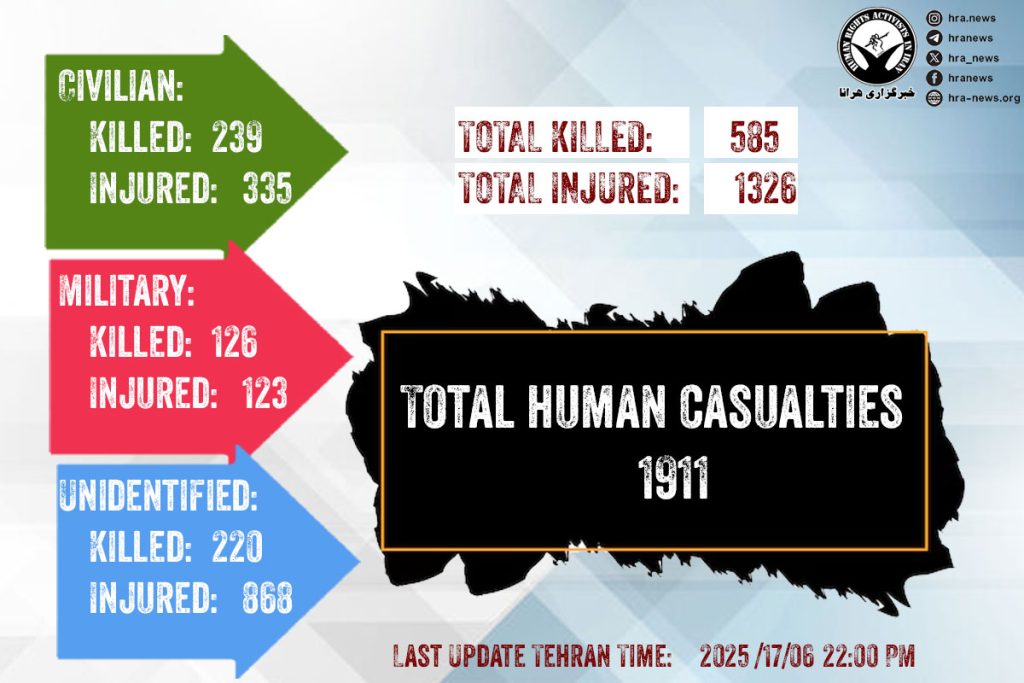
Yesterday, the spokesperson of the Iranian Red Crescent reported that 21 provinces have been affected since the start of Israel’s attacks. According to published reports, at least seven people were killed or injured in yesterday’s assaults. Based on non-governmental sources, as of June 17, 23:00 UTC, the total number of casualties over the past five days has reached at least 1,911, including 585 dead and 1,326 injured.

Geographic Scope of the Strikes

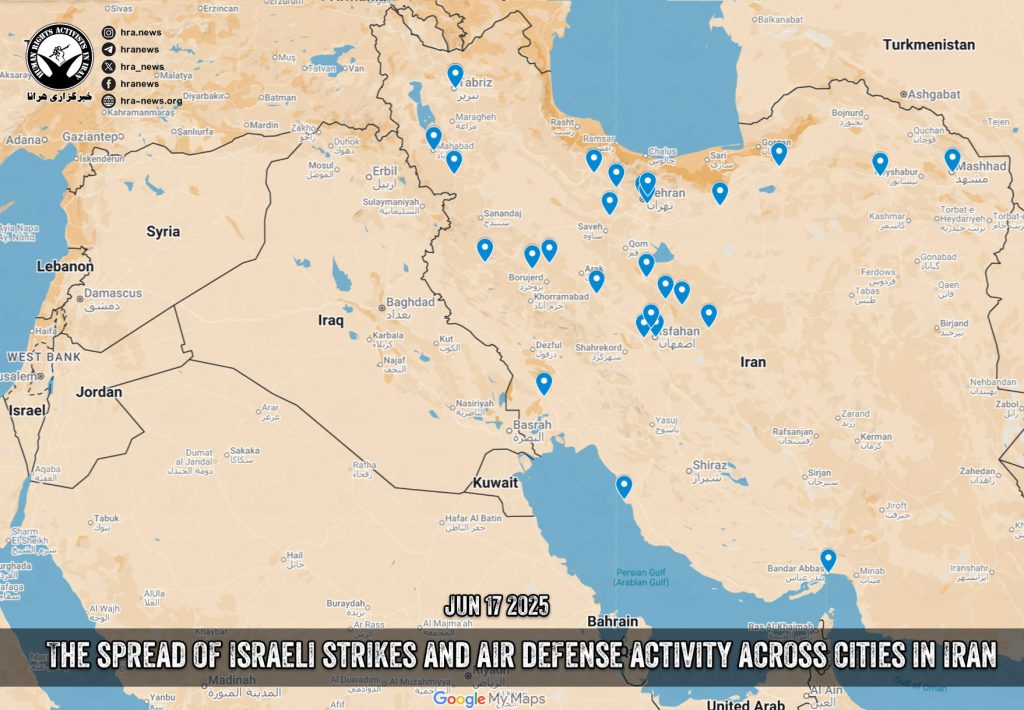
In continuation of Israel’s military attacks on Iranian territory, yesterday energy infrastructure, military facilities, and residential areas were attacked in the provinces of Tehran, Isfahan, East Azerbaijan, Alborz, Markazi, Qazvin, Khuzestan, Hormozgan, West Azerbaijan, Khorasan Razavi, Kurdistan, Kermanshah, Chaharmahal and Bakhtiari, Hamedan, Bushehr, and Kerman. Isfahan Province was Israel’s primary target yesterday.

Regarding the geographical scope of Israel’s attacks in Iran, Mojtaba Khaledi, the spokesperson for the Red Crescent, without naming specific provinces, stated: “Since the beginning of Israel’s attacks, 21 provinces have been involved.”

Casualties among Red Crescent rescue workers in Tehran were among yesterday’s notable events. According to the Red Crescent spokesperson, four rescue workers have been killed in the Israeli attacks so far.

Explosions in some areas have caused extensive damage and likely resulted in additional casualties. Further information is under investigation and will be updated.
Military Equipment and Scale of Attacks

The Israeli army previously announced that during the first three days of attacks on Iran, it conducted 720 airstrikes across various parts of the country. This figure has not yet been updated by Israel.

In the investigations of human rights groups, proportionality under the laws of war is of particular importance — including proportionality between targets and weaponry. According to information gathered from credible sources, the Israeli army used the following weapons in its attack:


WeaponTypeModel/VariantDescription & Role
1HaropLoitering attack drone– (IAI Harop)Autonomous kamikaze drone that loiters and dives onto targets (especially radars). Used to suppress Iranian air defenses and communications by homing in on radar emissions.
2HarpyLoitering anti-radar drone– (IAI Harpy)Anti-radiation loitering munition designed to seek and destroy enemy radars. Older, fire-and-forget drone that crashes into SAM radar emitters. Complemented Harop in knocking out Iran’s SAM sites.
3F-35I “Adir”Stealth multirole fighterF-35I (Israel variant)5th-gen stealth fighter jet with Israeli electronics. Penetrated Iranian airspace undetected to lead initial strikes, targeting air defenses, command centers, and nuclear sites with precision munitions.
4F-15I “Ra’am”Strike fighter-bomberF-15I (Israel variant)Long-range heavy fighter (F-15E variant) carrying large payloads (bunker busters, etc.). Non-stealth, but high payload and range; used to bomb hardened sites like Natanz once air defenses were down.
5F-16I “Sufa”Multirole fighterF-16D Block 52+ (Israel)Versatile fighter jet with conformal fuel tanks for extended range. Dropped guided bombs (e.g., SPICE, JDAM) on a wide array of targets (missile launchers, bases, leaders). Backbone of strike force.
6DelilahAir-launched cruise missile– (IMI Delilah)Standoff cruise missile (loitering munition) with ~250 km range. Can loiter and be retargeted in flight. Used to surgically strike mobile or well-hidden targets (radars, convoys) from afar.
7RampageAir-to-surface guided missile– (Elbit Rampage)Supersonic guided strike missile (air-launched rocket) designed to penetrate bunkers and hit high-value targets at long range. Difficult to intercept due to high speed.
8Blue SparrowAir-launched ballistic missile (ALBM)– (Blue Sparrow target missile)Air-dropped ballistic missile used as a pseudo-weapon. Released from aircraft to strike like a short-range ballistic missile. Provided Israel a way to hit distant hardened targets quickly.
9LORAShort-range ballistic missileLORA (IAI)Surface-launched ballistic missile (ground/ship) with ~400 km range and 10 m accuracy. Carries a 570 kg warhead. Used to hit fixed strategic targets (bases, infrastructure) at long range in opening salvo.
10SPICE-1000/2000Precision glide bomb kitSPICE family (Rafael)Electro-optical/GPS guided bombs (1000 lb or 2000 lb) that glide to target. Extremely accurate (<3 m CEP). Used to destroy buildings, runways, and other fixed targets with minimal collateral damage.
11JDAM BombsGPS-guided bomb (kit)GBU-31 JDAM etc.Joint Direct Attack Munition – a guidance kit for 500–2000 lb bombs using GPS/INS. Turns “dumb” bombs into all-weather smart bombs (~5–10 m accuracy). Formed a large portion of munitions dropped on Iranian targets.
12GBU-39 Small Diameter BombGuided glide bombGBU-39/B SDB I250 lb glide bomb with GPS guidance and pop-out wings (range ~110 km). Small warhead for pinpoint strikes on SAM sites, launchers, etc. Allows multiple bombs per aircraft hardpoint.
13GBU-28 “Bunker Buster”Laser/GPS guided bombGBU-28/B5,000 lb deep-penetration bomb developed to destroy heavily fortified underground facilities. Can penetrate dozens of feet of concrete/earth. Deployed by F-15I against Iran’s buried nuclear sites (e.g. Natanz).


Latest Casualty Figures

Since the beginning of Israel’s attacks on Iran, hundreds of both military and civilian individuals have been killed or injured. The military or civilian status of a significant number of the victims cited in this report remains under investigation.

In addition to the figures reported during the first four days of attacks, HRANA, after reviewing and verifying additional information and documentation, has added 806 more fatalities and injuries to its earlier casualty reports for those initial days. However, in some cases, these new figures reflect reclassification of victims rather than an actual increase in total numbers.

Beyond the casualties reported in previous days, as detailed earlier, yesterday’s attacks accounted for three additional deaths and four injuries. According to HRANA’s reports, based on its volunteer network and other non-governmental sources, the total number of people killed or injured as a result of Israel’s attacks has now reached at least 1,911.


Civilian Casualties (Killed and Injured)
ProvinceCityDateKilledInjuredNotesNeighborhoods & Locations
KashanKashanJune 1734Checkpoint Station

According to non-governmental sources, as of the time this report was compiled (June 17, 23:00 UTC), a total of 1,911 military or civilian citizens have been killed or injured, broken down as follows:

▫️Civilians:
Deaths: 239
Injured: 335

▫️Military personnel:
Deaths: 126
Injured: 123

▫️Unspecified:
Deaths: 220
Injured: 868

▫️Total deaths: 585
▫️Total injured: 1,326
▫️Total human casualties: 1,911 individuals

While a detailed examination of various non-governmental sources documents 1,911 casualties inside Iran, yesterday Ali Mousavi, the Islamic Republic’s ambassador in London, announced that nearly 1,500 people have been killed or injured in the Israeli attacks on Iran. He did not provide precise figures but stated that 224 civilians, including 20 children, have been killed. This comes after the Minister of Health announced yesterday that 1,800 people were injured in Iran during the first four days of the attacks.

At noon yesterday, the Red Crescent spokesperson reported: “So far, 145 injured individuals have been transferred to hospitals by the Red Crescent, and 75 were treated at the scene.” Additionally, a government spokesperson said that 120 women and children have been injured as a result of the Israeli attacks.

Previously, Hossein Kermanpour, head of public relations for the Ministry of Health, claimed in a social media post that 1,481 people were killed or injured during the first 65 hours of Israel’s attack on Iran. He stated that “more than 90 percent of these individuals were civilians.” According to Kermanpour, 522 people have been discharged, with 224 killed and 1,257 injured.

Continued Israeli Strikes on Iran’s Civilian Infrastructure on the Fifth Day

On the fifth day, Israeli attacks struck civilian areas and infrastructure in the cities of Tehran, Kashan, Tabriz, Nazarabad, Zarandieh, Khomein, Qazvin, Najafabad, Ardestan, Shahin Shahr, and Naein. Among the civilian targets were the IRIB broadcasting complex in Tehran, the Nazarabad Industrial Zone, and the Zaviyeh Industrial Park.

According to documented reports, the following civilian areas were targeted: Piroozi Street, areas near IRIB headquarters, Majidieh, Andarzgoo, Sabalan Square, Velenjak, Pasdaran, and Elahieh in Tehran; Valayat District in Qazvin; and areas near Alavijeh Junction in Shahin Shahr.

Additionally, yesterday air defense confrontations with hostile projectiles were reported in Mahabad, Tehran, Natanz, Bandar Abbas, Qazvin, Shiraz, Tabriz, Mashhad, Saqqez, Sabzevar, Kermanshah, Ahvaz, Nahavand, Malayer, and Bushehr.
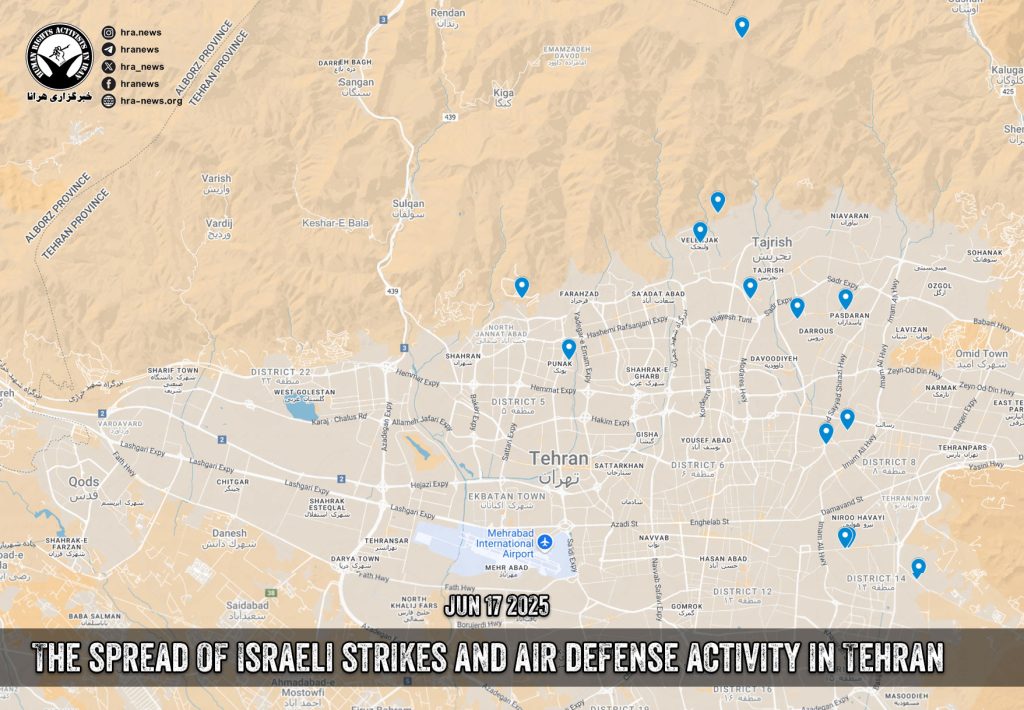
Alongside civilian sites, several military locations were struck, including: a checkpoint headquarters in the Kashan region, Heshmatiyeh Barracks, Al-Zahra Barracks in Tabriz, Quds IRGC Barracks in Shahin Shahr, an ammunition depot and Ayat Base in Villashahr, Hashem Abad Air Defense site in Naein, an additional ammunition depot in Ekhtiarabad, and the 15th of Khordad Barracks in Isfahan.

Communication Disruptions and Secondary Consequences

From the start of the attacks, the Minister of Communications claimed that due to the “special circumstances of the country,” the ministry had temporarily restricted internet access. WhatsApp remained blocked for the fifth consecutive day. IRIB, as the sole official radio and television broadcaster in Iran, urged citizens to delete WhatsApp and Instagram from their phones, claiming that these apps were stealing Iranian user data and cooperating with Israel.

Since the outbreak of military hostilities, access to services based on Cloudflare has also been disrupted — an ongoing issue that has seriously affected independent media activity, emergency data transmission, and real-time access to information.

This morning, Bank Sepah’s infrastructure came under cyberattack, disrupting its services. The IRGC-affiliated Fars News Agency confirmed the cyberattack and reported that because Bank Sepah supports some gas stations, fuel service disruptions may occur in the coming hours.

Later in the day, users across various provinces reported widespread internet disruptions. No official government statements have been made about these interruptions so far.

Official media outlets also reported widespread internet disruptions across multiple provinces. Simultaneously, ArvanCloud Radar and the Telecommunication Infrastructure Company’s monitoring dashboard — which show real-time internet status — also experienced disruptions. Some IT experts warned of the possibility of a complete disconnection from the international internet in the coming hours. Meanwhile, NetBlocks, which monitors internet access restrictions worldwide, confirmed the internet disruptions in Iran.

Yesterday, the Israeli attacks also shut down Tehran’s Grand Bazaar. According to published images, shopkeepers refused to open their businesses.

Arrests and Security Crackdowns

Yesterday, at least 21 individuals were arrested for online activities. Among them: 1 in Bafgh, 18 in Lorestan Province, 1 in Boukan, and 1 in Tehran.

Including these new detentions, a total of 139 Iranian citizens have been arrested over the past five days for their online activity and content related to Israel’s attack on Iran.

Additionally, Fars News Agency, affiliated with Iran’s security institutions, reported the formation of legal cases and arrests of several citizens and media outlets. According to the report, among those targeted were ISNA News Agency, Dideban Iran website, Asr Iran website, Salam Telegram channel, and individuals including Mostafa Mehryein, Motahareh Gonei, Sadegh Al-Hosseini, Ali Sharif Zarchi, Asal Esmaeilzadeh, Hassan Asadi Lari, Atiyeh Rad, Ali Taremi, Atefeh Chaharmahalian, Hadi Tabakhgar, and Hadi Kasaeizadeh. Some of them received warnings, legal cases were opened for others, and some were arrested by court orders. HRANA had previously reported the arrests of Motahareh Gonei and Mostafa Mehryein.

The Tasnim News Agency also reported the arrests of two individuals in Isfahan and Savojbolagh, accusing them of being “affiliated with the Mossad intelligence agency.” The deputy governor of Zanjan Province also announced the arrest of several individuals on charges of collaborating with Israel. Government-affiliated media also published video footage reporting that one individual in Bushehr was arrested for allegedly collaborating with Israeli intelligence.

It should be noted that yesterday, an Iranian prisoner named Esmail Fekri was executed on charges of “spying for Israel.” The judiciary’s news agency claimed that Mr. Fekri was arrested in December 2023, and after the initial verdict, the case was sent to the Supreme Court for appeal, where, “based on the existing evidence,” the lower court’s ruling was upheld.

Other Related Developments

One related development was the cancellation of all nurses’ leave across the country. Sajad Razavi, Deputy Minister of Health for Treatment Affairs, announced that all doctors and nurses nationwide had their leaves canceled and were required to remain continuously present at medical centers.

Emphasis on Compliance with Humanitarian Obligations

As stated above that among other instances, the civilian targets have included the IRIB broadcasting complex in Tehran.

While IRIB functions as a central propaganda outlet for the Iranian government and the IRGC, its targeting raises serious concerns under international humanitarian law. State media is protected as a civilian object unless and for such time as it makes an effective contribution to military action and its destruction offers a definite military advantage. The dissemination of propaganda alone does not satisfy this threshold. Absent concrete evidence that IRIB was directly used for military purposes, such as transmitting operational instructions, its targeting would likely constitute a violation of IHL.

As the field consequences of the attacks expand, the damage to civilian infrastructure and disruption of emergency and medical services have increased. These conditions underscore the urgent need for strict adherence to humanitarian law obligations, including the principles of precaution, proportionality, and distinction between military and civilian targets.

International bodies and human rights defenders have once again stressed the need to ensure safe and unimpeded access to emergency aid and protection for civilians. The ongoing indiscriminate nature of attacks without proper distinction poses serious challenges to the legitimacy of military actions by both parties.

HRA, while continuing to monitor developments on the ground, emphasizes the need for independent investigations, accurate documentation of suspected violations, and legal accountability for all parties involved.
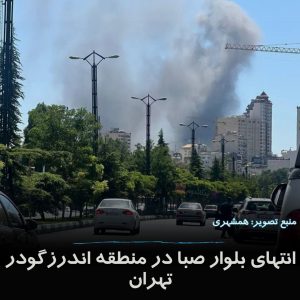
 

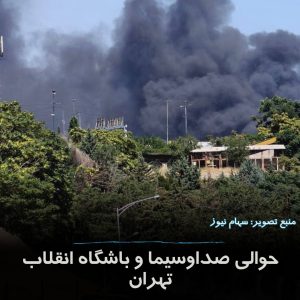
Saba Blvd in the Andarzgoo area
– Tehran
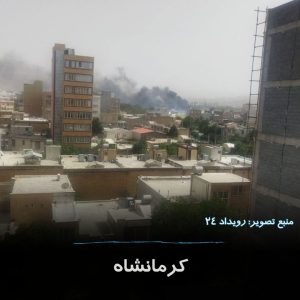
KermanshahNear IRIB (state broadcaster)

The Fourth Day of Israeli Attacks on Iran: A review of the Incidents

HRANA News Agency – The military confrontation between Iran and Israel entered its fourth consecutive day on Monday, June 16, following Israel’s early morning airstrikes on Iranian territory last Friday. The conflict has since intensified, with Iran mounting a military response and hostilities continuing to escalate.

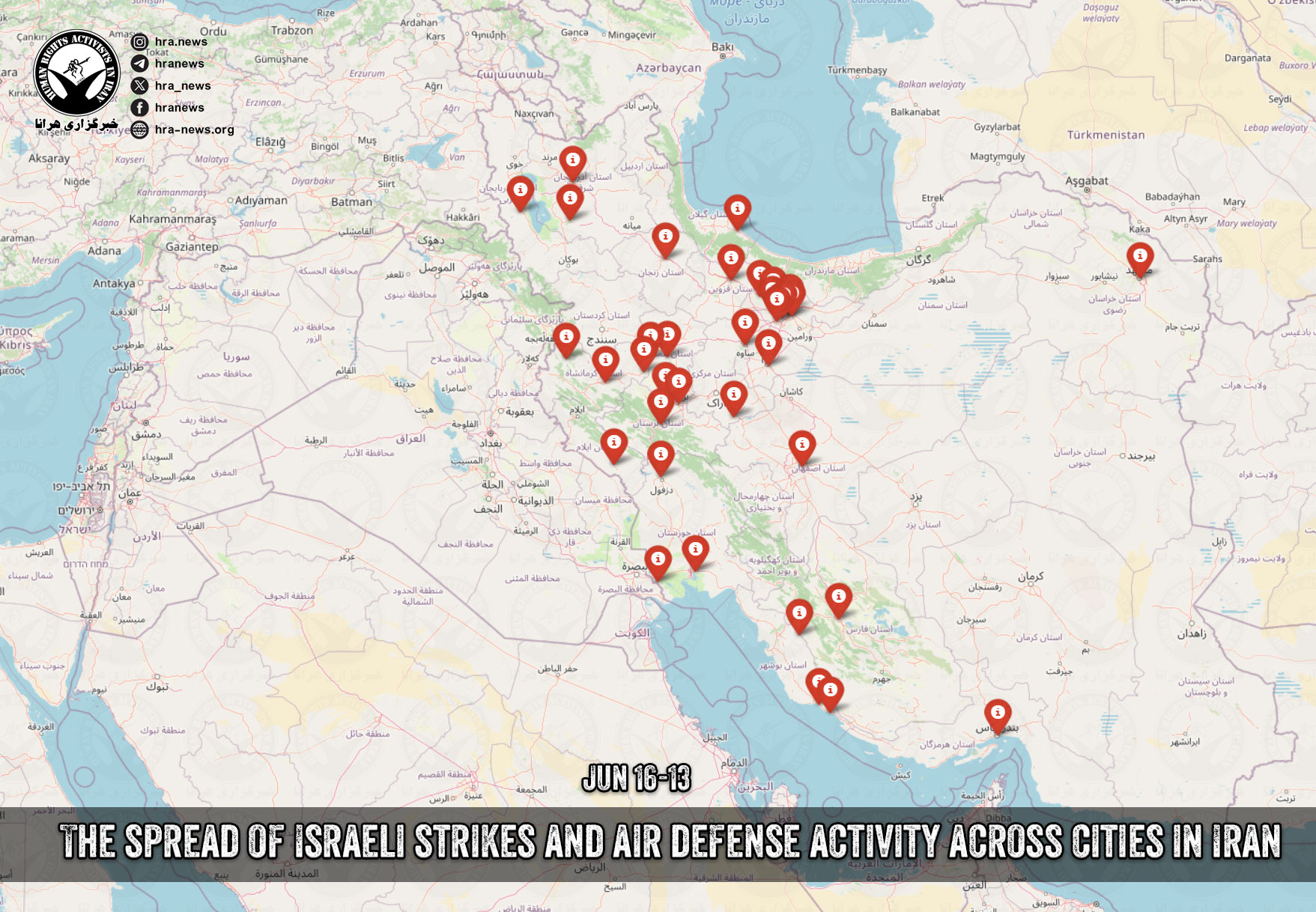
Over the past four days, military installations, civilian sites, and residential areas in at least 19 provinces across Iran have come under attack. According to official and local reports, at least 16 people were killed or injured on Monday alone. Additionally, 77 casualties have been confirmed from earlier days of the conflict. In total, as of June 16, 22:00 UTC, non-governmental sources report that at least 1,098 people have been killed or wounded since the start of the attacks, including 452 fatalities.

Geographic Scope of the Strikes

As Israeli military attacks on Iranian soil continue, yesterday a number of energy infrastructures, military installations, and residential areas were targeted in the provinces of Ilam, Kermanshah, Tehran, Qom, Hamedan, Khuzestan, Zanjan, Alborz, Markazi, East Azerbaijan, Kurdistan, and Fars. Notable sites targeted yesterday include the IRIB building in Tehran, the Musian fire station in Ilam province, Farabi Hospital in Kermanshah, and an oil refinery in Kermanshah. An emergency vehicle was also struck in yesterday’s Israeli attacks in Tehran. In addition, IRGC barracks and missile warehouses in several provinces were hit.

Explosions in some of these areas have caused widespread damage and likely human casualties. Further information is being reviewed and updated.

Fighter jets, drones, various planted bombs, Delilah air-launched cruise missiles, short-range projectiles, and suicide microdrones are among the primary weapons reportedly used by Israel in yesterday’s attacks.

The Israeli army announced yesterday that it has carried out 720 airstrikes on various locations across Iran since the beginning of the attacks.

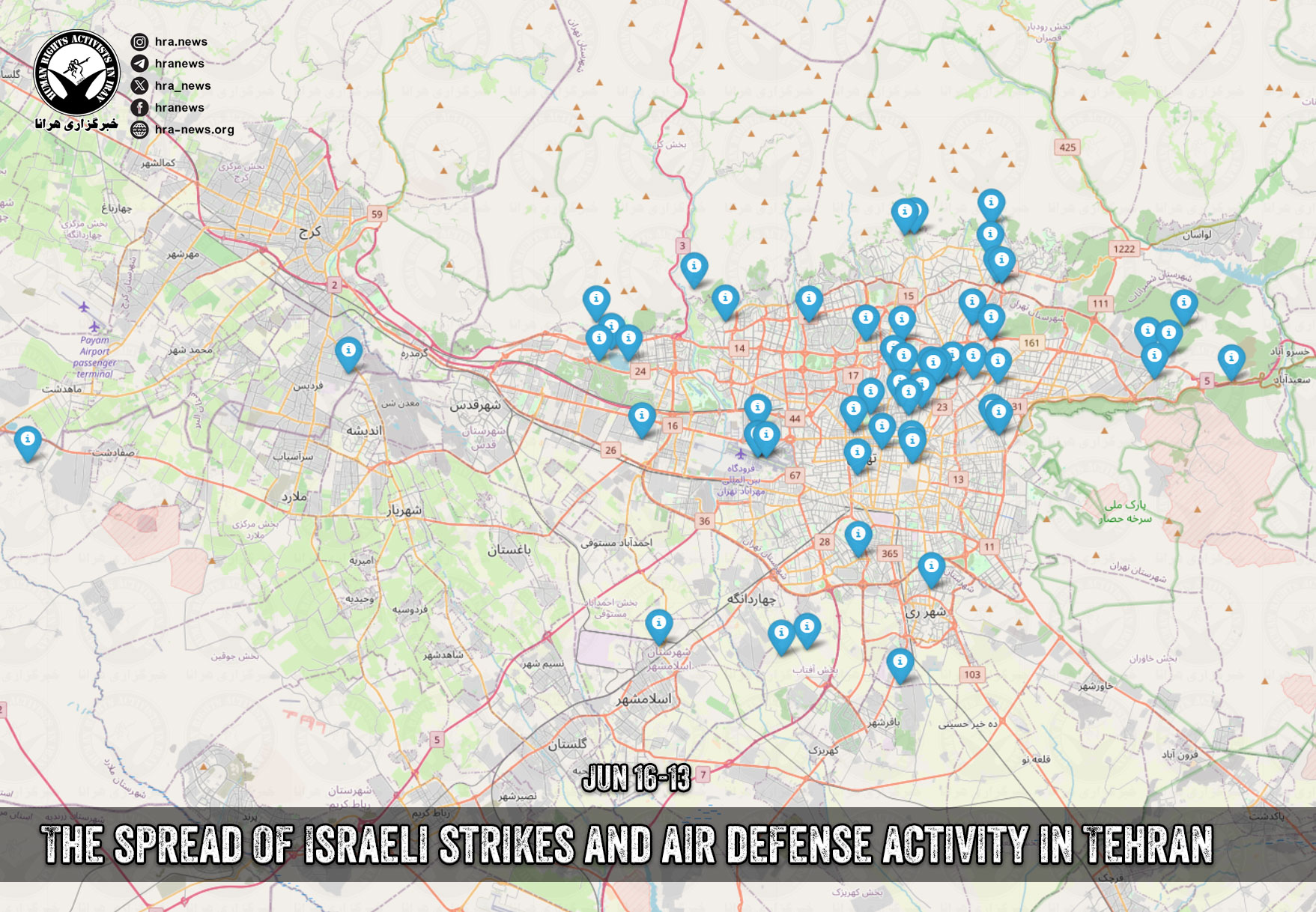
The map below shows the distribution of attacks and defense activity from the beginning of the conflict up to the present.

Update on Casualties and Human Losses

Since the start of Israeli attacks on Iran, more than a thousand military or civilian citizens have been killed or injured in total. The military or civilian status of a significant number of the human victims mentioned in this report is still under investigation.
HRANA had reported 1,005 people killed or injured during the first three days of attacks. With access to new information regarding casualties from previous days, this figure has now increased to 1,082.

The table below provides updated casualty figures from the first three days of the attacks, supplementing earlier reports. In some instances, the changes reflect reclassification rather than an actual increase in numbers.

Updated Casualty Figures from Previous Days

ProvinceCityDateCategoryKilledInjuredNotesLocation
TehranTehranUnknown (June 13–16)Civilian121Victims include 5 childrenResidential areas
HamadanAsadabadUnknown (June 13–16)Civilian40Victims were firefightersAsadabad Agricultural Airport
UnknownUnknownUnknown (June 13–16)Civilian13Qasemi family; a 2-month-old infant was killedUnknown
TehranTehranJune 13Civilian10Shahrara
TehranTehranJune 15Civilian40Tajrish / Mohebbi Shariati Street
TehranTehranJune 15Military10Police HQ (FATA)
TehranTehranJune 15Military10Unknown
LorestanUnknownJune 13Military10Military Garrison
East AzerbaijanTabrizJune 13Military20Shahid Fakouri Airbase
QomQomJune 15Military242Hazrat Fatemeh Air Defense / Mostafa Khomeini Garrison
HamadanAsadabadUnknown (June 13–16)Military20Asadabad Agricultural Airport


Latest Statistics on Casualties and Human Losses So Far

In addition to the previous section, reports published regarding yesterday’s attacks have documented the deaths of 13 individuals and the injury of at least 3 others, bringing the total number of people killed or injured due to Israeli attacks—according to non-governmental sources—to at least 1,098.

Uncategorized Casualties
ProvinceCityDateKilledInjuredNotesLocation
MarkaziKhomeinJune 1520Unknown
Civilian Casualties
ProvinceCityDateKilledInjuredNotesLocation
KermanshahKermanshahJune 1601Attack on a truck dealershipDizelabad
TehranTehranJune 1630Red Crescent relief personnelUnknown
TehranTehranJune 1602Includes an IRIB journalistIRIB Building
Military Casualties
ProvinceCityDateKilledInjuredNotesLocation
ZanjanZanjanJune 1620Ansar al-Mahdi IRGC Garrison
MarkaziKhomeinJune 1660Rouhollah IRGC Garrison


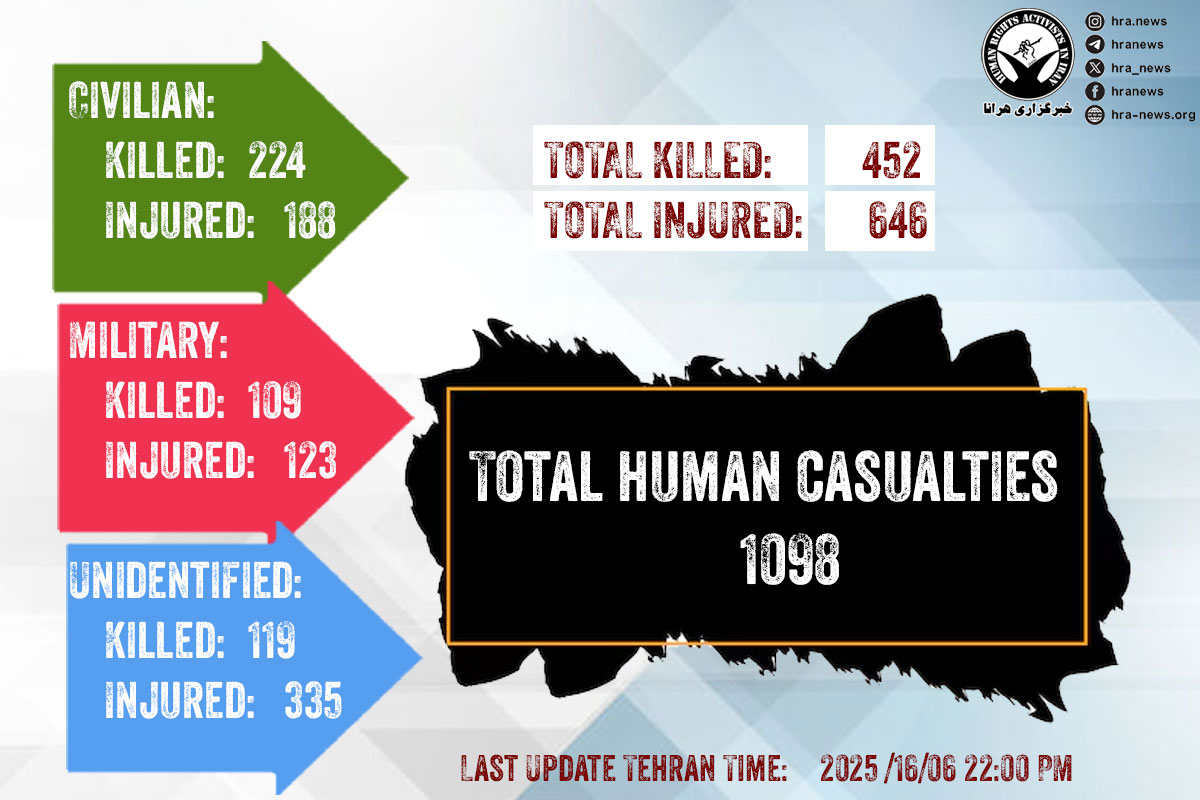
According to non-governmental sources, as of the time this report was compiled, a total of 1,098 military or civilian citizens have been killed or injured, broken down as follows:

▫️Civilians:
Deaths: 224
Injured: 188

▫️Military personnel:
Deaths: 109
Injured: 123

▫️Unspecified:
Deaths: 119
Injured: 335

▫️Total deaths: 452
▫️Total injured: 646
▫️Total human casualties: 1,098 individuals

It is also worth noting that access to casualty data has become significantly more difficult for non-governmental groups since the first day of attacks. This could be due to government-imposed security measures or communication disruptions.

While non-governmental sources estimate Iran’s human losses at just under 1,100, Hossein Kermanpour, Head of the Ministry of Health’s Public Relations and Information Center, reported a significantly higher figure in a social media post yesterday. According to Kermanpour, 1,481 people were killed or injured during the first 65 hours of Israeli attacks, with “over 90 percent” identified as civilians. He added that 522 of those affected have been discharged, reporting a total of 224 deaths and 1,257 injuries.

However, yesterday, the Minister of Health, in an interview with IRNA, stated that 1,800 people have been injured due to Israeli attacks. Regarding yesterday’s attack on Quds Square in Tehran, he said that not only were water pipes broken, but 59 people were injured in the incident. He added that 12 people “attained martyrdom” in the Quds Square bombing, one of whom was a pregnant woman.

Continued Israeli Attacks on Iran’s Civilian Infrastructure on the Fourth Day

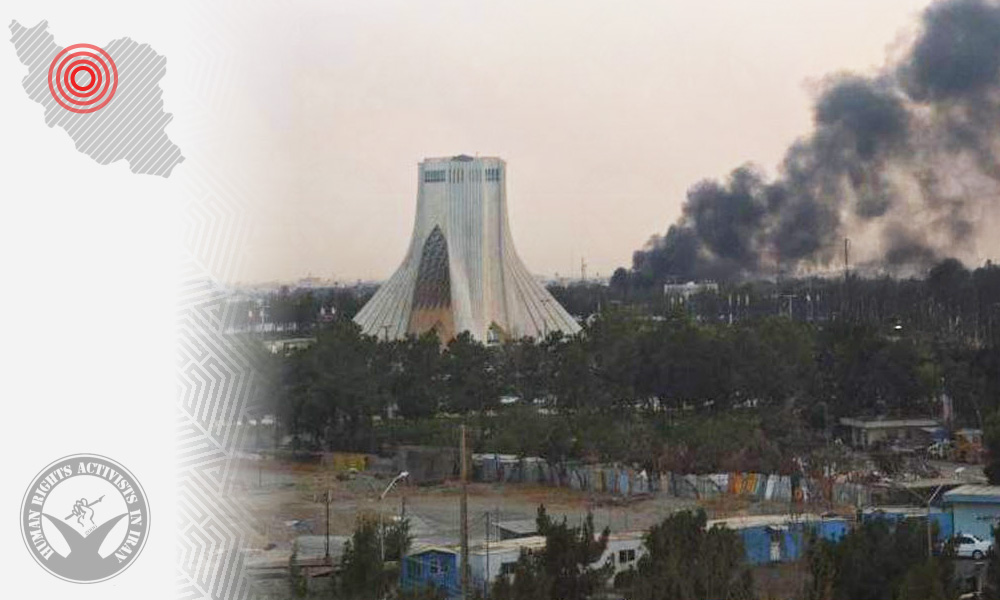
The Israeli army’s attacks continued yesterday, causing damage to non-military infrastructure. Throughout the day, the cities of Bushehr, Qeshm, Bandar Abbas, Dehloran, Natanz, Tehran, Sanandaj, Tabriz, Kermanshah, Ahvaz, Bandar Anzali, Bostanabad, Marand, Malayer, and Shahriar witnessed air defense engagement with hostile projectiles. Among the affected provinces, Tehran once again experienced the heaviest attacks. The areas in and around Tehran that were hit include: Khalazir village, Shahrak-e Gharb, Bideganeh neighborhood, Vavan township, Bagheri township, Olympic Village, areas around Mehrabad Airport, around Azadi Square, Tehranpars, and the IRIB building in Tehran.

Other key areas that witnessed attacks and air defense activity include: areas along the Imam Reza and Tehran–Qom highways, Marand Industrial Town, Shahrak-e Emam and the oil refinery in Kermanshah, areas around the Tehran–Saveh highway, Nazarabad and Mehrshahr in Alborz province, Farabi Hospital in Kermanshah, and a truck dealership in Kermanshah.

In addition to civilian sites, several IRGC missile warehouses in Faraman and Dowlatabad in Kermanshah province, the Fatemeh Masoumeh air defense unit, Mostafa Khomeini garrison, and the Qiam Kushk-e Nosrat pilot training base in Qom, an air defense unit in Andimeshk, IRGC garrisons in Zanjan, Sardroud, and Marivan, the Alvand missile site in Khomein, and a military base in western Tehran were among yesterday’s military targets.

Disruptions in Communications and Secondary Consequences

From the first day of the attacks, Iran’s Ministry of Communications imposed temporary internet restrictions “due to the country’s special circumstances.” The WhatsApp messaging service has remained blocked for the fourth consecutive day, and user access to Cloudflare-based services has been disrupted. These measures have severely hampered the operations of independent media, the transmission of humanitarian data, and immediate access to information.

Judicial and security authorities began threatening citizens from the early hours of the conflict. In the latest statements, the head of Iran’s judiciary announced that those arrested on charges of collaborating with Israel would be tried and punished swiftly under wartime conditions. Mohseni-Ejei warned that the harshest punishment would be imposed without leniency on individuals cooperating with Israel.

Yesterday, security crackdowns on citizens in Iran continued, with at least 15 arrests recorded, bringing the total number of arrests over the past four days to more than 115 individuals. These citizens were mostly detained for publishing content related to the Iran-Israel military conflict. Those arrested yesterday include two individuals in Kerman, two in Tehran, five in Ardabil, several in Khorramabad and Borujerd, one in Shahr-e Qods, several in Gerash County, and five in North Khorasan. In addition, 60 citizens in Isfahan Province are facing legal proceedings. The head of Isfahan’s cyber police accused these individuals of “disturbing public opinion in cyberspace.”

The newspaper Ham Mihan also published images of at least two citizens being arrested, identifying them as “individuals linked to Israel.” A channel affiliated with the IRGC published images of two detainees, claiming they were “preparing for an operation from an unfinished building.” Another channel close to security agencies released a video reporting the arrest of five Afghan nationals in Nahavand County, claiming that “several microfiles” were discovered in their possession.

Meanwhile, the judiciary announced that 28 individuals had been arrested in Tehran Province over the past four days, with some of the charges including “espionage, photographing military fortifications and restricted areas, possession of military weapons, and membership in anti-regime groups.”

In the past three days, at least 100 other individuals in Iran had already been arrested by security forces for publishing content related to the Iran-Israel conflict.

Yesterday, the judiciary also announced that the execution of Esmaeil Fekri on charges of “espionage for Israel” had been carried out. According to the judiciary’s news agency, Mr. Fekri was arrested in Azar 1402 (December 2023), and after the initial verdict was issued, the case was referred to the Supreme Court for appeal. The court, citing “available evidence,” confirmed and upheld the original sentence.

International Humanitarian Law (IHL) Analysis

On the third day of the international armed conflict between Iran and Israel, concerns over increasing violations of fundamental principles of international humanitarian law have intensified. According to Article 51 of Additional Protocol I to the Geneva Conventions, parties to the conflict are obligated to distinguish between military objectives and the civilian population. However, reports of the deaths of at least ten children in a residential building strike and the killing of a worker at a horse stable reinforce the possibility of indiscriminate and disproportionate attacks.

The repeated targeting of locations with no apparent military value not only calls into question the principles of proportionality and precaution but also directly contradicts the absolute prohibition of direct attacks on civilians, as stated in Article 48 of the mentioned Protocol. Furthermore, under Article 57, even if a military target is located near civilian areas, the parties are obligated to take all feasible precautions to minimize harm to civilians, including the issuance of effective advance warnings—a measure that, in many cases, appears not to have been observed.

Human rights organizations have once again emphasized the need to halt indiscriminate attacks, protect civilian lives, and ensure access to emergency assistance. The Human Rights Activists in Iran also noted in its latest assessment, while highlighting concerning patterns in target selection: “Protection of civilian lives must remain at the center of attention.”

The organization has reaffirmed its commitment to documentation, legal analysis, and pursuit of accountability for all parties under international humanitarian law, warning that the continued execution of indiscriminate attacks may constitute war crimes.

International Reactions to Ongoing Conflict

As the conflict continues, the international community has issued new responses regarding the military attacks. A number of governments and international bodies have called for restraint from both parties and an immediate return to diplomatic channels. Statements released yesterday emphasized the need to avoid escalating violence, fully respect civilian rights, and ensure access to humanitarian aid.

These positions underscore the role of neutral international organizations in monitoring developments and supporting peace-building efforts, while also expressing concern over the risk of the conflict expanding further. There was also a renewed call for all parties to uphold their obligations under the United Nations Charter and the rules of international humanitarian law.

Russia and Turkey announced their readiness to mediate in order to end the conflict between Iran and Israel. A spokesperson for the Russian presidency stated that Russia remains in contact with both sides of the war and that its earlier offer to mediate still stands. Simultaneously, Turkish President Recep Tayyip Erdoğan, in a phone call with his Iranian counterpart Masoud Pezeshkian, said that Turkey is ready to play a mediating role in resuming nuclear negotiations and ending the dispute with Israel.

Emphasis on Adhering to Legal Obligations

With the expansion of field consequences resulting from the attacks, damage to civilian infrastructure and disruptions in emergency and medical services have also increased. These conditions further highlight the critical importance of strictly adhering to humanitarian law requirements, including the principles of precaution, proportionality, and distinction between targets.

International institutions and human rights advocates have once again reiterated the need to guarantee safe and unimpeded access to emergency aid and to protect the civilian population. At the same time, the ongoing use of indiscriminate attacks without regard for civilian locations poses a serious challenge to the legitimacy of both parties’ military actions.

The Human Rights Activists in Iran, while continuing to monitor developments on the ground, have stressed the need for independent investigations, thorough documentation of suspected violations, and the pursuit of legal accountability for all parties involved.


Missile strike on Farabi Hospital
in Kermanshah
Missile strike on Farabi Hospital
in Kermanshah
Dormitory of Shahid Beheshti
University of Medical Sciences
East TehranMehrabad area,
next to the Mapping Organization
One of the Ministry of Foreign
Affairs buildings in Tehran
Truck dealership in KermanshahKimi Darou pharmaceutical
factory in the Tehranpars -Tehran
Bagheri Township, Chitgar,
and Iran Mall in Tehran
IRIB (Islamic Republic of
Iran Broadcasting) building
IRIB (Islamic Republic of
Iran Broadcasting) building
IRIB (Islamic Republic of
Iran Broadcasting) building

Farhad Sheikhi Sentenced to Imprisonment and Additional Penalties

Farhad Sheikhi, a workers’ rights advocate, has been sentenced by the Revolutionary Court of Karaj to one year in prison, a two-year travel ban, two years of mandatory residence in Divandarreh, and a two-year ban on living in Alborz and Tehran provinces.

Based on a verdict recently issued by Branch 1 of the Revolutionary Court of Karaj, presided over by Judge Seyed Musa Asif al-Hosseini and communicated to Mr. Sheikhi, he has been sentenced to one year in prison, two years of exile to Divandarreh in Kurdistan province, and a two-year travel ban for the charge of “propaganda against the regime.” Additionally, after the period of exile, he is prohibited from living in Alborz and Tehran provinces for two years. His court session regarding this charge was held on June 19th of this year.

Farhad Sheikhi was arrested by security forces at his home in Hashtgerd on May 28th of 2023 and was subsequently transferred to Rajai Shahr Prison in Karaj.

Mr. Sheikhi was eventually released on June 13th of the same year from Karaj Central Prison on a bail of 100 million Tomans after being formally charged at the Hashtgerd Prosecutor’s Office.

This workers’ rights advocate has previously been arrested and sentenced due to his activities. He was released from prison on February 7, 2023, as per a pardon directive.

Five Inmates Spared from Execution in Kerman and Karaj

In Kerman and Karaj provinces, five inmates convicted of murder in separate cases were spared from execution by receiving consent from the victims’ families.

According to HRANA, the news agency of Human Rights Activists, quoting Young Journalists Club, four death-row received consent from victims’ families in Kerman Prison.

Similarly, the General Director of Alborz Prisons Organization announced that in one of the prisons of this province, a death-row inmate convicted of killing his cellmate in Hamedan Prison received amnesty from the victim’s family after 23 years of incarceration.

Three Christian Converts Summoned in Karaj to Endure Their Sentences

Christian Converts Amin Khaki, Milad Goodarzi, and Alireza Nourmohammadi were summoned to appear today, November 10, at the Executive Unit of the Court of Karaj to endure their sentences.

According to HRANA, the news agency of Human Rights Activists, Branch 12 of the Court of Appeals of Alborz Province had previously sentenced each of these citizens to three years in prison.

In their first trial, which took place on June 26 of this year, they were each sentenced to 5 years imprisonment and paying a fine of 40 million tomans by Branch 4 of the Revolutionary Court of Karaj on charges of “propaganda and catechizing deviant against the holy Sharia of Islam”.  Following the verdict, they were released each on bail of 250 million Tomans. On August 22, the verdict was reduced to three years each on appeal.

Despite the fact that Christians are recognized as a religious minority under Islamic law, nevertheless, the security services pursue the issue of Muslims converting to Christianity with particular sensitivity and deal harshly with the converts of the Christian faith.

The Iranian regime targets Christian converts despite Article 18 of the Universal Declaration of Human Rights and Article 18 of the International Covenant on Civil and Political Rights, which state that every individual has the right to freedom of religion and belief and freedom to express it openly or secretly.