HRANA News Agency – Early yesterday, alongside Israel’s ongoing airstrikes on multiple Iranian provinces, the United States launched its first direct attacks, targeting Iran’s nuclear facilities in Fordow, Natanz, and Isfahan. The U.S. entry into the conflict has significantly escalated tensions and sparked widespread reactions.
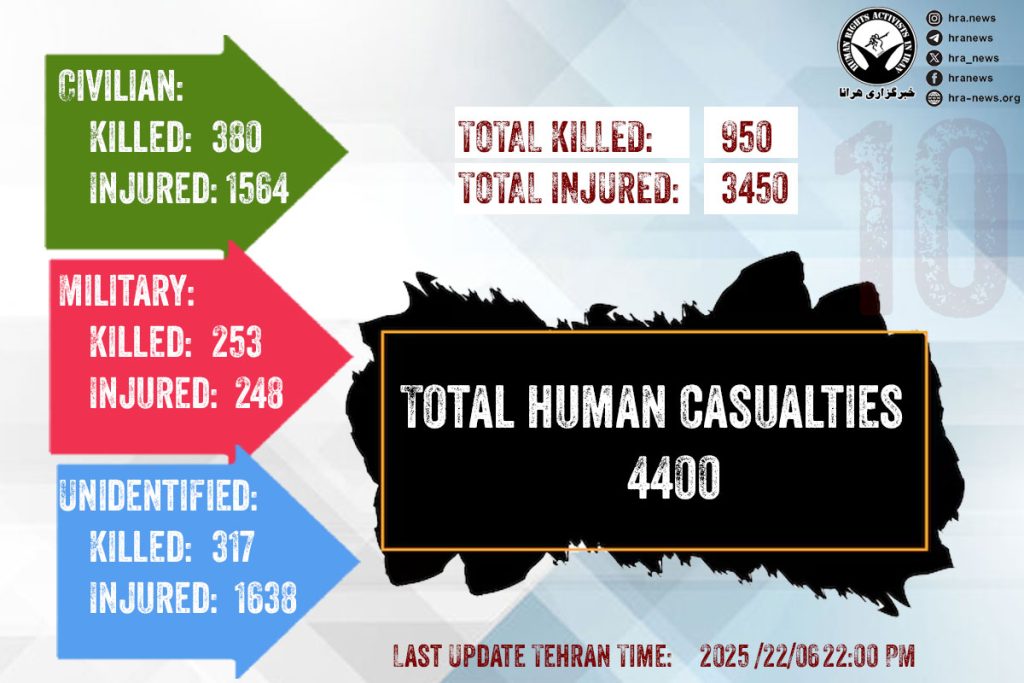
According to data collected by HRANA, since the outbreak of hostilities, 25 Iranian provinces have come under attack. Including yesterday’s casualties, as of June 22, 21:00 UTC, the total number of victims has risen to 4,400. Of these, 950 have been killed and 3,450 injured. In addition, 640 citizens have been arrested on political or security-related charges during this period.
As clashes between Iran and Israel escalate, the United States’ direct involvement marks a critical turning point in the conflict’s expansion, raising serious concerns about the humanitarian and civilian toll. The engagement of another military power has broadened the crisis’s scope, leading to widespread disruption: collapse of public services, instability in the banking sector, suspension of public transportation, shortages of essential goods, surging prices, and increasingly limited access to medical care for vulnerable groups.
Geographical Scope and Developments
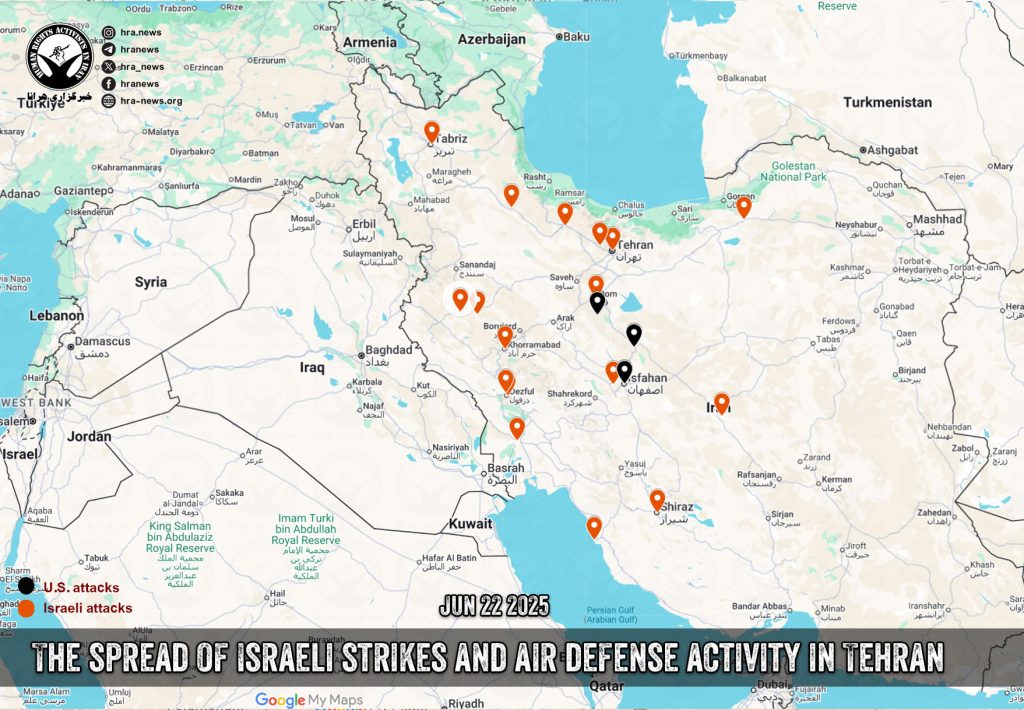
Over the past 10 days, military strikes in Iran have targeted infrastructure, military and civilian facilities, residential and industrial areas in 25 provinces. The provinces directly affected so far are:
Tehran, East Azerbaijan, West Azerbaijan, Ardabil, Isfahan, Ilam, Kermanshah, Markazi, Hamedan, Fars, Khuzestan, Kurdistan, Alborz, Zanjan, Bushehr, Qazvin, Gilan, Hormozgan, Qom, Razavi Khorasan, Chaharmahal and Bakhtiari, Kerman, Semnan, Mazandaran, and Golestan.
Yesterday, Sunday, June 22, the military attacks continued into their tenth day, targeting the provinces of Kermanshah, Alborz, Semnan, Qom, Isfahan, Tehran, Lorestan, Zanjan, Fars, Khuzestan, East Azerbaijan, Yazd, Bushehr, and again Fars. The continuation of attacks yesterday indicates that the security situation remains critical, with no clear prospect for an immediate de-escalation.
Tehran has consistently seen the highest number of attacks. Mohammad Sadegh Motamedian, the governor of Tehran, stated that Israel has targeted more than 200 locations in Tehran province over the past 10 days.
While Iran faces daily waves of extensive Israeli strikes, early yesterday, the U.S. Air Force also bombed three key Iranian nuclear sites in Isfahan, Fordow, and Natanz.
Latest Casualty and Human Loss Statistics as of Now
Since Friday, June 13, thousands of military personnel and civilians have been killed or injured as a result of Israeli and U.S. military attacks on Iran. The military or civilian status of a significant portion of the casualties mentioned in this report is still under investigation.
Yesterday, the spokesperson for the Red Crescent announced that so far, 3 aid workers have been killed in Tehran and East Azerbaijan provinces, and 29 others have been seriously injured.
The government spokesperson also stated yesterday that the military conflicts have so far resulted in the deaths of 55 women and children and injuries to 209 women and children. According to him, 18 medical personnel have also been killed or injured. He further reported damage to 6 emergency bases and 9 ambulances.
Meanwhile, the Director-General of Crisis Management for East Azerbaijan province announced that 52 people have been killed in East Azerbaijan since the beginning of the attacks. He did not specify how many of these were military or civilian.
State media reported the deaths of 32 athletes during the military strikes on Iran. HRANA had previously documented 27 of these fatalities.
Additionally, the head of the Red Crescent, regarding the casualties from the U.S. military strikes on nuclear sites, stated that 11 people were injured in these attacks, most of whom have since been discharged from the hospital. He claimed that there were no signs of nuclear radiation leaks or contamination among the injured.
Yesterday, the Ministry of Health announced that since the start of the Israeli attacks, 450 civilians have been killed and more than 3,500 civilians injured.
Based on the latest updates from HRANA News Agency — which gathers its information through a network of volunteers and independent non-governmental sources — the casualty figures, as of June 22, 21:00 UTC, including newly received reports from previous days and yesterday’s updates, are as follows:
▫️Civilians:
Killed: 380
Injured: 1,564
▫️Military Personnel:
Killed: 253
Injured: 248
▫️Unconfirmed (Status Undetermined):
Killed: 317
Injured: 1,638
Total Fatalities: 950
Total Injured: 3,450
Total Human Casualties: 4,400
Yesterday, domestic media reported the deaths of two children, Taha Behroozi and Alisan Jabari, both aged seven. According to these reports, the children were killed after being struck by shrapnel from a downed Israeli drone in the Azerbaijan Square area of Tabriz.

Israeli Strikes on Civilian Infrastructure – Day 10
Yesterday, several civilian areas across the country were once again targeted. The most significant reported damage occurred in civilian areas around the Mosalla (Grand Prayer Ground) in Tehran, the Pirouzi district of Tehran, the Hakimiyeh district of Tehran, as well as parts of Andimeshk and Fardis. In addition, channels close to security institutions published images of an attack on an ambulance.
Throughout the day, the cities of Yazd, Bushehr, Damavand, Dezful, Isfahan, and Shiraz witnessed air defense operations against hostile projectiles. In Tehran, air defense activity was also reported in the Tehranpars and Ashrafi Esfahani districts.
Yesterday, officials from the Red Crescent and the Ministry of Health announced that five hospitals and several healthcare centers across the country have been damaged in Israeli airstrikes on Iranian territory. According to these reports, facilities affected include Hakim Children’s Hospital in southwest Tehran, another hospital in Tehran, Farabi Neuropsychiatric Hospital in Kermanshah, the Comprehensive Health Center of Mianrahan in Dinavar District of Kermanshah Province, and another comprehensive health services center. Six emergency ambulances and one rescue helicopter have also been put out of service.
Methodological Note:
The classification of targeted locations as “military” or “civilian” in this report is based on publicly available information, visual evidence, and testimonies from local citizens. A precise and definitive assessment of these sites requires official documents, satellite imagery, and additional analysis, which are currently not accessible. Therefore, this classification is preliminary and intended to provide an initial picture of the situation, without representing a final judgment on the nature of the targets.
Israeli Strikes on Iranian Military Infrastructure – Day 10
In addition to civilian areas, yesterday U.S. forces targeted Iran’s nuclear facilities, destroying the Fordow, Natanz, and Isfahan nuclear sites.
. Other military targets struck yesterday included:
. Malek Ashtar Industrial University in Lavizan, affiliated with the Ministry of Defense and Armed Forces Logistics;
. IRGC-affiliated sites in Bagh Deh Bozorgi, Shiraz;
. IRGC headquarters in Ahvaz;
. Madani military base in Tabriz;
. Ammunition depot of the 31st Ashura Division in Tabriz;
. IRGC logistics and supply center in Tabriz;
. IRGC military base in Saeedabad, Tabriz;
. 4th Tactical Fighter Base “Vahdati” in Dezful;
. Military zones near the Shiraz Industrial Park;
. A military base in Qom;
. IRGC Al-Ghadir unit in Yazd;
. Shahid Sadoughi military base in Yazd;
. Military sites around Bushehr;
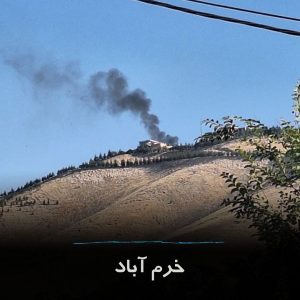
. Military zones in Khorramabad;
. IRGC Ansar Al-Mahdi unit in Zanjan Province;
. Military industries base in Isfahan;
. Military zones around Kermanshah, Shahroud, and Qazvin.
Arrests and Crackdown on Citizens
On Friday, four citizens were arrested in the city of Dehdasht by forces of The Ministry of Intelligence. These individuals were detained on charges such as “disturbing public opinion,” “propaganda against the regime,” and “promoting Israel” through activities on social media. HRANA’s inquiries into their current situation and place of detention are ongoing.
According to reports received by HRANA, at least 11 social media users were also arrested by security forces in the city of Ramshir, Khuzestan province. Their identities had not been confirmed at the time of this report, and there is no precise information about the reasons for their arrest, the detaining authority, or their place of detention.
On the same day, the police commander of Bukan announced the arrest of five individuals accused of “disturbing public opinion” both on social media and in public spaces. These individuals were handed over to the judiciary.
The police commander of Kerman Province reported the identification and arrest of 14 additional individuals, accusing them of “reposting Israeli actions on social media, disturbing public opinion, and supporting Israel.”
With these new arrests, a total of 277 Iranian citizens have been detained in the past 10 days for online activities and publishing content related to Israel’s attacks on Iran.
Security-Related Arrests
In addition to those arrested for opinions or political activities, there is another category of detainees about whom little information is available. These individuals are typically arrested by security agencies on more serious charges such as espionage, armed activity, terrorism, and similar accusations.
The mere filing of such charges, given the Iranian government’s history of labeling dissidents to justify repression, cannot in itself be considered evidence of guilt. Only fair trial standards and due process provide a legitimate basis for human rights organizations to assess these accusations.
In this context, yesterday the judiciary’s spokesperson announced that three individuals were arrested in Kermanshah Province on espionage charges and handed over to the judiciary. He stated that one of them is a citizen of a European country.
The deputy police chief of Fars Province reported the arrest of 53 individuals, accusing them of “disturbing public opinion, possession and operation of drones and small UAV parts, filming sensitive areas, and sending footage to opposition media.”
The head of the cultural and social affairs department of East Azerbaijan Police reported the arrest of one individual in Tabriz on charges of connections with Israel, alleging that this person exchanged classified information with individuals abroad. He claimed that photos and articles related to drone design and construction were found on the suspect’s phone and laptop.
Agents from the IRGC Intelligence Organization in Mazandaran also claimed to have arrested a person on charges of “espionage.” The Mehr News Agency reported that the detainee had undergone specialized and military training in a foreign country, and at the time of arrest, various espionage and communication devices were confiscated.
The police commander of Robat Karim announced that one individual was arrested on charges of “disturbing public opinion.” He claimed this person had links to Israel’s intelligence services, received financial payments, and deliberately published certain content online.
The judiciary’s spokesperson also reported that five individuals were identified in one of the provinces who were allegedly “planning terrorist operations.” Four of them were arrested, while one committed suicide during the arrest attempt.
Including the 63 individuals arrested yesterday, the total number of people detained on security charges over the past 10 days has reached 363.
Separately, domestic media yesterday reported the execution of a prisoner named Majid Masibi, who had been sentenced to death on charges of “espionage for Israel.” Since the start of Israeli attacks on Iran on June 13 (23 Khordad), at least two individuals have been executed in Iran on espionage charges related to Israel.
Disruptions in Communications and Secondary Consequences
From the first day of the attacks, the Minister of Communications claimed that, “due to the special situation of the country,” internet access had been temporarily restricted. However, these restrictions intensified in the following days, and as of Wednesday, June 18 (28 Khordad), Iranian citizens’ access to the global internet has been severely disrupted. The official stated that “the Iranian government has officially ordered the national internet shutdown” to prevent “Israeli cyberattacks.” The government spokesperson said the restrictions were imposed to prevent infiltration by enemies and to protect critical infrastructure.
The widespread internet disruptions, which began with the onset of the military attacks, have now become one of the most serious secondary consequences of the crisis. The shutdown or severe limitation of communications has not only obstructed the free flow of information but has also significantly disrupted people’s access to essential services, including banking, education, healthcare, and communication with relatives in affected areas. The situation is particularly dire in rural and underprivileged areas, leaving many citizens isolated and uninformed.
As these restrictions persist, human rights concerns over freedom of expression and the right to information have intensified. International digital rights groups have warned that internet shutdowns amid military conflict hamper the documentation of human rights violations and the delivery of targeted humanitarian aid. Furthermore, many small and home-based businesses dependent on internet access have been forced to shut down, endangering the livelihoods of thousands of people.
Yesterday, NetBlocks, which monitors internet access worldwide, reported that Iran’s internet shutdown has entered its fourth day. Despite slight improvements in connectivity, the country remains largely offline. After 72 hours, the ongoing telecommunications blackout continues to affect people’s ability to communicate and inform one another.

Images from yesterday’s attacks:
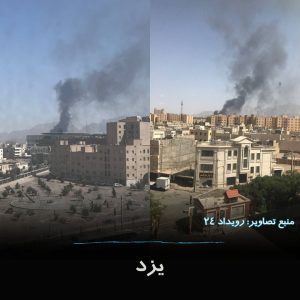 | 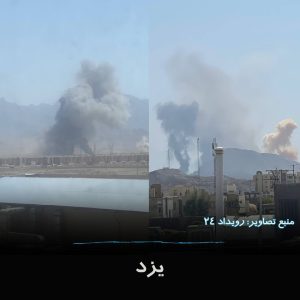 | 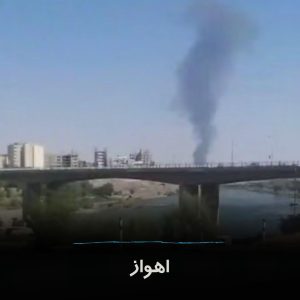 |
| Yazd | Yazd | Ahvaz |
 |  |  |
| Khorramabad | Tabriz | Tehran |
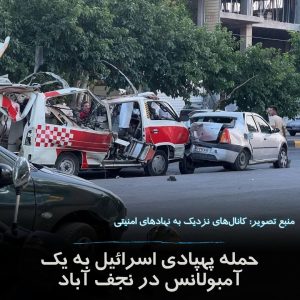 | 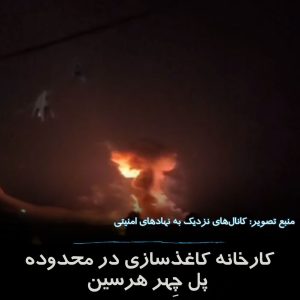 | |
Israeli drone strike on an
ambulance in Najafabad | Paper factory near Chehr Bridge, Harsin | |